
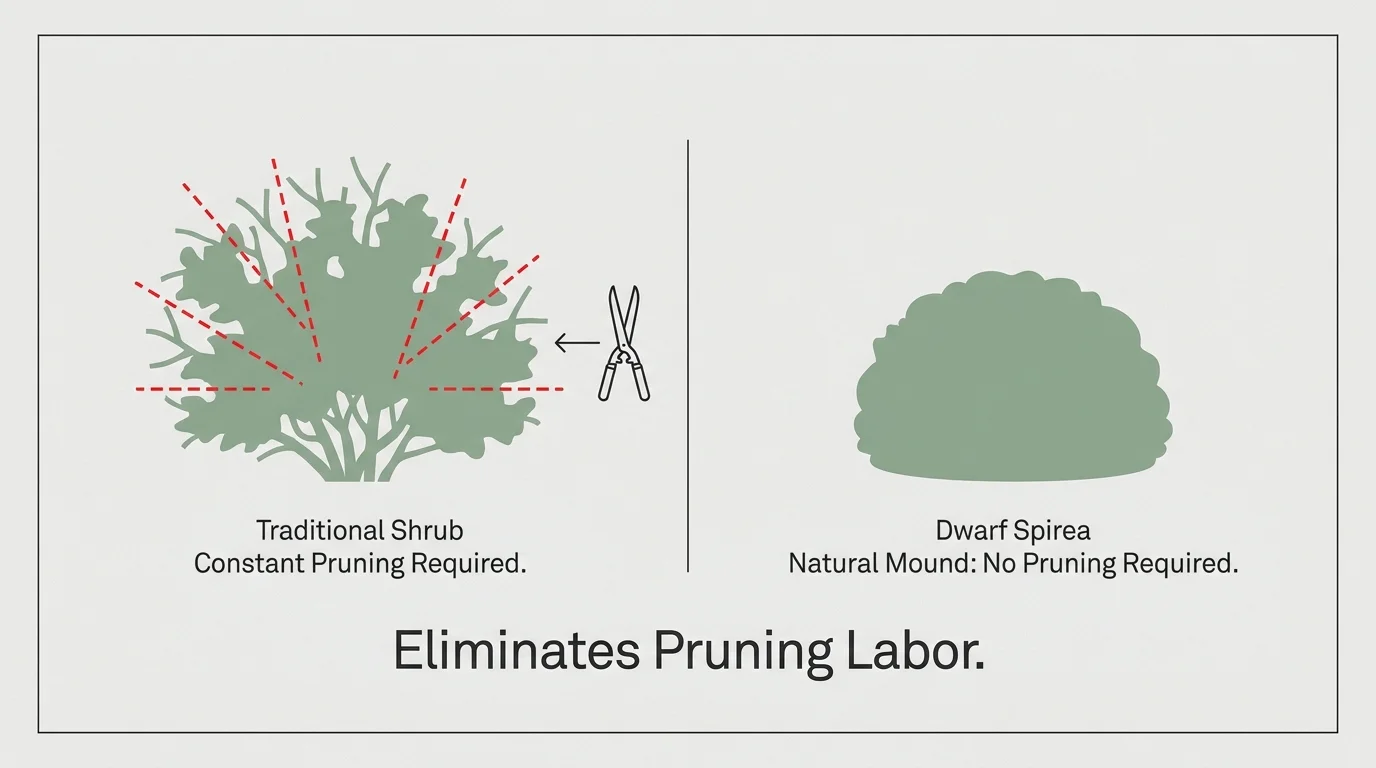
Outdoor Strategy #8: Dwarf Spirea to Eliminate Pruning Labor
Woody shrubs provide the vital structural backbone of any successful landscape, but traditional varieties frequently require physically demanding pruning from the top of an unsteady, dangerous step ladder.
You can entirely eliminate this significant safety hazard by exclusively planting dwarf shrub varieties that naturally limit their own vertical growth. Dwarf Japanese Spirea, for instance, rarely exceeds two to three feet in both height and overall width.
Cultivars like Goldmound or Little Princess naturally maintain a dense, perfectly rounded shape without requiring a single pass from heavy, vibrating hedge clippers. They burst into spectacular bloom in early summer, producing dense clusters of flat, pink flowers that actively attract passing butterflies and beneficial pollinators.
Beyond their undeniable aesthetic appeal, these compact shrubs are exceptionally tough, happily tolerating poor soil, heavy urban pollution, and moderate drought conditions. Planting a structured row of dwarf spirea along a foundation creates a permanent, colorful border that remains remarkably neat year after year.

3 Responses
My snake plant in the hallway (with filtered sunlight is loosing leaves around the edges. What can I do?!
Hi there! Thanks for reaching out. 😊
If your snake plant is losing leaves around the edges, a few things could be causing it—even in filtered light. First, check your watering routine: snake plants usually prefer their soil to dry out completely between waterings, and too much moisture can lead to leaf damage or rot.
Also take a look at the hallway temperature—cold drafts from doors/windows or sudden temperature changes can stress the plant. If the edges look brown and crispy, low humidity or inconsistent watering could also be the culprit.
I’d recommend trimming off any damaged leaves, checking the roots for signs of rot (mushy/dark roots), and moving it slightly closer to brighter indirect light if your hallway is a bit too dim.
Snake plants are resilient, so with a few small adjustments, it should bounce back. Hope this helps—and feel free to share a photo if you’d like more specific advice!
How about any plants that hummingbirds may apprecite?!