
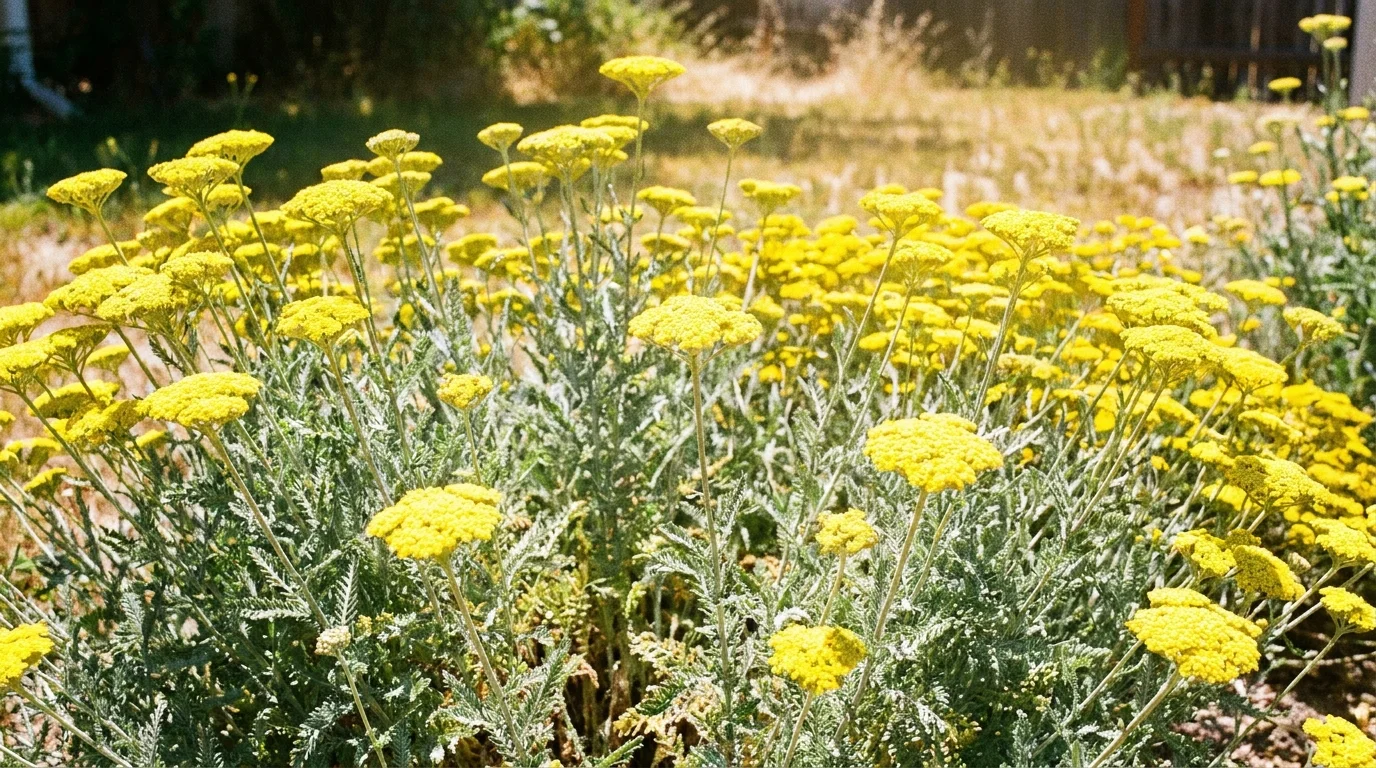
Outdoor Strategy #10: Yarrow for Heat-Proof Perennial Borders
If you constantly battle hot, dry microclimates and exceptionally nutrient-poor soil in your yard, Yarrow (Achillea) will quickly become your most trusted landscape ally.
This ancient, highly adapted perennial thrives effortlessly in harsh environments that would instantly scorch delicate ornamental flowers. Featuring finely cut, fern-like foliage that exudes a spicy, herbal scent, yarrow naturally deters browsing deer and hungry rabbits from entirely destroying your hard work.
Its distinct, flat-topped flower clusters come in brilliant shades of yellow, pink, red, and classic white, hovering gracefully above the foliage from early summer well into the crisp fall months.
Yarrow mandates excellent drainage; planting it in heavily compacted, wet clay often leads to root rot. However, when placed in sandy, rocky, or unamended soil, it spreads steadily to form a rugged, highly effective weed-suppressing mat.
You never need to apply synthetic fertilizer to yarrow, nor do you need to provide supplemental irrigation once its roots firmly take hold in the landscape.


3 Responses
My snake plant in the hallway (with filtered sunlight is loosing leaves around the edges. What can I do?!
Hi there! Thanks for reaching out. 😊
If your snake plant is losing leaves around the edges, a few things could be causing it—even in filtered light. First, check your watering routine: snake plants usually prefer their soil to dry out completely between waterings, and too much moisture can lead to leaf damage or rot.
Also take a look at the hallway temperature—cold drafts from doors/windows or sudden temperature changes can stress the plant. If the edges look brown and crispy, low humidity or inconsistent watering could also be the culprit.
I’d recommend trimming off any damaged leaves, checking the roots for signs of rot (mushy/dark roots), and moving it slightly closer to brighter indirect light if your hallway is a bit too dim.
Snake plants are resilient, so with a few small adjustments, it should bounce back. Hope this helps—and feel free to share a photo if you’d like more specific advice!
How about any plants that hummingbirds may apprecite?!