
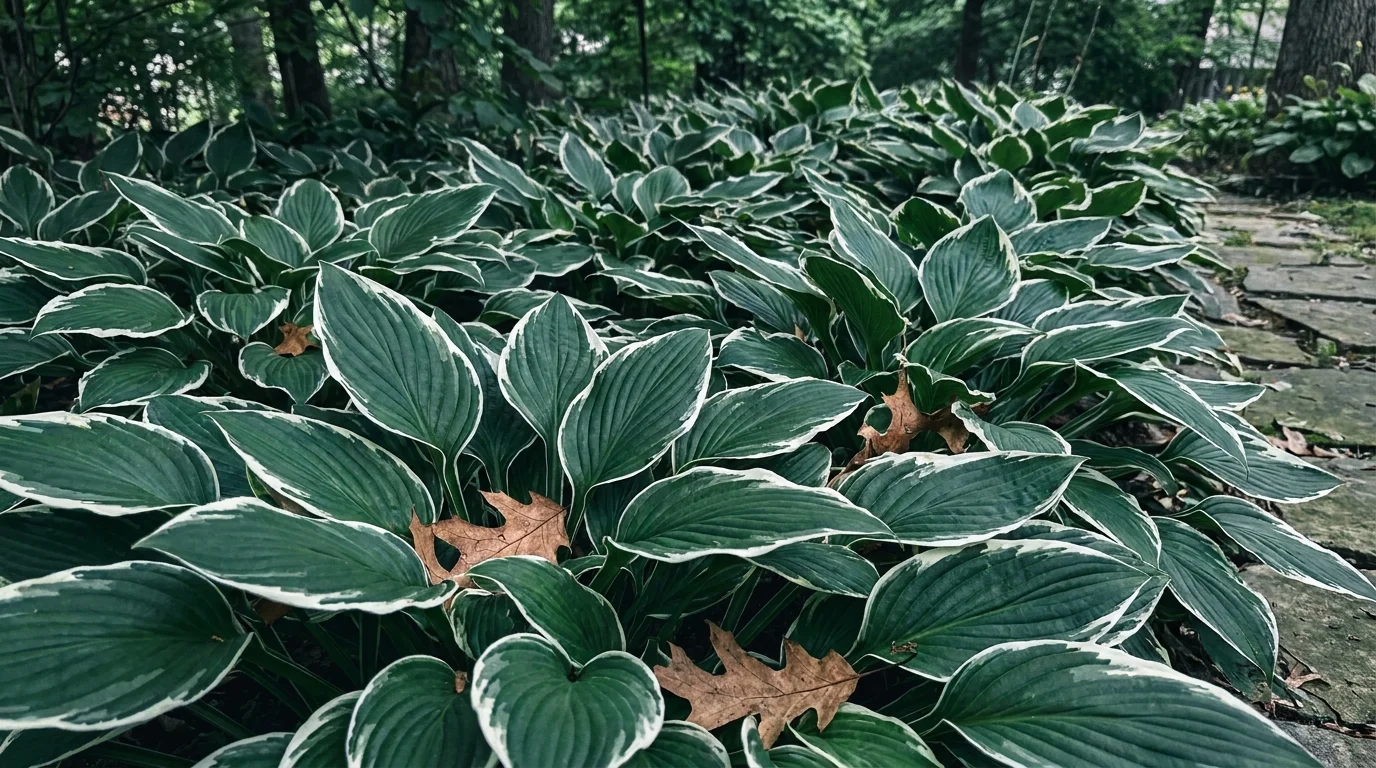
Outdoor Strategy #1: Hostas for Effortless Shade Gardens
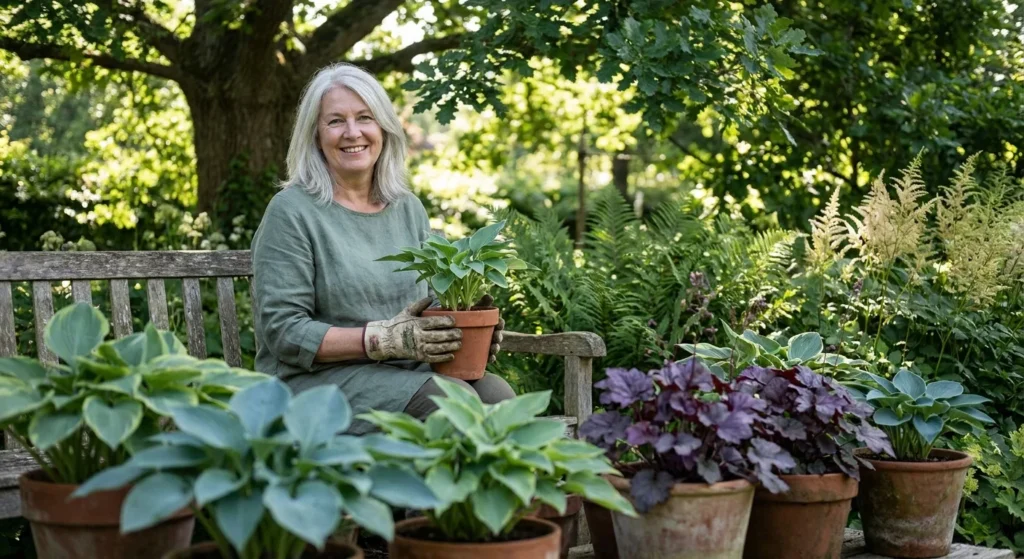
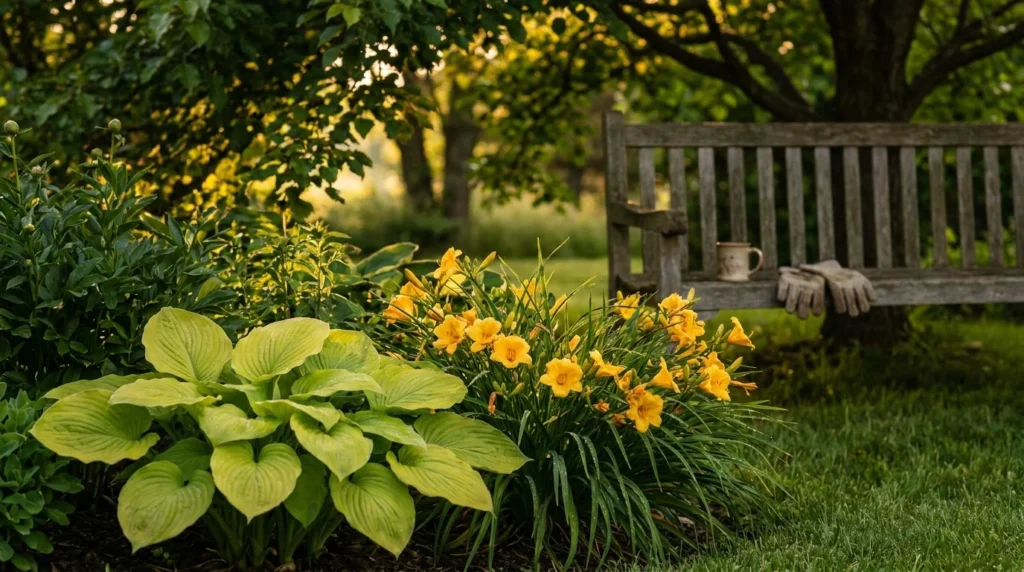
Hostas represent the absolute gold standard for shaded areas, transforming dark, challenging corners of your yard into lush displays of structural foliage. Thriving reliably across United States Department of Agriculture (USDA) Hardiness Zones 3 through 9, these hardy perennials emerge every spring with zero intervention.
Instead of struggling to coax fragile blooms out of heavily shaded, nutrient-poor soil, you can rely on hostas to provide striking visual contrast through their broad, corrugated leaves.
Because hostas naturally grow in dense, overlapping clumps, they act as a living mulch that shades the soil and actively suppresses invasive weeds. This aggressive weed suppression drastically reduces the time you spend bending over to clear out unwanted growth.
Varieties like the massive, chartreuse Sum and Substance instantly brighten dark corners, while the crisp white margins of the Patriot variety offer an elegant, formal appearance. Aside from optionally removing the tall flower spikes in late summer and clearing away the collapsed leaves after the first hard frost, these resilient plants demand nothing from you.

3 Responses
My snake plant in the hallway (with filtered sunlight is loosing leaves around the edges. What can I do?!
Hi there! Thanks for reaching out. 😊
If your snake plant is losing leaves around the edges, a few things could be causing it—even in filtered light. First, check your watering routine: snake plants usually prefer their soil to dry out completely between waterings, and too much moisture can lead to leaf damage or rot.
Also take a look at the hallway temperature—cold drafts from doors/windows or sudden temperature changes can stress the plant. If the edges look brown and crispy, low humidity or inconsistent watering could also be the culprit.
I’d recommend trimming off any damaged leaves, checking the roots for signs of rot (mushy/dark roots), and moving it slightly closer to brighter indirect light if your hallway is a bit too dim.
Snake plants are resilient, so with a few small adjustments, it should bounce back. Hope this helps—and feel free to share a photo if you’d like more specific advice!
How about any plants that hummingbirds may apprecite?!