
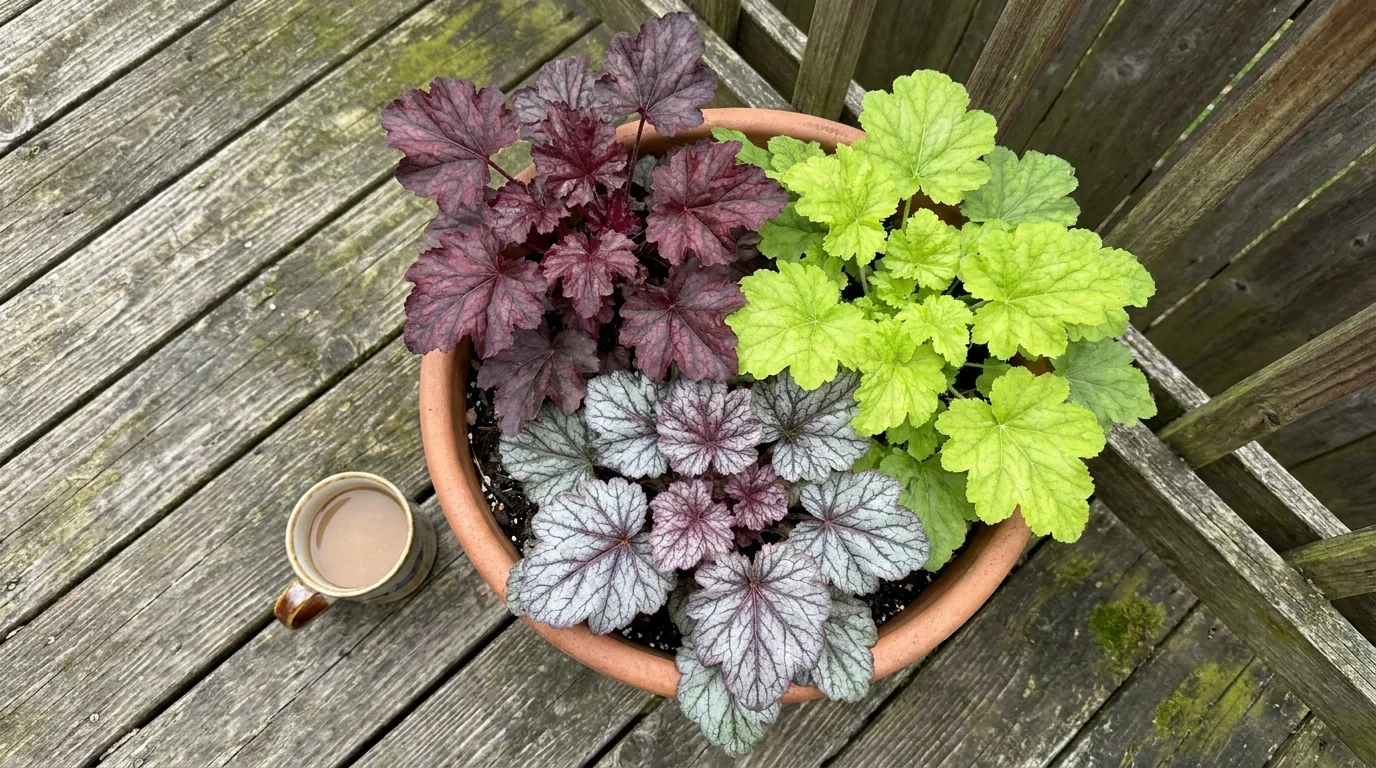
Outdoor Strategy #6: Coral Bells for Vibrant Foliage
Traditional garden design frequently overemphasizes delicate flowers, leading to a frustrating boom-and-bust cycle of color that demands constant deadheading to maintain visual appeal.
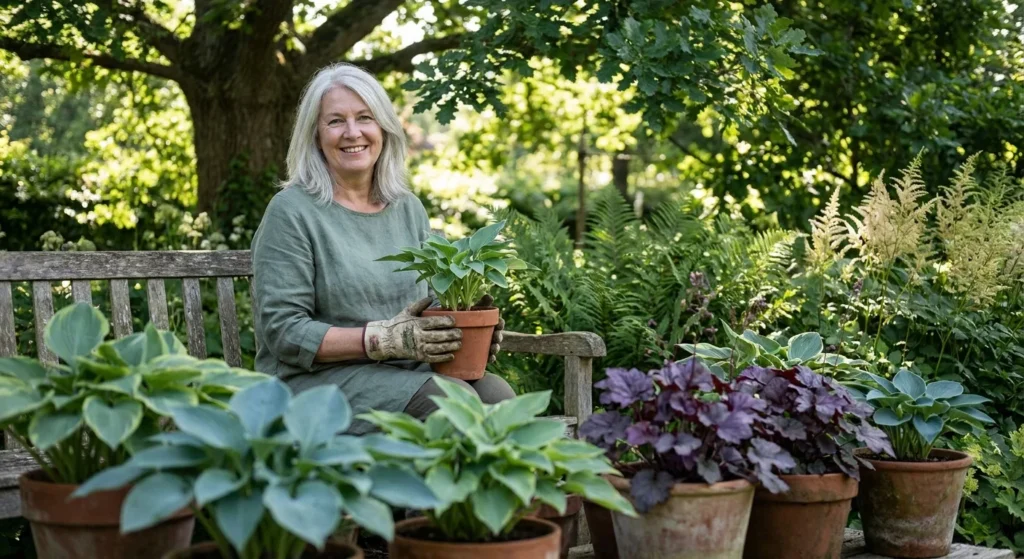
You can bypass this tedious labor entirely by utilizing plants prized specifically for their dramatic, long-lasting foliage, such as Coral Bells (Heuchera). Available in a staggering array of colors—ranging from deep majestic purple and metallic bronze to lime green and soft caramel—these compact perennials offer continuous visual impact.
Coral Bells thrive beautifully in partial shade and prefer well-drained soil, making them phenomenal candidates for raised planters and elevated container gardens. Growing them in raised beds brings their intricate leaf veining closer to eye level and completely removes the need to kneel or bend over for routine maintenance.
They naturally maintain a tidy, circular mounding habit that rarely exceeds eighteen inches in width, meaning you never have to worry about aggressive spreading or invasive tendencies ruining your carefully planned borders.


3 Responses
My snake plant in the hallway (with filtered sunlight is loosing leaves around the edges. What can I do?!
Hi there! Thanks for reaching out. 😊
If your snake plant is losing leaves around the edges, a few things could be causing it—even in filtered light. First, check your watering routine: snake plants usually prefer their soil to dry out completely between waterings, and too much moisture can lead to leaf damage or rot.
Also take a look at the hallway temperature—cold drafts from doors/windows or sudden temperature changes can stress the plant. If the edges look brown and crispy, low humidity or inconsistent watering could also be the culprit.
I’d recommend trimming off any damaged leaves, checking the roots for signs of rot (mushy/dark roots), and moving it slightly closer to brighter indirect light if your hallway is a bit too dim.
Snake plants are resilient, so with a few small adjustments, it should bounce back. Hope this helps—and feel free to share a photo if you’d like more specific advice!
How about any plants that hummingbirds may apprecite?!