
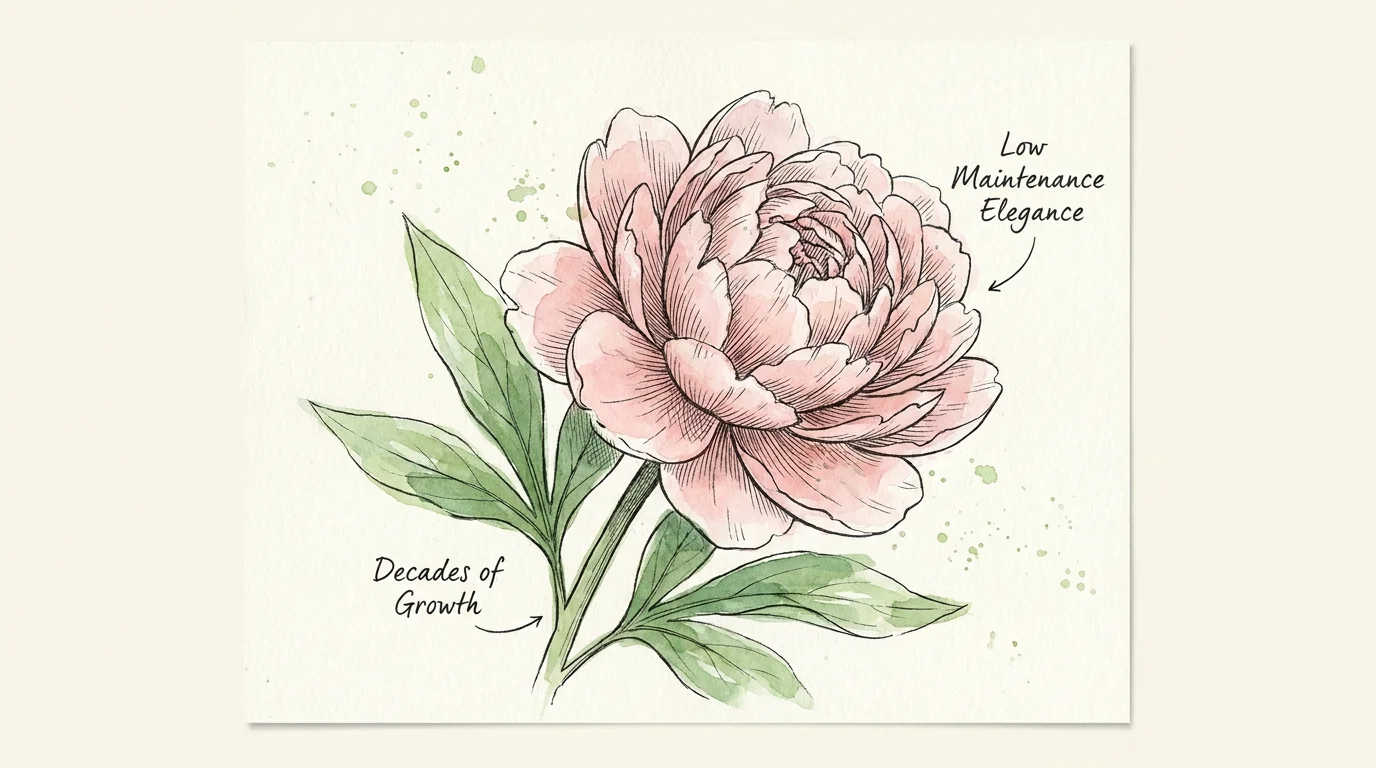
Outdoor Strategy #4: Peonies for Long-Lived Spring Blooms
Many novice gardeners mistakenly believe that spectacular, dinner-plate-sized flowers require intensive care, but peonies completely shatter that persistent myth.
A properly planted peony can live and bloom in the exact same spot for over a century, providing generations of breathtaking beauty for just a few minutes of initial planting effort. These herbaceous perennials flourish in Zones 3 through 8, utilizing the winter chill to produce their legendary, highly fragrant blossoms.
The secret to cultivating a hands-off peony lies entirely in the initial planting phase; you must set the roots shallowly, ensuring the growing eyes sit no more than two inches below the soil surface.
Once established in the earth, peonies deeply resent being moved and require absolutely no division, sparing you the heavy, back-breaking labor associated with managing other aggressive perennials.
Varieties like Sarah Bernhardt offer intoxicating fragrances and lush foliage that remains highly attractive long after the spring flowers naturally fade.


3 Responses
My snake plant in the hallway (with filtered sunlight is loosing leaves around the edges. What can I do?!
Hi there! Thanks for reaching out. 😊
If your snake plant is losing leaves around the edges, a few things could be causing it—even in filtered light. First, check your watering routine: snake plants usually prefer their soil to dry out completely between waterings, and too much moisture can lead to leaf damage or rot.
Also take a look at the hallway temperature—cold drafts from doors/windows or sudden temperature changes can stress the plant. If the edges look brown and crispy, low humidity or inconsistent watering could also be the culprit.
I’d recommend trimming off any damaged leaves, checking the roots for signs of rot (mushy/dark roots), and moving it slightly closer to brighter indirect light if your hallway is a bit too dim.
Snake plants are resilient, so with a few small adjustments, it should bounce back. Hope this helps—and feel free to share a photo if you’d like more specific advice!
How about any plants that hummingbirds may apprecite?!