
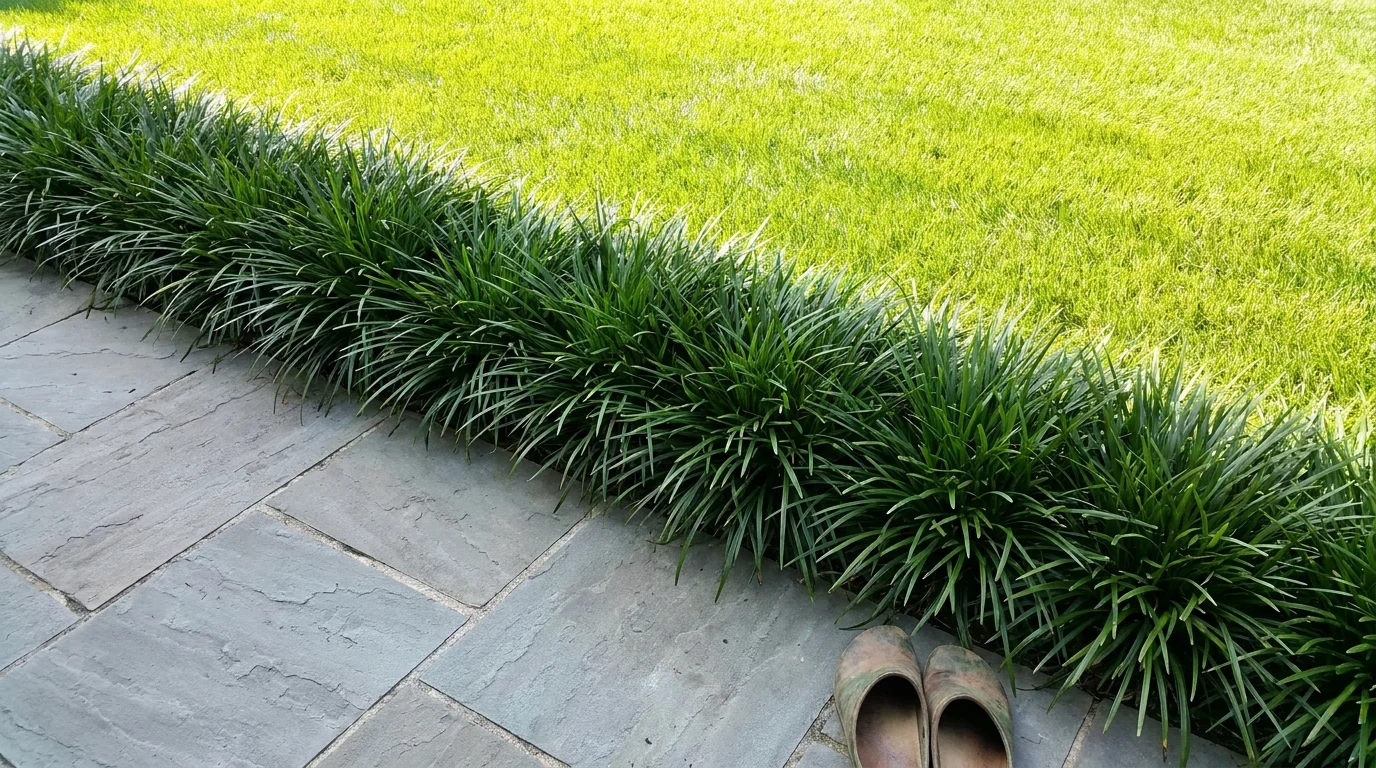
Outdoor Strategy #9: Liriope for Clean Border Edging
Clean, beautifully defined edges instantly elevate the appearance of a yard, but maintaining those crisp lines with a heavy gasoline or battery-powered string trimmer severely strains the lower back and shoulders.
Liriope, commonly known as lilyturf or monkey grass, offers an elegant, biological solution to this recurring physical problem. This tough, grass-like perennial forms dense, impenetrable clumps that effectively create a permanent living boundary between your manicured lawn and your mulched garden beds.
Reaching only twelve to fifteen inches tall, Liriope physically blocks creeping turfgrass from invading your delicate planting areas. In late summer, it produces charming spikes of purple or white flowers, followed closely by clusters of dark black berries in the autumn.
It tolerates deep shade, baking full sun, and practically everything in between, thriving reliably in Zones 4 through 10. The only maintenance required involves cutting the old, tired foliage down to the ground once a year in late winter before the vibrant new growth emerges, a task easily managed with lightweight grass shears.


3 Responses
My snake plant in the hallway (with filtered sunlight is loosing leaves around the edges. What can I do?!
Hi there! Thanks for reaching out. 😊
If your snake plant is losing leaves around the edges, a few things could be causing it—even in filtered light. First, check your watering routine: snake plants usually prefer their soil to dry out completely between waterings, and too much moisture can lead to leaf damage or rot.
Also take a look at the hallway temperature—cold drafts from doors/windows or sudden temperature changes can stress the plant. If the edges look brown and crispy, low humidity or inconsistent watering could also be the culprit.
I’d recommend trimming off any damaged leaves, checking the roots for signs of rot (mushy/dark roots), and moving it slightly closer to brighter indirect light if your hallway is a bit too dim.
Snake plants are resilient, so with a few small adjustments, it should bounce back. Hope this helps—and feel free to share a photo if you’d like more specific advice!
How about any plants that hummingbirds may apprecite?!