
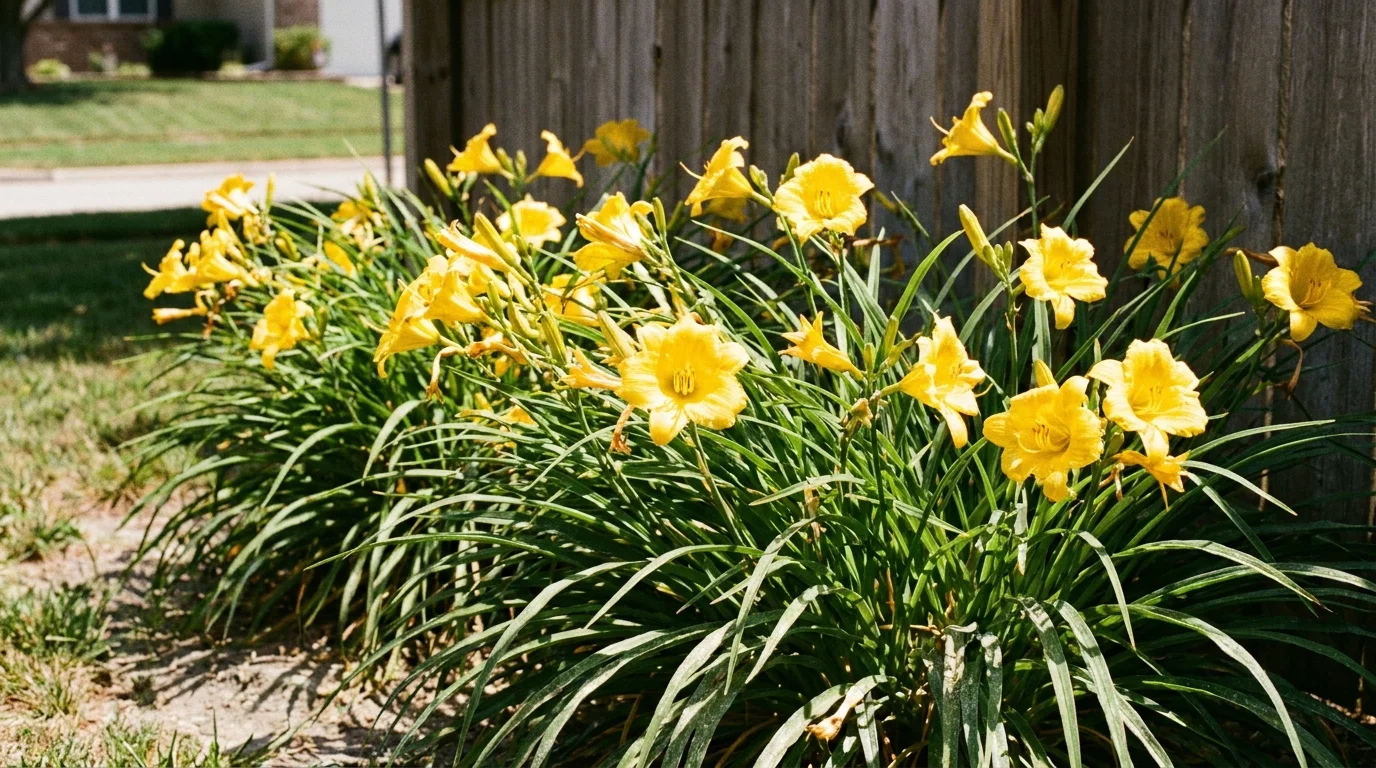
Outdoor Strategy #2: Daylilies for Durable Summer Color
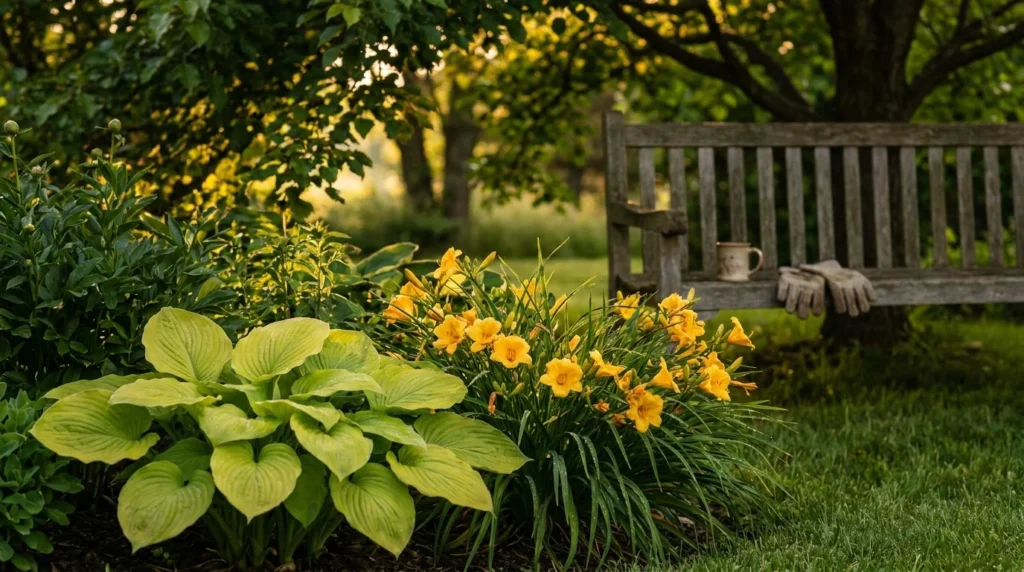
Daylilies—specifically members of the Hemerocallis genus—are frequently dubbed the perfect perennial for their astonishing durability and vibrant output. These rugged plants establish thick, tuberous root systems that store water highly efficiently, making them exceptionally drought-tolerant once they settle into your landscape.
If your goal involves eliminating the daily chore of dragging heavy hoses across the grass, daylilies offer a spectacular, colorful solution.
Flourishing in Zones 3 through 9, daylilies tolerate a massive spectrum of soil conditions, ranging from dense, heavy clay to fast-draining sandy loam. Cultivars like Stella de Oro or Happy Returns provide continuous waves of golden-yellow blossoms from early summer through the onset of fall.
The arching, grass-like foliage forms a neat mound that serves as an excellent border along walkways or retaining walls, softening hardscape elements effortlessly.
When planted in large, sweeping drifts, daylilies choke out competing weeds and stabilize sloping ground against soil erosion, effectively turning difficult terrain into a self-sustaining floral display.

3 Responses
My snake plant in the hallway (with filtered sunlight is loosing leaves around the edges. What can I do?!
Hi there! Thanks for reaching out. 😊
If your snake plant is losing leaves around the edges, a few things could be causing it—even in filtered light. First, check your watering routine: snake plants usually prefer their soil to dry out completely between waterings, and too much moisture can lead to leaf damage or rot.
Also take a look at the hallway temperature—cold drafts from doors/windows or sudden temperature changes can stress the plant. If the edges look brown and crispy, low humidity or inconsistent watering could also be the culprit.
I’d recommend trimming off any damaged leaves, checking the roots for signs of rot (mushy/dark roots), and moving it slightly closer to brighter indirect light if your hallway is a bit too dim.
Snake plants are resilient, so with a few small adjustments, it should bounce back. Hope this helps—and feel free to share a photo if you’d like more specific advice!
How about any plants that hummingbirds may apprecite?!