
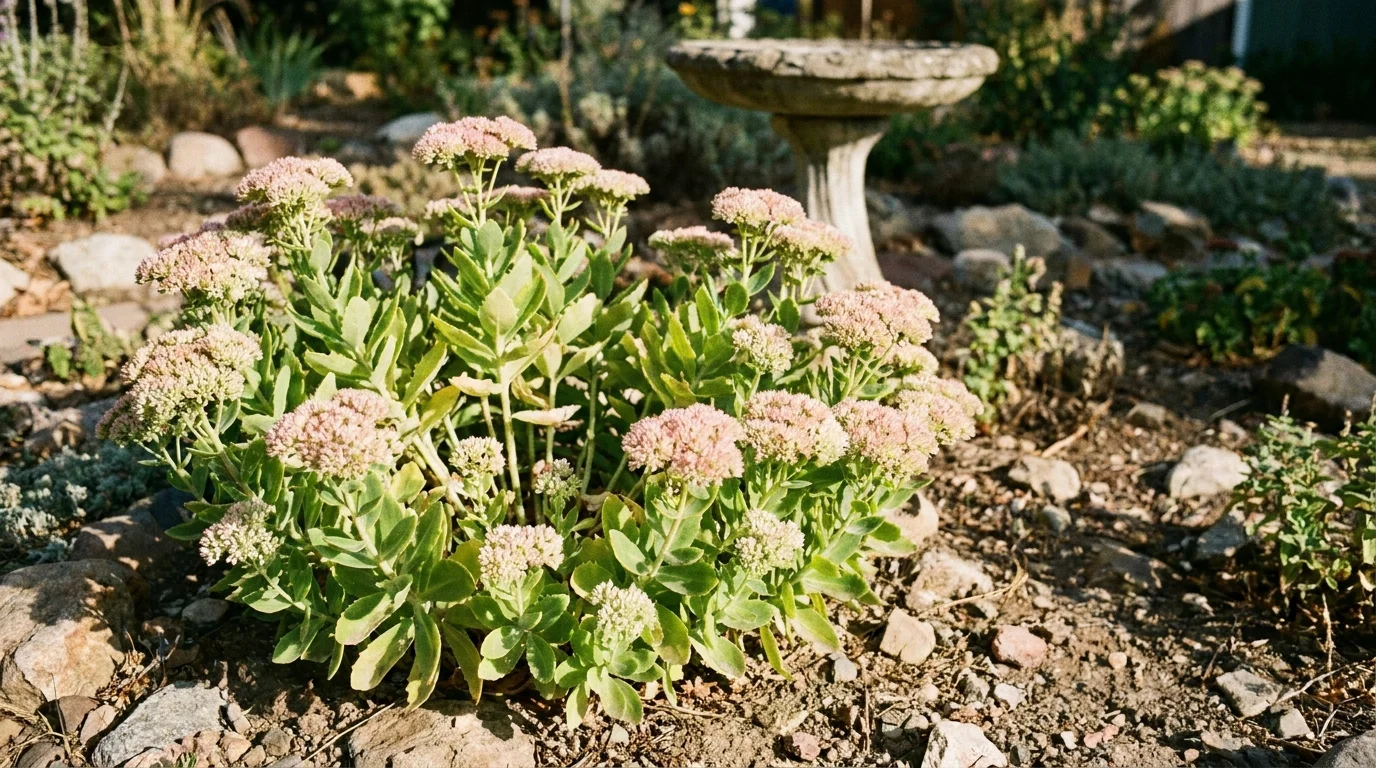
Outdoor Strategy #3: Sedum for Drought-Tolerant Textures
Upright sedums, commonly known as stonecrops, introduce fascinating architectural texture to your landscape without asking for supplementary irrigation or labor-intensive fertilization.
As natural succulents, sedums store precious moisture within their thick, fleshy leaves; this brilliant biological adaptation allows them to thrive gracefully during extended periods of intense summer heat and prolonged drought.
The acclaimed Autumn Joy stands out as a premier variety for those seeking brilliant late-season color. It emerges in early spring resembling a tight cluster of pale green broccoli, slowly expanding into sturdy, two-foot-tall stems as the season progresses.
By late summer, massive flower heads develop, turning from a subtle pale pink to a deep, rusty brick red as autumn approaches. Because their stems are structurally robust, these plants never require staking, tying, or artificial support rings.
You can leave the dried flower heads standing throughout the winter months to catch the snow, requiring only a quick cutback in early spring to prepare them for another effortless growing cycle.


3 Responses
My snake plant in the hallway (with filtered sunlight is loosing leaves around the edges. What can I do?!
Hi there! Thanks for reaching out. 😊
If your snake plant is losing leaves around the edges, a few things could be causing it—even in filtered light. First, check your watering routine: snake plants usually prefer their soil to dry out completely between waterings, and too much moisture can lead to leaf damage or rot.
Also take a look at the hallway temperature—cold drafts from doors/windows or sudden temperature changes can stress the plant. If the edges look brown and crispy, low humidity or inconsistent watering could also be the culprit.
I’d recommend trimming off any damaged leaves, checking the roots for signs of rot (mushy/dark roots), and moving it slightly closer to brighter indirect light if your hallway is a bit too dim.
Snake plants are resilient, so with a few small adjustments, it should bounce back. Hope this helps—and feel free to share a photo if you’d like more specific advice!
How about any plants that hummingbirds may apprecite?!