
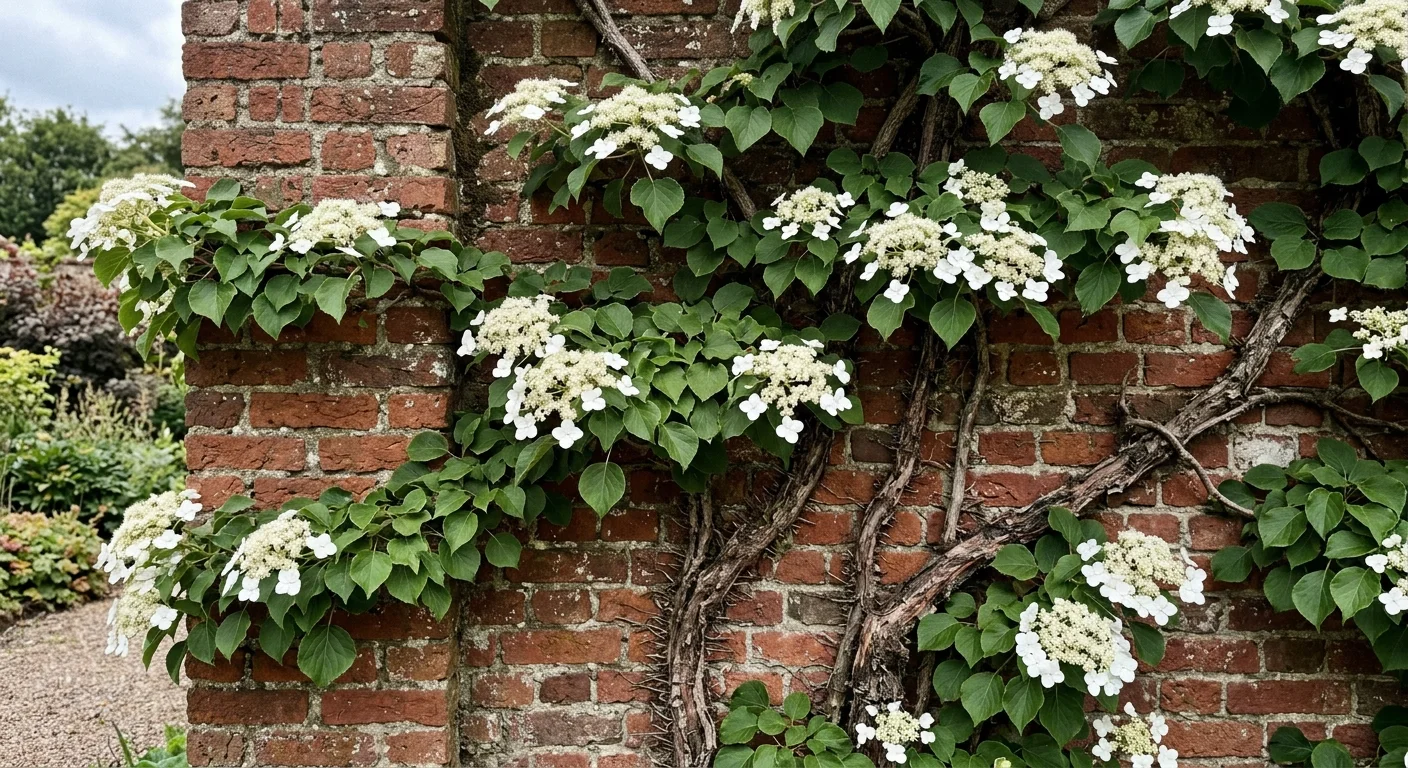
Tip #7: Climbing Hydrangea (Hydrangea anomala subsp. petiolaris)
Shaded fence lines often present a landscaping challenge, yet climbing hydrangea thrives in north-facing or heavily shaded exposures where other blooming climbers struggle. This deciduous giant features rich green, heart-shaped leaves and produces massive, eight-inch lacecap flower clusters consisting of small fertile blooms surrounded by showy, creamy-white sterile bracts in early summer. Unlike twining vines, climbing hydrangea attaches itself directly to rough surfaces—such as weathered wooden fences, masonry walls, or sturdy brick supports—using specialized aerial rootlets (holdfasts) that grip without requiring synthetic ties or wire mesh. While it establishes somewhat slowly during its first two years, it gains impressive vigor as its root structure matures, eventually reaching heights of 30 to 50 feet if unpruned. In winter, after the crisp autumn leaves drop, the plant reveals attractive reddish-brown peeling bark that adds subtle architectural interest to your winter garden landscape.

One Response
Where, on line, can I puchase these vines