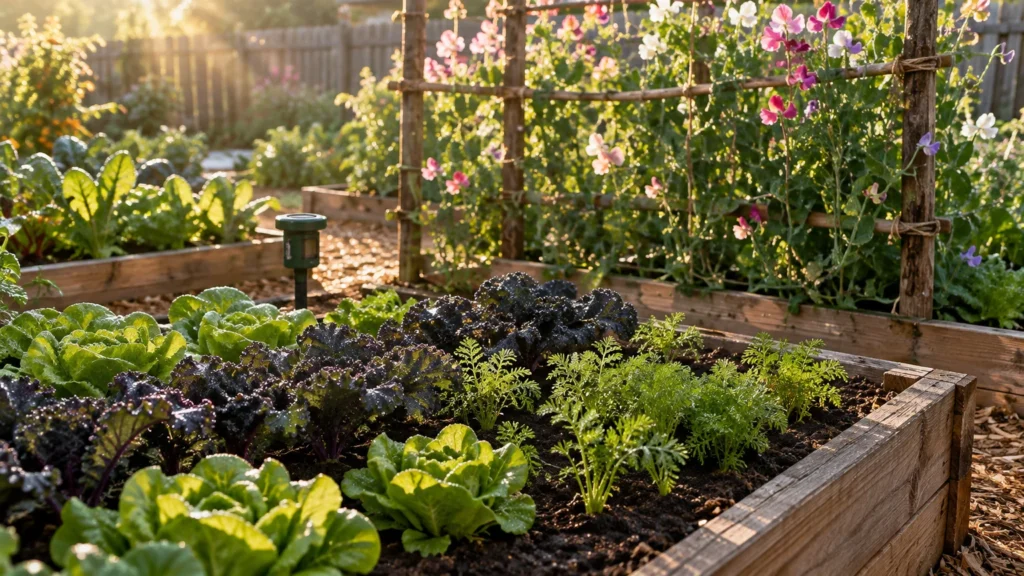
You can reclaim your weekends by replacing thirsty turf with resilient ground covers instead of grass. Low-maintenance ground covers reduce chore time and fuel consumption while providing dense, vibrant greenery across your property.
Traditional turf requires weekly trimming, heavy fertilizing, and thousands of gallons of supplemental water every summer. Selecting dedicated lawn alternatives allows you to mow once a year without sacrificing curb appeal or soil health.
These sturdy ground cover plants crowd out persistent weeds, conserve vital moisture, and handle moderate foot traffic effortlessly. Explore ten exceptional varieties that require cutting only once a season to thrive beautifully.
Tip #1: Fine Fescue Blends
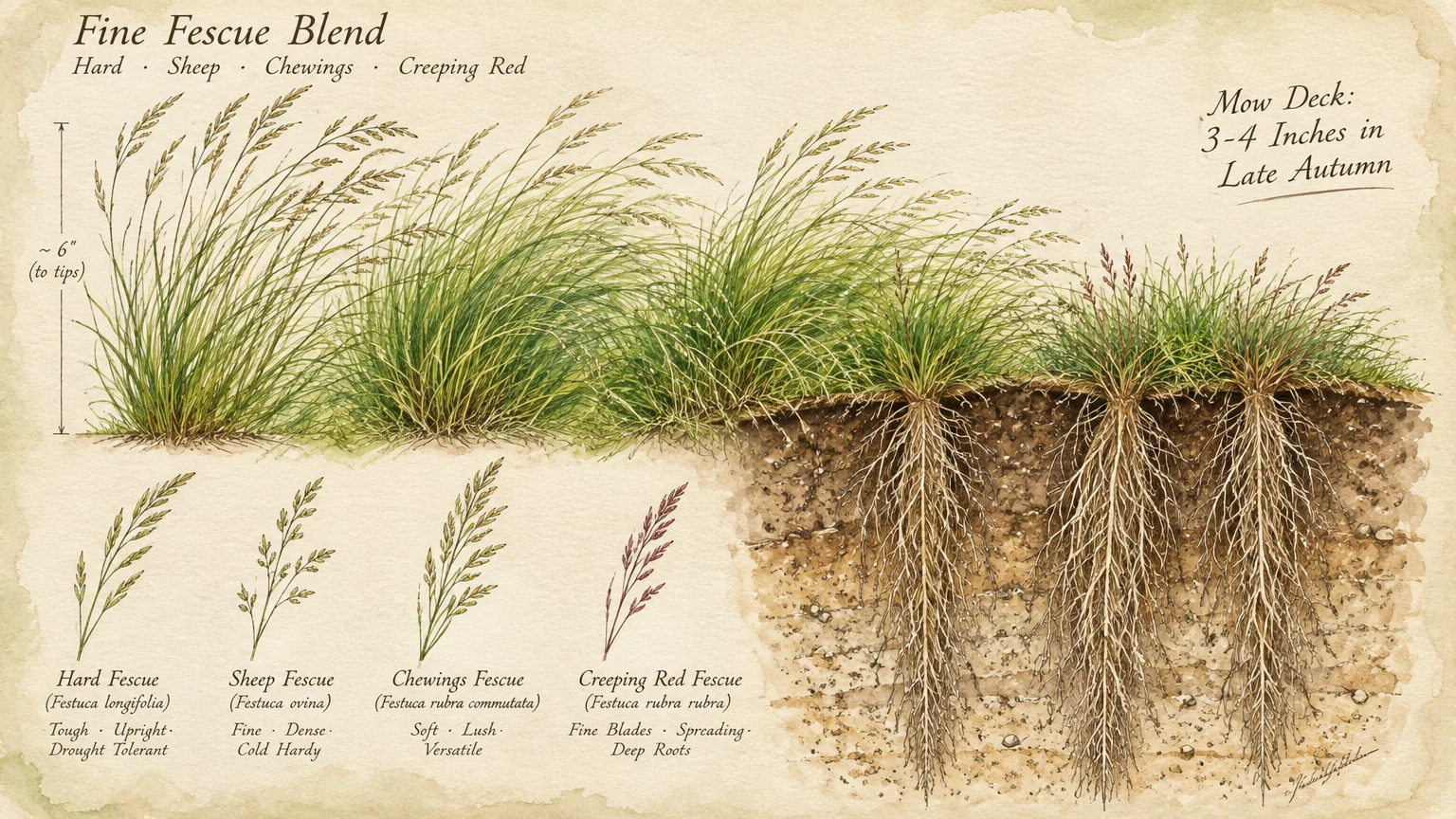
Fine fescue mixes combine hard, sheep, chewings, and creeping red fescues into an adaptable turf alternative. These cool-season grasses thrive together across USDA plant hardiness zones 3 through 8.
You will appreciate how gracefully fine fescues grow; they reach roughly six inches tall before gently flowing over like waves. This soft habit creates an enchanting, meadow-like appearance across front yards and gentle hillsides.
Compared to conventional turf, fine fescues require roughly 70 percent less water and zero supplemental nitrogen once established. Their deep root systems anchor soil firmly, preventing costly topsoil erosion on slopes.
Establish your stand by broadcasting four to five pounds of seed per 1,000 square feet in early autumn. Keep the soil evenly moist for three weeks until germination occurs.
You only need to mow once a year in late spring or late autumn. Set your mower deck to three or four inches to trim dried seed heads and tidy the canopy.
Letting the fine blades slump naturally between seasonal mowings produces a charming, soft carpet that suppresses weed seedlings without chemicals.
Tip #2: Pennsylvania Sedge (Carex pensylvanica)
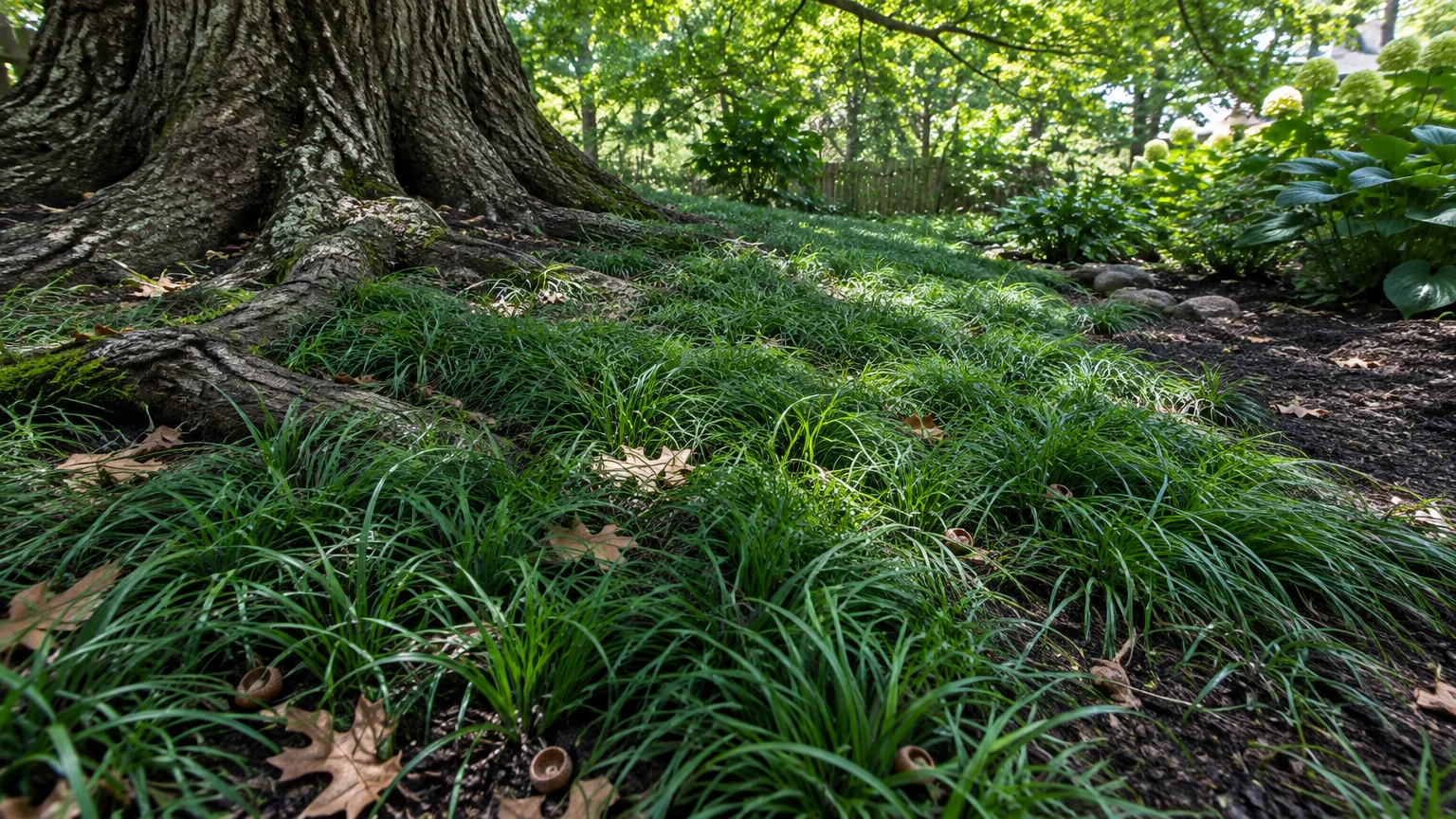
Pennsylvania sedge is a semi-evergreen native perennial that forms soft, lush carpets under mature shade trees. It naturally flourishes in woodland clearings across USDA zones 3 through 8.
While standard lawn grasses thin out in low-light environments, this resilient native plant thrives in dry, shaded conditions. It spreads gently via slender underground rhizomes to establish a continuous green sod.
Its fountain-like blades reach eight inches tall, gracefully arching downward to create a six-inch-high undulating cover. The fine foliage crowds out common woodland weeds without invading adjacent flower borders.
Plant nursery plugs eight to twelve inches apart in well-drained, acidic soil enriched with organic compost. Water the new installation once weekly during its first summer to foster root expansion.
Maintain this low-maintenance lawn alternative with a single annual haircut in late winter. Mowing to three inches removes winter-damaged tips and stimulates clean, bright emerald blades in early spring.
This native sedge requires zero supplemental fertilizer, making it an exceptionally sustainable ground cover for low-fertility garden patches.
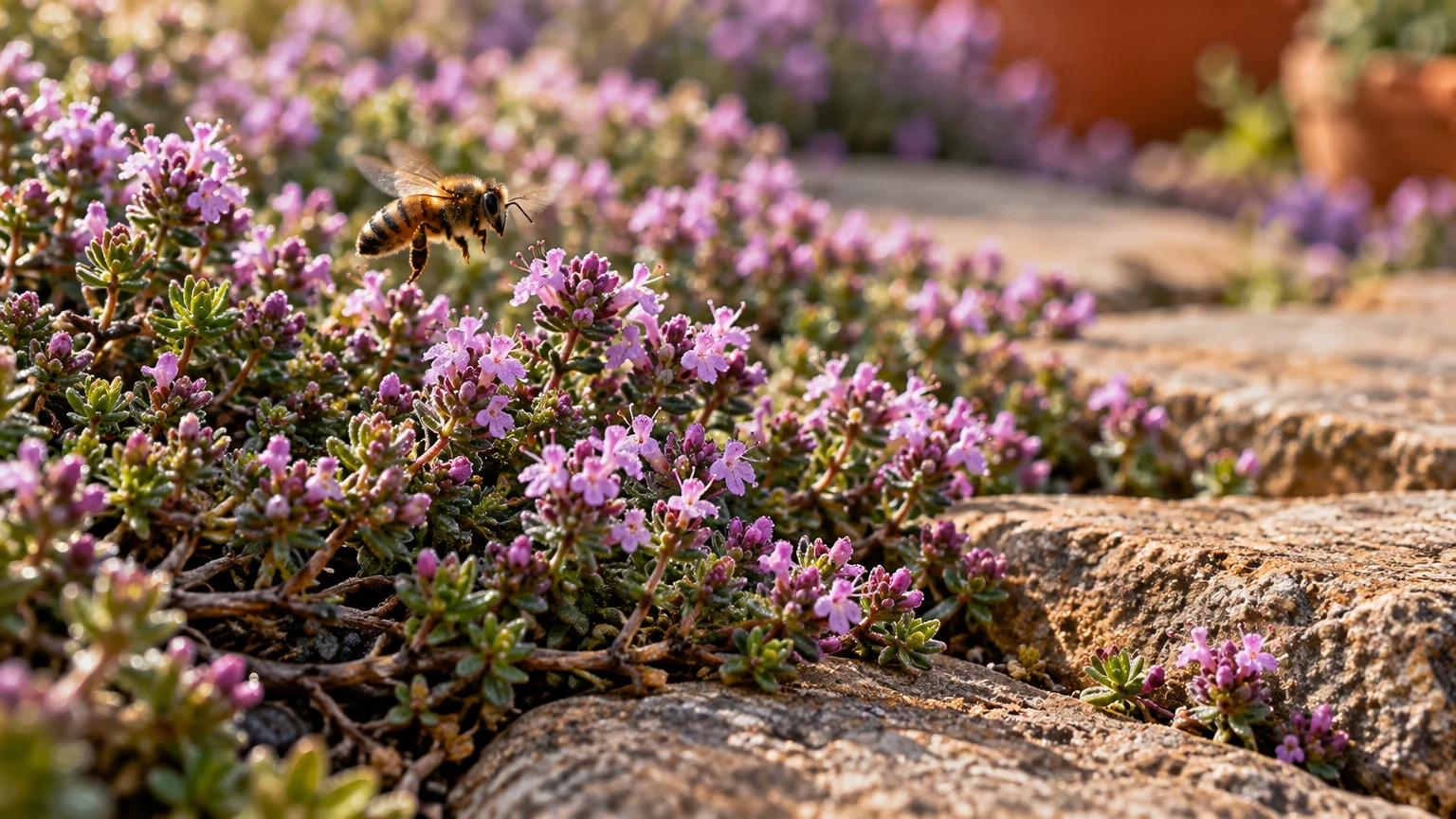
Tip #3: Creeping Thyme (Thymus serpyllum)
Creeping thyme serves as an aromatic substitute for conventional turf in sunny, dry outdoor spaces. This woody perennial forms dense, wiry mats that stand two to three inches tall in USDA zones 4 through 9.
During June and July, tiny pink and purple blossoms blanket the foliage in dazzling color. Walking across the plants releases a soothing herbal fragrance that repels deer and rabbits naturally.
This durable herb tolerates poor, gravelly soils and thrives in prolonged summer heat without flinching. It withstands moderate foot traffic effortlessly, making it an ideal choice along flagstone pathways or sunny slopes.
Space nursery plugs six to nine inches apart in gritty, well-draining soil with a neutral pH. Avoid heavy clay or damp hollows, as stagnant moisture causes root rot.
When flowering concludes in late summer, mow your patch once with the blades set at two inches. This single pruning strips away faded blossoms, discourages woody stem development, and tightens the foliage.
The dense intertwining stems form an evergreen matrix that locks down loose gravel and sheds excess rain easily.
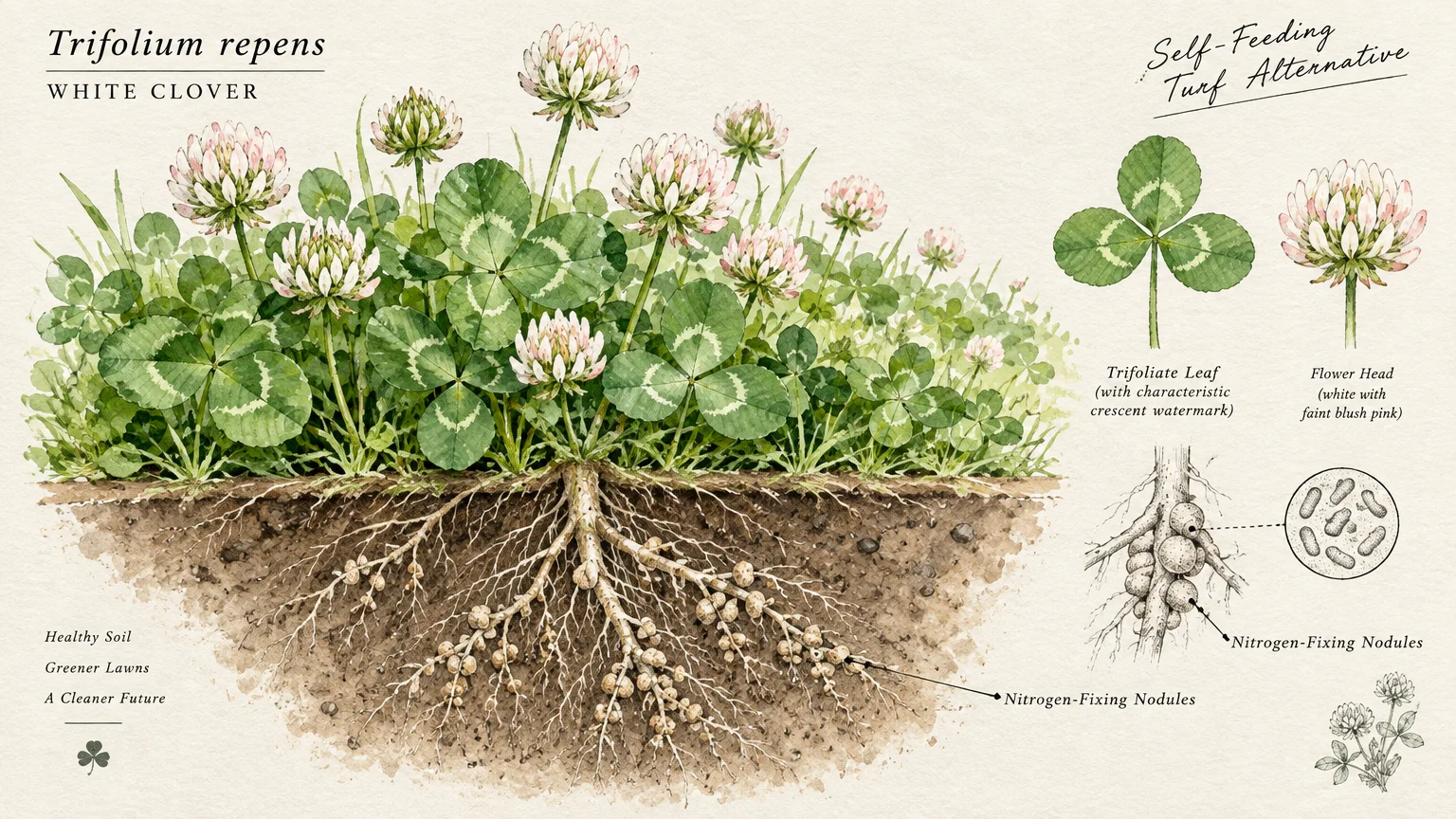
Tip #4: White Clover (Trifolium repens)
White clover represents one of the most effective, self-sustaining lawn alternatives for residential yards. This hardy perennial legume flourishes across USDA zones 3 through 10, staying emerald green through hot summers.
The secret behind clover lies within its root nodules, where beneficial bacteria capture atmospheric nitrogen. The plant fertilizes itself and nearby companion species, eliminating the need for expensive synthetic fertilizers.
Clover roots reach depths of twelve to eighteen inches, pulling moisture from deep beneath compacted soils. Its broad, three-lobed leaves shade the ground surface, drastically reducing weed seed germination.
Sow seed in early spring at a rate of two to four ounces per 1,000 square feet. Mix the tiny seeds with dry sand or compost to ensure uniform distribution over bare soil.
You only need to mow once a year in late summer after the white blossoms brown. Trimming at three inches cleans away spent flowers and evenly redistributes matured seed across the lawn.
Because clover remains cool underfoot and resists pet urine discoloration, it provides an exceptionally family-friendly outdoor surface.
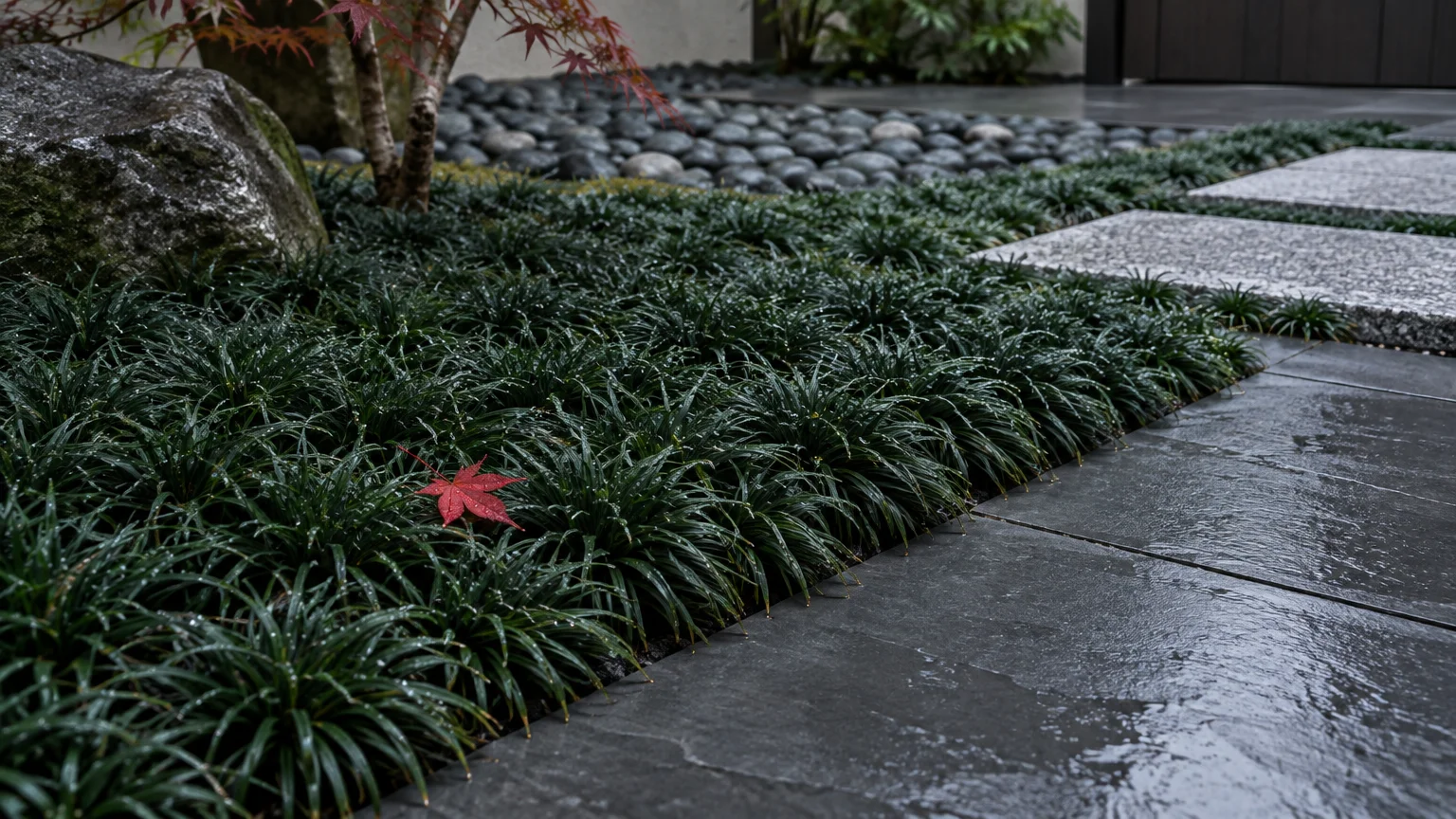
Tip #5: Dwarf Mondo Grass (Ophiopogon japonicus ‘Nana’)
Dwarf mondo grass is an evergreen perennial that forms exceptionally dense, dark green swaths of ribbony foliage. It excels in USDA zones 6 through 10, especially under the canopy of deep shade.
Because mature clumps reach a maximum height of just two to four inches, it practically eliminates regular lawn chores. It creates a refined, carpet-like appearance that rivals fine manicured turf.
The root network of dwarf mondo grass produces thick tuberous stolons that knit together beneath the soil. This dense subterranean barrier chokes out crabgrass, dandelions, and other stubborn garden invaders.
Install divisions or nursery four-packs four to six inches apart in rich, slightly acidic soil. Maintain consistent moisture during the first year while the root systems anchor themselves.
Run your mower over the patch once in late winter before the spring flush begins. Set the mower deck to its highest level to clip aged, weather-worn foliage without damaging new crown shoots.
Once established, dwarf mondo grass shrugs off salt spray, deer browsing, and short periods of seasonal drought with ease.
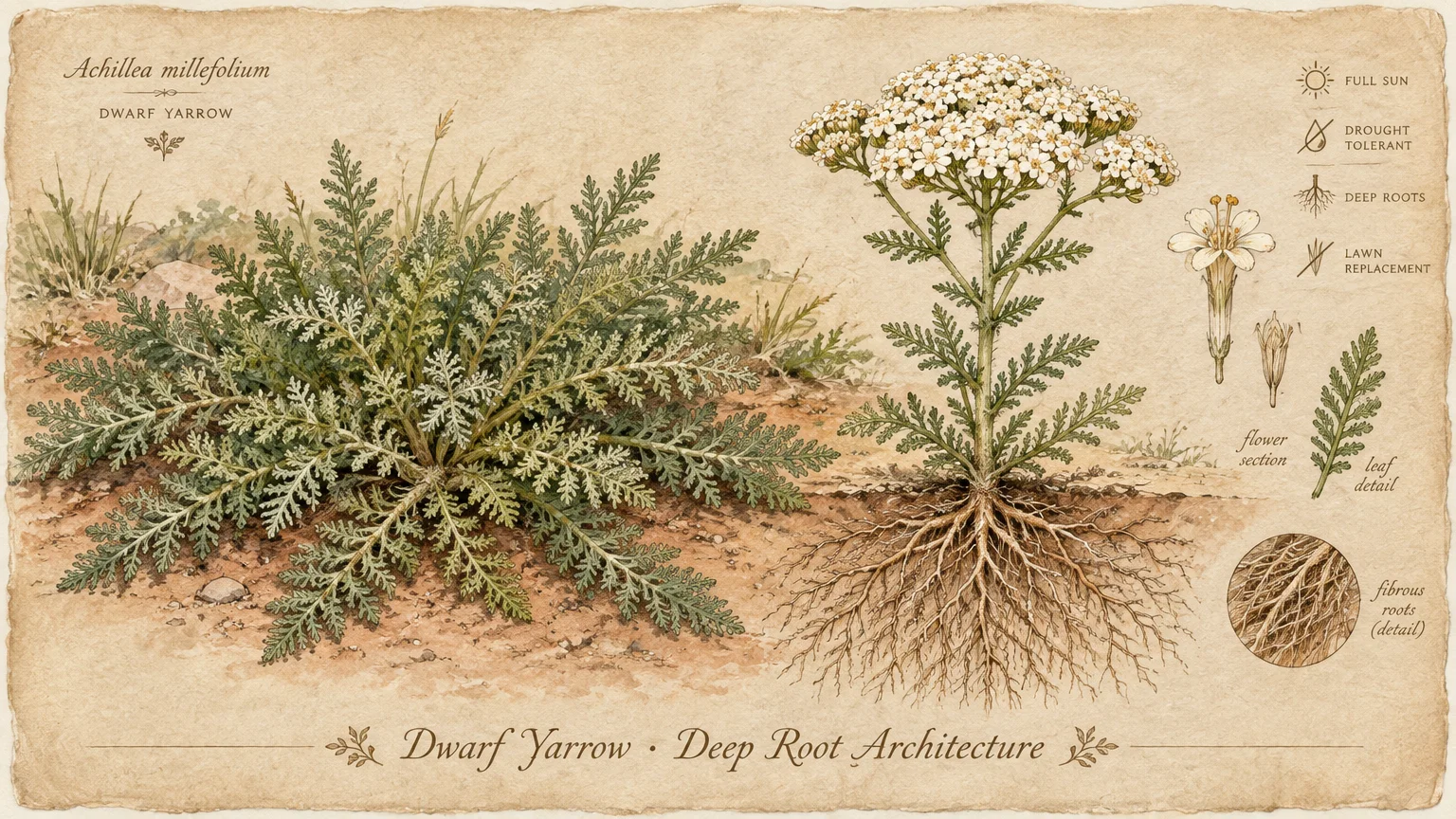
Tip #6: Dwarf Yarrow (Achillea millefolium)
Dwarf yarrow transforms open, sun-drenched spaces into drought-resistant, fern-like lawns. Hardy in USDA zones 3 through 9, this North American native withstands intense heat, high winds, and rocky terrain.
Its feathery green foliage stays remarkably low when walked upon, forming an indestructible turf. In university field trials, dwarf yarrow lawns reduced irrigation requirements by more than sixty percent compared to turfgrass.
The extensive underground rhizome network binds loose soil particles tightly, preventing erosion on steep banks. In addition, its tiny roots mine deep minerals, continually improving degraded garden soils.
Broadcast seed at one pound per 1,000 square feet in late spring or autumn. Alternatively, install container plugs twelve inches apart in lean, well-draining garden beds.
Mow once a year in late autumn using a three-inch cutting height. This solitary mowing eliminates dry flower stalks and prompts the crowns to produce dense, low-growing basal leaves before winter.
The soft gray-green foliage creates a delicate texture across large open expanses while requiring minimal ongoing attention.
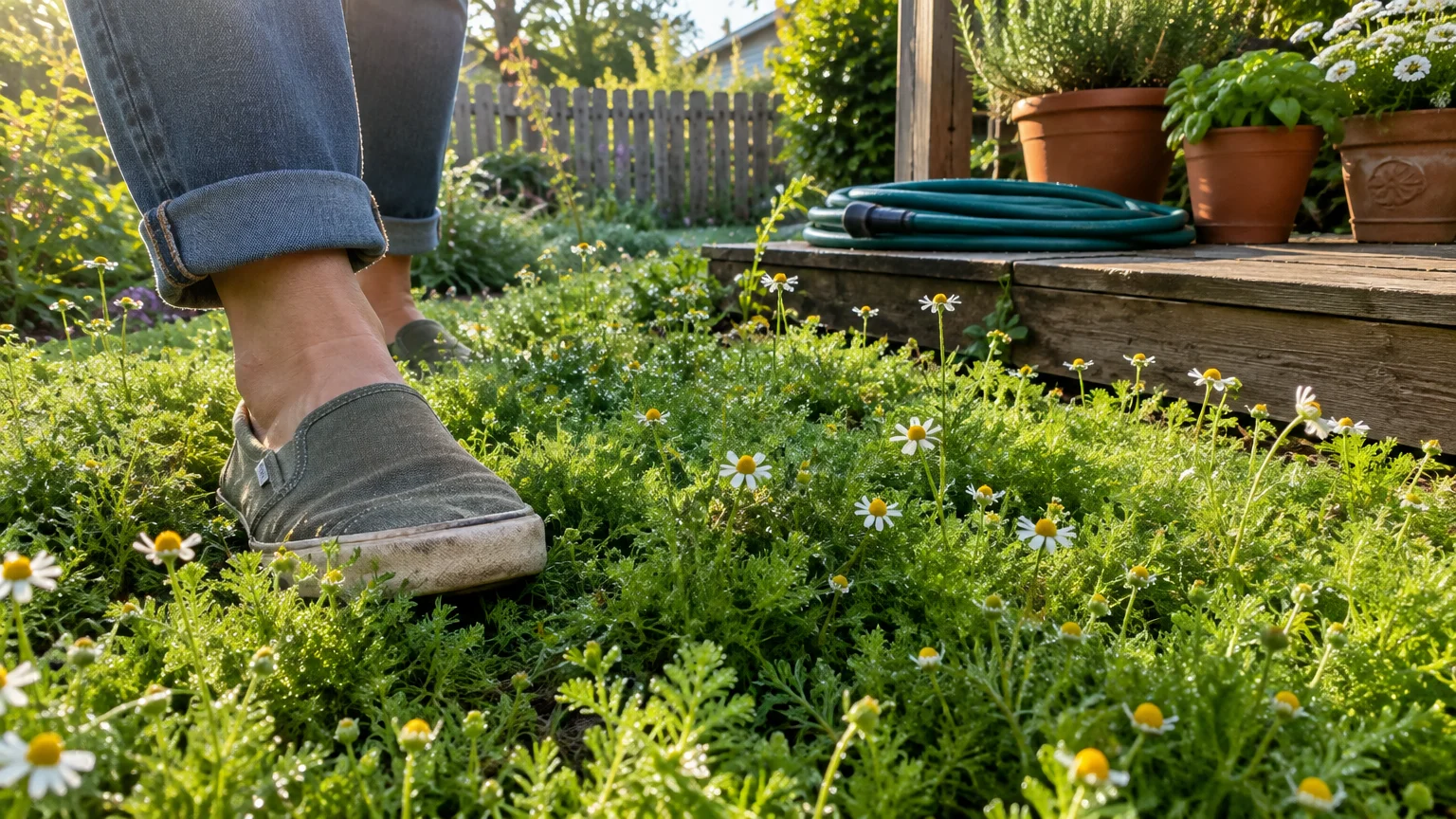
Tip #7: Roman Chamomile (Chamaemelum nobile)
Roman chamomile provides a delightful, aromatic lawn alternative that fills the garden with a sweet apple scent. This evergreen perennial thrives in USDA zones 4 through 9 when planted in full sunshine.
Reaching three to six inches in height, its finely divided leaves weave a springy, cushion-like living carpet. Small, daisy-like blossoms appear throughout midsummer, attracting essential pollinators to your outdoor living space.
Chamomile thrives in sandy, well-drained loams and resists drought far better than typical lawn grasses. It handles light to moderate foot traffic, making it popular around patios, benches, and garden paths.
Space rooted runners six to eight inches apart in prepared soil free of weeds. Press them firmly into the soil surface and irrigate lightly until vigorous new growth emerges.
Mow once a season in late summer after the main floral display concludes. Setting your cutting deck to two inches removes spent blooms and encourages a compact, tightly woven green mat.
The plant forms a buoyant green surface that remains pleasantly cool even beneath relentless midsummer sunshine.
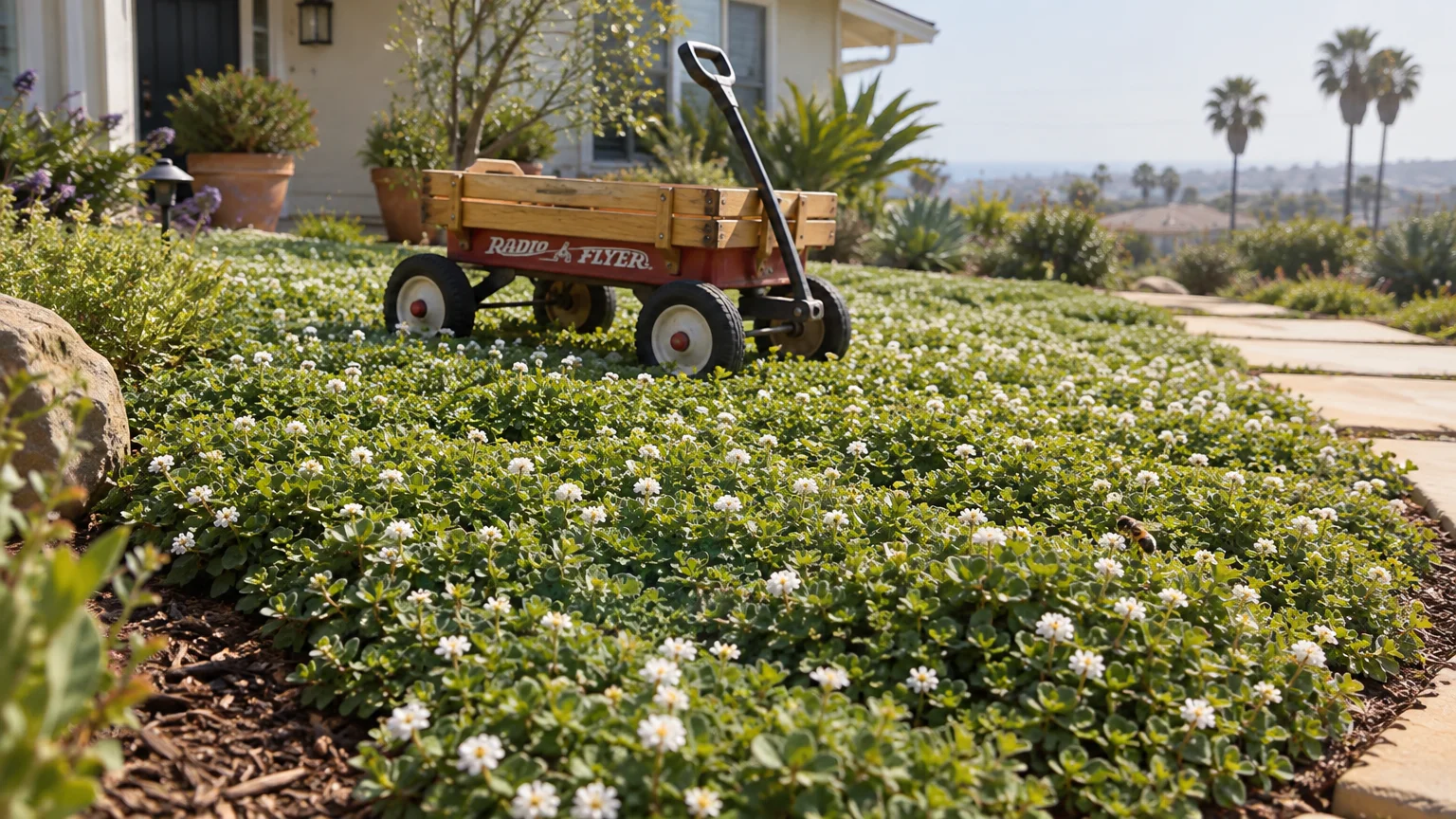
Tip #8: Kurapia (Phyla nodiflora)
Kurapia is a revolutionary, non-invasive ground cover engineered specifically for extreme water efficiency. It flourishes in USDA zones 7 through 11, tolerating severe heat, salinity, and poor drainage.
Extensive horticultural testing confirms that Kurapia thrives on up to eighty percent less water than cool-season turfgrass. Its aggressive root structure plunges ten feet into the subsoil to access deep moisture reserves.
Kurapia produces short runners that create an impenetrable carpet roughly one to three inches tall. From May through October, it yields countless miniature white blossoms that support foraging honeybees.
Plant plugs fifteen to eighteen inches apart in early spring or early summer. Under warm conditions, the plants spread rapidly, forming a solid, weed-suppressing carpet within sixty to ninety days.
Mow once a year in late autumn to reset the canopy height to two inches. This single seasonal pass removes residual flower stems and prevents excessive thatch buildup before the winter rest.
Its remarkable tolerance for poor municipal water and reclaimed irrigation makes it a premier choice for arid regions.
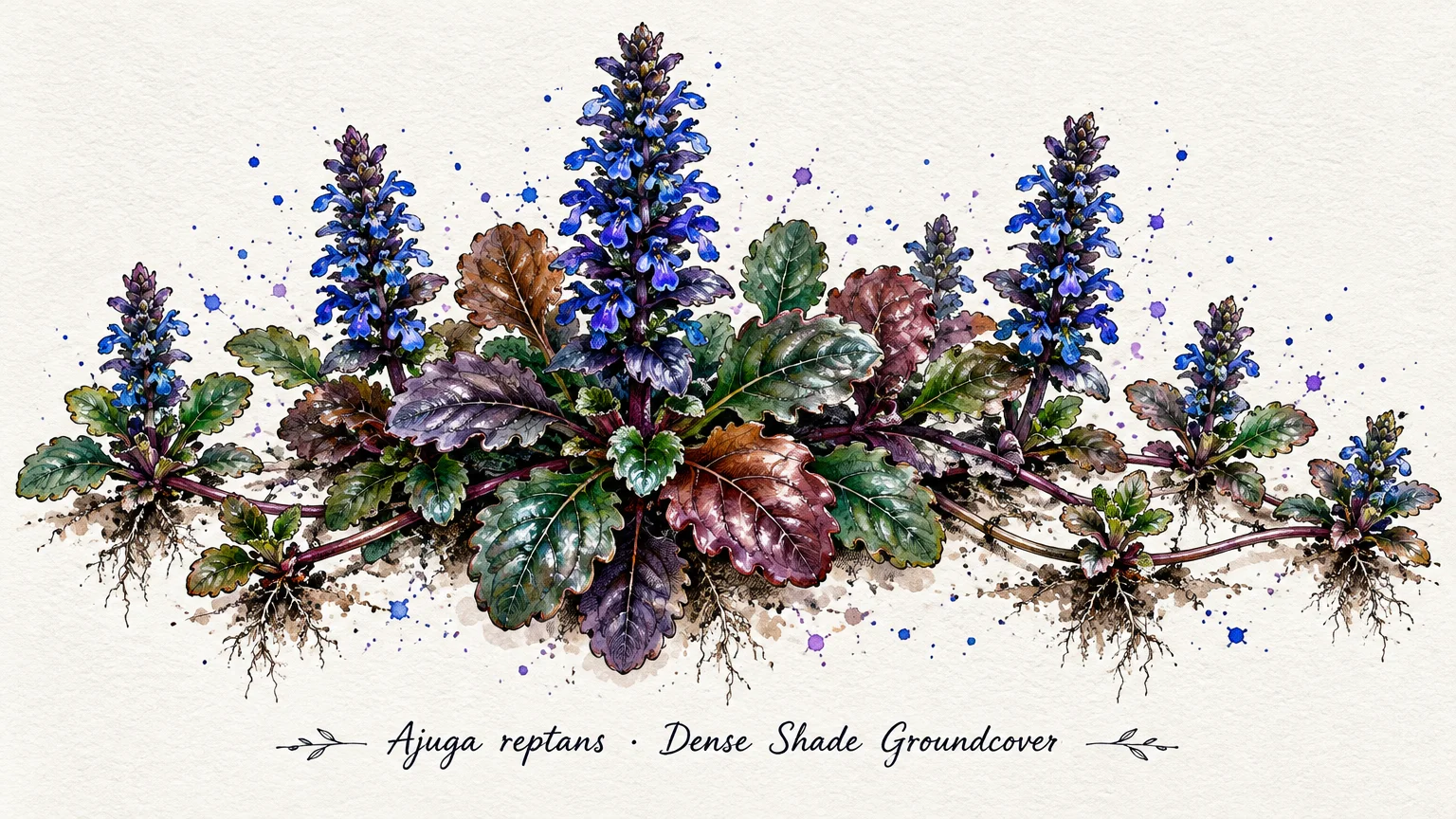
Tip #9: Bugleweed (Ajuga reptans)
Bugleweed forms a dense, glossy ground cover that effortlessly outcompetes weeds in damp, shaded settings. It performs reliably across USDA hardiness zones 3 through 10, tolerating poor, heavy soils.
With striking leaf colors ranging from deep bronze to purplish chocolate, this perennial delivers high visual impact. In spring, upright spires of sapphire-blue flowers rise four to six inches above the foliage.
Spreading via vigorous surface runners called stolons, bugleweed quickly knits together to stabilize sloped soils. It forms a living mulch that retains soil moisture and minimizes rainfall runoff during heavy storms.
Space starter plugs ten to twelve inches apart in partial to full shade. Water consistently during dry periods until the plants begin spreading aggressively across the bare soil.
Mow your bugleweed patch once in late spring immediately after flowering ends. Setting your mower blade at three inches neatly shears off dead flower spikes, rejuvenating foliage for the entire summer.
The dense mat blankets the ground completely, protecting delicate tree roots from extreme temperature swings throughout changing seasons.
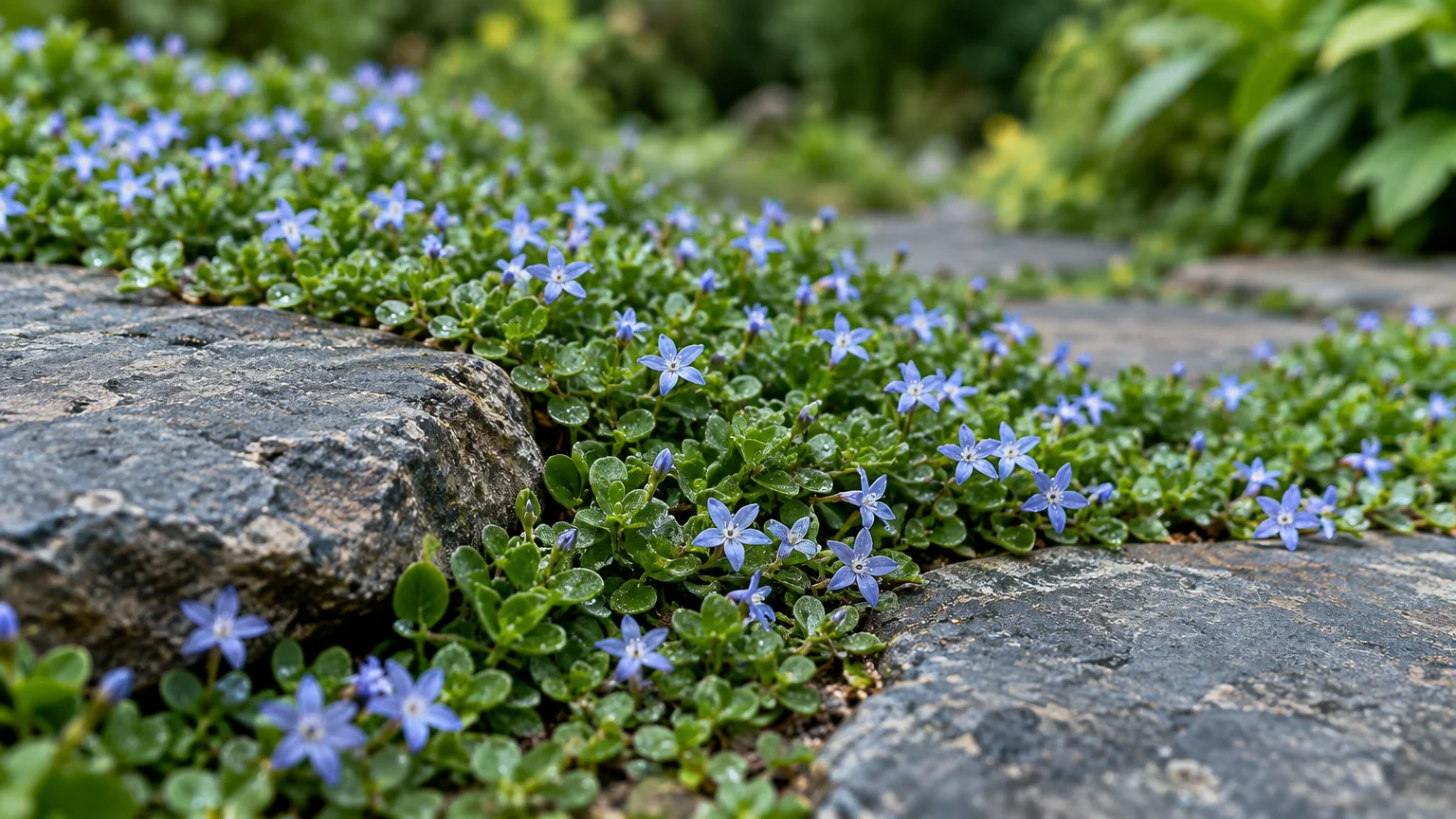
Tip #10: Blue Star Creeper (Isotoma fluviatilis)
Blue star creeper creates a flat, durable carpet of tiny green leaves punctuated by pale blue flowers. It flourishes in USDA zones 5 through 9, adapting to both sun and partial shade.
Rising barely two to three inches tall, this perennial takes moderate to heavy foot traffic with remarkable resilience. It stays vibrant through summer heat and maintains its semi-evergreen foliage through mild winters.
The plant spreads rapidly by rooting at every stem node that touches the soil surface. This self-rooting habit quickly seals gaps where invasive lawn weeds might otherwise establish.
Plant cell plugs six to eight inches apart in moist, well-draining garden soil. Provide moderate moisture during its initial month to encourage the stems to root firmly into the surrounding ground.
Mow the planting once in early spring before the first flower buds open. Trimming to two inches removes winter-damaged leaf tips and prompts an explosion of uniform blue blossoms.
Because it recovers quickly from foot traffic, this creeper works wonders between stepping stones, beside patios, and across play areas.
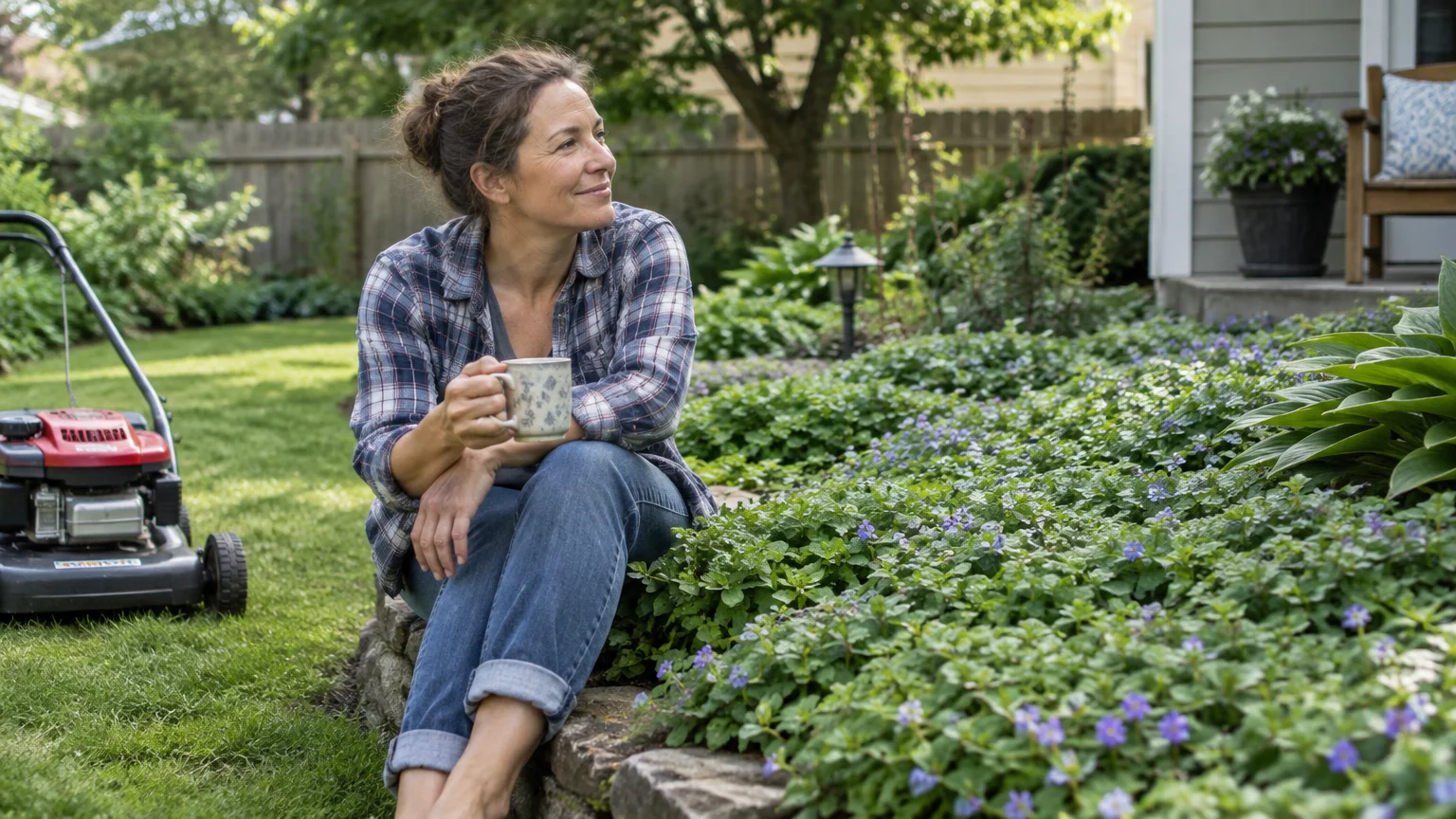
Putting It All Together: Enjoy Your Beautiful Garden
Transitioning to low-maintenance ground covers liberates you from the endless cycle of weekly lawn mowing. By selecting species suited to your microclimate, you save countless hours and hundreds of dollars annually.
These resilient living carpets dramatically cut household water consumption while building healthy, biologically active topsoil. Furthermore, their dense growth habit virtually eliminates the need for toxic synthetic herbicides.
You can easily mix several compatible varieties to accommodate sunny borders, shady tree canopies, and sloped terrain. Combining sedges, clovers, and flowering creepers transforms ordinary yards into biodiverse sanctuaries.
Take time to prepare your planting beds properly by removing existing weed roots and amending dry soils. A thorough initial preparation ensures rapid establishment and decades of trouble-free performance.
Replace noisy mowers and exhausting yard chores with lush, self-sustaining green ground covers instead of grass. Step back and savor your vibrant, climate-resilient landscape every season.
Your garden will reward you with rich textures, seasonal floral displays, and uninterrupted weekend leisure time.
Frequently Asked Questions
Can you walk on these ground covers instead of grass?
Yes, several varieties such as creeping thyme, Roman chamomile, and blue star creeper tolerate regular foot traffic. They cushion footsteps comfortably and release pleasant natural fragrances whenever you step on them.
For pathways with intense daily traffic, pair your ground covers with stepping stones or flagstone pavers. This simple design touch protects plant crowns while preserving a seamless, natural garden appearance.
What is the best time of year to mow once a year?
The ideal timing depends on the specific plant species you select for your landscape. Most flowering ground covers benefit from a single trim in late summer right after their blossoms fade.
Cool-season sedges and grasses prefer an annual shearing in late winter or early spring. This timely maintenance clears away winter foliage damage just before fresh spring shoots begin emerging.
How do you prevent weeds while ground covers establish?
Apply a two-inch layer of clean organic mulch around young plugs to suppress emerging weed seeds. The mulch preserves vital soil moisture and moderates root temperatures during hot summer days.
Hand-pull stray weeds diligently during the first full growing season. Once your ground cover plants knit together into a dense canopy, they will naturally outcompete prospective invaders.
Do ground cover plants require supplemental fertilizer?
Most low-maintenance ground covers actually perform best in lean, unfertilized soils. Excessive chemical nitrogen often causes weak, floppy growth and encourages aggressive weed competition.
Legumes like white clover produce their own nitrogen directly through natural root interactions. For most other species, an annual top-dressing of organic compost provides all the nutrition they need.
For region-specific advice, consult your local University Extension program (find yours via the USDA directory). For plant databases and inspiration, visit the Missouri Botanical Garden or the Royal Horticultural Society.
Disclaimer: This article provides general gardening advice. Always consider your specific climate, soil conditions, and local pests. Follow safety guidelines when using gardening tools and products.