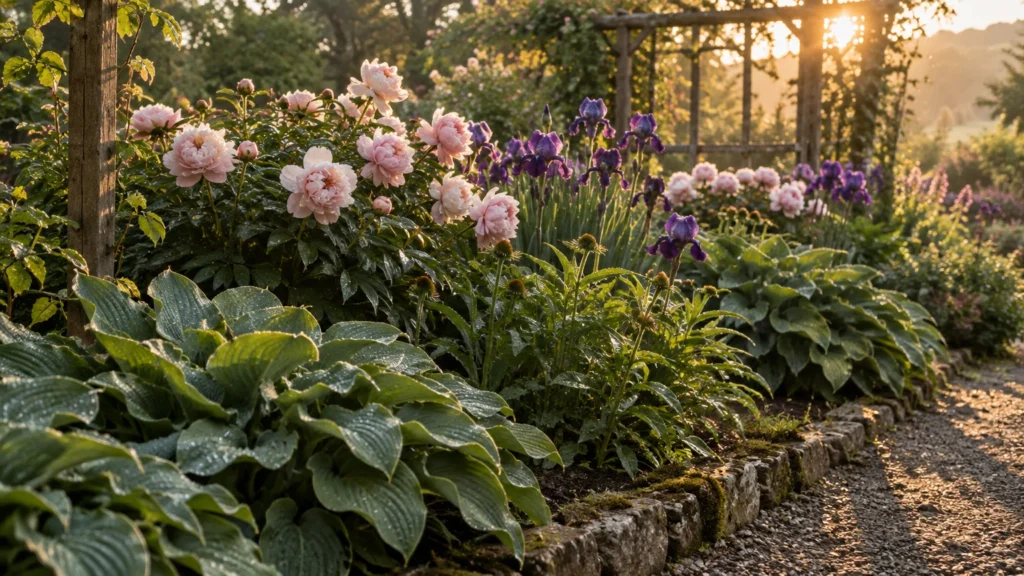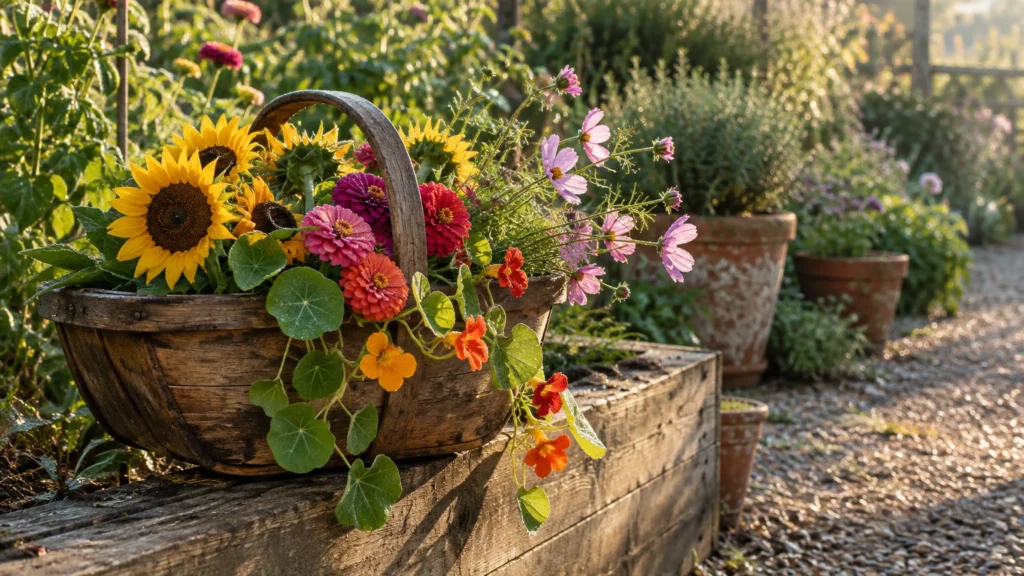
Mass planting transforms ordinary borders into breathtaking drifts of continuous color and natural beauty. When you group individual blossoms together, they support each other and create far greater visual drama than lonely standalone stems.
Clustering also shades garden soil to lock in moisture and naturally crowd out aggressive weeds. You save valuable maintenance time while treating local pollinators to rich, concentrated feeding stations.
These twelve proven flowers deliver their absolute best performance when you install them in tight, intentional groupings. Use these practical flower bed design tips to elevate your landscape with lush sweeps of vibrant color.
Tip #1: Daffodils (Narcissus)
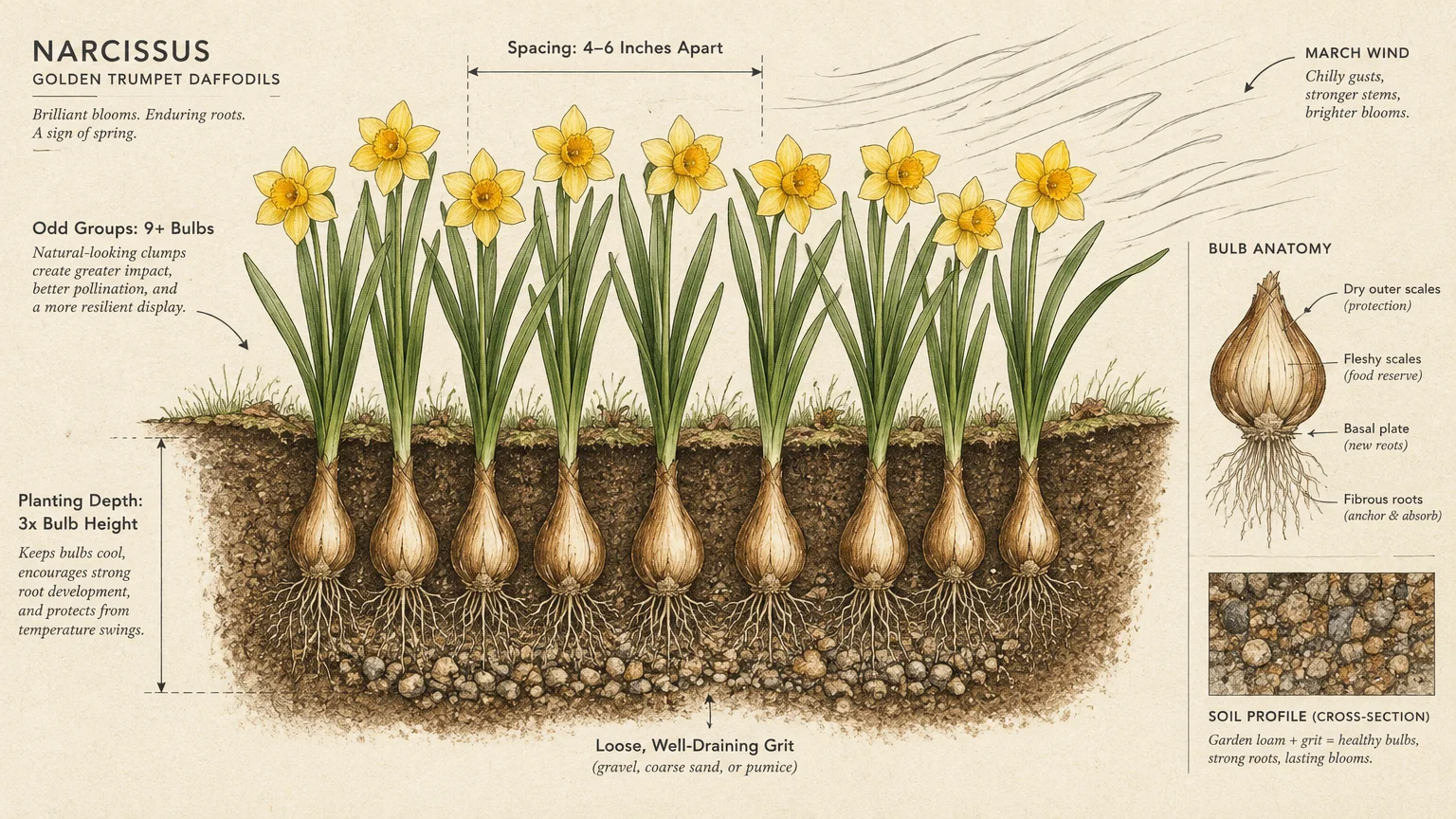
Daffodils announce spring with unbeatable optimism, but single stems often look lost in wide borders. Planting them in generous sweeps creates a golden carpet that immediately commands attention.
Clustered bulbs reinforce one another against blustery March winds and driving rain showers. Their interlaced roots also anchor the soil on gentle slopes before turfgrass awakens.
Set your bulbs roughly four to six inches apart in odd-numbered groups of nine or more. Plant each bulb pointed upward at a depth three times its vertical height.
Select a sunny site with loose, fertile soil that drains freely throughout wet spring spells. Heavy, soggy ground rots dormant bulbs before they have a chance to multiply.
When the vibrant blossoms fade, let the foliage yellow naturally to recharge next year’s blooms. Interplant them with emerging hostas or daylilies to hide the ripening leaves effortlessly.
Tip #2: Coneflowers (Echinacea Purpurea)
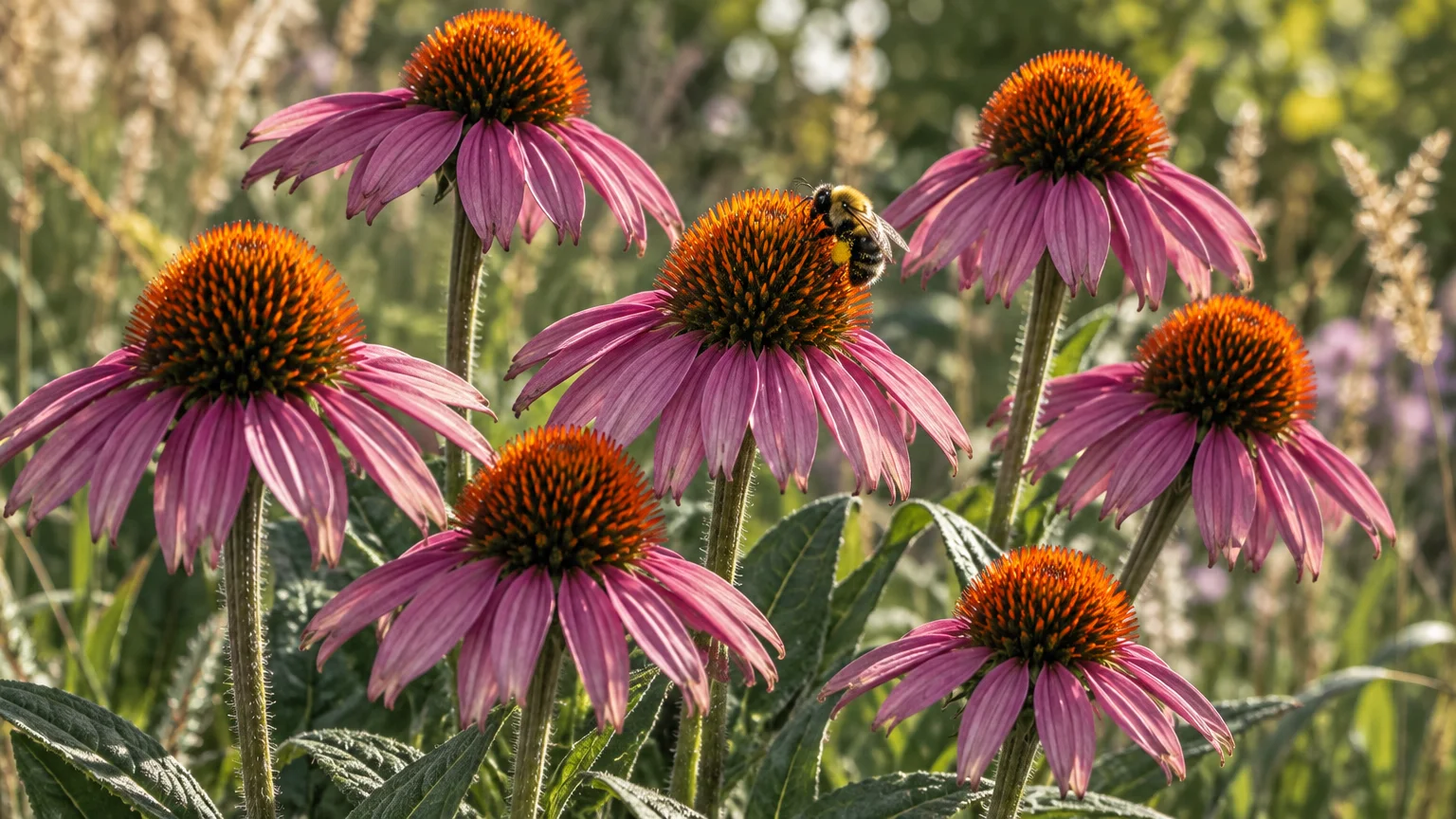
Purple coneflowers anchor summer perennial borders with sturdy daisy-like blooms and bristly orange cones. Solitary plants can look spindly, but dense clusters form a lush, architectural thicket.
Mass planting flowers like coneflowers creates a high-density target for passing native bees and butterflies. The collective nectar supply keeps beneficial pollinators lingering in your yard for hours.
Space individual plants eighteen inches apart to ensure good air circulation around the foliage. Group at least five to seven specimens together to forge a seamless tapestry of rosy-pink petals.
Coneflowers thrive under full sun and tolerate drought once their deep taproots establish in native soil. Avoid high-nitrogen fertilizers, which fuel excessive weak leaves rather than sturdy floral stems.
Leave the seed heads intact through late autumn and winter for architectural interest. Local goldfinches will feast enthusiastically on the cone seeds throughout chilly weather.
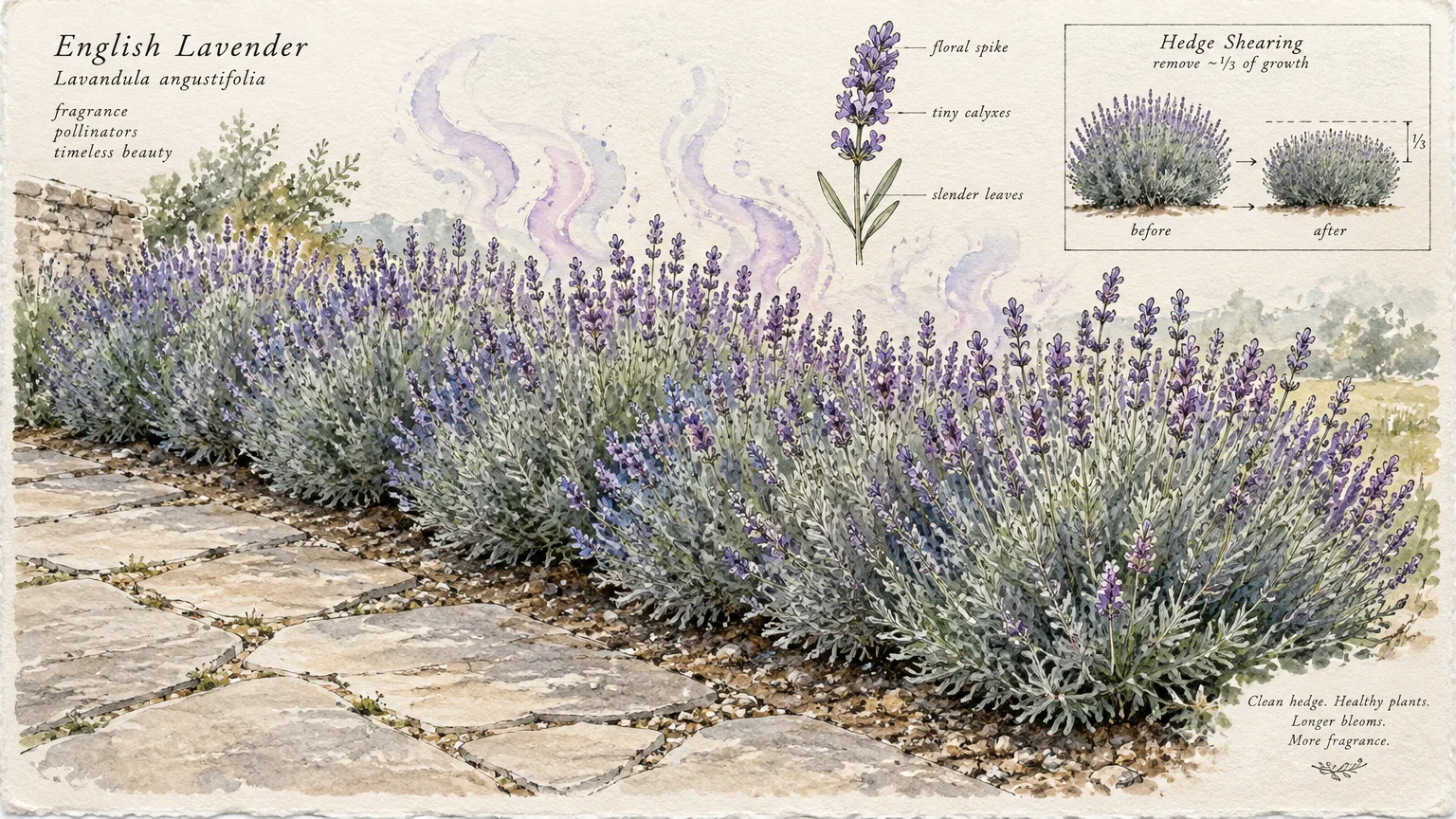
Tip #3: English Lavender (Lavandula Angustifolia)
English lavender brings timeless Mediterranean charm and intoxicating fragrance to sunny garden walkways. When planted as isolated specimens, lavender often appears sparse and struggles to make an impact.
Grouping lavender plants creates a soft, continuous low hedge with incredible aromatic intensity. As you brush past the clustered foliage, bruised leaves release waves of calming essential oils.
Position your lavender shrubs twelve to eighteen inches apart in gritty, alkaline soil. Tight spacing encourages neighboring branches to knit together into a dense, weed-suppressing floral ribbon.
Excellent drainage is non-negotiable because standing moisture quickly induces fatal root rot. Add coarse grit or crushed gravel to heavy clay beds before installing your cluster.
Shear the plants by one-third immediately after flowering to keep the interior growth compact and bushy. This simple pruning routine prevents the centers from becoming woody and hollow over time.
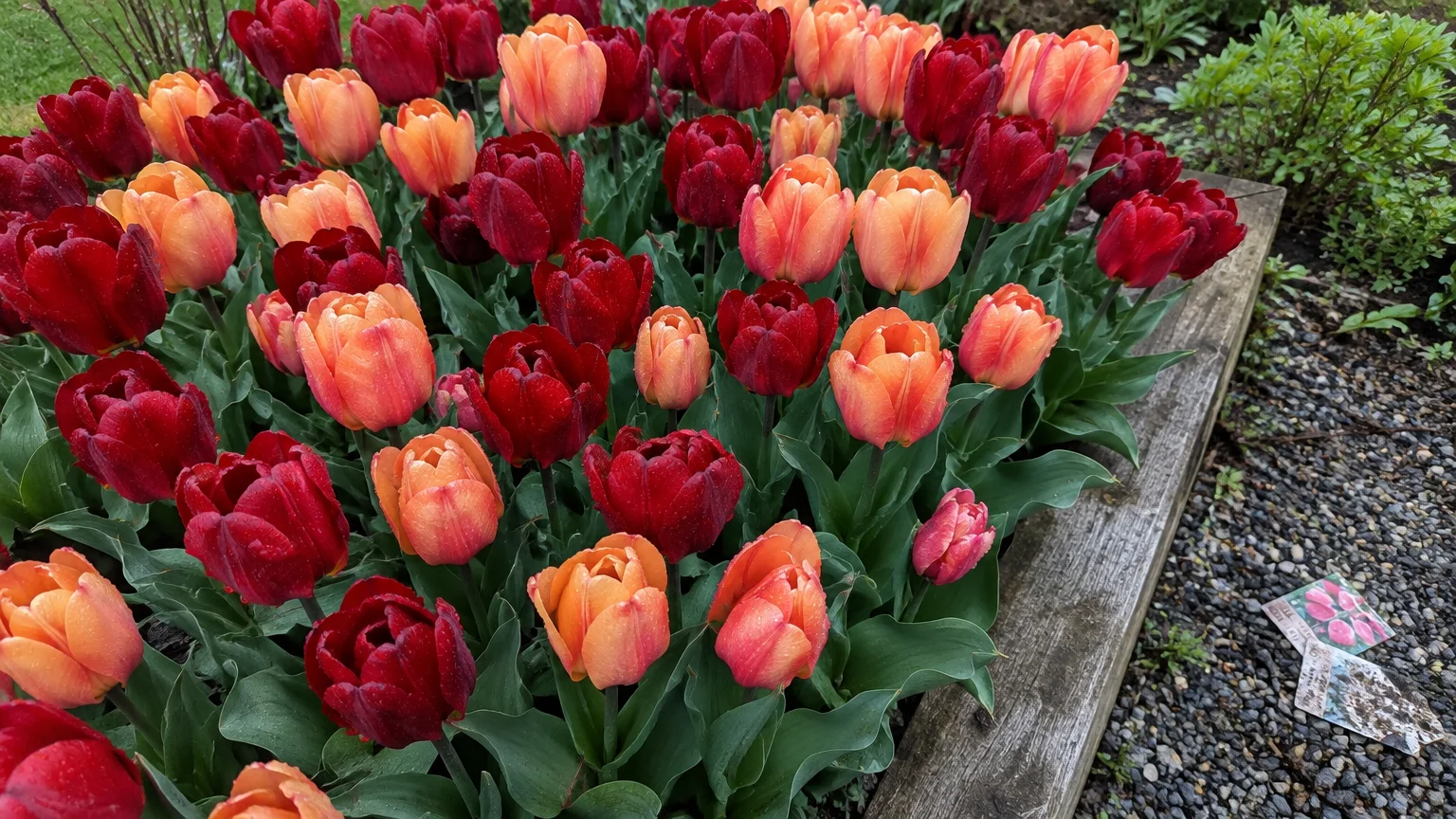
Tip #4: Tulips (Tulipa)
Tulips offer saturated spring color, yet scattered single bulbs look awkward and accidental in garden beds. Grouping them tightly generates dramatic bursts of visual energy that resemble miniature Dutch flower fields.
Clustered tulips shield one another from fierce spring breezes, keeping delicate petals upright longer. Their concentrated presence turns bare post-winter earth into an instant, cheerful focal point.
Dig a broad trench and space bulbs just three to four inches apart in groups of twelve or more. Planting closely produces an opulent bouquet effect right in your outdoor beds.
Position bulbs five to six inches deep in fertile, sandy-loam soil receiving full sunlight. Dust the planting hole with bone meal to support strong root growth during winter dormancy.
Treat hybrid tulips as long-flowering annuals, or choose species tulips for reliable perennial returns. Pair bold red and golden clusters with deep purple pansies for eye-popping seasonal contrast.
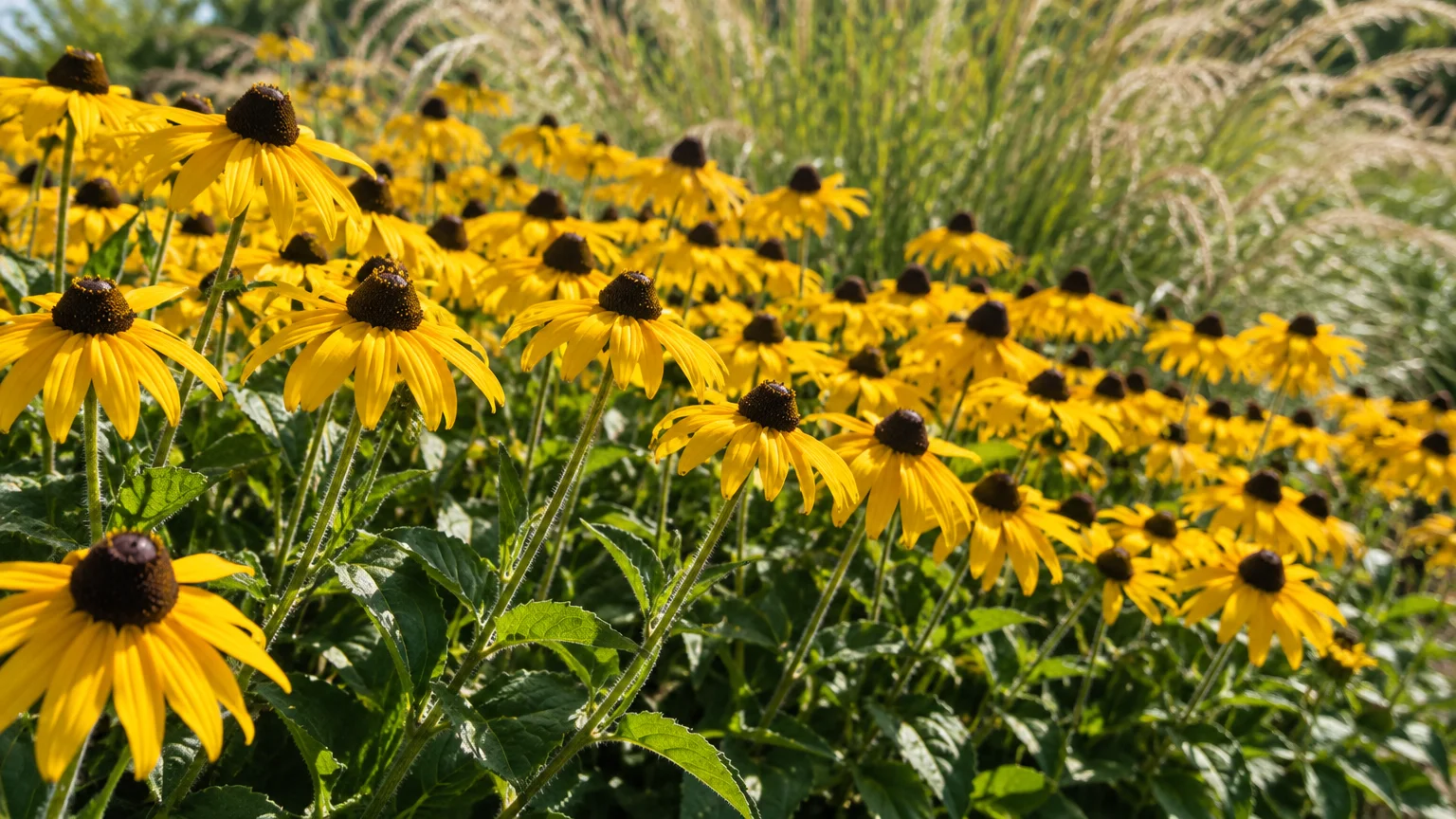
Tip #5: Black-Eyed Susans (Rudbeckia Fulgida)
Black-eyed Susans deliver unbeatable late-summer warmth with radiant golden-yellow rays and dark chocolate centers. One lone plant looks sparse, whereas a sprawling colony lights up the entire perimeter.
This prairie classic stands among the best flowers for garden groupings due to its vigorous spreading habit. As crowns knit together, their dense basal foliage blankets the soil and eliminates weeding chores.
Space nursery starts fifteen to eighteen inches apart in clusters of five, seven, or nine. They quickly expand via underground rhizomes to fill every open pocket within two seasons.
Give this rugged perennial average to moderately fertile soil with at least six hours of direct sunlight. While black-eyed Susans handle dry spells gracefully, regular watering promotes nonstop blooming through early autumn.
Divide overgrown clusters every three to four years during early spring to maintain vigorous flowering. Replant the divided clumps in new garden beds to expand your sunny summer display.
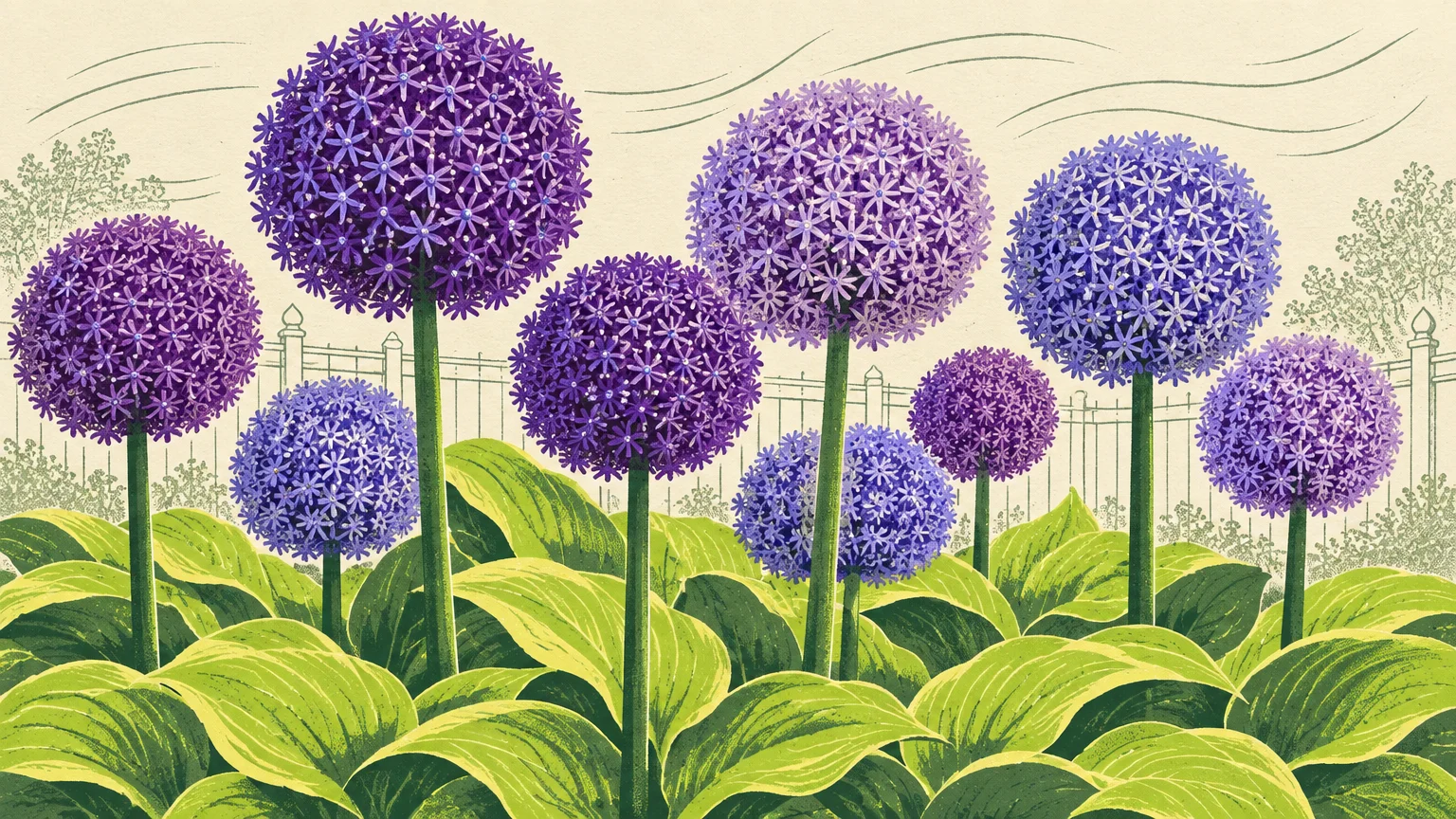
Tip #6: Ornamental Alliums (Allium)
Ornamental alliums inject whimsical architecture into mid-spring borders with their perfectly spherical flower globes. Planting them individually looks disjointed; grouping them creates a rhythmic dance across your garden.
Massed allium globes hover gracefully above lower perennials, creating multi-layered depth without taking up valuable ground space. Furthermore, their faint onion aroma naturally discourages hungry deer and browsing rabbits.
Plant giant varieties eight to ten inches apart in groups of five or seven. For smaller varieties like drumstick alliums, plant twenty to thirty bulbs spaced four inches apart.
Sink the bulbs six to eight inches deep into gritty, free-draining soil under full sun. Ensure excellent winter drainage so bulbs do not rot during damp, cold months.
Let nearby perennials, like catmint or hardy geraniums, surround the allium stems to mask their fading strap-like leaves. The striking dried seed heads remain handsome for months after the florets fade.
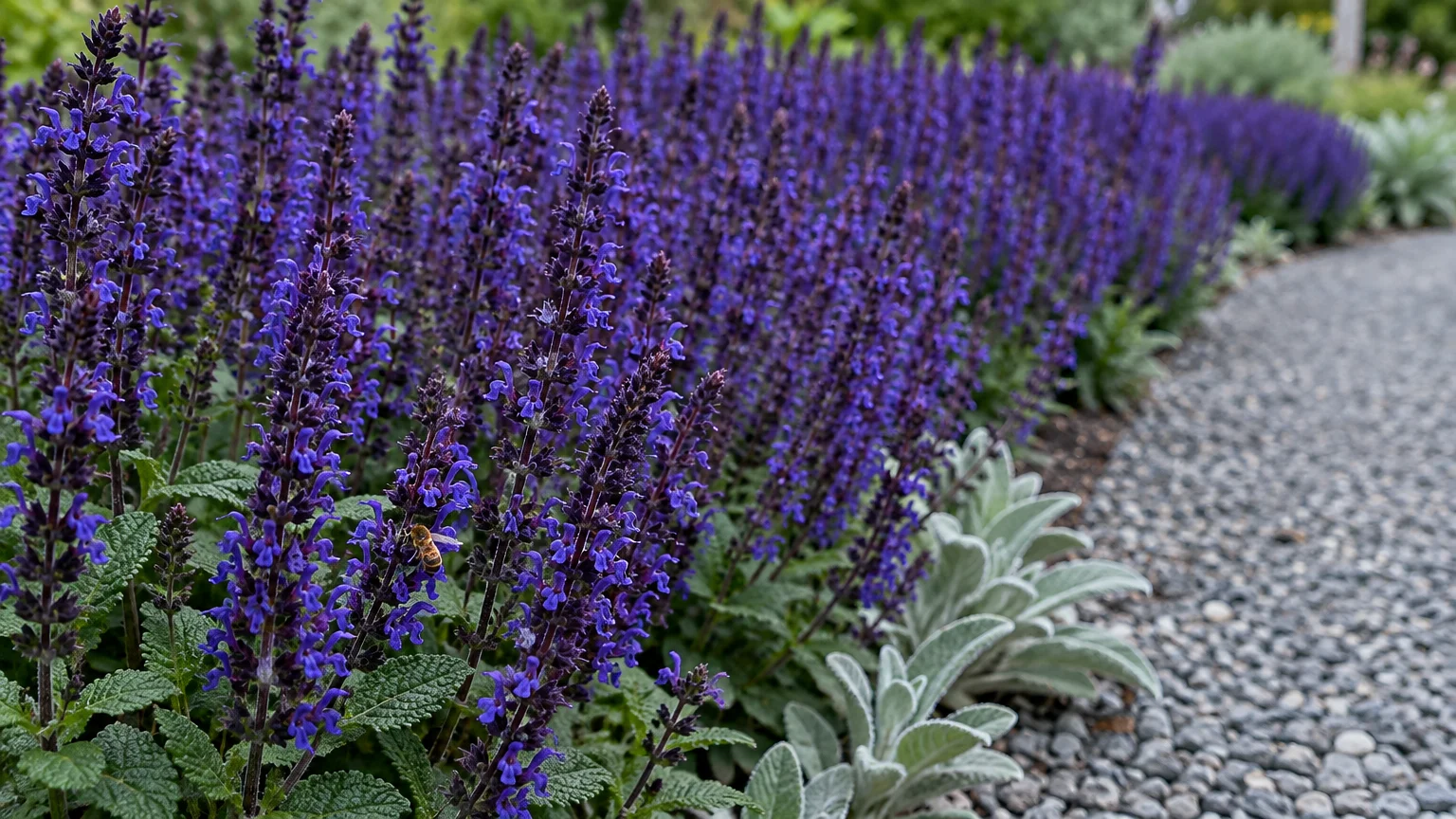
Tip #7: Woodland Salvia (Salvia Nemorosa)
Woodland salvia produces dense spires of rich violet-blue that electrify perennial borders from late spring onwards. Individual stems can disappear against broad-leaved neighbors, but a grouped swath creates pure magic.
Clustered salvias form a sea of nectar-rich spikes that attract hummingbirds and bumblebees from morning until dusk. The collective root mass also stabilizes light soils along garden slopes and border edges.
Space your salvia plants twelve to fifteen inches apart in organic, well-draining garden beds. Arrange them in staggered triangular patterns to create a seamless, flowing wave of cool purple.
Position your cluster in full sun for maximum bloom production and compact, tidy growth. Salvia tolerates lean soils easily; rich fertilizer only causes flopping stems and diminished floral density.
Shear back spent floral spikes down to the basal foliage once the first flush finishes in early summer. You will trigger a robust second flush of vibrant blooms by mid-summer.
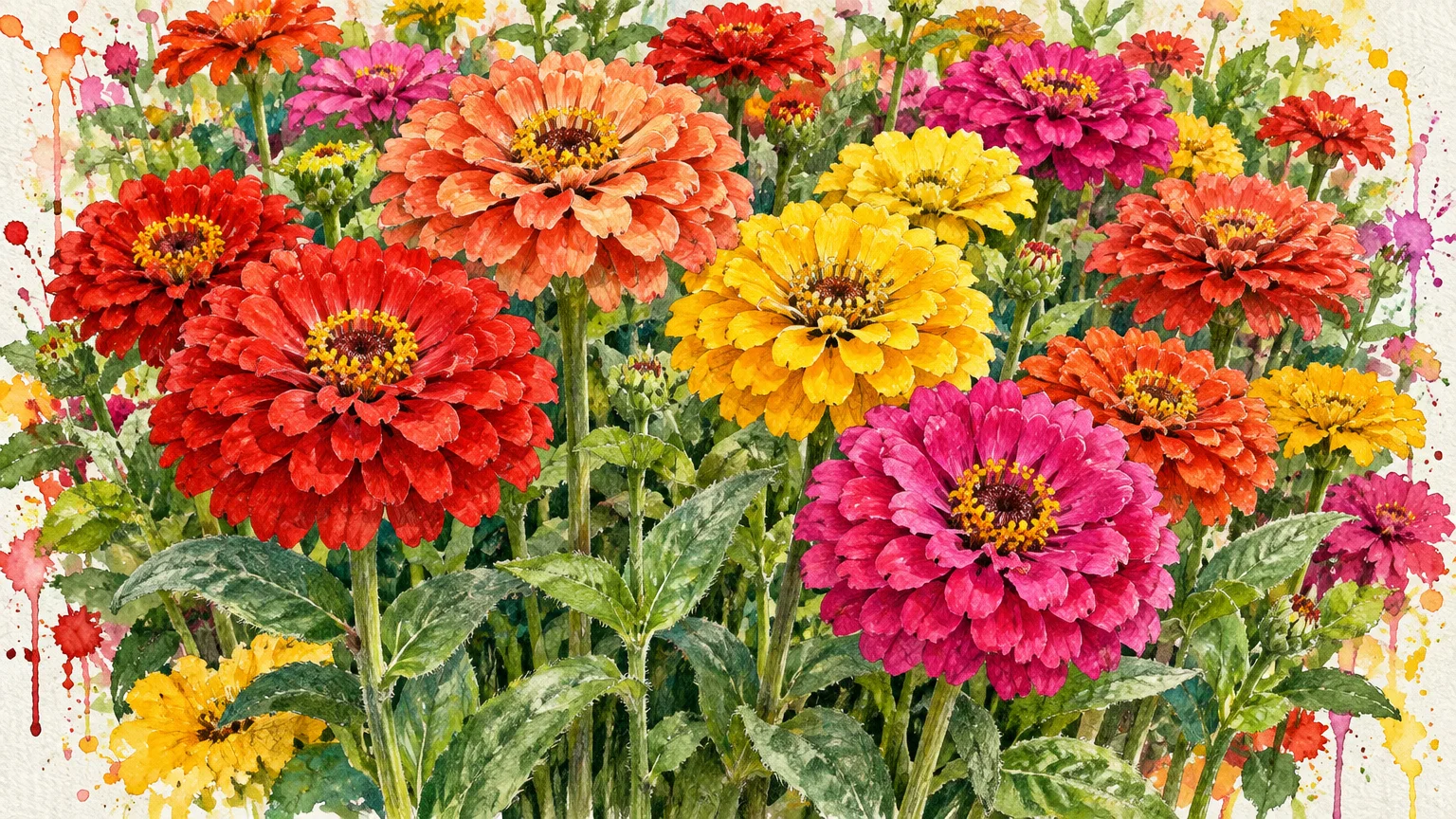
Tip #8: Zinnias (Zinnia Elegans)
Zinnias are among the top annual flowers to plant in clusters for nonstop cut-flower production. A lone zinnia plant looks awkward, but a dense block explodes into an intoxicating riot of color.
Grouped plantings create an abundant floral canopy that shades the root zone and locks in soil moisture. The sheer volume of overlapping blooms turns your backyard into a bustling pollinator sanctuary.
Sow seeds directly outdoors after frost danger passes, spacing plants nine to twelve inches apart. Planting in tight blocks rather than single rows maximizes bloom density per square foot.
Choose a warm location receiving full sun and water exclusively at ground level using drip hoses. Keeping foliage dry prevents powdery mildew from tarnishing leaves during muggy midsummer weather.
Snip flowers frequently for indoor vases to prompt continuous branching and constant new bud formation. The more blooms you cut from your clustered zinnia patch, the more flowers emerge.
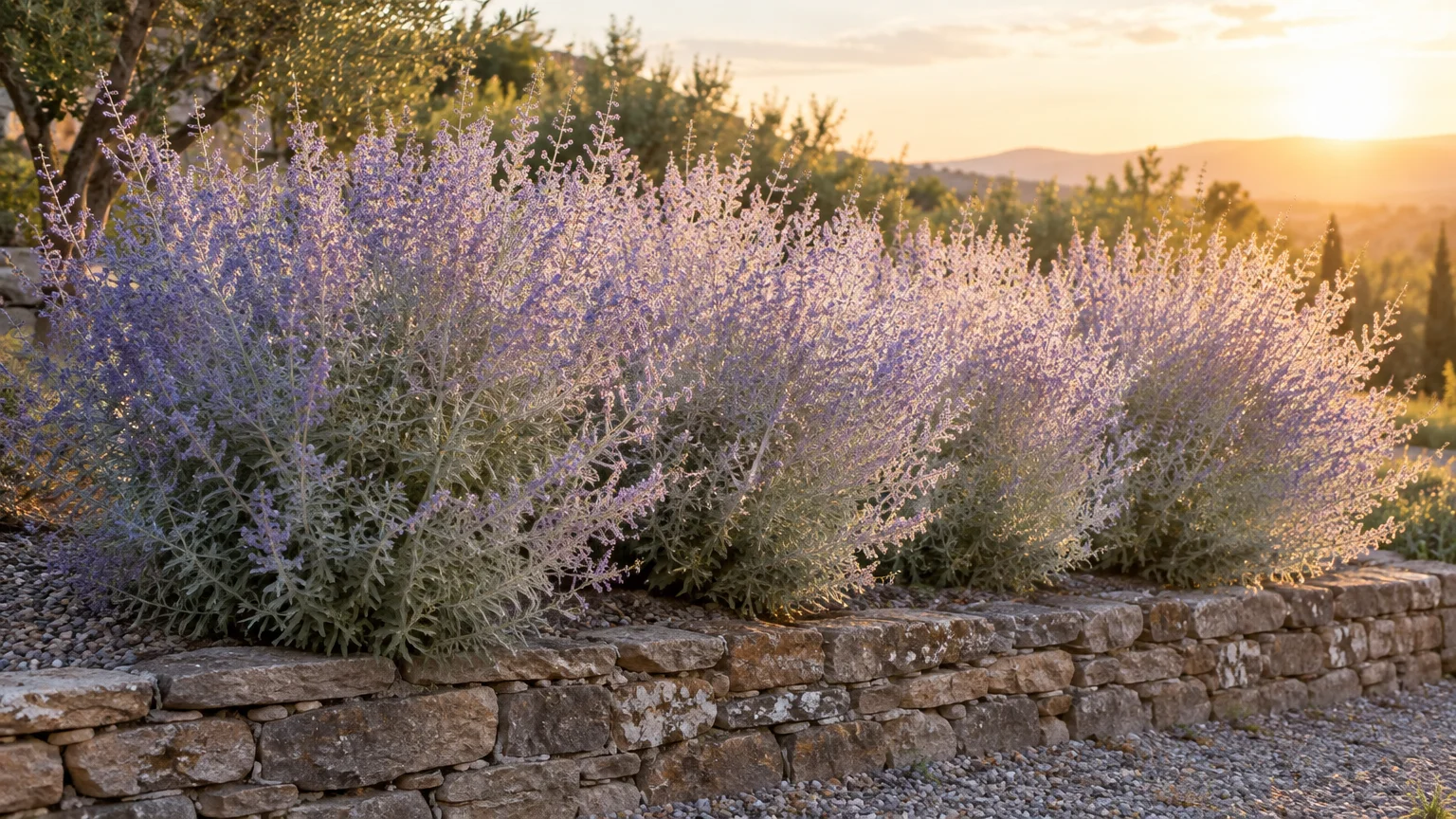
Tip #9: Russian Sage (Salvia Yangii)
Russian sage wraps the late-summer garden in an ethereal haze of lavender-blue plumes and silvery foliage. Solitary specimens often look bare at the base, but grouped plantings create a cohesive cloud of color.
When planted together, the wiry stems support each other and prevent unsightly flopping after summer thunderstorms. The clustered aromatic foliage also acts as an impenetrable shield against browsing deer and rabbits.
Space plants twenty-four to thirty inches apart to accommodate their mature, vase-shaped architectural spread. A grouping of three to five specimens creates a massive visual anchor in open landscapes.
Provide baked, sunny positions with dry to medium soil that drains rapidly after seasonal downpours. Russian sage despises soggy feet; dry, gravelly earth actually produces sturdier stems and brighter blooms.
Cut the woody stems back to six inches above the ground every spring as new growth awakens. This yearly rejuvenation stimulates vigorous new shoots crowned with immense floral sprays by mid-July.
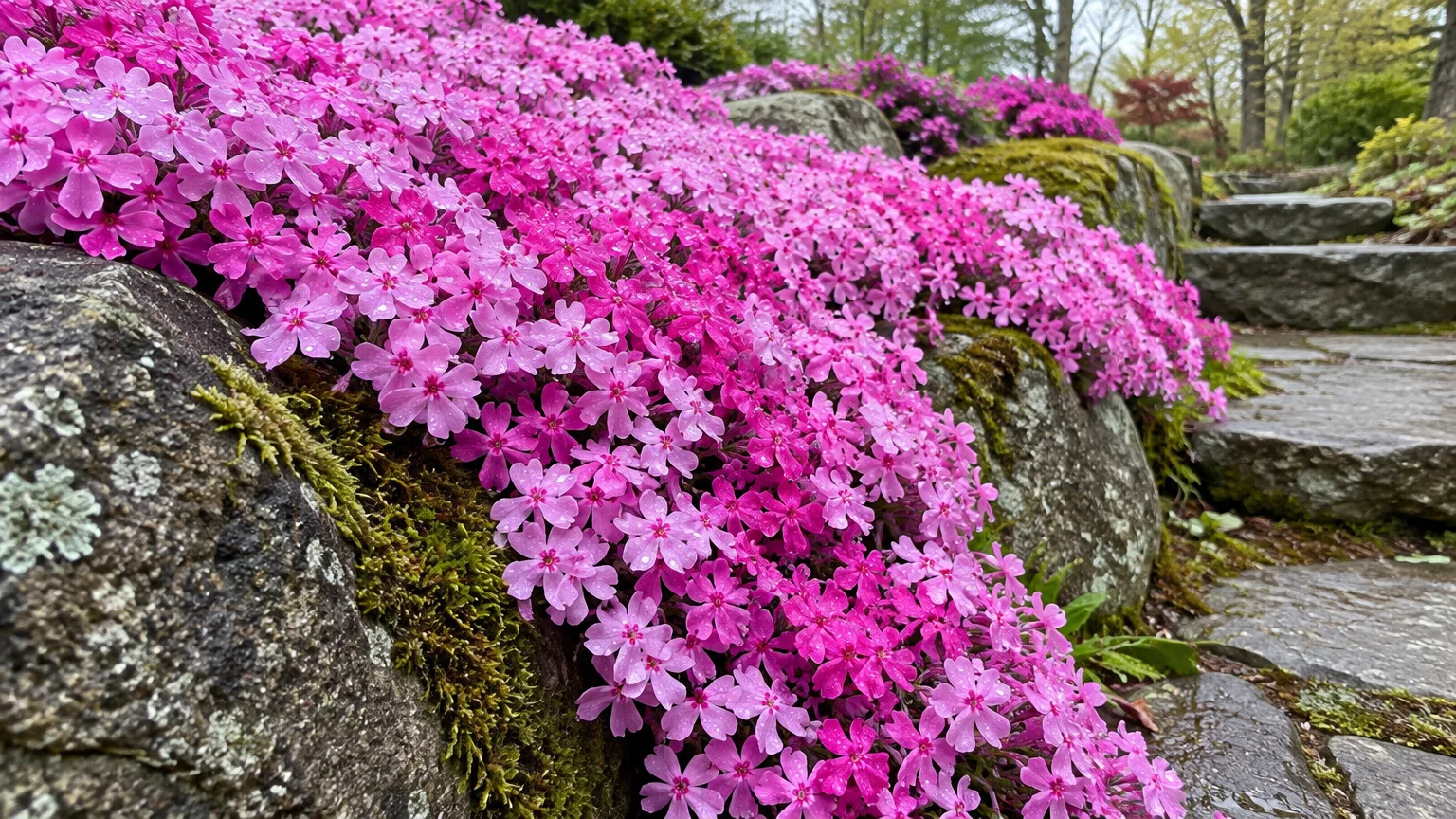
Tip #10: Creeping Phlox (Phlox Subulata)
Creeping phlox forms a luminous, evergreen carpet smothered in pink, lavender, or white star-shaped blooms every April. Isolated patches look spotty, but expansive groupings create breathtaking cascades across rockeries and borders.
This mat-forming perennial shines among premier cluster planting ideas because it doubles as living green mulch. The dense evergreen weave suffocates emerging weed seeds and prevents topsoil erosion along slopes.
Space individual plugs ten to twelve inches apart in a staggered grid across the planting site. Within two seasons, the creeping stems knit together to form a solid, weed-proof floral blanket.
Plant in full sun and sharply drained, slightly gritty soil for the most prolific flower coverage. Heavy shade causes patchy foliage and severely curtails the spring blossom explosion.
Trim the mat lightly with garden shears immediately after the spring blooms fade from view. Light shearing encourages fresh, bushy evergreen growth that stays attractive throughout the entire winter season.
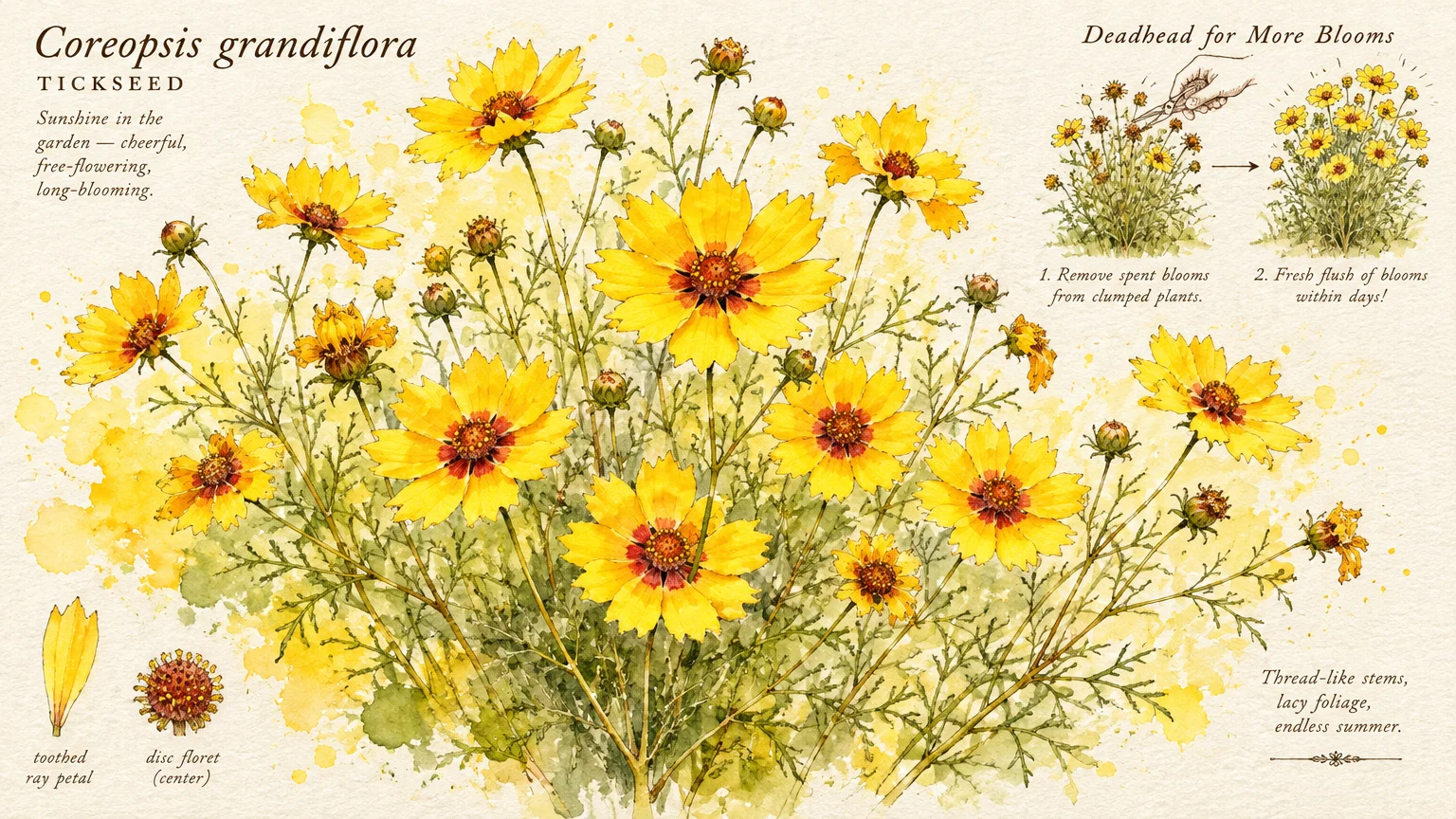
Tip #11: Coreopsis (Tickseed)
Coreopsis produces cheerful, sunny daisies that dance playfully atop delicate, thread-leaf foliage from June through September. Individual plants look fragile, but a dense colony delivers a solid wall of sunshine.
Massed coreopsis plants weave together to create a buoyant, self-supporting drift that withstands wind and pelting rain. Their concentrated blossoms attract beneficial hoverflies and predatory insects that control garden pests naturally.
Set nursery starts twelve to fifteen inches apart in groupings of five or more plants. Stagger your placement to prevent visible rows and establish an organic, meadow-like presence.
Give coreopsis full sun and average, well-drained soil; it tolerates heat and drought once established. Avoid heavy compost additions, which promote weak foliage growth rather than dense floral clusters.
Shear back the top third of the clump after the primary bloom cycle slows in midsummer. Fresh buds will form rapidly, rewarding you with another lavish flush of golden blossoms until frost.
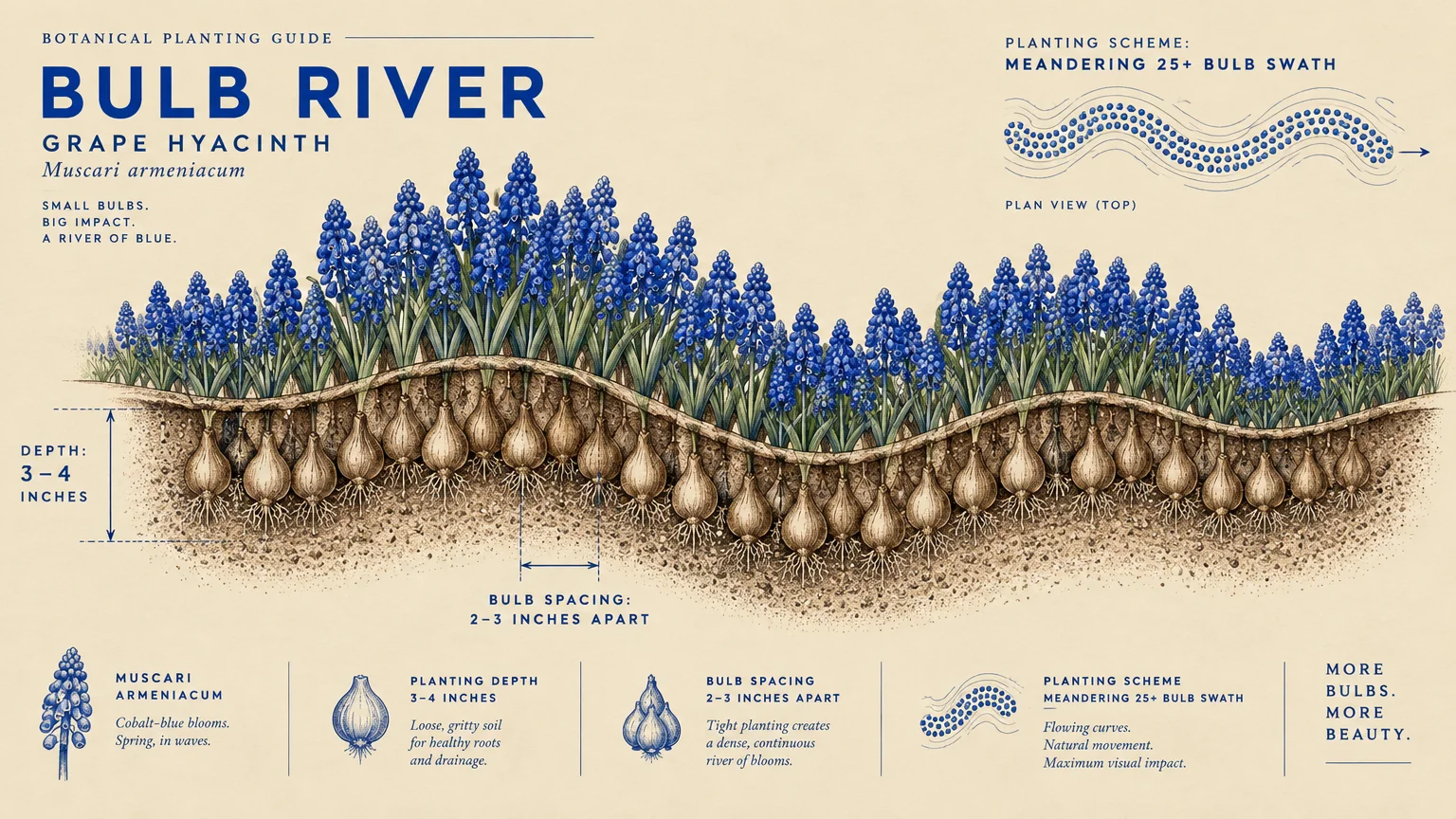
Tip #12: Grape Hyacinths (Muscari)
Grape hyacinths produce tight clusters of cobalt-blue, urn-shaped florets that resemble miniature clusters of grapes. Planted singly, they are virtually invisible; planted in large colonies, they create jaw-dropping blue rivers.
These vigorous little bulbs naturalize effortlessly, multiplying year after year to carpet bare soil beneath deciduous trees. Their early nectar offers vital sustenance to hungry queen bumblebees emerging from winter hibernation.
Plant bulbs two to three inches apart in sweeping drifts containing twenty-five to fifty bulbs minimum. Clustered planting creates dense, saturated pools of color that pop against early spring greens.
Bury bulbs three inches deep in moist, well-drained soil under deciduous tree canopies or sunny borders. They finish flowering and recharge their bulbs before tree canopies cast heavy summer shade.
Combine grape hyacinth ribbons with bright yellow miniature daffodils or pink tulips for extraordinary contrast. Once established, these hardy bulbs return reliably every spring without requiring any fuss or pampering.
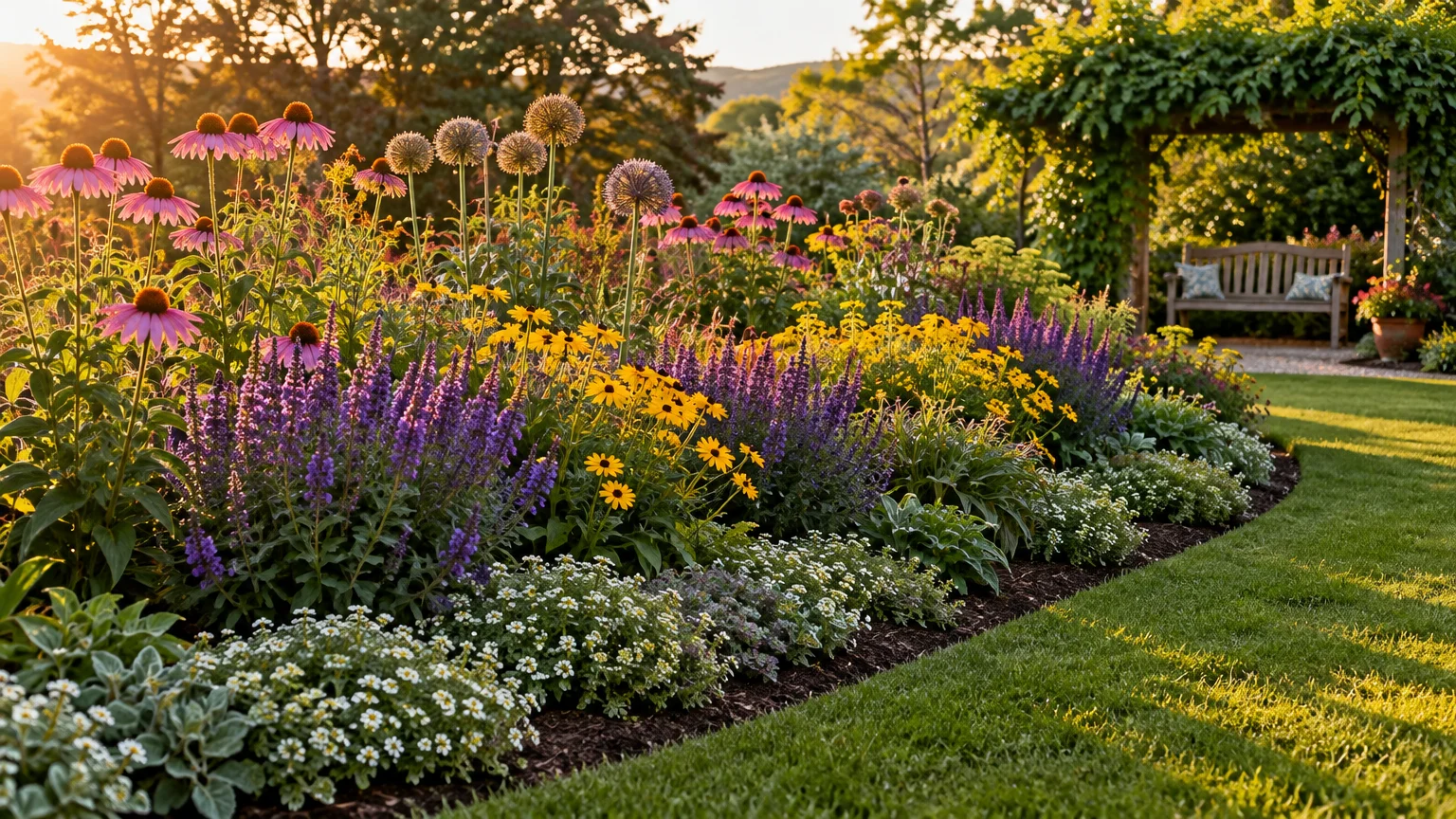
Putting It All Together: Enjoy Your Beautiful Garden
Designing with mass plantings transforms fragmented flower beds into cohesive, eye-catching works of landscape art. Clustered flowers amplify color, smother weeds, and provide an abundant feast for hardworking pollinators.
When planning your beds, remember to group odd numbers of plants—like threes, fives, or sevens. Odd-numbered arrangements mimic natural growth habits and look far more graceful to the human eye.
Pay close attention to individual spacing requirements so your plants touch without suffocating one another. Proper airflow between clustered crowns keeps fungal diseases at bay while still creating a lush canopy.
Start small by clustering one or two standout species in your sunniest front border this season. As your confidence grows, experiment with broader drifts and contrasting textural groupings across your entire yard.
Frequently Asked Questions
How close should you space flowers when planting in clusters?
Space plants at the lower end of their recommended spacing guidelines on plant tags. For instance, if a perennial tag recommends twelve to eighteen inches, choose twelve inches for clustering.
This tighter distance allows adjacent branches to touch quickly without overcrowding root zones or restricting air circulation. Always ensure good soil drainage to keep tightly clustered roots healthy.
Do clustered plants compete too much for nutrients?
Clustered flowers do draw more nutrients from a confined area, but healthy living soil compensates easily. Blend two inches of rich organic compost into the planting zone before installing your groupings.
Applying a light annual top-dressing of organic mulch or compost feeds the soil web continuously. This sustained nourishment prevents nutrient competition and keeps clustered blooms vibrant year after year.
How many plants should you include in a single cluster?
Horticultural designers generally recommend grouping a minimum of three to five specimens of larger perennials. For smaller bulbs like grape hyacinths or crocuses, aim for drifts of twenty-five or more.
Always plant in odd-numbered increments to create an asymmetrical, natural aesthetic in your garden. Even-numbered plantings can look stiff, geometric, and artificially forced.
Can you mix different flower species within the same cluster?
You can combine contrasting species, provided they share identical sun, moisture, and soil chemistry requirements. Pair plants with differing flower shapes and textures to create captivating visual contrast.
For example, mingle spiky purple salvia with rounded yellow coreopsis blooms for continuous drama. Group three of each species together within the shared bed to maintain clear visual rhythm.
For region-specific advice, consult your local University Extension program (find yours via the USDA directory). For plant databases and inspiration, visit the Missouri Botanical Garden or the Royal Horticultural Society.
Disclaimer: This article provides general gardening advice. Always consider your specific climate, soil conditions, and local pests; follow safety guidelines when using gardening tools and products.