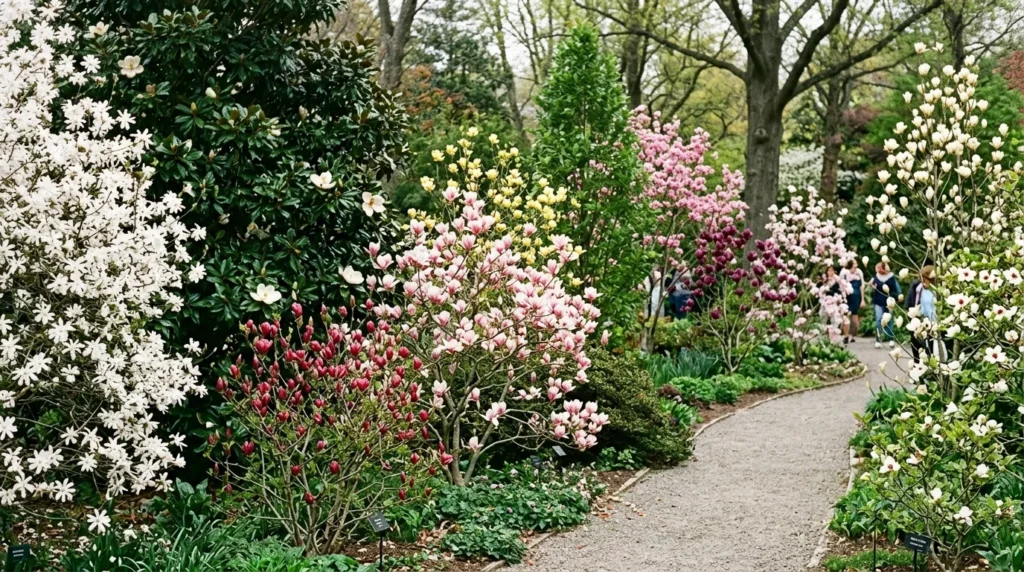
You can banish winter drabness and enjoy vibrant outdoor color weeks before the standard growing season begins. Planting the earliest spring bloomers guarantees cheerful blossoms when frost still covers the garden soil.
These resilient early spring flowers brave subfreezing temperatures to provide an indispensable boost of nectar for awakening pollinators. They bring immediate optimism and rich fragrance directly to your doorstep.
By selecting dependable varieties with staggered bloom times, you will create a lively, continuous parade of vivid petals. Here are twelve outstanding early bloomers that awaken your garden landscape with ease.
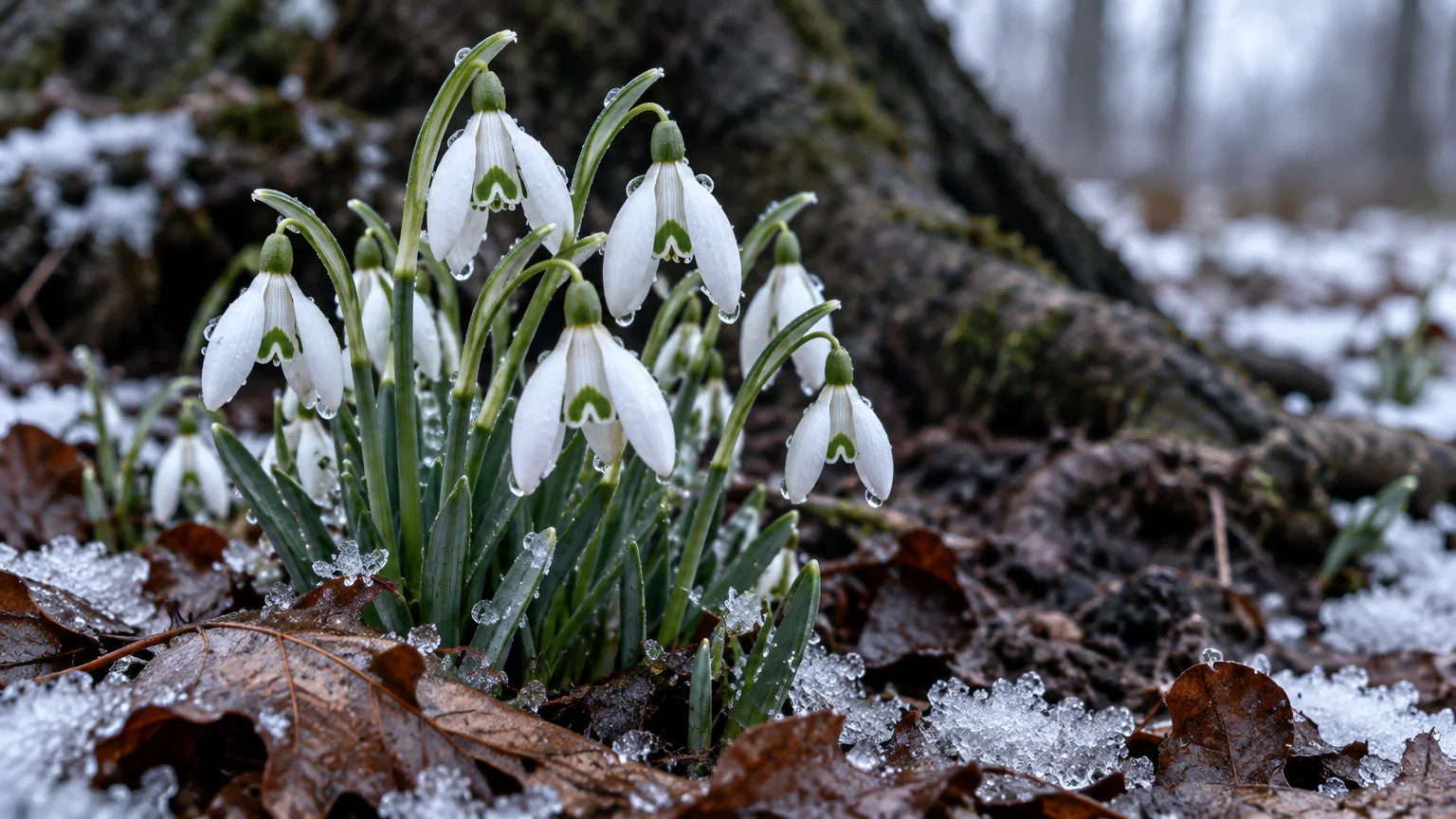
Tip #1: Snowdrops (Galanthus nivalis)
Snowdrops rank among the very first flowers of spring, frequently piercing through thick layers of snow in late winter. Their dainty, bell-shaped white petals droop gracefully from slender emerald stems.
These hardy perennials thrive across USDA hardiness zones 3 through 7. They flourish in moist, well-draining soil under deciduous trees where winter sunlight filters through bare branches.
Plant your snowdrop bulbs during early autumn at a depth of three inches. Space them two to three inches apart in tight drifts to achieve an eye-catching woodland carpet.
Because their foliage naturally contains bitter alkaloids, hungry deer, rabbits, and rodents avoid eating them. Leave the leaves intact after flowering until they turn yellow to replenish the underground bulb.
Divide established clumps in late spring immediately after blossoms fade while the leaves remain green. This simple propagation technique expands your white floral carpet year after year.
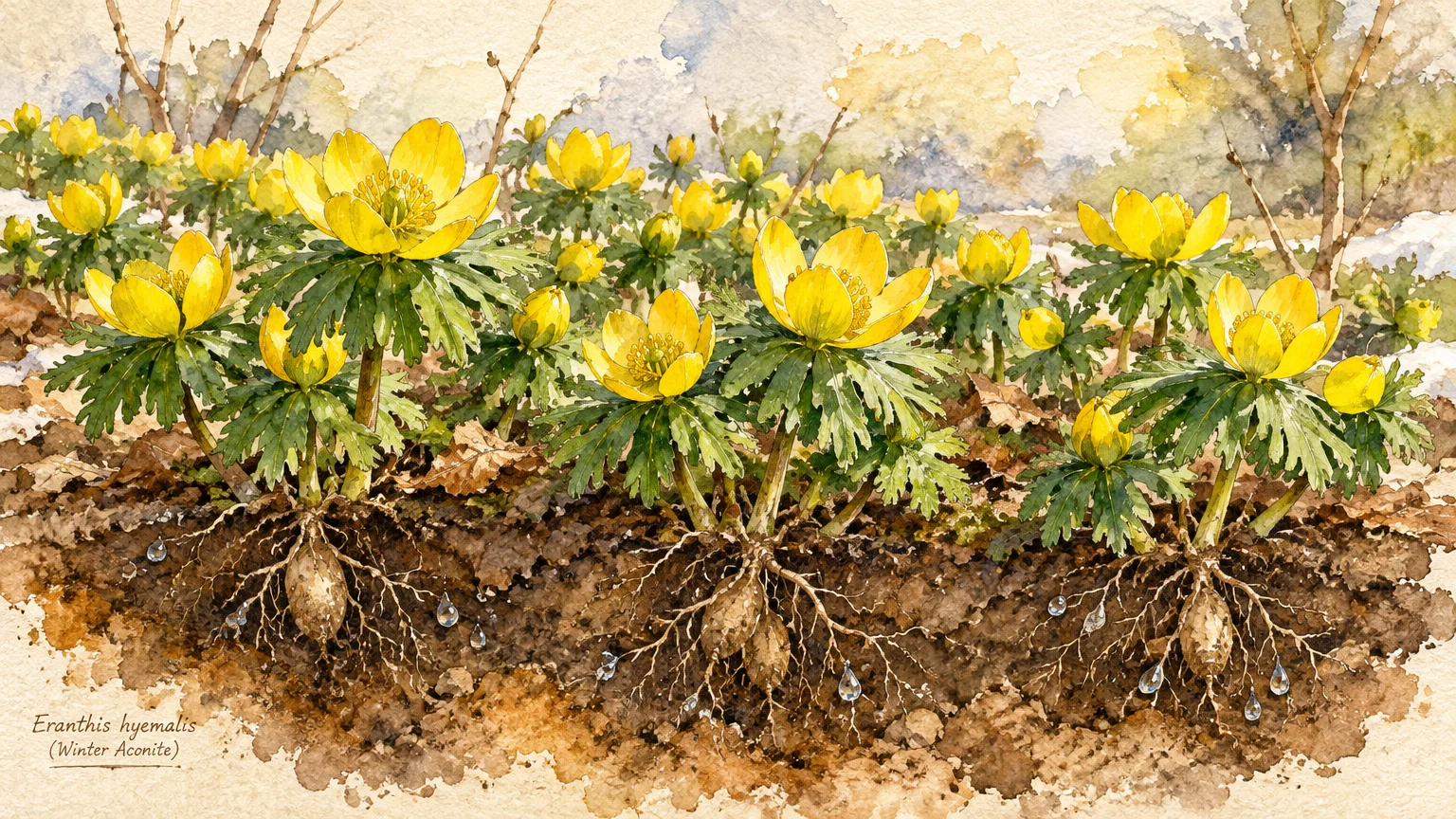
Tip #2: Winter Aconite (Eranthis hyemalis)
Winter aconite carpets the chilly earth with cheerful, buttercup-like yellow blossoms surrounded by distinctive frilly green collars. These petite wonders often bloom alongside snowdrops during late January and February.
Their radiant chalice-shaped petals open wide in bright sunshine and close tight during cloudy or freezing weather. This smart adaptation protects precious pollen from excessive moisture and sudden cold snaps.
Soak the small, hard tubers in warm water overnight before planting them in autumn. This crucial rehydration step triggers swift root establishment and reliable spring emergence.
Bury the tubers two to three inches deep in rich, organic soil that retains balanced moisture. They prefer partial shade and perform exceptionally well beneath large shade trees.
Winter aconite self-seeds freely across undisturbed flowerbeds over several seasons. Soon, your early bloomers garden will display an expansive gold tapestry without demanding continuous maintenance.
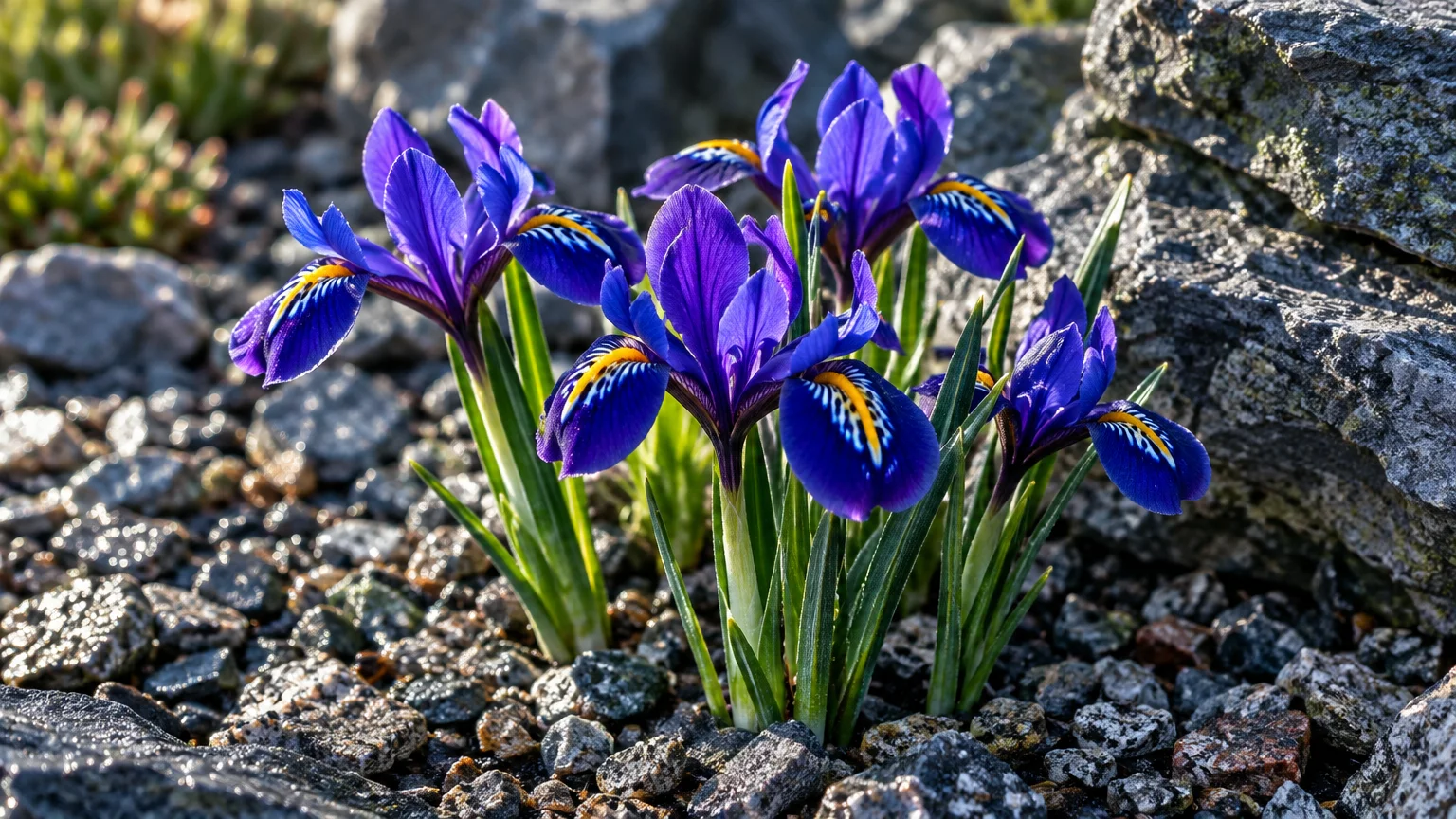
Tip #3: Reticulated Iris (Iris reticulata)
Reticulated iris delivers rich jewel tones of royal violet, sapphire blue, and velvety purple directly to thawing garden borders. Intricate gold and white markings trace the center of each delicate, upright petal.
Standing only four to six inches tall, these dwarf irises release a delicate, sweet fragrance reminiscent of fresh violets. They instantly brighten rock gardens, stone planters, and edge plantings.
Place these small bulbs three to four inches deep in sharply draining soil during October or November. Wet winter soil causes bulb rot, so mix coarse horticultural grit into heavy clay.
Position them where they receive full morning sunlight to maximize their vivid coloration. Pair them with early blooming flowers like white crocuses to generate stunning visual contrast.
Allow their narrow, grass-like leaves to mature fully after blooms drop in late March. These slender blades gather vital energy for the following season’s floral display.
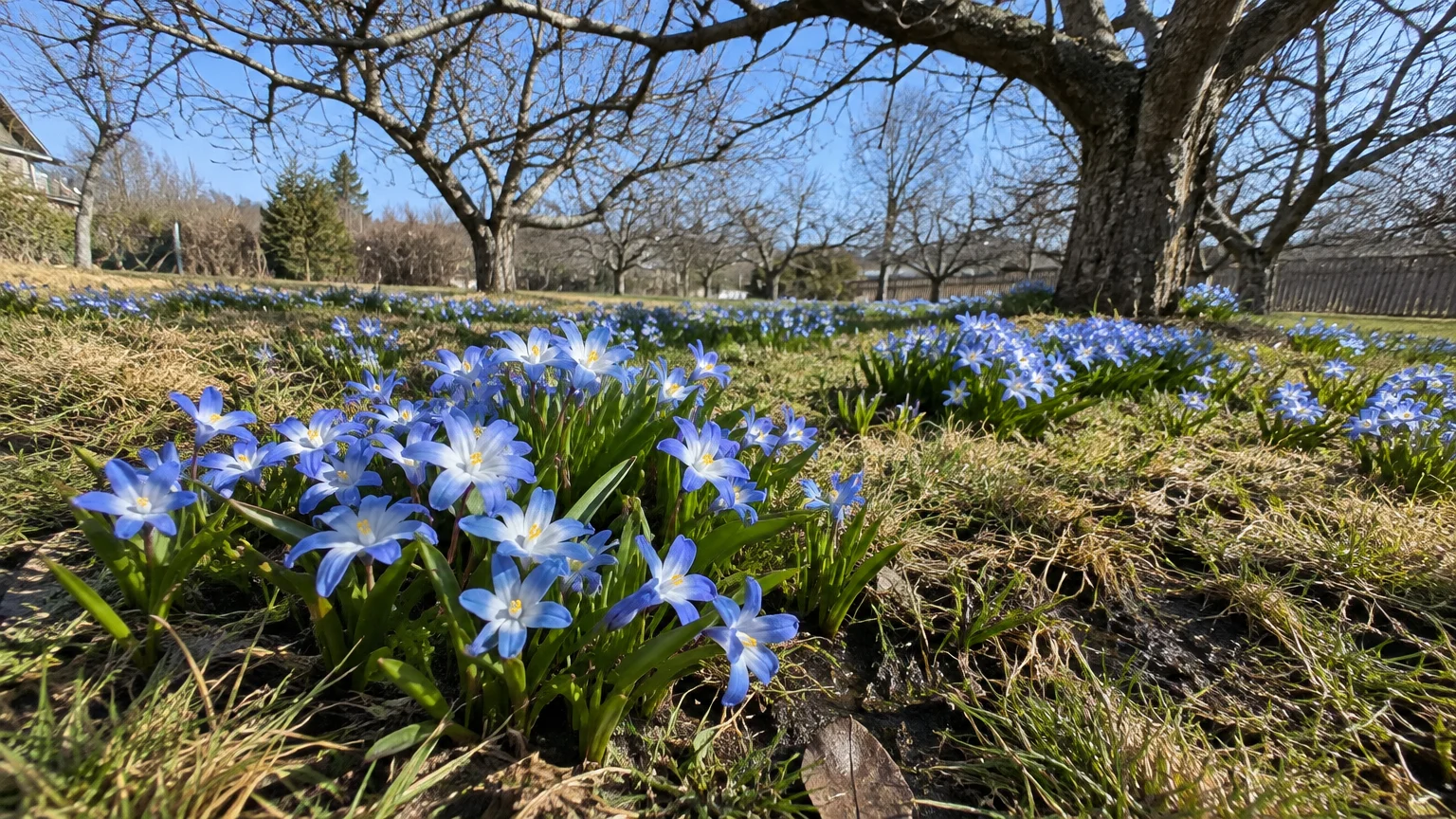
Tip #4: Glory-of-the-Snow (Chionodoxa forbesii)
Glory-of-the-snow produces clusters of star-shaped, sky-blue blossoms with luminous white centers. True to their descriptive name, these spirited petals frequently open while winter snow blankets the surrounding turf.
Each slender flower spike carries up to ten upward-facing florets that sway gracefully in brisk March breezes. They naturalize vigorously, transforming dull lawns and garden beds into undulating seas of blue.
Plant the tiny bulbs two to three inches deep in late autumn in full sun or dappled shade. They tolerate a wide variety of soils as long as excess water drains away freely.
You can tuck them beneath deciduous shrubs or right into your turf grass. Because their slender foliage fades quickly before spring lawn mowing starts, they cause zero turf maintenance problems.
Hungry foraging rodents completely ignore glory-of-the-snow bulbs due to natural deterrent compounds. That makes them one of the most reliable spring garden flowers for woodland edges.
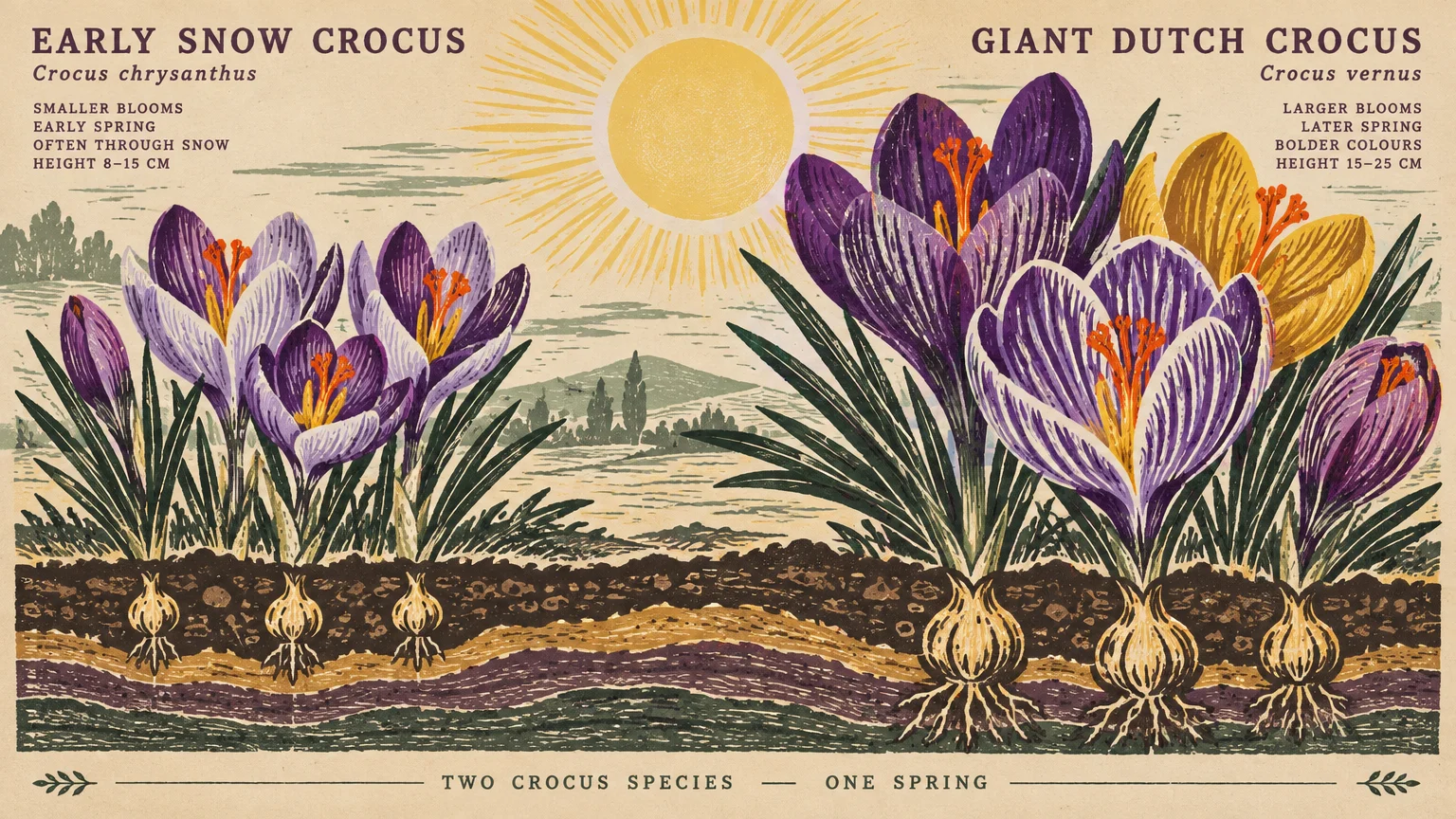
Tip #5: Crocuses (Crocus vernus and Crocus chrysanthus)
Crocuses signal the undeniable arrival of mild weather with their cup-shaped blooms in vivid shades of purple, yellow, and striped ivory. Hungry honeybees revere these classic blooms as essential early-season pollen stations.
Species varieties like Crocus chrysanthus open first, followed closely by the larger Dutch hybrid types. Combining both kinds extends your crocus bloom window by two to three full weeks.
Install crocus corms three to four inches deep in fertile, sandy soil with full sun exposure. Plant them in sweeping informal clusters of fifty or more for maximum visual impact.
If squirrels or chipmunks frequently dig up your planting beds, lay hardware cloth over the bulbs before covering them with topsoil. The stems will push right through the wire mesh without injury.
Provide modest moisture during active growth, but allow the ground to dry out slightly during dormant summer periods. These tough perennials multiply year after year with virtually no human intervention.
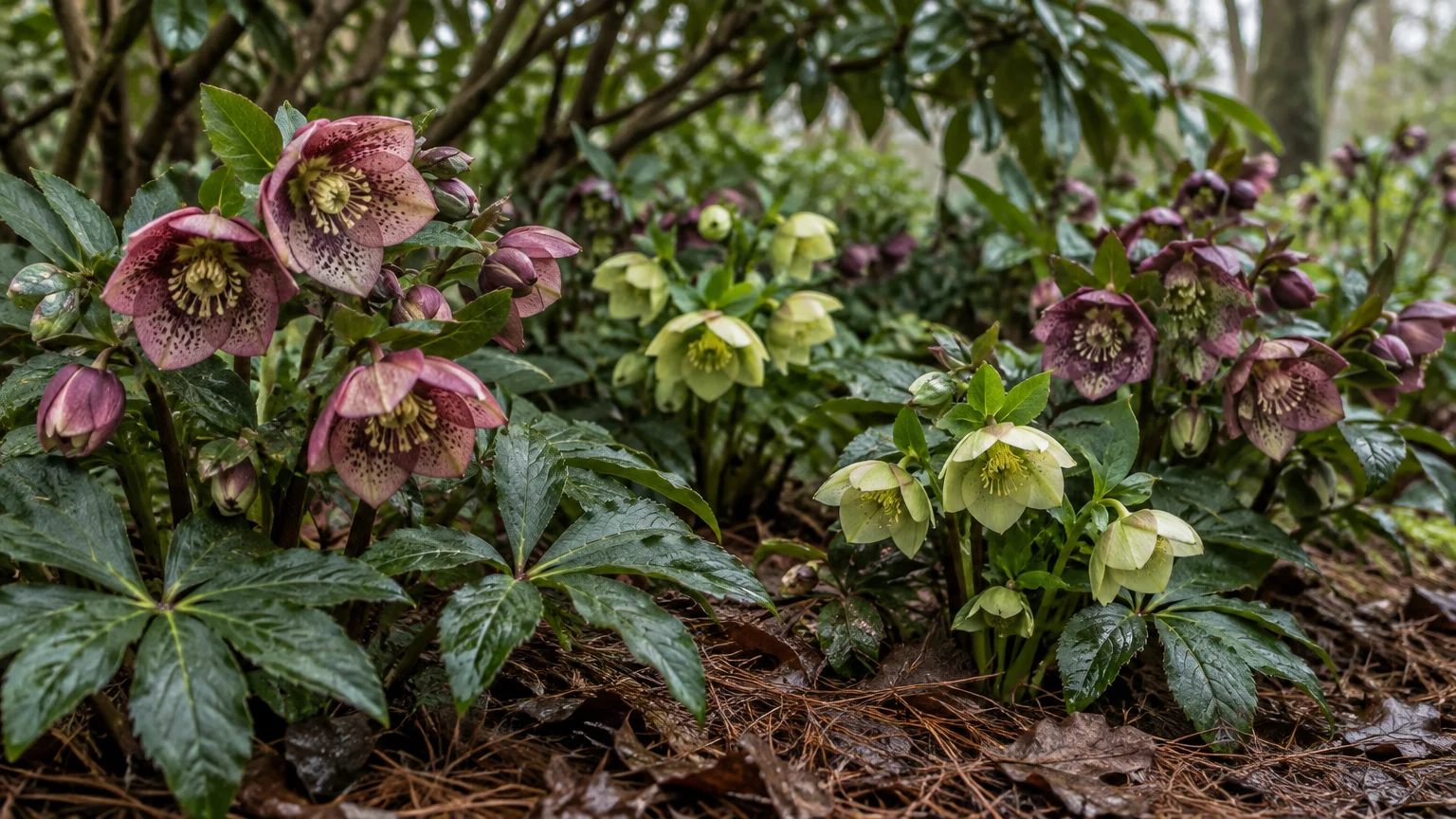
Tip #6: Lenten Roses (Helleborus orientalis)
Lenten roses produce nodding, leathery blooms in exquisite shades of dusty pink, slate plum, creamy white, and speckled green. They defy harsh winter freezes, often showing robust color as early as February.
Unlike delicate bulb flowers, hellebores boast thick evergreen foliage that maintains handsome structural interest all year long. Their downward-facing sepals withstand severe overnight frost without suffering petal damage.
Plant container-grown hellebores in early spring or autumn, spacing them eighteen inches apart in humus-rich, well-draining soil. They prefer sheltered shade under tall tree canopies or beside north-facing foundations.
Trim away ragged, winter-worn leaves in late winter just as new flower buds emerge from the crown. This simple pruning showcases the new blossoms cleanly and discourages leaf spot fungal disease.
Hellebores contain toxic sap, ensuring complete immunity from browsing deer, rabbits, and voles. Once established, their deep fibrous root systems tolerate dry summer shade remarkably well.
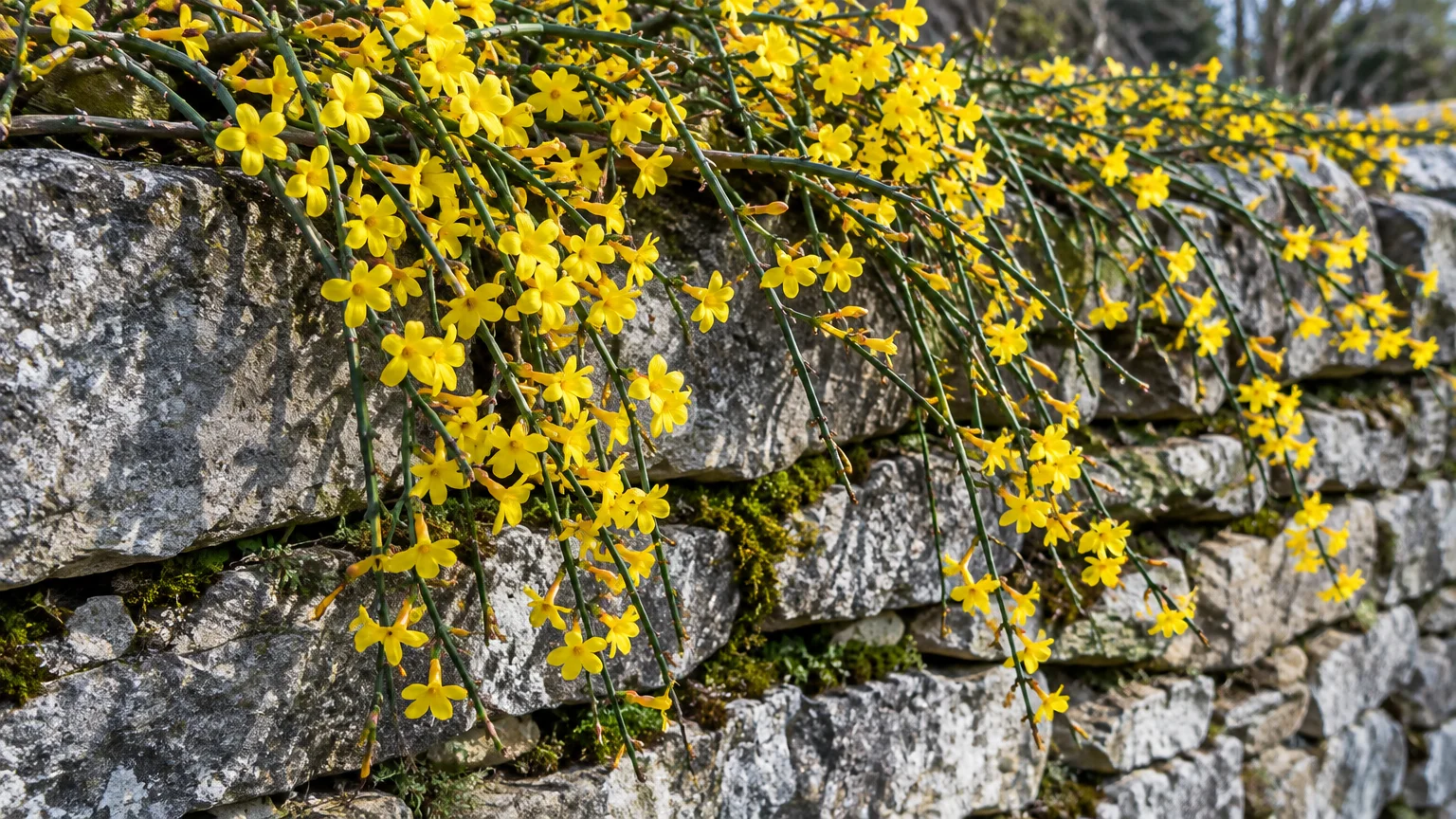
Tip #7: Winter Jasmine (Jasminum nudiflorum)
Winter jasmine brightens gloomy winter days by producing brilliant yellow, star-like blossoms along bare green stems. Flowering commences in January and continues well into March across zones 6 through 9.
Although unscented, this trailing deciduous shrub offers immense ornamental value when other woody garden plants sit completely dormant. Its arched branches cascade elegantly over retaining walls and steep banks.
Position winter jasmine in full sun or light shade within average, well-draining garden soil. Full sun exposure guarantees the densest flower bud development and the most profuse floral show.
Prune the shrub vigorously immediately after the flowering cycle concludes in early spring. Cutting branches back to strong new growth encourages fresh green shoots that will produce next winter’s blooms.
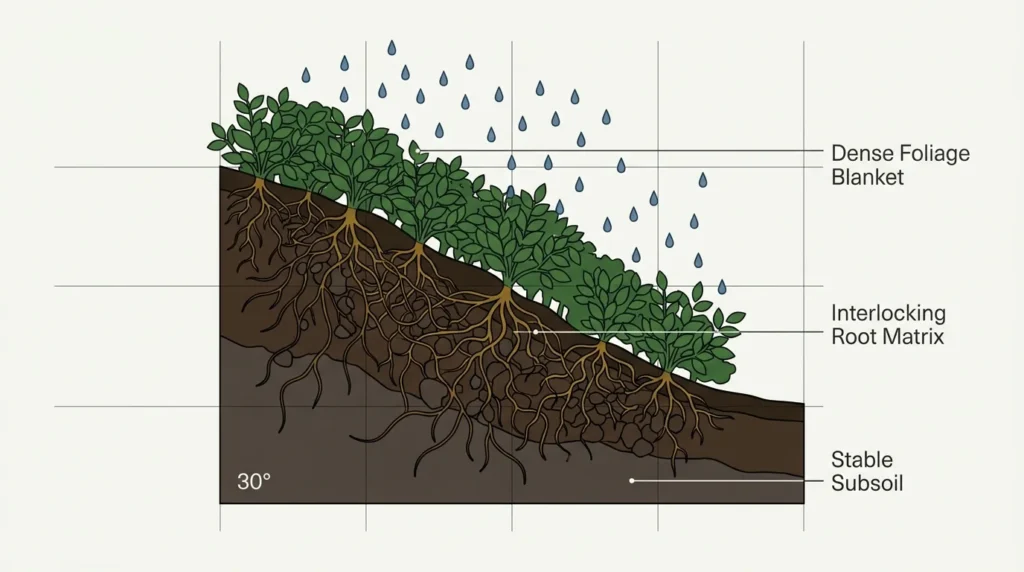
Train the stems onto a trellis or let them spill freely down structural embankments to prevent soil erosion. This versatile shrub demands very little water once its roots take firm hold.
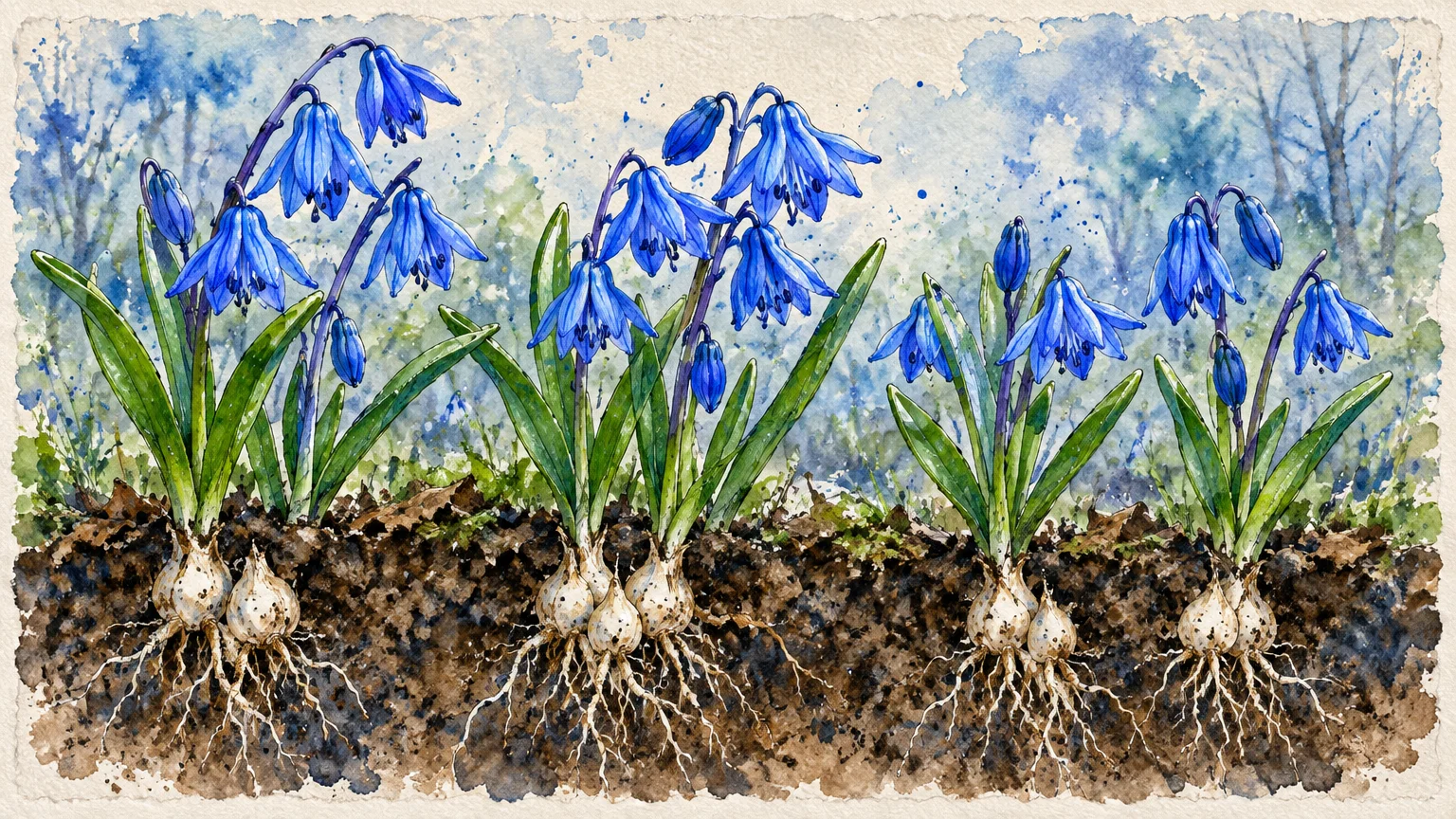
Tip #8: Siberian Squill (Scilla siberica)
Siberian squill coats ground surfaces in breathtaking royal cobalt blue, creating one of nature’s most intense floral spectacles. Tiny bell-shaped blooms dangle from slender stems just three to five inches above the soil.
These extremely cold-hardy early spring flowers endure freezing northern temperatures down to USDA zone 2. They withstand late-season blizzards and spring snow squalls without missing a single beat.
Bury the diminutive bulbs three inches deep in loose, moisture-retentive soil during autumn. Space them two inches apart in large groupings of one hundred bulbs for an unforgettable color splash.
Siberian squill spreads aggressively via underground bulb offsets and prolific seed dispersal. Plant them where you want them to naturalize wild areas rather than near tidy, small rockeries.
Their foliage ripens and completely disintegrates by late spring, vanishing before summer perennials spread their wings. This makes squill an ideal companion underneath hostas, daylilies, and late-emerging ferns.
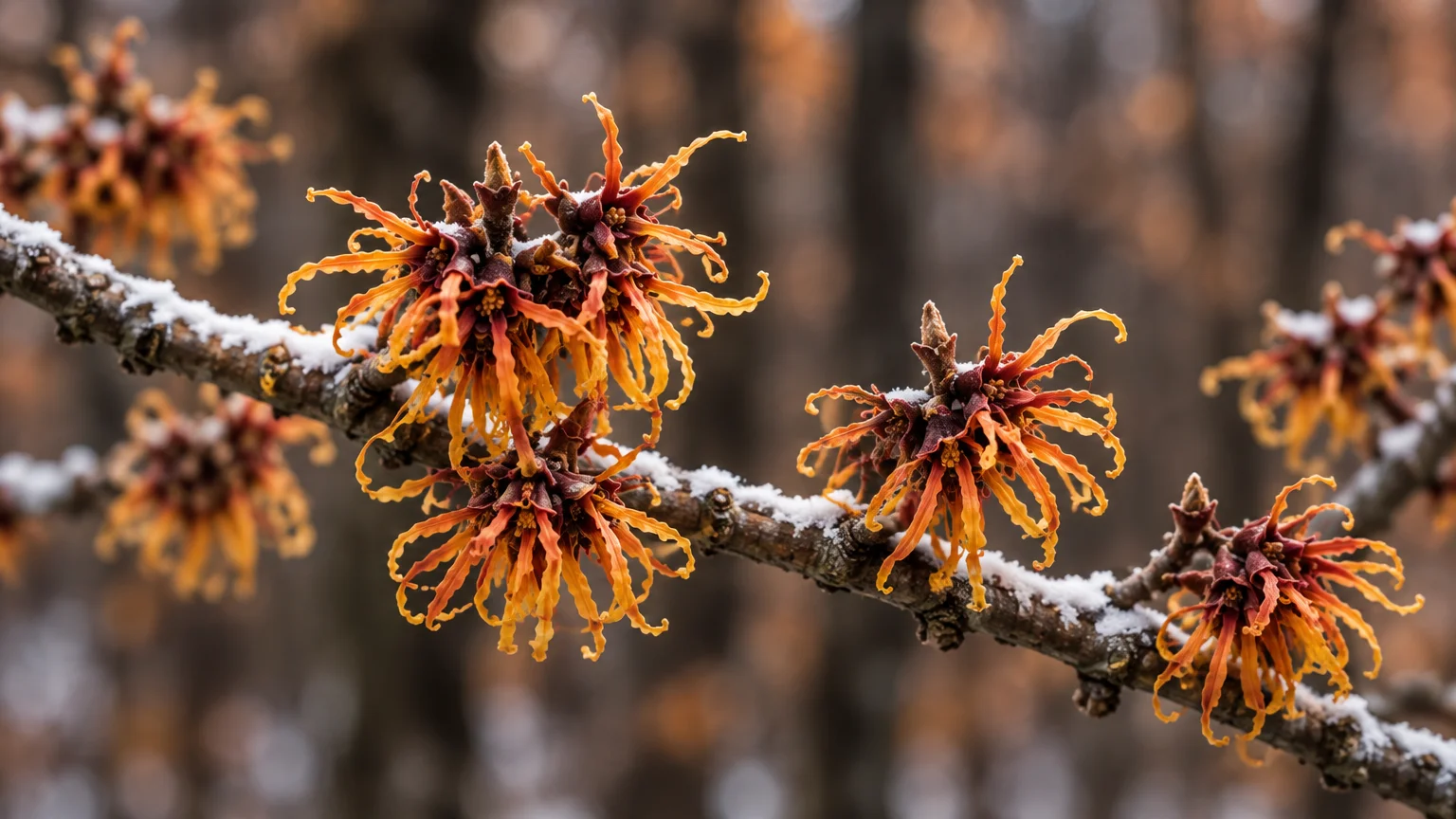
Tip #9: Witch Hazel (Hamamelis)
Witch hazel displays unique, ribbon-like petals in shades of spicy copper, fiery orange, and luminous gold. These spidery flowers bloom on bare wood during the depth of February when few plants dare stir.
When freezing winds howl, the delicate petals curl up tightly to protect themselves against frost damage. They unfurl instantly once mild sunshine warms the air, releasing an intoxicating, woodsy perfume.
Hybrid selections like Hamamelis x intermedia provide outstanding winter displays alongside fiery autumn foliage. They grow as large spreading shrubs or small specimen trees reaching twelve to fifteen feet tall.
Plant witch hazel in acidic, loamy soil enriched with organic leaf compost in full sun or partial shade. Ensure consistent moisture during hot summer spells to foster healthy bud set for next winter.
Situate this architectural plant near walkways, entryways, or patio windows where you can appreciate its fragrance daily. It requires minimal pruning aside from removing dead or crossed branches in spring.
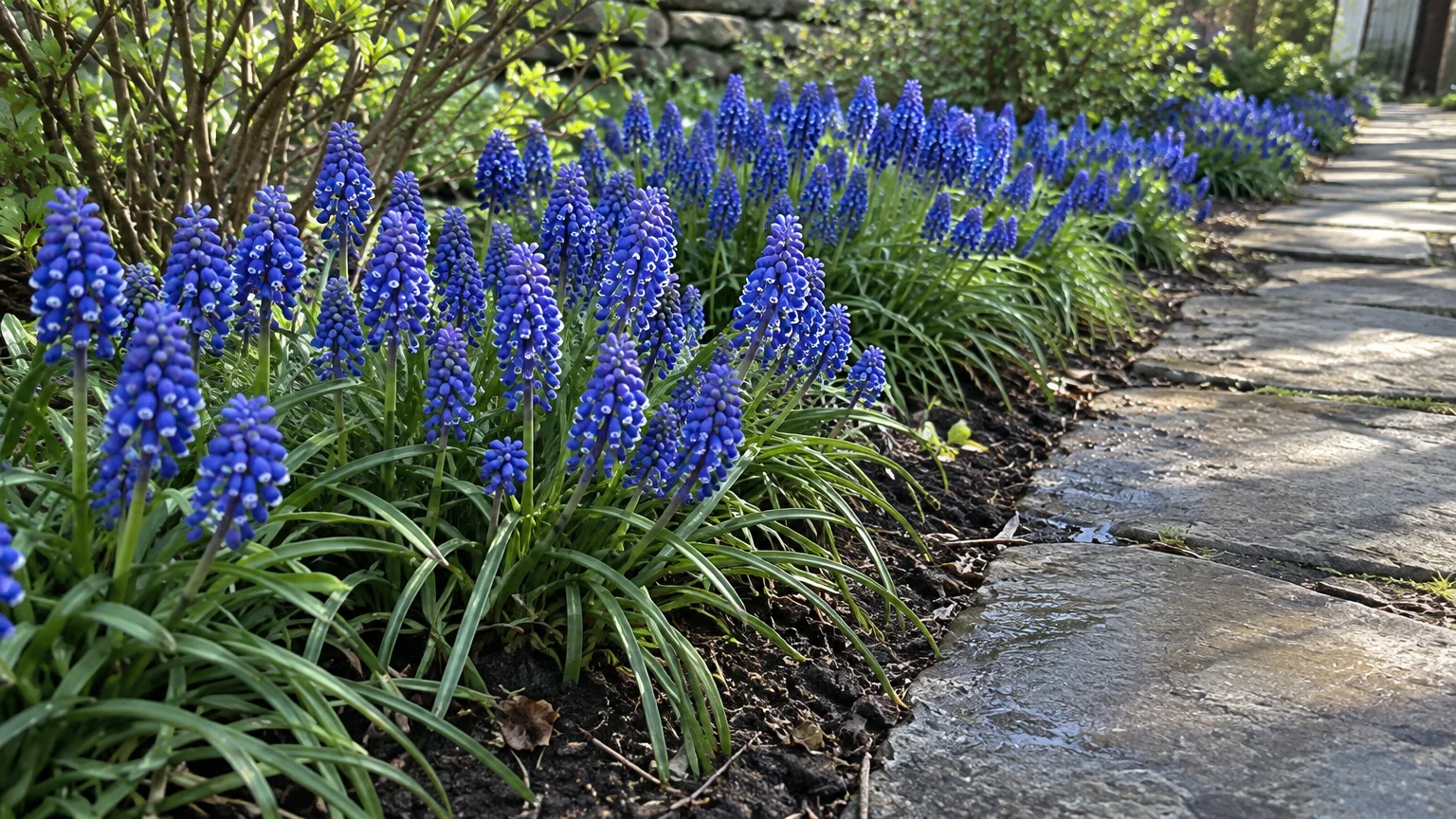
Tip #10: Grape Hyacinths (Muscari armeniacum)
Grape hyacinths produce tight, conical spikes composed of miniature, urn-shaped florets resembling tiny clusters of grapes. Their saturated cobalt, sky blue, or pure white tones provide intense border contrast in early spring.
These resilient perennials emit a sweet, musky fragrance that draws curious early pollinators out of their winter nests. Standing six to eight inches high, they make splendid edging accents for walkways.
Plant the tear-shaped bulbs three inches deep in late autumn, spacing them roughly three inches apart. They thrive in ordinary, well-draining garden soil bathed in full sunlight or partial shade.
Grape hyacinths naturalize readily, forming thick colonies that return reliably for decades. Unlike many delicate spring blooming flowers, Muscari bulbs resist hungry rodents, deer, and common garden insects.
Combine them alongside bright yellow daffodils or pink tulips to create timeless early-season color harmonies. Trim spent flower stems after blooming to keep plantings neat and prevent unwanted self-seeding.
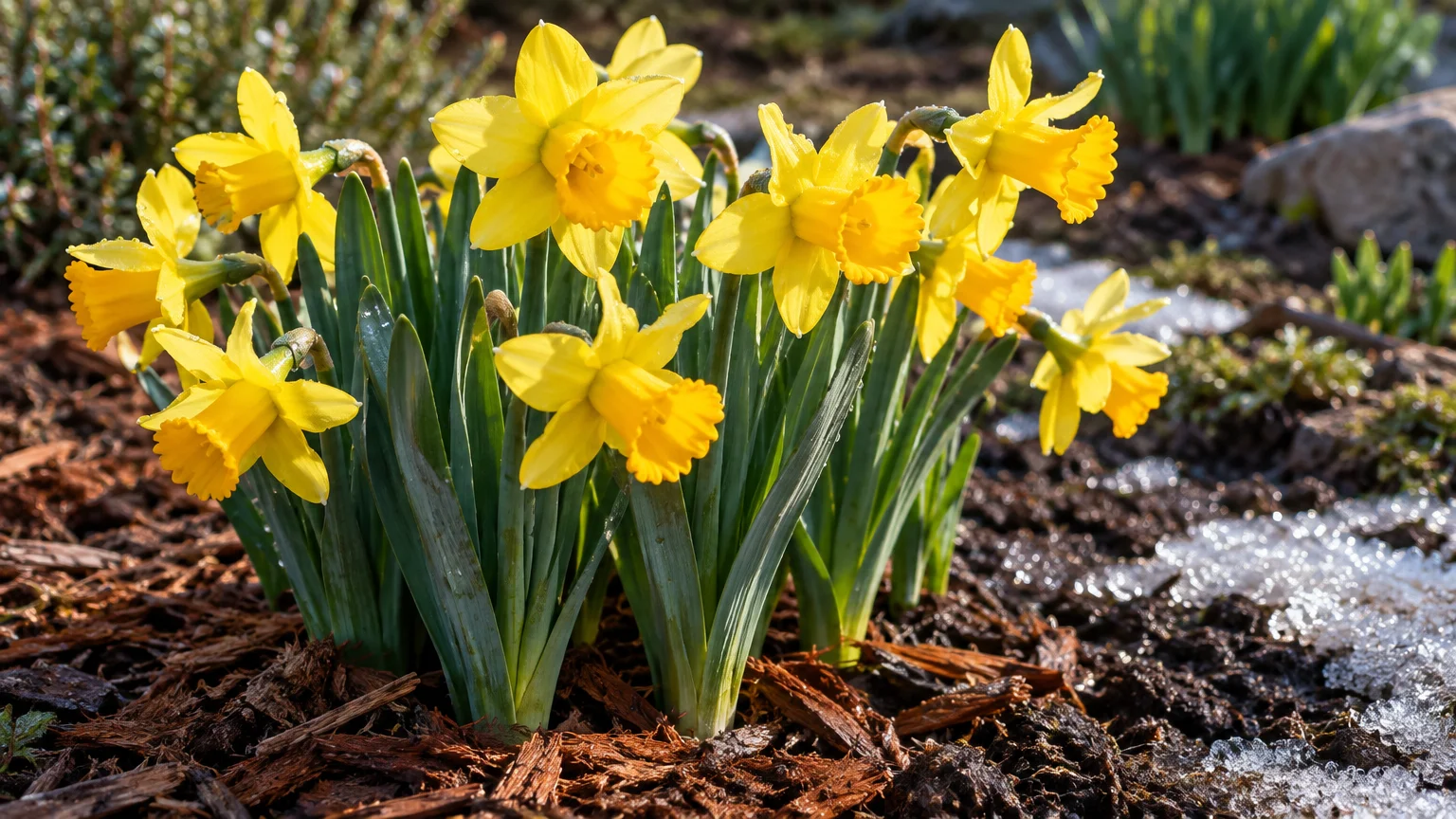
Tip #11: Early Daffodils (Narcissus ‘Rijnveld’s Early Sensation’)
While standard daffodils bloom in mid-spring, specialized early cultivars like ‘Rijnveld’s Early Sensation’ often blossom in February. Their classic golden-yellow trumpets beam bravely against lingering winter snowbanks.
These vigorous, weather-resistant flowers withstand driving rain, sleet, and freezing overnight temperatures without drooping. They provide an early dose of bright sunshine when your garden needs optimism most.
Plant your daffodil bulbs in early autumn, setting them six inches deep with the pointed tips facing upwards. Pick a location that receives at least six hours of direct sunlight each day.
Daffodils contain poisonous lycorine crystals throughout their tissues, making them entirely pest-proof against deer, rabbits, and voles. You can plant them freely around vulnerable plants to deter foraging animals.
Allow the thick foliage to stand undisturbed for six weeks following the bloom cycle. This duration allows the leaves to convert solar energy into carbohydrates stored inside the dormant bulb.
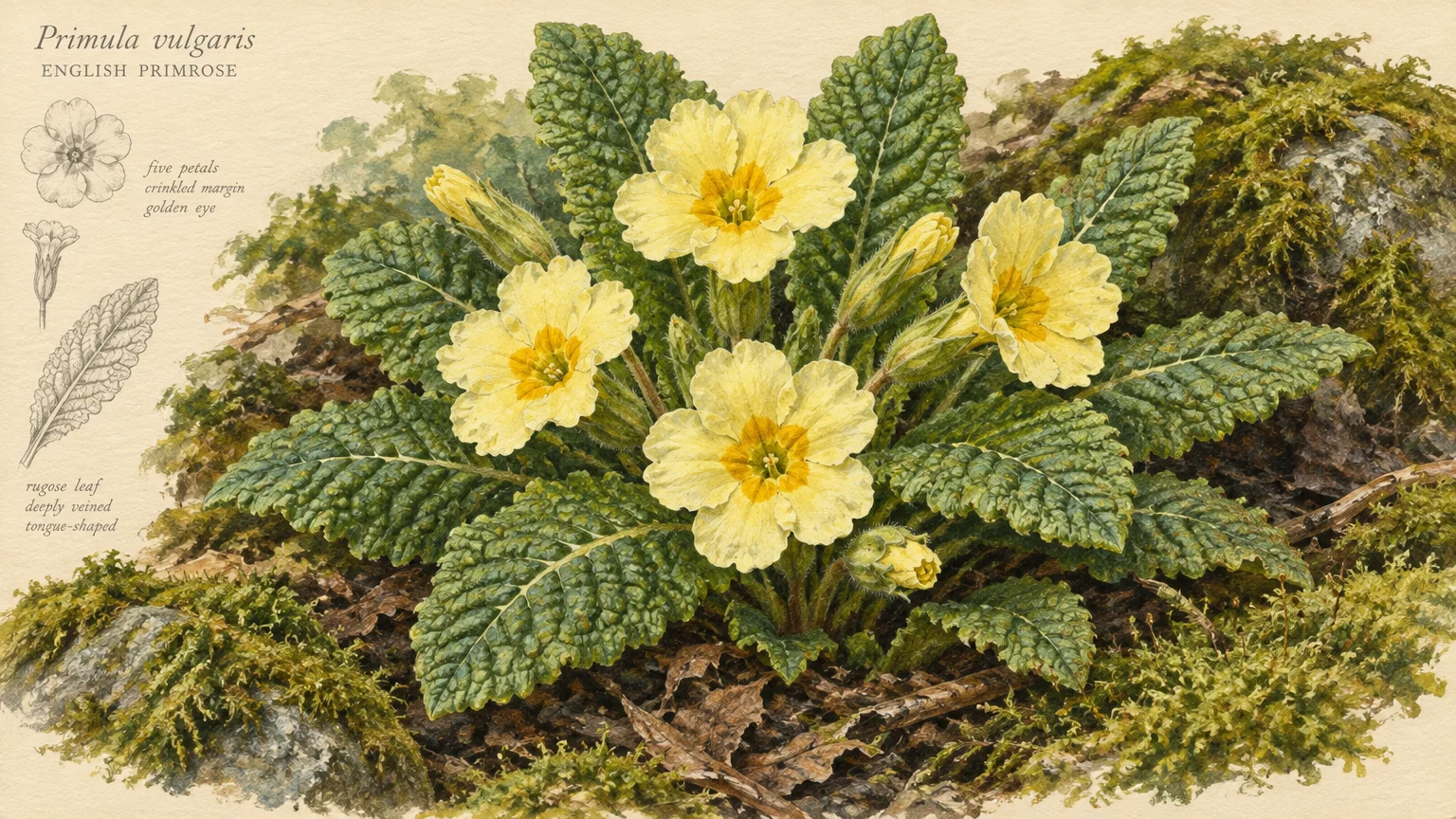
Tip #12: English Primroses (Primula vulgaris)
English primroses carpet early spring garden beds with vibrant, crinkled leaves and cheerful, five-petaled blooms. Their blossoms span an astonishing spectrum of colors, including buttercup yellow, scarlet red, deep sapphire, and pastel pink.
In cool, temperate climates, these moisture-loving perennials start flowering in early March and continue for several weeks. Their pleasant fragrance and cheerful golden eyes welcome early foraging bumblebees.
Primroses prefer damp, humus-rich soil situated in cool, dappled shade or along woodland edges. They suffer in dry, sandy soils or scorching summer heat, so mulch beds well with organic compost.
Install young container plants in early autumn or late winter, setting crowns level with the surrounding soil line. Keep the soil consistently moist throughout their active spring growing and flowering period.
Pinch off faded flower stems at their base to encourage continuous bud production throughout early spring. Divide overcrowded clumps every three years in early autumn to sustain vitality and vigorous growth.
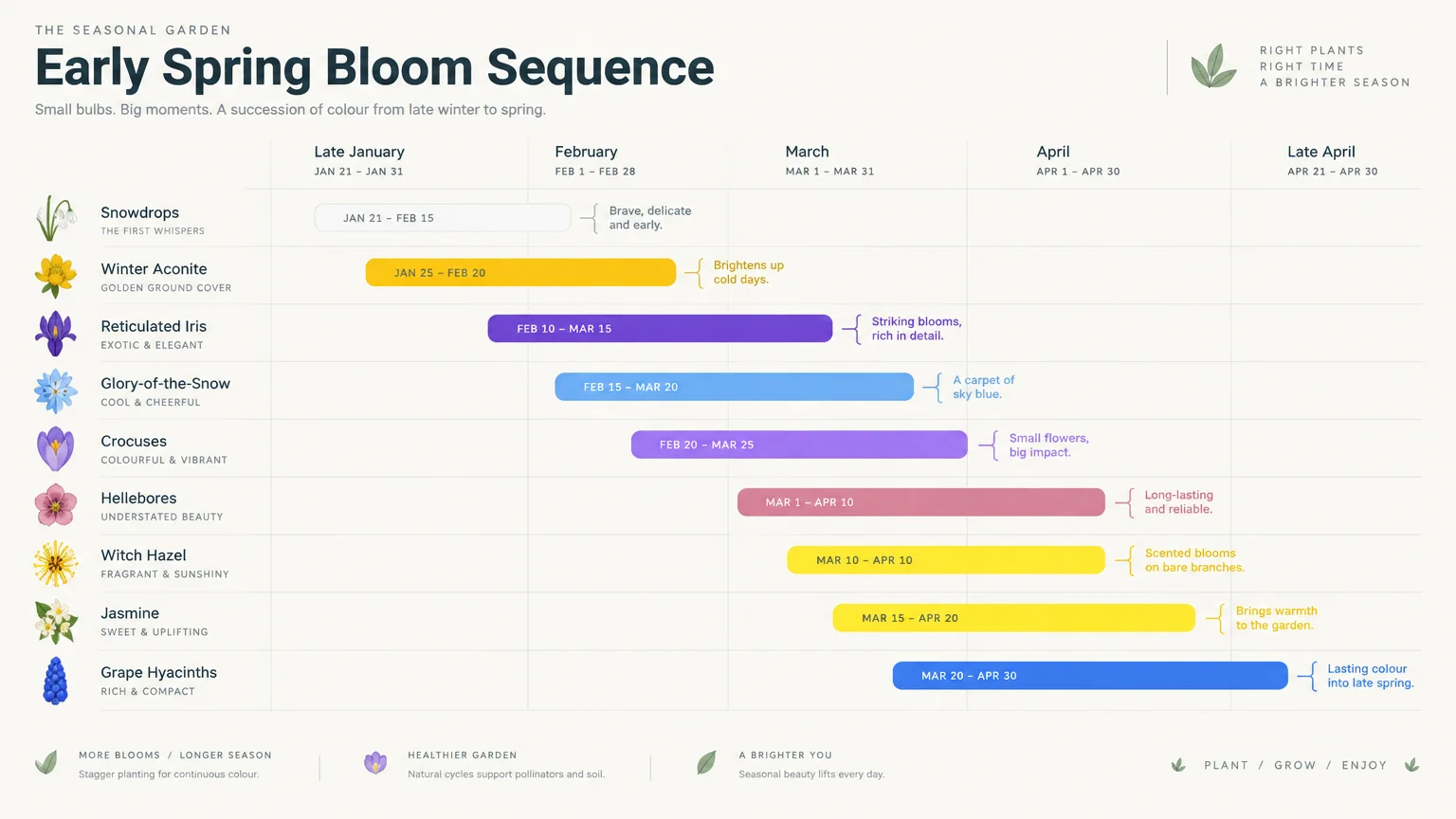
Putting It All Together: Enjoy Your Beautiful Garden
Designing an early bloomers garden lets you chase away winter gloom weeks before your neighbors see a single sprout. By pairing ultra-early bulbs with hardy woody shrubs, you construct layered visual interest.
Plant in large, concentrated drifts rather than scattering single bulbs across large areas. Grouping colors together produces striking focal points that catch the eye from indoor windows.
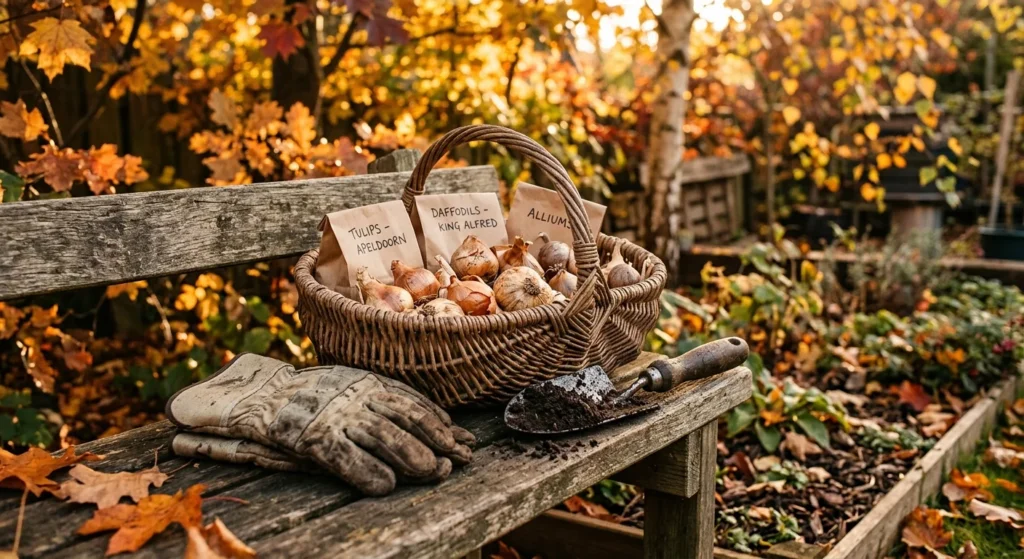
Remember to plant fall bulbs at their correct depths in rich, well-draining soil before hard frosts freeze the ground. Consistent moisture in autumn promotes robust root development that guarantees spectacular spring shows.
Incorporate reliable pest-resistant selections like hellebores, snowdrops, and early daffodils to safeguard your hard work. This strategic planting ensures deer and rodents leave your delicate blossoms untouched.
Step outside this weekend to survey your yard for prime planting locations under deciduous trees and near entry paths. Welcoming the first flowers of spring will bring you deep gardening joy year after year.
For region-specific advice, consult your local University Extension program (find yours via the USDA directory). For plant databases and inspiration, visit the Missouri Botanical Garden or the Royal Horticultural Society.
Disclaimer: This article provides general gardening advice; always consider your specific climate, soil conditions, and local pests. Follow safety guidelines when using gardening tools and products.
Frequently Asked Questions
When is the best time to plant early spring bulbs?
Plant fall-planted bulbs such as snowdrops, crocuses, and squill from late September through November. Aim to install them after soil temperatures cool down but before the ground freezes solid.
This timing allows bulbs to establish healthy root systems without pushing tender top growth before winter arrives.
How do early spring flowers survive freezing temperatures and snow?
Early spring bloomers produce natural antifreeze compounds, specifically concentrated sugars, inside their cellular structures. These natural solutions lower the freezing point of water within plant tissues.
Their flexible stems can collapse flat under heavy snow and spring right back up when the sunshine returns.
Should I cut back the foliage of early blooming flowers after they finish?
Never cut green foliage immediately after flowers fade because the leaves generate food for next year’s buds. Wait until the foliage naturally turns yellow and wilts completely, which usually takes four to six weeks.
Once the leaves turn brown and pull away easily with a gentle tug, you can clean up your garden bed.
Which early spring flowers are safest from deer and rodents?
Snowdrops, hellebores, and early daffodils top the list of pest-resistant spring garden flowers. Their tissues contain natural alkaloids that taste intensely bitter and prove mildly toxic to foraging animals.
Rodents and deer quickly learn to steer clear of these plantings, leaving your floral displays undisturbed.