Transforming a steep, eroding hillside into a lush, stabilized landscape requires vigorous vegetation with deep, interlocking root systems. Rainwater washes loose topsoil down bare slopes within minutes, creating unsightly ruts and stripping vital nutrients from your yard. You can permanently halt this runoff and safeguard your property value by establishing resilient, mat-forming groundcovers. These hardy plants intercept heavy raindrops with their dense foliage blankets while anchoring shifting subsoil with extensive underground networks. Selecting the right species creates an attractive, low-maintenance living carpet that suppresses weeds, retains moisture, and eliminates dangerous hillside mowing forever.
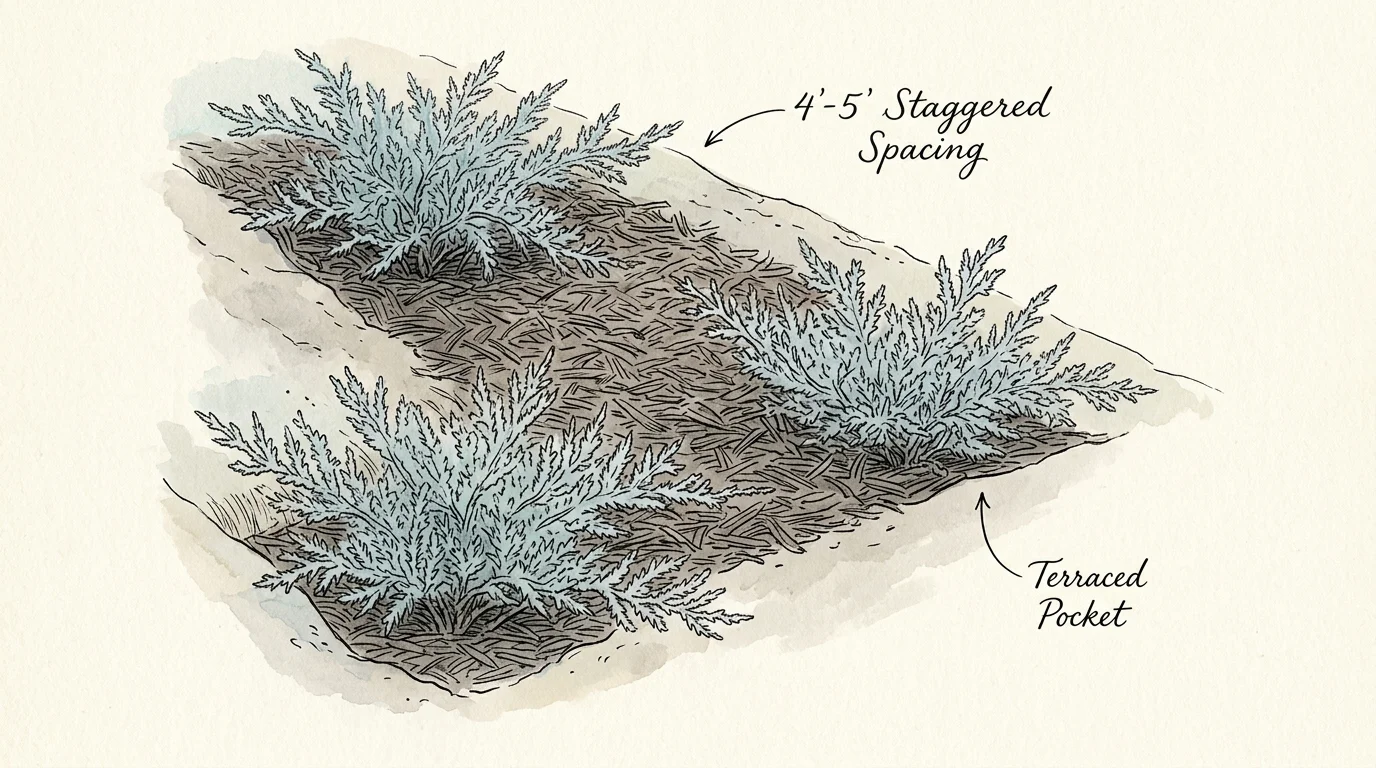
Tip #1: Creeping Juniper (Juniperus horizontalis)
Creeping juniper stands as one of the most reliable erosion control ground cover plants for steep, sun-drenched grades. This tough evergreen conifer stays low to the ground, rarely exceeding six to twelve inches in height, while sending out wide, prostrate branches that stretch six to eight feet across. Cultivars like ‘Blue Rug’ and ‘Wiltonii’ produce an uninterrupted tapestry of fine, silvery-blue foliage that shifts to rich plum tones during the cold winter months. Because it retains its foliage year-round, creeping juniper shields vulnerable hillside soil from winter rains and heavy snowmelt when deciduous options lie dormant.
The primary strength of this plant lies beneath the surface. Creeping juniper develops an extensive, woody root system that penetrates deeply into compacted subsoils, effectively pinning clay, gravel, and loose loam to the hillside. Its overlapping, prickly branches create an impenetrable barrier that baffles surface runoff, slowing water velocity so moisture can soak into the ground rather than carve erosion channels.
To install creeping juniper successfully, plant young nursery stock in early spring or autumn. Space individual plants four to five feet apart in a staggered, diagonal grid pattern across the slope. Excavate planting pockets with a flat terrace behind each hole to catch water, and amend heavy clay with organic compost to improve drainage. Apply a three-inch layer of shredded hardwood mulch between the young plants to prevent soil movement until the branches intertwine to form a solid, weed-choking carpet.
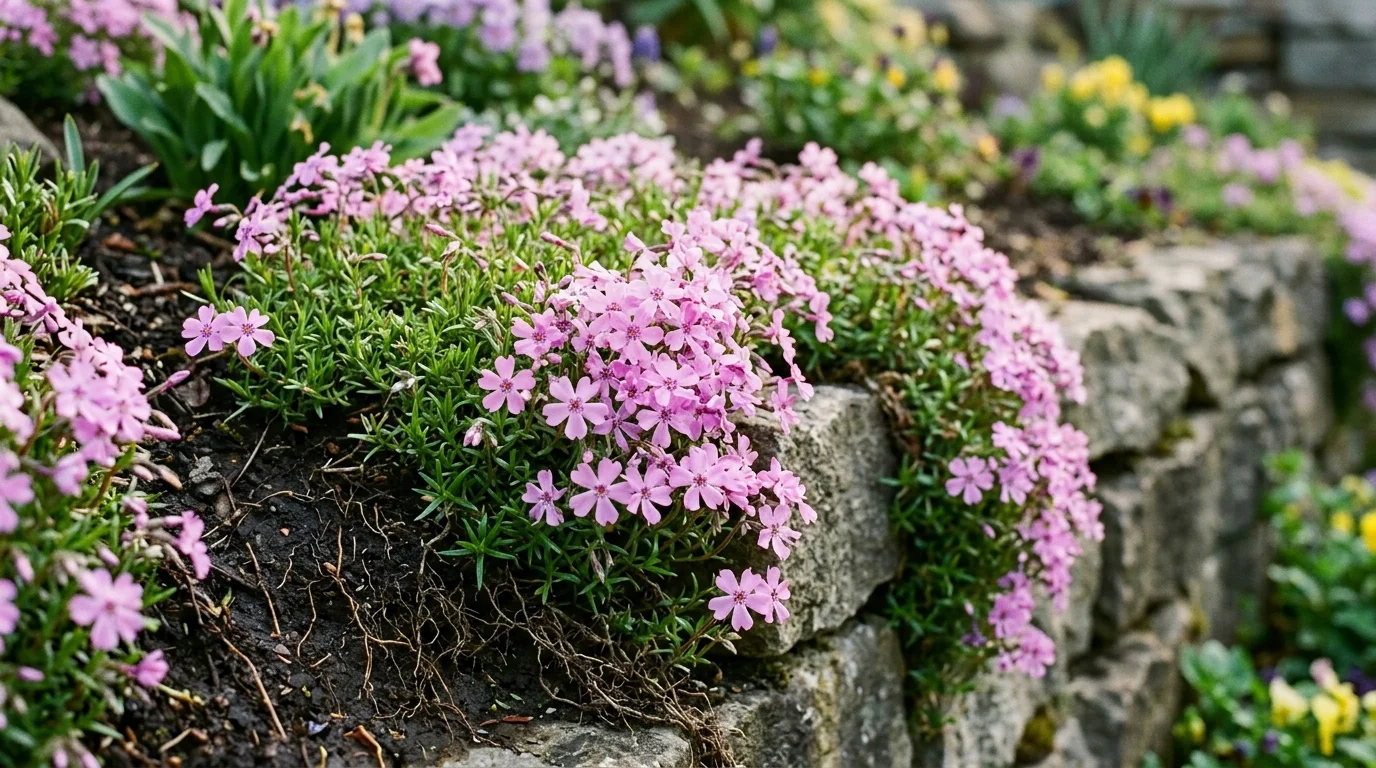
Tip #2: Creeping Phlox (Phlox subulata)
Creeping phlox, often called moss phlox, provides phenomenal slope landscaping performance combined with a dazzling spring floral display. This evergreen perennial hugs the terrain, forming dense, needle-like mats that reach just three to six inches in height. During mid-to-late spring, the foliage disappears completely beneath hundreds of five-petaled blossoms in shades of lavender, magenta, bright pink, and pure white. It is an ideal choice for rocky inclines, sunny bank edges, and dry retaining wall drop-offs.
The dense, mossy foliage of creeping phlox acts like an interlocking cushion that absorbs the kinetic energy of pelting rainstorms. Below ground, its fine, fibrous root system knits the top six inches of topsoil together into a solid aggregate. This high root density prevents soil particles from dislodging during sudden downpours, making it one of the best plants to prevent soil erosion on moderate garden slopes.
Plant creeping phlox in full sun and well-drained, slightly alkaline to neutral soil. Space container-grown plugs twelve to fifteen inches apart in alternating rows. Water the plants weekly during their first growing season to encourage rapid lateral root spread. Once the spring blooming cycle concludes, shear the foliage back by one-third with hand shears; this simple maintenance task encourages dense branching, tightens the mat, and prevents the center of the plant from becoming woody.
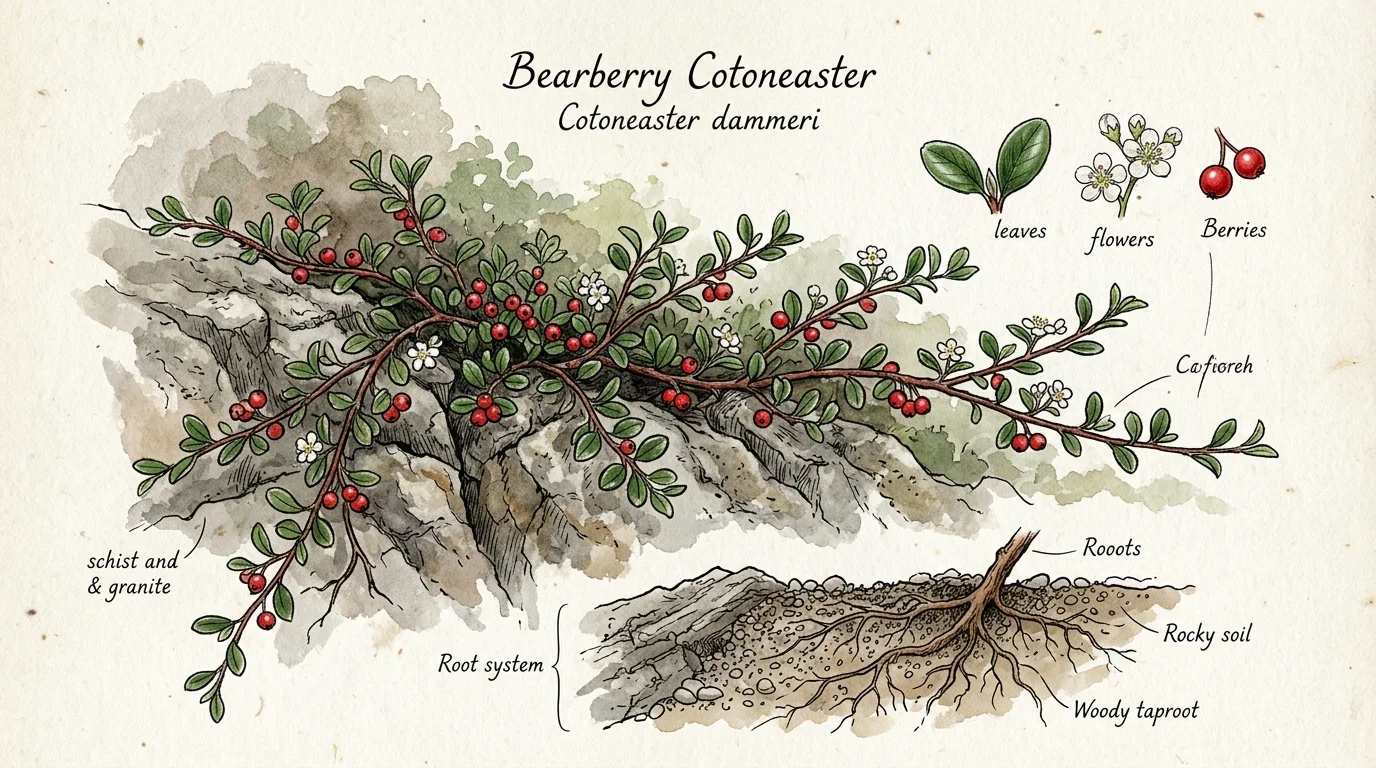
Tip #3: Bearberry Cotoneaster (Cotoneaster dammeri)
Bearberry cotoneaster is a vigorous, trailing woody shrub that offers exceptional utility as a ground cover for hillsides. Growing only six to eight inches tall, this plant produces long, arching stems that spread up to six feet wide. Glossy dark green leaves cloak the branches throughout the year, accompanied by delicate white flowers in late spring and brilliant red pomes in autumn that persist into winter.
What makes bearberry cotoneaster particularly powerful for stabilizing slopes is its ability to perform adventitious rooting. As the trailing stems creep along the terrain, they sprout new roots wherever the bark maintains firm contact with damp soil. This natural layering process creates dozens of secondary anchor points across the hillside, stitching the soil into a continuous, interconnected living lattice that resists even severe gravitational sliding.
Set your cotoneaster plants into the hillside spaced three to four feet apart. When planting on steep slopes with angles exceeding thirty degrees, secure biodegradable coir or jute erosion control fabric over the hill first. Cut small X-shaped slits through the fabric to insert the root balls into the soil below. The fabric will protect the slope from sheet erosion during the first two years while the cotoneaster stems root across the surface and take over structural control.
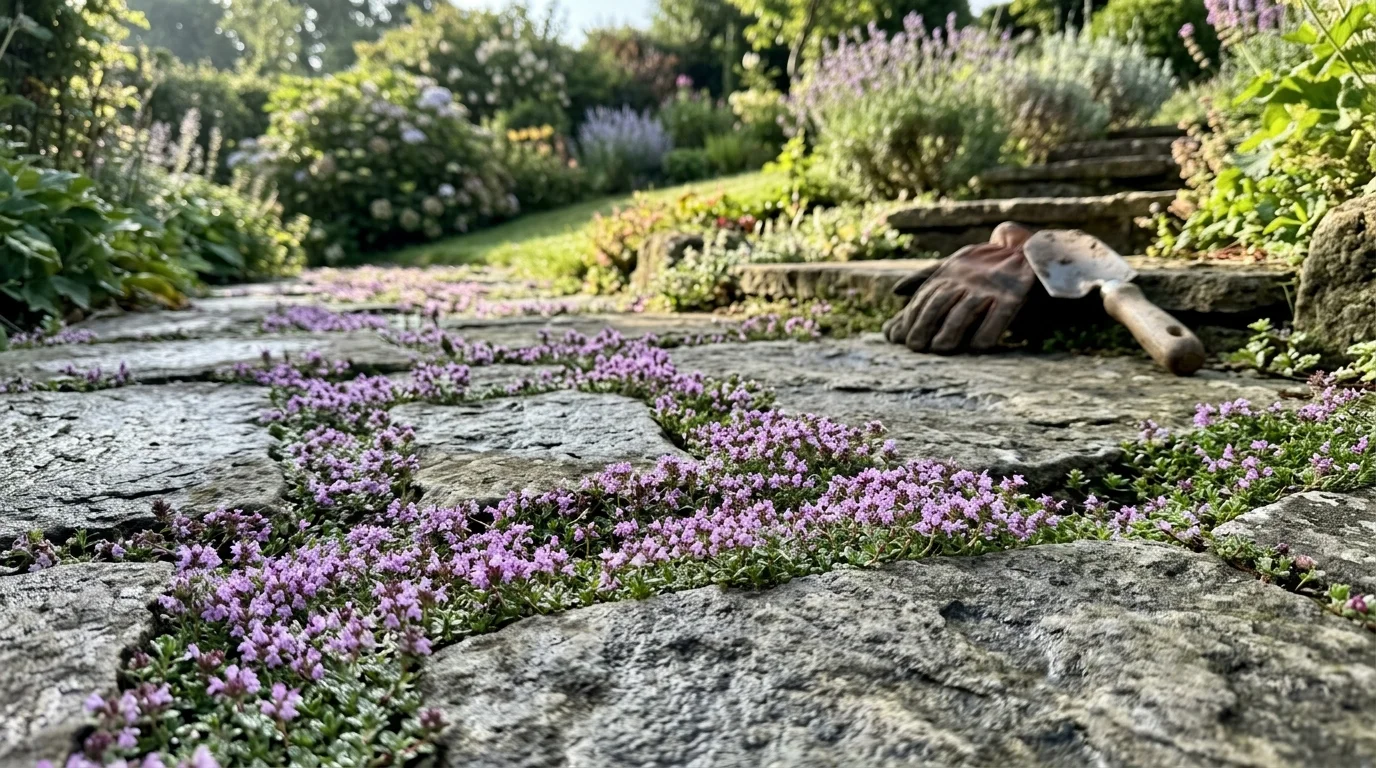
Tip #4: Creeping Thyme (Thymus serpyllum)
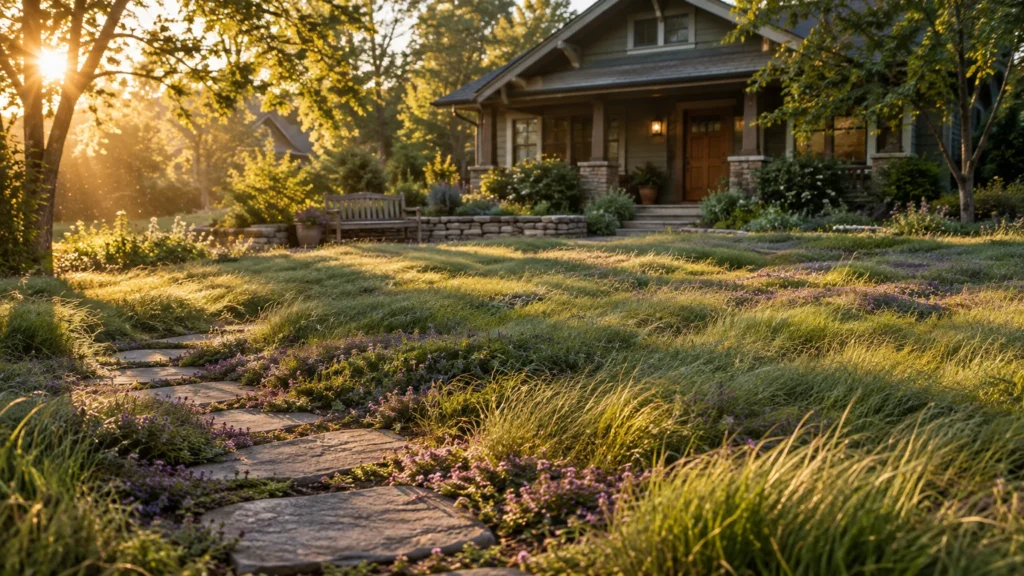
Creeping thyme is an aromatic, ultra-hardy perennial groundcover that thrives in baking sun and thin, nutrient-poor soil. Reaching a height of only two to four inches, it spreads laterally to form tight, fragrant cushions of tiny rounded leaves. In midsummer, the plant bursts into bloom with dense clusters of pink and purple nectar-rich blossoms that draw honeybees and beneficial pollinators from across the neighborhood.
This herb excels at binding loose, gravelly topsoil on south-facing banks where standard turfgrass withers from heat and drought. Creeping thyme develops a dense, fibrous network of micro-roots that anchor surface particles and dramatically improve soil porosity. The tight foliage layer reduces surface evaporation, helping the hillside retain vital groundwater during prolonged dry spells while eliminating runoff during flash storms.
Plant creeping thyme plugs six to nine inches apart in well-drained, sandy or gravelly loam. Thyme dislikes excessive moisture and heavy clay, so avoid planting it at the bottom of drainage swales where standing water collects. Give the plants light, regular watering until established, after which they will survive on natural rainfall alone. Lightly trim the spent flowers in late summer to maintain a compact, weed-free cover that withstands light foot traffic.
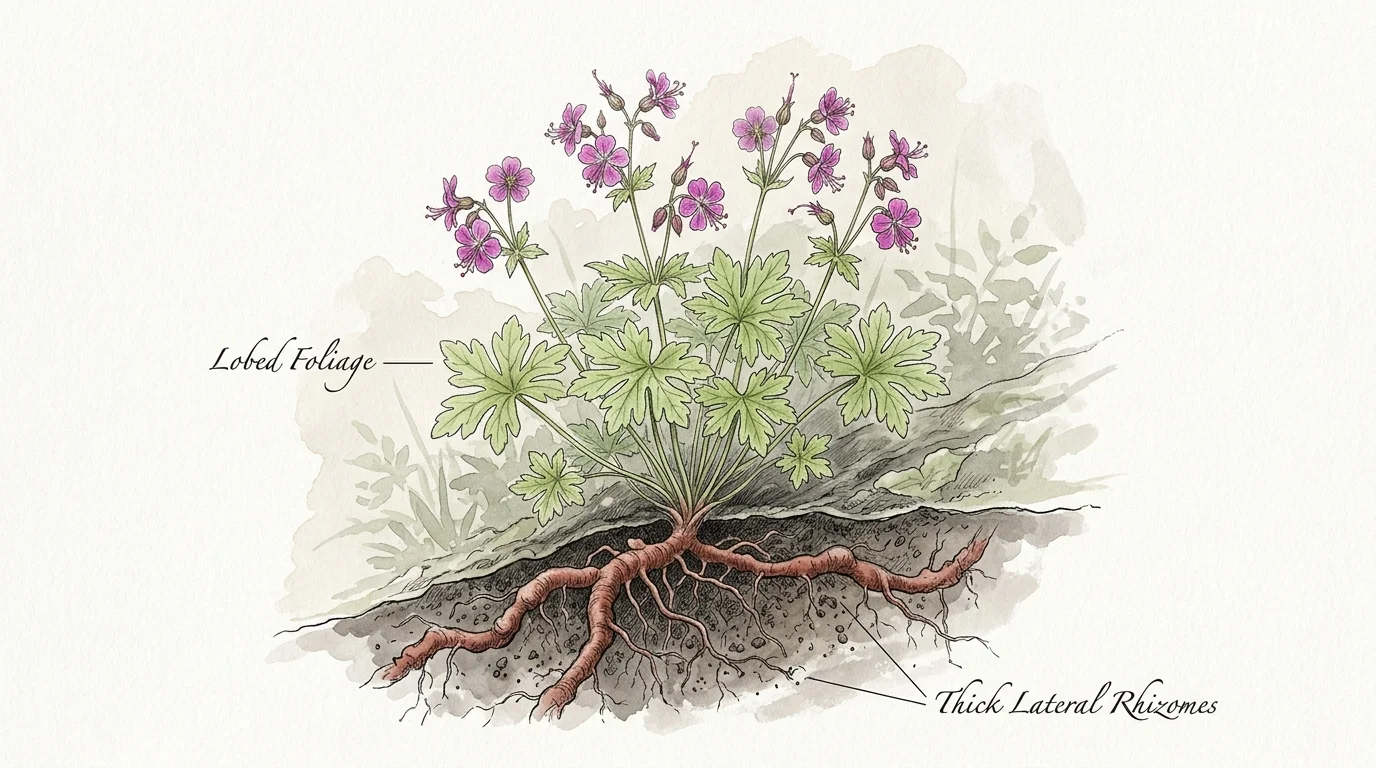
Tip #5: Bigroot Geranium (Geranium macrorrhizum)
Bigroot geranium is an indispensable, semi-evergreen perennial that solves erosion challenges in areas shifting from full sun to dappled woodland shade. It grows twelve to eighteen inches tall, producing broad, aromatic, lobed leaves that turn fiery shades of copper, amber, and crimson in late autumn. Magenta flowers emerge on upright stalks in late spring, creating an eye-catching visual accent on sloping terrain.
The mechanical advantage of bigroot geranium comes from its stout, fleshy underground rhizomes. These thick rootstocks travel just below the surface, locking the upper soil horizon together in a tight, resilient grid. At the same time, the broad umbrella-like foliage deflects heavy rainfall, dispersing torrential water into a gentle mist before it impacts the bare soil. This leaf barrier also casts dense shade, naturally preventing aggressive hillside weeds from gaining a foothold.
Install container plants twelve to eighteen inches apart in staggered lines across your hillside. Bigroot geranium tolerates virtually any soil type, from dry rocky banks to heavy clay. Water young plants thoroughly once a week during their first month in the ground. Because deer and rabbits avoid the fragrant oils in the foliage, this plant remains completely untouched by wildlife on open, suburban hillsides.
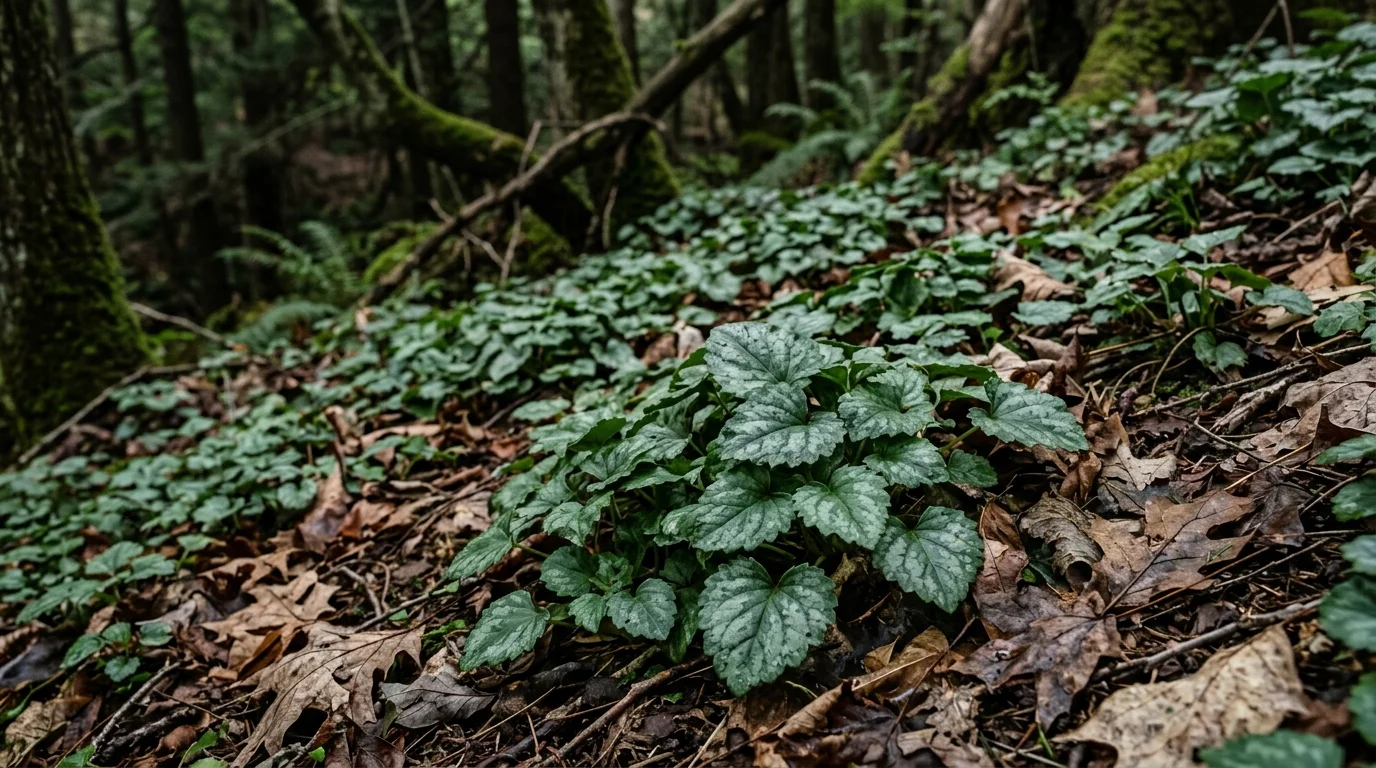
Tip #6: Allegheny Spurge (Pachysandra procumbens)
For shaded slopes under mature deciduous trees, Allegheny spurge serves as an ecologically beneficial native groundcover that excels at soil stabilization. Unlike its non-native Asian counterpart, this North American native exhibits a refined, matte-green leaf texture with subtle silver mottling. In early spring, fragrant white flower spikes emerge from the base of the plant before the tree canopy leafs out, providing early forage for native bees.
Allegheny spurge secures sloped forest floors through a slow-spreading subterranean rhizome system. These underground stems bind humus-rich woodland soils, preventing organic leaf litter and topsoil from sliding down the bank during heavy spring thaws. Because it forms a uniform, semi-evergreen woodland carpet, it prevents gullies from developing along steep shade trails and ravine edges without overtaking native woodland wildflowers.
Plant Allegheny spurge in partial to full shade in soils rich in organic matter. Space crowns eight to twelve inches apart and cover the surrounding area with two inches of leaf mold or composted pine bark. Keep the planting zone evenly moist during the initial establishment year. Once its roots grip the subsoil, this native spurge tolerates periodic summer droughts under thirsty tree canopies with exceptional resilience.
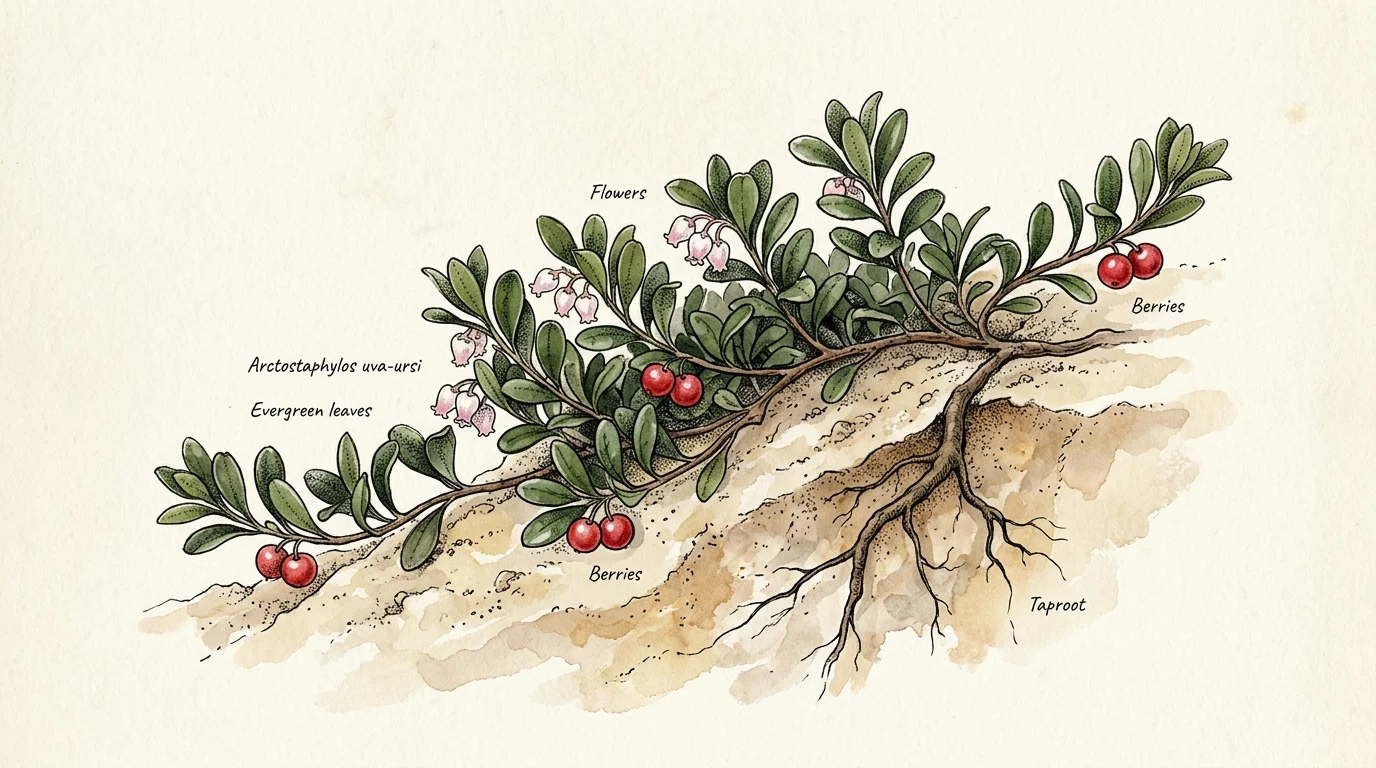
Tip #7: Bearberry (Arctostaphylos uva-ursi)
Bearberry, also known by its indigenous name kinnikinnick, is a prostrate, woody broadleaf evergreen shrub engineered by nature for harsh hillside environments. Growing just six to twelve inches high, it produces long, trailing reddish-brown branches that spread three to six feet in diameter. It features glossy, leathery green leaves that turn bronzy-red in winter, small bell-shaped pinkish-white blossoms, and bright scarlet berries favored by songbirds.
This plant thrives in extreme environments, including coastal sand dunes, granite slopes, and rocky alpine ledges where few other groundcovers can survive. Bearberry forms a dual root system: a primary woody taproot that plunges deep into rocky fissures for stability, paired with spreading lateral roots that produce new shoots and anchor shifting sand or loose scree. This root architecture makes it one of the most effective slope landscaping plants for cold, exposed hillsides.
Install bearberry in full sun or light shade within USDA hardiness zones 2 through 6. It requires acidic, well-draining, sandy or rocky soil with a low pH between 4.5 and 5.5. Space individual plants two to three feet apart. Avoid adding rich fertilizers or heavy topsoil to the planting hole, as bearberry performs best in nutrient-lean conditions that discourage root rot.
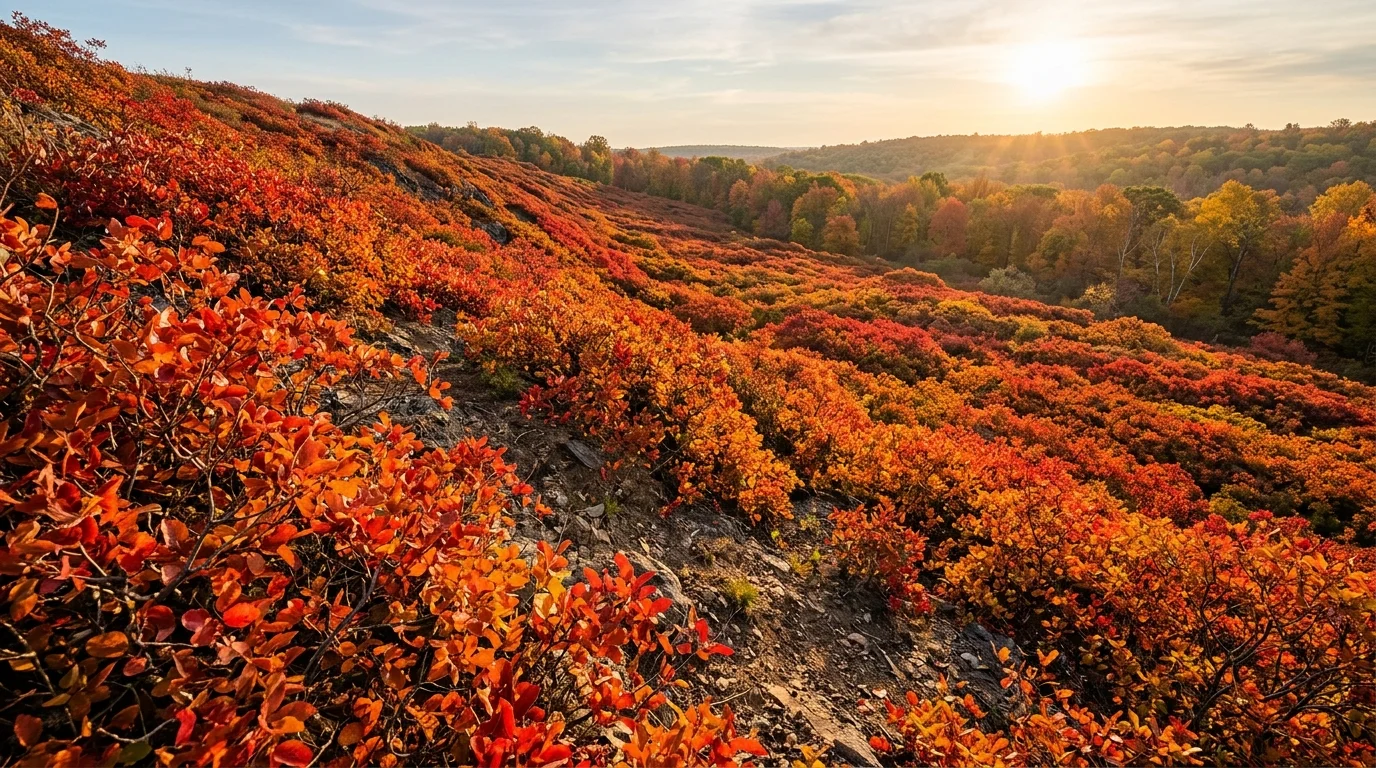
Tip #8: Gro-Low Fragrant Sumac (Rhus aromatica ‘Gro-Low’)
When dealing with massive highway-style cuts, long driveway slopes, or severe erosion gullies, Gro-Low fragrant sumac delivers unmatched anchoring strength. This tough deciduous woody shrub grows two to three feet tall while sprawling six to eight feet wide. It features handsome three-lobed green leaves that emit a pleasant citrus scent when bruised, followed by spectacular scarlet and orange autumn foliage.
Gro-Low fragrant sumac develops a massive, extensive woody root structure that branches deep into difficult subsoils, including solid clay, shale, and fractured bedrock. The plant spreads by root suckering, steadily sending up new stems that form an impenetrable thicket. This structural density breaks the momentum of downhill water runoff and locks entire hillside banks firmly in place against severe soil movement and mudslides.
Space these shrubs four to six feet apart across the upper, middle, and lower sections of your slope. Fragrant sumac tolerates drought, road salt, poor soil, and intense wind once established. Water deeply every two weeks during the first growing season to encourage the root system to dive deep into the hillside profile. Once mature, this self-sustaining ground cover requires virtually zero maintenance, providing permanent structural stability and brilliant seasonal color.
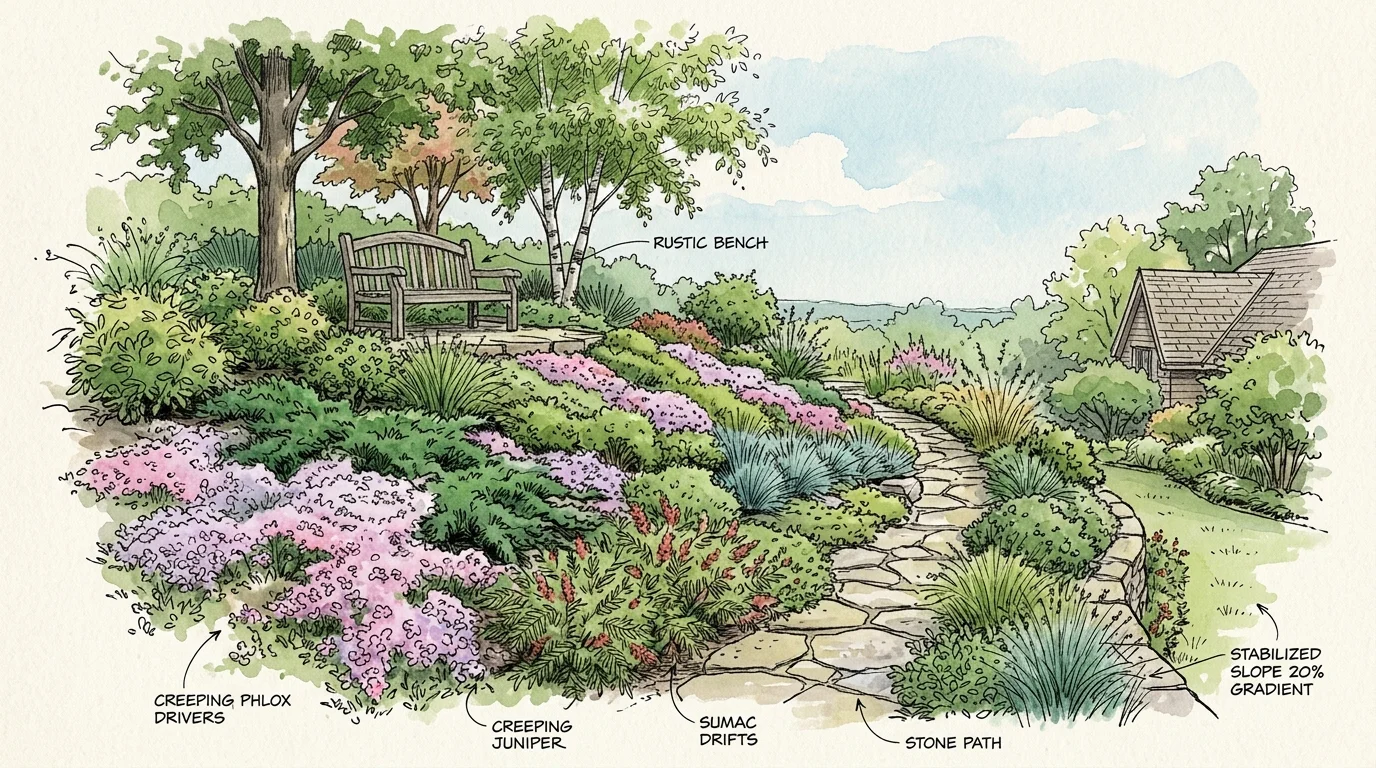
Putting It All Together: Enjoy Your Beautiful Garden
Transforming a steep, problematic slope into an attractive, stabilized garden feature is one of the most rewarding landscape projects you can undertake. By replacing hazardous, high-maintenance turfgrass with deep-rooted groundcovers for slopes, you solve soil erosion issues while enhancing your property’s visual appeal and biodiversity. Success begins with understanding your site’s specific sun exposure, soil composition, and slope gradient before choosing the right plant palette.
When you plant on an incline, always use a staggered diagonal grid rather than straight lines, as staggered placement traps runoff more effectively. Utilize erosion control blankets made from natural coconut coir or jute mesh on steep grades to hold the soil securely while root systems establish. Adding a consistent mulch layer and creating small water-retaining terraces behind each planting hole gives your new plants the foundational support they need to thrive.
As your living carpet fills in over the next two to three growing seasons, the interlocking roots will form a permanent subterranean matrix that binds the hillside together. You will enjoy a resilient, weed-resistant landscape that requires no dangerous mowing, minimal supplemental water, and no synthetic fertilizers. Take pride in your transformed hillside, knowing that you have protected your landscape against the elements while creating a thriving outdoor sanctuary.
Frequently Asked Questions
How do you plant groundcovers on a steep slope without causing further erosion?
To plant on steep slopes without disturbing soil stability, work across the slope horizontally from bottom to top rather than walking straight up and down the hill. Lay down biodegradable jute or coir erosion netting across the bank and stake it securely with wooden pins. Cut small incisions through the fabric only where you plan to place each plant, leaving the surrounding soil covered and undisturbed. Dig individual planting pockets with a small shelf on the uphill side to retain water, install your groundcovers, backfill firmly, and water each plant deeply. The mesh stabilizes the topsoil while the plants root through the fabric into the hillside.
How long does it take for slope groundcovers to fully establish?
Most erosion control ground cover plants require two to three full growing seasons to achieve complete coverage and full root depth. During the first year, plants focus the majority of their energy below ground, developing deep taproots and extensive lateral networks. In the second year, you will observe substantial top growth and spreading runners. By the third season, the groundcover forms an unbroken, dense carpet that fully prevents surface runoff and eliminates weed competition.
Can I combine different groundcovers on the same hillside?
Yes, combining multiple species is an excellent strategy that mirrors natural ecosystems and enhances hillside resilience. You can plant deeper-rooted woody shrubs like Gro-Low fragrant sumac or creeping juniper in key structural positions across the slope, while filling the intervening spaces with mat-forming perennials like creeping phlox or creeping thyme. Ensure that the companion plants share identical sunlight and soil moisture requirements so they thrive together harmoniously.
What type of mulch is best for stabilizing sloped garden beds?
Shredded hardwood mulch is the best choice for slopes because its fibrous, interlocking strands knit together to form a stable blanket that resists washing away during downpours. Avoid smooth pine bark nuggets, wood chips, or light straw, as these materials float easily and will wash down the hill with the first heavy rain. Apply shredded mulch at a depth of two to three inches, keeping it a couple of inches away from the direct crowns or stems of young groundcovers to prevent rot.
For region-specific advice, consult your local University Extension program (find yours via the USDA directory). For plant databases and inspiration, visit the Missouri Botanical Garden or the Royal Horticultural Society.
Disclaimer: This article provides general gardening advice. Always consider your specific climate, soil conditions, and local pests. Follow safety guidelines when using gardening tools and products.