You can harvest crisp, refreshingly sweet cucumbers all summer by eliminating the environmental stressors that trigger bitterness. Bitter cucumbers stem from compounds called cucurbitacins, which surge whenever plants face distress.
Understanding these biological triggers allows you to protect your harvest before acrid compounds ruin your garden salads. Simple adjustments to your daily care routine will transform bitter vines into prolific producers of sweet fruit.
Avoid these nine common cucumber growing mistakes to safeguard your vines and secure an abundant harvest of sweet, delicious slicing cucumbers all season long.
Tip #1: Inconsistent or Irregular Watering
Why Moisture Fluctuations Cause Bitterness
Cucumber fruits consist of over 95 percent water, making hydration the single most critical factor in their development. When a plant suffers through dry soil followed by heavy drenching, it experiences severe physiological shock.
This erratic moisture cycle forces the cucumber vine into survival mode. As a defensive response, the plant synthesizes high concentrations of cucurbitacins that migrate directly into the fruit.
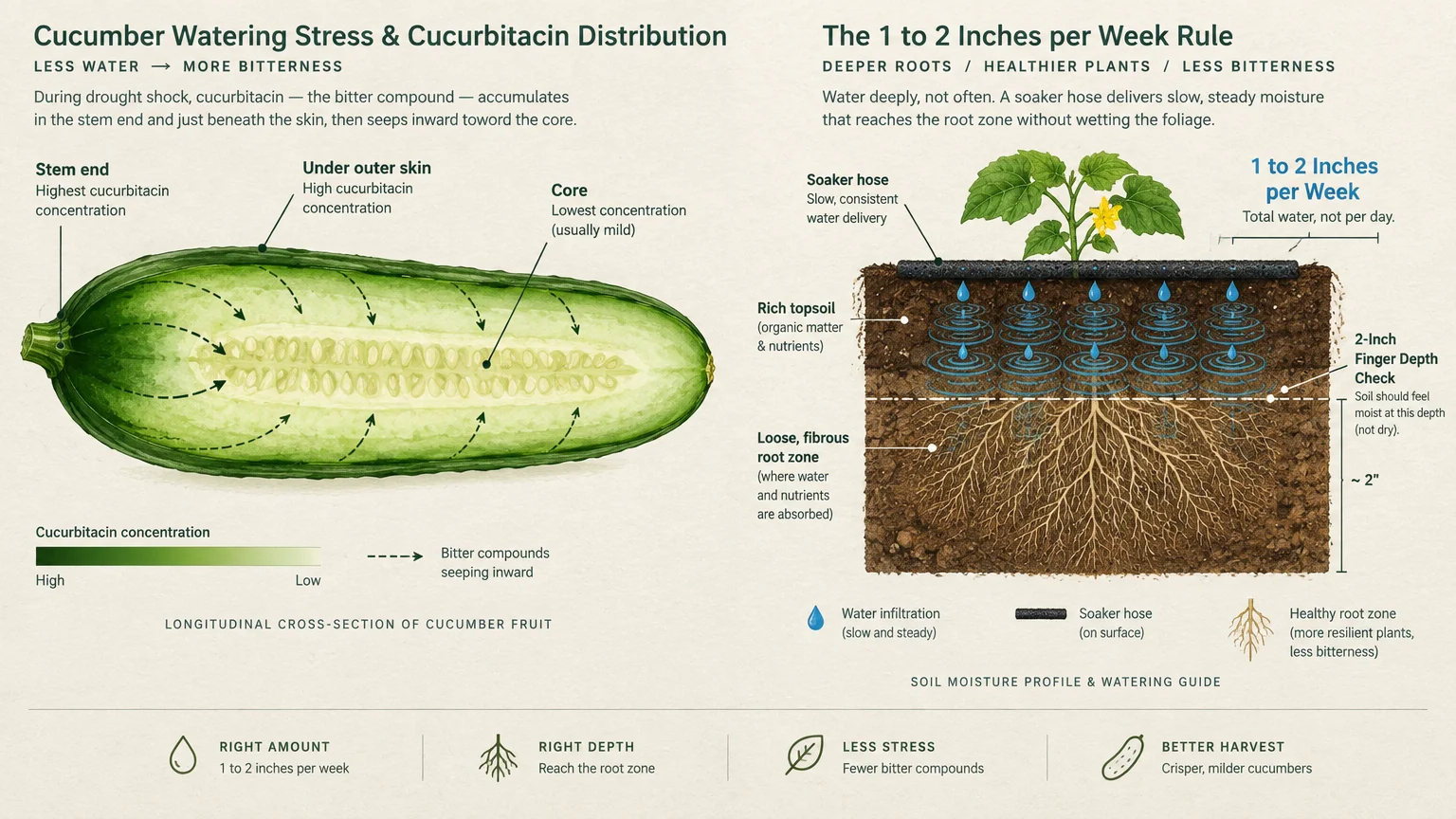
Cucurbitacins typically concentrate near the stem end and directly beneath the dark green skin. Irregular watering causes these bitter compounds to seep inward toward the core.
How to Maintain Steady Soil Moisture
Provide your cucumber plants with one to two inches of water every week. During hot summer spells, you may need to water your garden beds every morning.
Check soil moisture by pushing your index finger two inches into the dirt near the base of the plant. If the soil feels dry at that depth, water the roots thoroughly.
Drip irrigation systems and soaker hoses work best because they deliver consistent hydration directly to the root zone. Consistent watering prevents moisture swings and stops bitter cucumber causes in their tracks.
Tip #2: Exposing Vines to Extreme Afternoon Heat
How Heat Stress Alters Fruit Flavor
Cucumbers thrive in warm weather, but prolonged temperatures above 90 degrees Fahrenheit trigger intense plant stress. High ambient heat accelerates transpiration, causing leaves to wilt even when the soil contains adequate moisture.
When heat exhaustion overwhelms cucumber vines, cellular metabolism shifts to produce bitter defensive chemicals. The resulting fruit develops a harsh, astringent taste that ruins culinary dishes.
Sustained heat waves also cause pollen sterility and blossom drop, stunting overall fruit development. The few cucumbers that manage to mature during heat spikes almost always taste unpleasant.
Protecting Your Vines from Scorching Sun
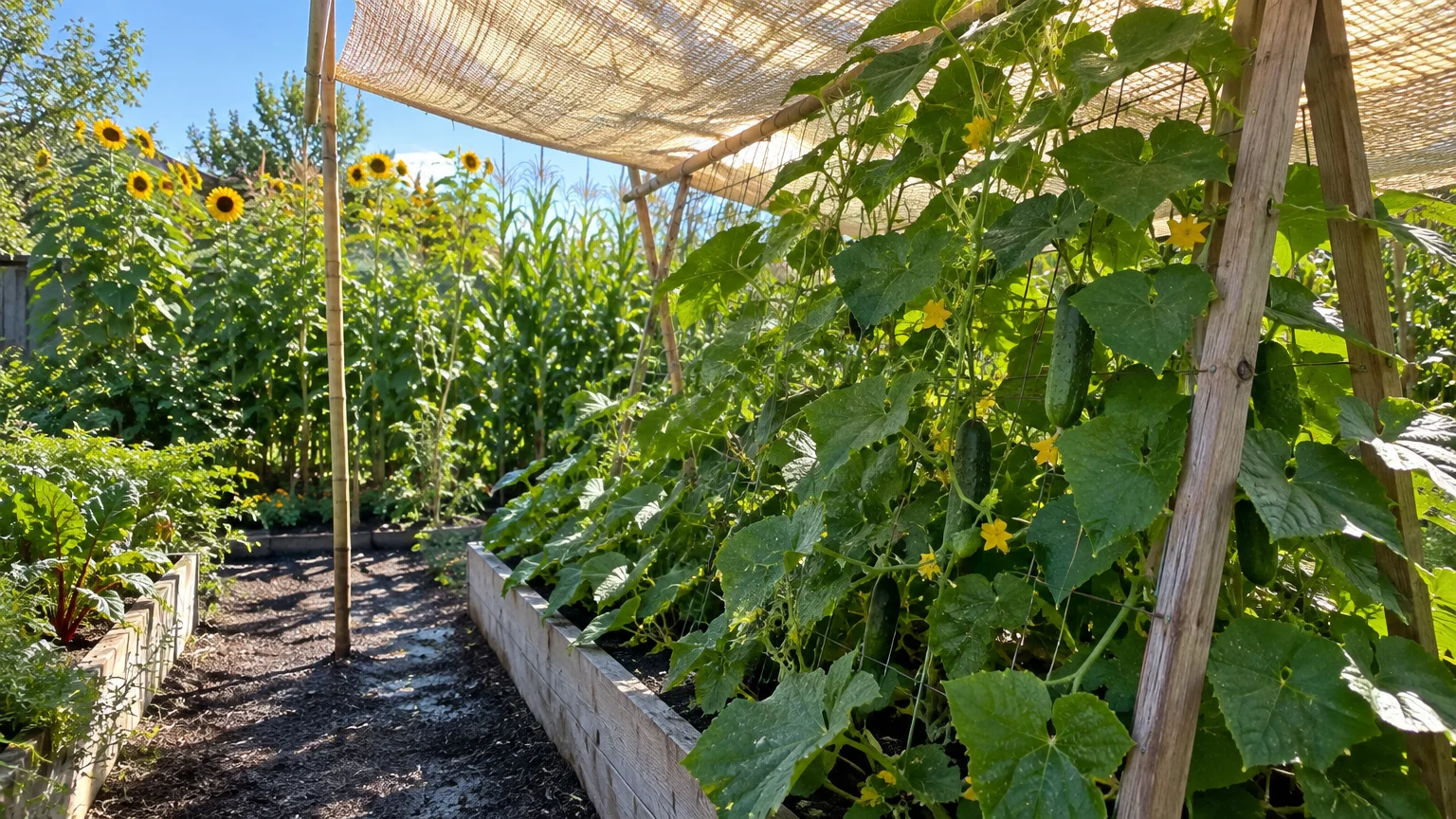
Erect a 30 to 40 percent shade cloth over your cucumber trellis during the hottest afternoon hours. This simple fabric shield lowers leaf temperature without depriving the plant of essential sunlight.
Position your cucumber rows where taller companion plants, such as sweet corn or sunflowers, cast natural afternoon shade. This strategic planting mimics natural microclimates and buffers your crop against extreme heat.
Mist your garden pathways lightly with water at midday to cool the surrounding microclimate through evaporative cooling. Keeping temperatures moderate is an essential cucumber plant care tip for sweet harvests.
Tip #3: Overfeeding with High-Nitrogen Fertilizers
The Problem with Excessive Nitrogen
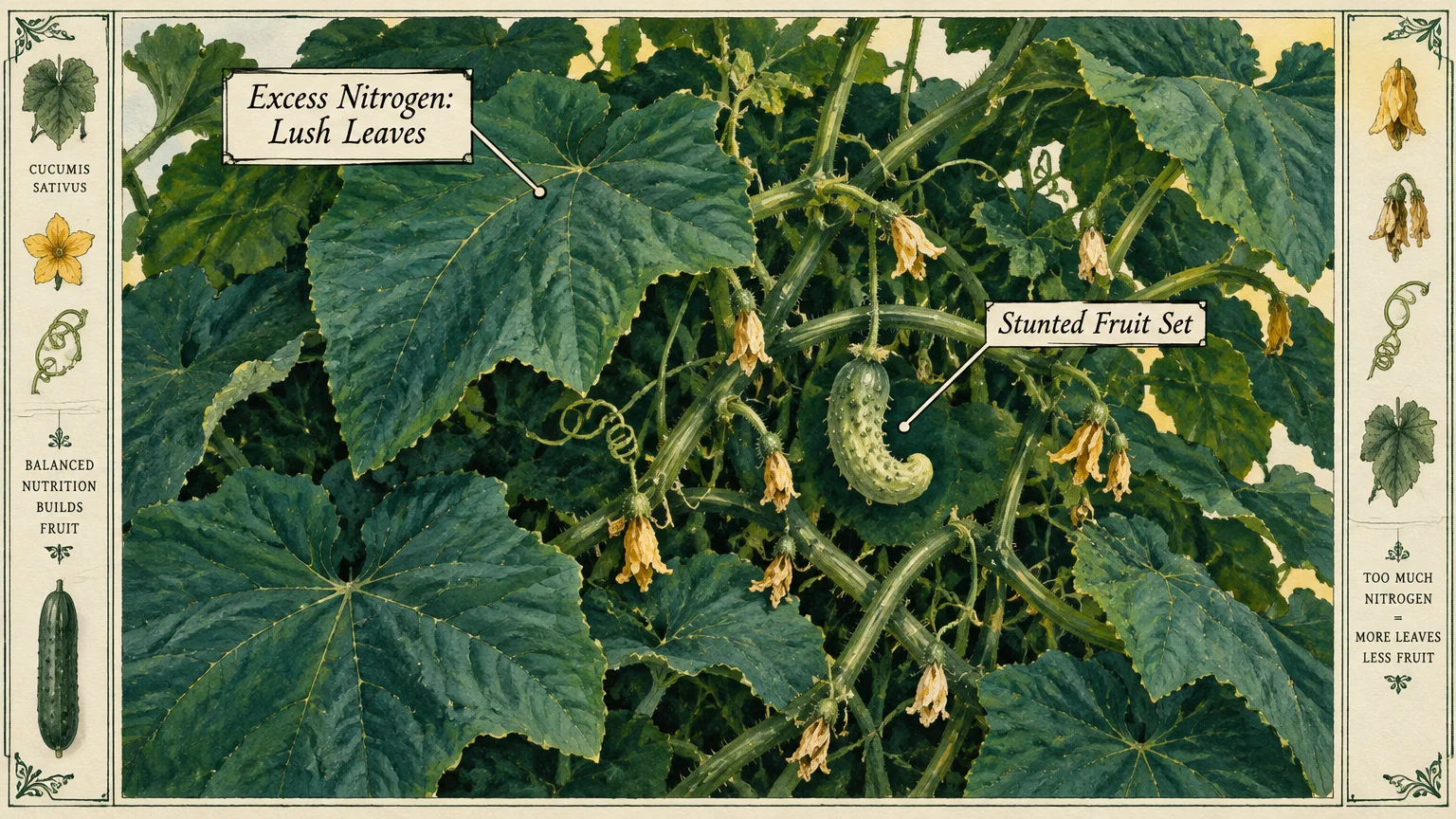
Many gardeners mistakenly apply heavy doses of high-nitrogen fertilizer in hopes of boosting cucumber vine growth. Unfortunately, excess nitrogen forces lush foliage development at the expense of healthy fruit production.
Rapid, soft vine growth induced by surplus nitrogen strains the plant’s vascular system. This metabolic imbalance prompts cucumber plants to produce elevated cucurbitacin levels, leading directly to bitter fruit.
Furthermore, nitrogen-heavy diets make cucumber foliage highly attractive to sap-sucking pests like aphids and cucumber beetles. Pest feeding causes additional stress, intensifying fruit bitterness.
Balancing Nutrients for Sweet Cucumbers
Switch to a balanced organic fertilizer or a formula with higher phosphorus and potassium levels once flowers appear. Potassium supports robust cellular structure and enhances natural fruit sugars.
Amend your planting beds with rich organic compost before planting to provide a steady, slow-release nutrient supply. Finished compost releases essential minerals evenly without shocking tender roots.
Apply a diluted seaweed or kelp meal liquid drench every three weeks to deliver trace minerals. Balanced nutrition helps you learn how to grow sweet cucumbers reliably year after year.
Tip #4: Selecting Bitterness-Prone Cultivars
Genetics and Bitter Compounds
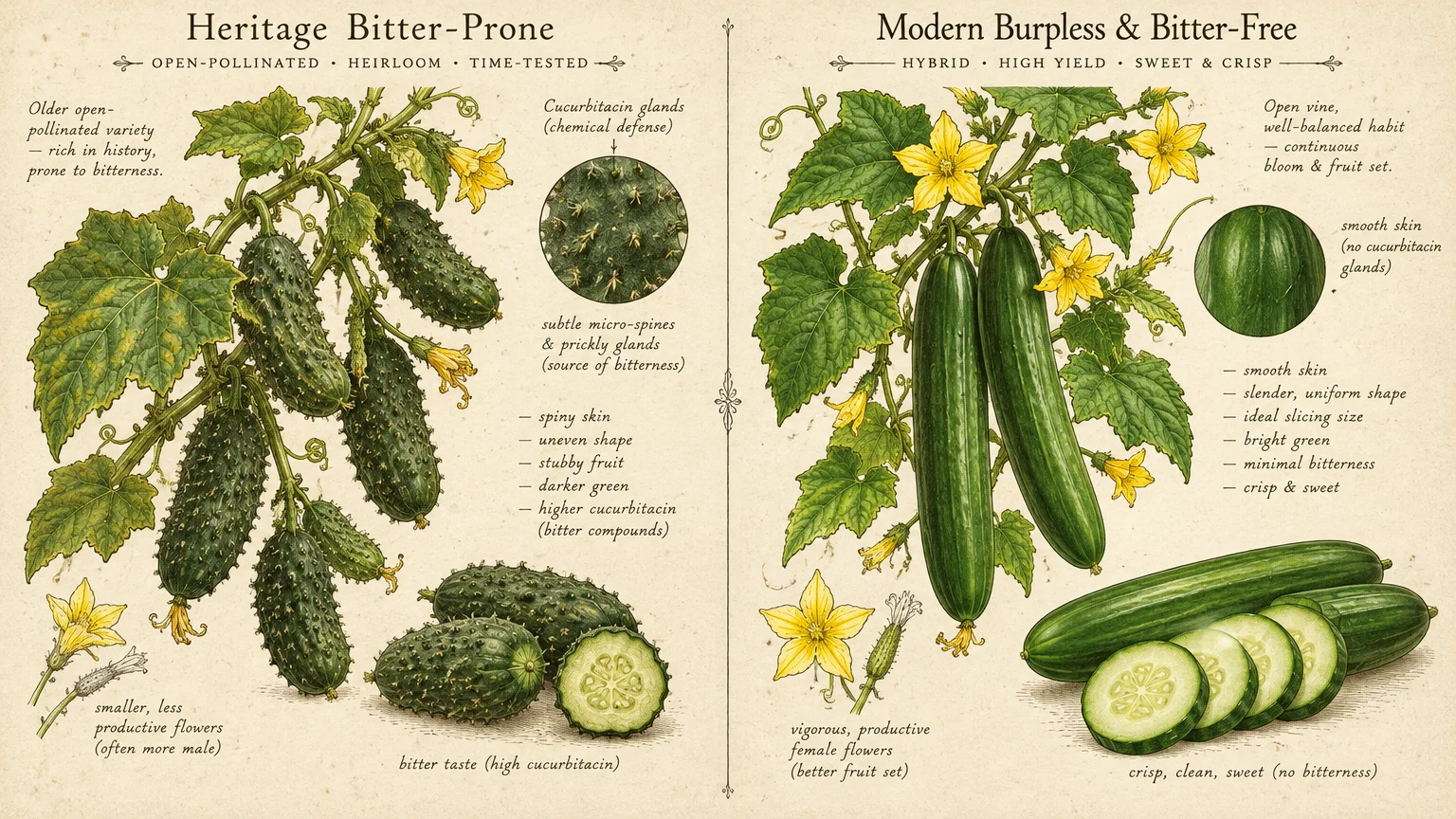
Not all cucumber varieties possess the same genetic tendency toward bitterness. Older heirloom varieties naturally contain higher baseline levels of cucurbitacin than modern cultivars.
Wild ancestors of the modern cucumber used bitter cucurbitacin compounds to deter herbivores and insects from eating their vines. When heirlooms experience minor stress, their ancestral defense mechanisms activate immediately.
If you live in a region with unpredictable weather, growing temperamental heirloom varieties frequently leads to disappointing harvests. Knowing why are cucumbers bitter often comes down to the seeds you sow.
Choosing Sweet and Bitter-Free Varieties
Select modern gynoecious and parthenocarpic hybrids bred specifically with the bitter-free gene. Varieties labeled bitter-free lack the genetic capability to produce cucurbitacin, even under moderate environmental stress.
Look for popular sweet varieties like Marketmore 76, Diva, Sweet Slice, or English greenhouse types. These cultivars consistently yield tender, crisp fruit with thin skins and zero astringency.
Check seed packets carefully for descriptions highlighting non-bitter qualities before purchasing your spring seeds. Choosing resistant genetics is the easiest preventive step for any home gardener.
Tip #5: Neglecting Mulch Over Shallow Roots
Why Exposed Soil Harms Cucumber Roots
Cucumber vines develop extensive root systems, but the majority of their feeder roots sit within the top few inches of topsoil. Bare garden soil leaves these sensitive roots vulnerable to rapid evaporation and intense soil heat.
When unmulched soil heats up past 85 degrees Fahrenheit, root growth stalls completely. The resulting root stress triggers immediate chemical changes that cause cucumber plants to turn bitter.
Bare earth also crusts over after rain, creating a hard barrier that repels water rather than absorbing it. This crusting leads to water runoff and chronic root dehydration.
Applying Mulch Correctly in Your Beds
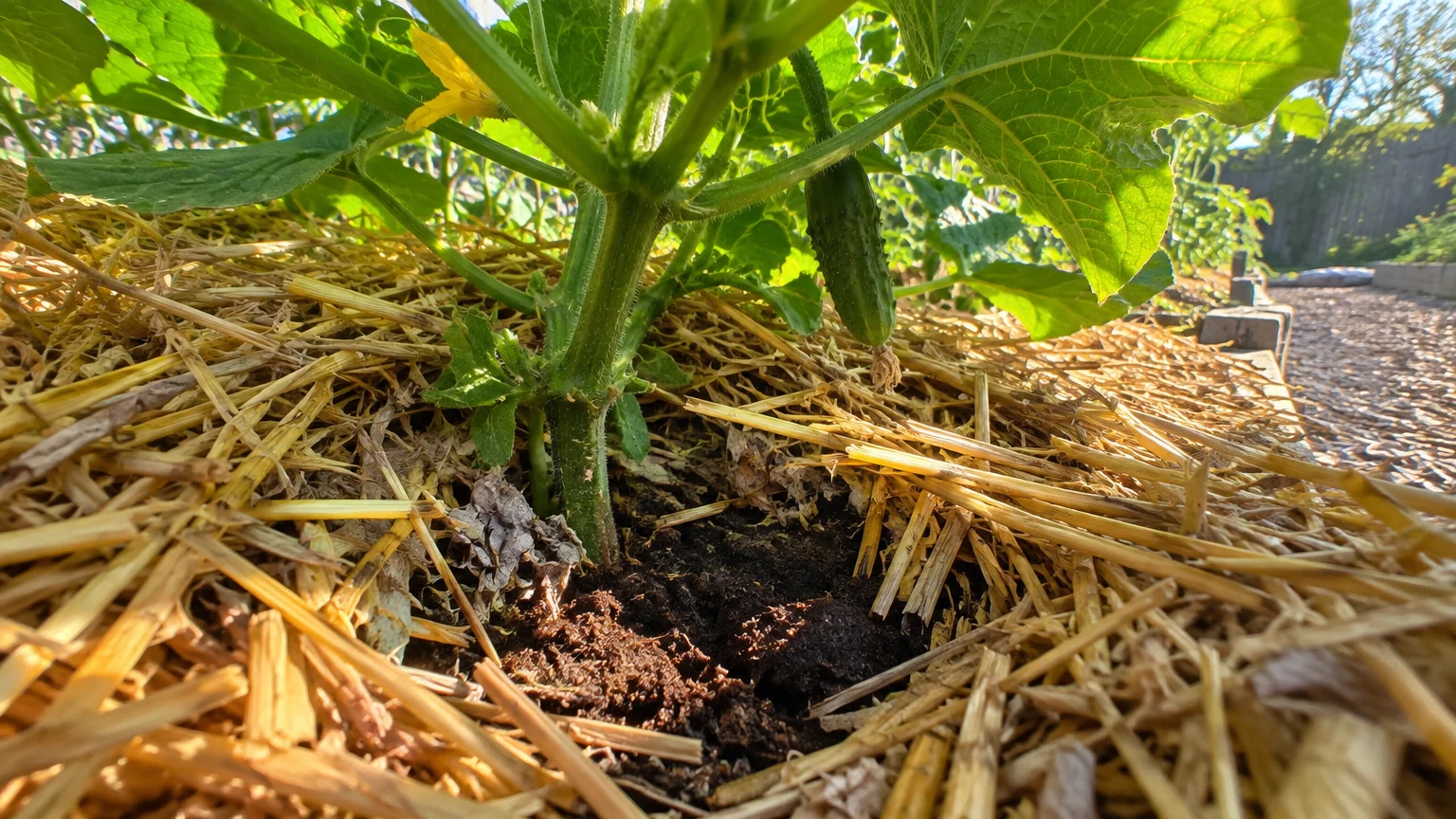
Spread a two to three-inch layer of organic mulch around the base of your cucumber plants. Clean straw, shredded autumn leaves, and chemical-free grass clippings make fantastic mulch choices.
Keep the mulch two inches away from the main cucumber stems to prevent fungal rot and stem diseases. This protective ring preserves moisture while allowing ample air circulation around the crown.
Organic mulch slowly decomposes throughout the summer, enriching the soil with valuable organic humus. Mulching is one of the most effective cucumber growing mistakes to fix in your garden.
Tip #6: Letting Cucumbers Overmature on the Vine
The Flavor Decline in Overripe Fruit
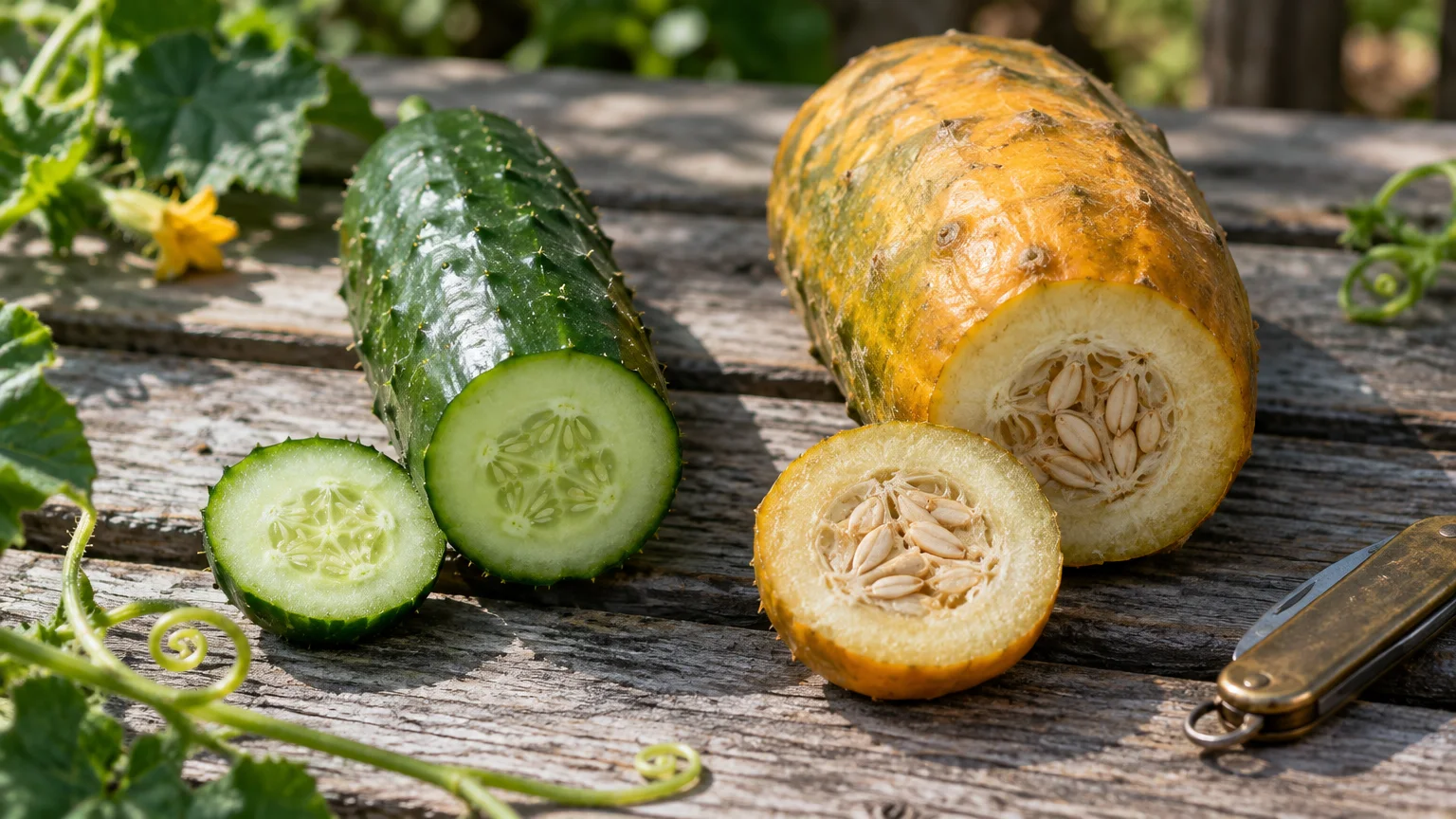
Leaving cucumbers on the vine past their prime is one of the most common harvest errors. As cucumbers grow overly large, their skins thicken, seeds harden, and cucurbitacin levels escalate dramatically.
Overmature cucumbers often turn dull green or develop a yellowish hue at the blossom end. Yellowing indicates that the fruit has entered reproductive maturity, trading crisp sweetness for tough, bitter flesh.
Allowing giant fruits to linger on the plant also signals the vine to stop producing new blossoms. Your entire harvest declines in both quantity and eating quality.
Harvesting at Peak Sweetness
Pick slicing cucumbers when they reach six to eight inches in length and feel firm along their entire length. Pickling cucumbers should be harvested even smaller, ideally between two and four inches.
Check your cucumber patch every day or two during peak production, as fruits can double in size within 48 hours. Frequent harvesting encourages the vine to continuously set sweet, young fruit.
Always use a clean pair of garden snips or pruners to sever the fruit stem cleanly. Tearing or pulling cucumbers off the vine damages the plant and induces stress.
Tip #7: Planting in Heavy, Poorly Drained Soil
How Waterlogged Roots Cause Bitterness
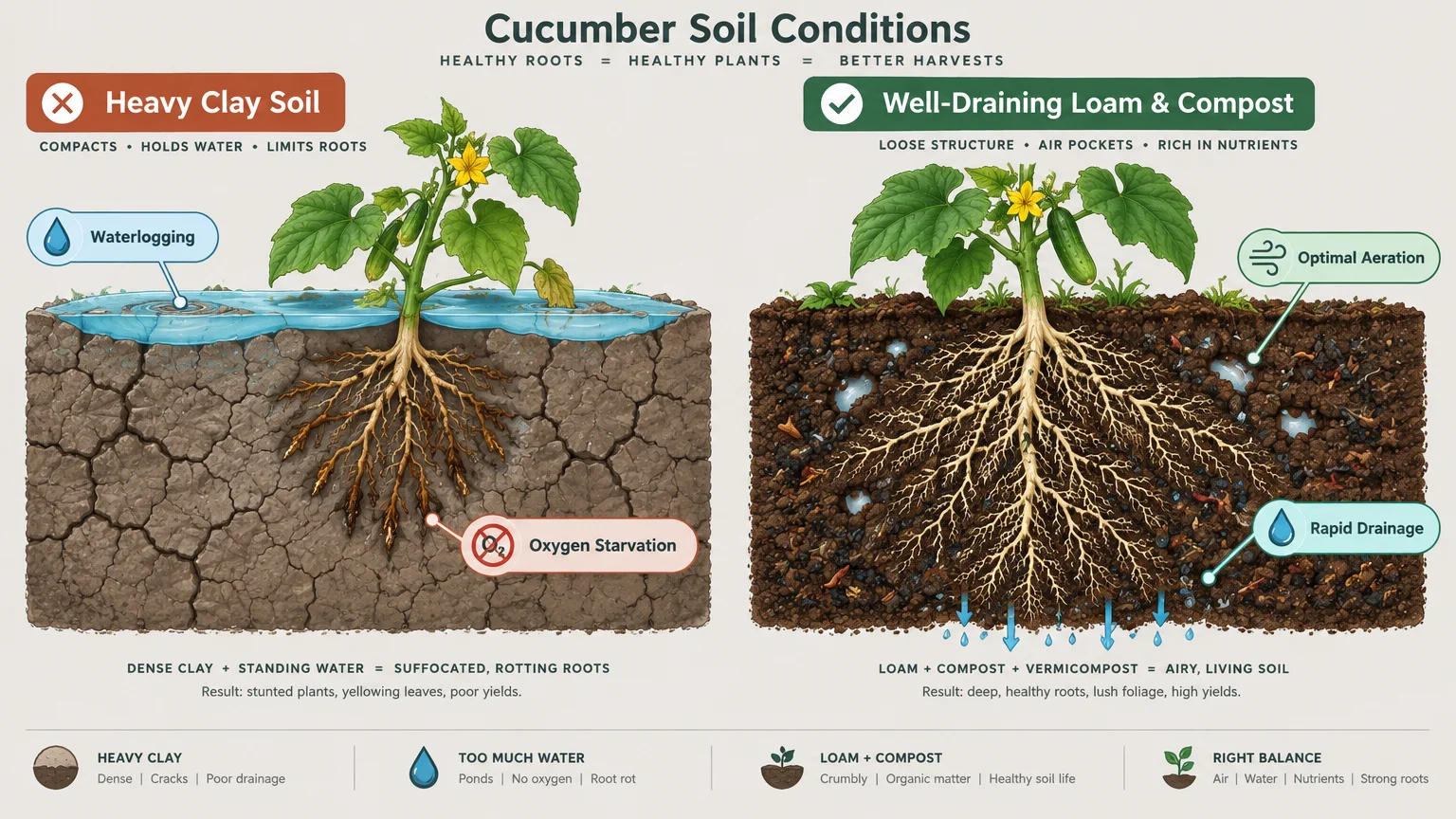
Cucumbers require constant moisture, but they despise standing water around their root systems. Heavy clay soil suffocates roots by eliminating oxygen pockets, leading to root rot and severe metabolic stress.
Suffocating roots cannot absorb essential minerals, even when the soil contains abundant nutrients. Deprived of oxygen and food, cucumber plants flood their tissues with bitter compounds as a survival mechanism.
Poor drainage also invites destructive fungal pathogens like Pythium and Phytophthora. Diseased vines produce misshapen, bitter cucumbers that rot shortly after picking.
Improving Soil Texture and Drainage
Incorporate generous amounts of aged compost, leaf mold, and coarse sand into heavy clay before transplanting. Adding organic matter improves soil porosity and allows excess moisture to drain freely.
Consider planting cucumbers in raised garden beds or mounded soil rows if your native ground drains poorly. Raising your growing area six to twelve inches provides optimal aeration and warmth.
Test your soil drainage before planting by digging a twelve-inch hole and filling it with water. If the water takes longer than two hours to drain, amend your soil immediately.
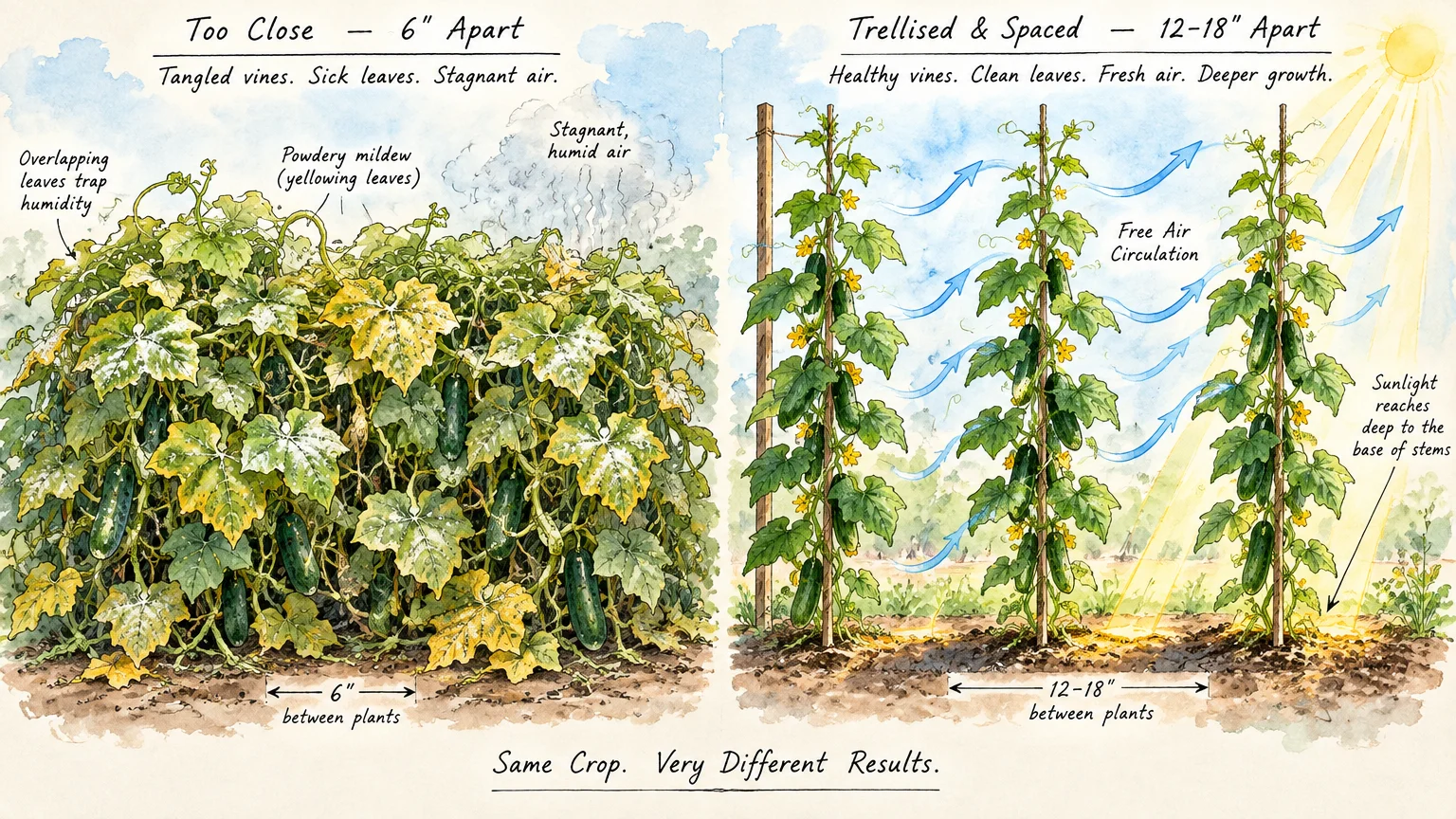
Tip #8: Crowding Plants and Restricting Airflow
The Hidden Stress of Dense Planting
Planting cucumbers too close together creates intense competition for moisture, soil nutrients, and sunlight. Under crowded conditions, individual plants become stressed and produce high levels of bitter cucurbitacin.
Tightly packed vines trap stagnant, humid air, creating the perfect breeding environment for powdery mildew and downy mildew. Foliar diseases devastate photosynthetic capacity, causing rapid fruit bitterness.
Crowded foliage also conceals destructive insect pests like squash bugs and spider mites from beneficial predatory insects. Unchecked pest feeding accelerates vine decline and ruins crop flavor.
Spacing and Trellising for Healthy Growth
Space cucumber plants twelve inches apart along a vertical trellis, or thirty-six inches apart if growing along the ground. Trellising lifts the vines into the air, maximizing sunlight exposure and airflow.
Vertical training also keeps your fruit clean and off the damp soil where fungal spores lurk. Trellised cucumbers grow straighter, develop more uniform color, and taste noticeably sweeter.
Prune away dense lower leaves and non-fruiting suckers near the soil line to enhance air circulation. Proper plant spacing is an indispensable cucumber plant care tip for avoiding bitter cucumber causes.
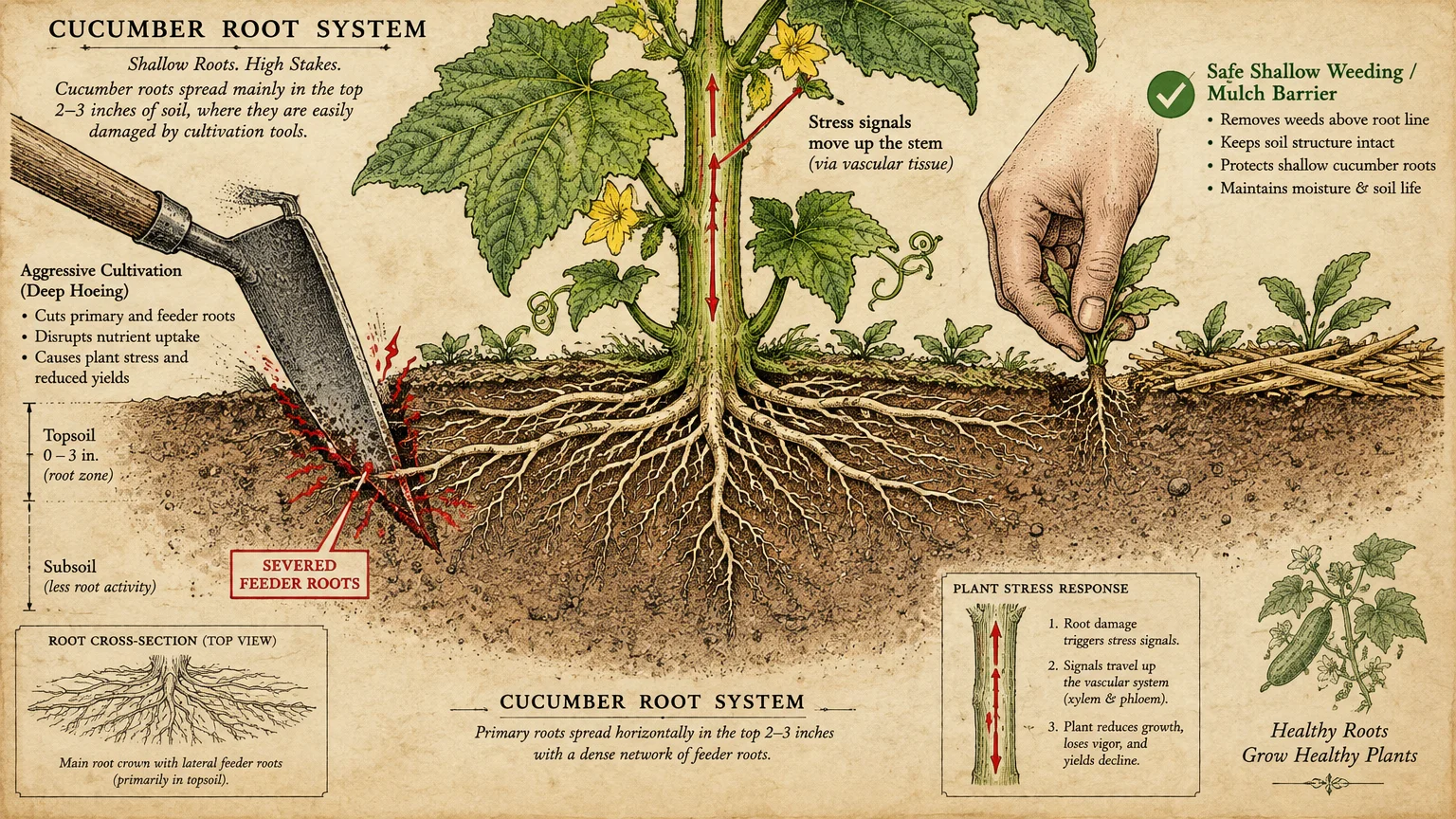
Tip #9: Damaging Shallow Roots with Deep Cultivation
How Physical Root Shock Triggers Bitterness
Because cucumber roots spread widely and stay close to the surface, aggressive weeding poses a serious threat. Digging into the soil with hoes or garden forks shears tender feeder roots.
Losing feeder roots impairs the plant’s ability to draw up water and vital minerals instantly. In response to physical trauma, the vine releases defense hormones that stimulate cucurbitacin production.
Wounded roots also provide an open gateway for soil-borne pathogens and root rot organisms to infect the vascular system. The resulting physical and biological stress ruins cucumber flavor.
Gentle Weed Management Strategies
Hand-pull young weeds near cucumber plants while weeds are small and their root systems are shallow. Pull gently at an angle to avoid disturbing neighboring cucumber roots.
Maintain a thick mulch layer around your vines to suppress weed seeds before they germinate. Smothering weeds with mulch eliminates the need for mechanical digging or harsh weeding tools.
If stubborn weeds appear near the crown, snip them off at ground level with garden shears. Slicing weeds at the soil surface preserves fragile cucumber roots and keeps your harvest sweet.
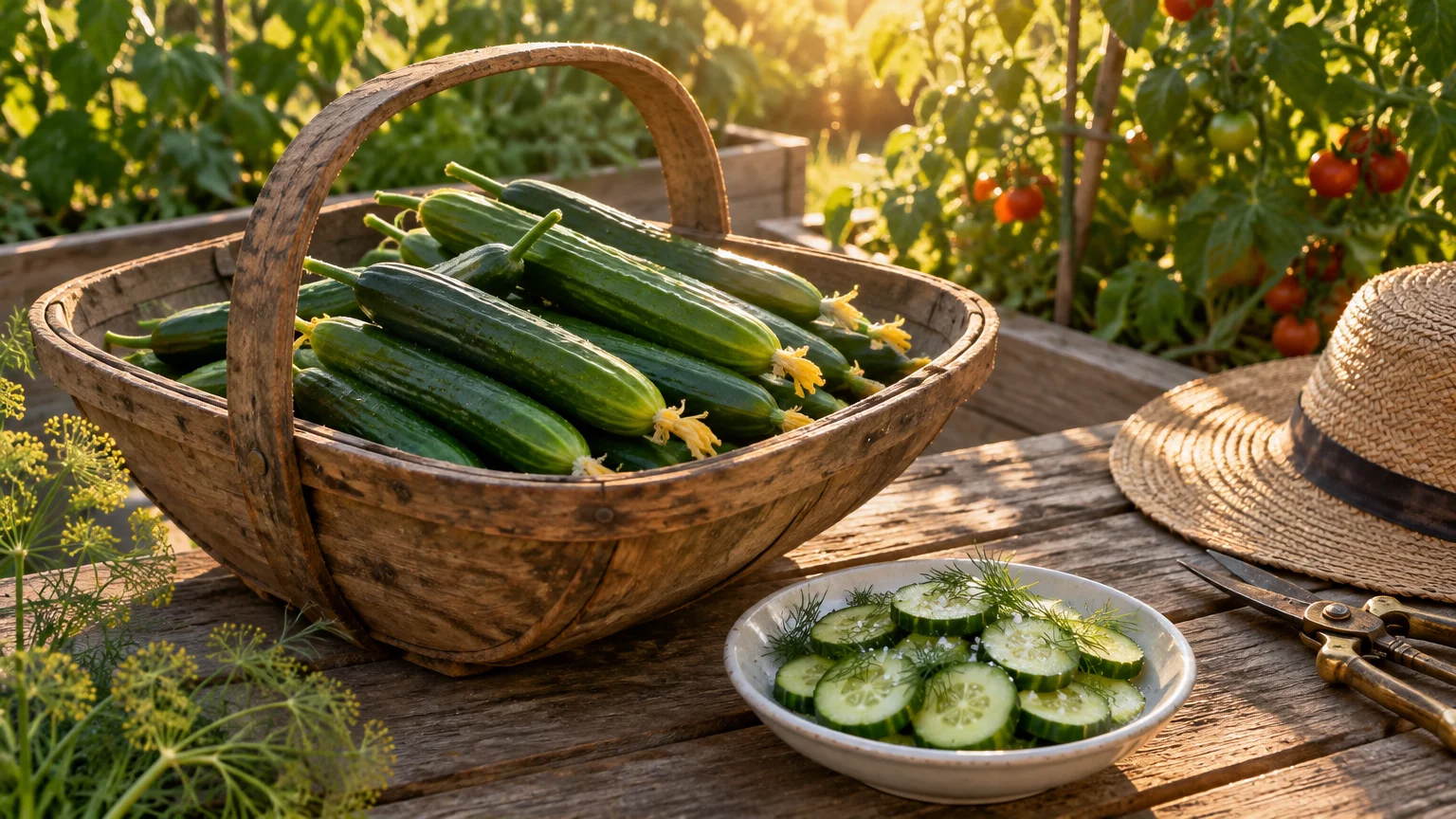
Putting It All Together: Enjoy Your Beautiful Garden
Growing crisp, sweet cucumbers in your home garden brings unmatched satisfaction to summer cooking. You do not have to accept bitter cucumbers as an unavoidable gardening disappointment.
By prioritizing steady irrigation, healthy soil aeration, and afternoon heat protection, you eliminate the key stressors that provoke cucurbitacin synthesis. Your garden vines will reward you with crunchy, refreshing fruits all season long.
Pair thoughtful watering habits with vertical trellising and modern non-bitter cultivars to ensure garden success. Small, mindful improvements in your daily care routine make an extraordinary difference in cucumber flavor.
Walk through your cucumber patch daily to admire the lush green foliage, vibrant yellow blossoms, and developing fruit. Cultivating cucumbers with care and attention creates a thriving, bountiful garden you can cherish.
Apply these practical insights today to transform your cucumber patch into a powerhouse of crisp, delicious produce.
Frequently Asked Questions
Why are cucumbers bitter at the stem end?
Cucurbitacins naturally concentrate in the vegetative parts of the plant, including stems and leaves. When plants experience stress, bitter compounds enter the cucumber fruit through the stem attachment point first.
To salvage a slightly bitter cucumber, slice off the stem end by one to two inches and peel away the dark green skin. The core and blossom end usually remain sweet and edible.
Can bitter cucumbers make you sick?
Consuming small amounts of slightly bitter cucumber is generally harmless to healthy adults, though the taste is unpleasant. However, extremely bitter cucumbers contain concentrated cucurbitacins that can cause severe stomach cramps, nausea, and diarrhea.
Never consume a cucumber that tastes overwhelmingly acrid or foul. If peeling and trimming do not remove the bitterness, compost the fruit and focus on optimizing growing conditions.
Does removing the skin stop cucumber bitterness?
Peeling your cucumbers helps significantly because cucurbitacin compounds concentrate heavily in the dark outer peel and the underlying green tissue. Removing the outer layer often eliminates mild bitterness completely.
Rinse your knife after peeling to avoid transferring bitter residue from the skin into the sweet inner flesh. Peeling remains one of the simplest kitchen tricks to improve questionable cucumbers.
Can you fix a cucumber plant that is already producing bitter fruit?
Yes, cucumber vines can recover and produce sweet fruit once you resolve the underlying environmental stress. If you correct irregular watering, apply mulch, and provide afternoon shade, newly developing cucumbers will taste sweet.
Harvest and discard any bitter fruits currently growing on the vine to reset plant energy. The next flush of blossoms will produce delicious, crisp cucumbers once stress levels drop.
For region-specific advice, consult your local University Extension program (find yours via the USDA directory). For plant databases and inspiration, visit the Missouri Botanical Garden or the Royal Horticultural Society.
Disclaimer: This article provides general gardening advice, so always consider your specific climate, soil conditions, and local pests. Follow all manufacturer safety guidelines when using gardening tools and products.