Transform your landscape by adding towering vertical interest that commands attention from across the yard. Tall garden flowers create living backdrops, screen unsightly fences, and inject energetic architectural drama into boring, flat beds.
You do not need decades of horticultural experience to grow magnificent statement flowers for garden borders. Choosing the best tall flowering plants establishes effortless structure while providing abundant nectar for hummingbirds and native bees.
Explore these dramatic garden flower ideas to elevate your outdoor space with breathtaking color, reliable texture, and impressive height.
Tip #1: Giant Sunflower (Helianthus annuus)
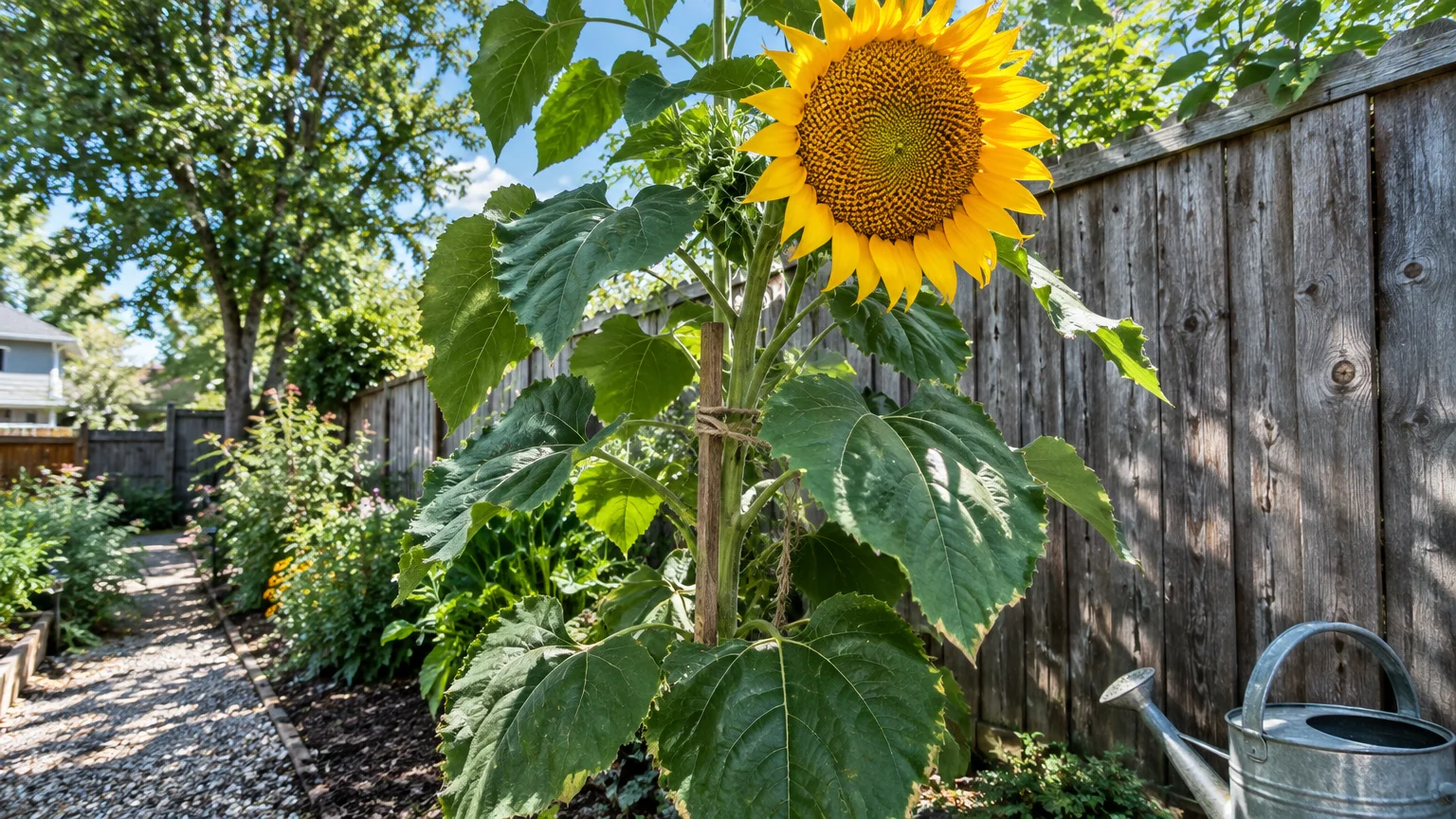
Giant sunflowers reign supreme among tall garden flowers, reaching heights between 10 and 14 feet in a single summer. Cultivars like ‘Mammoth Russian’ produce massive, golden flower heads measuring up to 14 inches across.
Their thick, sturdy stalks provide an instant living screen against fences; they also produce hundreds of nutrient-rich seeds that feed songbirds through late autumn.
Plant seeds directly outdoors after your last spring frost in full sun and well-draining soil. Space each seed 18 to 24 inches apart, and supply deep weekly soakings to anchor their taproots securely.
Tip #2: Tall Delphinium (Delphinium elatum)
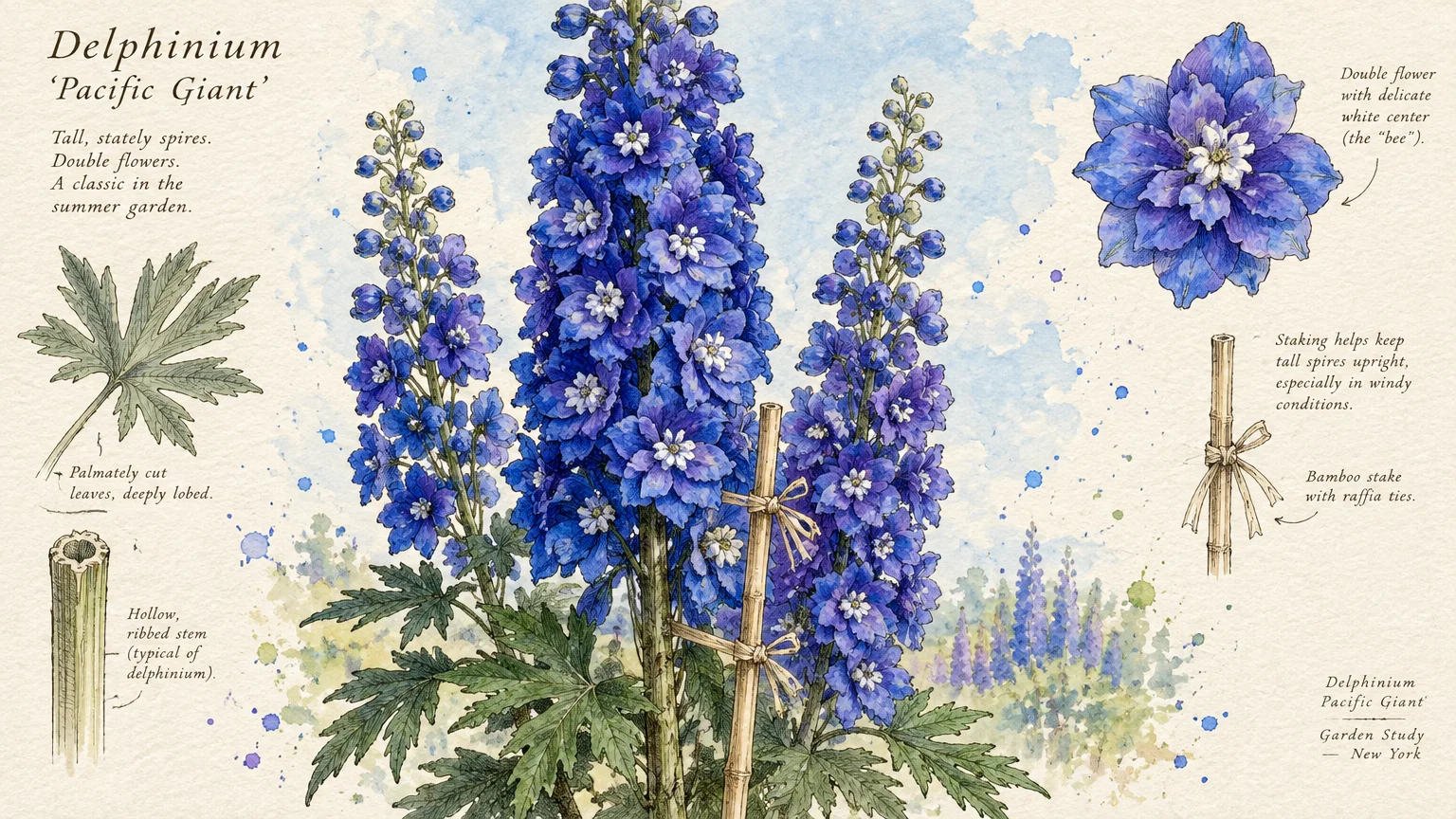
Delphiniums offer magnificent flower spires that soar 5 to 7 feet high in dramatic shades of cobalt blue, violet, and pristine white. Varieties from the ‘Pacific Giant’ series produce dense, double-flowered columns that make unforgettable focal points.
These cool-season perennials deliver striking vertical lines that few other statement flowers for garden borders can match. Their intense blue tones create rich depth when paired with yellow and pink mid-border perennials.
Grow delphiniums in rich, moisture-retentive soil that receives full morning sun and sheltered afternoon shade. Insert sturdy bamboo stakes early in spring to protect their hollow stems from heavy summer rains and gusts.
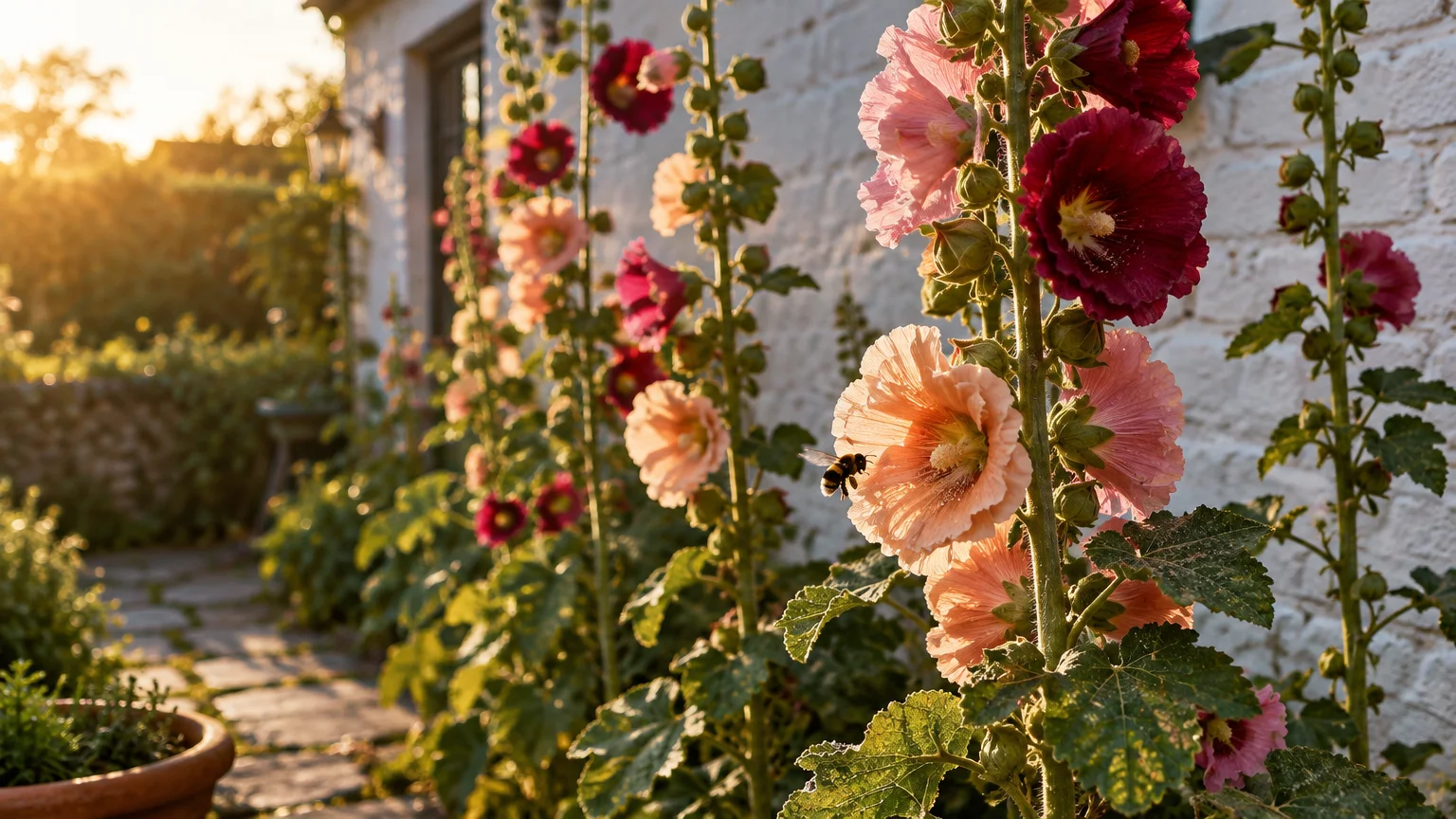
Tip #3: Hollyhock (Alcea rosea)
Hollyhocks bring timeless cottage charm with stately towers stretching 6 to 9 feet tall. These classic biennials feature cup-shaped blooms that open progressively from bottom to top along unbranched vertical stems.
They excel at softening bare building walls and wooden fences with months of vibrant color. Their open, nectar-rich blossoms reliably draw bumblebees, hummingbirds, and painted lady butterflies to your garden.
Sow seeds in full sun and well-drained soil with good air movement to minimize fungal leaf rust. Water at the soil level rather than overhead, and stake tall flower spikes in exposed, windy locations.
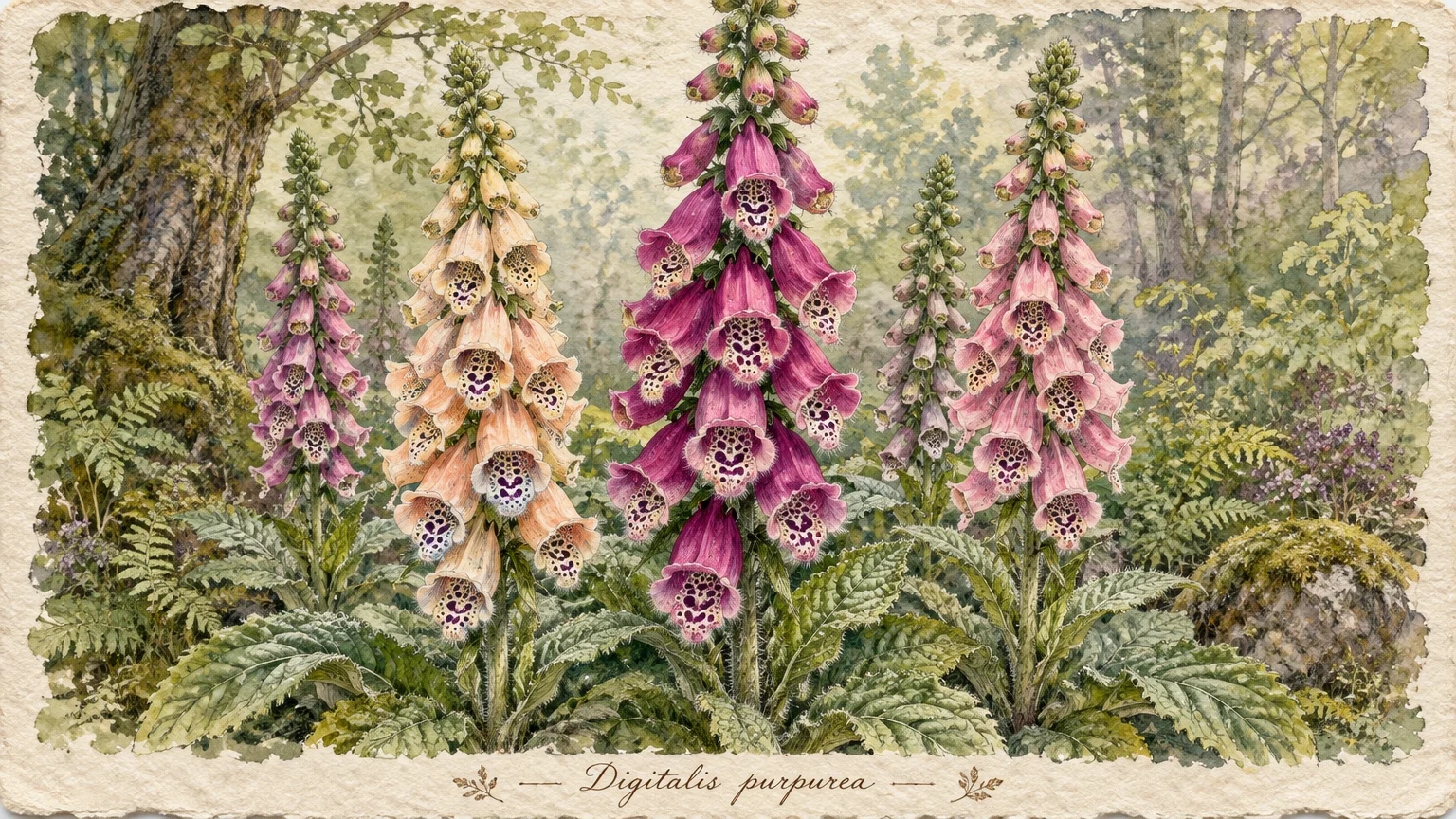
Tip #4: Common Foxglove (Digitalis purpurea)
Foxgloves produce dramatic, 4 to 6-foot spires packed with tubular, bell-shaped blossoms speckled with delicate interior spots. Cultivars like ‘Excelsior’ present outward-facing blooms in shades of magenta, apricot, cream, and soft rose.
They provide invaluable garden flowers for height in damp, semi-shady locations where many sun-loving giants fail. Additionally, deer and rabbits naturally avoid them due to their bitter foliage compounds.
Position them in moist, humus-rich soil under dappled sunlight or woodland margins. Allow plants to self-seed naturally each summer so you enjoy a continuous, perennial-like display year after year.
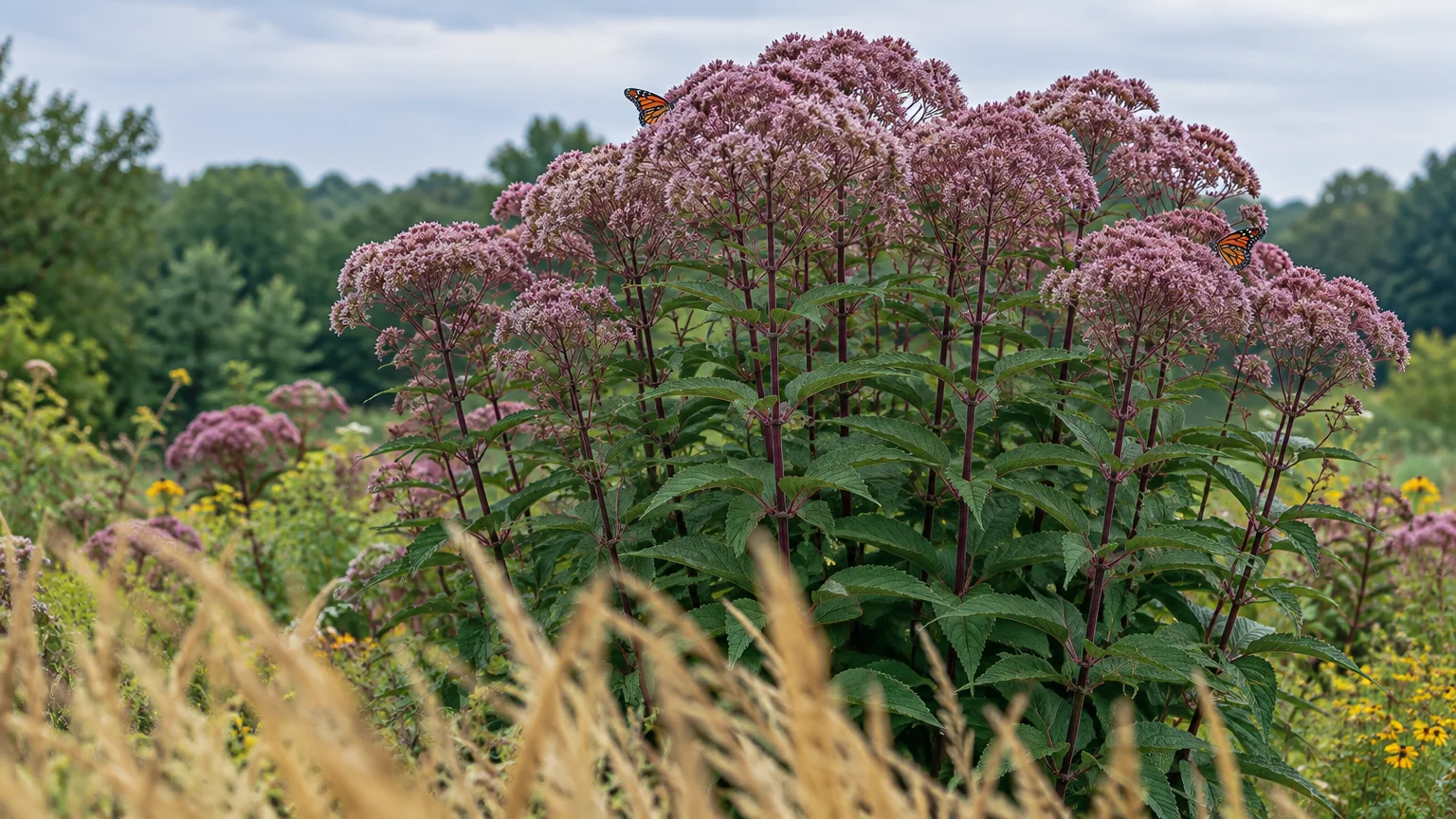
Tip #5: Joe Pye Weed (Eutrochium purpureum)
Joe Pye weed is a robust native perennial that commands attention at 5 to 8 feet tall. In midsummer to early fall, it crowns sturdy stems with massive, vanilla-scented mauve flower clusters.
It stands as one of the best tall flowering plants for pollinator conservation, attracting dozens of monarch butterflies simultaneously. The stout, whorled stems resist lodging, keeping the plant perfectly upright without mechanical staking.
Give Joe Pye weed a spacious location in full sun to partial shade with consistently moist, fertile soil. Mulch heavily to retain moisture, and cut stems back to ground level during late winter.
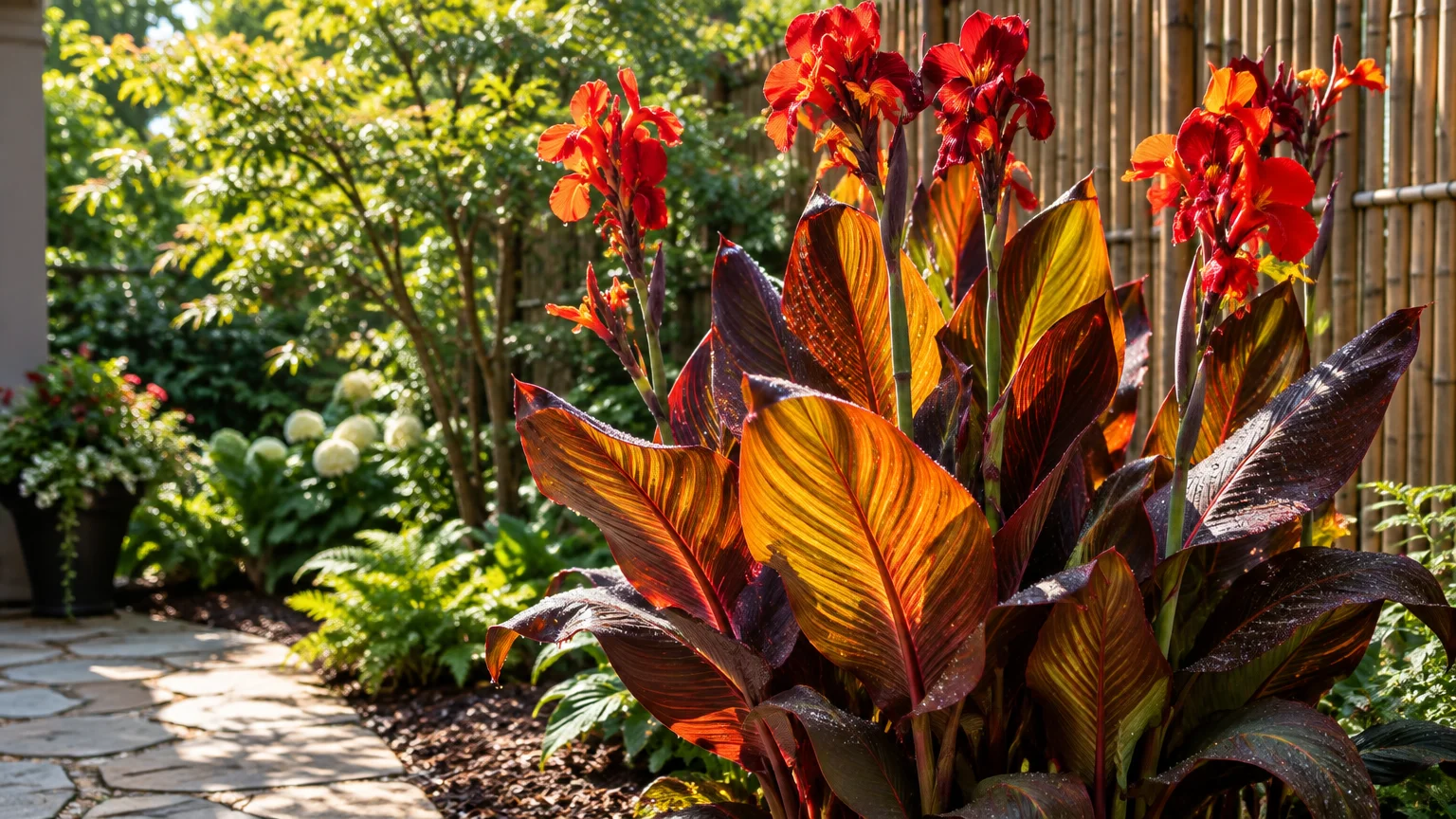
Tip #6: Canna Lily (Canna indica)
Canna lilies bring tropical architectural flair with paddle-shaped foliage and striking floral spikes reaching 6 to 10 feet. Cultivars like ‘Musifolia’ and ‘Phasion’ combine dazzling orange-red flowers with massive, bronze-striped leaves.
Their bold texture contrasts beautifully with finer-textured perennials, transforming dull spaces into lush, exotic retreats. Long bloom periods from midsummer until the first hard frost ensure months of vibrant backyard color.
Plant rhizomes 4 inches deep in warm, fertile soil after all danger of frost has passed. If you garden in USDA Zone 7 or colder, dig and store the fleshy rhizomes indoors each winter.
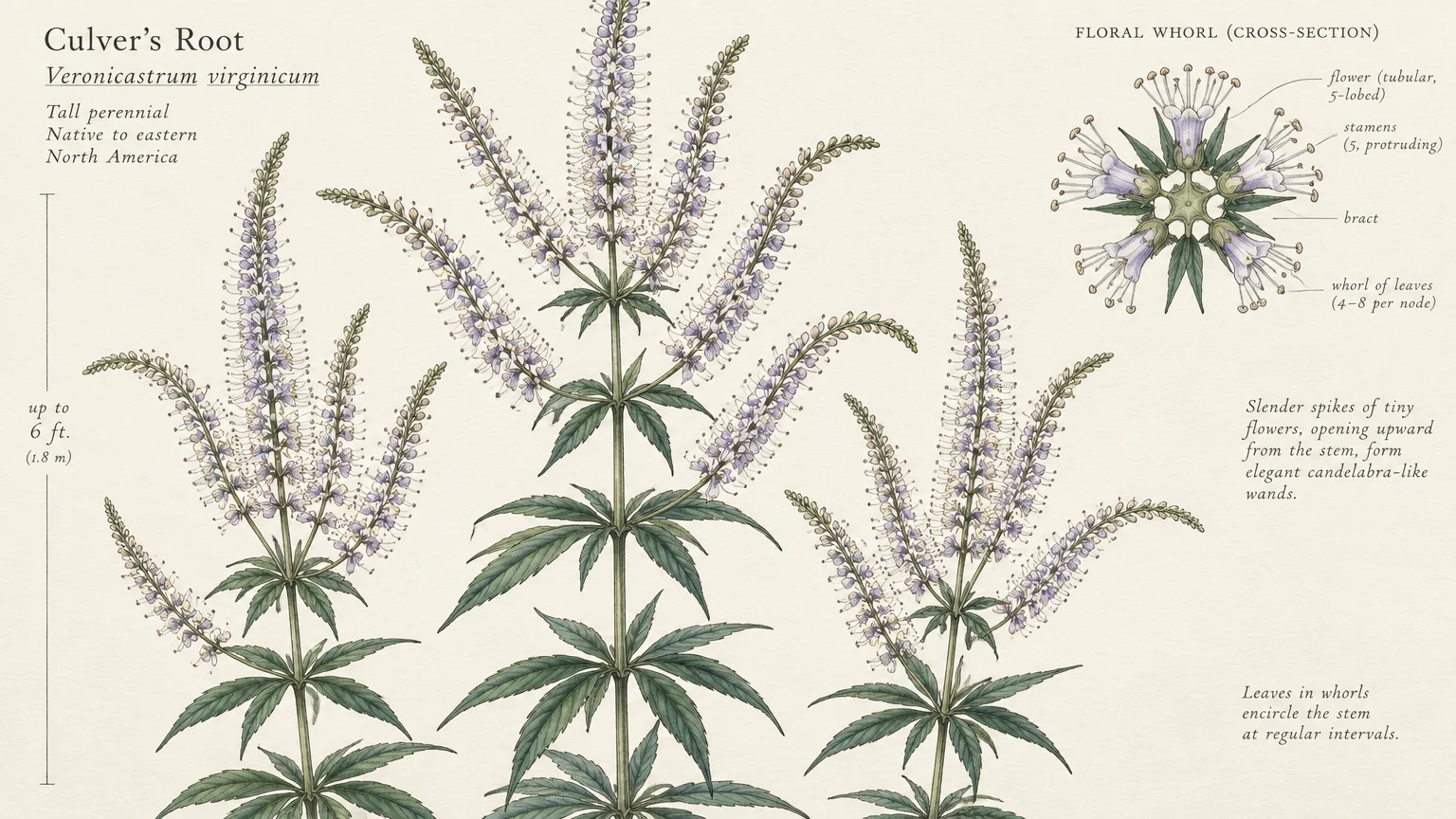
Tip #7: Culver’s Root (Veronicastrum virginicum)
Culver’s root features elegant, candelabra-like floral spires that elevate 4 to 7 feet above graceful whorls of deep green leaves. The slender white or pale lavender spikes bloom from the top down throughout midsummer.
Its refined structure provides architectural elegance without ever looking unruly or aggressive in formal and naturalistic designs. Native bees, honeybees, and beneficial wasps flock to the tiny, nectar-packed florets throughout the day.
Plant in full sun or light woodland shade where the soil stays evenly moist throughout the growing season. Apply a balanced organic compost annually each spring to promote vigorous, upright stem development.
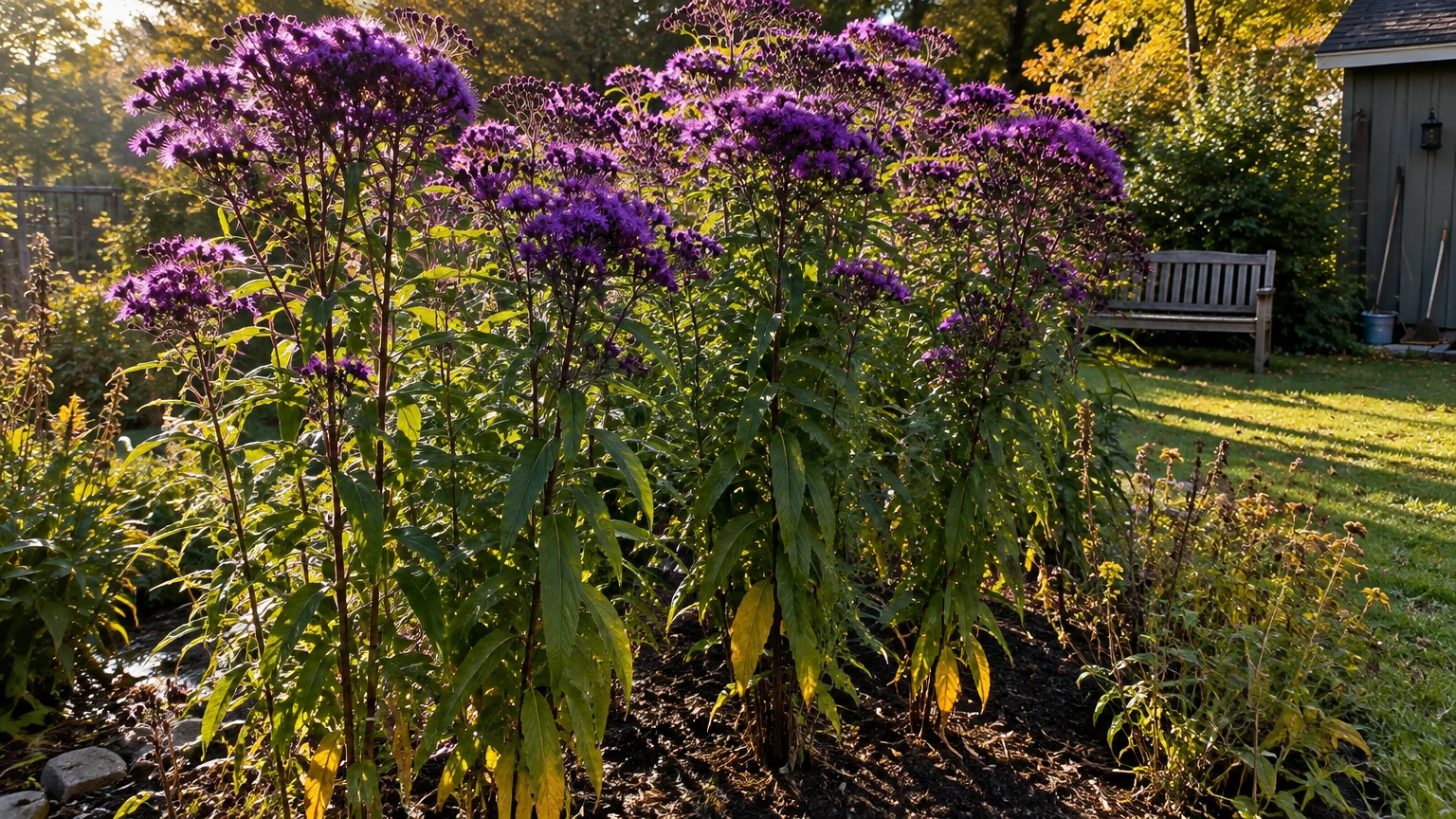
Tip #8: New York Ironweed (Vernonia noveboracensis)
New York ironweed stands an impressive 5 to 8 feet high, showcasing brilliant royal-purple flower heads from late summer into autumn. Each broad flat-topped flower cluster contains dozens of shaggy, disk-like florets.
The intensely saturated purple blooms appear just as many summer perennials fade, re-energizing your garden borders before frost. Its exceptionally stiff, fibrous stems withstand fierce autumn winds without bending or snapping.
Site ironweed in full sunlight and moist, slightly acidic soil near rain gardens, ponds, or border backdrops. Cut back stems by one-third in late spring if you prefer a slightly shorter, bushier habit.
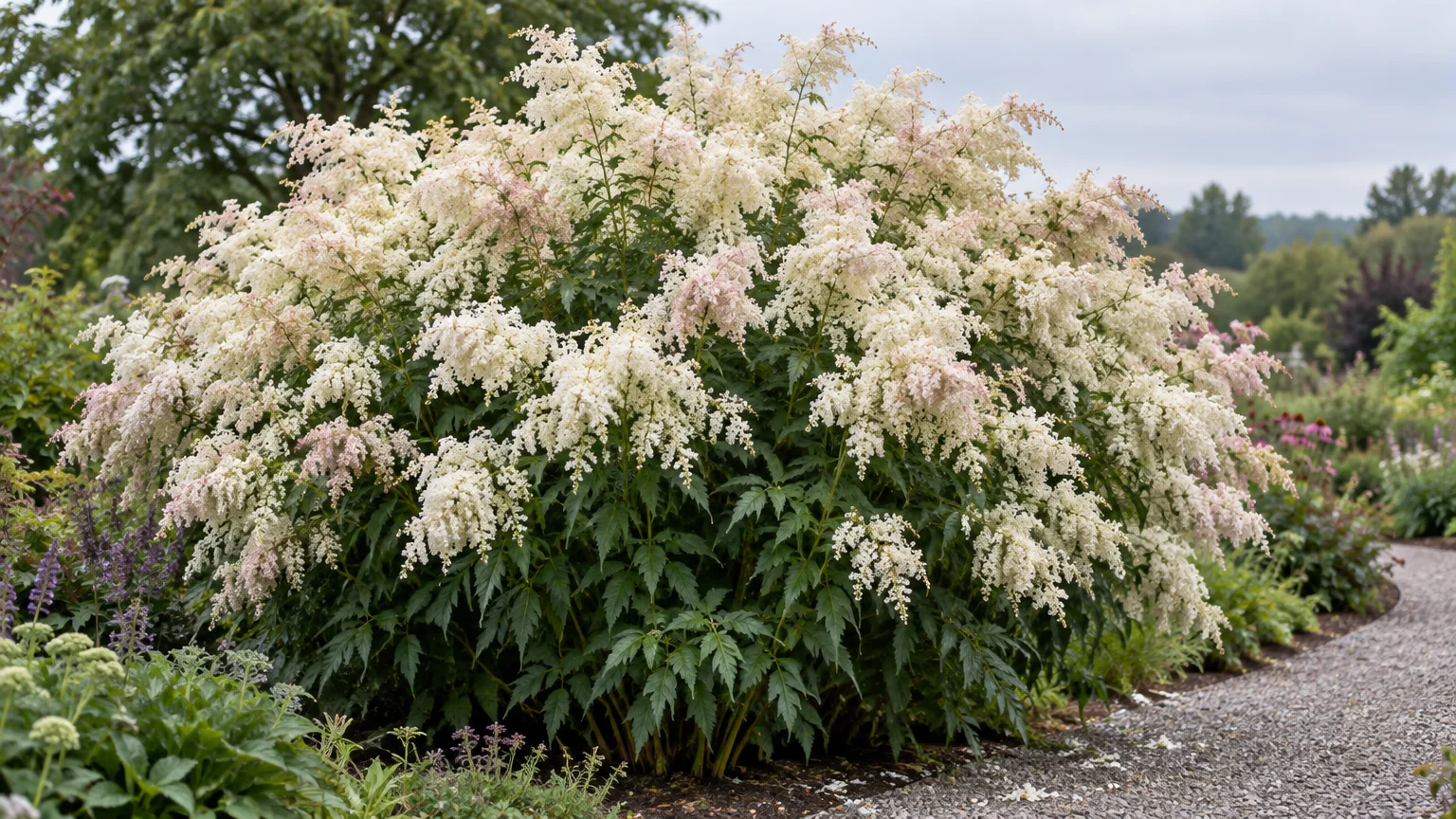
Tip #9: Giant Fleece Flower (Persicaria polymorpha)
Giant fleece flower forms an enormous, shrub-like perennial mound reaching 6 feet tall and equally wide. Starting in late spring, it blankets itself in cloud-like plumes of creamy white blossoms that persist for weeks.
Unlike invasive knotweeds, this well-behaved clumper does not spread aggressively through runners or self-seeding. The fluffy blooms fade gracefully to warm bronze seed heads, offering decorative texture well into autumn.
Plant this hardy specimen in full sun to partial shade and give it at least 5 feet of clearance. Water moderately while the root system establishes, after which it exhibits remarkable drought tolerance.
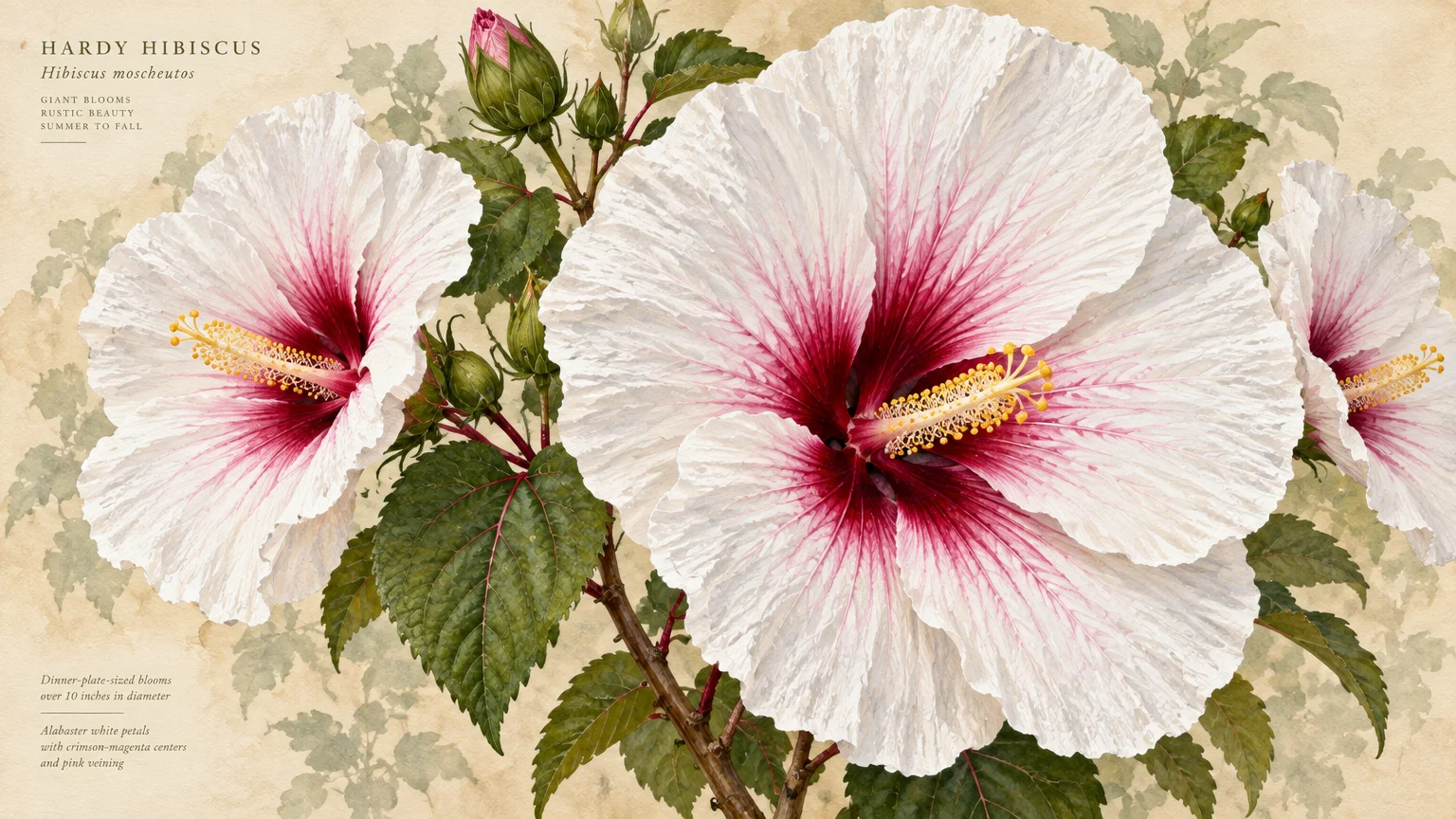
Tip #10: Hardy Hibiscus (Hibiscus moscheutos)
Hardy hibiscus, or swamp rose mallow, combines towering 5 to 7-foot stems with gigantic blossoms up to 10 inches wide. Cultivars such as ‘Lord Baltimore’ flaunt dinner-plate blooms in fiery red, rose, or white with crimson eyes.
It injects tropical grandeur into cold-climate yards while surviving harsh winters down to USDA Zone 4. Few other dramatic garden flower ideas match the sheer scale and visual impact of these colossal blooms.
Locate hardy hibiscus in full sun and rich, boggy or regularly watered garden soil. Wait patiently in spring; these slow starters do not emerge until the soil warms thoroughly in late May.
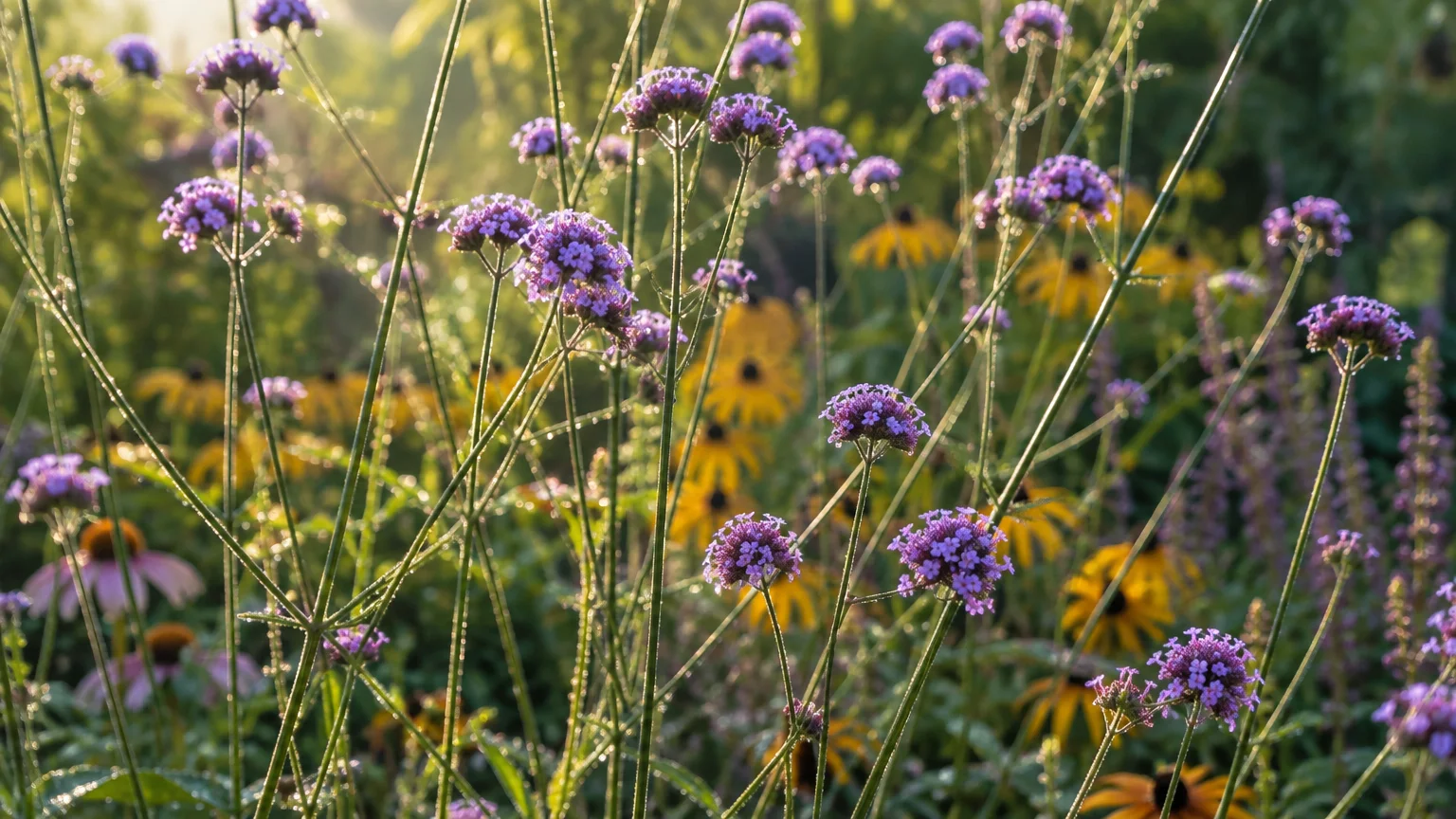
Tip #11: Brazilian Verbena (Verbena bonariensis)
Brazilian verbena forms airy, see-through clusters of vibrant violet florets held atop slender, branching 4 to 6-foot stems. Its wiry silhouette creates a floating veil of color that moves gracefully in the slightest breeze.
Because the stems are slender and nearly leafless, you can plant them mid-border without blocking plants growing behind them. They bloom continuously from early summer through late autumn, functioning as magnets for swallowtail butterflies.
Scatter seeds in a sun-drenched site with loose, fast-draining soil. Although usually grown as an annual in cold climates, it readily self-seeds in open soil without becoming unruly.
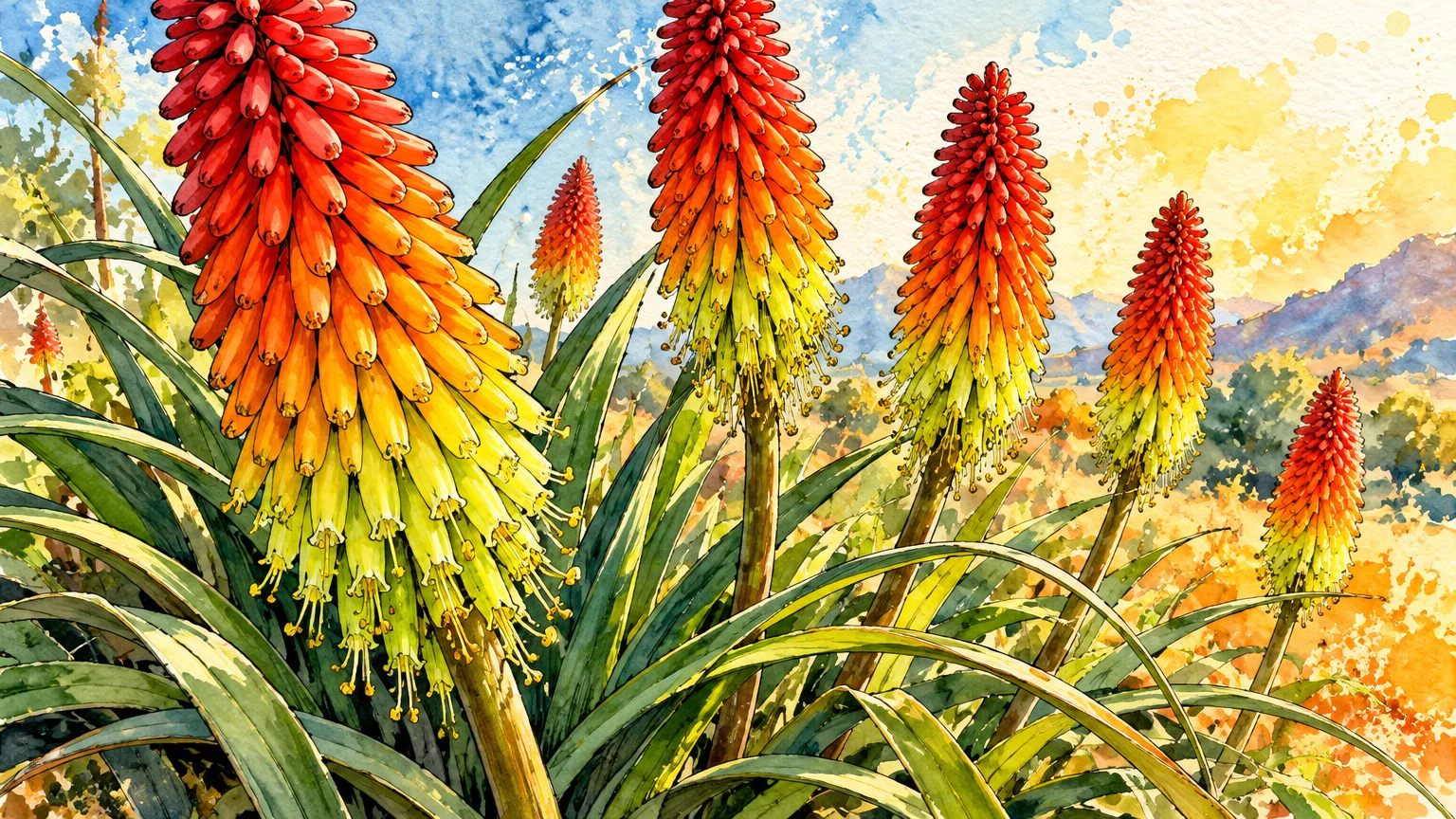
Tip #12: Red Hot Poker (Kniphofia uvaria)
Red hot pokers produce torch-like, bicolored flower spikes rising 4 to 6 feet above fountains of arching, evergreen grass-like leaves. The vibrant spikes display radiant gradations of flame red, tangerine, and lemon yellow as individual florets open.
Their striking, architectural silhouette commands attention and introduces exotic, fiery color palettes to sunny borders. Hummingbirds are intensely attracted to the tubular, nectar-dripping blooms all summer long.
Grow kniphofia in full sun and sharply drained soil; standing winter moisture will cause crown rot. Tie the foliage together over the crown in late autumn to shed freezing rains in cold zones.
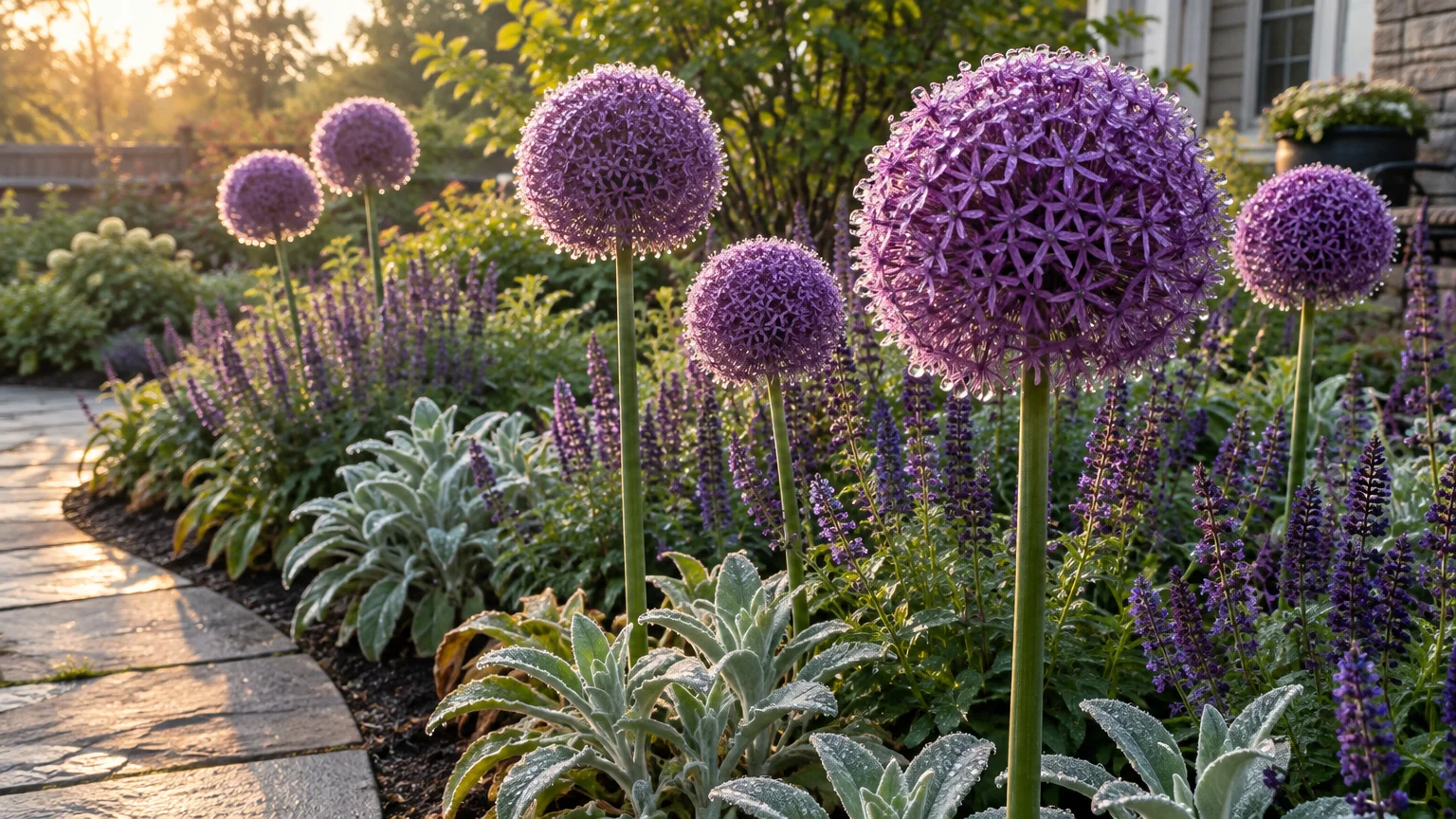
Tip #13: Giant Allium (Allium ‘Globemaster’)
Giant alliums shoot spherical, basketball-sized flower umbels atop sturdy, leafless scapes measuring 3 to 5 feet high. Cultivar ‘Globemaster’ features thousands of star-shaped, silvery-purple florets packed tightly into dense 8-inch spheres.
These striking orbs introduce geometric form and surreal modern artistry to your late spring planting beds. Because they belong to the onion family, hungry rodents and deer completely ignore both bulbs and stems.
Plant dormant bulbs in autumn at a depth of 8 inches in sunny, well-draining garden beds. Surround them with mounding perennials like hostas or catmint to camouflage the allium’s fading foliage as it blooms.
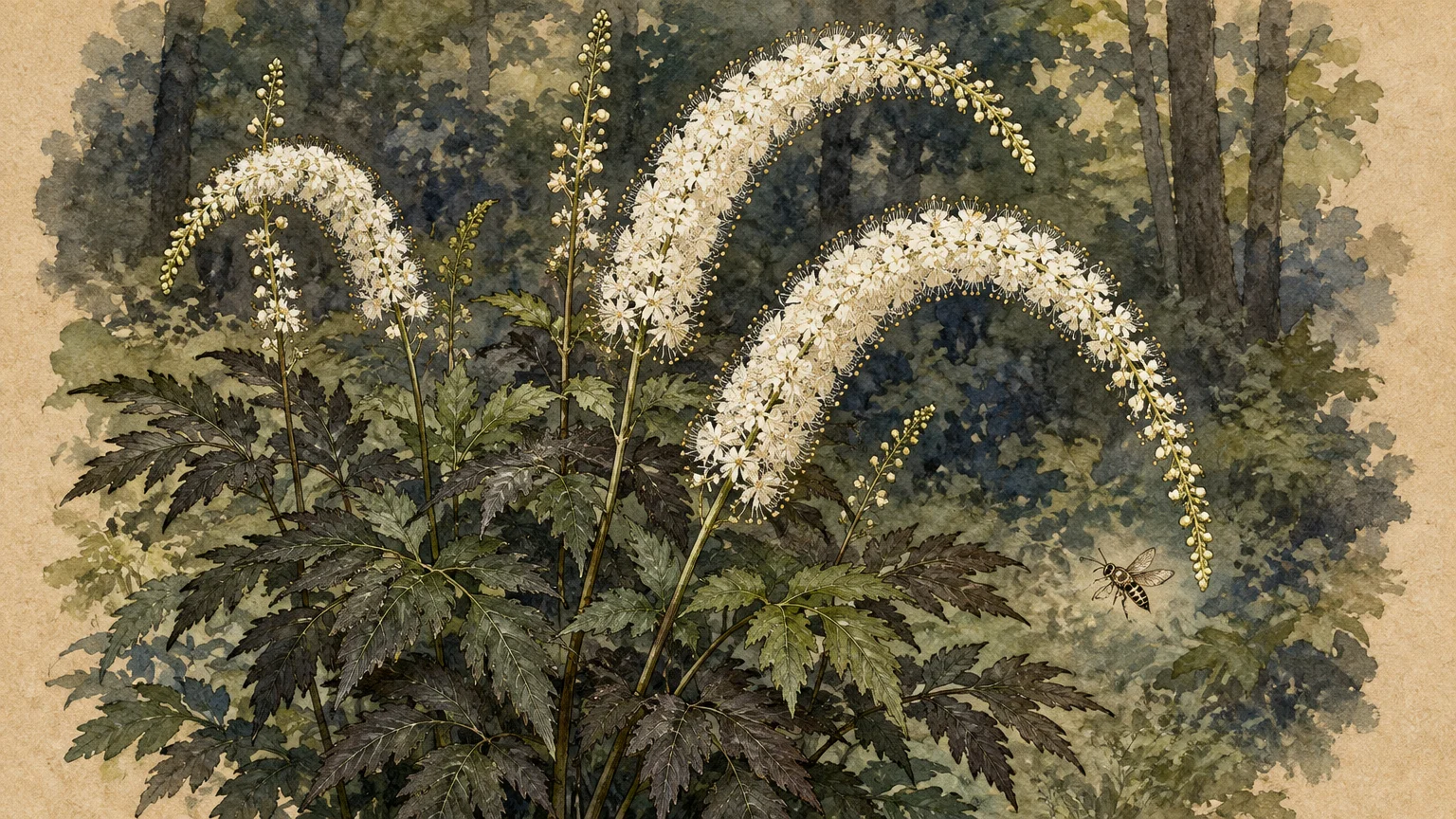
Tip #14: Black Cohosh (Actaea racemosa)
Black cohosh sends luminous, arching floral wands reaching 5 to 7 feet above lush mounds of fern-like foliage. The bottlebrush-like white flowers blossom in midsummer, glowing vividly against shady woodland understories.
It ranks among the best tall flowering plants for shaded borders, delivering dramatic height where choices are typically limited. The blooms emit a sweet, delicate fragrance that attracts beneficial woodland pollinators and night-flying moths.
Choose a sheltered, partially shaded to fully shaded location containing humus-rich, consistently damp soil. Add several inches of shredded leaf mulch annually to preserve moisture and duplicate its native forest floor.
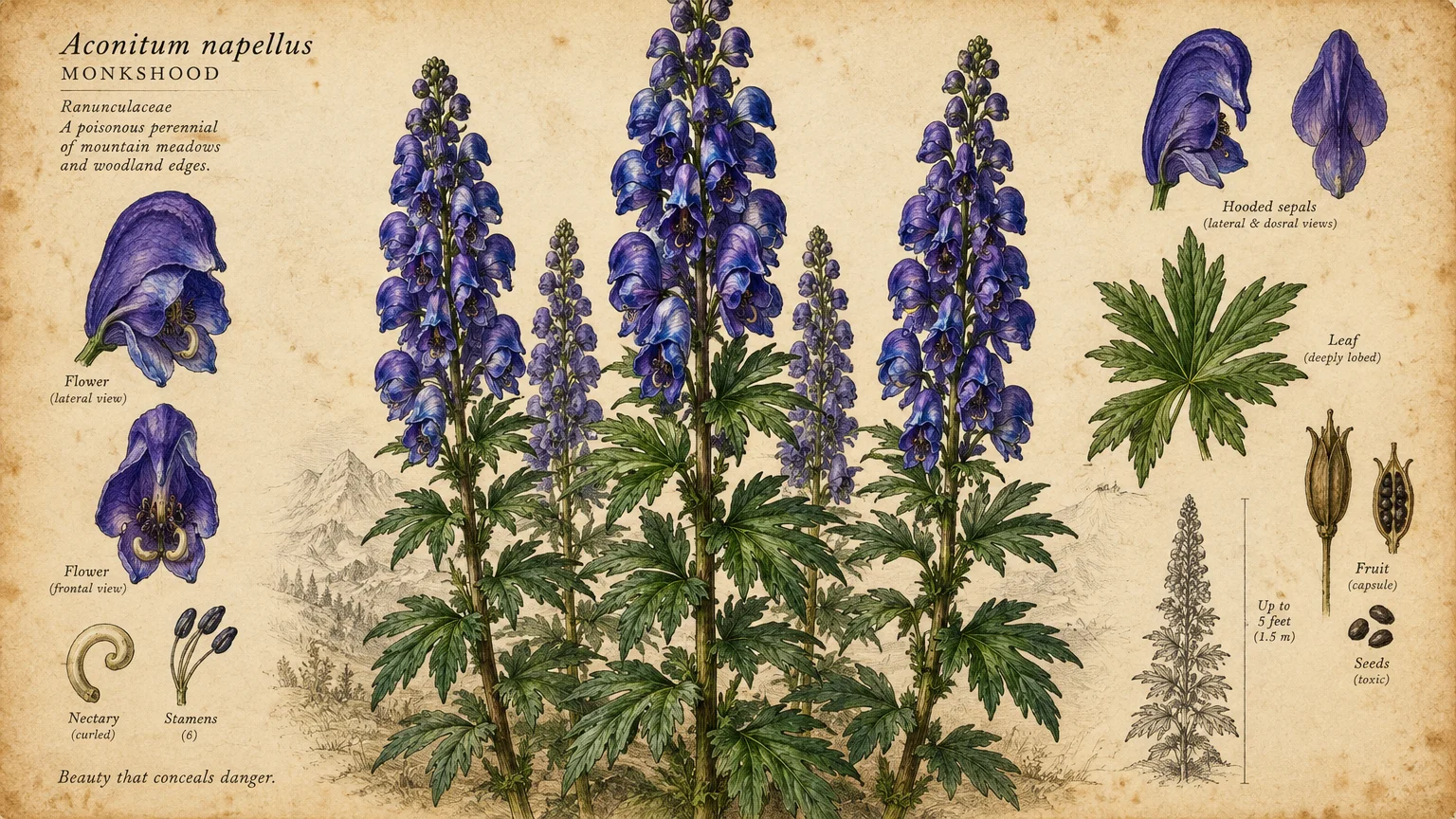
Tip #15: Monkshood (Aconitum napellus)
Monkshood produces stately 4 to 6-foot spires of hooded, intensely deep violet-blue blooms in late summer and autumn. Its deeply divided, glossy green foliage resembles delphinium foliage but carries distinct leathery texture.
It thrives in cooler climates and shaded borders where it provides stunning vertical color long after summer annuals decline. Deer, rabbits, and rodents never browse this plant, ensuring pristine late-season foliage.
Plant monkshood in partial shade with rich, moist, organic soil that never dries out completely. Always wear gardening gloves when handling this plant, as all parts contain toxic alkaloids that irritate skin.
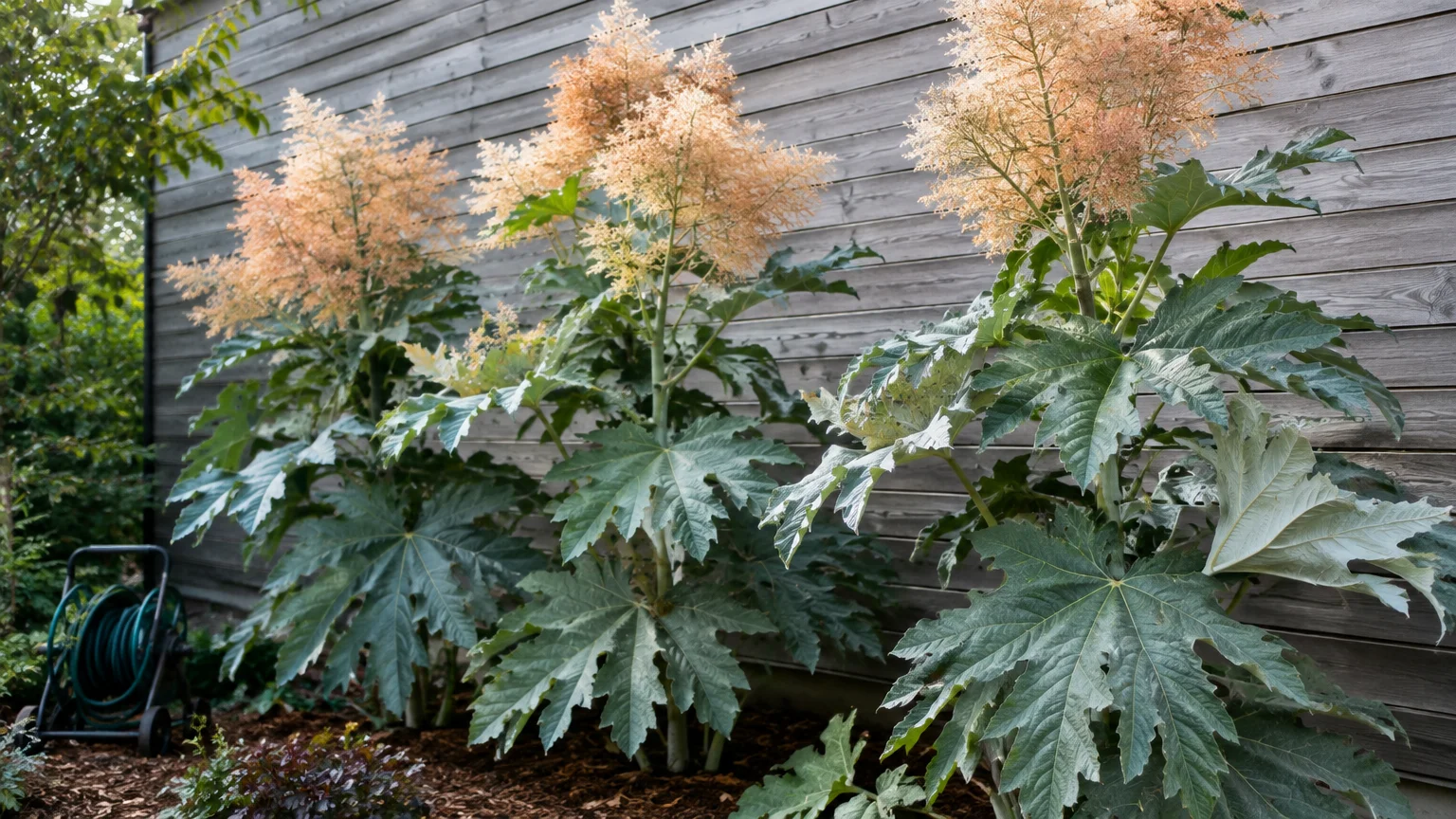
Tip #16: Plume Poppy (Macleaya cordata)
Plume poppy is a grand perennial reaching 6 to 9 feet tall with broad, scalloped, blue-green leaves featuring white undersides. Feathery, coral-buff flower panicles rise high above the foliage canopy in midsummer.
The immense foliage and airy floral clouds create immediate screening and a majestic focal point across vast spaces. Its leaves flutter in the wind to reveal shimmering silver reverses that contrast with darker foliage.
Site plume poppy in full sun to light shade in average, well-drained soil. Because it spreads via vigorous underground runners, install root barriers or plant it in contained boundary beds.
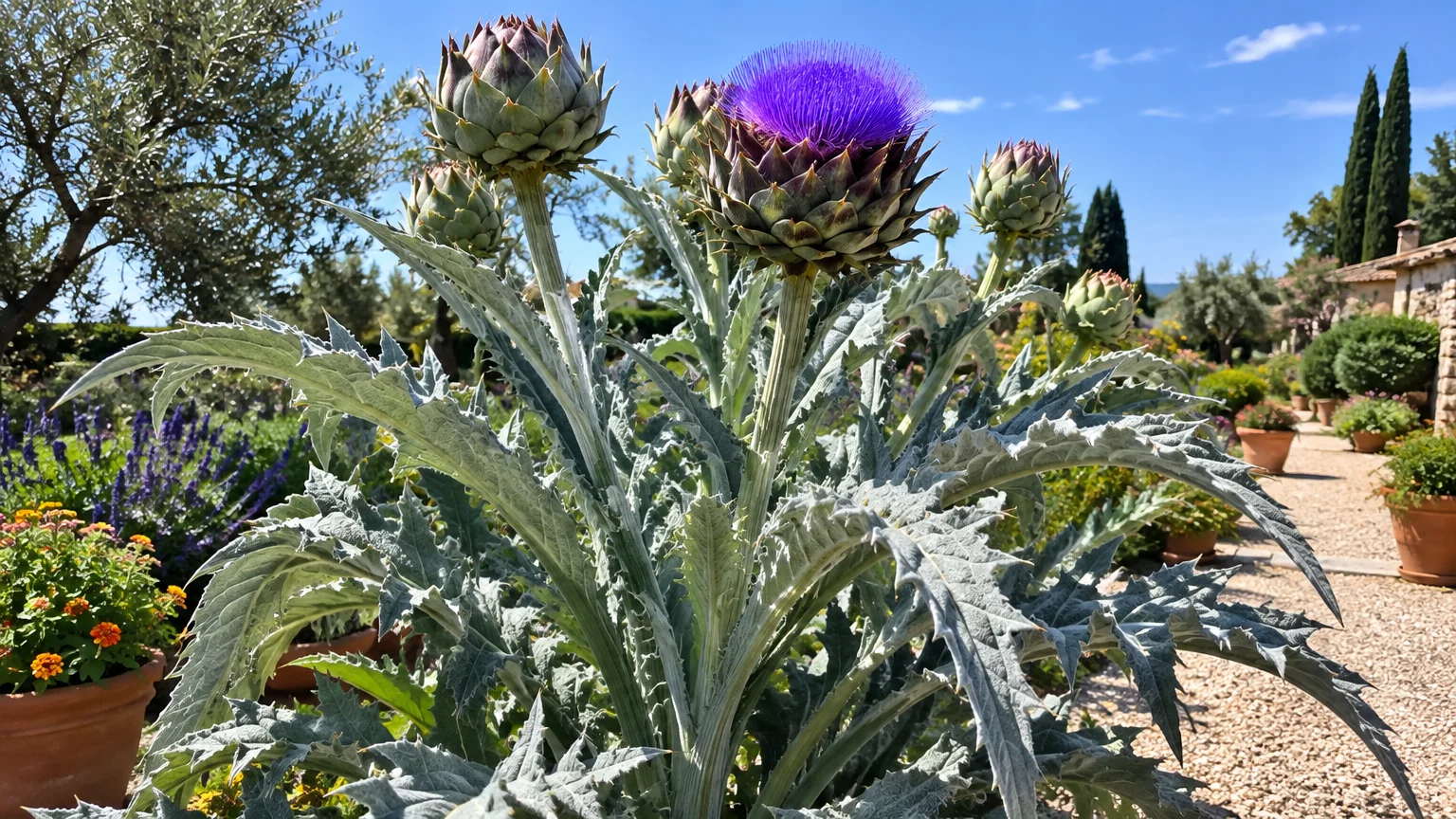
Tip #17: Cardoon (Cynara cardunculus)
Cardoon produces massive rosettes of deeply cut, silver-gray architectural foliage, topped by 5 to 7-foot flower stalks carrying thistle-like violet blossoms. These iridescent purple blooms measure 3 inches across and resemble wild artichoke flowers.
The dramatic, sculptural silver leaves provide extraordinary year-long texture that anchors Mediterranean and drought-tolerant planting schemes. Bees crowd the bristling purple flower heads throughout warm sunny afternoons.
Plant in full sun and well-draining, moderately fertile soil; cardoons tolerate poor and rocky conditions easily. Provide ample elbow room, as a mature specimen easily spreads 4 to 5 feet wide.
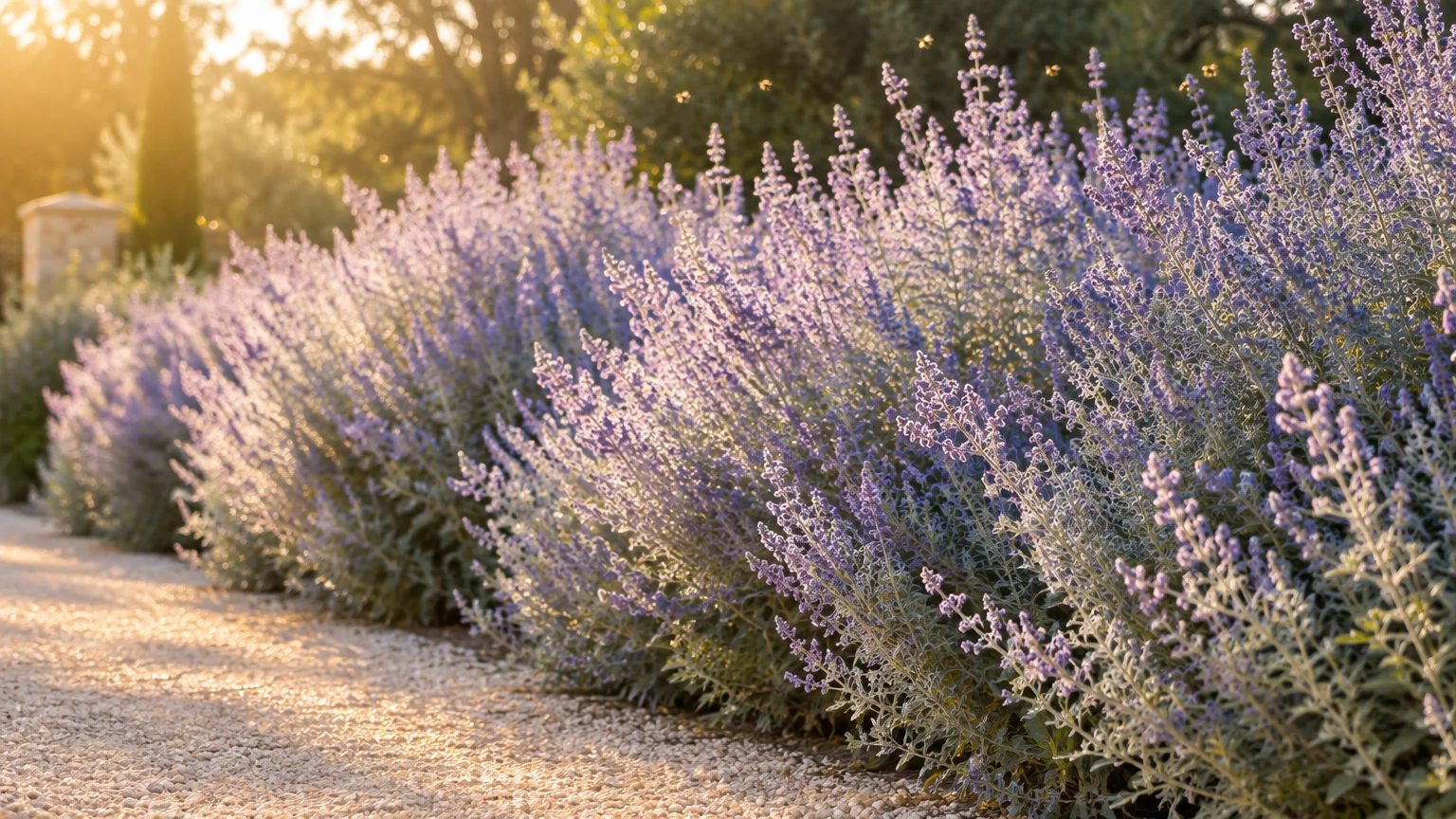
Tip #18: Russian Sage (Salvia yangii)
Russian sage forms a towering, 4 to 5-foot subshrub clothed in finely dissected, aromatic silver leaves and hazy lavender-blue floral clouds. It blooms profusely from midsummer well into late autumn.
This exceptionally durable plant withstands intense summer heat, poor gravelly soil, and prolonged drought without wilting. The scented gray-green foliage naturally deters browsing wildlife, making it virtually maintenance-free.
Grow Russian sage in hot, full-sun exposures with lean, sharply draining soil. Cut the woody stems back to 6 inches each spring to stimulate vigorous, compact new branching.
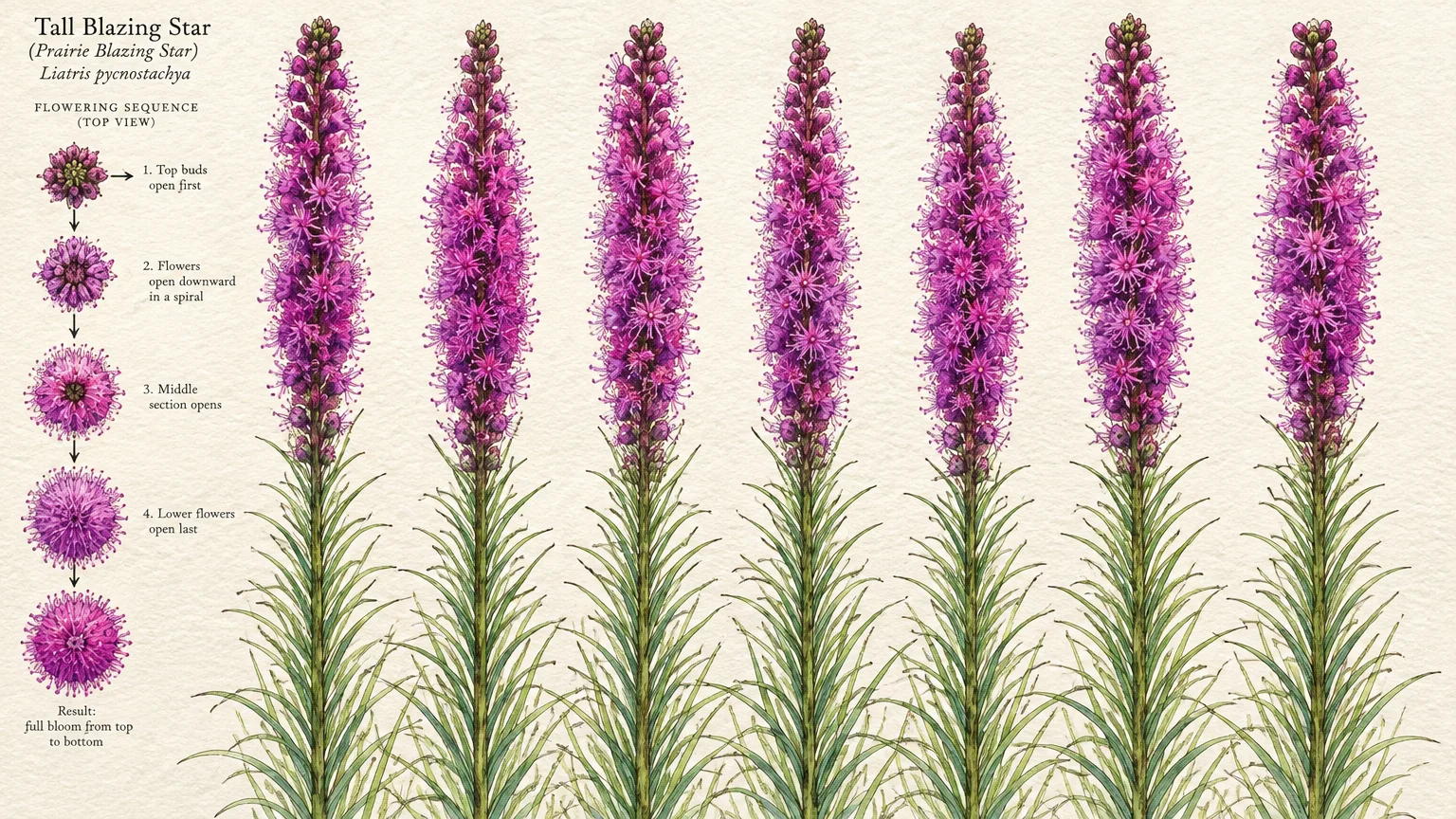
Tip #19: Tall Blazing Star (Liatris pycnostachya)
Tall blazing star, also known as prairie blazing star, thrusts dense, furry floral wands 4 to 6 feet into the sky. Unlike most spiked flowers, its vibrant purple-magenta florets open from the tip downward.
This native prairie perennial adds decisive vertical punctuation and extraordinary structural contrast among mounding grasses and broad-leaved perennials. It serves as an essential nectar reservoir for migrating monarch butterflies throughout late summer.
Plant corms in full sun and well-drained soil, spacing them 12 to 15 inches apart. Avoid overwatering or excessive fertilizer, which can cause the slender floral stalks to bend and flop.
Tip #20: Cup Plant (Silphium perfoliatum)
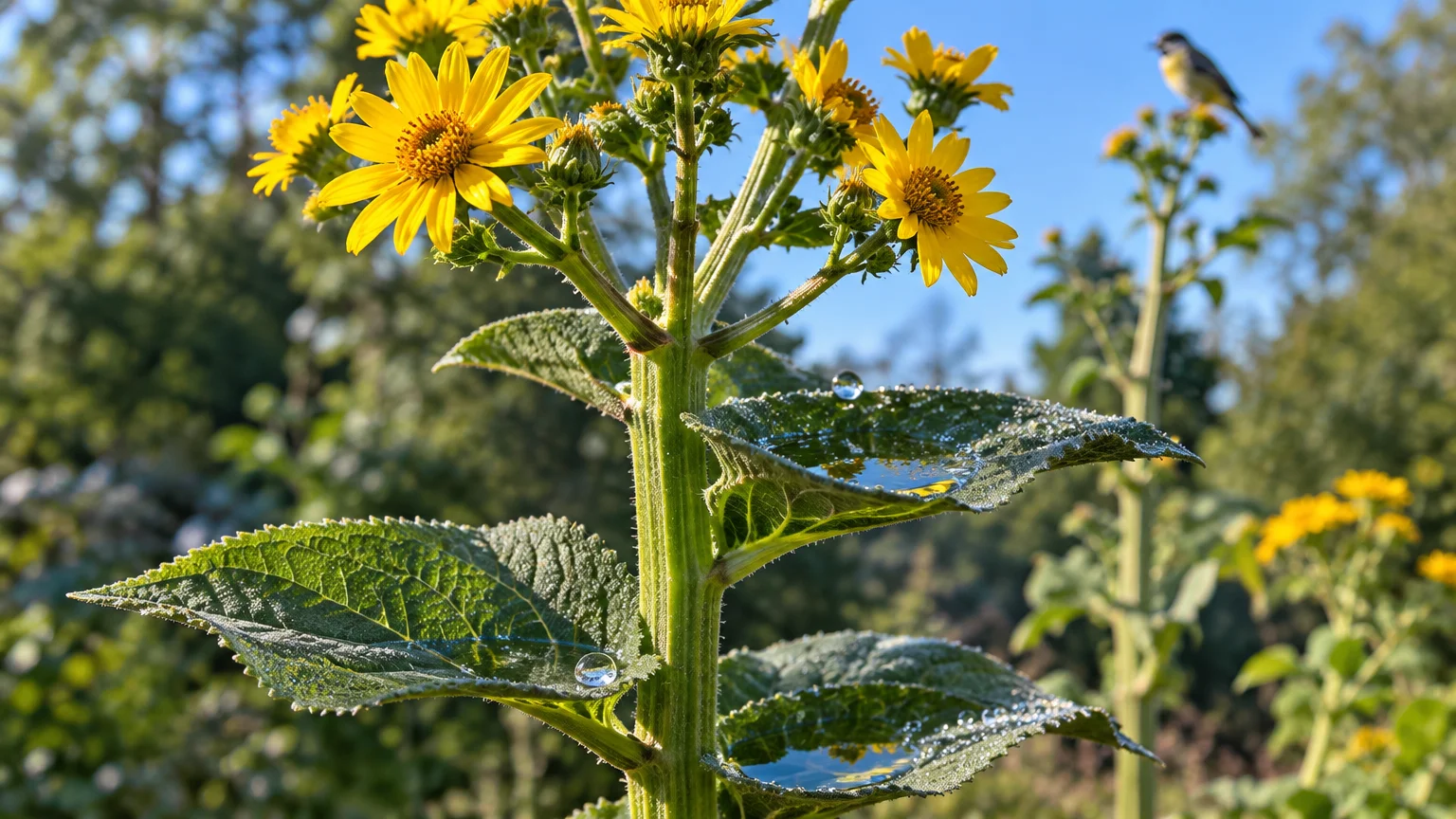
Cup plant is an imposing native giant reaching 6 to 9 feet tall with bright yellow, daisy-like blossoms spanning 3 inches wide. Its opposite leaves join around the square stems to form small natural reservoirs that capture rainwater.
Local songbirds regularly visit the leaf cups to drink and bathe before eating the ripe autumn seeds. Its robust, woody stems stand proud against severe thunderstorms, providing persistent winter structure.
Place cup plant at the rear of deep sunny borders or within native meadow plantings. Ensure the soil remains moderately moist, and deadhead spent flower heads if you wish to reduce self-seeding.
Putting It All Together: Enjoy Your Beautiful Garden
Creating multi-layered garden borders begins by choosing structural plants that command vertical space. When you position the tallest varieties along back boundaries, they form an enchanting living canvas for mid-sized perennials and groundcovers.
Mix contrasting textures, such as broad-leaved cannas and airy Brazilian verbena, to create dynamic visual tension. Group plants with similar sun and moisture requirements together to make seasonal maintenance simple and rewarding.
As your tall flowering specimens mature, they will welcome countless beneficial pollinators while giving your landscape year-round architectural presence. Step outside, experiment with height, and watch your outdoor living space reach exciting new dimensions.
For region-specific advice, consult your local University Extension program (find yours via the USDA directory). For plant databases and inspiration, visit the Missouri Botanical Garden or the Royal Horticultural Society.
Disclaimer: This article provides general gardening advice; always consider your specific climate, soil conditions, and local pests. Follow safety guidelines when using gardening tools and products.
Frequently Asked Questions
How do I prevent tall garden flowers from falling over?
Install plant supports like bamboo stakes, metal grow-through rings, or discreet twine corrals in late spring before stems grow tall. Planting in full sun and avoiding excessive nitrogen fertilizer also promotes thicker, self-supporting stems.
Where should I position tall flowering plants in my landscape?
Place tall garden flowers along the back row of borders, against fences, or around patios to establish living privacy screens. In island beds visible from all sides, position your tallest specimens directly in the center.
Which tall flowers grow best in shaded gardens?
Black cohosh, common foxglove, and monkshood thrive in low-light settings while reaching heights of 4 to 7 feet. These varieties provide magnificent architectural verticality without requiring full sun exposure.
Do tall perennial flowers need heavy fertilizing to reach their full height?
Most tall perennials prefer moderate feeding through organic compost rather than high-nitrogen chemical fertilizers. Excess nitrogen causes rapid, spindly foliage growth that makes stems weak, floppy, and vulnerable to breaking.