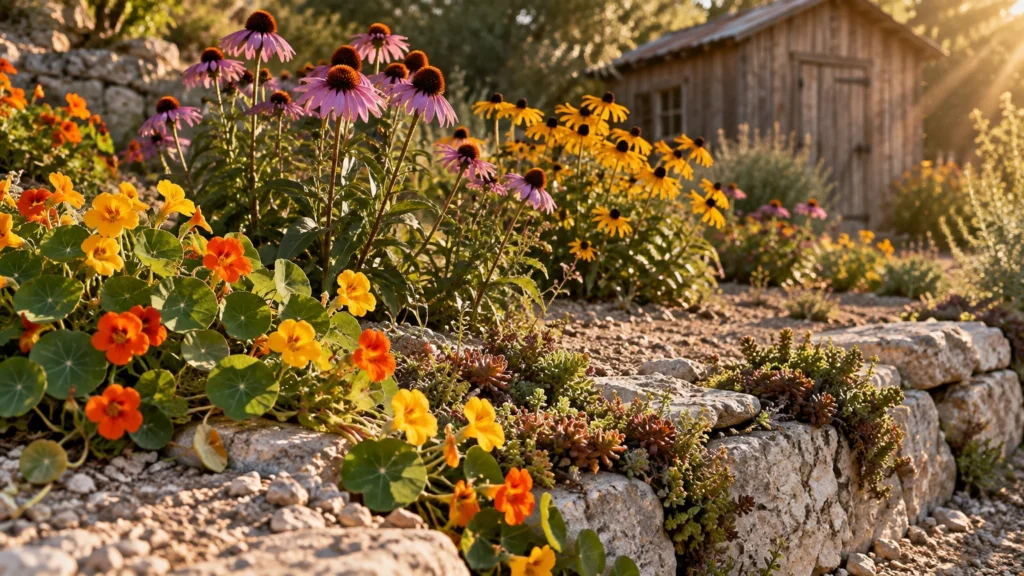
August heat often leaves garden beds looking exhausted, scorched, and faded. You can instantly reignite your landscape with resilient late-season blooms that thrive when summer perennials fizzle out.
Strategic plantings deliver fresh waves of rich color, sturdy texture, and vital nectar for pollinators right up until the first hard frost. These dependable selections will transform tired borders into vibrant autumn showstoppers.
With the right late-blooming varieties in your soil, you will enjoy a seamless floral bridge between dog-day slumps and crisp autumn mornings.
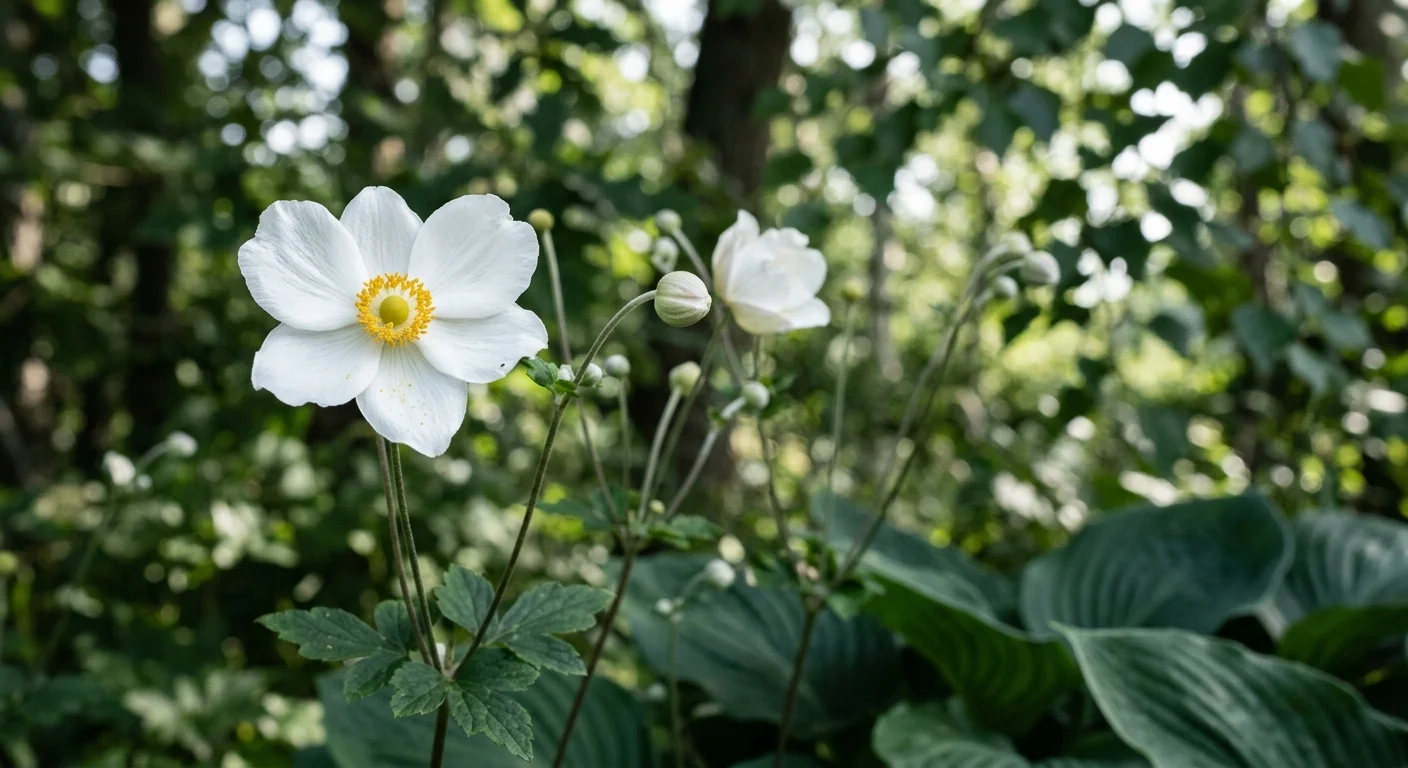
Tip #1: Japanese Anemone (Anemone × hybrida)
When high summer flowers start browning at the edges, Japanese anemone steps forward with breathtaking poise. These graceful perennials produce pure, cup-shaped blossoms that sway on slender, wiry stems two to four feet above handsome mounds of trifoliate foliage. Their refined petals circle a ring of luminous golden stamens, adding instant elegance to borders that have lost their early-summer luster.
Japanese anemones provide a continuous flush of flowers from mid-August through late October. While many perennials struggle in the late-season heat, anemones thrive in partial shade, making them ideal for brightening dim garden corners and understory borders. They establish slowly during their first season; once their fibrous root system settles, they spread into lush, reliable colonies that return stronger every year.
Plant your Japanese anemones in humus-rich, evenly moist, well-draining soil across USDA Hardiness Zones 4 through 8. These plants dislike soggy winter conditions, so incorporate generous amounts of compost or leaf mold at planting time to improve drainage and soil structure. Apply a two-inch layer of organic mulch around the base to keep their shallow root zone cool during sweltering August afternoons.
For pristine white blossoms that illuminate dusk gardens, choose the award-winning cultivar Honorine Jobert. If you prefer rich pink tones with silvery undersides, plant September Charm. Pair them alongside broad-leaf hostas and dark-stemmed ferns; the contrasting leaf textures will mask declining mid-season foliage while the anemone blossoms dance gracefully above.
Tip #2: Autumn Stonecrop Sedum (Hylotelephium spectabile)
Autumn stonecrop sedum represents the ultimate low-maintenance insurance policy for late-season flower garden ideas. This rugged succulent shrugs off scorching heat, prolonged drought, and poor soil without dropping a single leaf. Its fleshy, jade-green leaves form dense, upright clumps that provide structural interest all summer before exploding into massive flower heads as August comes to an end.
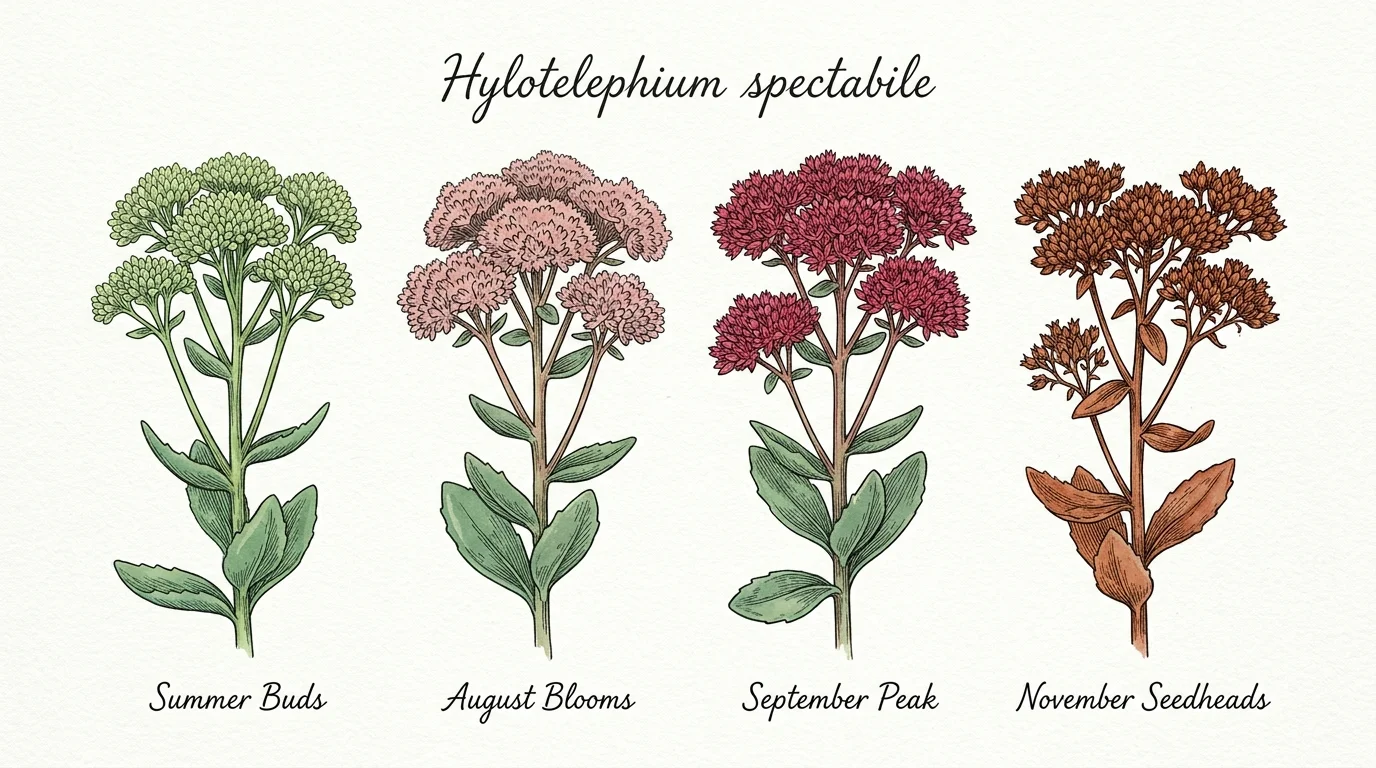
The real magic of stonecrop sedum lies in its shifting color progression. Tightly packed floral buds resemble miniature heads of broccoli in July, open into soft dusty-pink flower clusters in August, deepen to rosy ruby in September, and age into rich coppery-bronze seedheads by November. This remarkable longevity guarantees three solid months of visual interest without requiring deadheading or staking.
Grow autumn stonecrop in full sun—aim for at least six hours of direct sunlight daily—and lean, sharply draining soil within USDA Zones 3 through 9. Avoid rich soils or heavy nitrogen fertilizers; overly fertile ground causes the succulent stems to grow leggy and split open under the weight of their flower heads. Water moderately during initial planting, then let natural rainfall handle moisture needs once the roots take hold.
The gold standard cultivar Autumn Joy remains unmatched for its sturdy habit and warm terracotta autumn finish. For striking contrast, seek out Matrona, which pairs smoky purple stems and slate-tinted leaves with pale pink blooms. Plant sedums in front-of-the-border drifts, alternating them with fine-textured ornamental grasses like little bluestem for dynamic seasonal contrast.
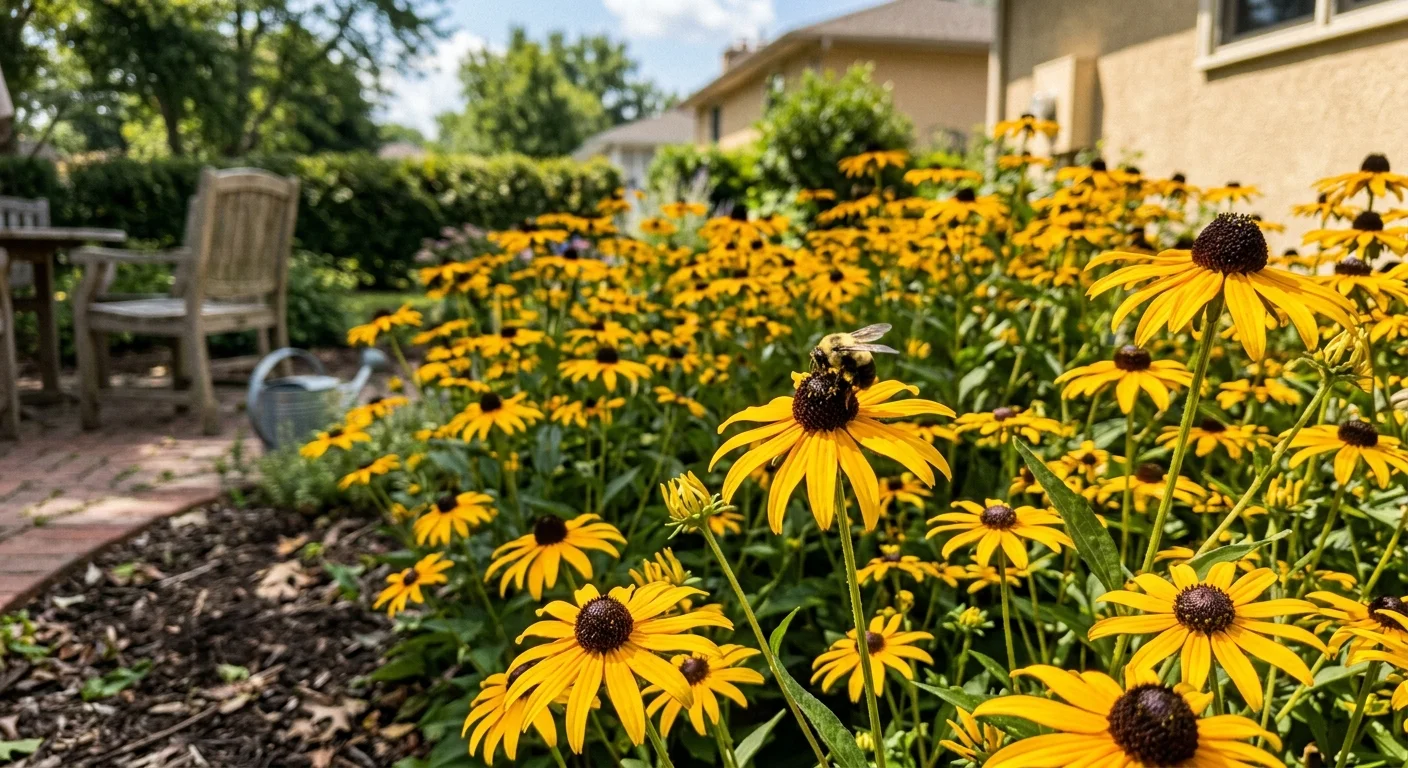
Tip #3: Black-Eyed Susan (Rudbeckia fulgida)
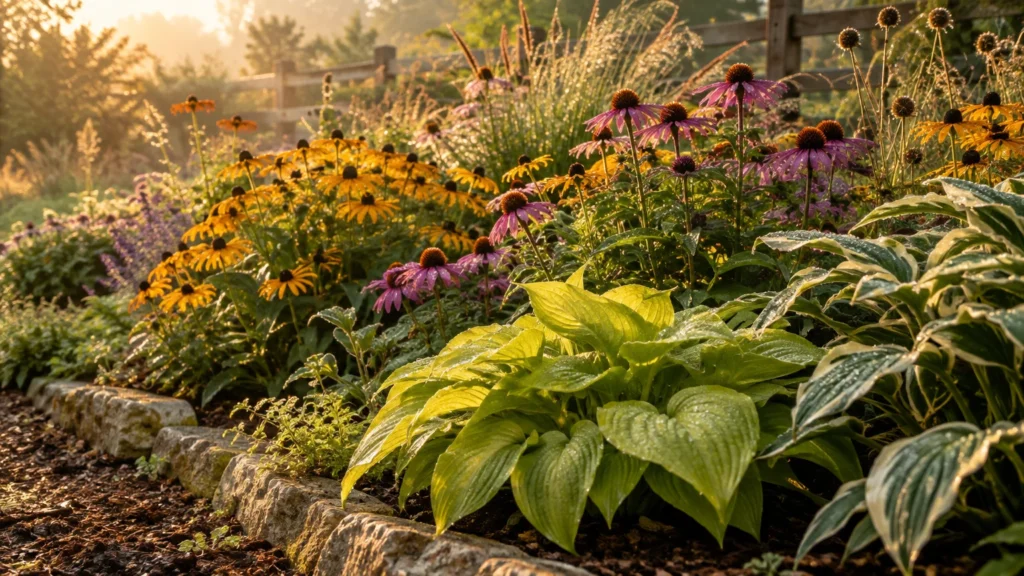
Few plants for late summer color deliver the joyous, high-energy impact of black-eyed Susan. Radiating fiery golden-yellow petals around a prominent, dark chocolate central cone, this native North American staple turns tired August borders into dazzling tapestries. It produces dozens of blossoms simultaneously on branching stems, creating an unbroken sea of saturated color that lasts until heavy autumn frosts.
Black-eyed Susans excel at filling gaps left by early-season bloomers that have gone dormant. Their rough, hairy foliage deters foraging deer and rabbits, while the nectar-rich florets draw bumblebees, swallowtail butterflies, and beneficial hoverflies by the dozens. In late autumn, the petals drop away to leave hard, seed-filled cones that serve as a crucial food pantry for visiting American goldfinches.
Provide your Rudbeckias with full sun to light afternoon shade and moderately fertile, well-draining soil across USDA Zones 3 through 9. While they possess excellent drought tolerance once established, providing a deep soaking during prolonged August heatwaves keeps flower production at its peak. Space individual plants 18 to 24 inches apart to ensure proper air circulation around their foliage.
Look for Goldsturm for a classic two-to-three-foot presence, or choose Little Goldstar if you need a compact cultivar that tops out at sixteen inches while producing double the bloom count. For landscapes prone to humid summer weather, plant American Gold Rush; its smaller, hairy foliage demonstrates exceptional resistance to Septoria leaf spot, keeping the foliage pristine all season long.
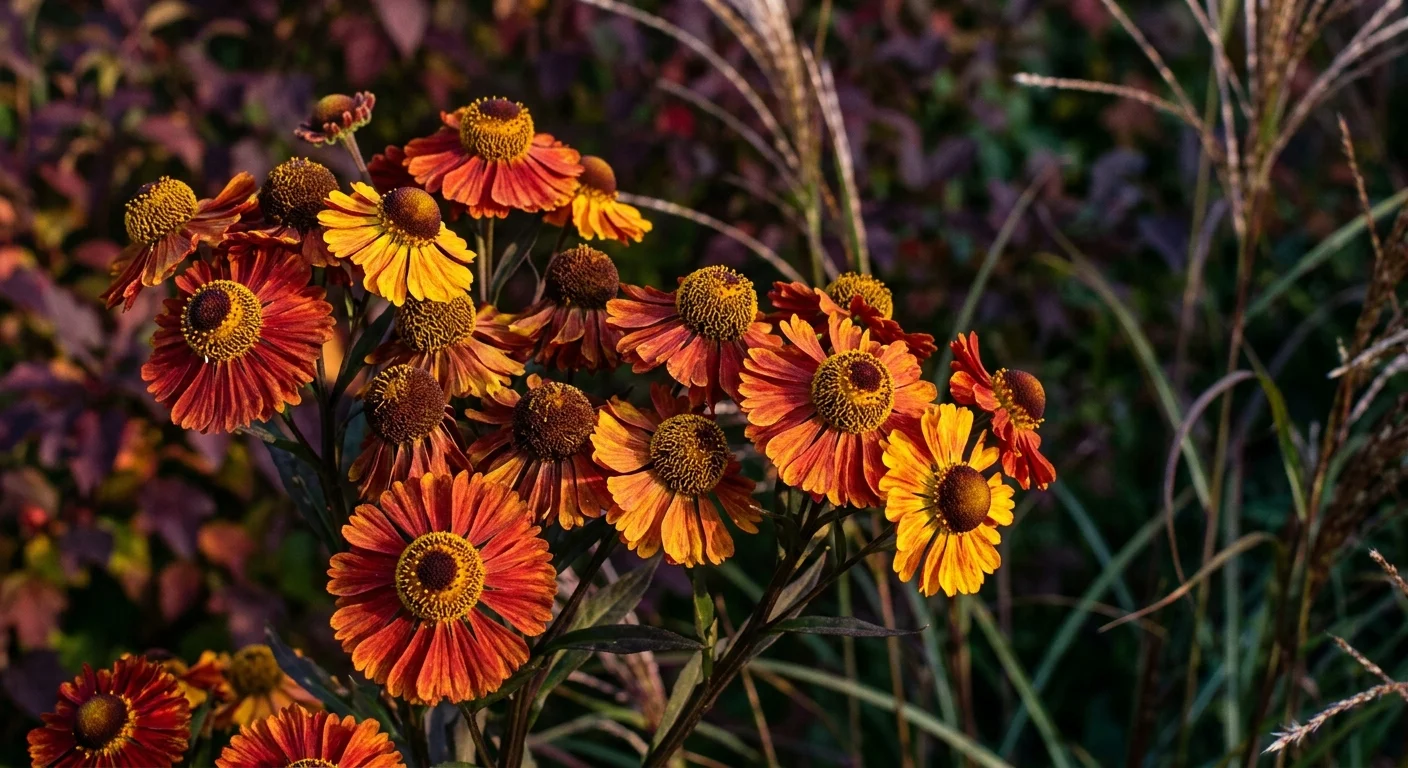
Tip #4: Sneezeweed (Helenium autumnale)
Despite its unfortunate common name—derived from historical use as a snuff to clear nasal passages rather than an allergy trigger—sneezeweed is one of the best late summer blooming flowers available to gardeners. Helenium features daisy-like flowers with distinctive, notched petal edges that cup around large, spherical center cones. Their rich shades of mahogany, rustic pumpkin, bright gold, and copper capture the true spirit of early autumn.
Sneezeweed starts its main floral display in early August and continues pumping out new buds well into October. Growing anywhere from three to five feet tall depending on the cultivar, it acts as a phenomenal vertical anchor for the middle or back of mixed perennial borders. The flowers produce copious pollen and nectar, revitalizing pollinator pathways during a critical pre-winter foraging window.
Plant sneezeweed in full sun and fertile, consistently moist soil in USDA Zones 3 through 8. Unlike drought-loving prairie natives, sneezeweed originates in damp meadows and stream banks; it demands adequate moisture to prevent lower leaf drop. To encourage compact, self-supporting stems that do not require staking, prune your plants back by one-third in late spring using the traditional Chelsea chop method.
Select Moerheim Beauty for pendulous, velvet petals that open in rich crimson-bronze before transitioning to warm coppery orange. If you garden in compact spaces, plant Salsa from the Mariachi series, which stays neatly under two feet tall while bearing intense, spicy-red blooms. Group sneezeweed alongside deep blue salvias or cool-toned asters to create electrifying late-season color harmonies.
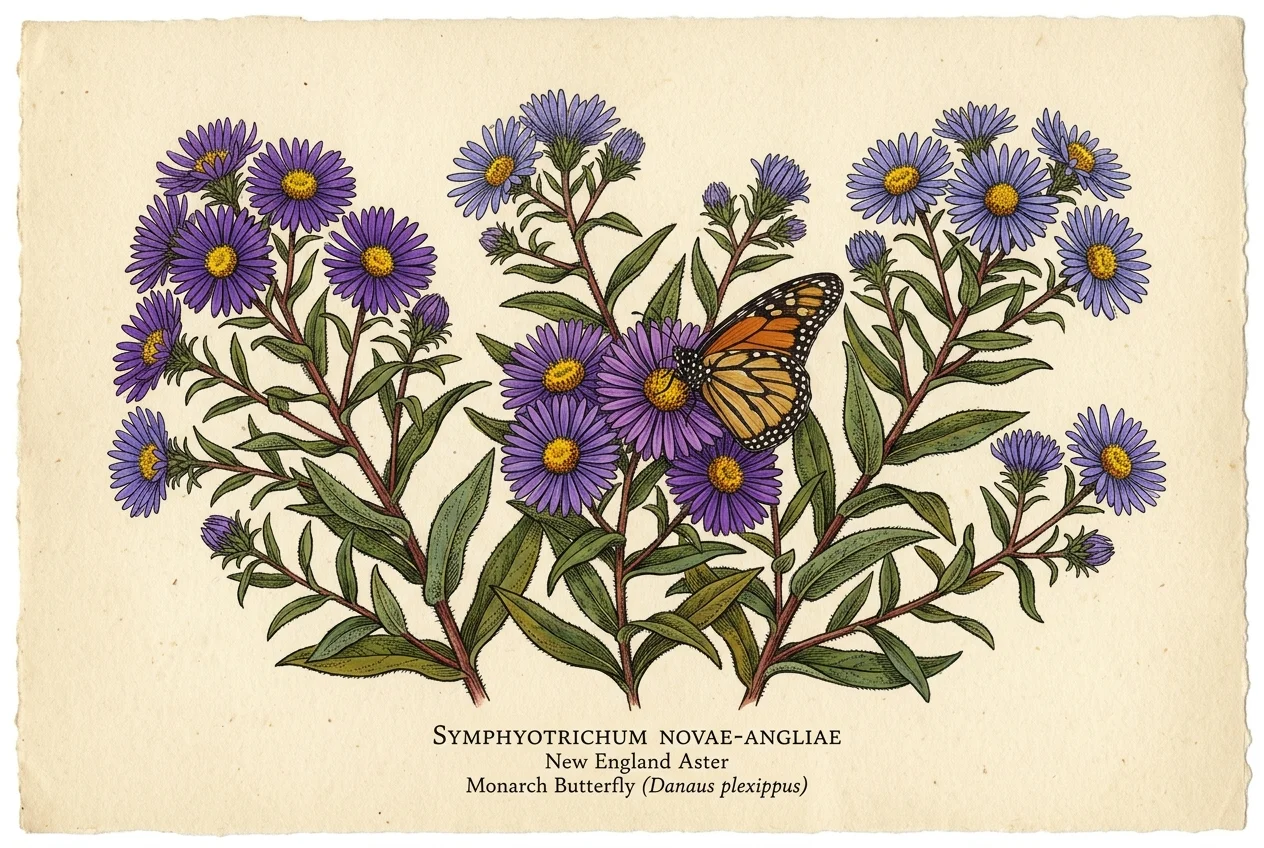
Tip #5: New England Aster (Symphyotrichum novae-angliae)
When high summer temperatures begin to soften, New England aster steps into the spotlight with electric intensity. Smothered in hundreds of small, daisy-like blossoms in royal purple, magenta, violet, and sky blue, these native powerhouses refresh tired garden flowers instantly. Their bright yellow centers create a striking focal point that anchors autumn garden beds when other perennials have completely surrendered.
Asters represent the single most important late-season lifeline for migrating Monarch butterflies, native solitary bees, and honeybees stocking their hives before winter. A mature aster clump buzzes with ecological activity from sunrise to sunset throughout September and October. Their fibrous, branching root networks also help stabilize garden soils against heavy autumn downpours.
Thriving in USDA Zones 4 through 8, New England asters prefer full sunlight and rich, moist, loamy soil. Because asters can be susceptible to powdery mildew during humid late-summer stretches, plant them in open areas with excellent air movement and water strictly at the soil level. Pinch back the growing stems by several inches once or twice between May and early July to stimulate bushier growth and double your final flower count.
The compact cultivar Purple Dome reaches just eighteen inches tall and produces solid mounds of deep violet flowers, making it perfect for border edges. If you desire height and striking color, choose Alma Pötschke for its luminous, four-foot spikes of glowing rose-pink blossoms. Pair New England asters with goldenrods and warm-toned ornamental grasses for a classic, naturalized meadow aesthetic.
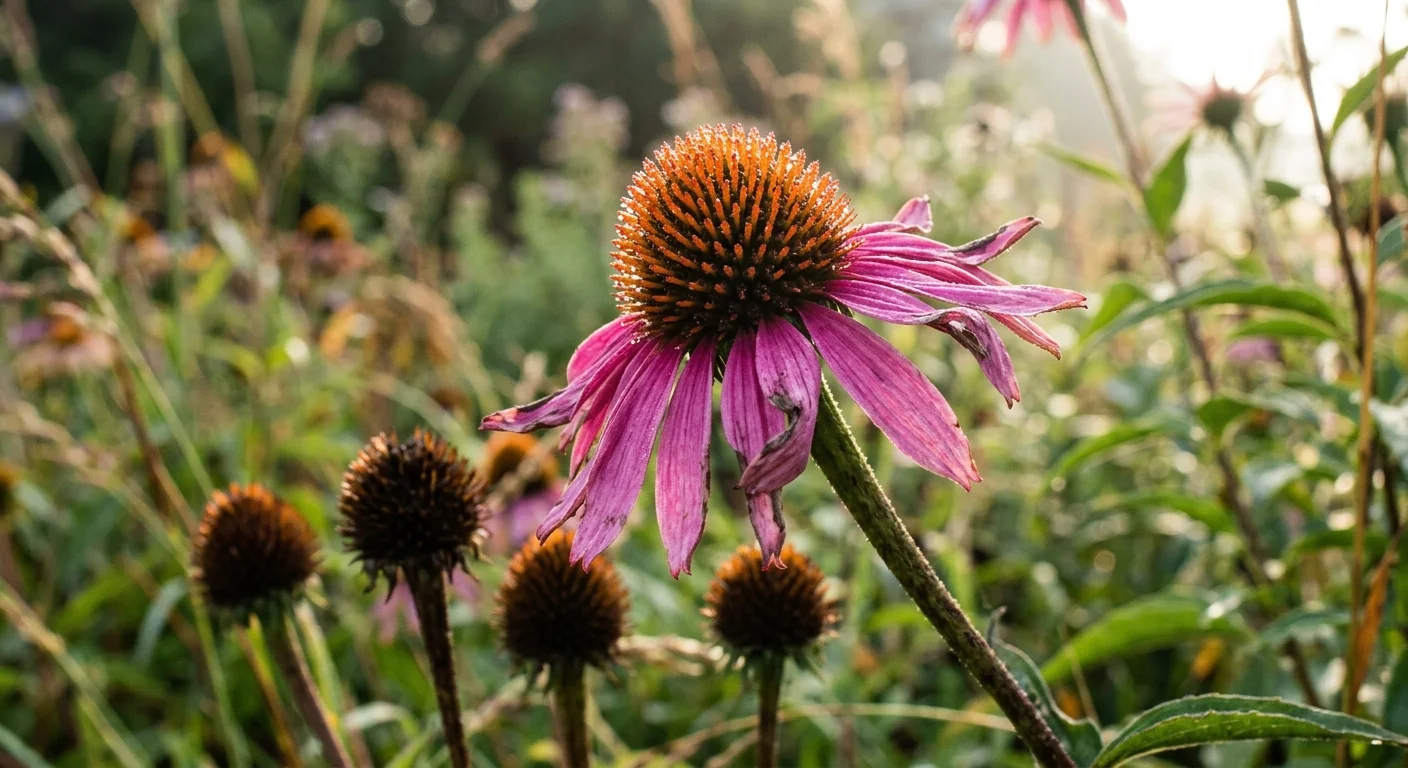
Tip #6: Purple Coneflower (Echinacea purpurea)
Purple coneflower is a beloved garden workhorse that proves its true mettle during the dog days of August. While its first wave of flowers appears in mid-summer, this tough-as-nails native produces a vigorous second flush of large, swept-back petals encircling spiky, orange-bronze central cones throughout late summer and early autumn. Its sturdy, bristly stems stand up against intense wind and summer thunderstorms without flinching.
Coneflowers possess a deep taproot that penetrates heavy soils to find moisture, making them exceptionally resilient against scorching heat and dry spells. They deliver dependable architectural structure in the border, drawing a diverse crowd of pollinators including swallowtails, painted ladies, and bumblebees. Leaving the persistent central cones standing into winter provides high-fat seeds for songbirds while creating striking silhouettes against frost.
Grow coneflowers in full sun and well-draining garden soil across USDA Zones 3 through 9. They tolerate poor, rocky soils with ease but will rot if planted in waterlogged winter ground. To maximize late-summer flower production, deadhead spent blooms promptly in July; this diverts plant energy away from premature seed production and triggers abundant new flower buds for late August.
The classic cultivar Magnus offers broad, non-drooping petals of deep carmine-rose that hold their color under blazing sun. For a dramatic multi-hued palette on a single plant, try Cheyenne Spirit, which yields an astonishing array of sunset orange, creamy white, bright scarlet, and rich gold blooms. Combine coneflowers with black-eyed Susans and Russian sage for a drought-proof pollinator haven.
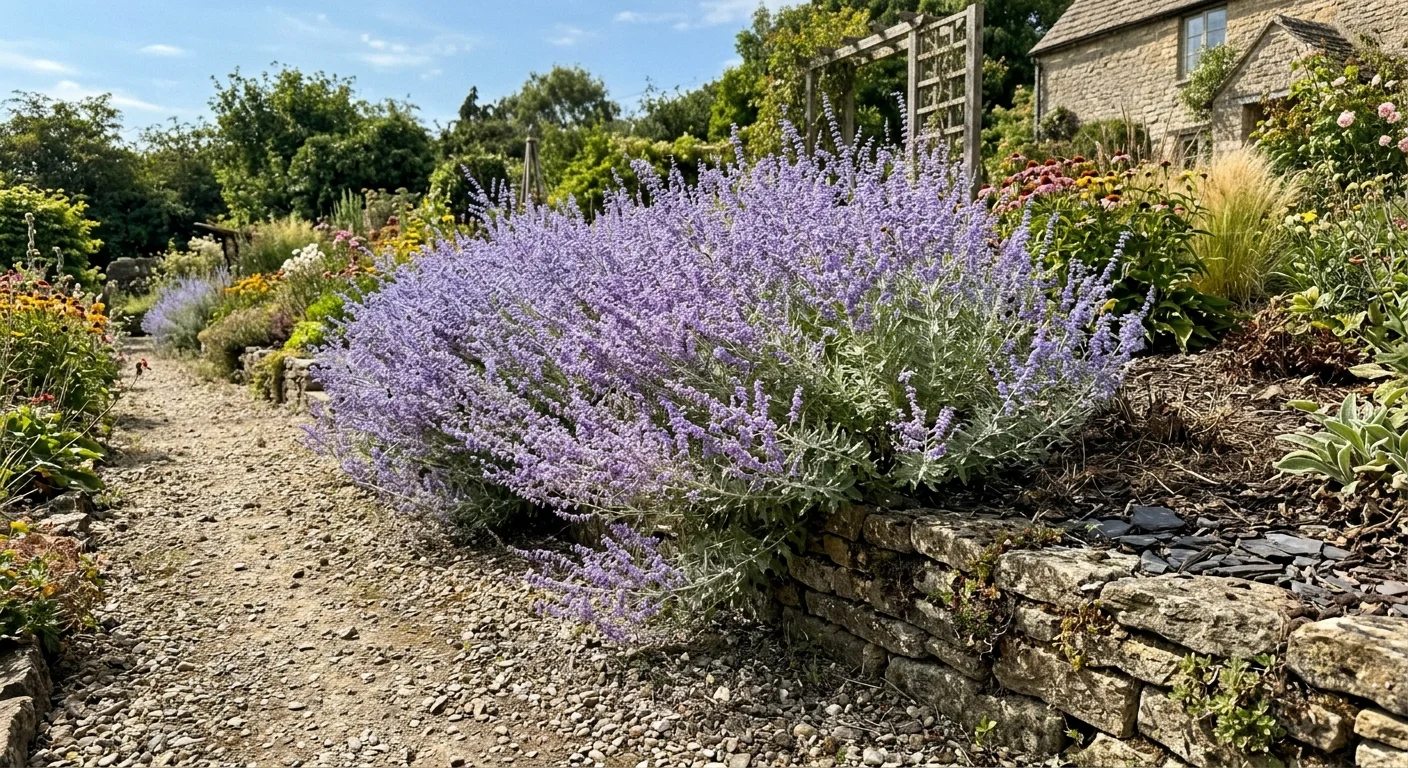
Tip #7: Russian Sage (Salvia yangii)
If your late-summer garden feels overwhelmed by heavy yellows and browns, Russian sage provides the perfect cool-toned antidote. This sub-shrub features finely dissected, aromatic silver-gray foliage topped by airy, cloud-like panicles of lavender-blue florets. The misty blue haze softens rigid landscape lines and provides a cool visual respite during the hottest weeks of August and September.
Russian sage thrives under conditions that cause other perennials to wither: baking sun, reflected pavement heat, sandy soils, and severe drought. Deer and rabbits avoid the pungent, herbal foliage, allowing the plant to remain untouched and pristine all season. It blooms relentlessly from mid-summer straight through October, filling the garden with a gentle, calming fragrance whenever brushed against.
Plant Russian sage in the absolute sunniest spot you have, utilizing lean, alkaline, sharply drained soil in USDA Zones 4 through 9. Heavy, wet soils or excessive fertilizer will cause the stems to flop open and lose their neat form. Prune the plant back hard in early spring—cutting stems down to four to six inches above the woody base—to stimulate strong, upright new growth for the coming season.
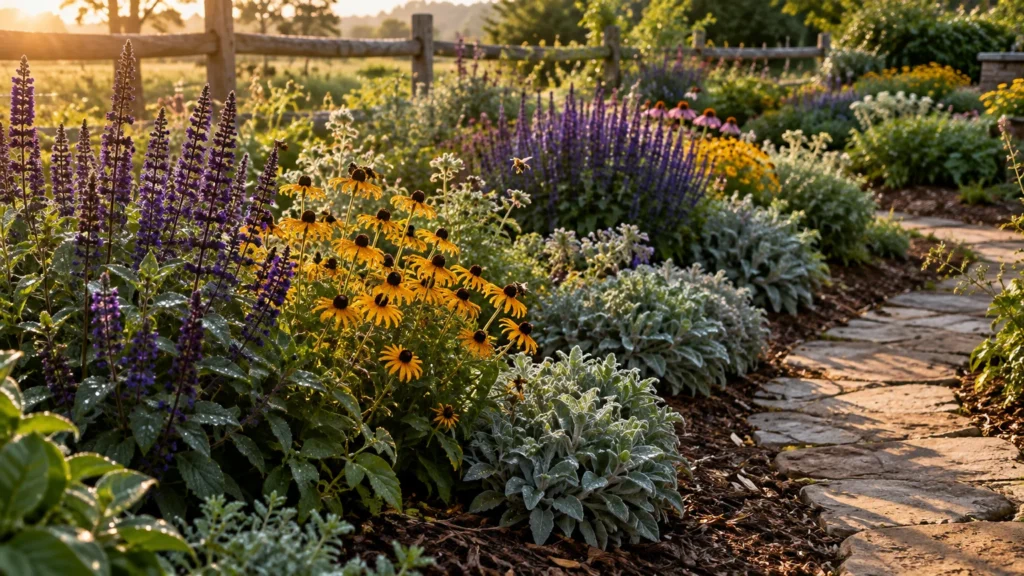
For gardens where older varieties tended to sprawl, modern cultivars offer outstanding upright manners. Denim ‘n Lace stays tidy at two to three feet tall with closely spaced, vivid blue calyxes that retain their color even after the petals fall. Plant Russian sage directly behind golden black-eyed Susans or fiery sneezeweed to create a high-contrast, professional-grade planting combination.
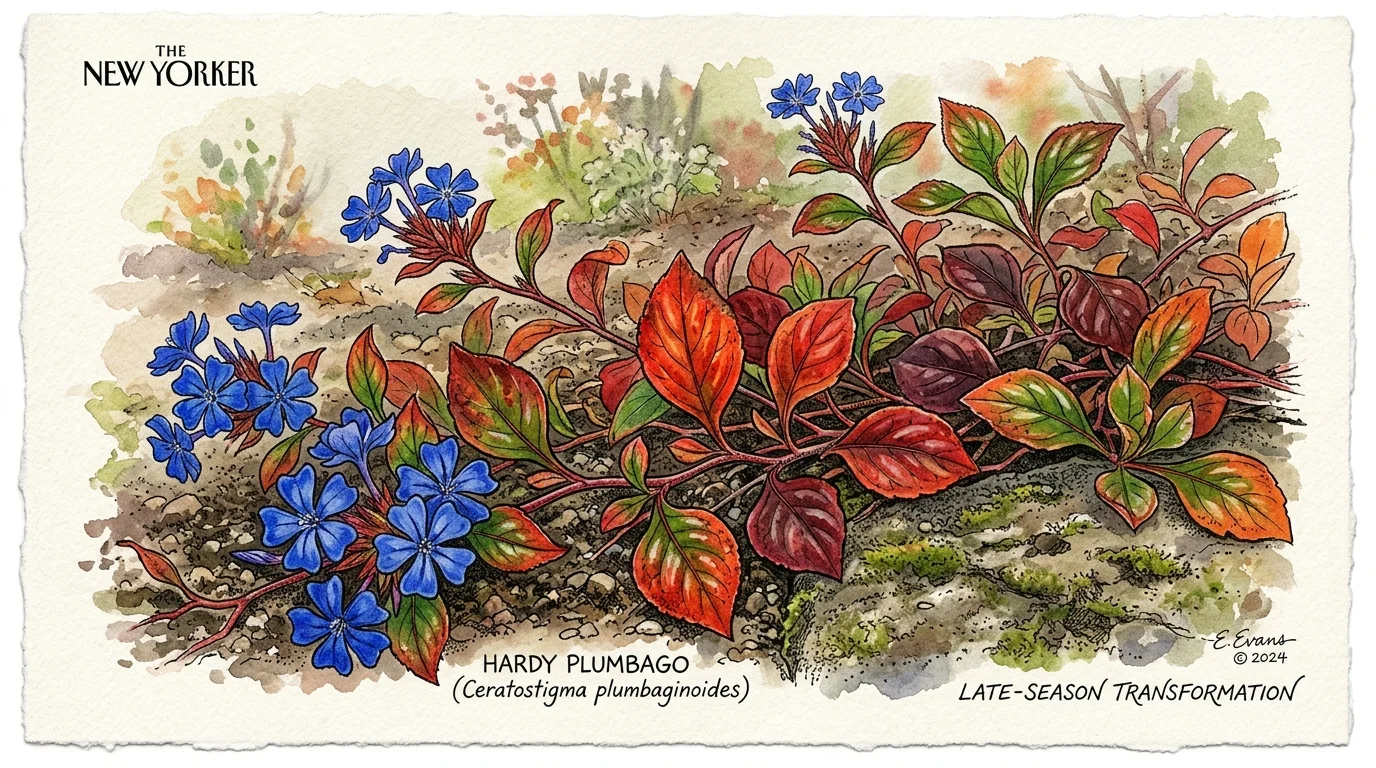
Tip #8: Hardy Plumbago (Ceratostigma plumbaginoides)
Hardy plumbago delivers a one-two punch of dynamic color right when garden borders need it most. Beginning in late August, this ground-hugging perennial produces clusters of intense, electric gentian-blue flowers that look like miniature phlox blossoms. As autumn temperatures dip in September and October, its glossy green foliage transforms into shades of burnished bronze, russet, and fiery burgundy.
This striking phenomenon—vivid cobalt blue flowers blooming concurrently over wine-red autumn foliage—makes hardy plumbago an exceptional tool for reviving the front edge of tired garden beds. It spreads via underground rhizomes to form a dense, weed-suppressing carpet that conceals the bare lower stems of taller, late-blooming perennials and shrubs.
Plumbago thrives in full sun to partial shade and prefers moderately fertile, well-draining soil across USDA Zones 5 through 9. It tolerates dry shade once established, making it a valuable problem-solver beneath mature deciduous trees. In cold-winter regions, apply a protective winter mulch over the crown during its first year in the ground, and cut back old stems in late spring before new shoots emerge.
Because hardy plumbago emerges late in spring, it serves as an ideal companion for spring-blooming bulbs like daffodils and tulips; as the bulb foliage dies back in June, plumbago fills the void and takes over the show for late summer. Plant it at the base of stone retaining walls or along stone pathways where the rich blue blooms and fiery autumn leaves can cascade freely.
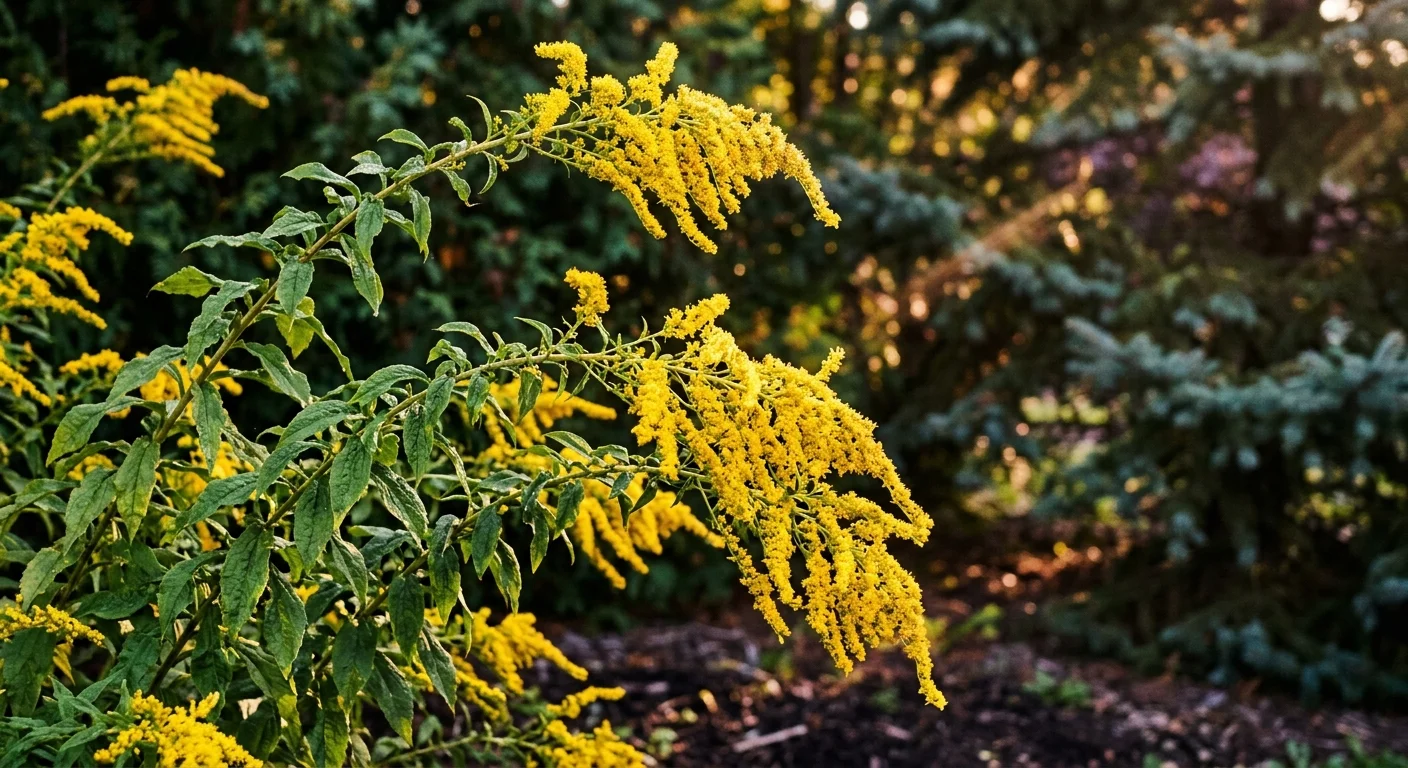
Tip #9: Wrinkleleaf Goldenrod (Solidago rugosa)
Goldenrod brings brilliant, celebratory warmth to the late-season landscape with arching, feathery sprays of miniature golden-yellow florets. Far from the aggressive roadside weeds that some gardeners fear, modern cultivated goldenrods are well-behaved clump-formers that illuminate borders from late August through October. They act as golden spotlights, catching low autumn sunlight and energizing faded garden beds.
A common misconception links goldenrod to seasonal hay fever; in reality, its heavy, sticky pollen is carried exclusively by insects rather than the wind. The true culprit behind late-summer sneezing is inconspicuous green ragweed that blooms at the exact same time. Goldenrod serves as a cornerstone species for native pollinators, sustaining over a hundred species of native bees, beneficial wasps, and butterflies before winter sets in.
Grow wrinkleleaf goldenrod in full sun to partial shade in average, well-draining garden soil across USDA Zones 4 through 9. It adapts remarkably well to heavy clay and handles damp or moderately dry conditions once rooted. Goldenrod requires virtually no supplementary fertilizer; excess nutrients will only encourage overly lush foliage at the expense of its magnificent flower panicles.
The definitive cultivar to plant is Fireworks, which lives up to its name with arching, radiating floral plumes that look like exploding starbursts of pure gold. Growing three to four feet tall, it creates an unforgettable tapestry when interplanted with purple New England asters and pink Japanese anemones, proving that goldenrod is essential for anyone seeking flowers to revive a late summer garden.
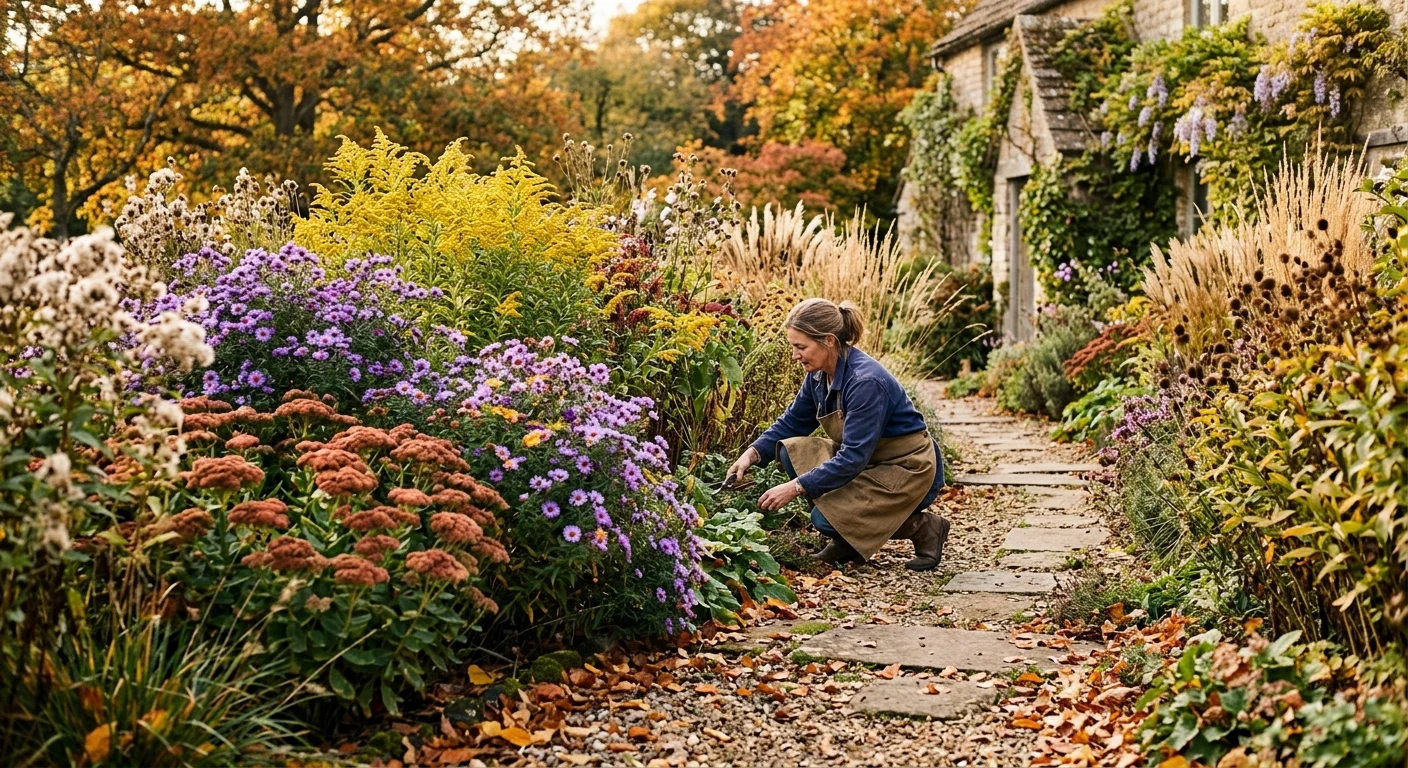
Putting It All Together: Enjoy Your Beautiful Garden
Revitalizing your late-summer garden does not require a complete landscape overhaul; it simply takes intentional layering and strategic plant selections. By combining high-impact bloomers with varying heights, textures, and color tones, you can turn the late-season slump into your garden’s most captivating chapter.
Position taller structural beauties like Japanese anemones, New England asters, and goldenrod toward the back of your borders to serve as glowing backdrops. Anchor the middle ground with long-blooming powerhouses such as purple coneflowers, black-eyed Susans, and fiery sneezeweed. Finally, edge your pathways and border fronts with the neat mounds of autumn stonecrop sedum and the rich blue groundcover of hardy plumbago.
To keep your late-blooming selections thriving through autumn, implement a few basic late-season maintenance habits. Water deeply during dry August spells to sustain flower bud development, and apply a fresh two-inch blanket of shredded bark or compost mulch to conserve root moisture. Leave structural seed heads—such as those of sedums, coneflowers, and black-eyed Susans—standing through winter to nourish local wildlife and add architectural beauty to frosty garden beds.
Frequently Asked Questions
When is the best time to plant late-summer blooming perennials?
The ideal time to plant late-blooming perennials is either early spring—allowing plants to establish deep root systems before summer heat arrives—or in late summer to early autumn. If planting during late summer, water thoroughly and consistently until the ground freezes to ensure strong root establishment before winter.
How can I keep my late-summer flowers blooming until the first frost?
To extend bloom time, deadhead spent flowers regularly throughout July and early August to stimulate continuous bud production. Provide consistent, deep moisture at the soil level during dry stretches, and avoid applying high-nitrogen fertilizers late in the season, as excess nitrogen promotes weak foliage growth rather than flowers.
Should I cut back late-season perennials before winter?
Leave sturdy perennials like coneflowers, black-eyed Susans, and sedums standing through the winter months. Their dried stems and seed cones add valuable visual texture to snow-covered beds and provide vital food and shelter for overwintering birds and beneficial insects. Cut the dead stems back to the ground in early spring before new green shoots emerge.
How do I prevent powdery mildew on late-blooming asters and sneezeweed?
Prevent powdery mildew by selecting disease-resistant cultivars, spacing plants generously to allow continuous airflow, and planting in areas with full sun. Always water at the base of the plant using drip irrigation or a soaker hose rather than wetting foliage with overhead sprinklers, especially during humid August evenings.
For region-specific advice, consult your local University Extension program (find yours via the USDA directory). For plant databases and inspiration, visit the Missouri Botanical Garden or the Royal Horticultural Society.
Disclaimer: This article provides general gardening advice. Always consider your specific climate, soil conditions, and local pests. Follow safety guidelines when using gardening tools and products.