Transforming rugged terrain into a vibrant landscape is simple when you choose the right rock garden plants. These resilient specimens hug stones, resist harsh weather, and deliver stunning textures across sun-drenched slopes and quiet shade.
Whether you design a miniature alpine trough or a sprawling terraced yard, selecting versatile perennials guarantees year-round beauty. You will discover exceptional varieties that demand minimal water while producing breathtaking foliage and blooms.
Here are fifteen proven selections that elevate rocky garden beds into low-maintenance sanctuaries. Explore how these hardy plants bring lasting color to every sunny ledge and shady crevice.
Tip #1: Creeping Thyme (Thymus serpyllum)
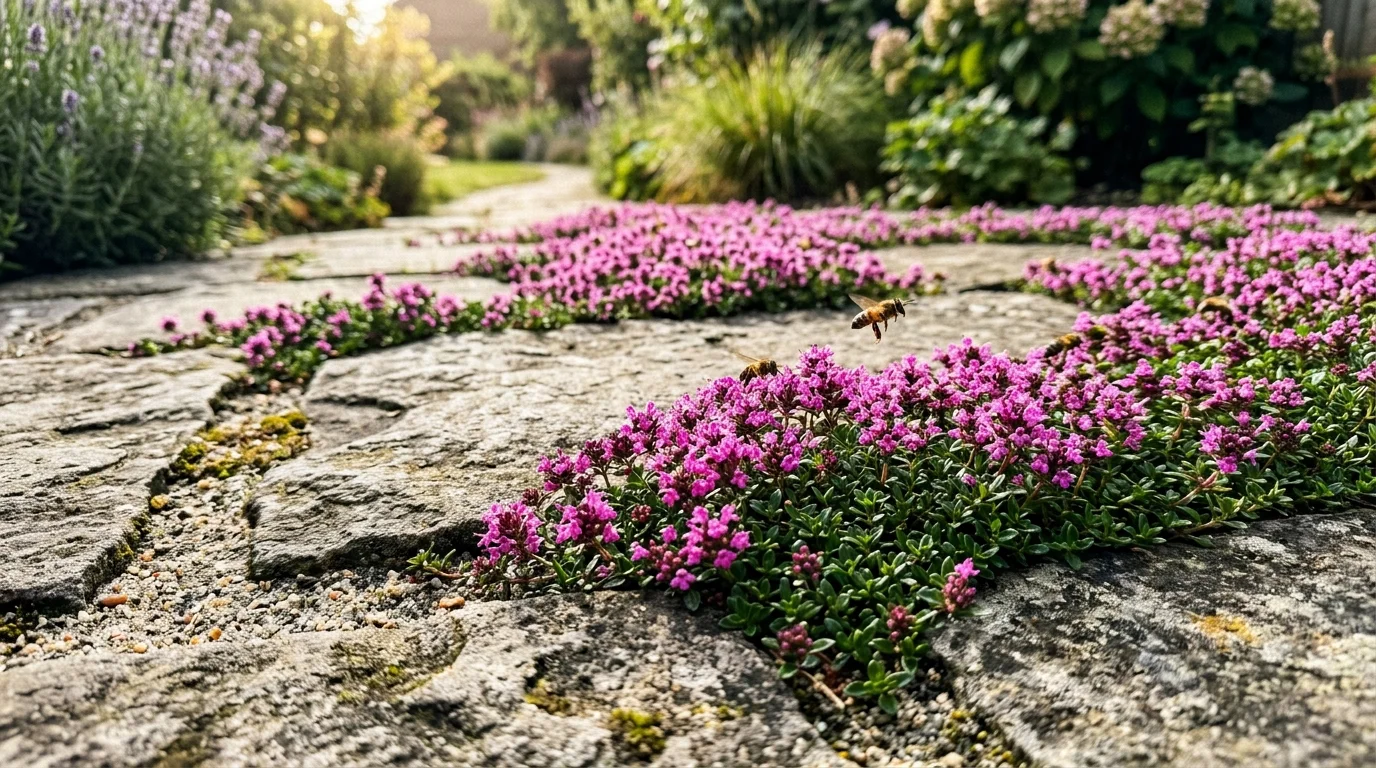
Creeping thyme blankets rugged stone borders with tiny aromatic leaves and dense clusters of pink or purple blossoms. This hardy perennial thrives in full sun but tolerates light afternoon shade without losing vigor.
You should plant creeping thyme in gritty, well-draining soil where excess moisture quickly flows away from its roots. It handles moderate foot traffic with ease, making it a perfect ground cover between stepping stones.
This rugged herb acts as a centerpiece in xeriscaping ideas by conserving ground moisture beneath rocky crevices. Trim the stems lightly after flowering to encourage dense growth and repeat flushes of foliage.
Bees and butterflies flock to the nectar-rich flowers throughout early summer. Its fragrant foliage releases a pleasant herbal scent whenever you brush against it during garden strolls.
Tip #2: Hens and Chicks (Sempervivum tectorum)
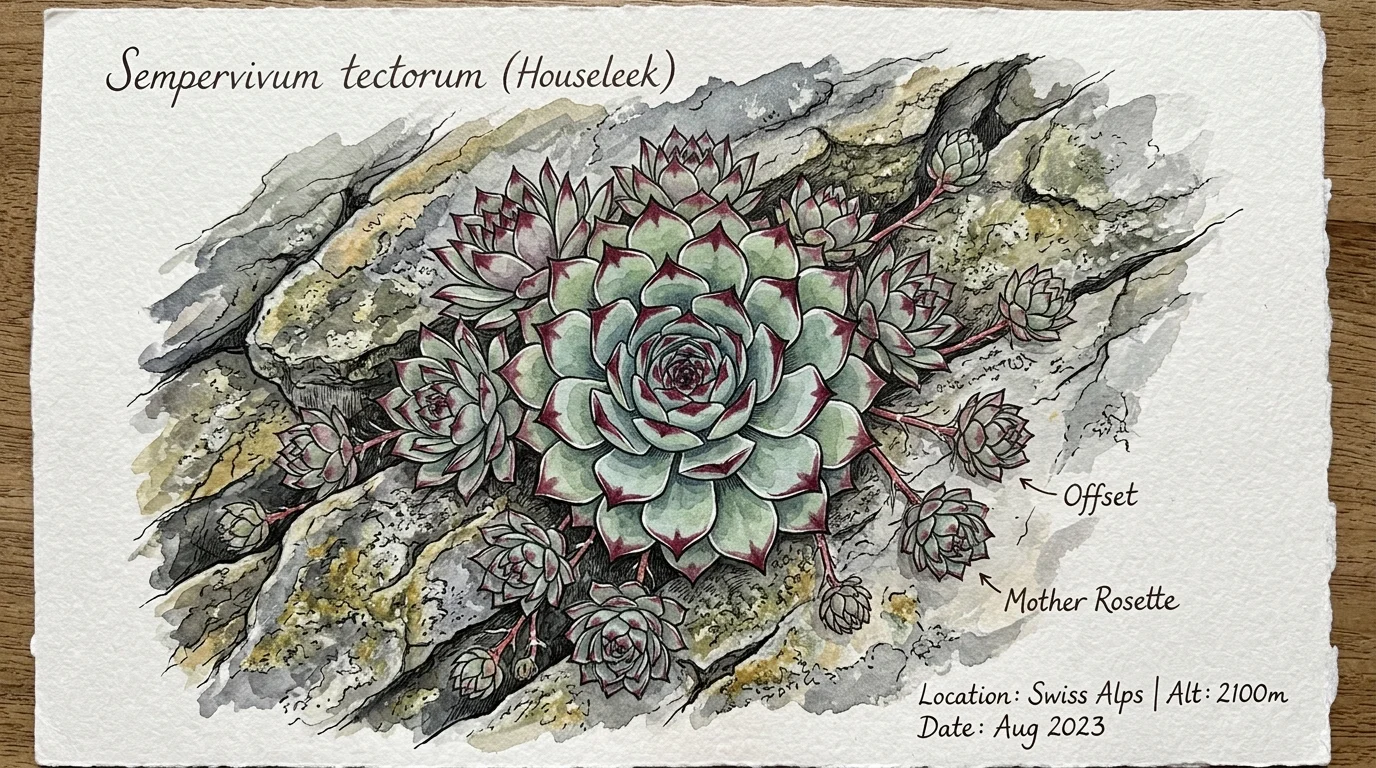
Hens and chicks are classic rock garden plants that form tight, architectural rosettes in shades of green, copper, and burgundy. They survive extreme temperatures by storing moisture in their thick, fleshy leaves.
Plant these succulents directly into narrow stone crevices or shallow gravel beds with full sunlight or light shade. They require little soil and almost no supplemental water once their root systems establish.
Mother rosettes produce charming clusters of offsets each season, gradually filling barren rock pockets. You can gently separate these offsets to propagate new colonies throughout your landscape.
Their cold-hardy nature allows them to endure freezing winters beneath heavy snow blankets without suffering damage. They provide dependable evergreen structure even when the rest of your garden goes dormant.
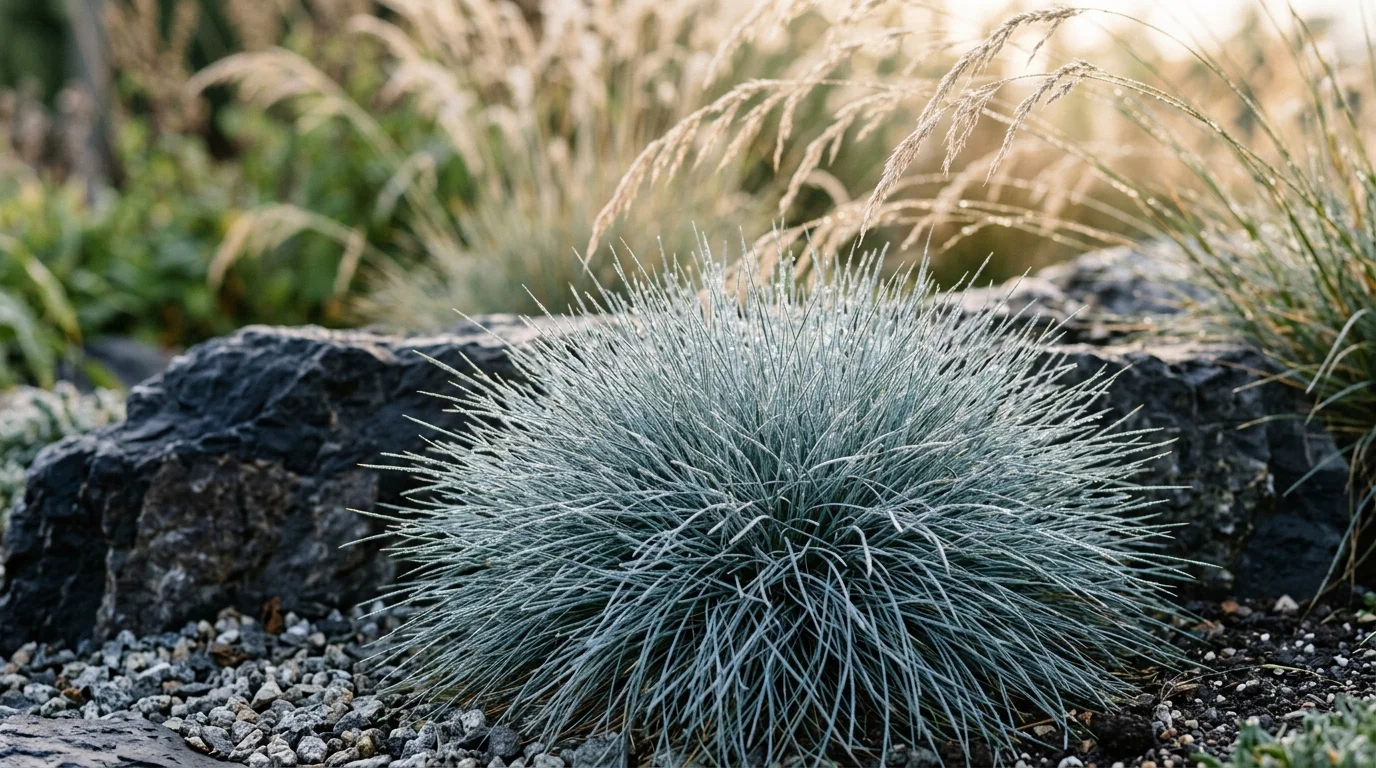
Tip #3: Blue Fescue (Festuca glauca)
Blue fescue provides striking color and spherical structure with its fine, needle-like, icy-blue foliage. This ornamental grass shines when tucked against dark boulders, creating dramatic contrast in your garden.
It performs best in full sun but maintains good color in partial shade, provided the ground drains rapidly. In soggy soil, the plant quickly deteriorates; gritty soil is critical for long-term health.
Comb out dead foliage in early spring using gloved hands to make room for fresh seasonal growth. This compact grower rarely exceeds twelve inches in height, making it ideal for small rock pockets.
Delicate, wheat-colored seed plumes rise above the blue mound in early summer, adding gentle movement. Pair it with dark slate rocks and broad-leaved perennials for eye-catching visual texture.
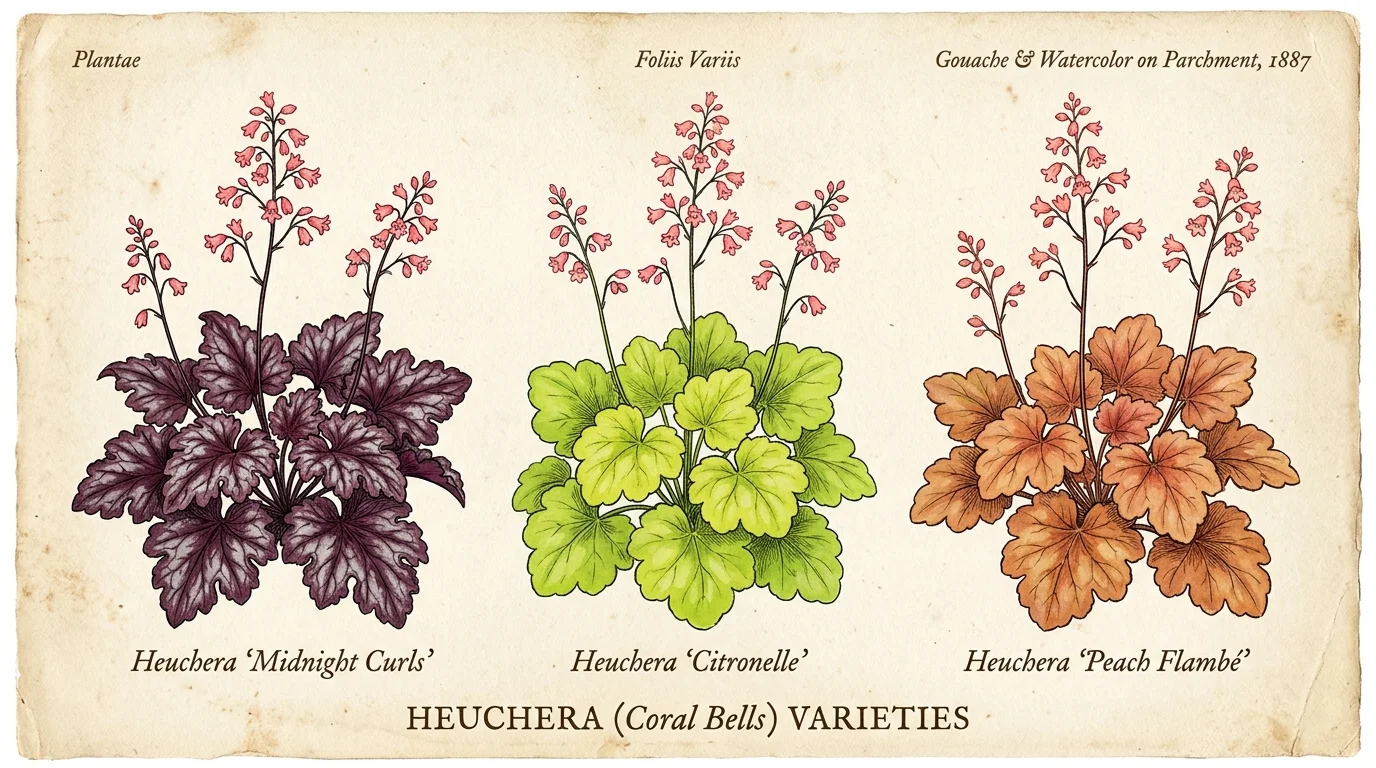
Tip #4: Coral Bells (Heuchera)
Coral bells bring dazzling leaf colors ranging from deep plum and lime green to rich amber and peach. They excel as sun and shade perennials, adapting effortlessly across varying light conditions in your rockery.
Position them in loose, well-draining soil on the sheltered side of large rocks to protect their roots from intense heat. While they tolerate morning sun, partial shade preserves their most vibrant foliage tones during hot summers.
Dainty flower wands rise above the foliage mound in late spring, attracting hummingbirds and friendly pollinators. Mulch lightly around their crowns with gravel to prevent rot and retain steady subterranean moisture.
Divide overgrown clumps every three to four years in spring to maintain strong vigor and compact growth. Their semi-evergreen foliage provides valuable visual interest well into late autumn.
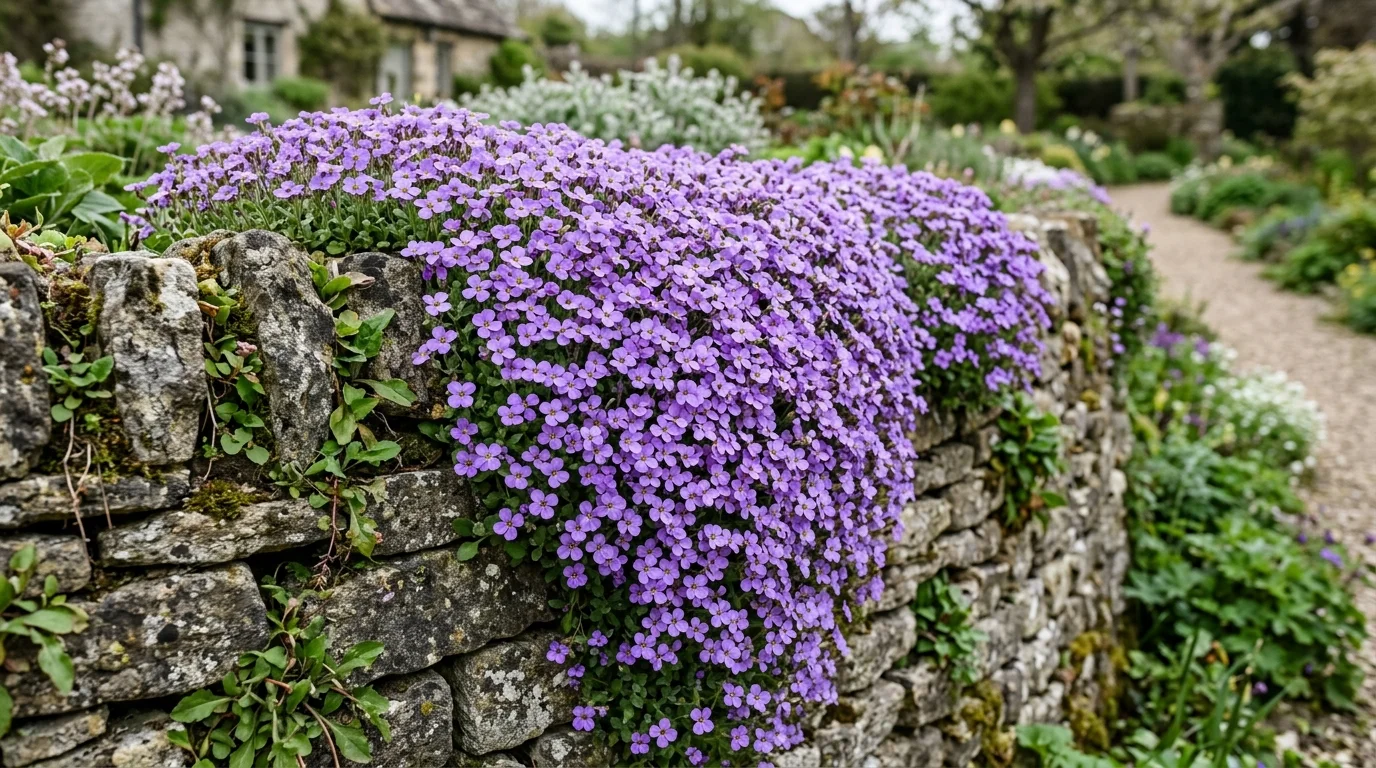
Tip #5: Rock Cress (Aubrieta deltoidea)
Rock cress drapes effortlessly over stone walls and sharp ledges, creating a cascading waterfall of rich purple, magenta, or blue petals. It bursts into bloom during early spring, awakening your garden after winter.
This evergreen perennial prefers sunny exposures but performs admirably in partial shade in warmer climate zones. Provide it with lean, alkaline soil that drains freely to mimic its native alpine cliff habitat.
Shear the entire plant back by half immediately following the bloom period to maintain a tidy, compact shape. This simple pruning step stimulates fresh green foliage that persists gracefully through the colder months.
Its spreading habit fills gaps between stacked boulders, creating a naturalized look on steep hillsides. You will appreciate how quickly it turns bare stone into a lively tapestry of vibrant color.
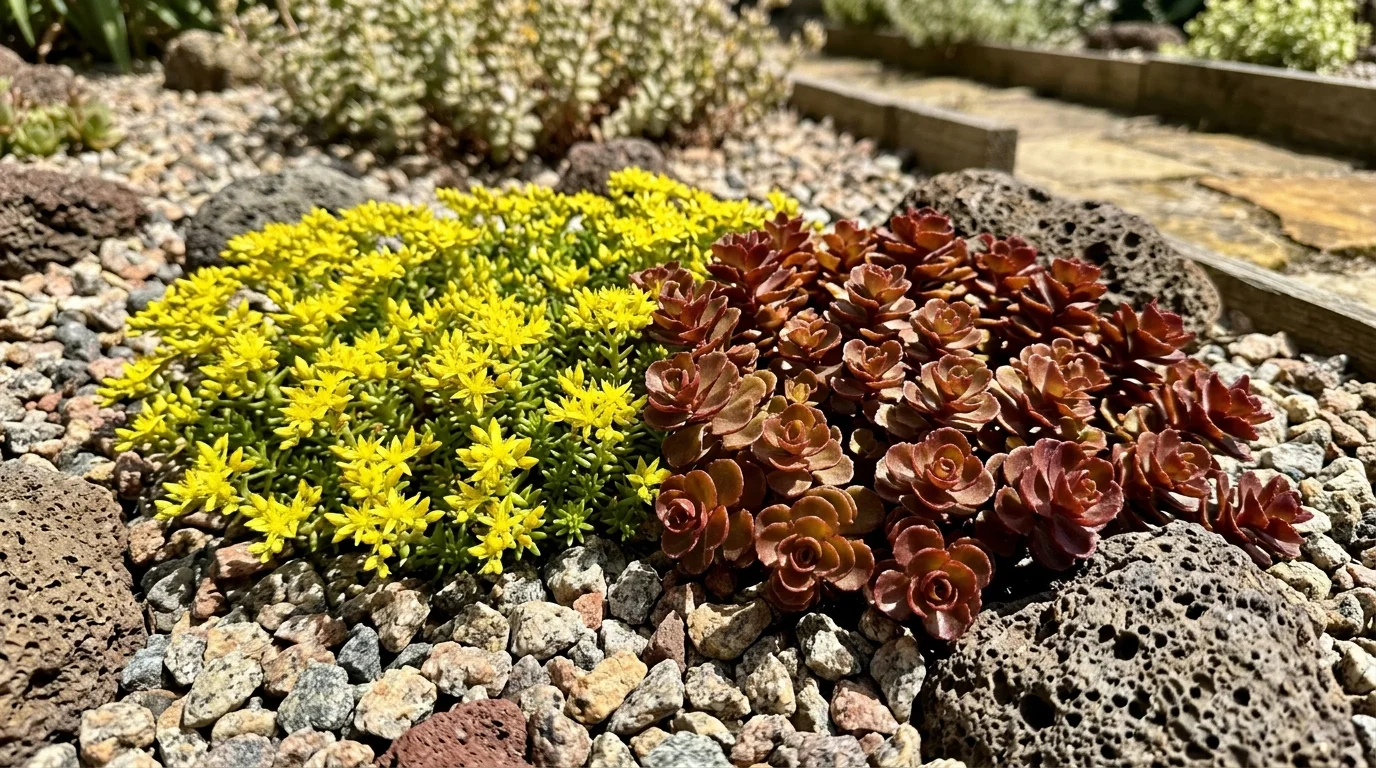
Tip #6: Stonecrop (Sedum spp.)
Stonecrops represent the ultimate low maintenance garden plants for dry, rocky microclimates. From trailing ground-hugging types to upright border varieties, sedums offer unmatched drought tolerance and fleshy, sculptural foliage.
They flourish in full sun and thrive in partial shade where other perennials might struggle to survive. Their star-shaped blossoms open in late summer, supplying vital nectar to bees when other flowers fade.
You can easily tuck broken stems directly into loose gravel, where they will strike roots within weeks. Sedums require virtually no supplemental fertilizer, thriving best in lean, unamended planting pockets.
Their thick succulent leaves change color as temperatures shift, displaying rich bronze, pink, and copper tones in autumn. They remain attractive year-round with almost no maintenance required.
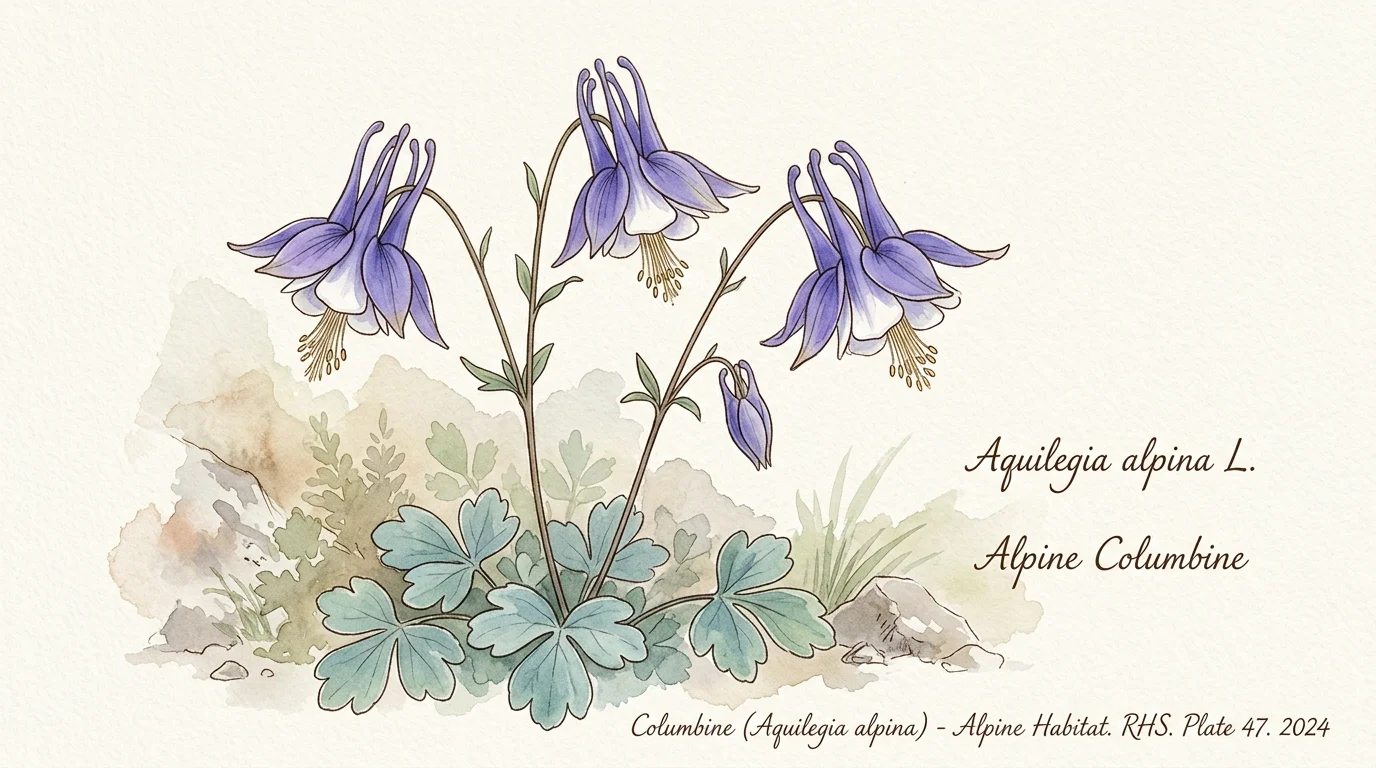
Tip #7: Alpine Columbine (Aquilegia alpina)
Alpine columbine features delicate, nodding blue blossoms perched above airy, fern-like foliage. It introduces refined elegance to rocky outcrops while tolerating both dappled forest shade and gentle morning sunlight.
Plant columbines in organic, moisture-retentive soil pockets nestled between cool, shaded boulders. The stones keep root zones insulated during warm weather, helping the plant sustain its lush leaves through midsummer.
These graceful perennials freely self-sow in gravel mulch, establishing naturalized colonies over several seasons. Deadhead spent blossoms to extend flowering or leave seed heads intact for exciting new seedlings next spring.
Their compact growth habit prevents them from overcrowding neighboring alpine plants. Columbines blend harmoniously with mossy stones, bringing woodland charm to partially shaded rockeries.
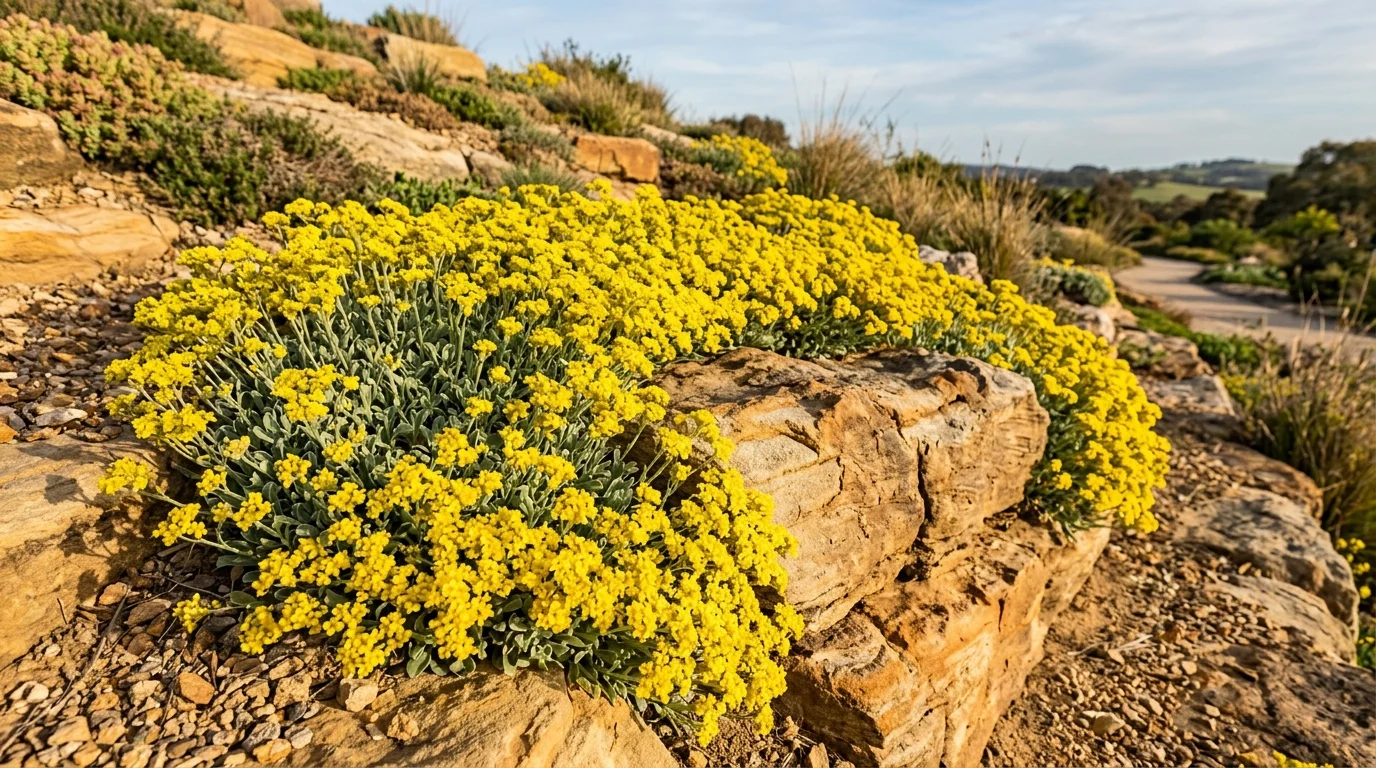
Tip #8: Basket of Gold (Aurinia saxatilis)
Basket of gold produces radiant clouds of luminous yellow flowers that light up sunny rock slopes in mid-spring. Its silvery-gray foliage forms attractive mounds that provide year-round visual appeal even when not in flower.
This plant demands full sun and dry, gritty soil to prevent stem flop and root fungal issues. It handles partial shade in baking southern climates where midday heat might otherwise scorch exposed foliage.
Cut the foliage back by one-third after the yellow blossoms fade to prevent leggy growth stems. This maintenance ensures dense, compact foliage cushions that hug your boulders through summer and autumn.
Because it thrives in nutrient-poor ground, you never need to apply heavy fertilizers. It pairs magnificently with purple rock cress to deliver classic spring rock garden color schemes.
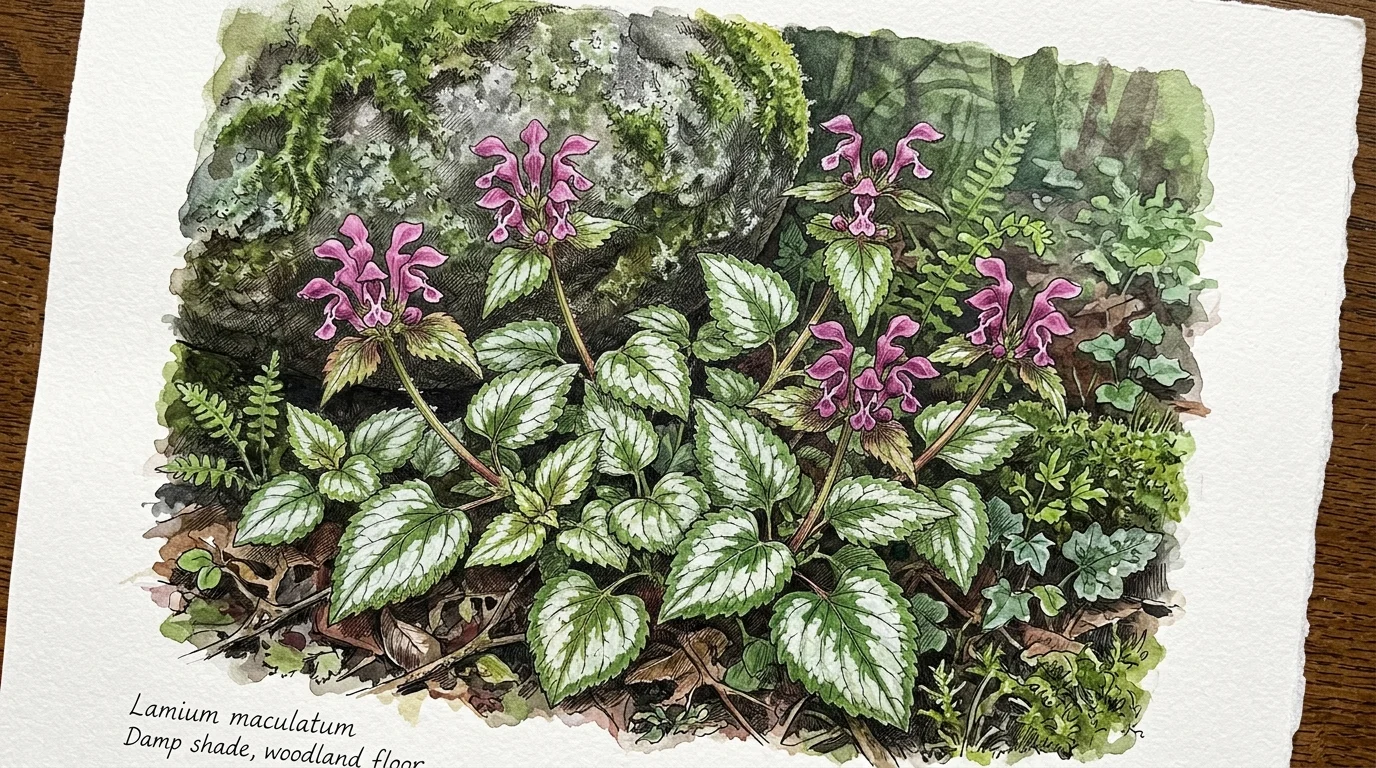
Tip #9: Spotted Deadnettle (Lamium maculatum)
Spotted deadnettle is an outstanding ground cover for shaded rock gardens and cool, north-facing slopes. Its frosted silver leaves brighten dark garden corners, complemented by clusters of pink, white, or purple blossoms.
This vigorous perennial thrives in partial to full shade and tolerates dry shade once fully established. It spreads via creeping runners that weave gracefully around rocks without becoming invasive or difficult to manage.
Water moderately during dry spells and trim back ragged stems in midsummer to stimulate fresh, colorful growth. Combine it with dark slate or volcanic rock for a breathtaking aesthetic contrast in shaded areas.
Deer and rabbits consistently avoid its aromatic foliage, making it a reliable choice for open gardens. It forms an effective living weed barrier beneath shaded rock walls.
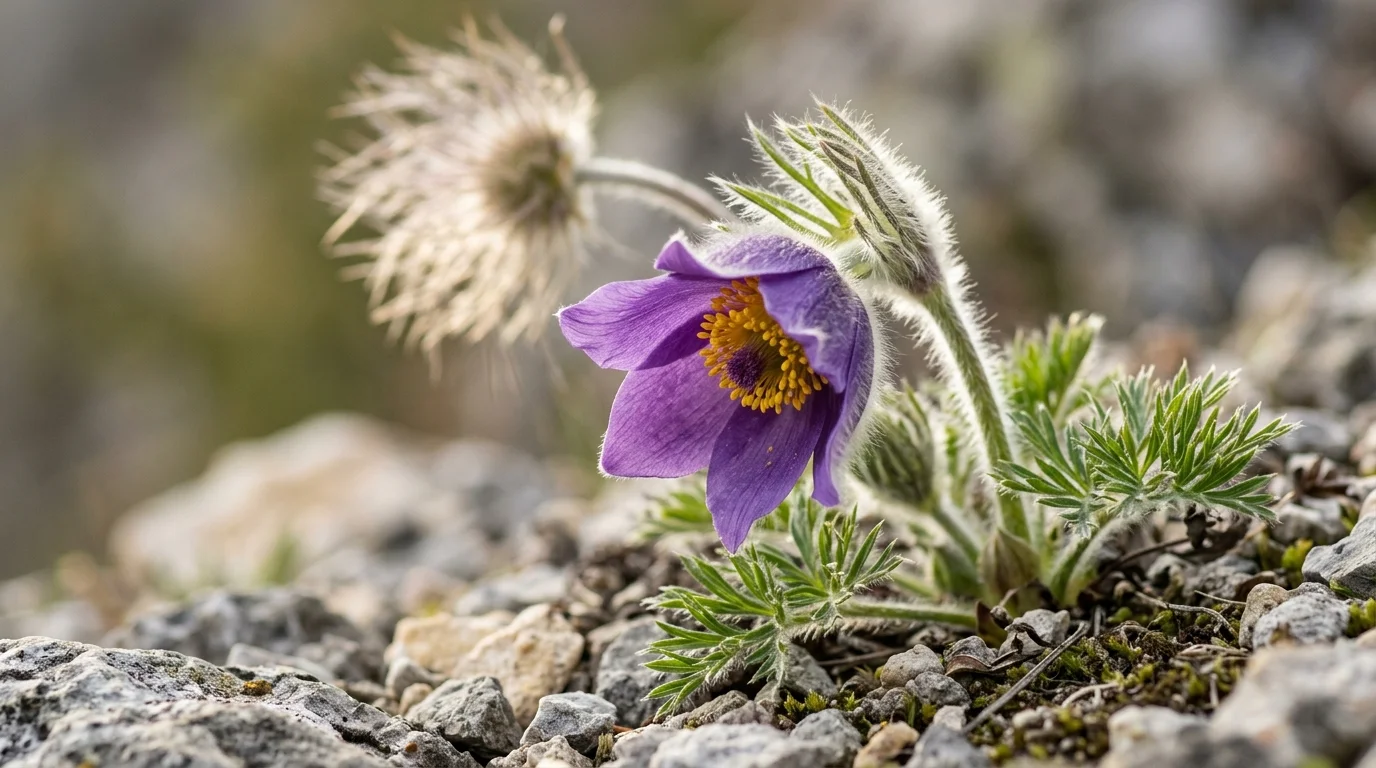
Tip #10: Pasque Flower (Pulsatilla vulgaris)
Pasque flower enchants gardeners with silky, cup-shaped purple blossoms that emerge before its feathery foliage unfolds. After blooming, it produces whimsical, feathery seed heads that catch sunlight and flutter in spring breezes.
It prefers full sunlight but adapts well to light partial shade in warm, arid environments. Deep taproots anchor the plant securely into rocky soil, enabling superior drought resistance once established.
Avoid moving mature specimens because their long taproots dislike root disturbance after planting. Provide well-aerated, calcium-rich soil on a sloped rock face to ensure winter moisture drains away promptly.
This early bloomer often flowers while snow still lingers on surrounding stones. Its unique seed plumes provide lingering ornamental interest long after the vivid petals drop.
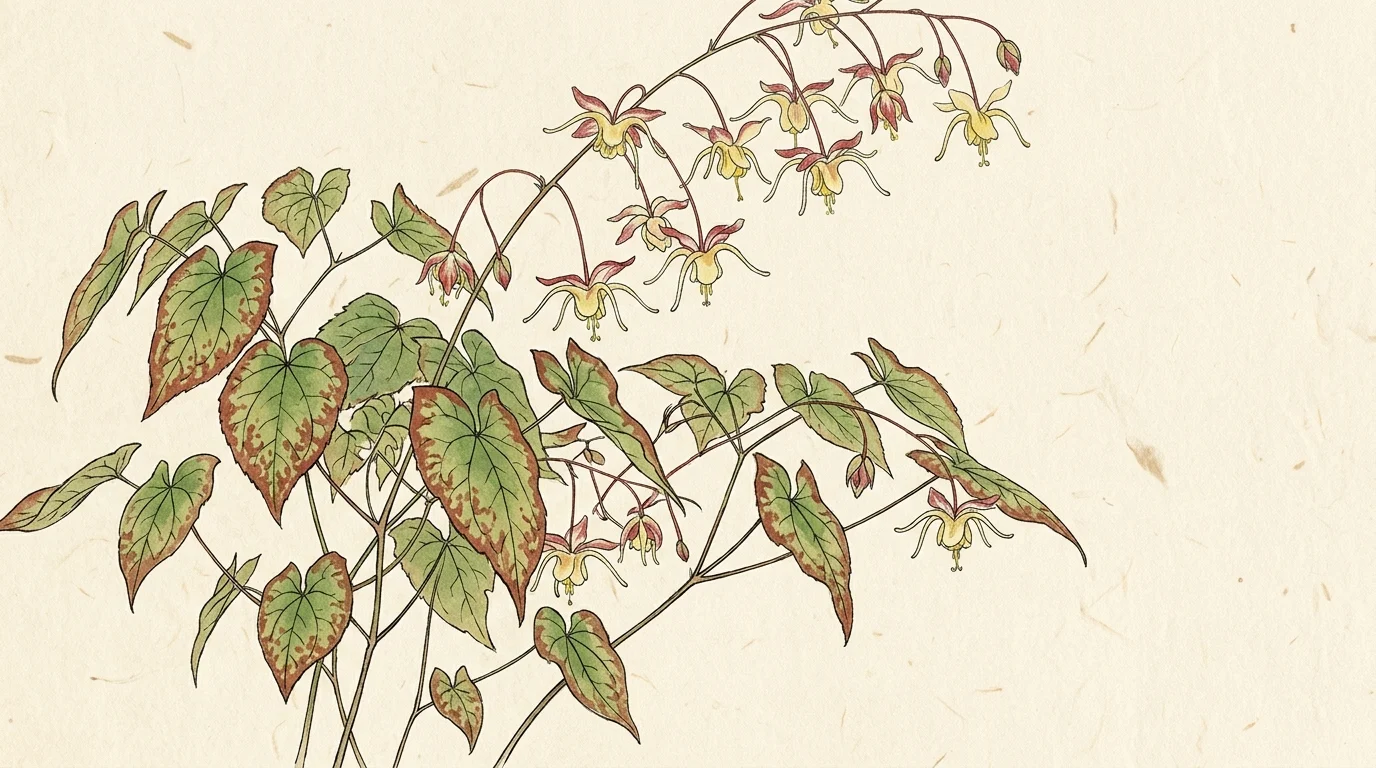
Tip #11: Barrenwort (Epimedium)
Barrenwort, often called fairy wings, is one of the toughest perennials for dry, shaded rockeries. It produces dainty, spider-like blossoms in spring above heart-shaped leaves that often display charming bronze edges.
It thrives beneath tree canopies and along shaded stone borders where most other plants fail completely. The tough, wiry root system penetrates tight rock crevices, effectively stabilizing loose soil and suppressing weeds.
Shear back old foliage in late winter before new flower scapes emerge to showcase the early blooms. Barrenwort requires almost no attention once established, proving indispensable for low-maintenance shade gardening.
The leathery leaves resist hungry pests like deer and slugs throughout the entire growing season. In autumn, the foliage takes on rich reddish tints that complement stone accents beautifully.
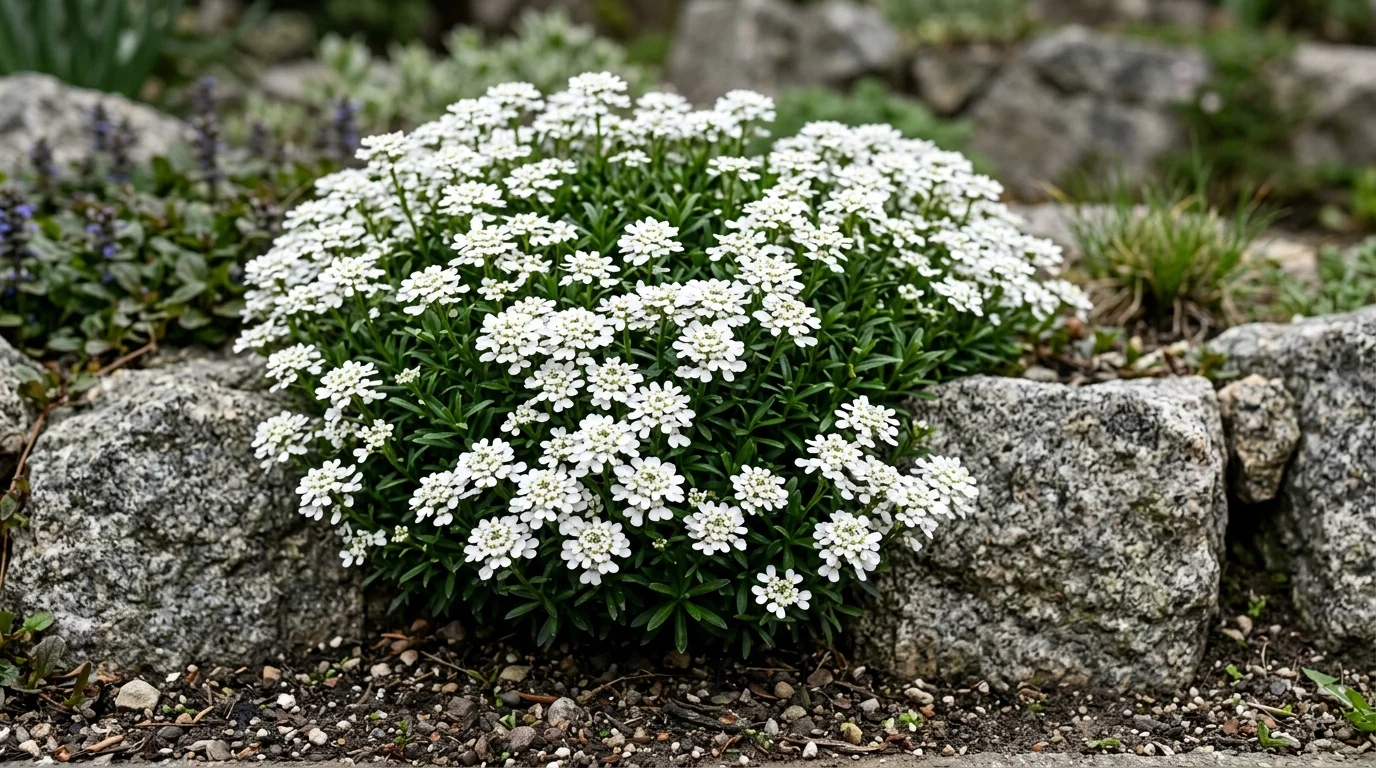
Tip #12: Candytuft (Iberis sempervirens)
Candytuft forms a sprawling mound of glossy, dark green evergreen foliage smothered in pure white flower clusters. It creates a stunning, crisp contrast when nestled against natural sandstone or gray river boulders.
This plant thrives under full sun but accepts partial shade with only a slight reduction in blossom density. It requires gritty, fast-draining soil and refuses to tolerate soggy winter conditions around its crown.
Prune the top few inches of stems after spring flowering to preserve an attractive, bushy architecture. Its evergreen leaves ensure your rockery retains visual interest and lush color throughout the winter months.
Because it tolerates roadside salt and drought, candytuft works exceptionally well near stone walkways and driveways. Its luminous white petals reflect moonlight, illuminating evening garden walks.
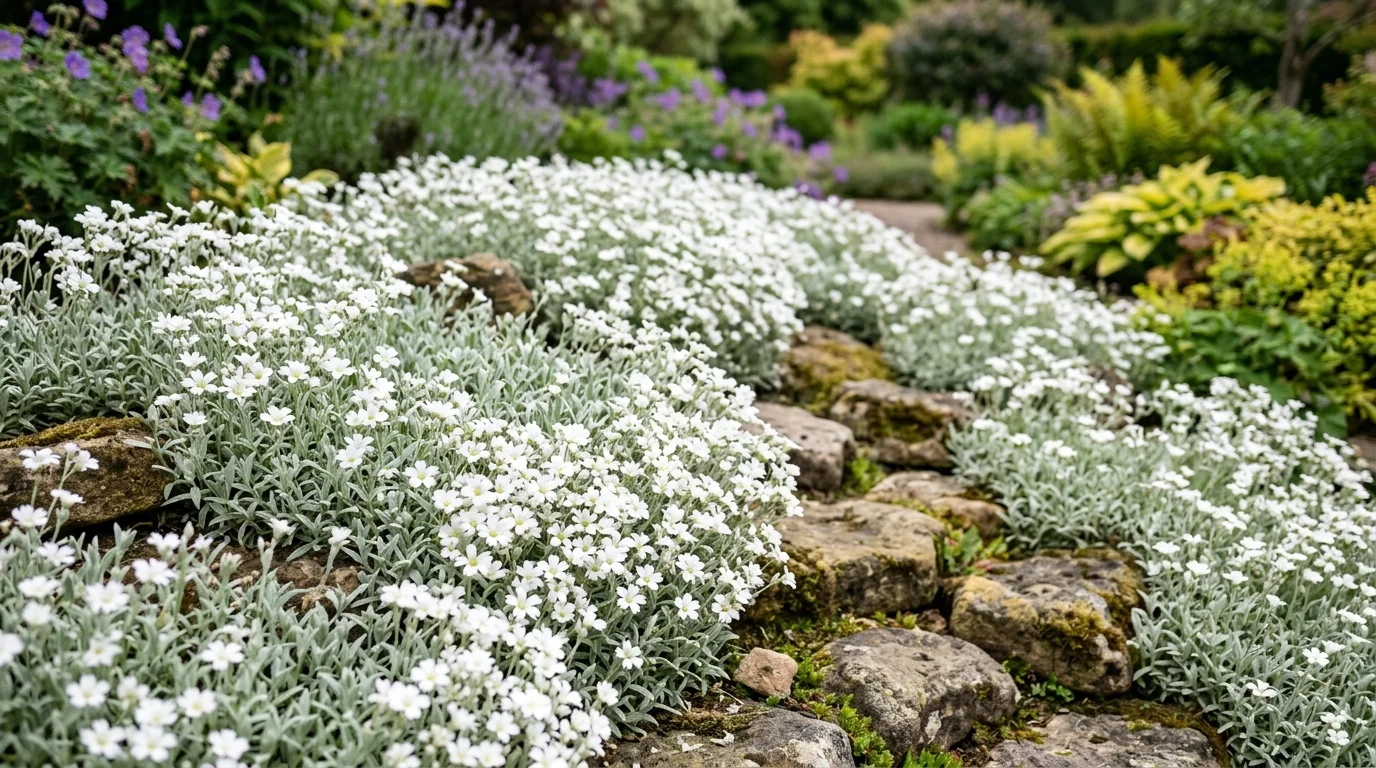
Tip #13: Snow-in-Summer (Cerastium tomentosum)
Snow-in-summer earns its name from the sea of pristine white flowers covering its silvery, woolly foliage in late spring. It spreads rapidly, forming a dense, drought-tolerant carpet over difficult, rocky inclines.
Place this sun-lover in full sun to partial shade in lean, dry soil with sharp drainage. Rich soils cause floppy, overly aggressive growth, so avoid adding compost or heavy organic fertilizers around it.
Mow or shear the plant hard after blooming to remove spent flower stalks and tidy the silver carpet. This hardy perennial excels at filling wide rock gaps where few other perennials can survive.
Its woolly leaves reflect intense sunlight, protecting the plant from desiccation during scorching summer days. The silver-gray foliage provides excellent color harmony against weathered limestone and granite.
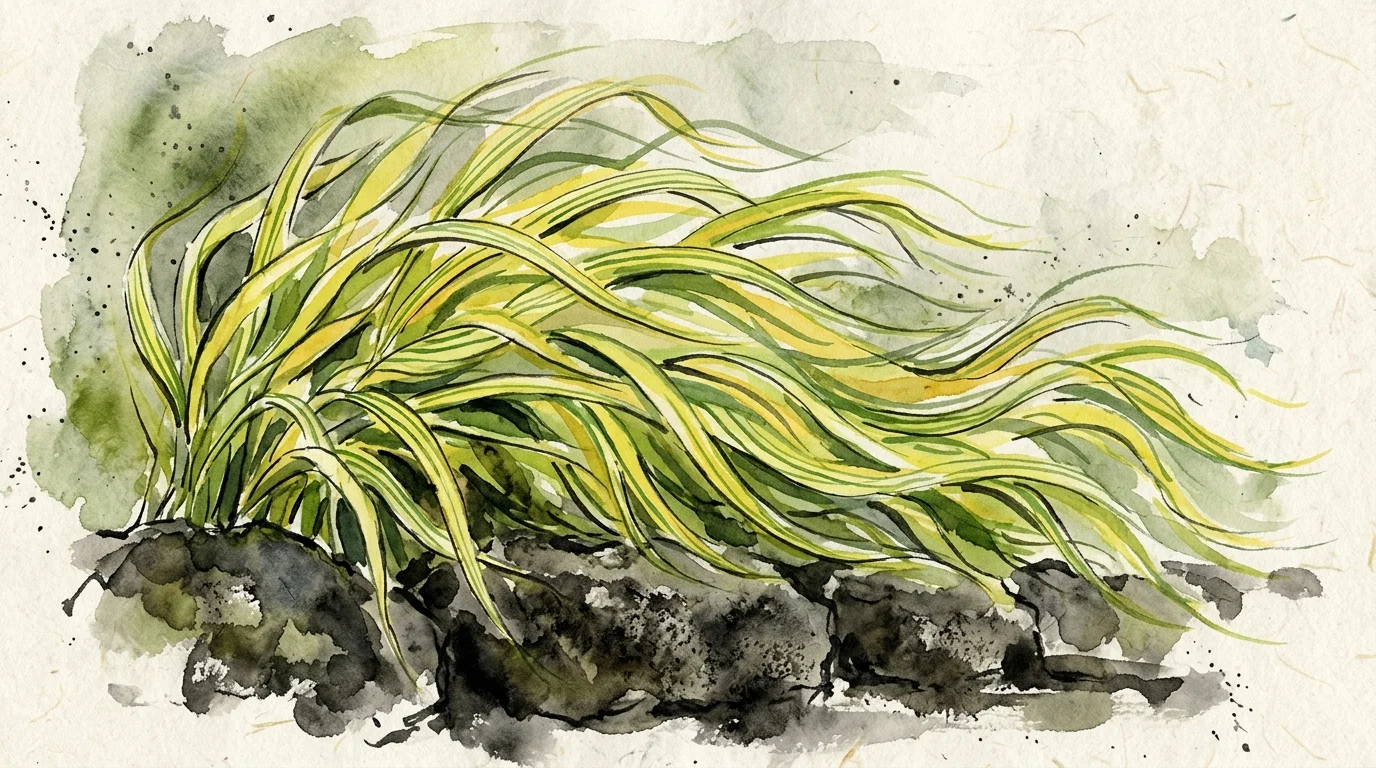
Tip #14: Japanese Forest Grass (Hakonechloa macra)
Japanese forest grass brings graceful, flowing texture to shaded rock nooks with its cascading, ribbon-like foliage. The arching golden or variegated blades soften hard boulder edges and shimmer in gentle woodland breezes.
This perennial prefers partial to full shade, though it tolerates mild morning sun in cooler climate regions. Plant it in humus-rich, well-drained soil pockets at the shaded base of larger garden stones.
Water consistently during summer heat to keep foliage tips fresh and vibrant throughout the growing season. In autumn, the foliage transforms into warm copper and orange tones before dying back for winter.
It grows slowly and forms well-behaved clumps that never overwhelm neighboring shade plants. The weeping habit creates the illusion of flowing water when positioned beside large rock outcroppings.
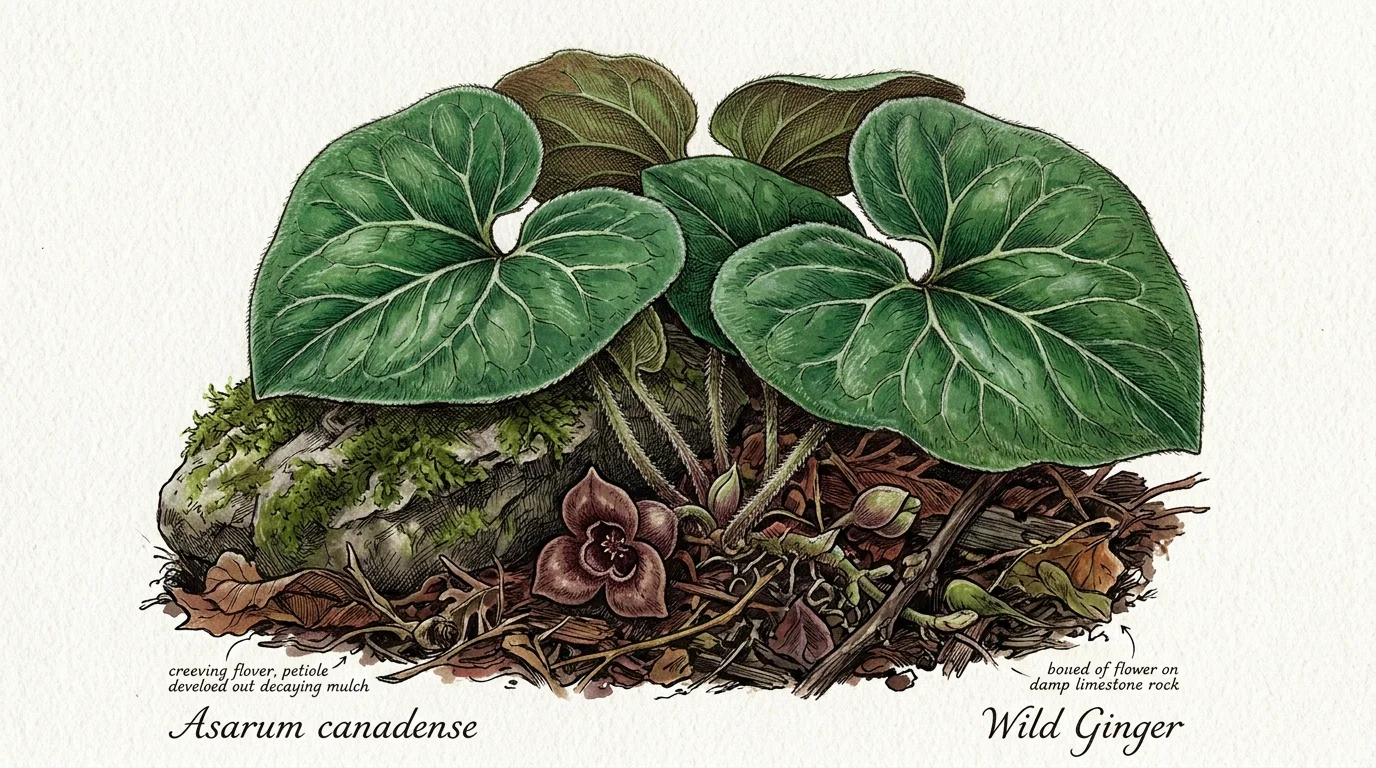
Tip #15: Wild Ginger (Asarum canadense)
Wild ginger carpets shaded rock crevices with lush, velvety, kidney-shaped leaves that release a pleasant spicy fragrance when crushed. It is an exceptional native ground cover for woodland rock gardens and damp stone borders.
This shade-loving perennial thrives in rich, moist soil tucked between moss-covered rocks and shady ledges. While it prefers consistent moisture, established colonies tolerate brief dry spells under tree canopies remarkably well.
Fascinating bell-shaped, maroon flowers hide beneath the lush foliage in early spring, pollinated by early emerging beetles. Plant wild ginger alongside ferns and epimediums to create rich textural diversity in deep shade.
Its dense root mats help prevent erosion on steep, shaded slopes without competing aggressively with established trees. The broad, dark green leaves remain handsome and pristine from spring through frost.
Putting It All Together: Enjoy Your Beautiful Garden
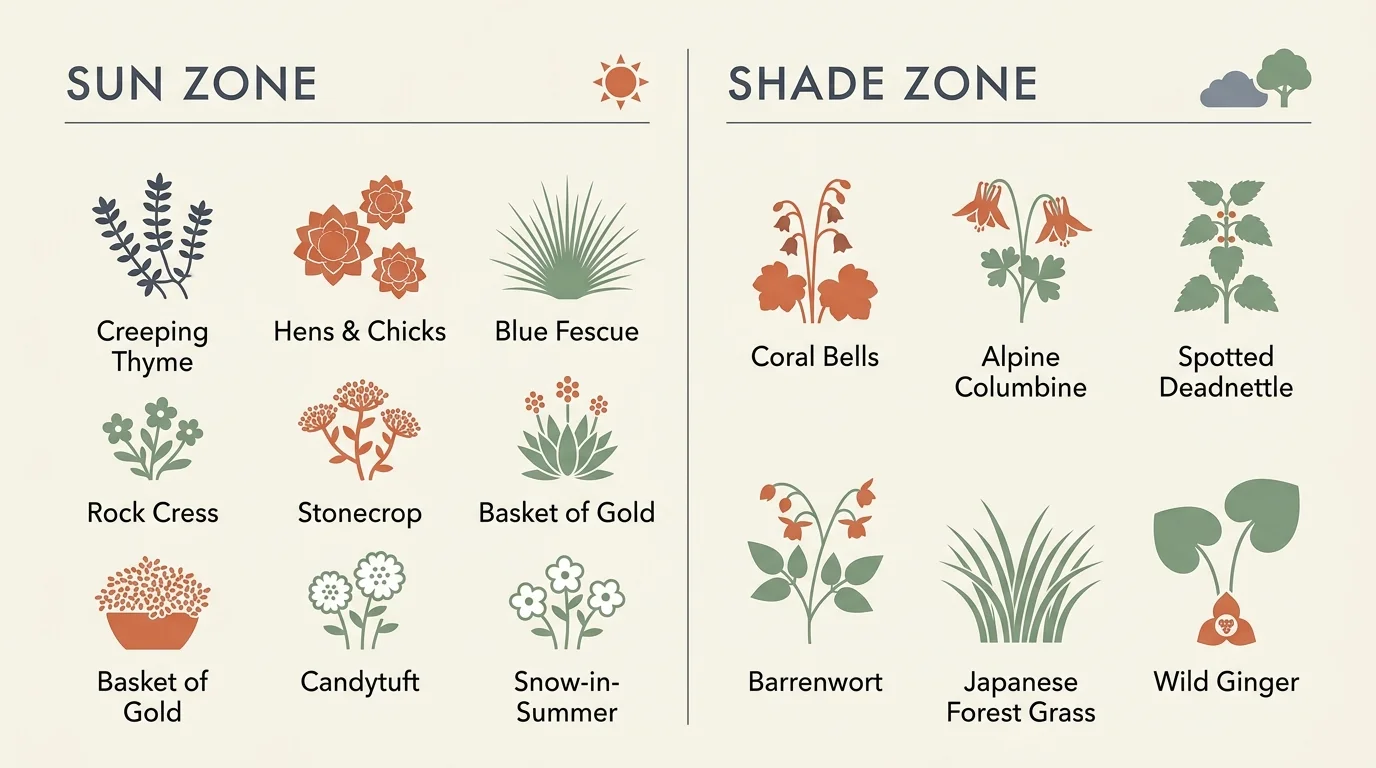
Designing a captivating rock garden combines the rustic durability of stone with the vibrant life of resilient perennials. By pairing drought tolerant plants with adapted shade varieties, you establish a balanced, sustainable ecosystem.
Group your selections based on their sun and moisture preferences to ensure every specimen thrives naturally. Incorporate varied heights, textures, and bloom periods to keep your rocky landscape visually engaging in every season.
Take time to enjoy the simple pleasures of watching your rock garden mature and fill every crevice. With the right foundation and plant choices, your garden will provide years of effortless beauty and joy.
As rocks weather and plants weave together, your rockery will develop an authentic, timeless character. Let your garden evolve naturally as individual species establish their permanent homes among the stones.
Frequently Asked Questions
How do I improve soil drainage for my rock garden plants?
Mix coarse horticultural sand, pumice, or fine gravel into your existing garden soil to enhance rapid water movement. Building raised berms or planting on natural slopes also ensures excess moisture drains away from sensitive root crowns.
Heavy clay soils retain too much water, causing rot in drought-adapted alpine roots during wet winters. Adding small crushed stones creates the porous, airy environment that rock garden species need to flourish.
How often should I water established rock garden plants?
Most established rockery plants need deep watering only once every ten to fourteen days during hot, dry weather. Shaded varieties and newly planted specimens may require supplemental moisture once or twice a week until established.
Always check soil moisture a few inches below the surface before adding water to established plantings. When in doubt, allow rock garden soil to dry out slightly rather than overwatering your plants.
What type of mulch works best in a rock garden?
Inorganic mulches such as pea gravel, crushed granite, or small river stones provide the best results for rockeries. Unlike bark mulch, gravel reflects warmth, prevents crown rot, and blends seamlessly with natural stone boulders.
A two-inch layer of gravel mulch also keeps weeds from taking root in bare soil pockets. It insulates subterranean roots from sudden temperature swings while allowing rain to penetrate deep underground.
Can I grow rock garden plants in containers?
Yes, shallow stone troughs and terracotta containers make excellent homes for miniature rock gardens and alpine plants. Ensure your container features multiple drainage holes and use a gritty, fast-draining potting blend.
Position your container rockery where it receives adequate sunlight or dappled shade depending on your chosen species. Container plantings allow you to control soil drainage and display delicate alpine treasures at eye level.
For region-specific advice, consult your local University Extension program (find yours via the USDA directory). For plant databases and inspiration, visit the Missouri Botanical Garden or the Royal Horticultural Society.
Disclaimer: This article provides general gardening advice, so always consider your specific climate, soil conditions, and local pests. In addition, follow standard safety guidelines when using gardening tools and landscape products.