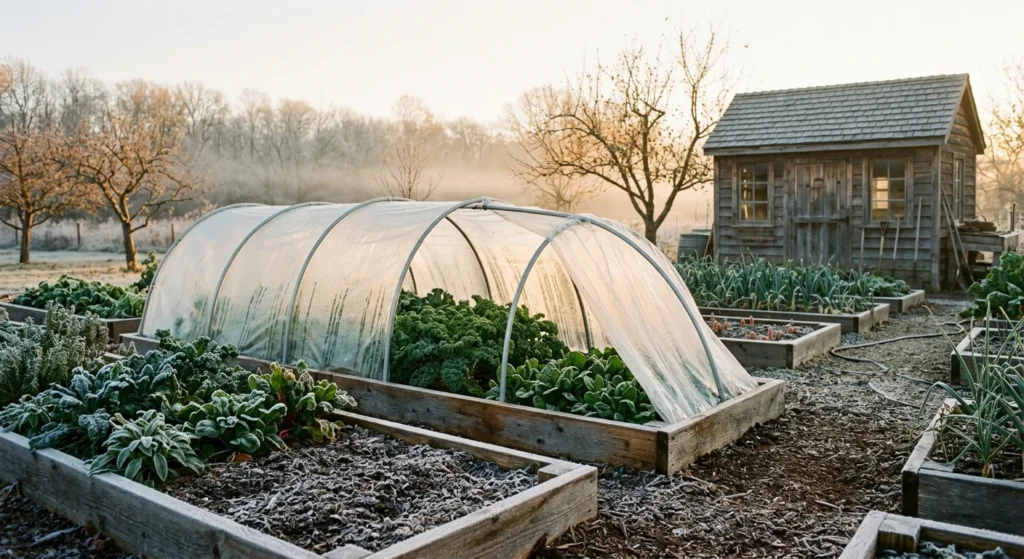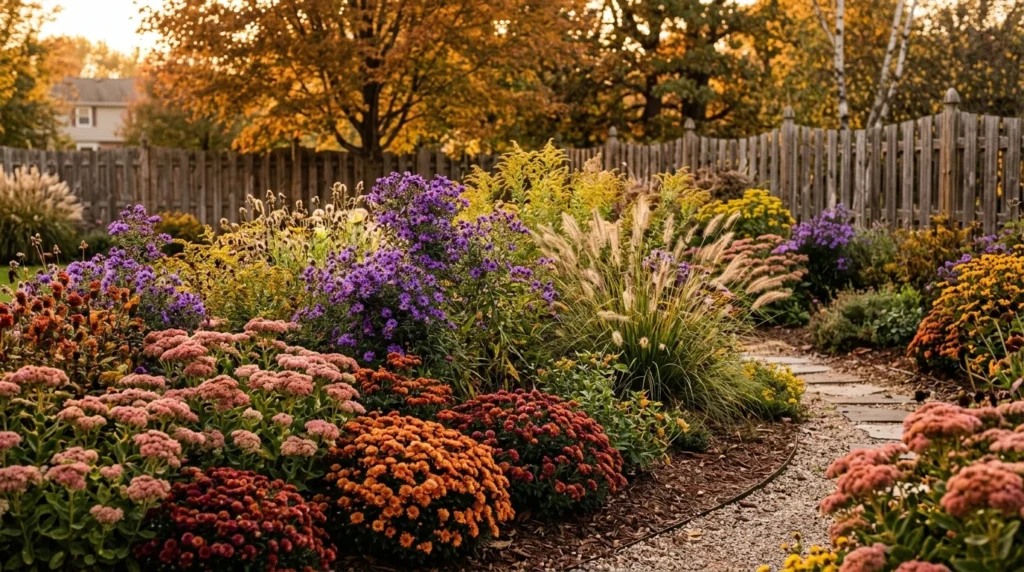
Transform your autumn landscape into a vibrant sanctuary by planting cold hardy flowers that thrive well past the first freezing temperatures. While most garden plants wither at the initial sign of crisp autumn air, resilient fall blooming plants continue to produce brilliant jewel-toned blossoms, providing critical nectar for late-season pollinators and dynamic visual interest when the rest of your garden goes dormant. By selecting the right perennials for fall color, you can extend your growing season into November without re-planting every year. These ten frost resistant flowers withstand icy night temperatures and keep your garden glowing with rich color until winter officially arrives.

Tip #1: Aromatic Aster (Symphyotrichum oblongifolium)
Aromatic aster stands out as one of the most reliable late blooming perennials for North American landscapes. While traditional asters often decline by early October, robust cultivars like ‘October Skies’ and ‘Raydon’s Favorite’ produce hundreds of sky-blue to deep lavender ray flowers well into November. This bushy native perennial grows two to three feet tall and wide, forming a dense, rigid mound that naturally resists flopping under early autumnal rain. It flourishes across USDA Hardiness Zones 3 through 8, thriving in full sun exposure and lean, well-drained soil.
When frosty nights drop temperatures down into the mid-20s Fahrenheit (-4°C), aromatic aster foliage releases a pleasant balsam scent while its blossoms remain completely undamaged. Plant your asters during spring or early autumn, allowing sufficient time for the root system to establish deeply before winter sets in. Avoid over-fertilizing these tough plants; excess nitrogen promotes weak, leggy stems rather than abundant floral clusters. While light deadheading keeps plants tidy, leaving the dried seed heads intact provides essential winter nourishment for overwintering songbirds like goldfinches.

Tip #2: Showy Stonecrop (Sedum spectabile)
Showy stonecrop—specifically famous varieties like ‘Autumn Joy’ and ‘Neon’—serves as an indispensable backbone for gardeners seeking top-performing perennials for fall color. Growing in neat, upright clumps 18 to 24 inches high in USDA Zones 3 through 9, stonecrop features thick, succulent green foliage that stores water through summer droughts. Large, broccoli-like flower heads emerge in midsummer with a subtle pale green hue, slowly ripening into soft pink by late August, deep dusty rose in September, and rich mahogany-red by October.
Even when night temperatures plunge below freezing, stonecrop retains its structural integrity and bold color palette. Plant stonecrop in full sun and sharply draining soil, as waterlogged winter soil can cause crown rot. Because its thick stems support weight exceptionally well under light snowfall, defer cutting back the stems until early spring. The dried, deep crimson flower heads create stunning frost-dusted silhouettes throughout the dormant winter months, offering structural beauty when the surrounding garden rests.

Tip #3: Russian Sage (Salvia yangii)
Russian sage delivers a striking haze of lavender-blue blossoms that persists from mid-summer straight through hard late-autumn frosts. Reaching three to five feet in height, this woody-based perennial features finely dissected, silvery-grey foliage that contrasts brilliantly with deep green autumn shrubs. Cold hardy in USDA Zones 4 through 9, Russian sage shrugs off heavy frost, wind, and severe drought with minimal gardener intervention.
Its tiny, tubular flowers contain high concentrations of natural plant sugars, which act as a natural antifreeze to protect delicate petals when temperatures drop to 25°F (-4°C). Place Russian sage in your sunniest garden bed where it receives at least six hours of direct sunlight daily; lean, alkaline soils yield the sturdiest, most erect growth. Pair it with golden autumn ornamental grasses or yellow goldenrod to build a dramatic, high-contrast display. In late winter or early spring, cut the woody stems back to six inches above the ground to stimulate vigorous new shoots and maximize autumn flower production.

Tip #4: Goldenrod (Solidago)
Goldenrod often receives unfair blame for late-season allergies, but ragweed is actually the culprit; goldenrod pollen is heavy, sticky, and transported exclusively by beneficial insects rather than wind. Native selection cultivars such as ‘Fireworks’ (Solidago rugosa) produce arching, bright-yellow floral plumes that light up borders from late August through November. Hardy across USDA Zones 3 through 9, goldenrod grows two to three feet tall and spreads into broad, glowing drifts over time.
These energetic fall blooming plants are essential for supporting migrating monarch butterflies and queen bumblebees preparing for winter hibernation. Goldenrod adapts effortlessly to poor, rocky, or clay soils in full sun, requiring virtually no supplemental watering once established in your garden. Severe autumn frosts barely affect its brilliant yellow display; the flower heads retain their radiant color even after several sub-freezing nights. Divide root clumps every three to four years during early spring to maintain vigorous growth and control spread in smaller spaces.

Tip #5: Japanese Anemone (Anemone × hybrida)
Japanese anemones bring refined elegance to the late autumn border with satiny pink or pure white blossoms hovering gracefully above deep green, palmate foliage. Cultivars like ‘Honorine Jobert’ and ‘September Charm’ grow three to four feet tall on wiry, wind-resistant stems. Cold hardy in USDA Zones 4 through 8, these long-blooming perennials begin flowering in August and continue until a hard, sustained freeze halts their display.
Unlike many prairie-native autumn bloomers, Japanese anemones thrive in partial shade and rich, organic, moisture-retentive soil. Keep the soil consistently moist during hot summer months, applying a two-inch layer of organic compost mulch around the base to protect shallow roots. Their frost resistant flowers withstand light autumn freezes, providing a delicate yet surprisingly tough floral display when traditional summer flowers have withered.

Tip #6: Sneezeweed (Helenium autumnale)
Despite its unglamorous common name, sneezeweed offers an explosion of rich warm-toned blossoms—deep crimson, burnt orange, and bright copper-yellow—accented by prominent central cones. Named historically for its use in snuff rather than its allergy potential, Helenium reaches heights of three to five feet in USDA Zones 3 through 8. It begins blooming in late summer and produces continuous flushes of daisy-like flowers right through October and into November.
Sneezeweed thrives in full sun and moisture-rich soils, making it an ideal choice for rain gardens, low-lying border areas, or damp meadow plantings. Pinching back the stems by half in late spring encourages dense branching, creating a stockier, self-supporting plant packed with extra flower buds. The thick petals tolerate freezing night temperatures easily, holding their fiery hues while neighboring annuals collapse. Deadhead faded flower heads during early autumn to prolong the blooming cycle until ground temperatures freeze solid.

Tip #7: Siberian Chrysanthemum (Chrysanthemum weyrichii)
While tender nursery florist mums often suffer root death during early freezes, the Siberian chrysanthemum is an exceptionally rugged, true perennial species built specifically for northern winters. Native to harsh cold climates, this low-growing plant forms dense carpets of dark green leaves 8 to 12 inches high, sending up masses of two-inch, soft pink or white daisy blossoms in late autumn.
Cold hardy from USDA Zone 3 down to Zone 9, cultivars like ‘Pink Bomb’ and ‘White Bomb’ do not even begin blooming until October, continuing through hard freezes down to 20°F (-6°C). Siberian chrysanthemums require full sun and well-draining, gravelly or sandy soil to prevent winter crown rot. Plant them along walkway borders, rock gardens, or at the front of perennial beds where their low profile creates a dramatic late-season border. Their extreme frost resistance makes them a centerpiece for late-fall color when virtually all other garden plants have surrendered to the cold.

Tip #8: Toad Lily (Tricyrtis hirta)
Toad lilies bring exotic, orchid-like beauty to shady autumn garden corners when most other shade plants are winding down for the year. Native to Japanese woodlands, this unique perennial grows one to two feet tall with arching stems and fuzzy, ladder-like foliage. From September into mid-November, tiny star-shaped flowers speckled with rich magenta spots open reliably along the leaf axils.
Hardy in USDA Zones 4 through 9, toad lilies withstand night frosts down to 28°F (-2°C) without losing their delicate flower form or vibrant purple spots. Plant toad lilies in partial to full shade and rich, moist, acidic soil supplemented with organic leaf mold. Because they bloom so late in the season, place them along garden pathways where you can admire their intricate detail up close. Keep the soil evenly moist during summer dry spells to prevent leaf tip burn, and mulch heavily in cold-winter regions to protect the crown.

Tip #9: Autumn Crocus (Colchicum autumnale)
Autumn crocus produces a magical fall performance by pushing goblet-shaped lavender, pink, or white flowers straight out of the bare earth long after its spring foliage has died back and vanished. Often called “naked ladies,” these cold hardy flowers grow 6 to 10 inches tall in USDA Zones 4 through 8. The thick-textured petals resist frost effortlessly, popping up in late September or October and lasting through multiple early freezes.
Plant the large corms in late summer, burying them four to six inches deep in full sun or light dappled shade with well-drained soil. Because the foliage grows in spring and dies back by June, interplant autumn crocus among low-growing groundcovers like creeping thyme or periwinkle; the groundcover supports the slender floral stems and prevents mud from splashing on the pristine petals during autumn rains. Colchicum contains natural plant compounds that render it completely immune to deer, rabbits, and voles.

Tip #10: Anise Hyssop (Agastache foeniculum)
Anise hyssop combines aromatic licorice-scented foliage with striking purple-blue floral spikes that persist well past the first hard frost. Growing two to four feet tall in USDA Zones 4 through 9, this native member of the mint family blooms continuously from mid-summer through November. Its dense flower spires produce high volumes of rich nectar, making it a crucial food source for late-season pollinators like native bees, swallowtail butterflies, and late-migrating hummingbirds.
Anise hyssop demands full sun to light shade and well-drained soil; it tolerates dry conditions easily once its root system establishes. The stiff, square stems withstand freezing temperatures and autumn winds without breaking or falling over. Even after hard frosts kill the individual flower petals, the persistent purple calyxes and seed heads retain their color and structure, providing geometric beauty and high-energy seeds for overwintering birds throughout the season.

Putting It All Together: Enjoy Your Beautiful Garden
Designing a garden that thrives through autumn freezes requires selecting plants with complementary bloom times, textures, and heights. Group taller species like Russian sage and goldenrod at the back of your border, tiering downward to medium-height Japanese anemones and sneezeweed, and finishing with low-growing Siberian chrysanthemums or autumn crocus along the front edge.
To maximize frost resistance, plant your fall blooming perennials during spring or early summer so they establish deep, resilient root systems before cool weather arrives. Ensure proper soil drainage across all beds, as wet winter soil causes far more plant losses than cold air temperatures. Apply a fresh two-inch layer of organic mulch around the bases of your perennials in early fall to insulate soil temperatures and retain moisture.
Refrain from cutting back sturdy plant skeletons until late winter; dried seed heads and stems shield plant crowns from freezing wind and create a stunning, frost-dusted landscape that keeps your yard lively until spring returns.
For region-specific advice, consult your local University Extension program (find yours via the USDA directory). For plant databases and inspiration, visit the Missouri Botanical Garden or the Royal Horticultural Society.
Disclaimer: This article provides general gardening advice. Always consider your specific climate, soil conditions, and local pests. Follow safety guidelines when using gardening tools and products.
Frequently Asked Questions
When is the best time to plant fall blooming perennials?
The ideal time to plant cold hardy flowers is in early spring or early fall. Planting in spring allows the perennials to spend the entire growing season developing extensive root systems, which increases their frost tolerance for their first autumn display. If you plant in early autumn, get them in the ground at least six weeks before your region’s average first hard frost date so roots can settle before the ground freezes solid.
How can I protect my late blooming perennials during an extreme unseasonal freeze?
If weather forecasts predict an unusually severe early drop in temperatures—such as a sudden drop into the low 20s Fahrenheit (-5°C) early in autumn—you can cover delicate open blooms with breathable frost cloth, burlap, or lightweight bedsheets. Stake the covers so they do not press directly on stems, and anchor the edges with bricks or soil. Remove the covers early the following morning as temperatures rise above freezing so sunlight can reach the plants.
Should I cut down my late blooming perennials after the first frost?
No, you should leave the hollow stems and dried seed heads intact throughout the winter months. Standing foliage traps snow, creating a natural insulating layer that protects root crowns from extreme freeze-thaw cycles. Additionally, dried flower heads from asters, goldenrod, and anise hyssop provide critical seed food for overwintering songbirds while adding structural architectural beauty to snowy garden beds.
Why do some perennials bloom through frost while others die back?
Frost resistant flowers possess physiological adaptations that protect their tissues from cellular collapse. Many late blooming perennials accumulate high concentrations of sugars, amino acids, and natural anti-freeze compounds within their cell sap, lowering the freezing point inside plant cells. Others feature dense cellular structures or thick waxy cuticles that resist ice crystal formation on leaves and petals.