
Tip #1: Aromatic Aster (Symphyotrichum oblongifolium)
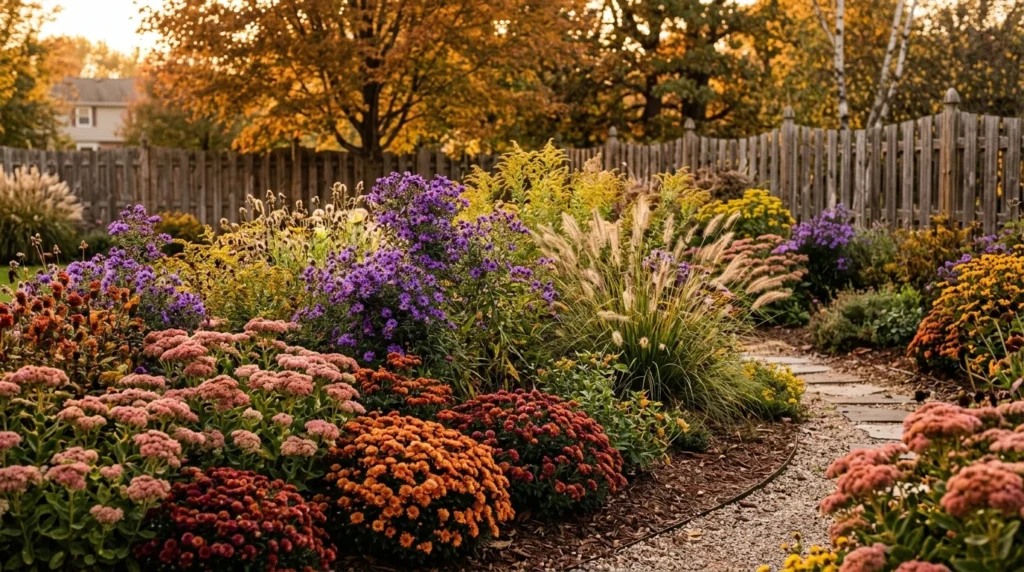
Aromatic aster stands out as one of the most reliable late blooming perennials for North American landscapes. While traditional asters often decline by early October, robust cultivars like ‘October Skies’ and ‘Raydon’s Favorite’ produce hundreds of sky-blue to deep lavender ray flowers well into November. This bushy native perennial grows two to three feet tall and wide, forming a dense, rigid mound that naturally resists flopping under early autumnal rain. It flourishes across USDA Hardiness Zones 3 through 8, thriving in full sun exposure and lean, well-drained soil.
When frosty nights drop temperatures down into the mid-20s Fahrenheit (-4°C), aromatic aster foliage releases a pleasant balsam scent while its blossoms remain completely undamaged. Plant your asters during spring or early autumn, allowing sufficient time for the root system to establish deeply before winter sets in. Avoid over-fertilizing these tough plants; excess nitrogen promotes weak, leggy stems rather than abundant floral clusters. While light deadheading keeps plants tidy, leaving the dried seed heads intact provides essential winter nourishment for overwintering songbirds like goldfinches.