You can transform your bleak yard into an inspiring landscape before spring officially arrives. Strategically planting early blooming shrubs brings vibrant blossoms and rich stem hues to the frostiest days.
These resilient woody plants defy snow and freezing rain while filling outdoor spaces with sweet fragrance. They also supply crucial early nectar to awakening pollinators when food remains scarce.
Explore these standout winter interest plants to infuse vivid winter garden color into your borders right now. You will create dynamic focal points that brighten gloomy February afternoons effortlessly.
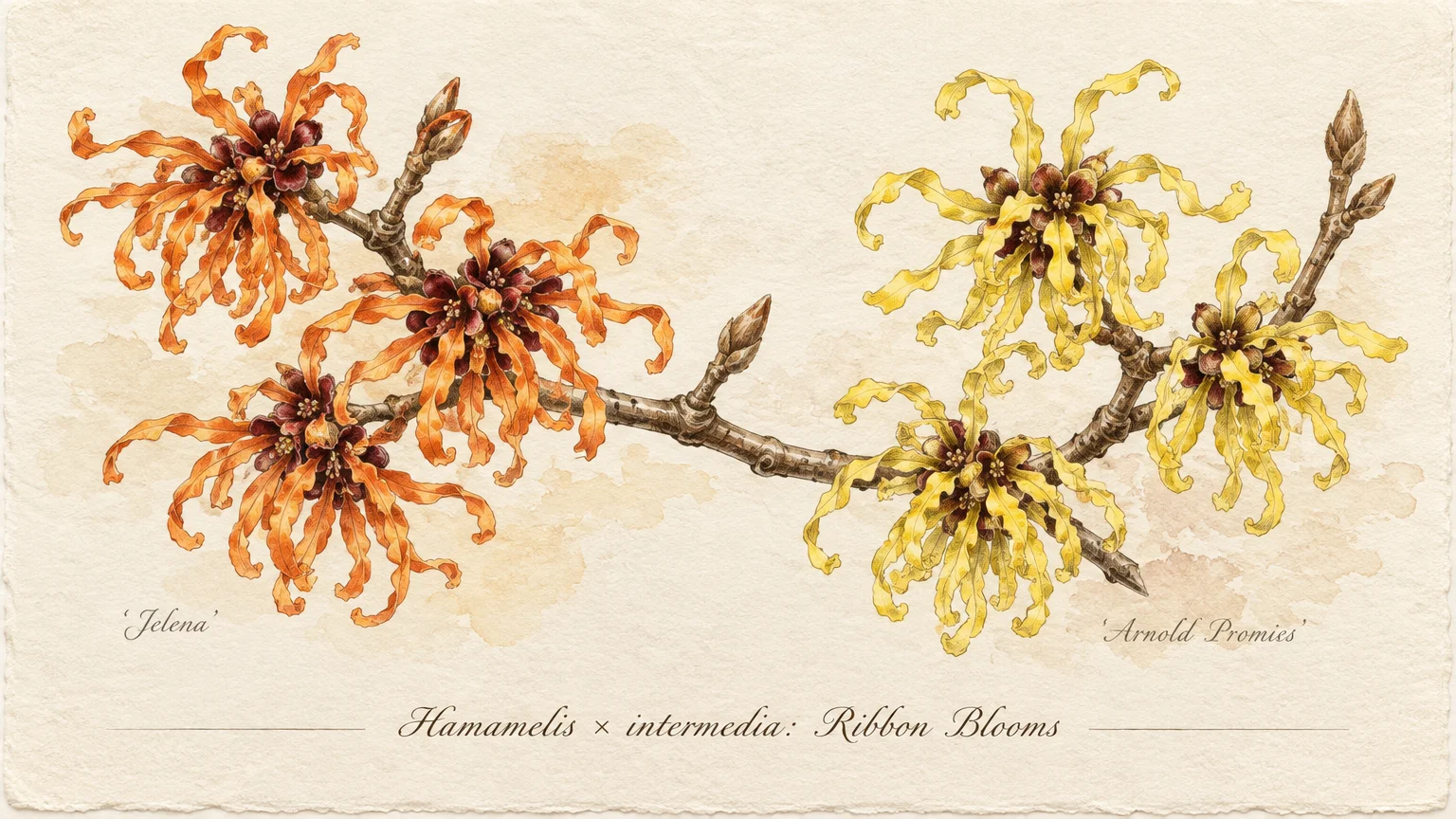
Tip #1: Plant Witch Hazel for Ribbon-Like Blooms
Witch hazel (Hamamelis × intermedia) ignites cold landscapes with spidery, frost-resistant petals. Cultivars like ‘Jelena’ offer copper-orange tones, while ‘Arnold Promise’ showcases bright sulfur-yellow ribbons on bare wood.
These classic winter blooming shrubs emit a clean, spicy fragrance that carries on chilly breezes. Their ribbon petals curl tightly during severe sub-zero freezes to protect tissue, unfurling again as temperatures rise.
Grow witch hazel across USDA hardiness zones 5 through 8 in rich, slightly acidic soil. Give your shrub full sun to partial shade; sunny positions encourage denser bud formation and richer autumn foliage.
Plant them where you can view them from a frequently used window or entryway. Witch hazels require minimal pruning beyond removing dead branches and suckers that emerge from below the root graft.
Apply a three-inch layer of shredded pine bark over the roots to preserve moisture and regulate soil temperatures.
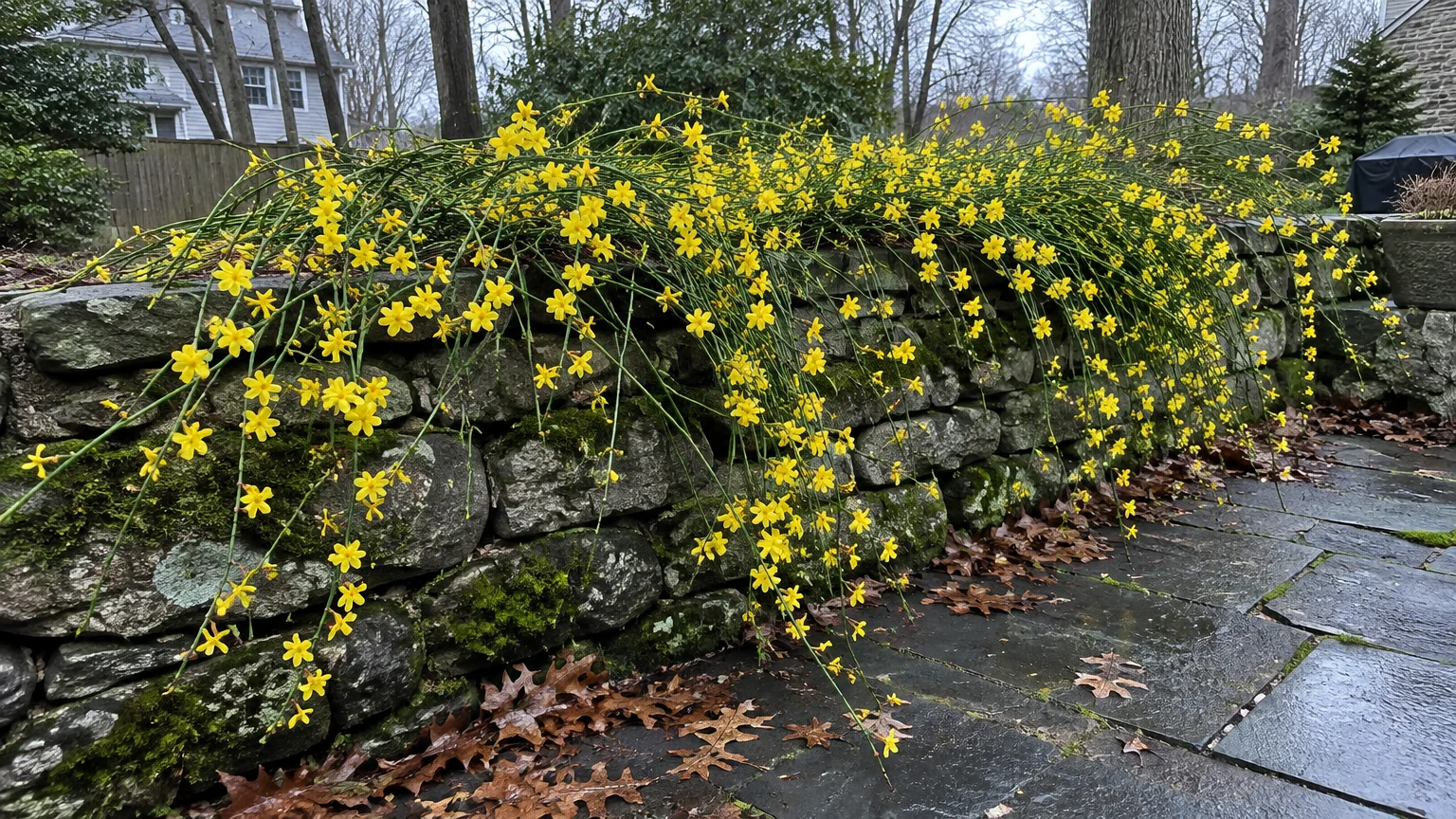
Tip #2: Brighten Dark Walls with Winter Jasmine
Winter jasmine (Jasminum nudiflorum) dispels gray winter skies with cheerful, bright yellow flowers beginning in January. Its slender green stems remain vivid all season, delivering reliable visual warmth before the buds even unfurl.
Unlike summer jasmines, this non-fragrant deciduous shrub tolerates bitter chills across USDA zones 6 through 9. Its willow-like branches cascade gracefully over retaining walls, steep slopes, or sturdy garden trellises.
Place this vigorous grower in full sun or light shade within well-drained loam or clay soil. It resists urban pollution and browsing deer while establishing drought tolerance once its root system matures.
Prune branches immediately after blooming finishes in early spring to encourage fresh, arching shoots. New green wood developed during the summer carries your next display of vibrant winter color.
Tie long shoots against wire supports to train this versatile plant into a colorful vertical screen.
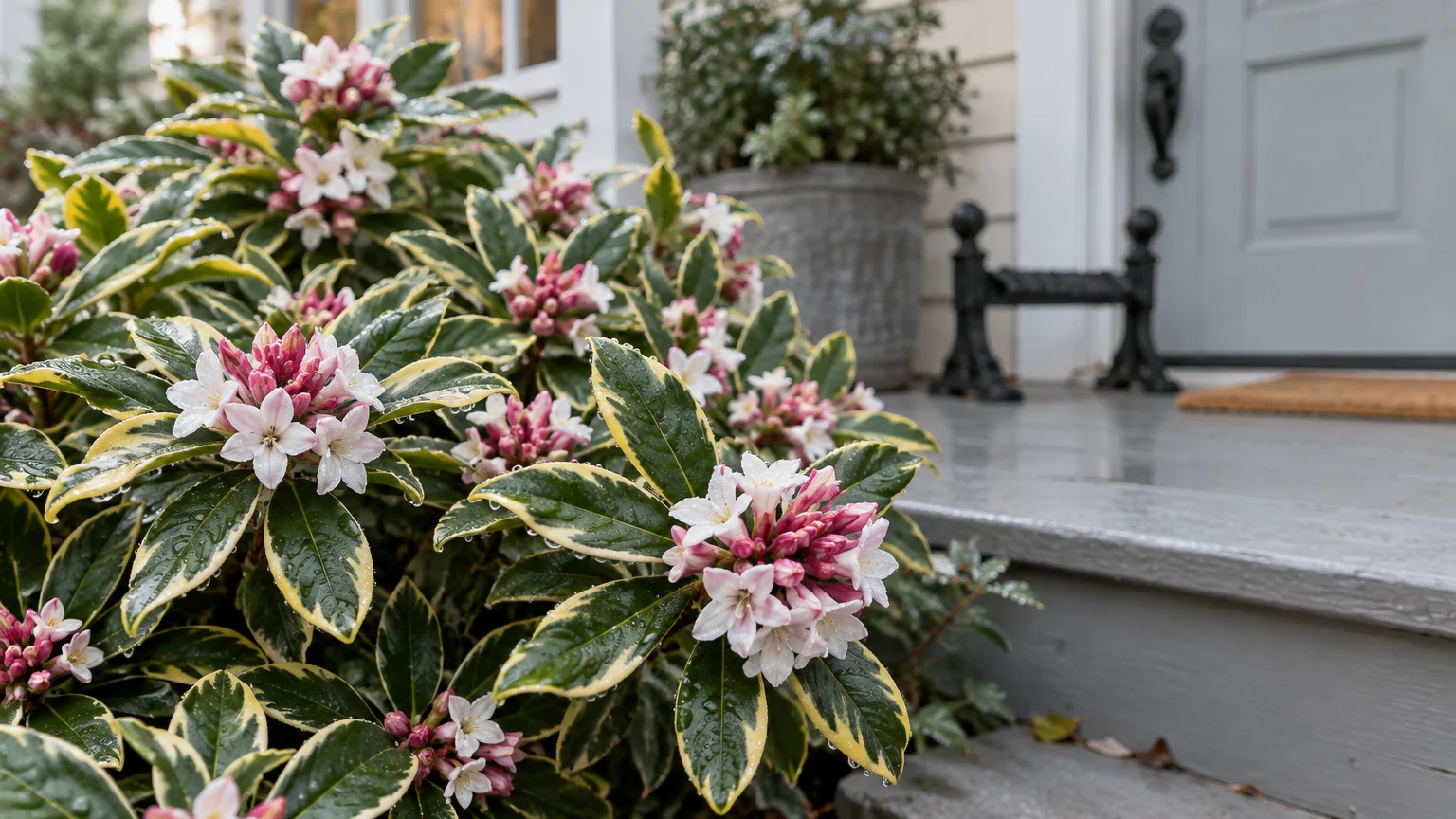
Tip #3: Perfume Entryways with Winter Daphne
Winter daphne (Daphne odora) captivates gardeners with an intoxicating citrus-and-spice perfume from late January into March. Tight clusters of tubular pink and white blossoms open against glossy, dark evergreen leaves.
The popular variegated cultivar ‘Aureomarginata’ features creamy yellow leaf margins that brighten shaded garden beds all year. This compact shrub reaches three to four feet tall and thrives across USDA zones 7 through 9.
Plant daphne in partial shade, sheltered from drying winter winds and harsh afternoon sunlight. It demands rich, loose soil with exceptional drainage, as standing winter moisture quickly causes root rot.
Water established shrubs sparingly, letting the top inch of soil dry out between soakings. Resist transplanting mature plants because their brittle, sensitive roots strongly dislike disturbance.
Position this shrub near your front entrance where you can savor its sweet fragrance every single day.
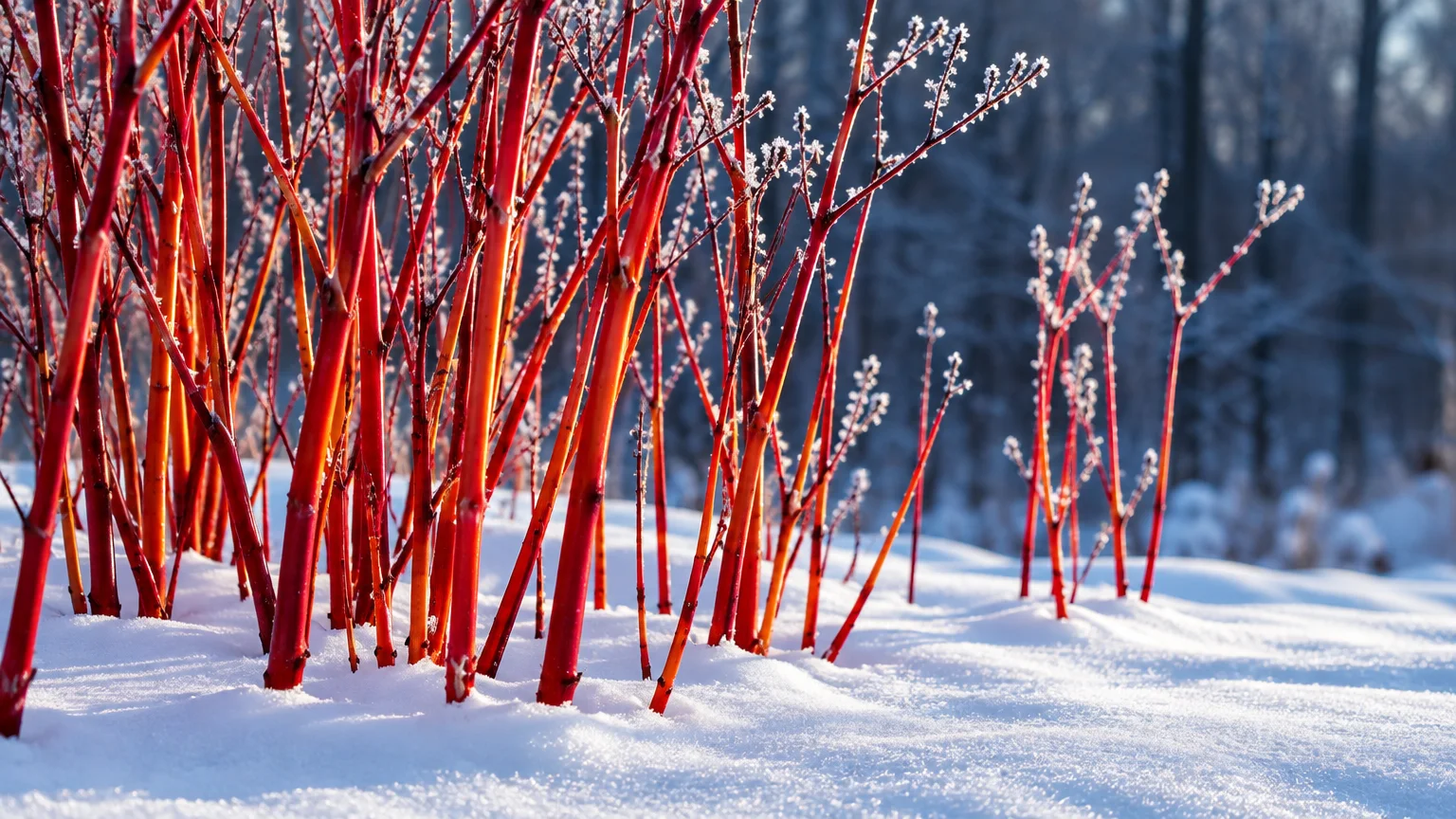
Tip #4: Ignite Borders with Red Twig Dogwood
Red twig dogwood (Cornus sericea) supplies phenomenal winter garden color through its fiery crimson and coral canes. Once autumn leaves drop, these bright bare branches create dazzling contrast against snowy lawns and dark evergreens.
Compact cultivars like ‘Arctic Fire’ grow just three to four feet tall, making them ideal for smaller beds. For spectacular two-tone contrast, interplant red varieties with the golden stems of ‘Flaviramea’ yellow twig dogwood.
This resilient North American native thrives in USDA zones 3 through 8, effortlessly enduring heavy clay and wet ground. Plant in full sun to develop the deepest, most saturated red bark pigmentation possible.
Prune one-third of the oldest, thickest stems right to the ground every year in late winter. The brightest coloration always develops on young, vigorous one-year-old stems rather than older wood.
Gather trimmed colorful stems to craft eye-catching holiday arrangements and winter container accents.
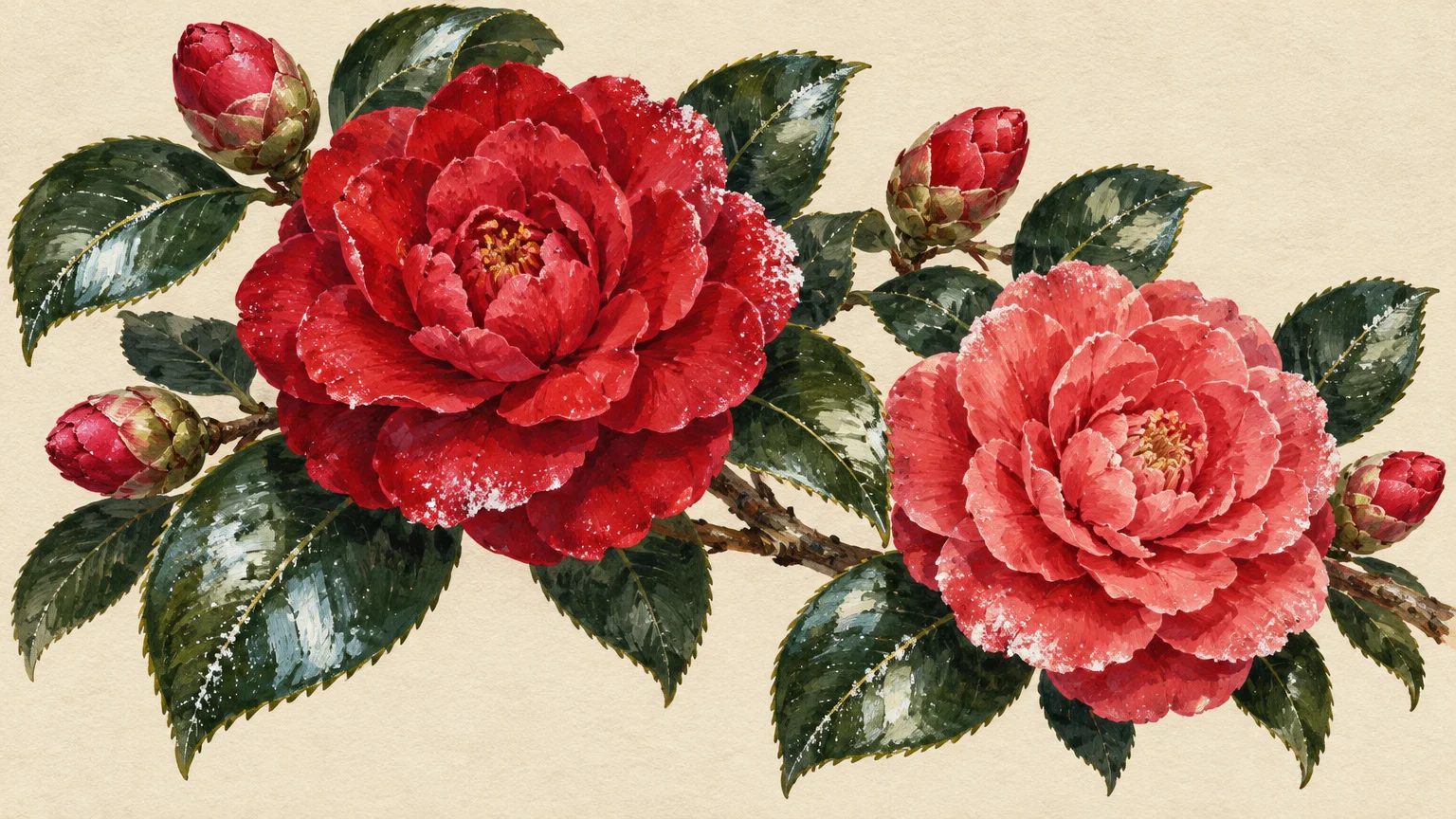
Tip #5: Showcase Elegant Japanese Camellias
Japanese camellia (Camellia japonica) brings unmatched sophistication to the late winter garden with formal, rose-like blossoms. Cultivars bloom in vibrant reds, delicate pinks, and pure whites amid glossy, leathery broadleaf foliage.
Hardy selections like ‘April Tryst’ and ‘Kramer’s Supreme’ withstand cold spells across USDA zones 6 through 9. Their heavy buds open steadily through freezing snaps, providing bold color from February well into April.
Succeed with camellias by planting them in dappled shade where trees buffer harsh morning sunlight. Ensure your soil contains generous organic matter and maintains an acidic pH between 5.5 and 6.5.
Apply a three-inch layer of pine needles around the shallow root zone to conserve moisture and maintain acidity. Water deeply during dry autumn weather so floral buds swell successfully without drying out or dropping prematurely.
Avoid aggressive late-season shearing so you do not snip off developing floral buds.
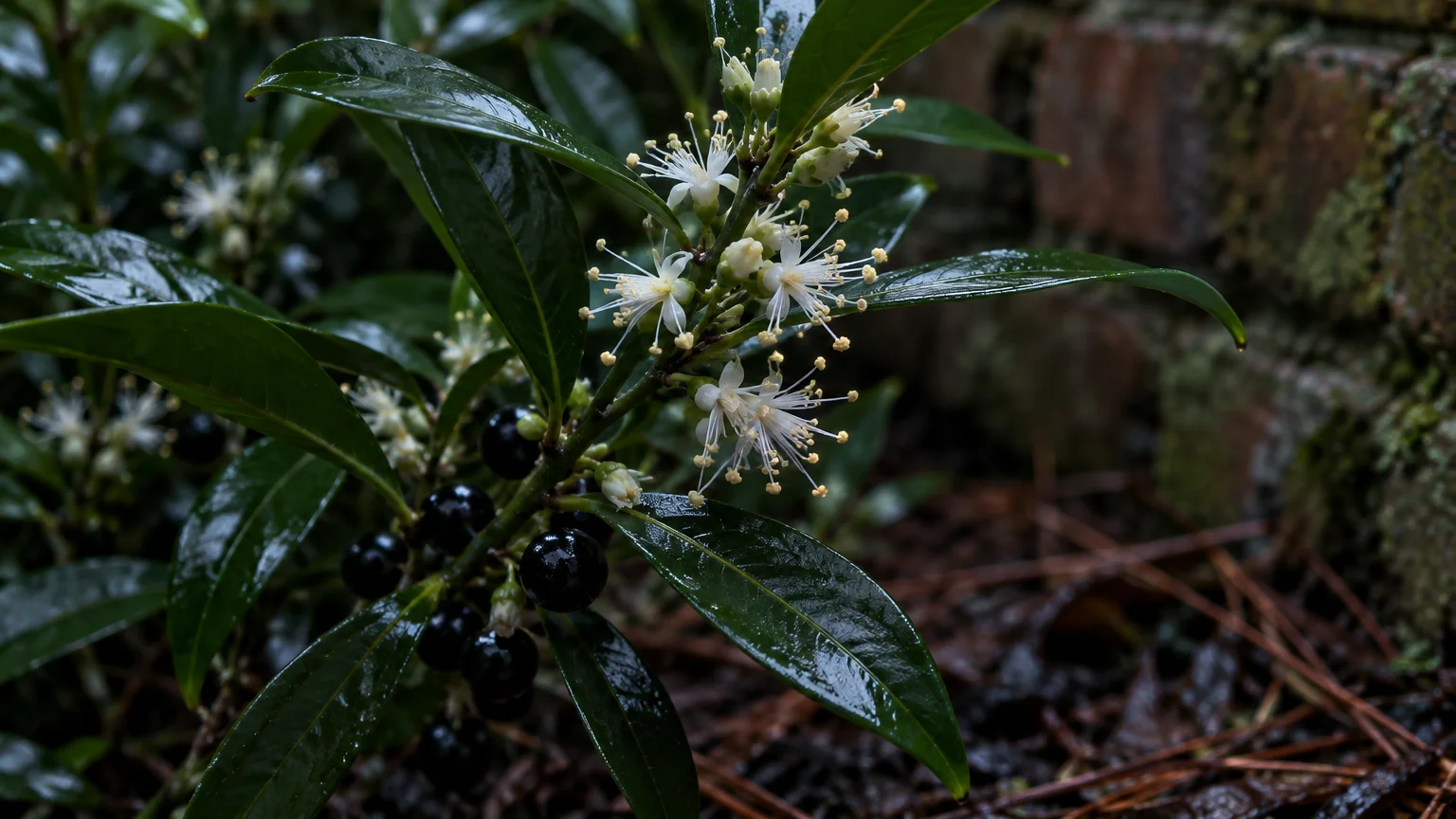
Tip #6: Tuck Fragrant Sweet Box into Deep Shade
Sweet box (Sarcococca confusa) is a dependable evergreen shrub that turns shadowy, neglected corners into aromatic havens. In late winter, tiny ivory tassels open beneath lustrous, dark green leaves, releasing a sweet honey fragrance.
Following the blooms, sweet box forms glossy ornamental berries that transition from crimson to midnight black. This deer-resistant, low-maintenance beauty thrives across USDA zones 6 through 9 with virtually no fuss.
Plant sweet box in partial to full shade where hot afternoon sunlight will not scorch its foliage. It grows happily under mature trees, competing successfully against greedy tree roots in dry shade environments.
Work rich compost into the native soil at planting to provide lasting organic nutrients. The plant maintains a neat, bushy habit around three feet tall without needing regular shears or shaping.
Use sweet box as a low hedge alongside dark entry walkways to enjoy its heavenly cold-season fragrance.
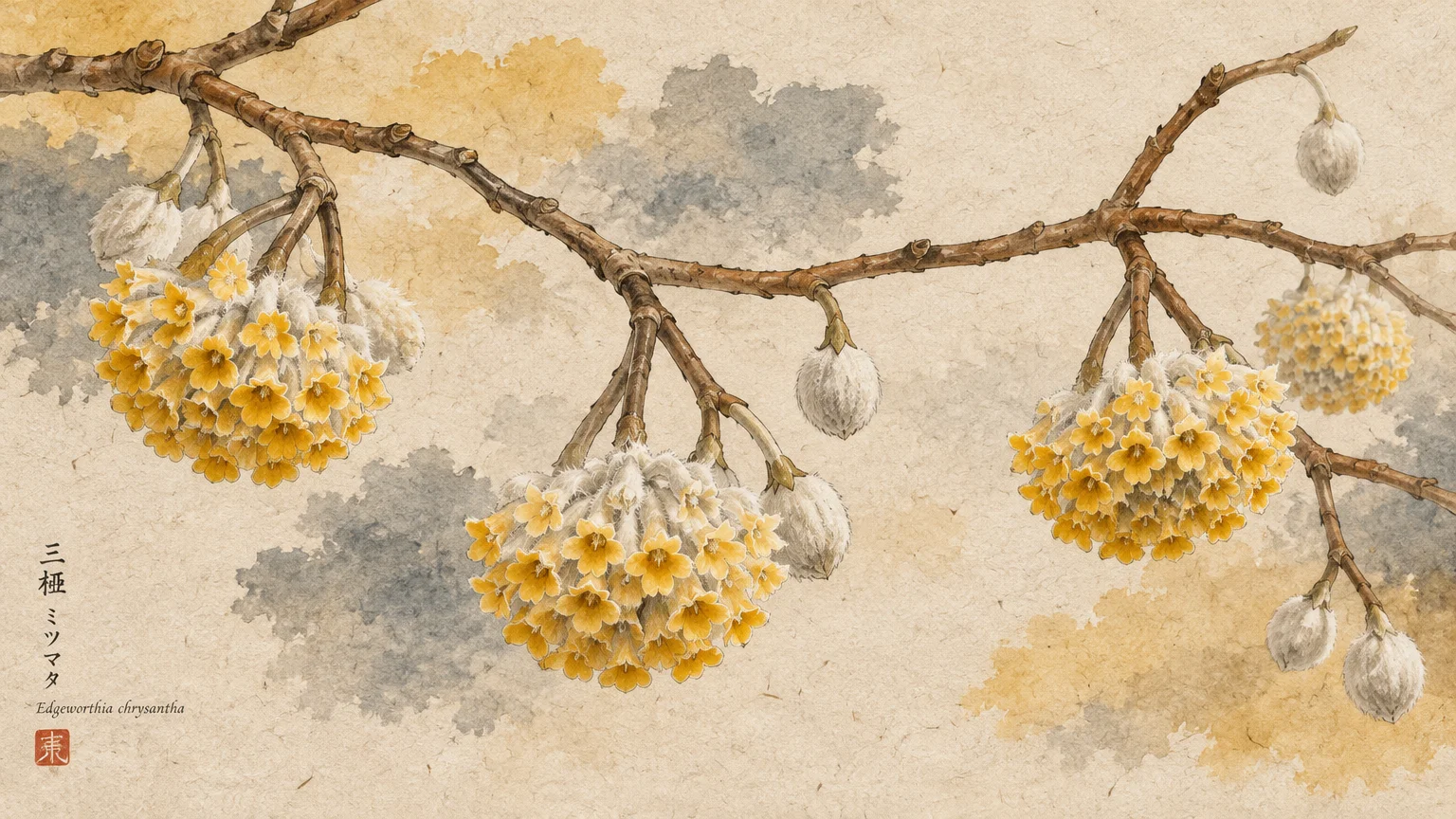
Tip #7: Plant Paperbush for Golden Honeycomb Flowers
Paperbush (Edgeworthia chrysantha) delivers dramatic architectural presence and exceptional sweet scent in late winter. Silky, silver-sheathed buds hang like jewelry from bare cinnamon branches before opening into golden-yellow honeycomb clusters.
The rich clove-and-honey perfume drifts across cold garden beds weeks before early spring perennials wake. Remarkably, the flexible, fibrous stems are pliable enough to bend without snapping, giving the plant its paper-making heritage.
Thriving in USDA zones 7 through 10, paperbush prefers sheltered spots with dappled sunlight or morning sun. Give it humus-rich, well-draining soil with steady moisture; avoid heavy waterlogged clays that rot sensitive roots.
Spread a generous ring of composted leaf mold around the base each autumn to nourish the roots. Pruning is rarely necessary; simply let its natural, multi-stemmed vase silhouette develop at its own pace.
Pair paperbush alongside purple hellebores and snowdrops for a luxurious late-winter woodland border.
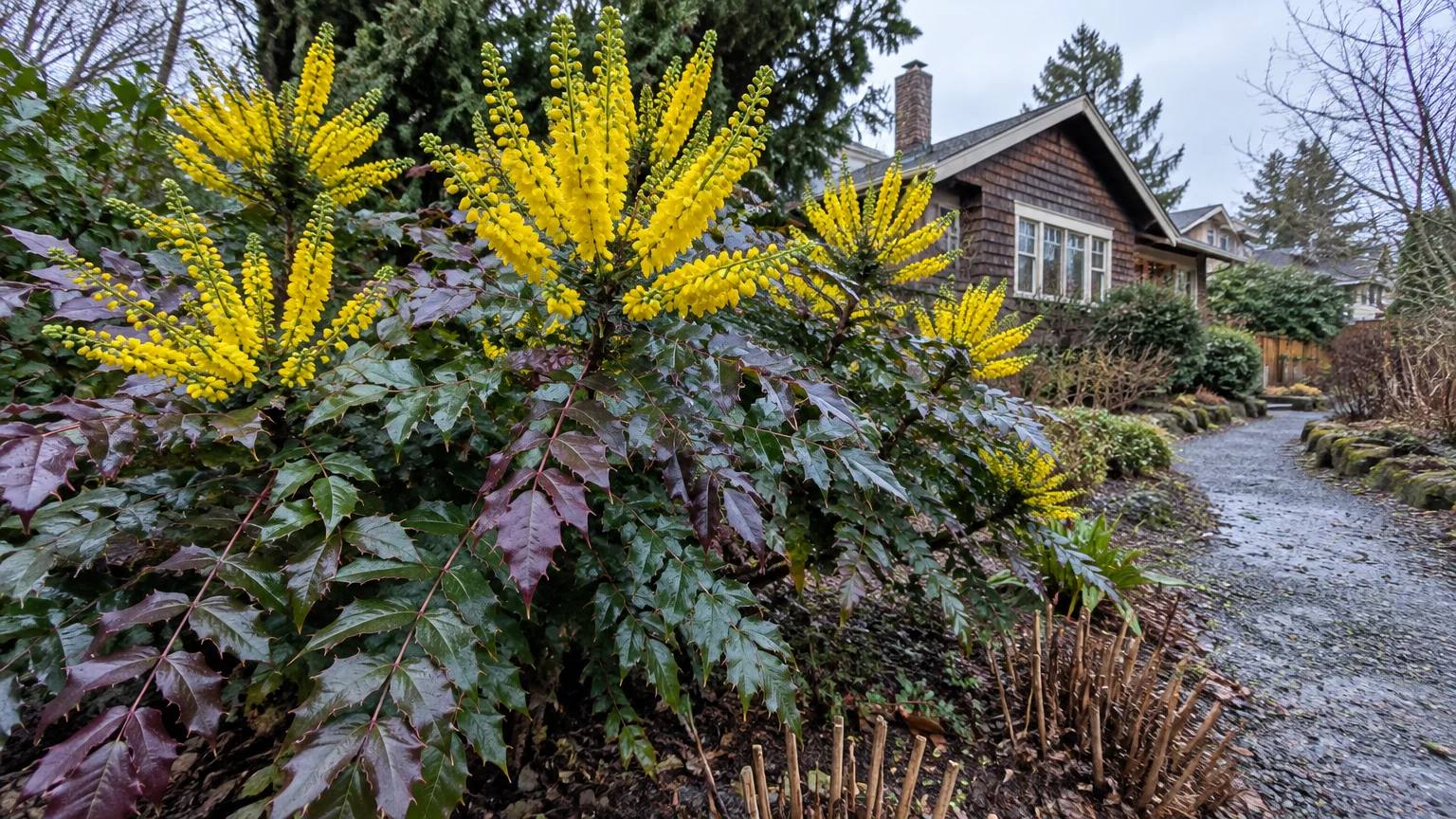
Tip #8: Ignite Borders with Architectural Mahonia
Hybrid mahonias (Mahonia × media), such as ‘Charity’ and ‘Winter Sun’, produce striking architectural drama during late winter. Tall, radiating sprays of bright sulfur-yellow flowers crown bold whorls of spiny, holly-like evergreen leaflets.
These fragrant flower spikes provide a life-saving nectar source for active winter hummingbirds and foraging bees. Later in spring, the blossoms transition into handsome powder-blue berries that attract cedar waxwings and robins.
Grow mahonia in USDA hardiness zones 6 through 9 in partial to dense woodland shade. It performs reliably in dry shade once established, defying harsh winter wind exposure and poor soils.
Cut leggy canes back to a lower whorl after flowering to encourage bushier, fuller foliage growth. Always wear thick leather gloves when handling this prickly shrub to protect your hands from stiff needles.
Position mahonia at the rear of mixed beds to establish an impenetrable, colorful living evergreen backdrop.
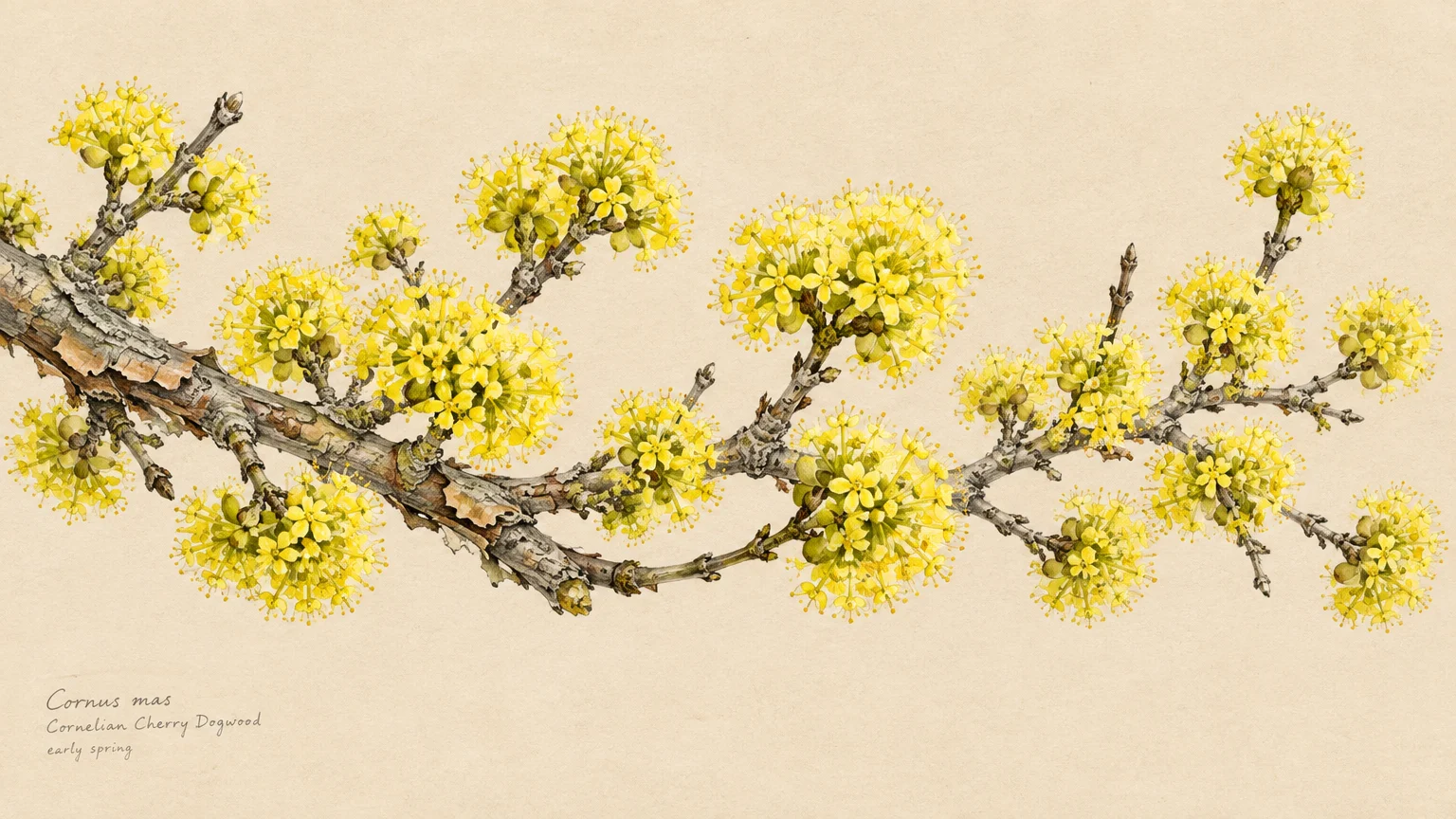
Tip #9: Welcome Golden Clouds of Cornelian Cherry Dogwood
Cornelian cherry dogwood (Cornus mas) lights up late winter landscapes with dense clouds of bright yellow flowers. Clustered umbels of tiny, star-shaped blossoms coat bare gray branches well before forsythias begin their spring show.
In late summer, those blooms develop into bright scarlet edible fruits prized for making flavorful jams and syrups. As the plant matures, its peeling bark adds rich gray and tan puzzle-piece textures to winter gardens.
Hardy across USDA zones 4 through 8, this rugged large shrub or small tree handles urban challenges easily. It thrives in full sun or light shade, tolerating clay soils and alkaline ground without complaint.
Water young plants deeply during dry summer stretches to establish a resilient, deep root network. Prune lightly after the yellow blossoms fade to remove crossed branches and maintain an attractive spreading canopy.
Plant Cornelian cherry as a screening hedge or a multi-stemmed focal specimen near your property boundary.
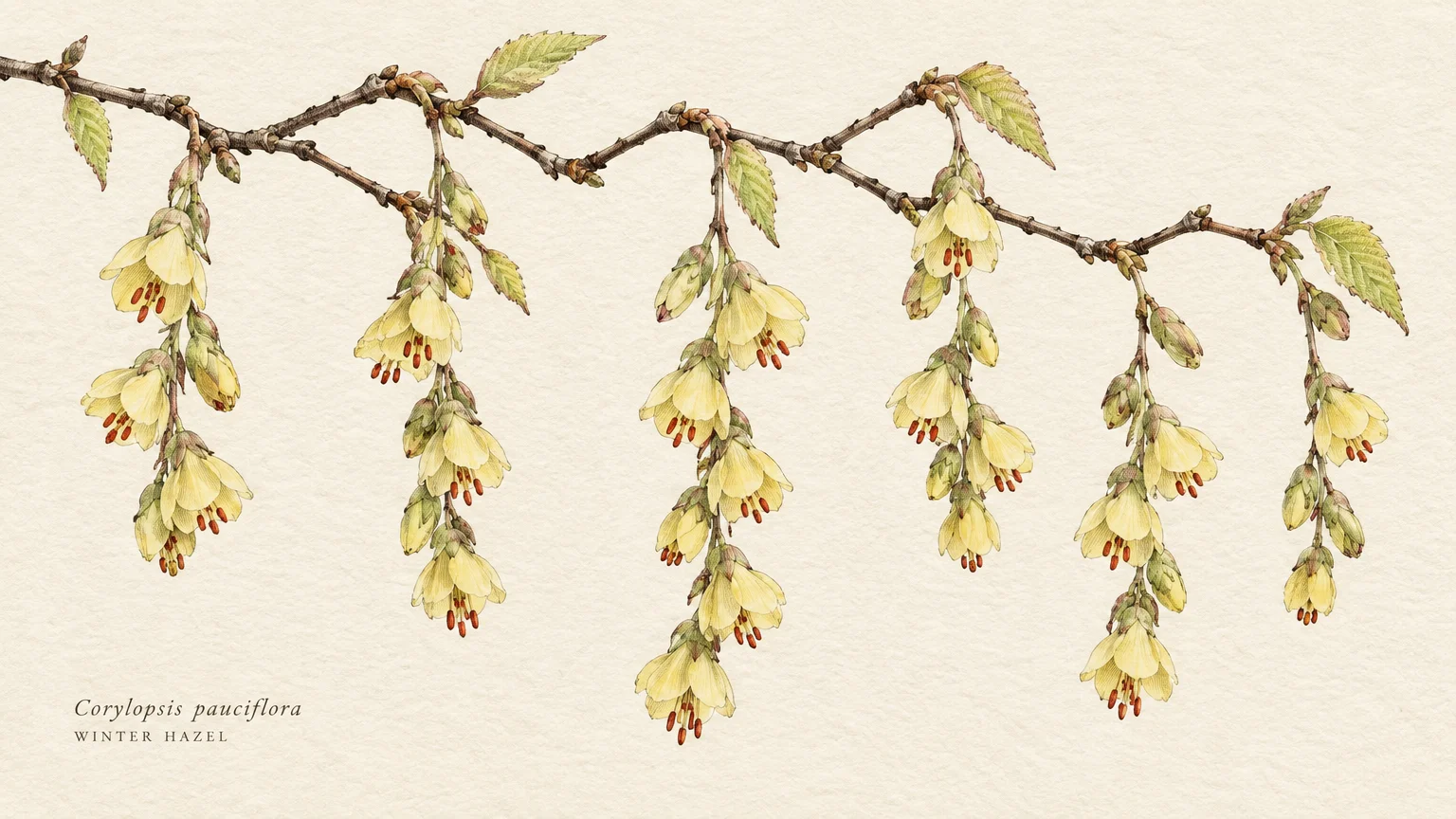
Tip #10: Dangle Graceful Chains of Winter Hazel
Winter hazel (Corylopsis spicata) offers delicate refinement with pendulous chains of soft, primrose-yellow blooms. These fragrant, bell-shaped flowers hang beneath bare horizontal branches in late winter, complemented by striking reddish-purple bracts.
This elegant deciduous shrub serves as an exquisite bridge between the icy depths of winter and spring. Broad, hazel-like leaves emerge in spring with bronze edges before maturing into pleasing blue-green foliage all summer.
Plant winter hazel in USDA zones 5 through 8 in dappled sunlight or sheltered morning exposure. Provide moist, organically rich, acidic soil with good drainage to prevent leaf chlorosis and promote vigorous roots.
Slightly shelter the shrub from northern winds to prevent unexpected late freezes from scorching early blooms. Prune selectively after flowering to remove weak shoots while preserving the naturally tiered, open branch structure.
Underplant winter hazel with blue grape hyacinths and hellebores for a charming, layered woodland vignette.
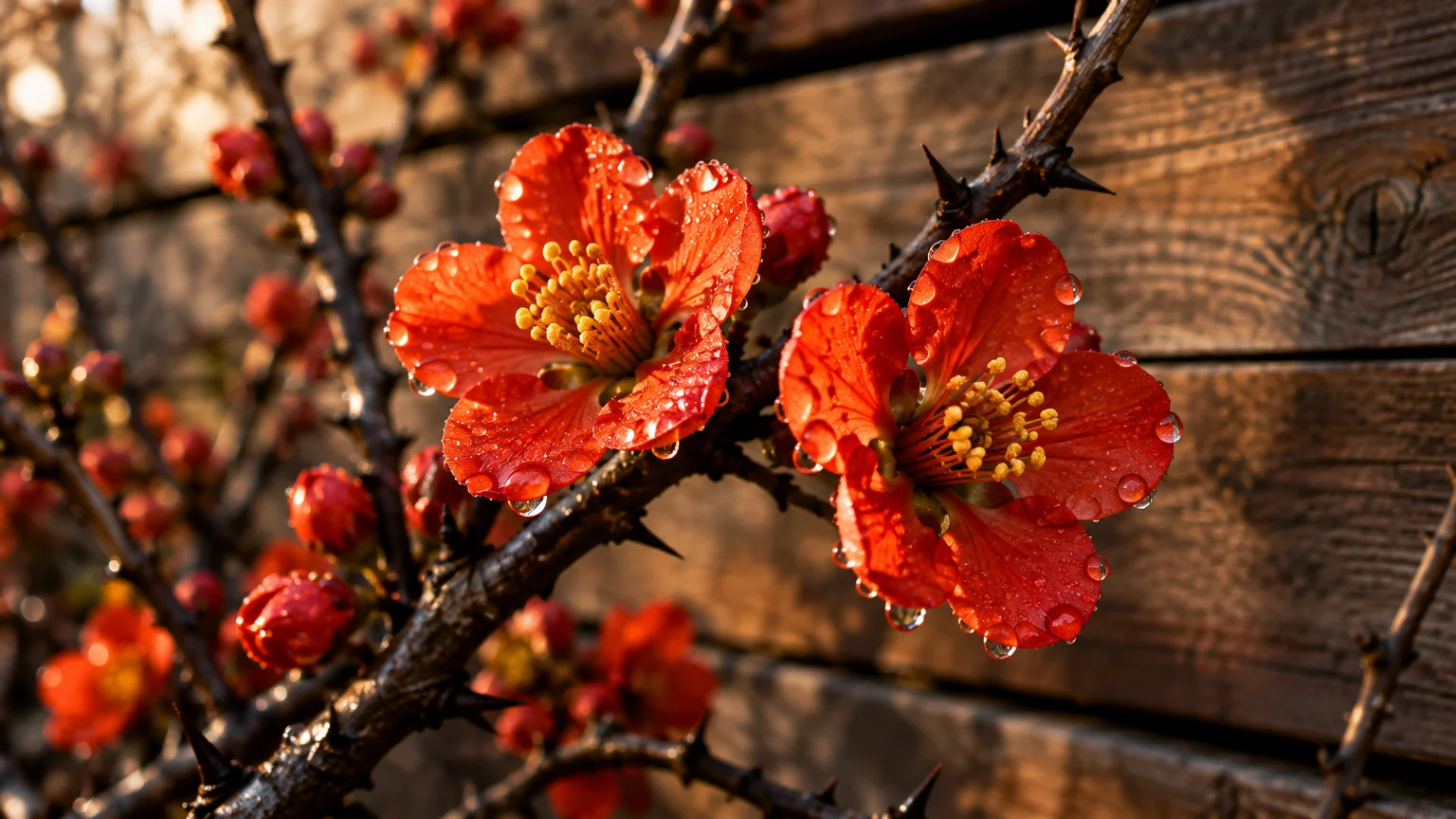
Tip #11: Unleash Fiery Flowering Quince Blossoms
Flowering quince (Chaenomeles speciosa) creates a dramatic burst of late winter garden color with intense scarlet, coral, or white blooms. Five-petaled blossoms open along tangled, spiny branches while frost still lingers across the lawn.
Modern thornless varieties like the Double Take series produce lush, peony-style flowers that withstand cold snaps with ease. In late summer, aromatic yellow-green quinces ripen on the stems, supplying tart pectin-rich fruit for kitchen preserves.
Flowering quince thrives in USDA zones 5 through 9, standing up to compacted clay, dry soil, and summer heat. Choose a site with full sun to ensure the most prolific flower bud formation and vivid coloration.
Prune immediately after flowers fade to control branch spread and thin out congested growth in the shrub center. Removing older interior canes opens the canopy to sunlight, fueling next year’s crop of vivid winter flowers.
Cut budded branches in February and set them in water indoors to force early flowering in your home.
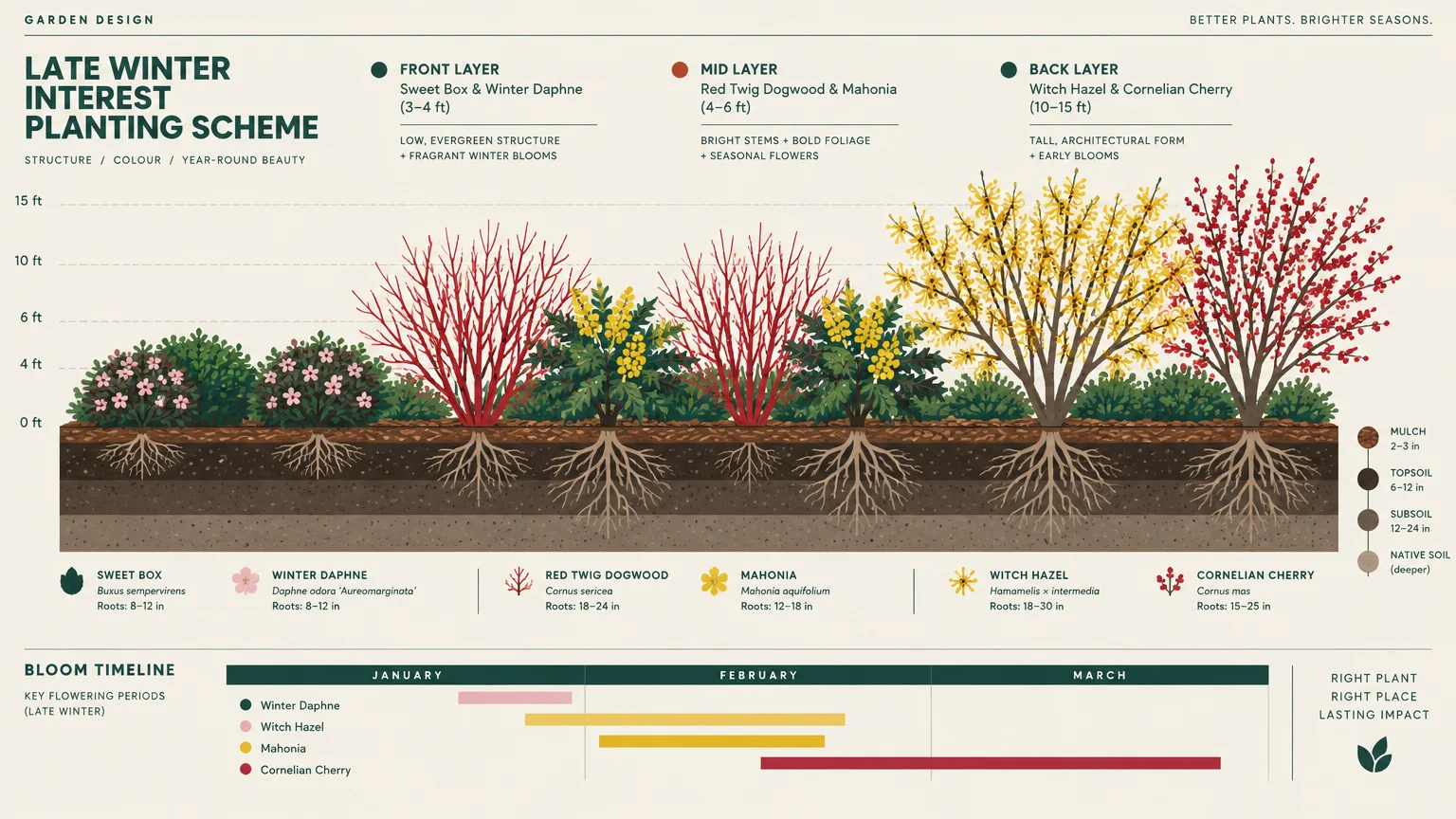
Putting It All Together: Enjoy Your Beautiful Garden
Creating a vibrant late winter landscape does not require living in a mild, tropical climate. By selecting smart winter interest plants, you transform bare soil into a tapestry of blossoms, textures, and rich scents.
Combine shrubs with contrasting stem hues and staggered bloom calendars to sustain visual interest from January through March. Pair the brilliant red canes of dogwoods with the bright yellow blooms of winter jasmine for instant impact.
Place fragrant selections like sweet box and winter daphne close to walkways where you can savor their perfume. Watching resilient winter blooming shrubs conquer the cold will inspire you during the quietest gardening weeks of the year.
Assess your landscape today and reserve room for these exceptional shrubs late winter color selections. Your garden will reward you every year with exhilarating vitality while the rest of the neighborhood sleeps under snow.
Frequently Asked Questions
When is the best time to plant winter blooming shrubs?
Plant both deciduous and evergreen winter blooming shrubs during the autumn months before the ground freezes solid. Cool autumn air paired with warm soil gives root systems ample time to establish before blooming begins.
You can also plant early in spring as soon as soil thaws to establish roots before summer arrives.
How do freezing temperatures affect late winter shrub flowers?
Most late-blooming shrubs feature unique botanical adaptations designed to withstand heavy frost and sub-freezing weather. For example, witch hazel petals curl up tightly during deep freezes and unroll unharmed when temperatures rebound.
If severe, unseasonable freezes threaten tender blossoms, protect plants overnight with breathable frost blankets or burlap wraps.
Do winter blooming shrubs need fertilizer during cold months?
Do not apply synthetic fertilizers to your shrubs while they are blooming in late winter. Cold-season feeding can stimulate tender vegetative growth that succumbs quickly to sudden hard freezes and damages plant health.
Wait until late spring after all flowering ceases to feed shrubs with balanced organic compost or slow-release fertilizer.
Can I cut branches from late winter shrubs to force blooms indoors?
Yes, harvesting branches from shrubs like flowering quince, witch hazel, and winter jasmine brings early color indoors. Select stems with plump, swollen buds on days when outdoor temperatures rise above the freezing mark.
Place stem ends in tepid water in a sunny room, and watch blossoms open weeks ahead of schedule.
For region-specific advice, consult your local University Extension program (find yours via the USDA directory). For plant databases and inspiration, visit the Missouri Botanical Garden or the Royal Horticultural Society.
Disclaimer: This article provides general gardening advice. Always consider your specific climate, soil conditions, and local pests. Follow safety guidelines when using gardening tools and products.