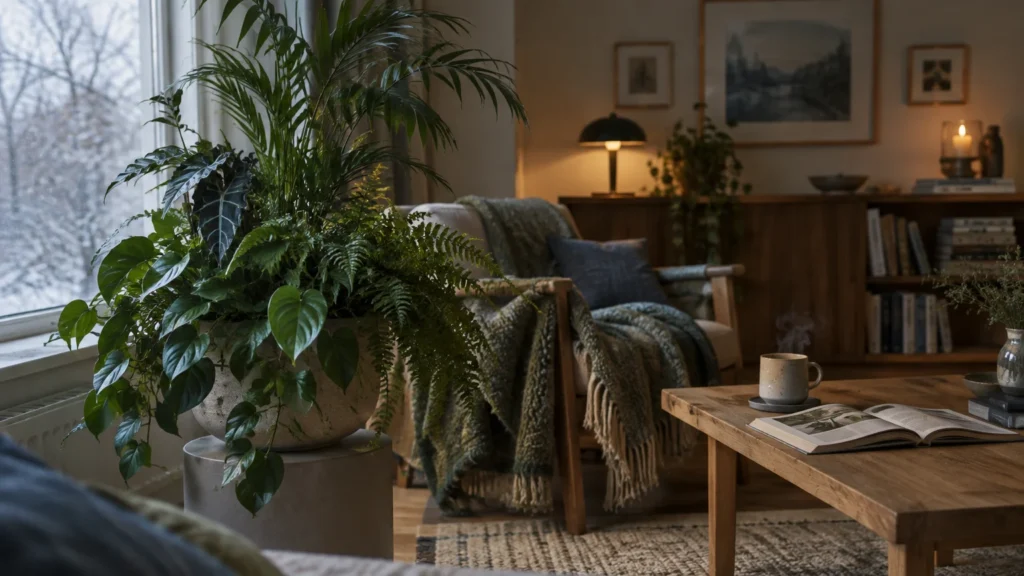
You can cultivate thriving indoor greenery even if your living space lacks sunny, south-facing windows. Many shade-tolerant succulents adapt remarkably well to dim corners and north-facing rooms.
These resilient plants store generous moisture inside fleshy foliage, meaning they withstand neglect while enhancing interior spaces. You will enjoy sculptural textures and vibrant leaves without investing in costly artificial grow lights.
Discover the best indoor succulents for low light and master their simple watering routines today. Creating a lush indoor oasis in a darker room is entirely within your reach.
Tip #1: Snake Plant (Dracaena trifasciata)
Tough Foliage with Architectural Flair
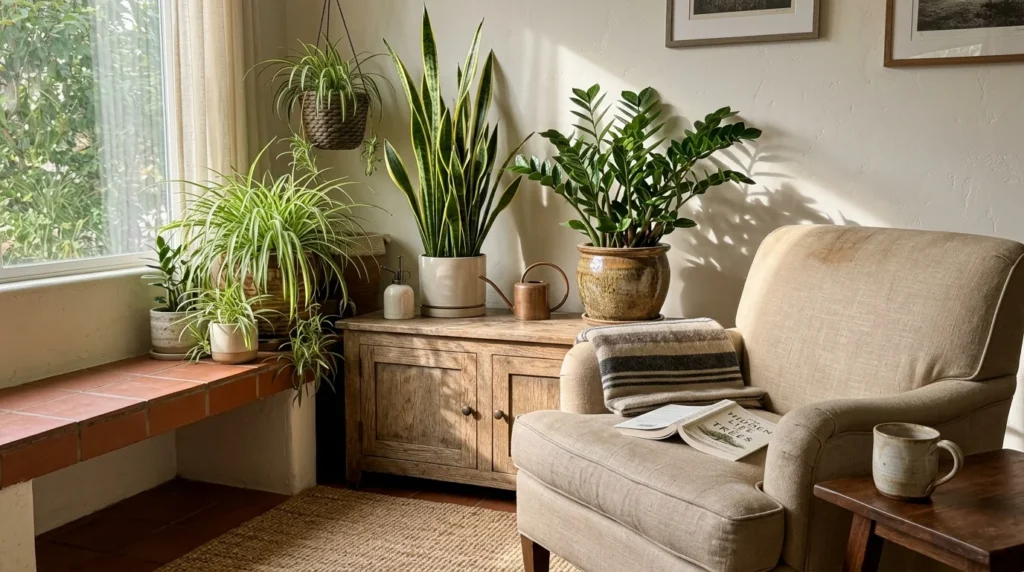
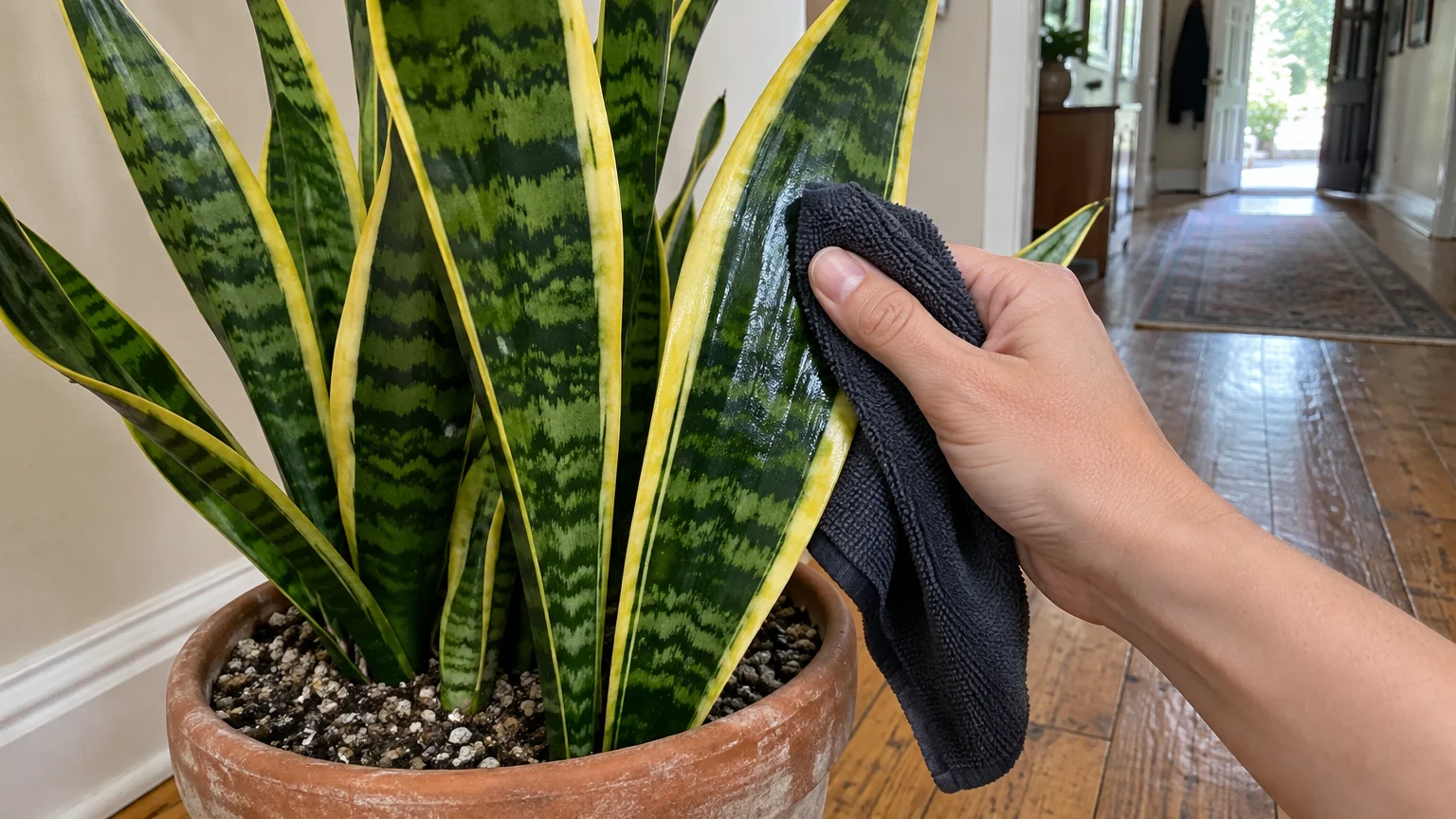
Snake plants rank among the most dependable low light succulents available for home interiors. Their upright, sword-shaped leaves display bold patterns of dark green and creamy yellow bands.
This species tolerates severe light deprivation by drastically slowing its metabolic rate. It functions happily in dim hallways and shadowed office corners where other houseplants fail.
Water your snake plant only when the soil dries out completely from top to bottom. In low light, this usually means watering once every three to four weeks.
Always plant them in porous terracotta pots with well-draining cactus soil. Stagnant moisture around the root zone causes root rot, so avoid overwatering at all costs.
Wipe the rigid leaves with a damp cloth periodically to remove settled household dust. Clean leaves absorb ambient light more efficiently, supporting steady indoor vitality.
You can also choose compact dwarf varieties like ‘Golden Hahnii’ for smaller bookshelves. These compact rosettes offer the same legendary toughness in a petite silhouette.
Tip #2: ZZ Plant (Zamioculcas zamiifolia)
Glossy Leaves and Thick Moisture-Storing Rhizomes
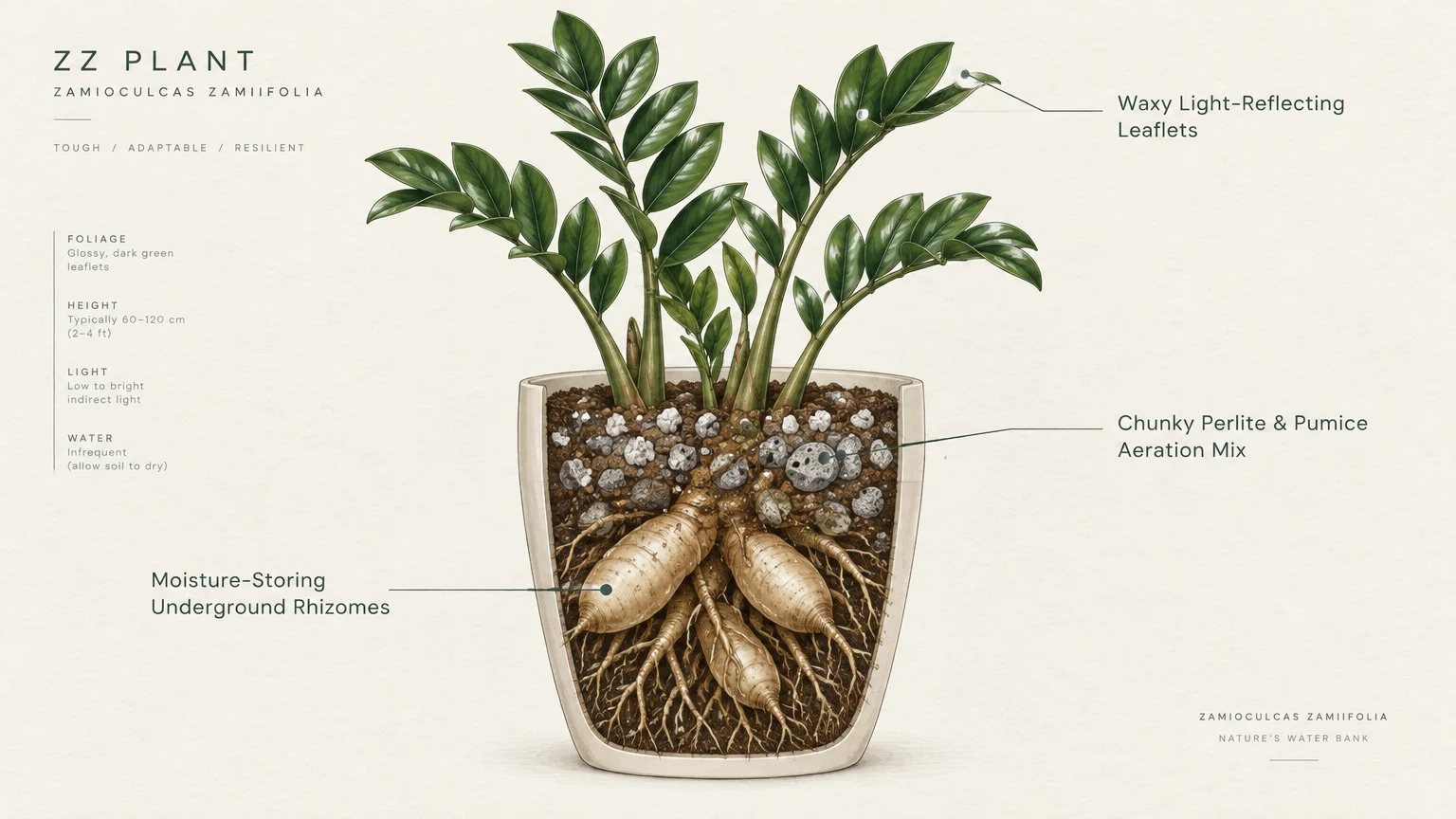
The ZZ plant is a quintessential champion among indoor succulents for low light spaces. Its naturally glossy, feather-shaped leaflets reflect dim ambient light across your living space.
Underneath the potting mix, this plant develops swollen, potato-like underground rhizomes. These rhizomes store generous moisture reserves, making the ZZ plant virtually immune to occasional neglect.
Place your ZZ plant several feet away from windows or inside windowless rooms. It thrives comfortably under standard fluorescent office lighting or muted indirect daylight.
You should drench the potting compost thoroughly, then let it dry out entirely before irrigating again. In shaded indoor rooms, watering once a month is generally sufficient.
Use a chunky potting blend containing perlite and coarse pumice for optimal aeration. Rapid drainage shields the fleshy rhizomes from waterlogging and fungal diseases.
If the glossy foliage turns yellow, you are likely watering too frequently. Simply reduce your hydration schedule and allow the soil to breathe between sessions.
Tip #3: Zebra Haworthia (Haworthiopsis fasciata)
Distinctive Ridges in a Compact Rosette
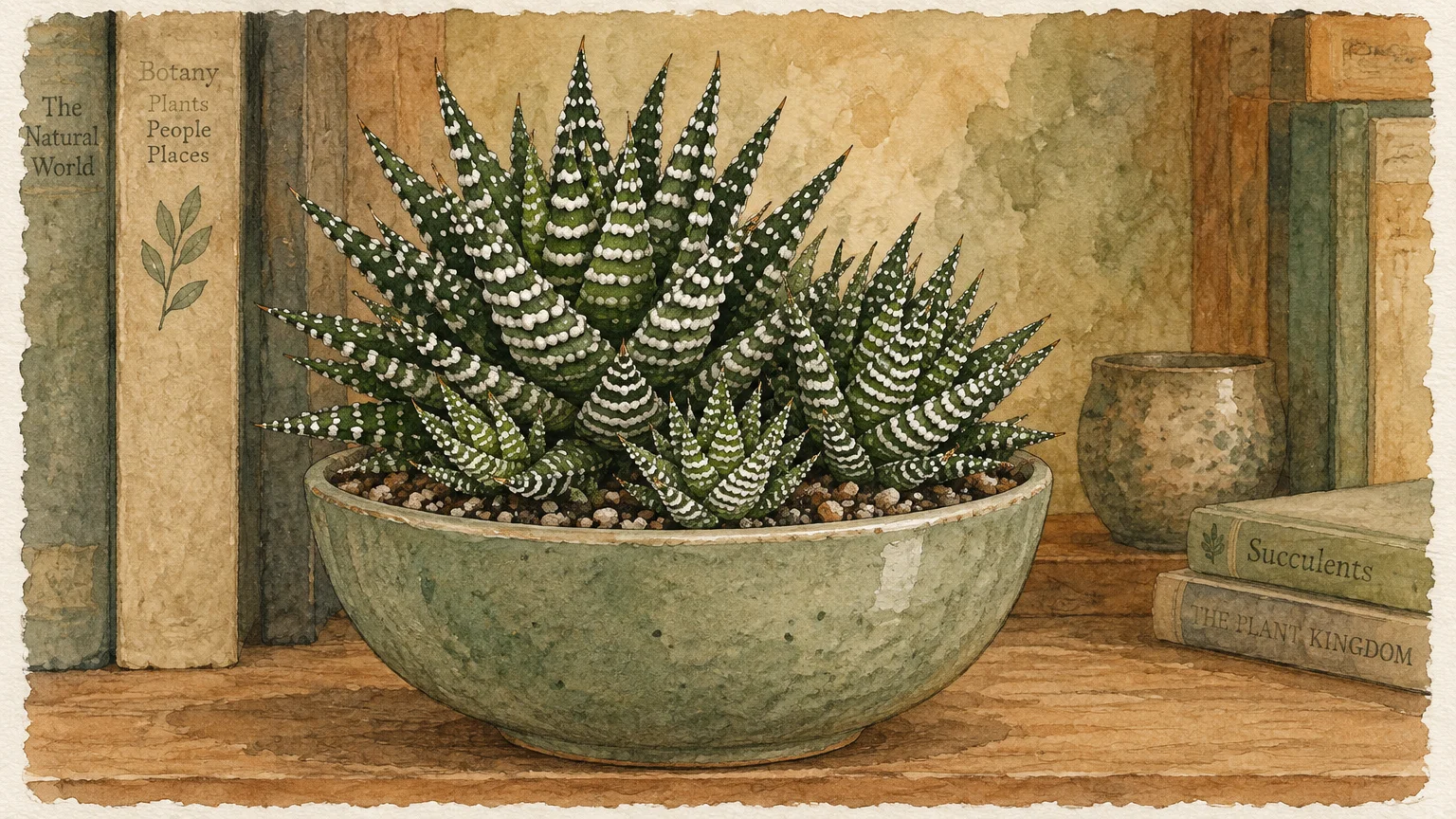
Zebra Haworthia forms striking miniature rosettes accented by raised, chalk-white horizontal ridges. Because it stays compact, it fits neatly on shaded desks, countertops, and decorative shelves.
In nature, this small succulent grows sheltered beneath thorny shrubs and rocky overhangs. This evolutionary adaptation makes it one of the most shade-tolerant succulents you can grow indoors.
Direct afternoon sun scorches its pointed tips, turning the deep green leaves an unhealthy reddish-brown. Muted, indirect illumination keeps its foliage crisp, deep green, and vibrant.
Water this plant moderately during the active spring and summer growing season. In cooler winter months, reduce watering to once every four to six weeks.
Keep water from pooling inside the central rosette when you irrigate the container. Applying water directly to the surrounding soil prevents crown rot and leaf spotting.
Pair your zebra plant with an unglazed ceramic pot to ensure rapid root drying. Healthy roots stay firm, anchoring the plant securely into gritty potting mix.
Tip #4: Ox Tongue (Gasteria glomerata)
Thick Textured Leaves Built for Shade
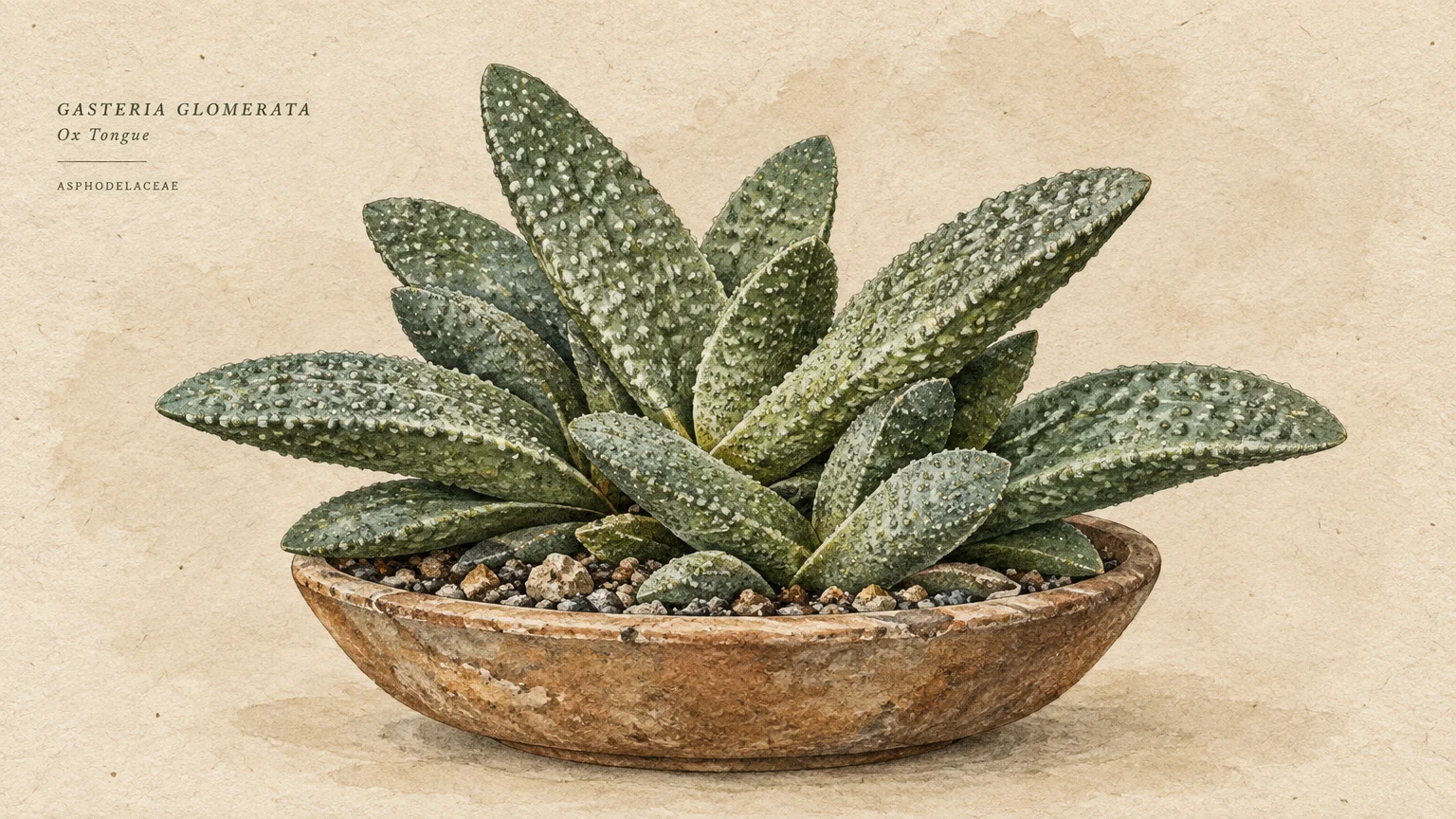
Ox tongue earns its playful nickname from thick, tongue-shaped leaves covered in rough, warty tubercles. Its distinctive two-ranked foliage pattern creates an eye-catching, sculptural presentation in any container.
Originating from shaded cliff faces in South Africa, Gasteria tolerates deep shade better than almost any other succulent. Harsh direct sunlight quickly bleaches its richly patterned dark foliage.
Position your ox tongue in north-facing windows or recessed corners of bright rooms. It maintains its compact shape and rich color without stretching desperately toward light sources.
Irrigate only when the potting substrate is bone dry through the entire root depth. Overly moist compost causes the brittle lower leaves to soften and detach prematurely.
Choose an airy mix containing equal parts standard cactus soil, perlite, and granite grit. This gritty composition promotes rapid evaporation and preserves healthy root respiration.
Gasterias produce graceful, tubular pink flowers on slender arching stalks during early spring. Even in low light settings, mature specimens occasionally delight growers with these blossoms.
Tip #5: Holiday Cactus (Schlumbergera bridgesii)
Lush Forest Epiphytes with Vibrant Blooms
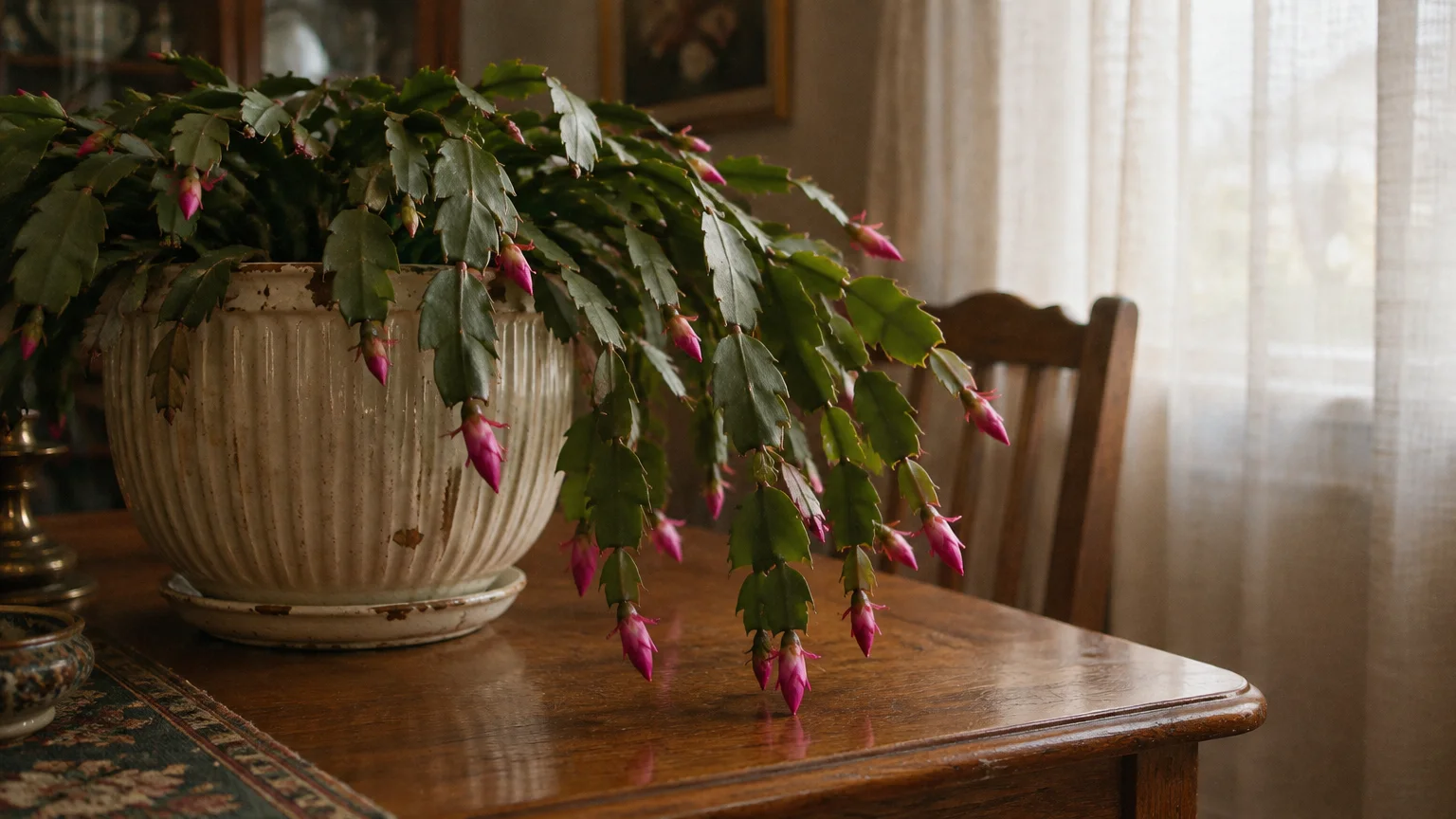
Unlike arid desert varieties, holiday cacti originate from tropical Brazilian rainforests as tree-dwelling epiphytes. They naturally thrive under dense canopy shade, making them exceptional easy indoor plants.
Their segmented, arching green stems drape gracefully over the rims of hanging baskets and pedestals. In late autumn, dazzling tubular blossoms emerge in brilliant shades of magenta, red, and white.
Holiday cacti appreciate moderate humidity and consistent moisture more than their desert-dwelling cousins. Never let the soil dry to powder, but avoid leaving pots in standing saucer water.
Provide medium to low indirect daylight away from harsh southern window exposures. Gentle illumination prevents leaf segment discoloration and encourages bud development.
Blend organic potting soil with peat moss and coarse bark to mimic forest floor debris. This loose medium retains light moisture while supplying crucial oxygen to the roots.
Nighttime darkness triggers flower production as winter approaches. Keep your plant in an unlit room each evening during autumn to stimulate massive floral displays.
Tip #6: String of Hearts (Ceropegia woodii)
Delicate Cascades of Mottled Heart-Shaped Foliage
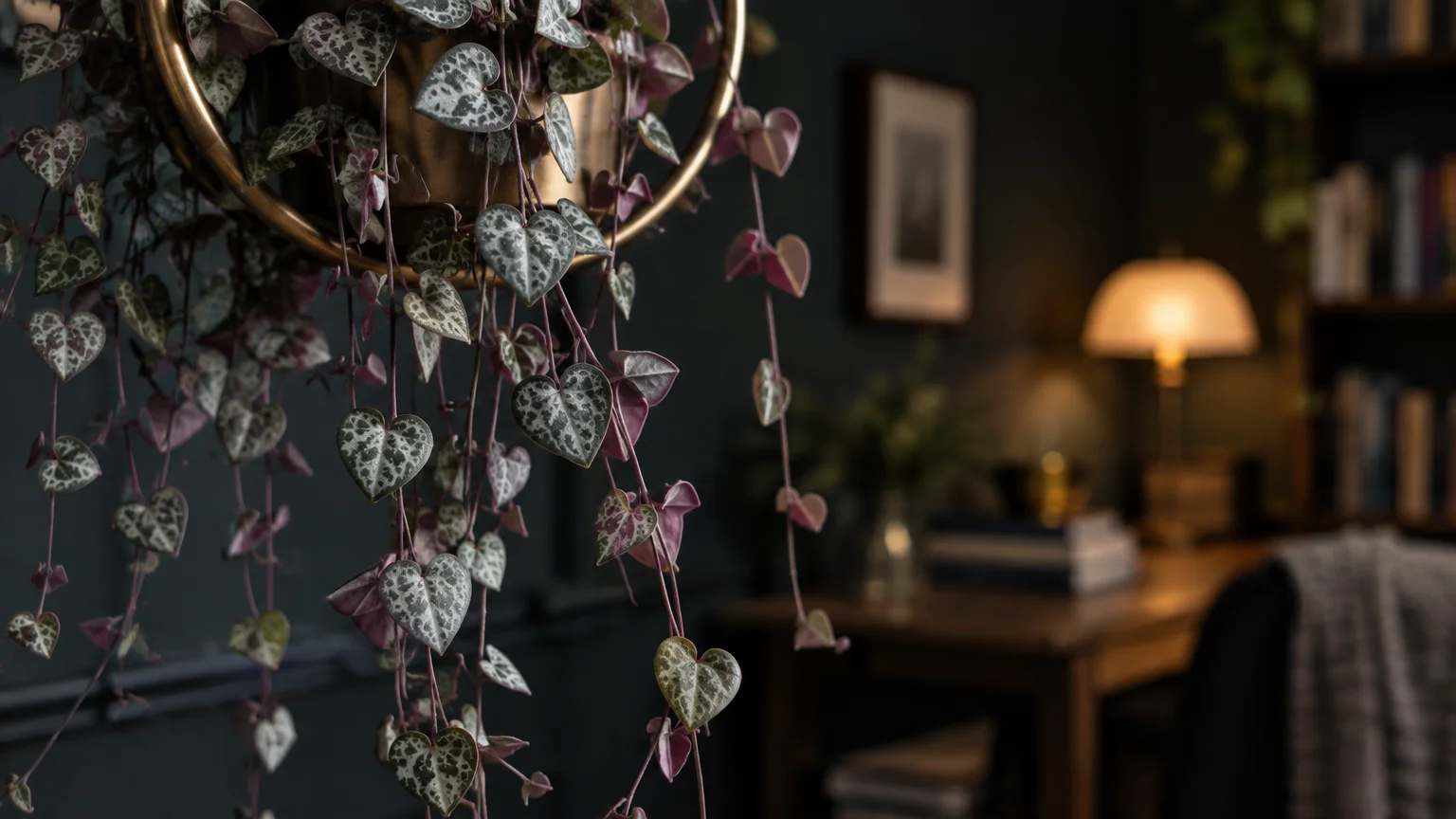
String of hearts showcases thread-like purple vines adorned with dainty, heart-shaped succulent leaves. Its silver-marbled patterning adds an ethereal, romantic charm to high shelves and hanging planters.
Fleshy tuberous nodes grow along the trailing stems, storing critical moisture reserves. This anatomical feature makes the vine remarkably drought tolerant and forgiving of occasional dry spells.
While bright indirect light produces tighter leaf spacing, this plant tolerates lower light conditions admirably. In moderate shade, the trailing vines continue to cascade with graceful ease.
Allow the top two inches of potting mix to dry before watering your plant. Using a squeeze bottle helps you moisten the soil without drenching delicate trailing foliage.
Feed with a diluted, balanced houseplant fertilizer once a month through spring and summer. Withhold nutrients completely during winter dormancy to match the plant’s natural cycle.
You can easily propagate new strands by pressing the woody stem tubers into moist soil. Within a few weeks, fresh roots establish, creating a fuller, bushier indoor basket.
Tip #7: Ponytail Palm (Beaucarnea recurvata)
A Bulbous Trunk Topped with Graceful Ribbons
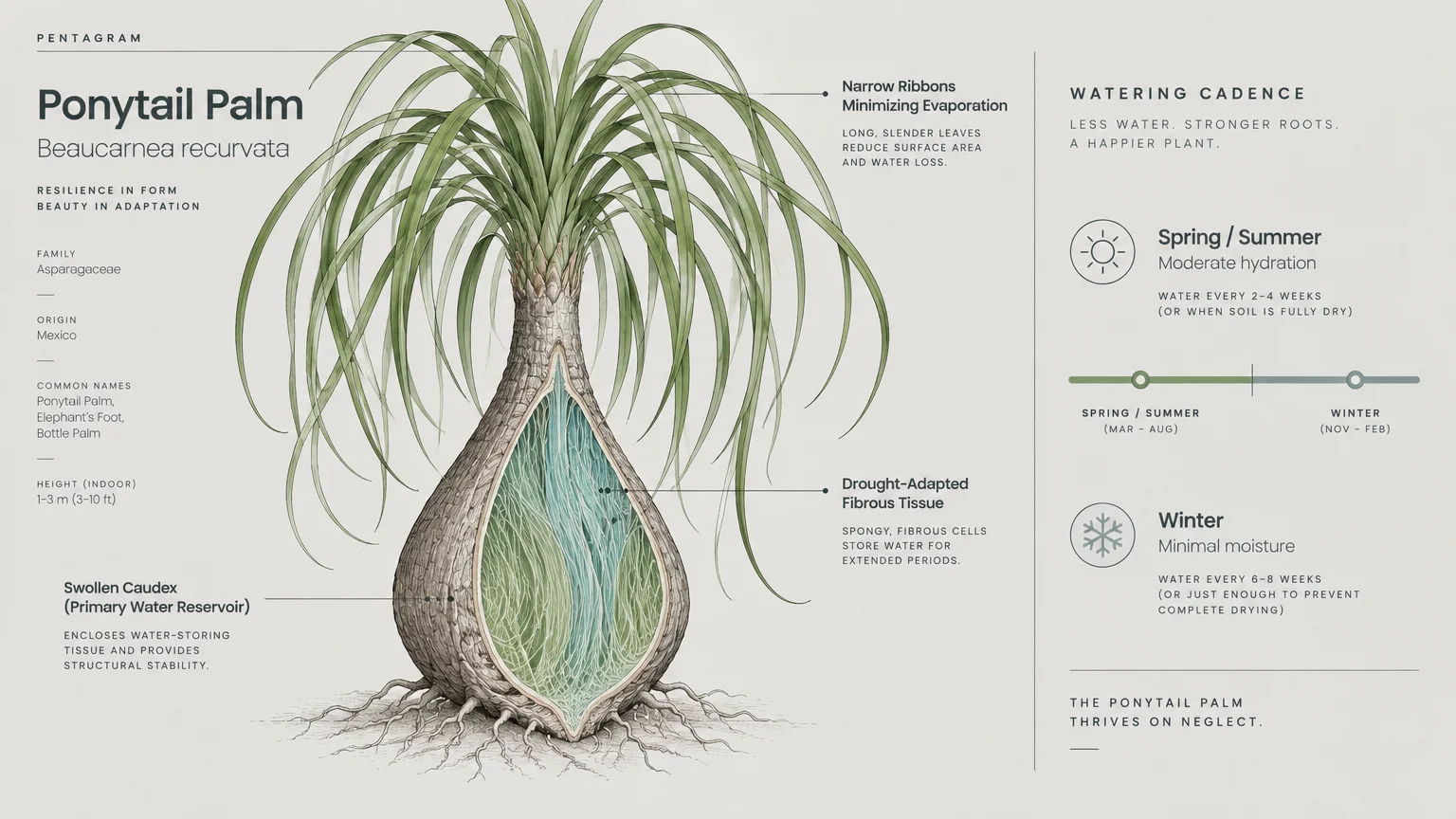
Despite its common palm-like appearance, the ponytail palm is actually a member of the succulent family. Its swollen, bulbous base—called a caudex—serves as a natural reservoir for water storage.
From the crown of this wooden base, a cascade of slender, ribbon-like green leaves fountains outward. Its striking silhouette adds whimsical, architectural beauty to dimly illuminated living areas.
This durable succulent survives happily in low light rooms where other structural plants struggle. Growth slows noticeably in deep shade, but the foliage remains lush and healthy.
Water the root ball thoroughly once every two to three weeks during warm weather. During winter, cut back watering to once a month or even less.
Always select a sturdy, broad container that prevents top-heavy plants from tipping over. Ensure multiple drainage holes exist so excess water exits freely into a catchment tray.
Brown leaf tips usually indicate minor underwatering or mineral buildup from hard tap water. Simply trim the dry brown ends with sharp shears to restore a pristine look.
Tip #8: Panda Plant (Kalanchoe tomentosa)
Velvety Felted Leaves with Chocolate Spots
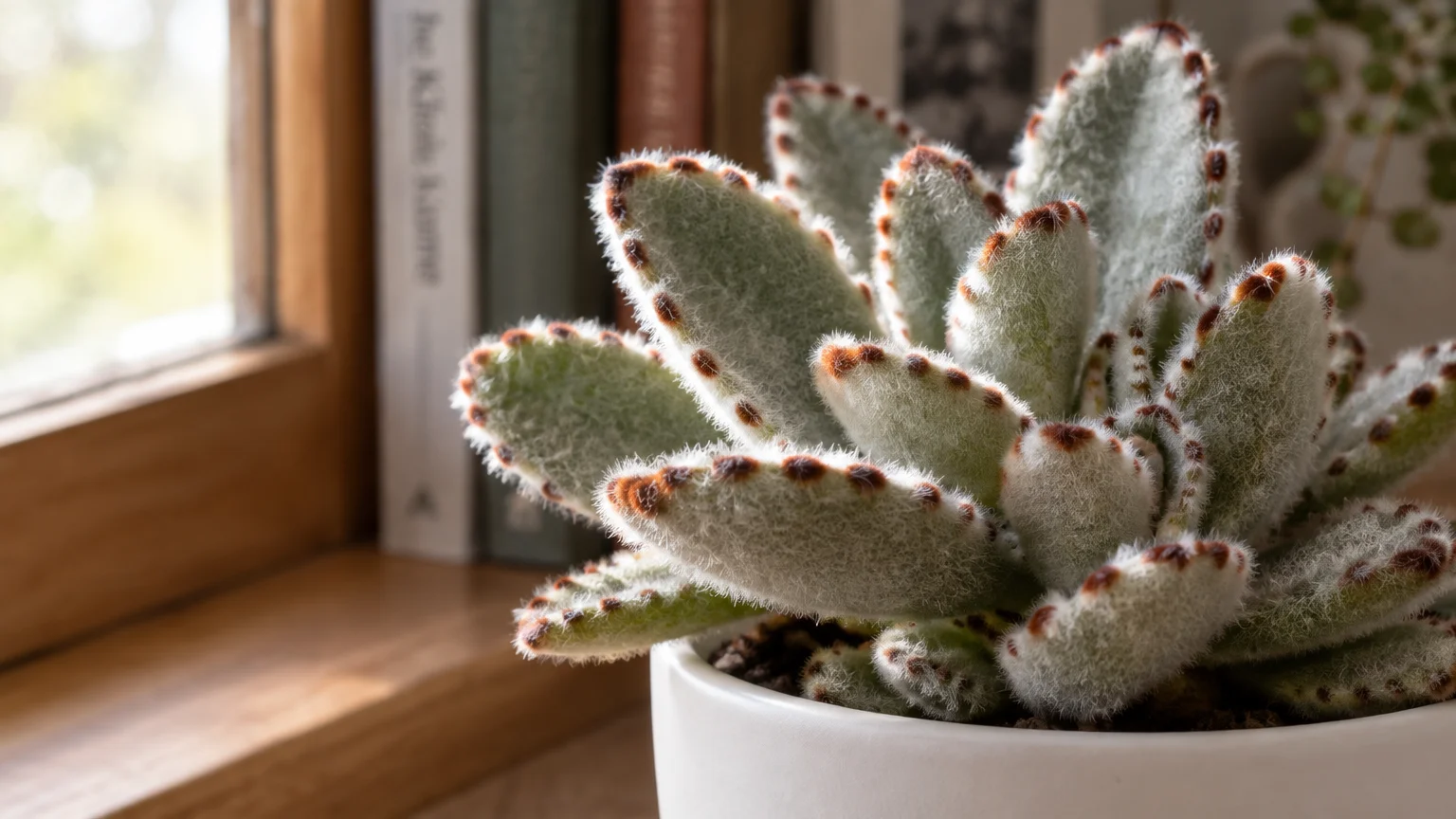
Panda plant captivates indoor gardeners with its plush, velvety leaves covered in tiny silvery hairs. Dark brown, chocolate-colored spots punctuate the leaf margins, creating an endearing fuzzy appearance.
The dense trichome coating protects the leaves from dehydration by trapping a micro-layer of humid air. This protective mechanism allows the plant to flourish even in dry, heated indoor environments.
Panda plants tolerate low indirect lighting far better than most members of the Kalanchoe genus. Place them in east-facing rooms or several paces away from west-facing windows.
Water only when the potting soil dries out entirely beneath the surface. Avoid splashing water onto the velvety leaves, as trapped moisture may promote unsightly fungal blemishes.
Repot every two years into a fast-draining cactus and perlite mixture. A snug root ball encourages healthy leaf density and keeps the woody stems upright.
Prune back elongated stem tips in spring if low light causes stems to stretch slightly. Pinching back growth points stimulates branching, producing a denser, bushier houseplant.
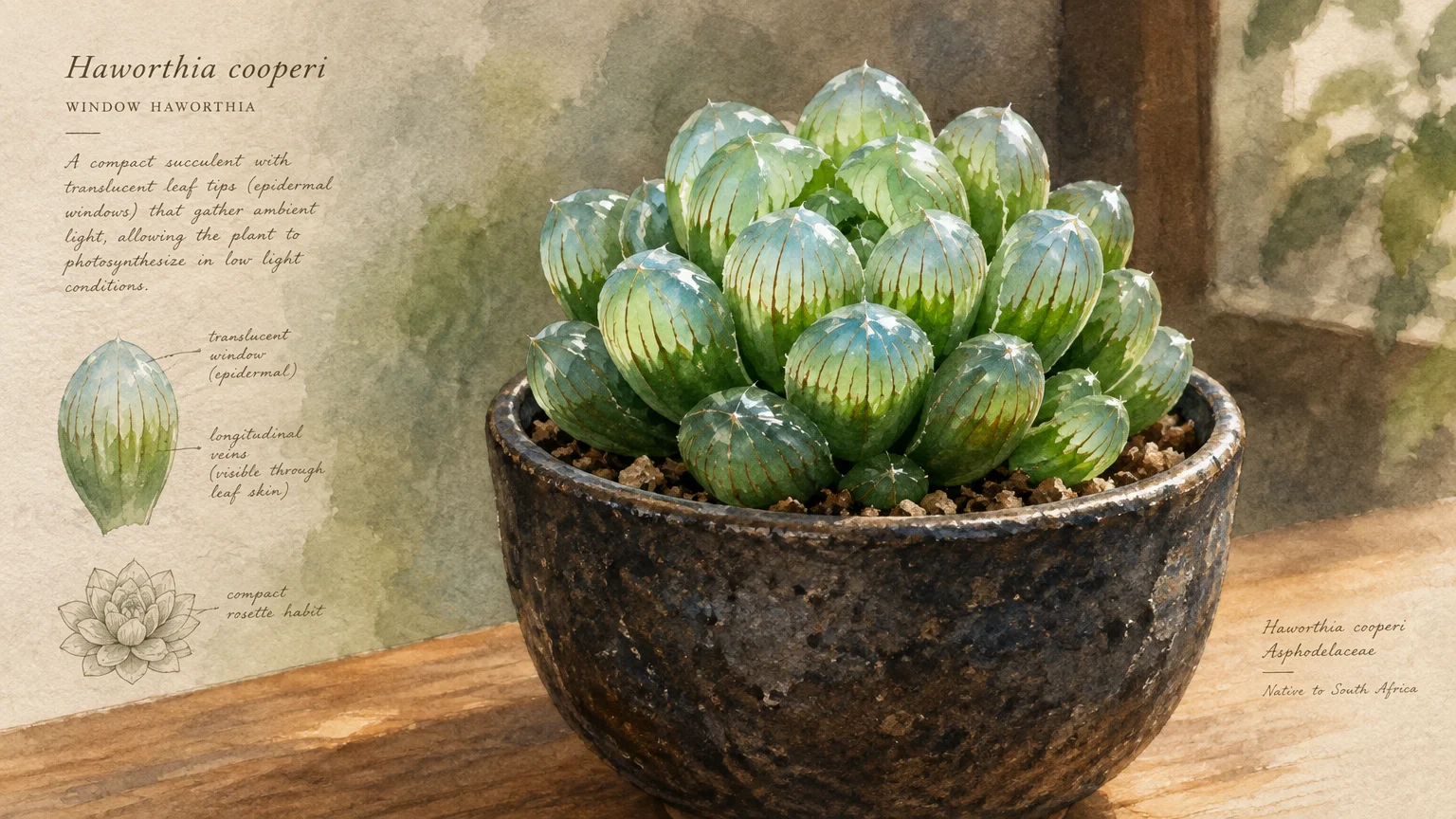
Tip #9: Window Haworthia (Haworthia cooperi)
Translucent Leaf Tips Designed for Diffused Light
Window Haworthia features plump, fleshy rosettes with nearly transparent, glass-like leaf tips called epidermal windows. In nature, these clear windows allow ambient light into leaf interiors while buried under sand.
Because of this unique evolutionary adaptation, this miniature succulent is perfectly suited for low light spaces. It efficiently absorbs whatever gentle ambient illumination reaches its compact rosette.
Keep window haworthia away from harsh, unshaded window sills to prevent leaf scorch. Gentle indirect light keeps the translucent globes glowing like luminous emerald jewels.
Hydrate this specimen thoroughly once the soil feels dry two inches below the surface. Always empty any water that collects in the saucer beneath the container.
Coarse mineral gritty substrates work best for this species, preventing fungal issues around the base. Pumice, lava rock, and coarse sand form an ideal growing matrix.
This plant readily produces small offsets around its base, creating charming clusters over time. You can separate these miniature pups to expand your indoor succulent collection effortlessly.
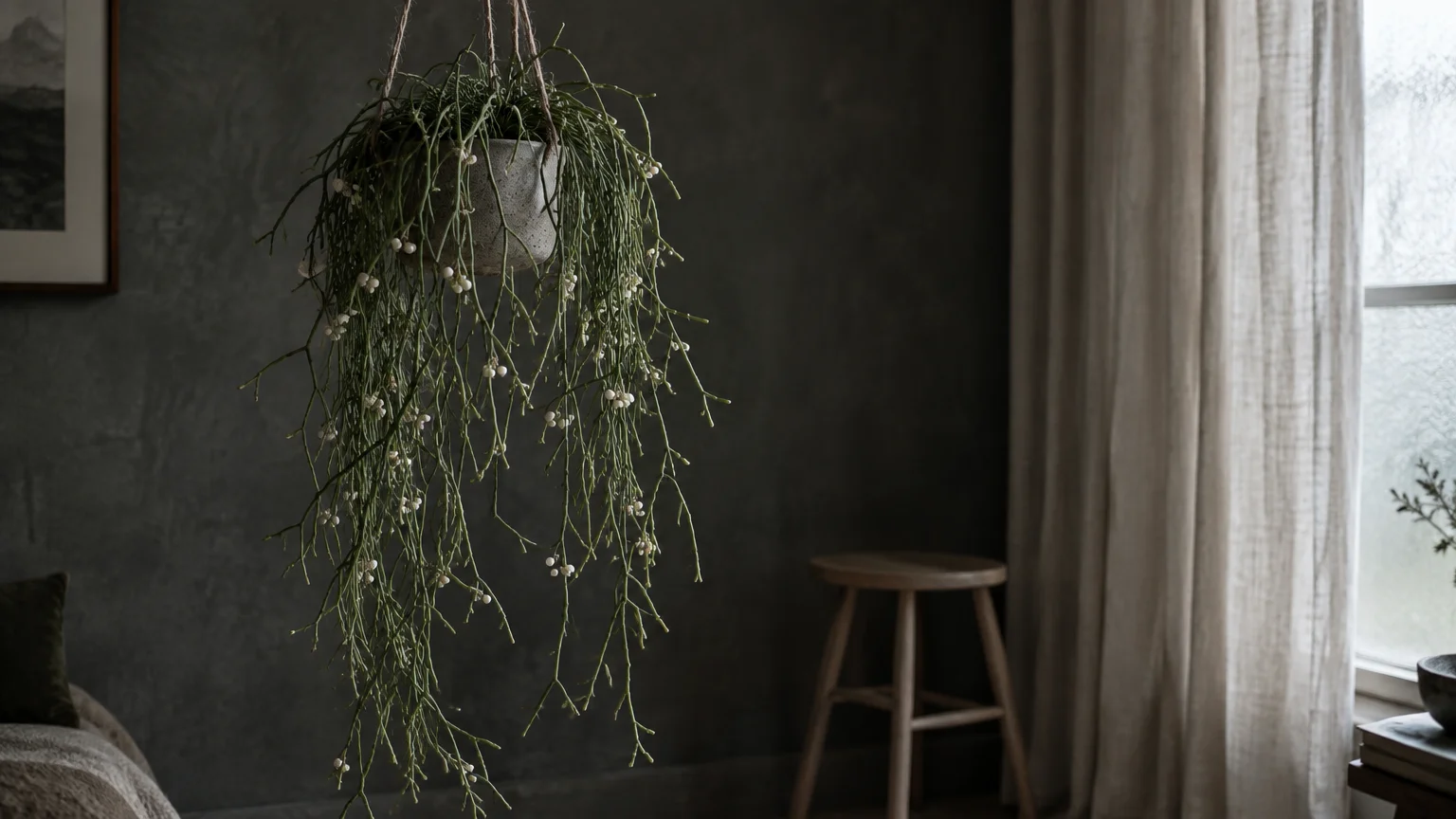
Tip #10: Mistletoe Cactus (Rhipsalis baccifera)
Slender Leafless Stems for Trailing Displays
Mistletoe cactus is a jungle-dwelling epiphytic succulent native to South America and tropical Africa. It produces masses of thin, cylindrical pale green stems that cascade dramatically from hanging planters.
Because it evolves beneath dense tropical forest canopies, Rhipsalis naturally avoids bright direct sunlight. It thrives in low to medium indirect light conditions where desert succulents languish.
Morning sun or ambient room lighting satisfies this plant’s daily photosynthetic requirements completely. Direct afternoon sun burns the tender trailing tendrils, bleaching them to a pale straw color.
Unlike desert succulents, mistletoe cactus appreciates consistent light moisture in its potting mixture. Water when the top inch of soil feels dry, but never allow waterlogging.
Use a rich, chunky epiphytic mix containing pine bark, perlite, and organic potting compost. This light medium provides ample root aeration while holding essential background moisture.
In spring, tiny white flowers appear along the delicate stems, followed by translucent white berries. These delicate botanical accents bring understated elegance to shaded indoor living quarters.
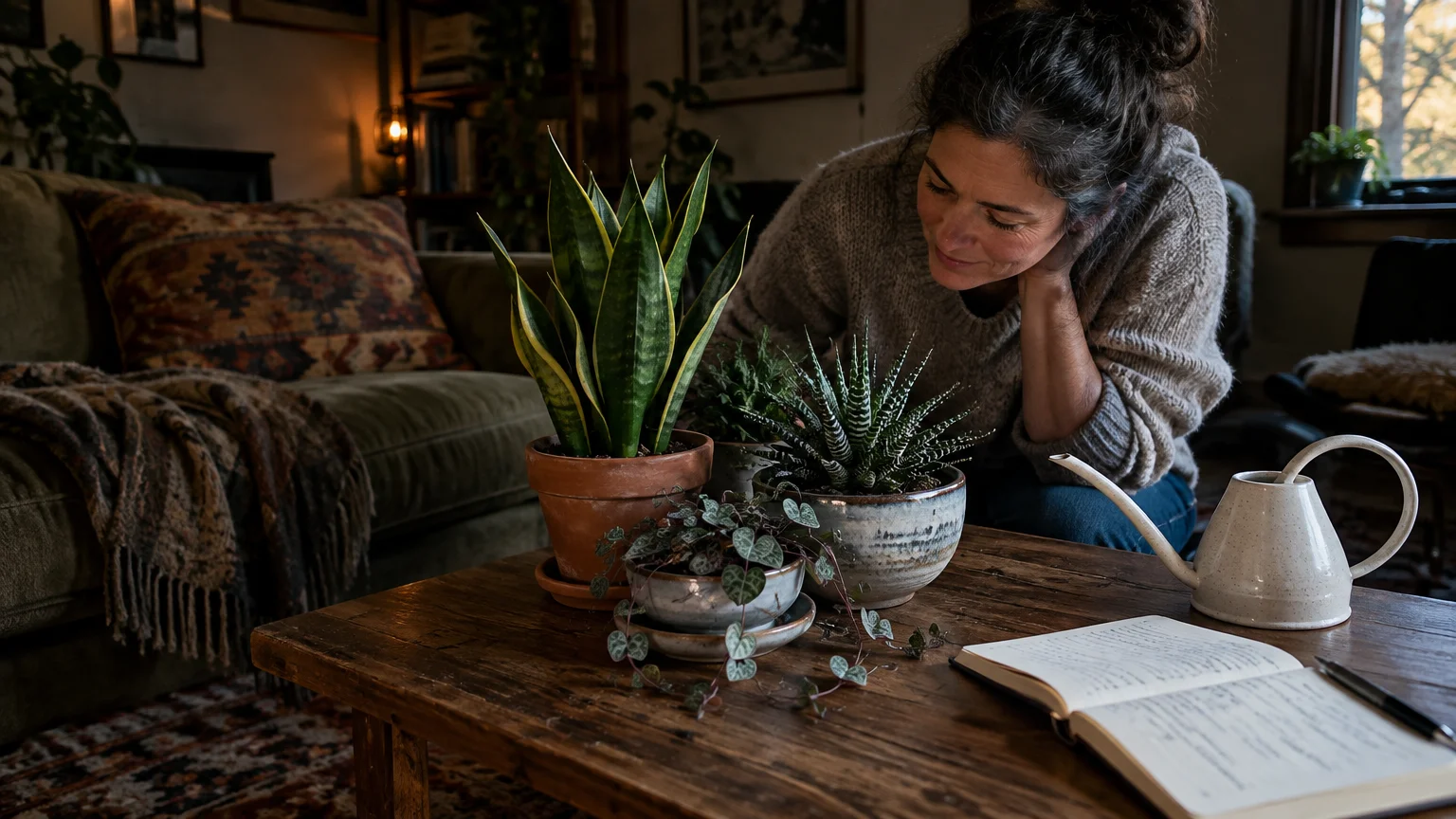
Putting It All Together: Enjoy Your Beautiful Garden
Growing succulents in darker rooms requires a thoughtful approach to watering, airflow, and soil drainage. Since low light slows photosynthesis, plants consume moisture at a much slower pace.
Always choose containers equipped with functional drainage holes to prevent dangerous water accumulation. Unglazed terracotta pots provide natural breathability, allowing potting media to dry evenly.
Adjust your watering frequency to match your specific indoor microclimate and seasonal shifts. In dim winter conditions, withhold moisture until leaves display slight softness or wrinkling.
Grouping your shade-tolerant succulents together creates an attractive, multi-textured indoor display. Combining upright snake plants with trailing mistletoe cactus yields dramatic visual contrast in any room.
With these reliable low light succulents, you never need a sun-drenched greenhouse to enjoy flourishing greenery. Start with your favorite specimen and watch your indoor botanical sanctuary thrive.
For region-specific advice, consult your local University Extension program (find yours via the USDA directory). For plant databases and inspiration, visit the Missouri Botanical Garden or the Royal Horticultural Society.
Disclaimer: This article provides general gardening advice. Always consider your specific climate, soil conditions, and local pests. Follow safety guidelines when using gardening tools and products.
Frequently Asked Questions
Can succulents survive in a room with zero natural light?
Succulents cannot survive indefinitely in pitch darkness, as every living plant requires photons for photosynthesis. However, specimens like ZZ plants and snake plants survive under standard fluorescent office lighting.
If your room lacks windows entirely, leave artificial ceiling fixtures on for eight to ten hours daily. Alternatively, rotate your succulents into brighter rooms every few weeks to replenish energy.
How do I know if my succulent is not getting enough light?
The most common symptom is etiolation, where the plant stretches out toward the light source. Stems become weak and pale, while spacing between individual leaves widens noticeably.
If you notice severe stretching, relocate the plant closer to an indirect light source. Prune back leggy stems in spring to stimulate compact, sturdy replacement growth.
How often should I water low light succulents indoors?
In low light environments, water only when the entire soil profile dries out completely. For most low light succulents, this translates to watering every three to four weeks.
Always verify soil moisture with a wooden skewer or moisture meter before watering. If the probe emerges with cool, damp soil clinging to it, wait another week.
Do low light indoor succulents require regular fertilizer?
Low light succulents grow at a modest pace and require very little supplemental plant food. Over-fertilizing plants in shade causes weak, leggy stems and damaging mineral buildup in soil.
Apply a balanced, water-soluble houseplant fertilizer diluted to quarter-strength once during late spring. Never fertilize your indoor succulents throughout the dark autumn and winter months.