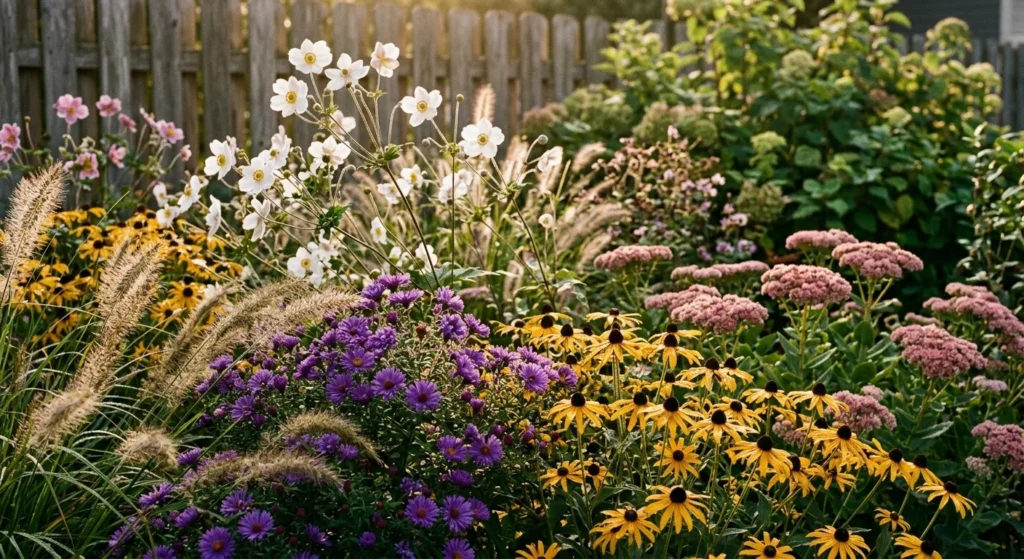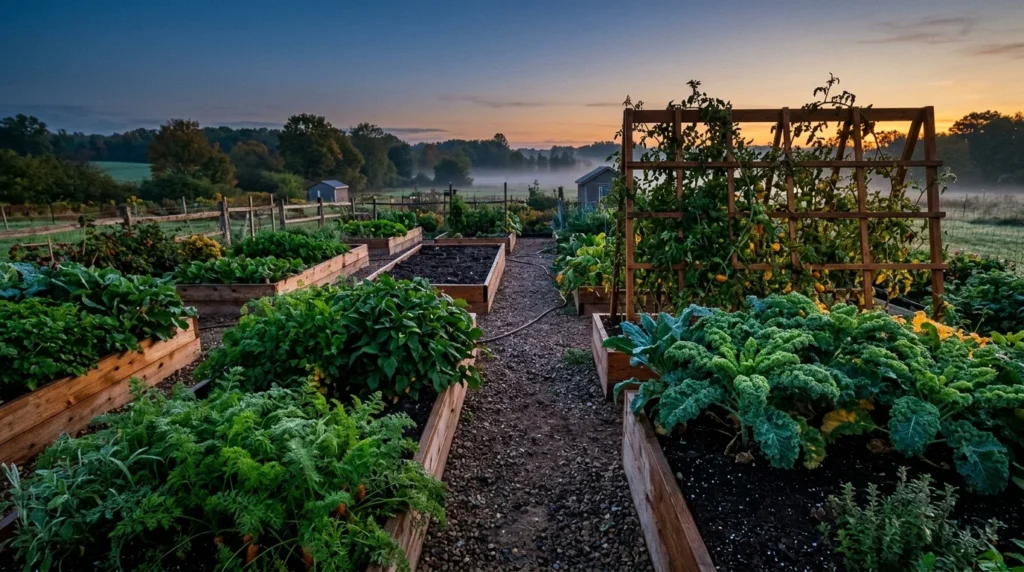
Pairing the right companion plants with roses elevates your garden aesthetic while naturally deterring destructive pests like aphids and beetles. Thoughtful plantings conceal bare lower canes and create a lush, living mulch that retains vital soil moisture.
Selecting the best plants for rose beds improves overall plant vigor through balanced root competition and enhanced airflow. You will spend far less time spraying chemicals when beneficial predators arrive to defend your roses naturally.
Transforming your rose garden companion planting strategy begins with choosing varieties that share similar sunshine, water, and soil requirements. Explore these proven botanical partners to build a resilient, breathtaking landscape this season.
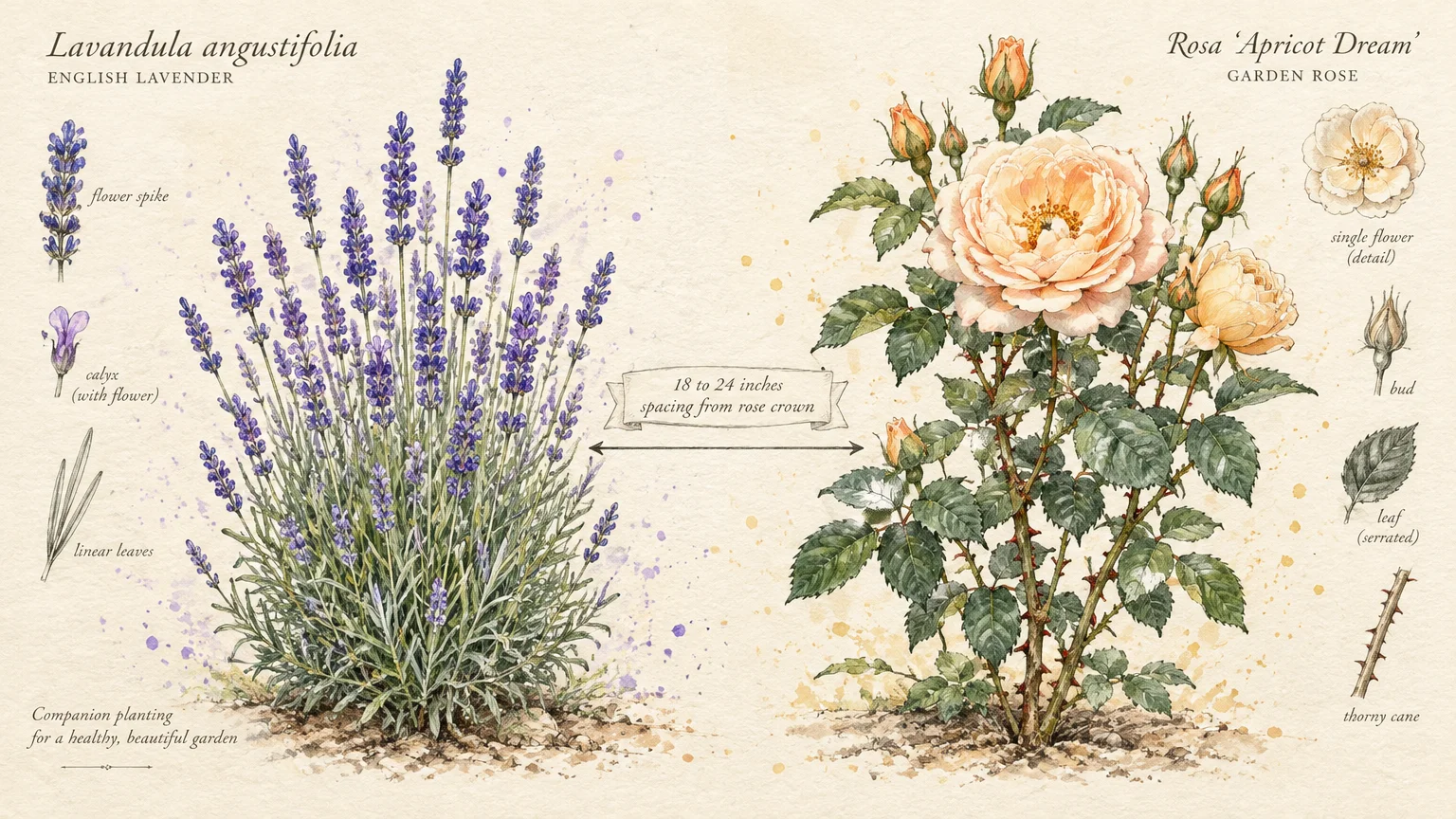
Tip #1: English Lavender (Lavandula angustifolia)
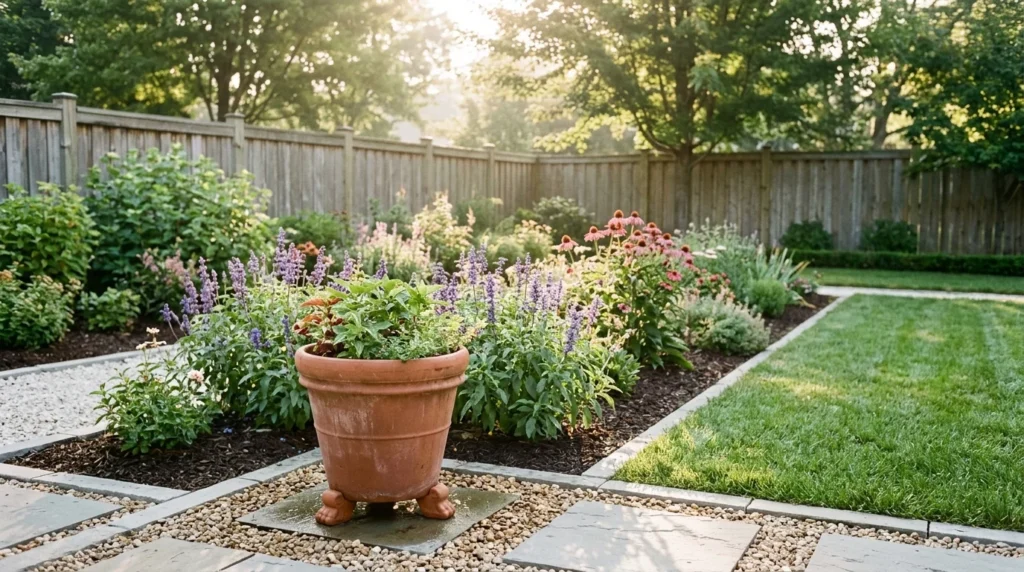
English lavender serves as a classic partner for shrub and hybrid tea roses. Its silvery foliage and upright purple spires contrast beautifully with broad rose blossoms.
The intensely aromatic oils within lavender foliage deter aphids, whiteflies, and browsing rabbits naturally. Beneficial pollinators like bumblebees flock to the blossoms, boosting your entire garden ecosystem.
Plant lavender about 18 to 24 inches away from rose crowns to prevent root entanglement. Both species thrive under six or more hours of direct sunlight daily.
Ensure your soil drains quickly, as lavender dislikes the heavy moisture roses often tolerate. Adding a bit of coarse sand or grit around the planting hole keeps lavender roots happy.
Cultivars such as ‘Munstead’ and ‘Hidcote’ stay compact, making them ideal edging companions along rose borders. Their evergreen presence maintains winter visual interest after roses drop their leaves.
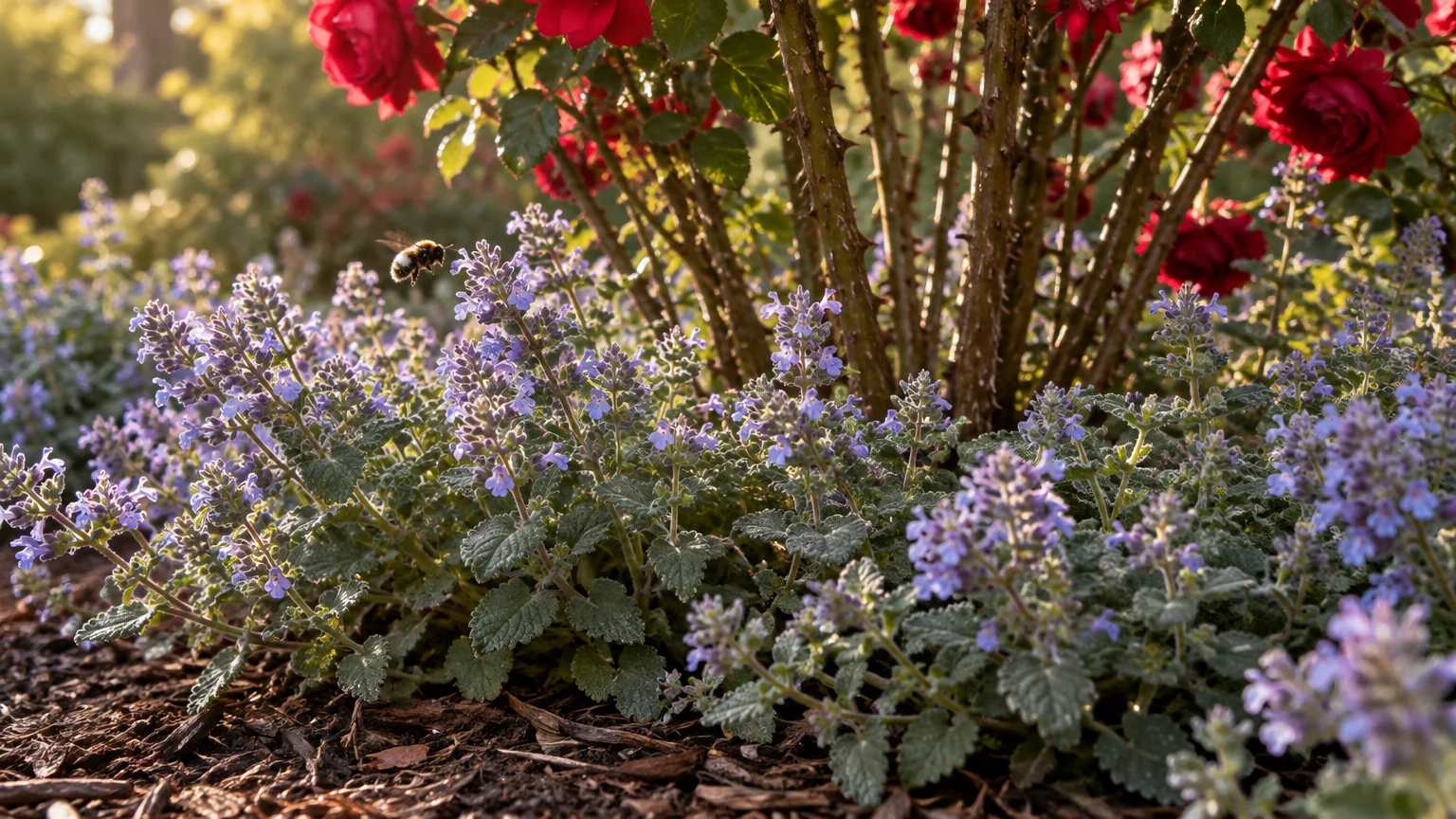
Tip #2: Catmint (Nepeta racemosa)
Catmint blankets the earth beneath roses with clouds of cool blue or soft violet flowers. It functions as an extraordinary groundcover that hides leggy rose stems effortlessly.
Nepetalactone, the natural chemical compound in catmint, repels destructive Japanese beetles and aphids effectively. Research demonstrates that companion plantings containing catmint reduce pest feeding pressure on nearby roses.
Position catmint roughly two feet from the base of your roses so air circulates freely. Good airflow drastically limits fungal outbreaks such as black spot and powdery mildew.
Shear catmint back by half after its initial summer flush to stimulate fresh foliage and continuous blooms until autumn. Varieties like ‘Walker’s Low’ and ‘Junior Walker’ provide bulletproof reliability in diverse climates.
Catmint requires minimal water once established, preventing excessive moisture competition around your roses’ feeding zones. Its hardy nature makes it one of the easiest companion plants for roses.
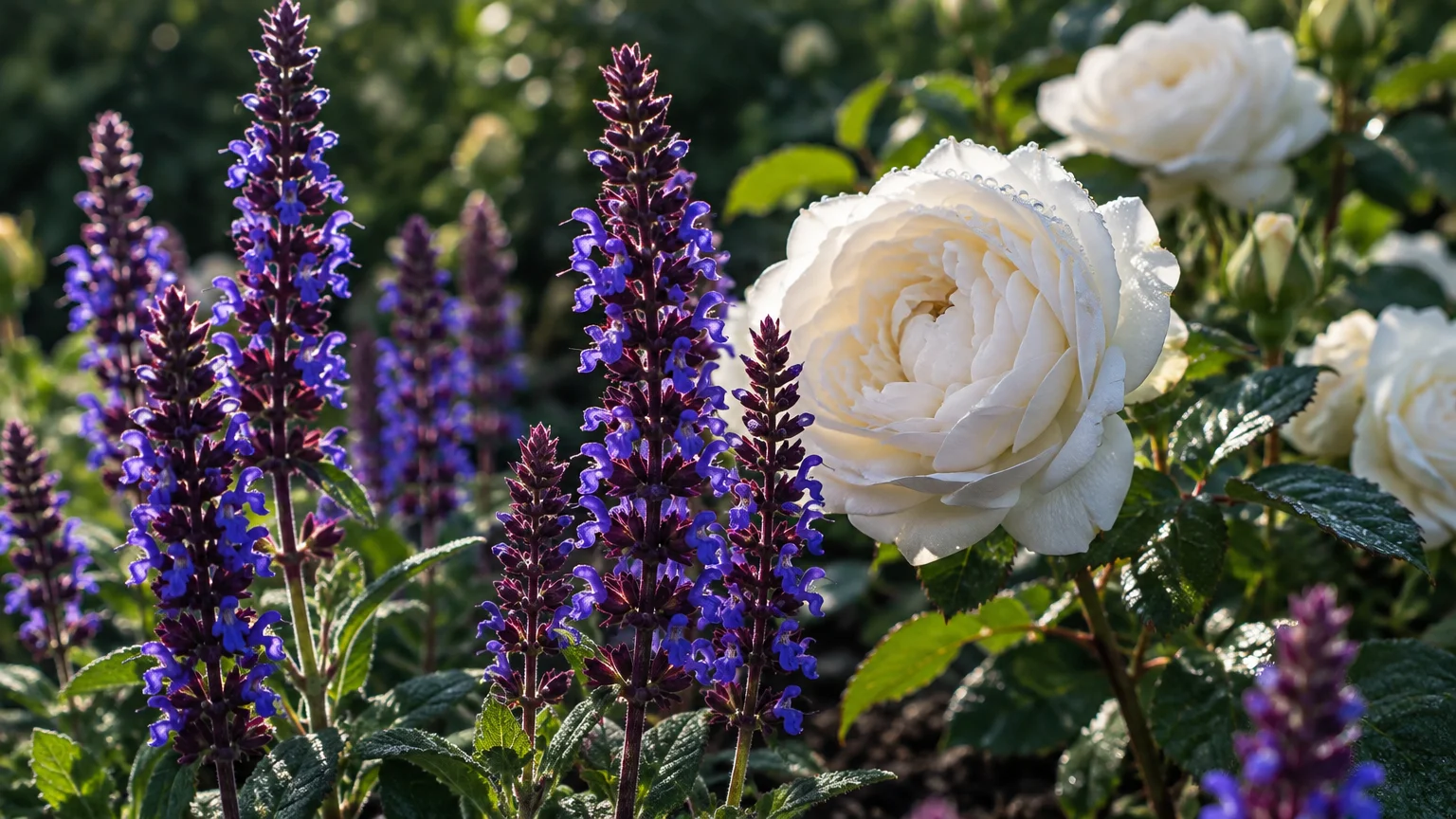
Tip #3: Perennial Salvia (Salvia nemorosa)
Perennial salvias feature vertical spikes that puncture the rounded, billowing shapes of rose bushes. Deep violet, pink, and white spires create striking architectural contrast within rose beds.
Salvias produce high concentrations of fragrant foliage oils that deer and rodents actively avoid. Predatory insects utilize the dense flower spikes as hunting grounds for thrips and spider mites.
Space your salvias 18 inches from rose stems to allow full sun penetration for both plants. Varieties such as ‘Caradonna’ and ‘May Night’ handle deep watering cycles while tolerating brief dry periods.
Deadheading spent flower spikes encourages repeat blooming alongside your repeat-flowering modern roses. Cut stems back to basal foliage in late winter to prepare for robust spring growth.
Salvia roots remain well-behaved and non-invasive, preserving space for sensitive rose feeder roots. This balance ensures optimal nutrient uptake for maximum blossom production.
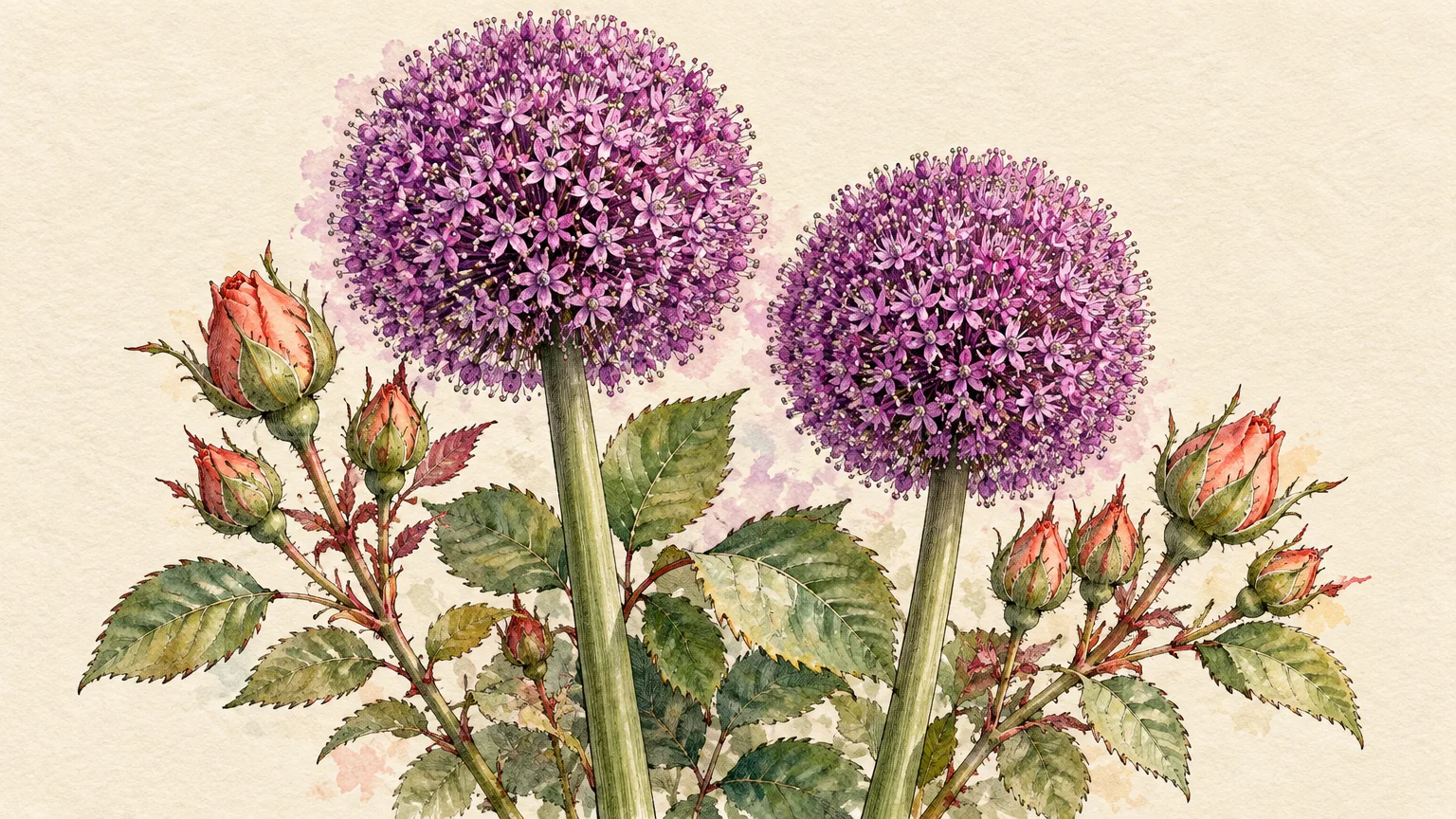
Tip #4: Ornamental Alliums (Allium spp.)
Ornamental alliums produce whimsical, globe-shaped flower heads that dance above rose foliage on slender stems. Their dramatic spherical blooms appear in late spring right as early roses unfurl.
As members of the onion family, alliums release sulfur compounds that mask the scent of roses. This scent barrier repels aphids, slugs, and tunneling rodents without chemical sprays.
Plant allium bulbs in autumn, spacing them six to twelve inches apart around the rose drip line. Their vertical habit occupies very little horizontal real estate, fitting seamlessly into tight spaces.
Rose foliage cleverly conceals the fading leaves of alliums as the bulbs transition into dormancy during summer. Varieties like ‘Purple Sensation’ and ‘Globemaster’ deliver dazzling purple colors that complement yellow and apricot roses.
Alliums tolerate the fertile, rich soil that roses demand to produce prize-winning blooms. Their drought resilience makes them virtually maintenance-free once planted.
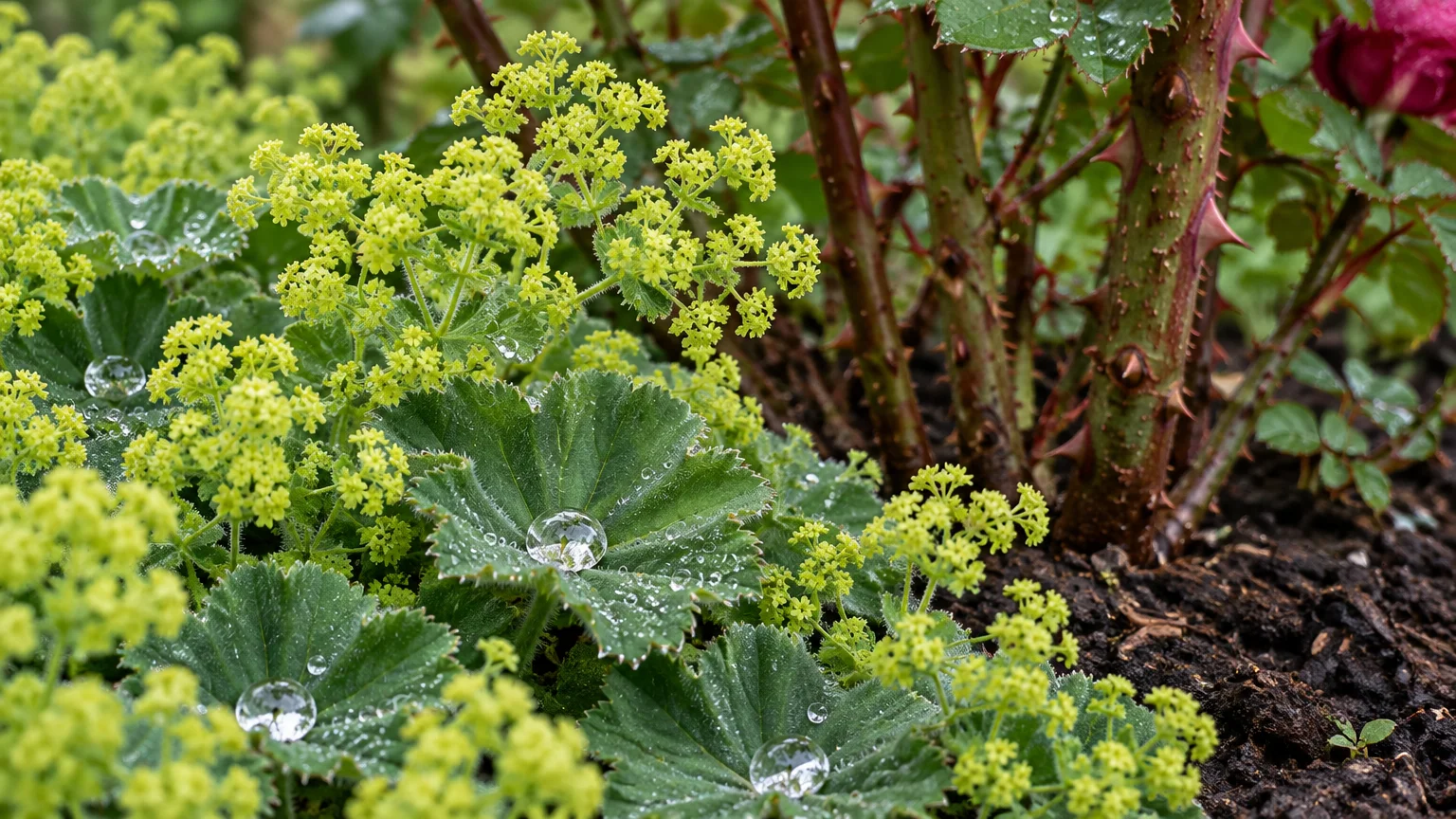
Tip #5: Lady’s Mantle (Alchemilla mollis)
Lady’s mantle offers scalloped, chartreuse foliage that collects sparkling dew droplets every morning. Its frothy sprays of lime-green flowers provide a stunning visual foil for deep red and pink roses.
This resilient herbaceous perennial forms low, dense mounds that act as a living weed suppression blanket. Shading the soil preserves vital ground moisture, reducing the irrigation demands of your rose beds.
Place Lady’s mantle along the outer edges of rose borders, spacing plants two feet apart. Keeping companion plants on the perimeter leaves rose root zones accessible for top-dressing with compost.
Cut flower stems back after blooming fades to refresh foliage and prevent self-seeding. Lady’s mantle tolerates full sun in temperate zones and appreciates light afternoon shade in hot southern climates.
Its soft textures soften the severe thorns of woody rose canes, creating an inviting, romantic cottage garden look.
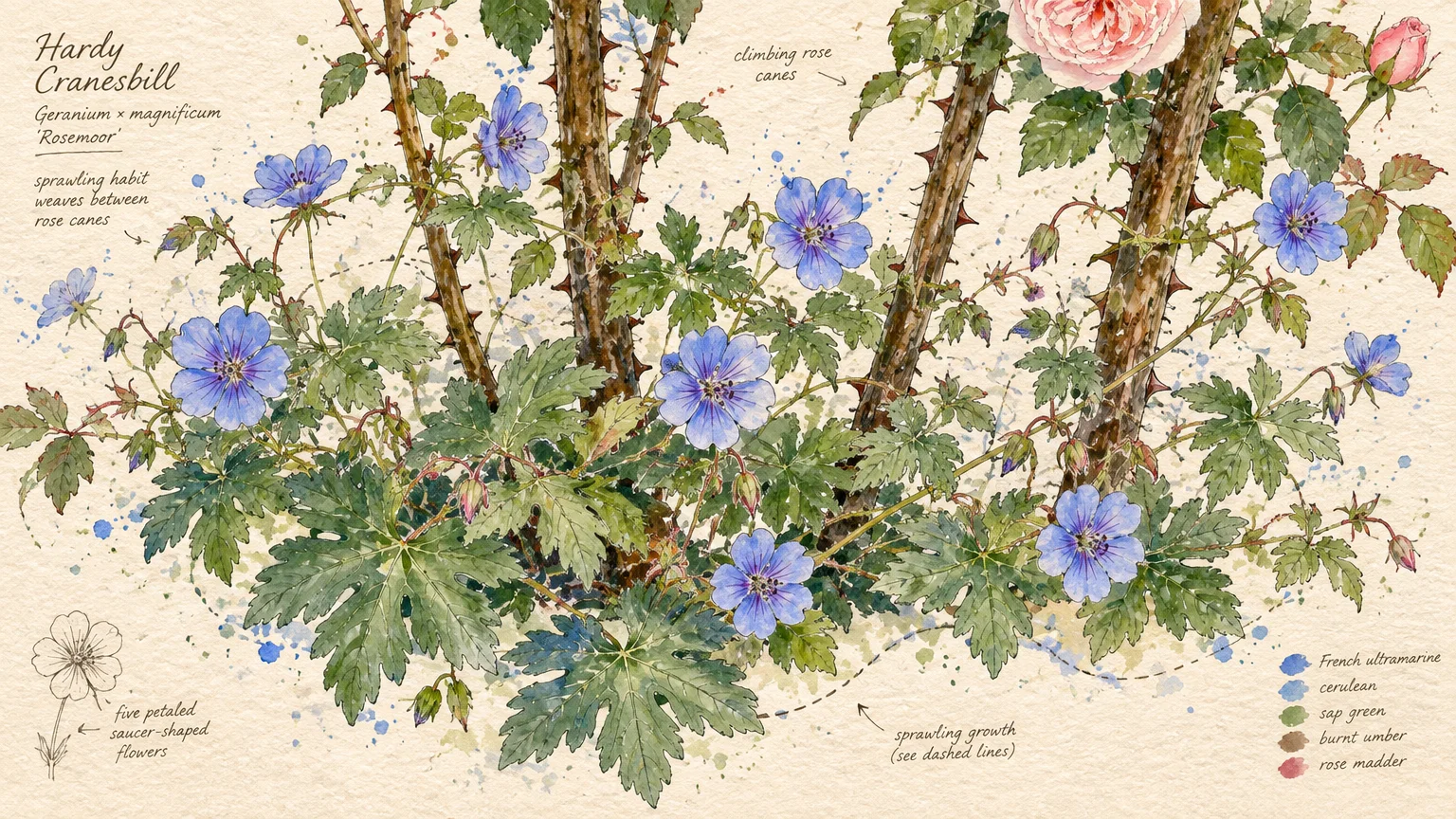
Tip #6: Cranesbill Geraniums (Geranium spp.)
Hardy cranesbill geraniums weave through the base of rose bushes, knitting together disjointed plantings with graceful blooms. They bloom in shades of blue, magenta, and pure white throughout summer.
Dense cranesbill foliage shades the soil, inhibiting weed seeds from germinating and outcompeting your roses for nutrients. They also host beneficial insects like hoverflies, whose larvae consume massive quantities of rose aphids.
Plant cranesbills two feet away from primary rose stems to maintain gentle root boundaries. Cultivars like ‘Rozanne’ and ‘Johnson’s Blue’ provide continuous floral displays from late spring until the first autumn frost.
Trim rampant runners midsummer if they start creeping into the rose interior. This light maintenance restores compact growth and stimulates fresh flushes of vivid blossoms.
Cranesbill geraniums thrive in the moist, humus-rich soil roses prefer, requiring no special soil modifications. Their adaptability makes them an indispensable asset for rose garden companion planting.
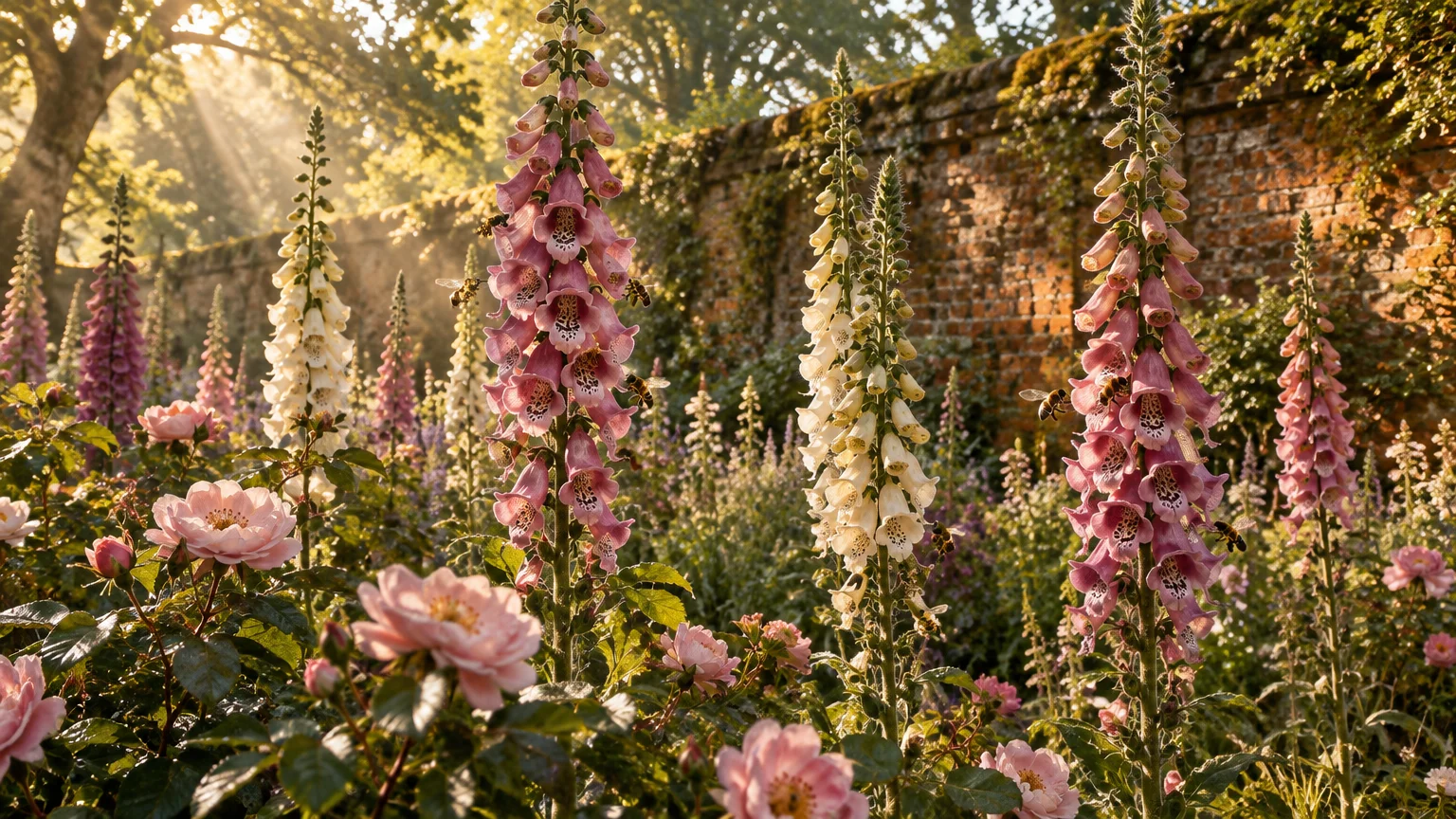
Tip #7: Foxglove (Digitalis purpurea)
Foxgloves produce towering, bell-covered flower spikes that introduce dramatic vertical architecture behind spreading shrub roses. They evoke a classic English cottage garden aesthetic with blossoms in pink, peach, and white.
Bees, particularly long-tongued bumblebees, adore climbing inside foxglove bells to gather nectar and pollen. Planting foxgloves increases pollinator visits across your entire garden plot.
Position foxgloves behind roses toward the back of the border to avoid shading your roses from essential sunlight. Space them 18 inches apart in well-amended, moist soil enriched with organic leaf mold.
Keep in mind that all parts of foxgloves contain cardiac glycosides, making them completely deer-resistant and rabbit-proof. Exercise caution if you have curious pets or small children roaming near garden beds.
Foxgloves drop abundant seeds that perpetuate their presence year after year without smothering adjacent plants. Leave several spent flower stems intact in late summer to ensure next season’s blooms.
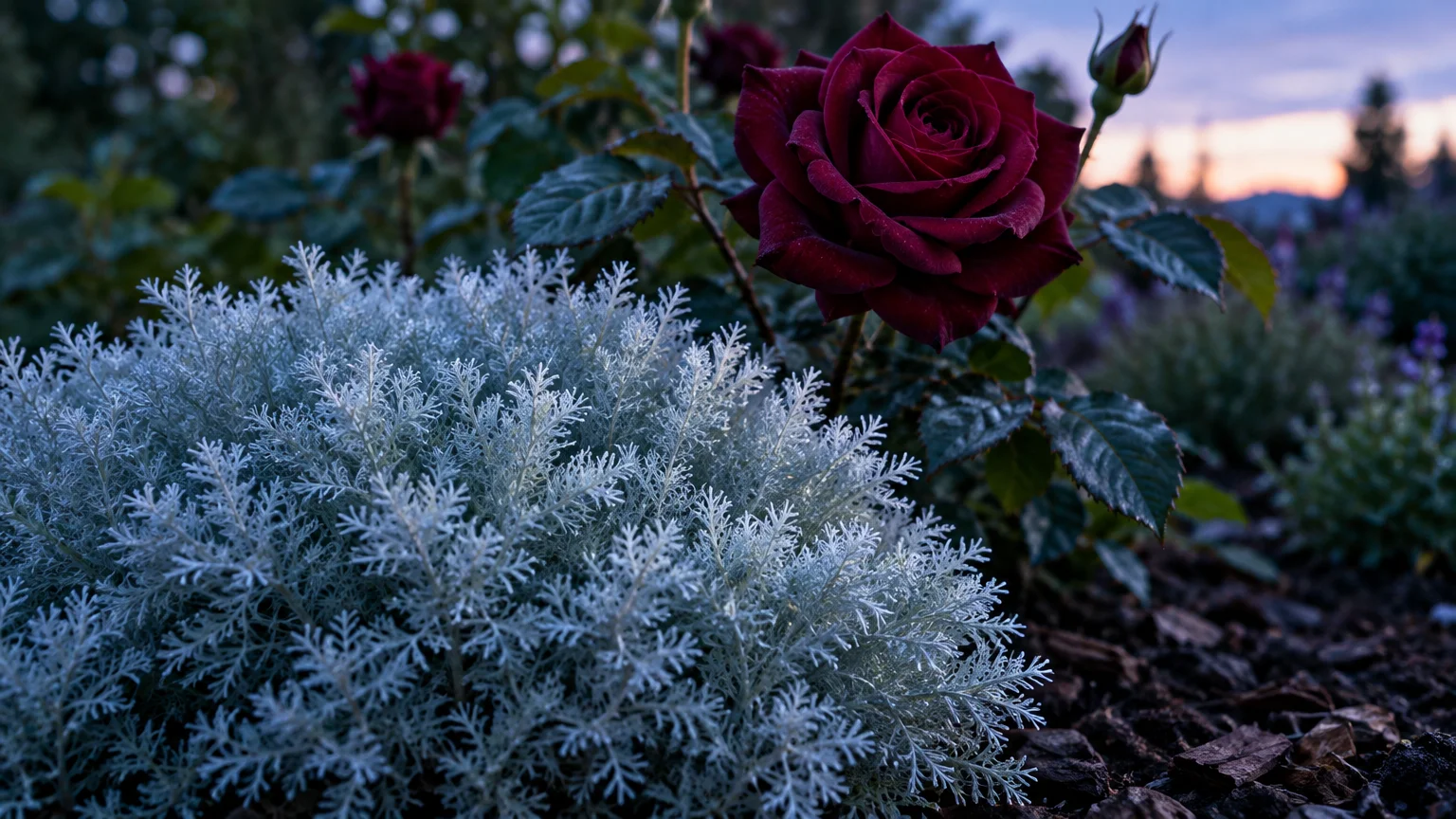
Tip #8: Artemisia (Artemisia schmidtiana)
Artemisia provides shimmering, silver-gray foliage that softens brilliant crimson, vivid orange, and deep yellow rose blossoms. Its fine, feathery texture delivers continuous visual contrast throughout the growing season.
The aromatic terpenes in artemisia act as natural deterrents against destructive chewing pests, including flea beetles and nematodes. Herbivores such as deer bypass artemisia entirely due to its pungent, bitter taste.
Plant compact varieties like ‘Silver Mound’ roughly 18 inches from the sunny base of your roses. Artemisia requires full sun and excellent drainage, preventing soil compaction around rose roots.
Avoid overfertilizing artemisia with high-nitrogen rose food, which can cause the silver mounds to split open. Position them slightly outside the rose fertilizer drip line to maintain tight, compact cushions.
Shear plants back lightly in midsummer if stems become floppy during humid conditions. Fresh, luminous silver foliage emerges quickly to brighten your autumn rose displays.
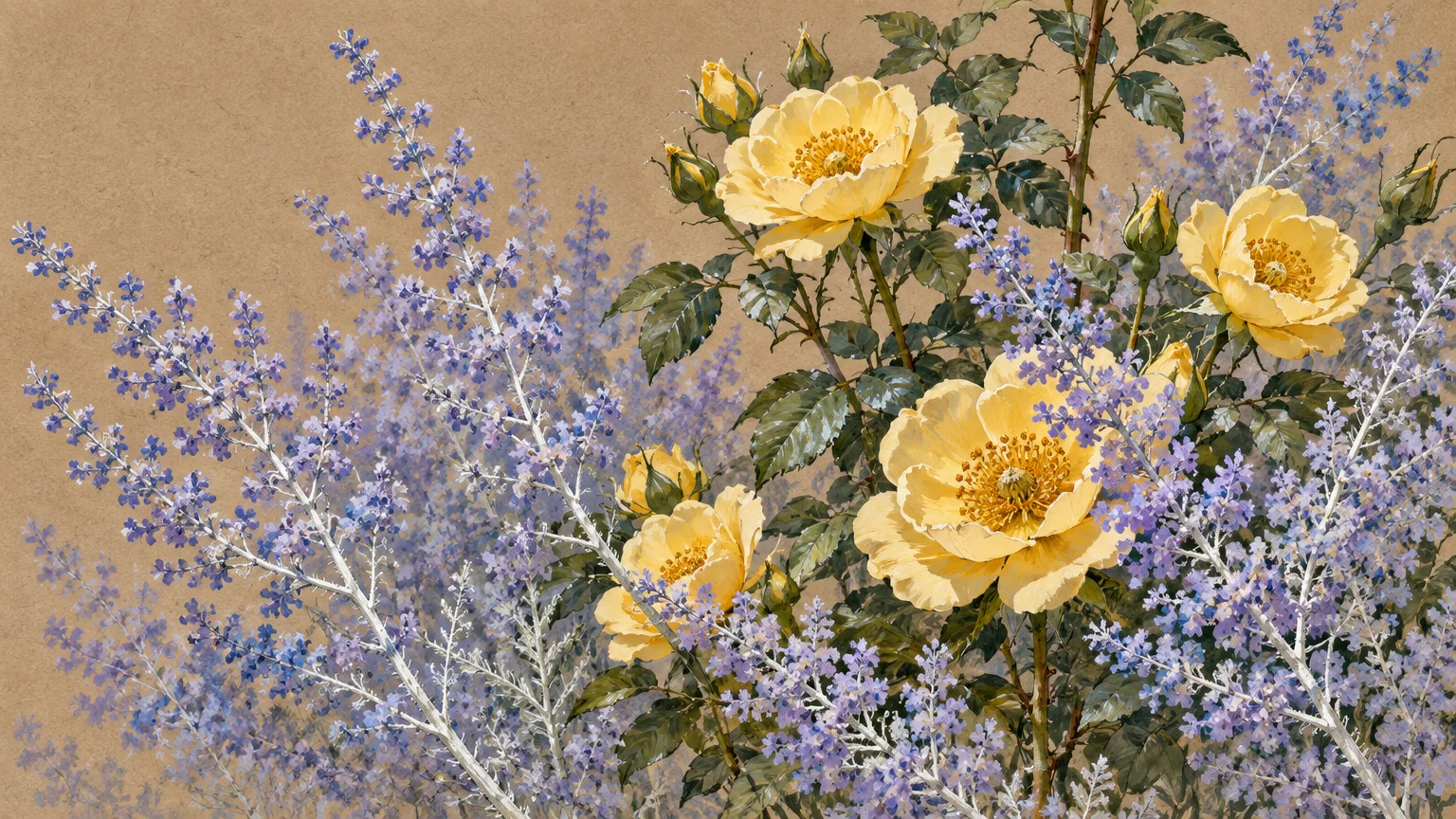
Tip #9: Russian Sage (Salvia yangii)
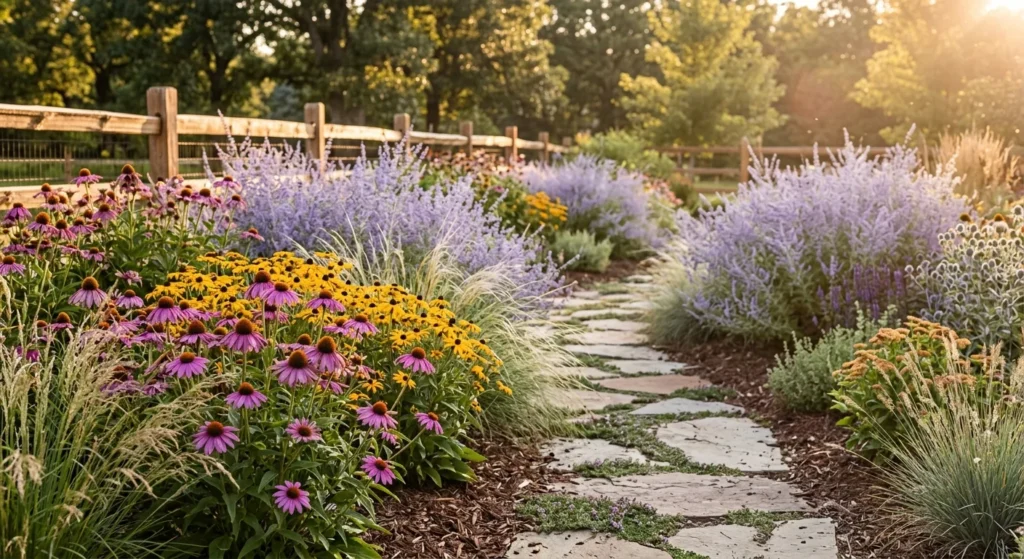
Russian sage presents airy plumes of lavender-blue flowers supported by aromatic, silver-white branching stems. Reaching three to four feet in height, it creates a hazy, romantic backdrop for large hybrid roses.
Its pungent herbal aroma naturally discourages deer, rabbits, and invasive rose chafer beetles from settling nearby. Meanwhile, beneficial predatory wasps frequent the flowers to hunt rose caterpillars and aphids.
Plant Russian sage at least three feet away from roses to accommodate its broad, spreading canopy. Placing it behind or between large shrub roses ensures balanced sunlight exposure for both species.
This durable perennial excels in hot, sunny conditions and requires minimal supplementary watering once established. Prune stems down to six inches in early spring to encourage vigorous new growth.
Cultivars like ‘Little Spire’ offer more compact silhouettes, fitting comfortably into modest rose beds. Its drought tolerance prevents fungal issues caused by excessive humidity.
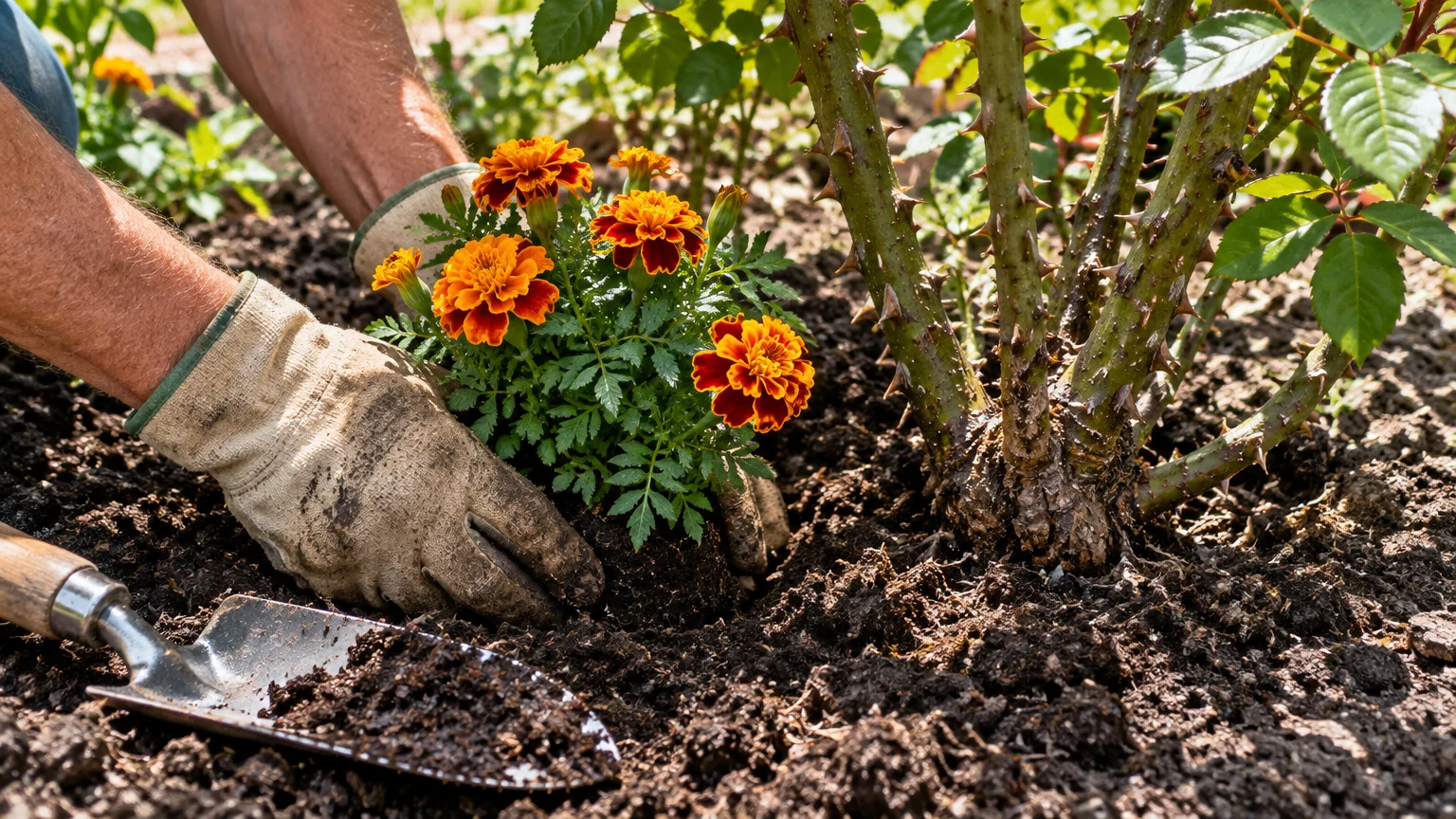
Tip #10: French Marigolds (Tagetes patula)
French marigolds inject cheerful golden, orange, and mahogany tones beneath roses while offering powerful pest protection. These compact annuals bloom tirelessly from spring frost until late autumn freeze.
Marigold roots exude alpha-terthienyl, a natural biochemical compound that suppresses damaging root-knot nematodes in the soil. Their pungent foliage also deters whiteflies and thrips from infesting delicate rose petals.
Interplant marigolds 12 inches apart as a bright border around your rose beds. Their shallow fibrous root systems never compete aggressively with deep rose roots for moisture or fertilizer.
Deadhead spent blossoms regularly to maintain an uninterrupted carpet of vibrant color all summer long. Marigolds love hot sunshine and respond eagerly to the moderate moisture roses receive.
As an added benefit, marigold blooms attract hoverflies and ladybugs that feast on aphid colonies. They represent an affordable, high-impact addition to any companion planting scheme.
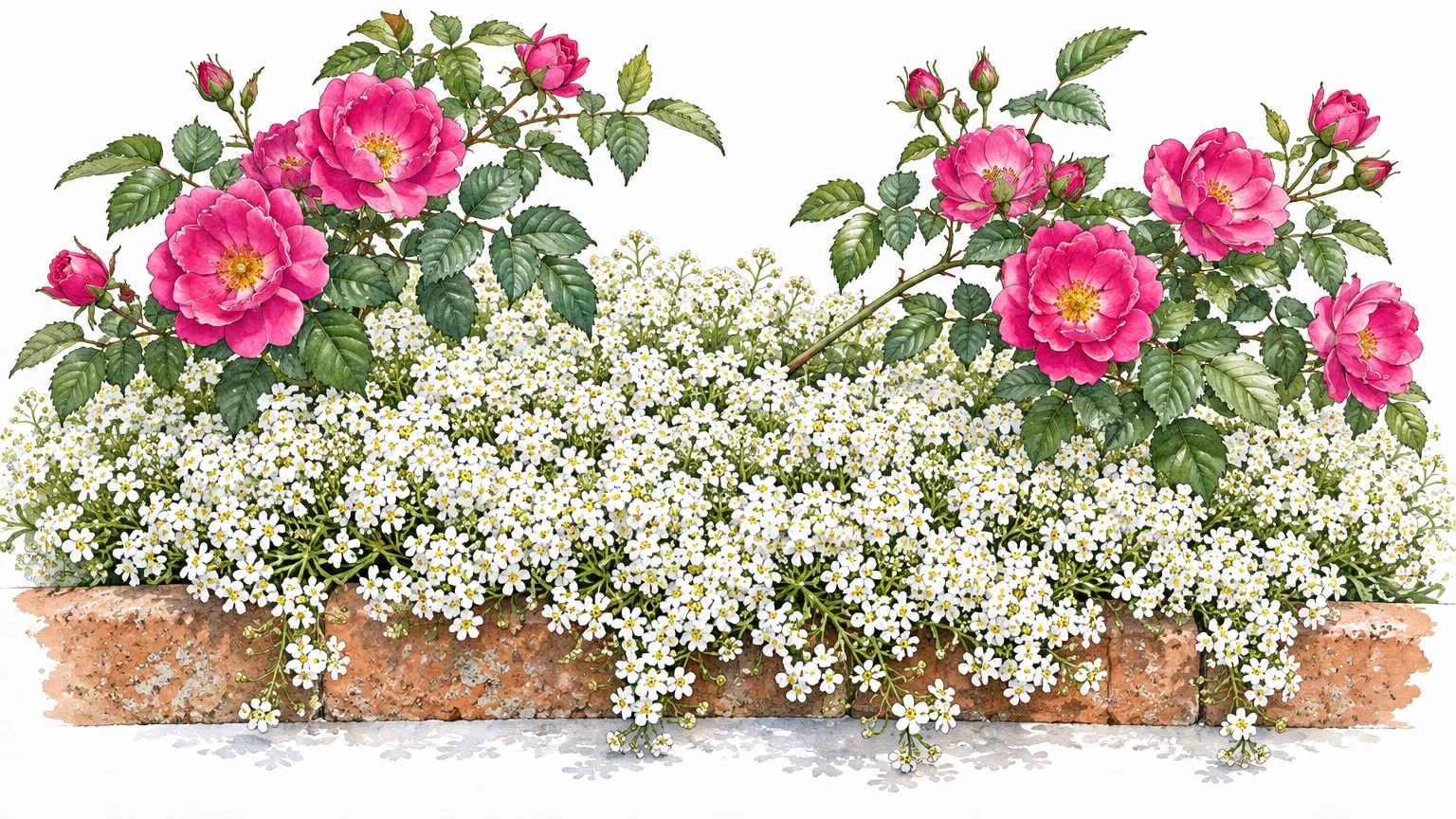
Tip #11: Sweet Alyssum (Lobularia maritima)
Sweet alyssum carpets the soil with honey-scented, miniature white blossoms that resemble fallen snow. This low-growing annual softens hard border edges and conceals thorny lower rose stems.
Scientific research shows sweet alyssum attracts minute pirate bugs and parasitic wasps that destroy rose thrips and aphids. Introducing alyssum creates an effective biological control system right beneath your roses.
Sow seeds directly or install starter plugs ten inches away from rose bases in early spring. Alyssum forms a living mulch that cools soil temperatures and preserves moisture during hot summer afternoons.
Shear the plants lightly with garden shears during midsummer heat to stimulate a vigorous autumn rebloom. In mild winter climates, sweet alyssum will often bloom continuously throughout the entire winter.
Alyssum roots stay exceptionally shallow, making it impossible for them to rob deep-rooted roses of nutrition. This gentle companion offers maximum beauty with minimal garden intervention.
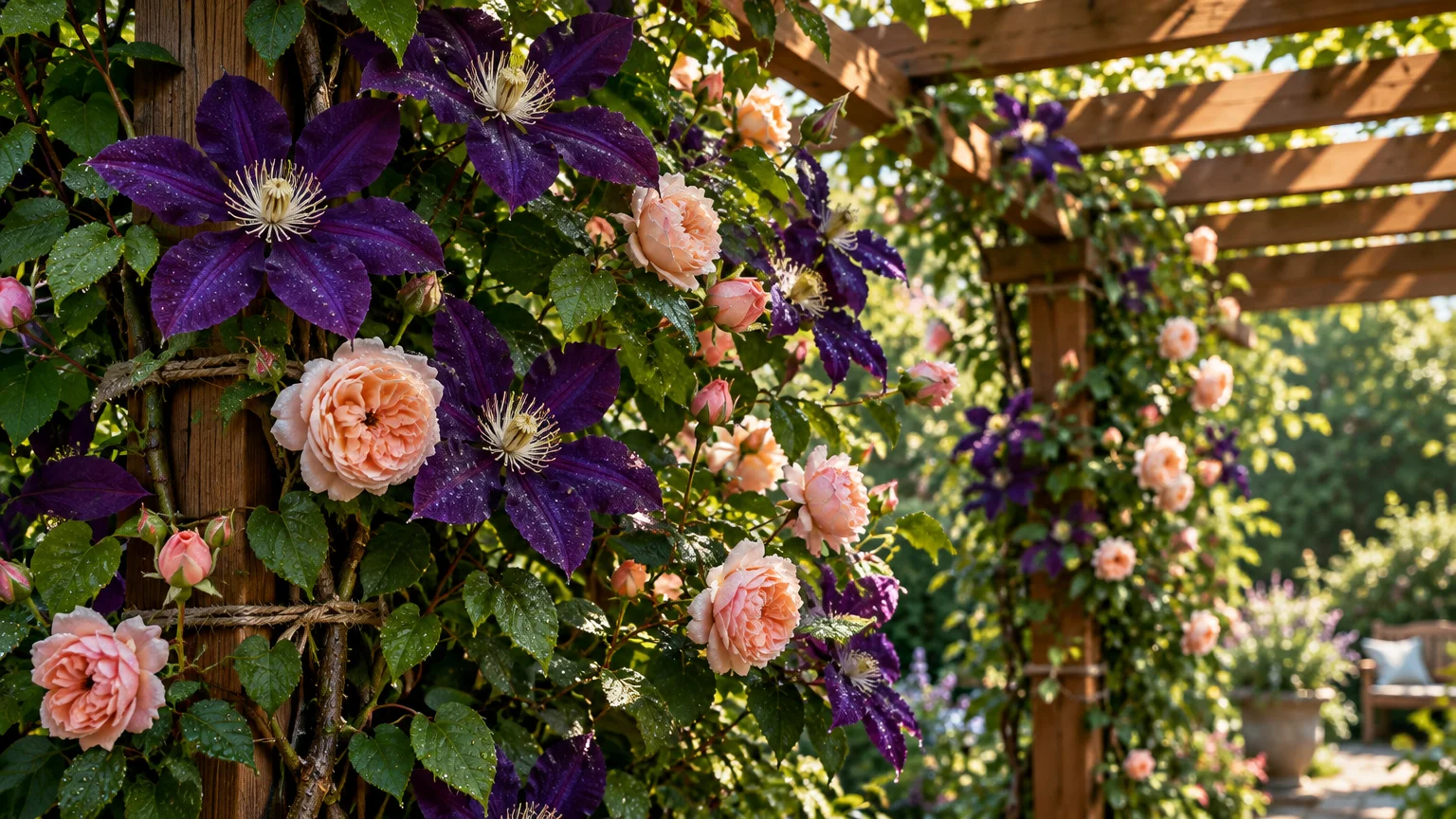
Tip #12: Clematis (Clematis spp.)
Clematis and climbing roses represent one of the most celebrated botanical pairings in classical garden design. Together, they create tapestry-like displays on walls, arbors, trellises, and garden obelisks.
Clematis vines utilize rose canes as natural living climbing supports without choking or strangling the shrub. Pairing complementary bloom times provides weeks of continuous color on a single vertical structure.
Plant clematis roots on the north or east side of the rose, roughly two feet away. Clematis famously prefers shaded, cool roots and sunny flowering tops, which rose bushes provide naturally.
Select pruning Group 3 (late-flowering) clematis varieties like ‘Jackmanii’ or ‘Vitacella’ for seamless maintenance. You can cut both the rose and the clematis back simultaneously in late winter.
Mulch heavily around clematis roots with rich organic compost to retain continuous moisture. This vertical partnership maximizes planting space while creating breathtaking visual impact.
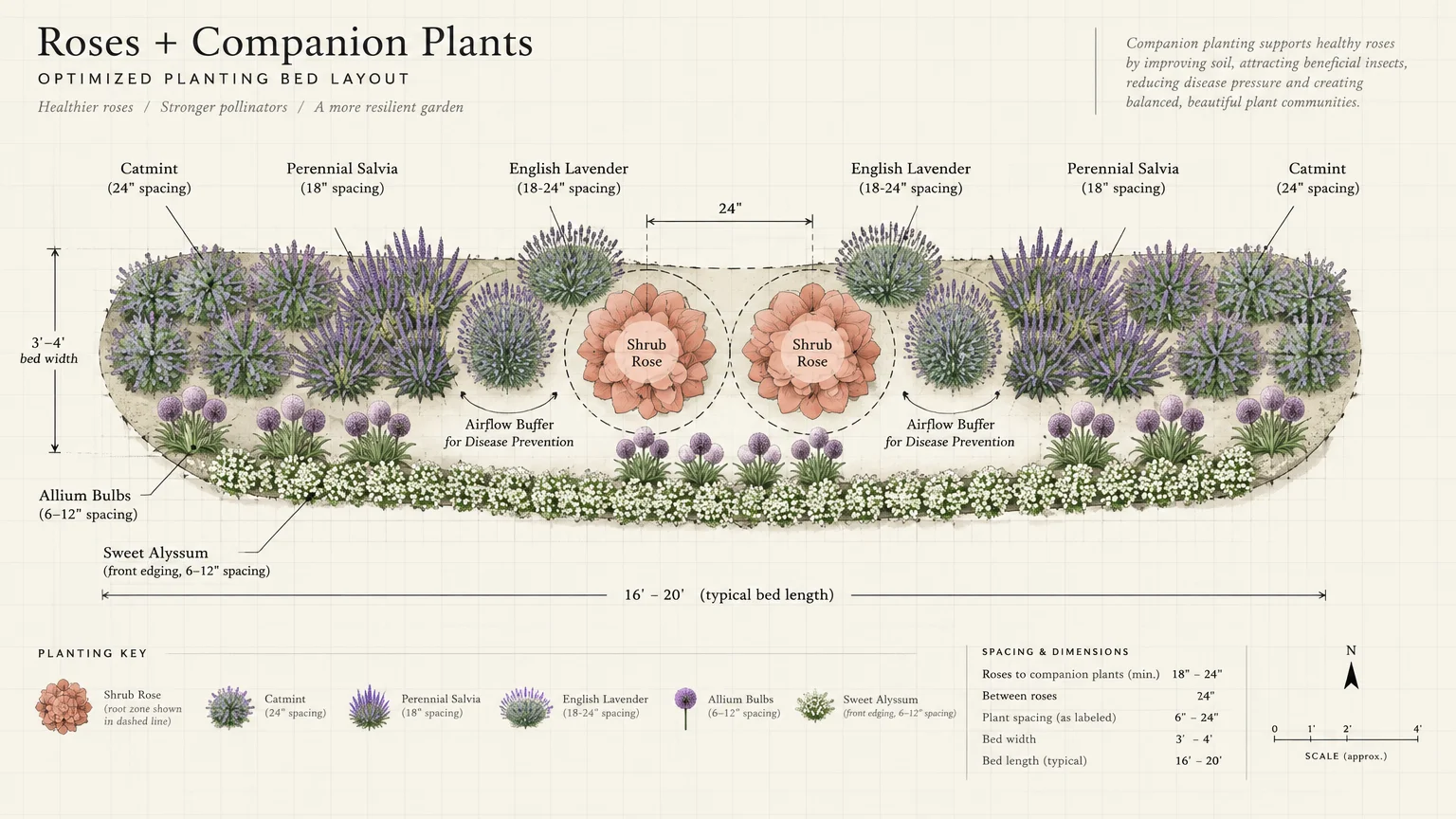
Putting It All Together: Enjoy Your Beautiful Garden
Successful rose garden design tips center on balancing aesthetics, airflow, and root spacing. Combining diverse companions creates a dynamic ecosystem where beneficial insects keep destructive pests in check naturally.
Always leave twelve to eighteen inches of open ground around each rose crown. This buffer zone facilitates easy fertilization, winter mulching, and adequate ventilation to deter fungal diseases.
Group companions with similar moisture and sunlight needs to streamline your garden maintenance routines. Drought-tolerant herbs belong along outer borders, while moisture-tolerant perennials thrive nearer irrigation lines.
Layering varying plant heights creates depth, disguising bare lower canes and framing stunning rose blooms. Low groundcovers hug the front edges, while vertical spires rise gracefully toward the rear.
Integrating thoughtful companions transforms ordinary rose beds into thriving, multi-season floral tapestries. Grab your trowel and begin planting these gorgeous partners to watch your roses flourish like never before.
For region-specific advice, consult your local University Extension program (find yours via the USDA directory). For plant databases and inspiration, visit the Missouri Botanical Garden or the Royal Horticultural Society.
Disclaimer: This article provides general gardening advice. Always consider your specific climate, soil conditions, and local pests. Follow safety guidelines when using gardening tools and products.
Frequently Asked Questions
Can I plant lavender directly next to my roses?
Yes, but keep lavender plants 18 to 24 inches away from rose crowns. Lavender requires faster-draining, leaner soil than roses, so avoid overwatering its root zone.
What plants should you avoid when planting near roses?
Avoid aggressive, invasive spreaders like mint, bamboo, or ribbon grass that strangle rose roots. You should also skip water-hogging plants and large shade trees that steal sunlight and moisture.
Keep plants susceptible to identical fungal pathogens, such as squash or cucumbers, away from rose beds. Isolating these plants minimizes cross-contamination of powdery mildew and rust spores.
How do companion plants help prevent rose diseases?
Companion plants improve bed microclimates by shading the soil and reducing fungal spore splash during heavy rainfall. Proper spacing between plants maintains healthy airflow, allowing damp rose leaves to dry quickly.
Do alliums really keep aphids off roses?
Yes, alliums emit volatile sulfur compounds that confuse and repel aphids seeking rose buds. Many gardeners report significant reductions in pest activity after interplanting alliums among their roses.