
Frequently Asked Questions
How do I support heavy vines on a wooden fence without causing wood rot?
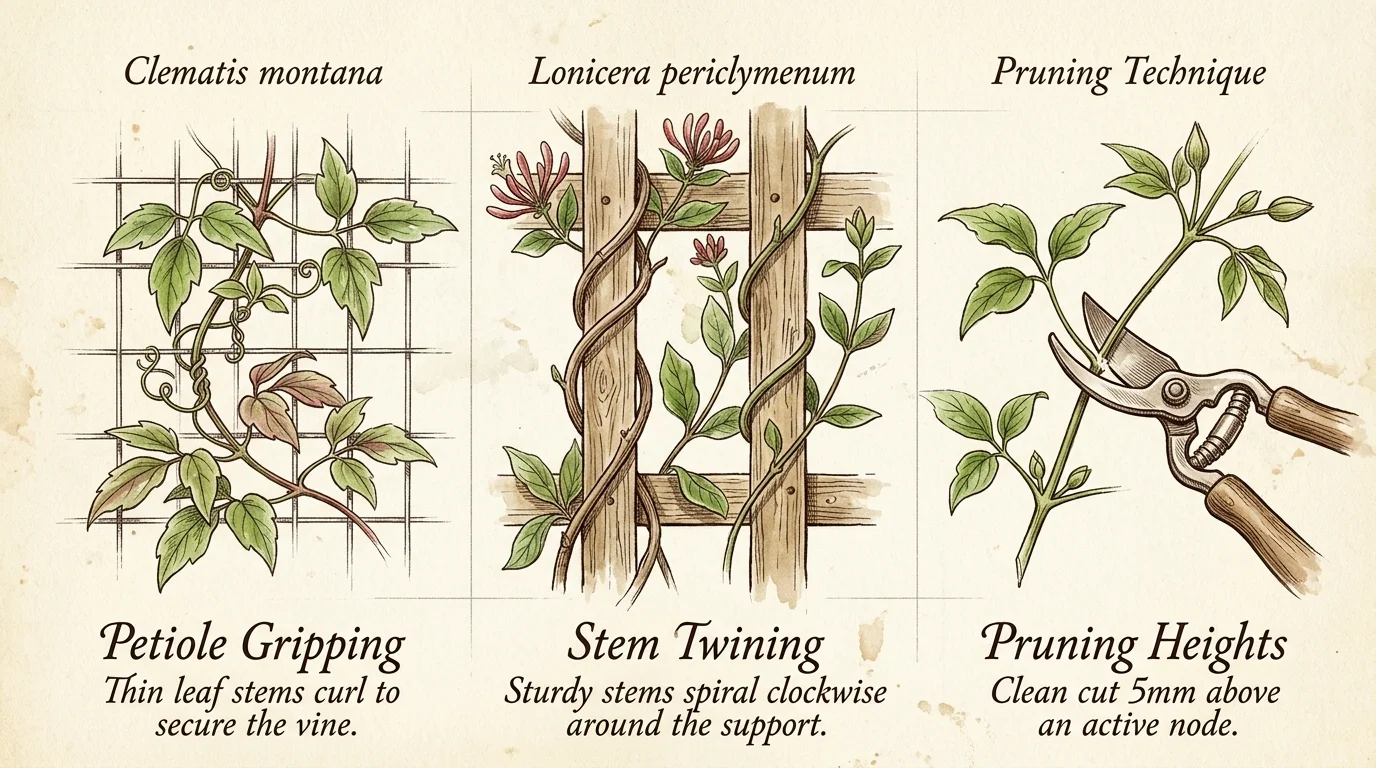
Use two-by-two wooden batten strips or stainless steel eye-screws to mount wire grid trellises or galvanized wire network two to four inches off the face of the wooden fence. This air gap permits proper airflow behind the foliage, preventing moisture accumulation against the wood paneling while giving vine tendrils plenty of room to twine freely.
How fast do privacy vine plants cover a standard 6-foot fence?
Fast-growing annual vines like morning glory or black-eyed susan vine achieve full six-foot vertical coverage in 8 to 12 weeks during hot summer months. Perennial vines like coral honeysuckle, star jasmine, or clematis usually spend their first year building root systems, achieving full coverage by their second or third growing season.
Will climbing flowering vines damage a chain-link fence?
Chain-link fences make ideal, durable supports for twining and tendril-bearing vines like passionflower, clematis, and morning glory because the metal mesh cannot rot. However, avoid extremely heavy woody vines like Asian wisteria, which can bend galvanized wire mesh over time as main trunks thicken.
Which flowering vines grow best in full shade?
Climbing hydrangea (Hydrangea anomala subsp. petiolaris) and native woodvamp perform exceptionally well in full to partial shade, producing bright white blooms without requiring direct afternoon sun. Bleeding heart vine also thrives in bright, indirect shade in warmer regions.



One Response
Where, on line, can I puchase these vines