
Tip #1: Clematis (Clematis spp.)
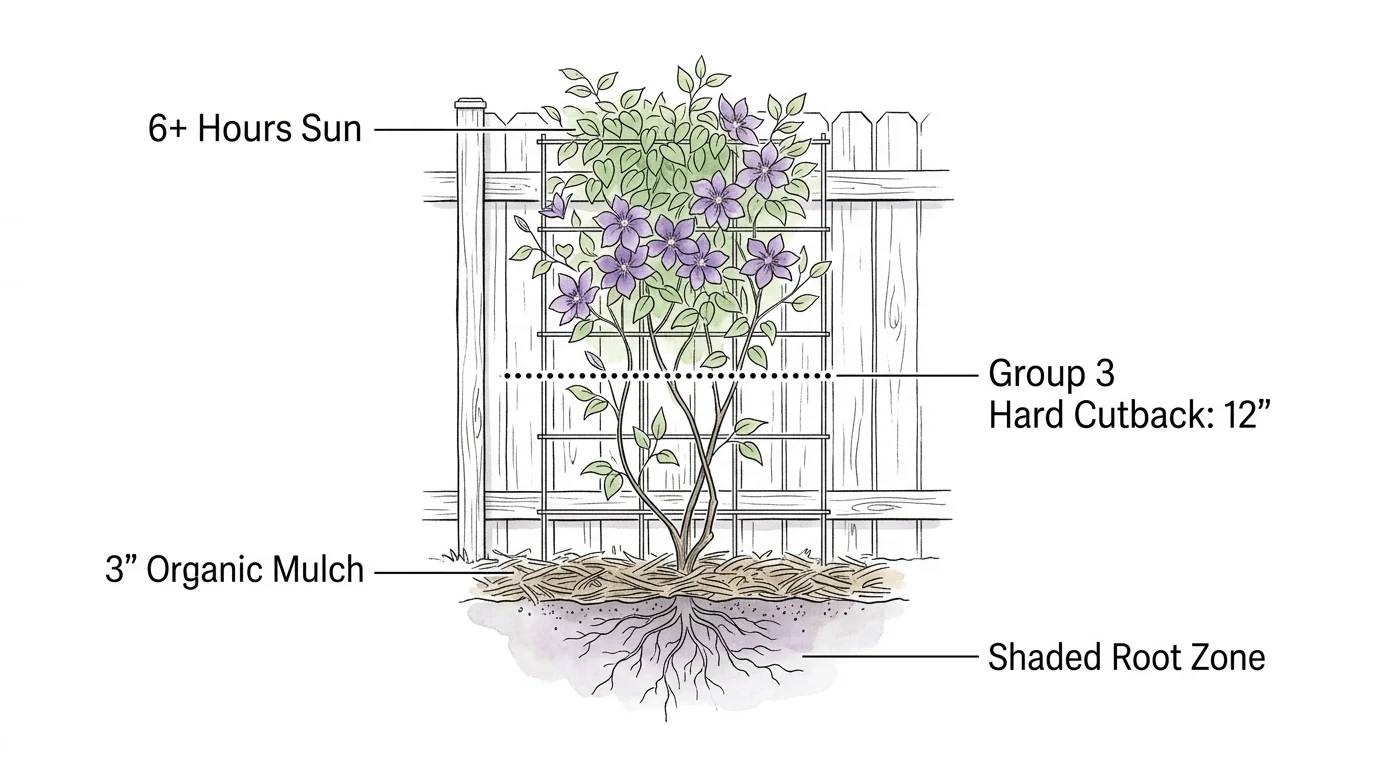
Clematis earns its reputation as the “Queen of Climbers” through its breathtaking display of starry blossoms ranging from deep velvet purple to pastel pink and snow white. These perennial flowering vines for fences climb using leaf petioles—small leaf stems that twist tightly around slender supports. Because these petioles cannot wrap around thick wooden fence posts, you must install narrow wooden lattice, chicken wire, or horizontal trellising wire directly onto your fence frame. Plant clematis in a spot where the foliage receives at least six hours of direct sunlight daily while keeping its root zone cool and shaded; applying a three-inch layer of organic bark mulch or surrounding the base with low-growing perennials accomplishes this balance effortlessly. Pay attention to your chosen variety’s pruning group: Group 1 blooms on old wood in spring and requires minimal trimming, Group 2 features large early-summer flowers on both old and new wood, while Group 3 blooms late on current season growth and benefits from a hard cutback to 12 inches above ground level each late winter.
One Response
Where, on line, can I puchase these vines