Tip #4: Cardinal Flower (Lobelia cardinalis)
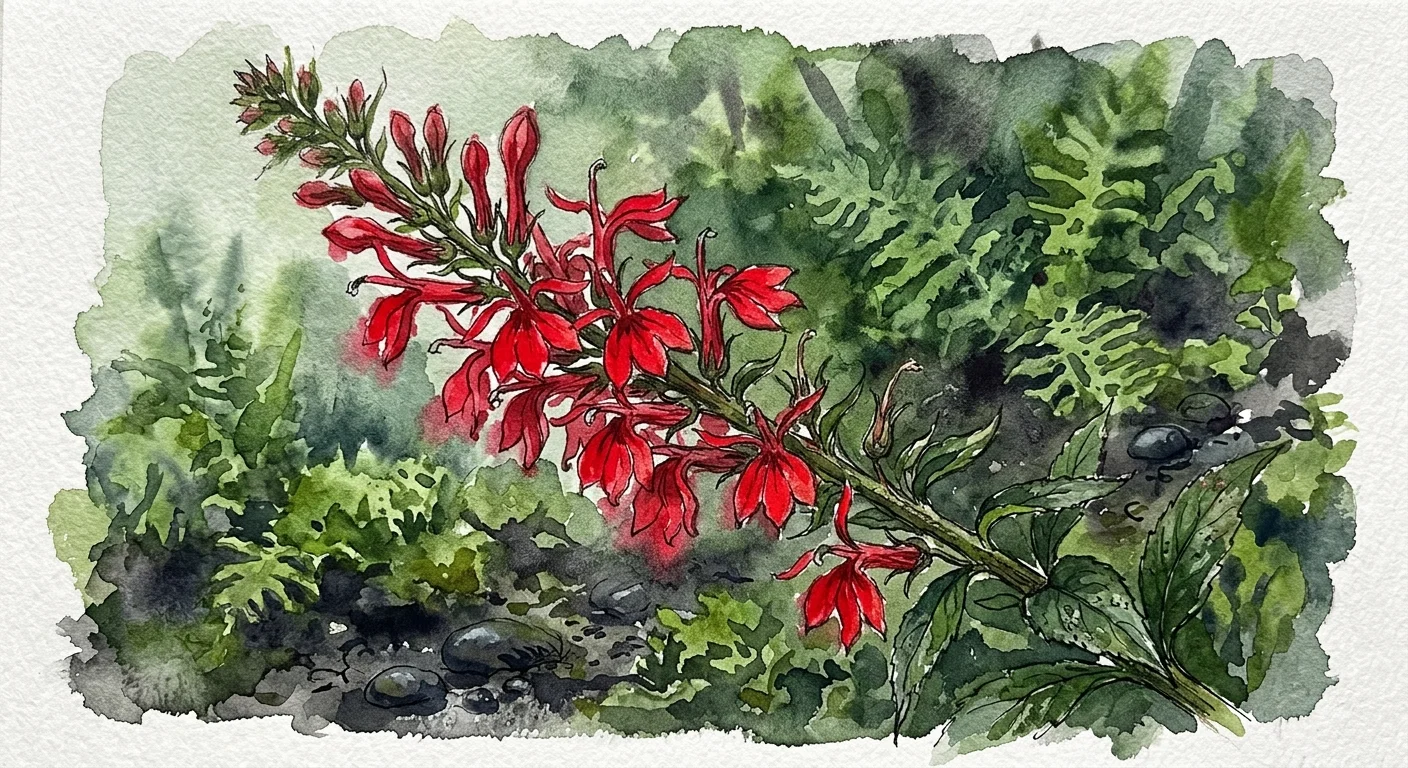
Few garden perennials match the sheer visual brilliance of the Cardinal Flower. This native moisture-lover features breathtaking, velvety scarlet flower spikes that rise two to four feet above clumps of dark green or bronze-tinted foliage. Blooming from midsummer into early autumn, *Lobelia cardinalis* provides an intense splash of primary red—the exact wavelength of light that stands out most prominently to migrating hummingbirds searching for food.
The ecological connection between the cardinal flower and hummingbirds is extraordinary. Due to the deep, narrow shape of the corolla and the placement of the plant’s reproductive organs, larger bees cannot easily pollinate the flower. The blossom relies almost entirely on hummingbirds for cross-pollination. As a bird reaches deep into the floral throat for its sweet nectar reward, an elongated column deposits pollen directly onto the feathers of the hummingbird’s crown, perfectly positioning it for transfer to the next blossom.
Grow cardinal flowers in full sun to partial shade in soils that remain consistently damp. This plant excels in rain gardens, bioswales, low-lying border areas, and along the margins of backyard ponds and water features. Apply a two-inch layer of shredded leaf mulch or compost around the base to conserve root moisture during hot summer afternoons. Never allow the soil around cardinal flowers to dry out completely. Cut down spent flower stalks in late autumn, leaving the basal rosettes undisturbed to overwinter successfully across USDA hardiness zones 3 through 9.