Tip #2: Bee Balm (Monarda didyma)
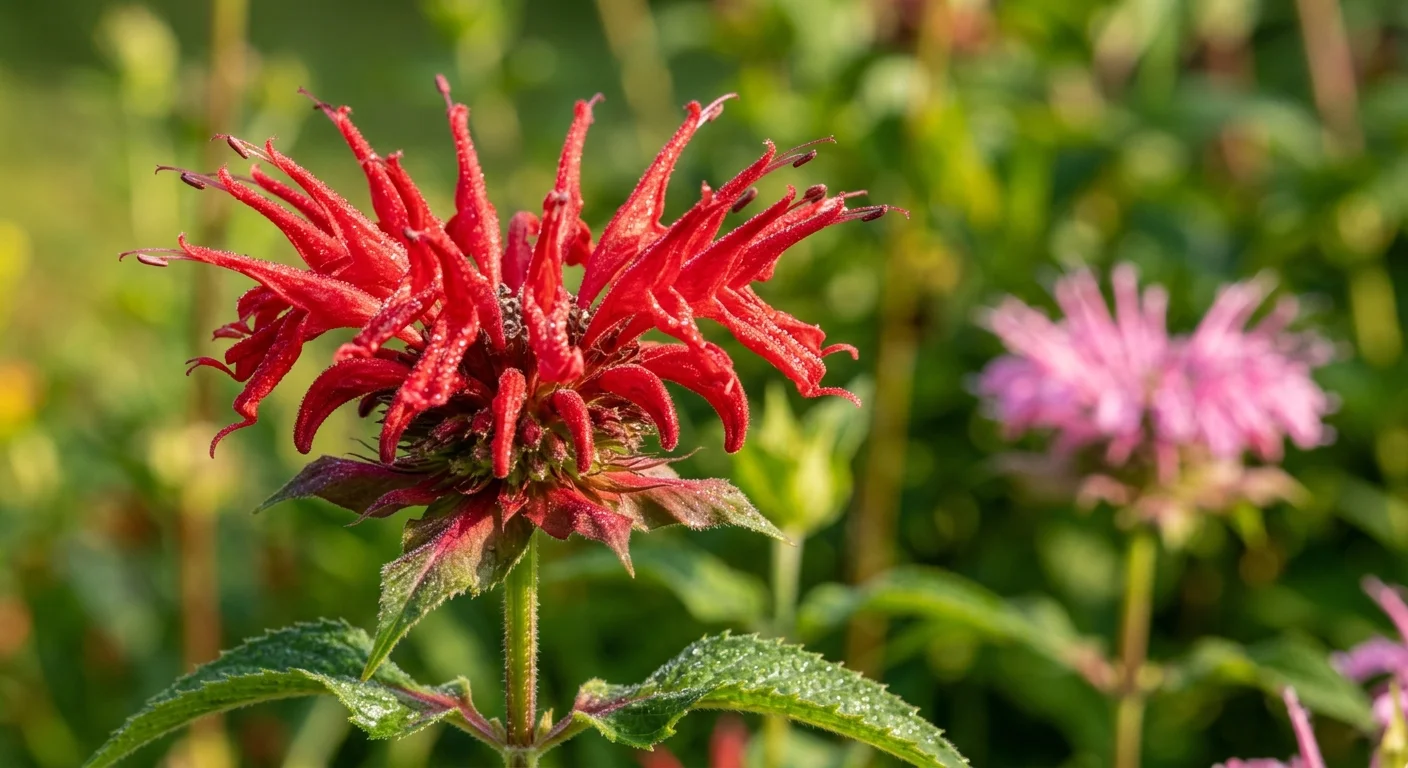
Bee Balm, also known as wild bergamot or Oswego tea, is an aromatic North American native perennial that commands attention in any summer border. The plant produces distinctive, crown-like flower heads composed of dozens of narrow, curved tubular petals radiating from a central globe. Varieties of Monarda didyma typically produce fiery scarlet, crimson, and deep magenta blossoms, while Monarda fistulosa offers softer shades of lavender and pink. Growing between two and four feet tall, bee balm creates a bold architectural statement in the garden.
Hummingbirds favor bee balm because each floral head functions as a concentrated feeding station. Instead of flying long distances between individual blooms, a hummingbird can hover in place and probe multiple nectar tubes in a single visit. The high nectar flow of native *Monarda* species matches the peak summer breeding and fledging season of the Ruby-throated Hummingbird, providing the essential carbohydrates parent birds need while raising their broods.
Plant bee balm in full sun to partial shade, choosing a site with rich, moisture-retentive soil amended with organic compost. Because wild bergamot naturally colonizes damp meadows and stream banks, it performs best when the soil remains consistently moist. Space individual plants 18 to 24 inches apart to ensure generous airflow around the foliage. Good air circulation prevents powdery mildew, a common fungal issue for monardas. Divide mature clumps every three to four years in early spring to maintain plant vigor, improve blooming capacity, and control spreading.