Tip #1: Salvia (Salvia spp.)
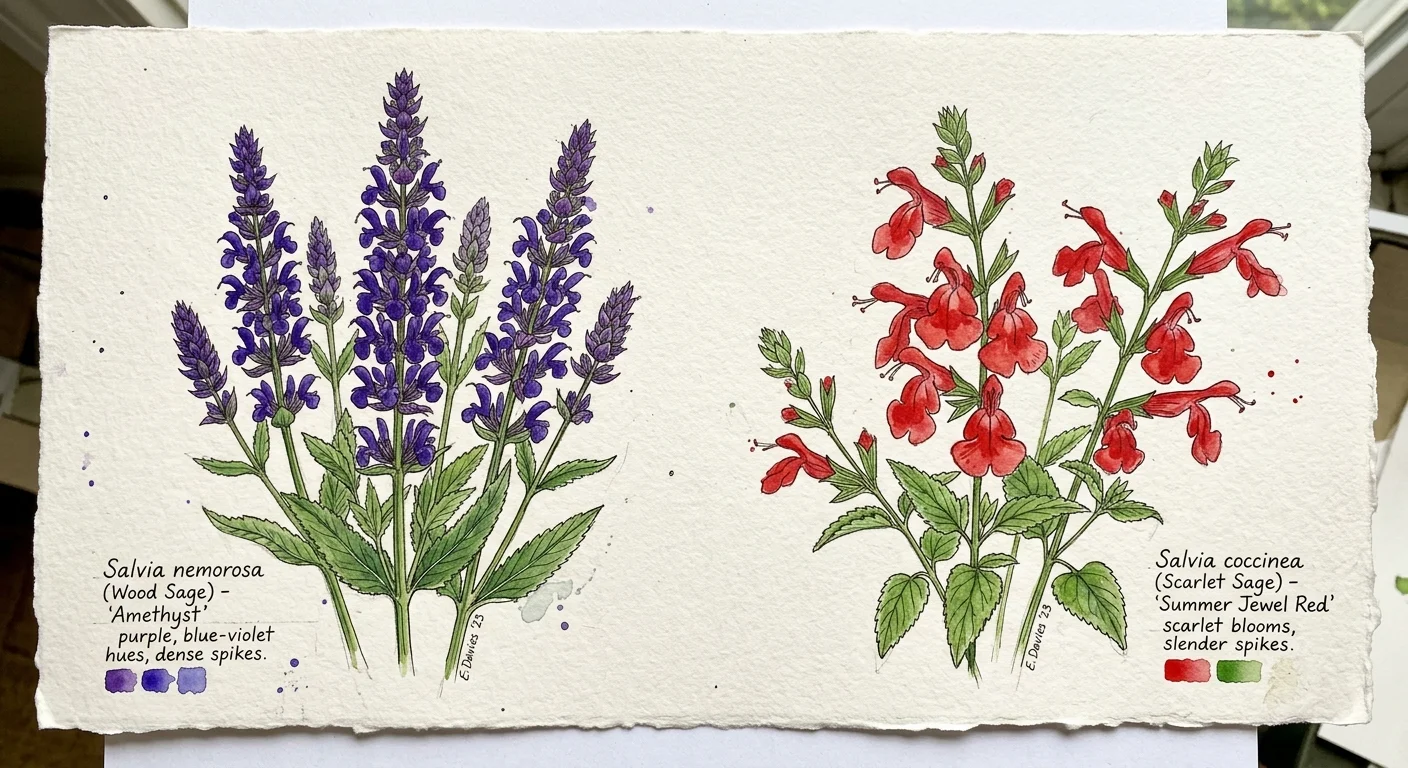
Salvia stands as an undisputed champion among plants that attract hummingbirds. Belonging to the mint family, this diverse genus includes cold-hardy perennials like Salvia nemorosa, tender perennials like Salvia guaranitica (‘Black and Blue’), and brilliant annuals such as Salvia coccinea (Scarlet Sage). The specialized floral architecture of salvia features two-lipped, tubular blooms clustered densely along upright spikes. When a hummingbird inserts its bill to reach the nectar chamber at the base of the flower, the upper petals brush gently against the bird’s crown, depositing and collecting pollen in a classic example of evolutionary symbiosis.
Beyond their physical shape, salvias produce nectar with exceptionally high sugar concentrations—often exceeding thirty percent sucrose. This dense caloric reward makes salvia one of the first stops for foraging birds each morning. Cultivars like ‘Amistad’ (deep royal purple) and ‘Lady in Red’ (vivid scarlet) generate hundreds of individual florets per plant, ensuring a steady food supply through scorching midsummer heatwaves.
To achieve the best performance in your garden, position salvias in full sun where they receive at least six hours of direct light daily. These plants thrive in loose, well-draining soil with a neutral to slightly acidic pH. While established perennials tolerate modest drought, regular watering during dry spells keeps flower production at its peak. Deadhead spent flower spikes promptly by cutting stems back to the nearest set of healthy leaves; this practice stimulates rapid lateral branching and guarantees continuous waves of fresh blossoms until the first hard autumn frost.