You can transform your barren yard into a vibrant sanctuary by choosing shrubs that flower in winter. These resilient plants produce vivid petals and intoxicating perfumes when most other garden species remain dormant.
Adding cold-hardy blossoms protects local pollinators during unseasonable thaws while brightening dreary landscapes. Your winter garden shrubs provide lively colors, structural elegance, and mood-boosting beauty throughout freezing weather.
Careful selection ensures you get reliable floral color and strong root development every single year. The right winter blooming shrubs will elevate your curb appeal straight through the coldest months.
Tip #1: Witch Hazel (Hamamelis)
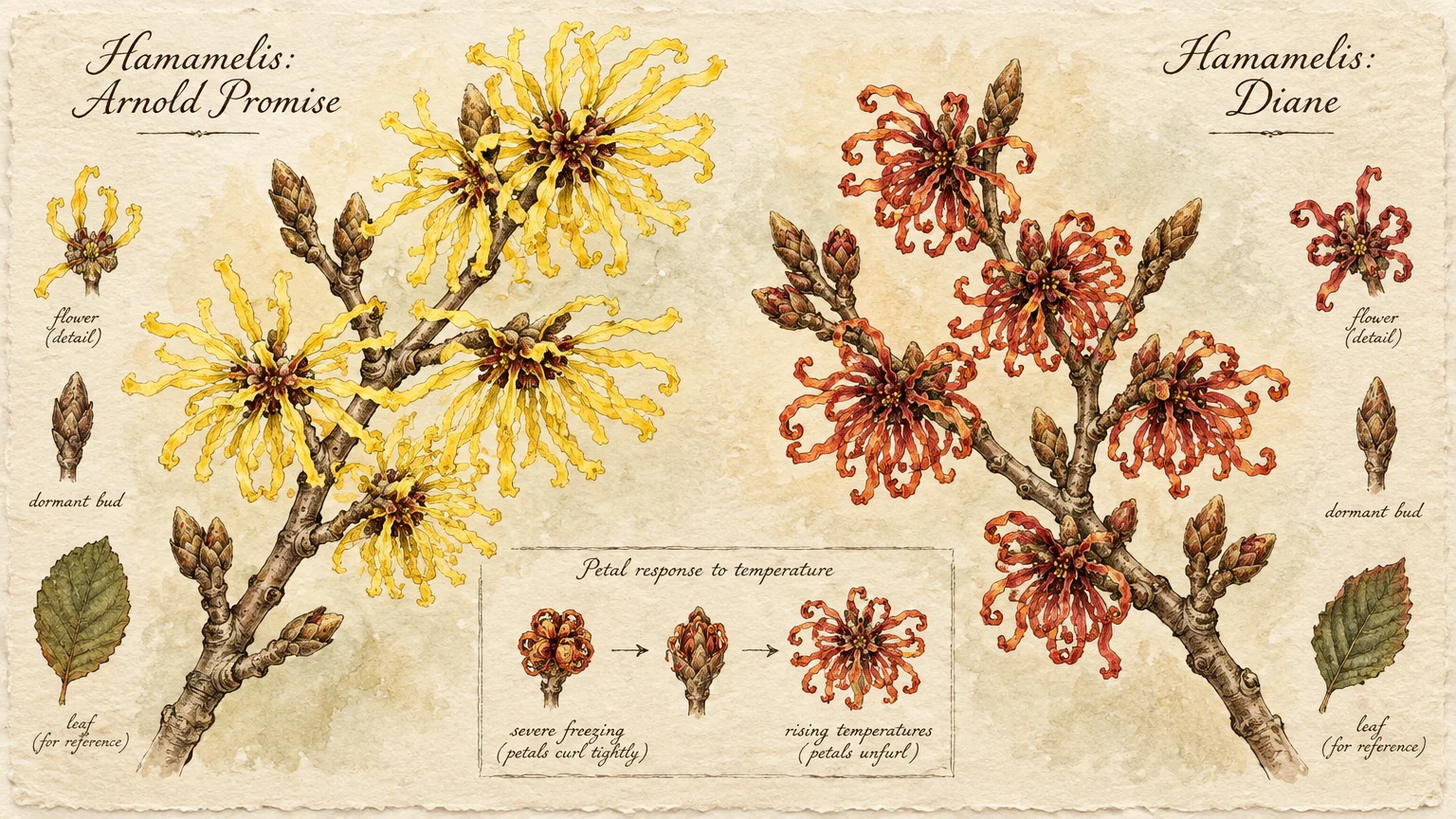
Witch hazel brightens gloomy winter borders with spidery, ribbon-like petals that resist freezing temperatures. The flowers curl up tightly during harsh frost spells and unfurl immediately when temperatures rise.
Cultivars like ‘Arnold Promise’ produce glowing yellow blossoms, while ‘Diane’ offers rich copper-red tones. These deciduous shrubs also deliver spicy citrus aromas that carry across crisp winter air.
Plant your witch hazel in rich, acidic soil that drains well. While it tolerates partial shade, full morning sunshine encourages the densest flower clusters.
Maintain even soil moisture during hot summer dry spells to support bud development. Mulch generously around the shallow root zone with organic leaf compost.
Pruning demands remain minimal; simply remove suckers arising from rootstocks in late spring. This hardy specimen anchors woodland edges and foundation plantings with effortless grace.
Position this shrub where low winter sunlight can illuminate its delicate blooms from behind. You will enjoy a glowing seasonal focal point just outside your window.
Tip #2: Camellia (Camellia japonica and Camellia sasanqua)
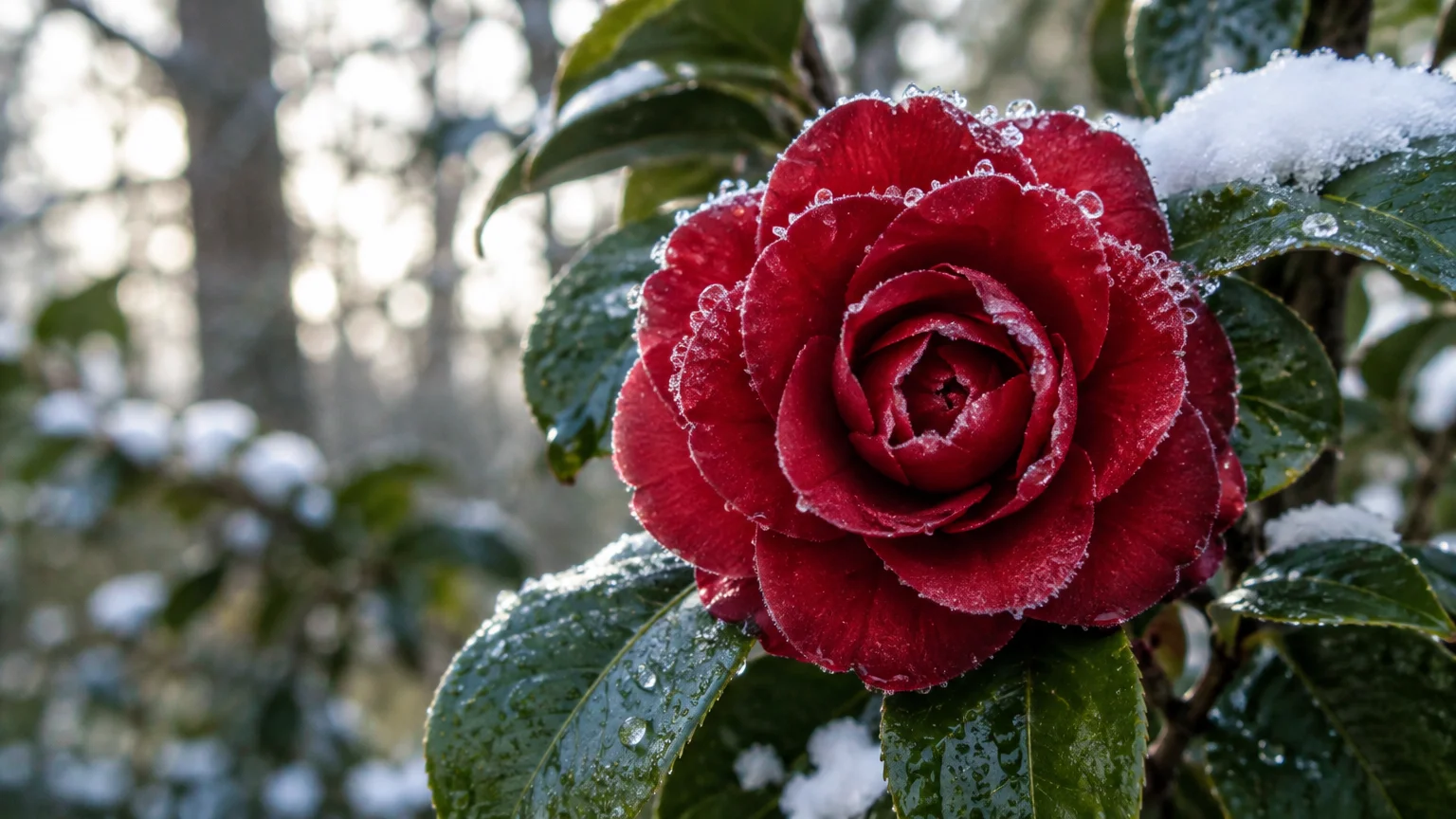
Camellia bushes produce magnificent, rose-like flowers amidst glossy, evergreen foliage throughout late autumn and deep winter. Sasanqua varieties bloom earlier in cool weather, whereas japonica selections peak in mid to late winter.
These elegant shrubs feature shades ranging from pure white and soft blush to deep crimson. Their layered petals create breathtaking contrasts against snowy lawn backdrops.
You should situate camellias in sheltered spots that protect brittle buds from bitter morning winds. Filtered woodland shade prevents harsh winter sunlight from scorching tender flower petals.
These acid-loving plants thrive best in moist, humus-rich soil with a pH between 5.5 and 6.5. Avoid planting root balls too deeply, as camellia surface roots require ample oxygen.
Apply a layer of pine bark mulch to preserve soil acidity and moisture levels. Water deeply during dry autumn intervals to prevent bud drop prior to blooming.
With proper placement, a mature camellia rewards you with decades of winter sophistication. Its lush foliage continues providing year-round privacy long after petals drop.
Tip #3: Winter Jasmine (Jasminum nudiflorum)
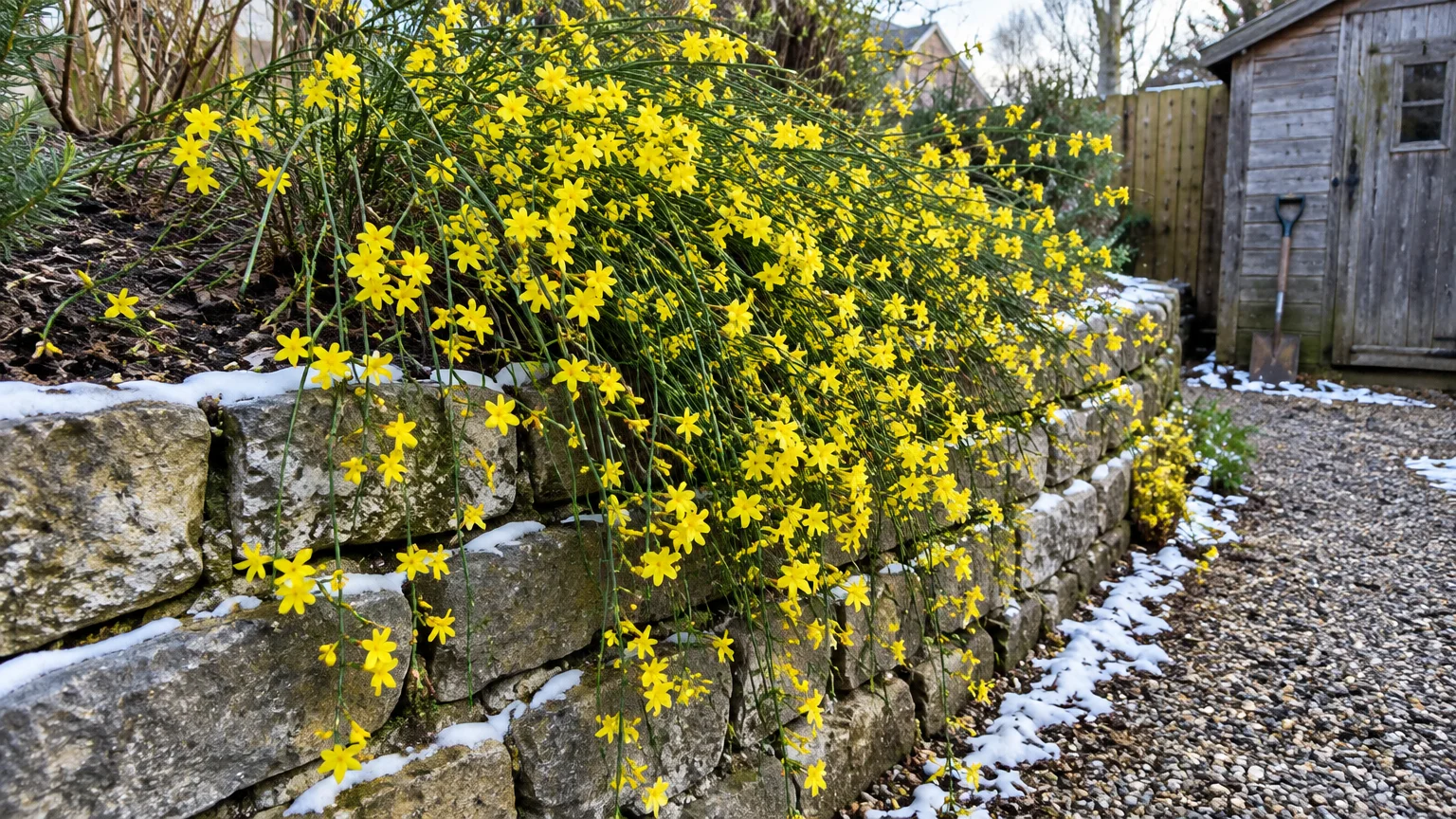
Winter jasmine produces an explosion of bright yellow, star-shaped blossoms on slender green stems before spring arrives. Unlike summer jasmine varieties, this rugged shrub bears unscented flowers that handle severe cold with ease.
Arching branches reach up to four feet high and spread up to seven feet across. You can train the flexible stems against trellises or let them cascade over retaining walls.
Plant this hardy bloomer in full sun to partial shade for the heaviest floral show. It adapts to poor soil conditions, provided the ground does not stay waterlogged.
Prune the shrub vigorously right after flowering finishes in late winter. Trimming older canes stimulates fresh green growth that produces next season’s cheerful blossoms.
The vivid green twigs provide valuable winter color even when the plant sheds its summer leaves. Use it along slopes to control erosion while providing early visual warmth.
Winter jasmine asks for very little maintenance once its extensive root system establishes. You will appreciate its reliable brightness during the grayest weeks of the year.
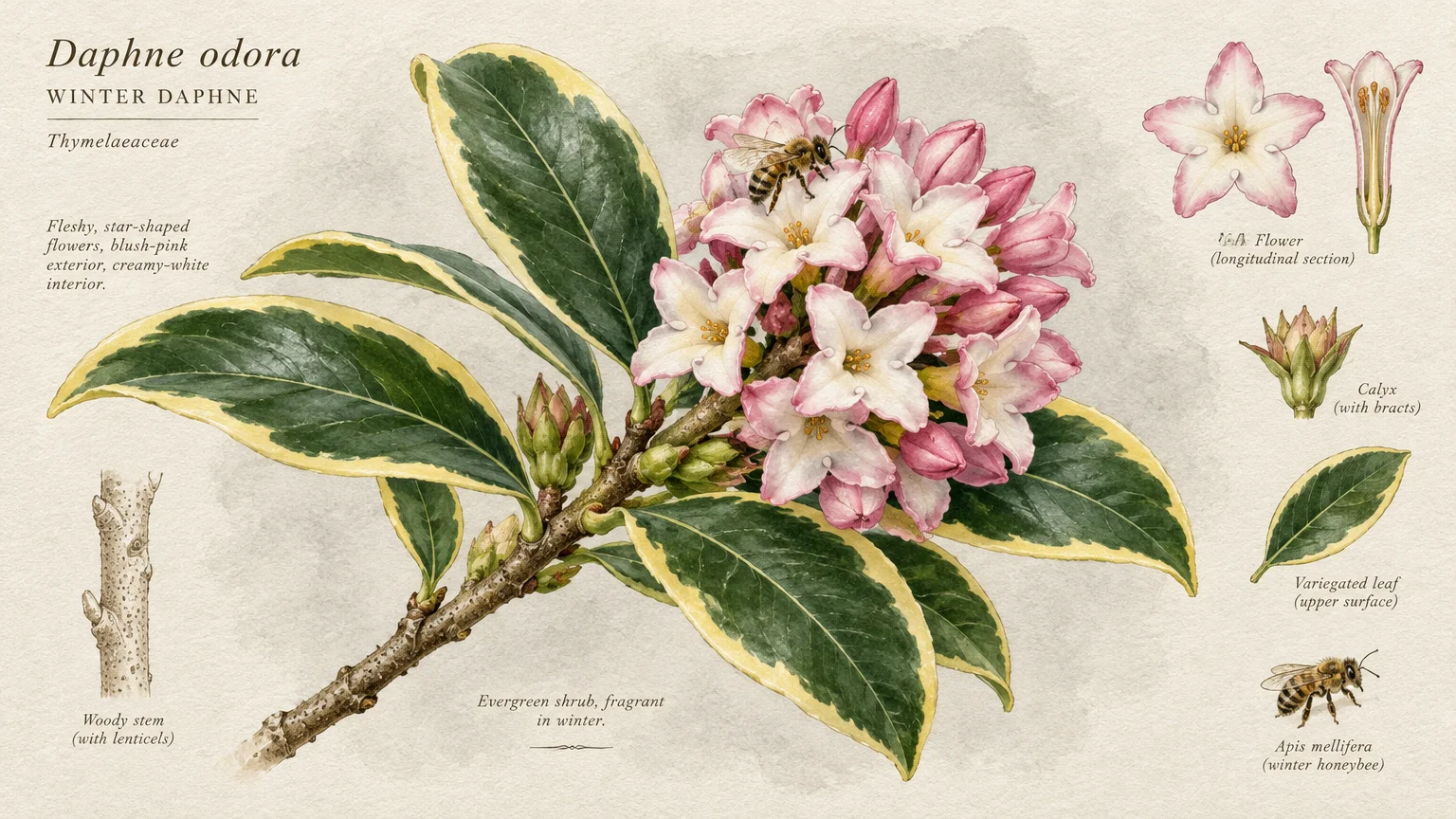
Tip #4: Winter Daphne (Daphne odora)
Winter daphne is legendary among gardeners for its intensely sweet, citrus-floral fragrance. Compact clusters of tubular, pale pink or creamy white blossoms open between January and March.
Glossy evergreen leaves—often edged in clean gold on cultivars like ‘Aureomarginata’—offer year-round garden appeal. A single specimen can perfume your entire front walkway.
This finicky beauty demands exceptional soil drainage to prevent fungal root diseases. Plant it in slightly elevated beds amended with coarse compost or sharp horticultural grit.
Choose a planting location that receives sheltered morning sun and gentle dappled afternoon shade. Daphne hates root disturbance, so avoid transplanting it once settled into place.
Water sparingly during humid summer months; daphnes prefer drying out slightly between waterings. Apply pine straw mulch to protect sensitive roots without suffocating the root crown.
Treat this shrub with gentle care and minimal pruning to maintain its natural, mounded form. The unforgettable perfume makes every bit of careful attention worthwhile.
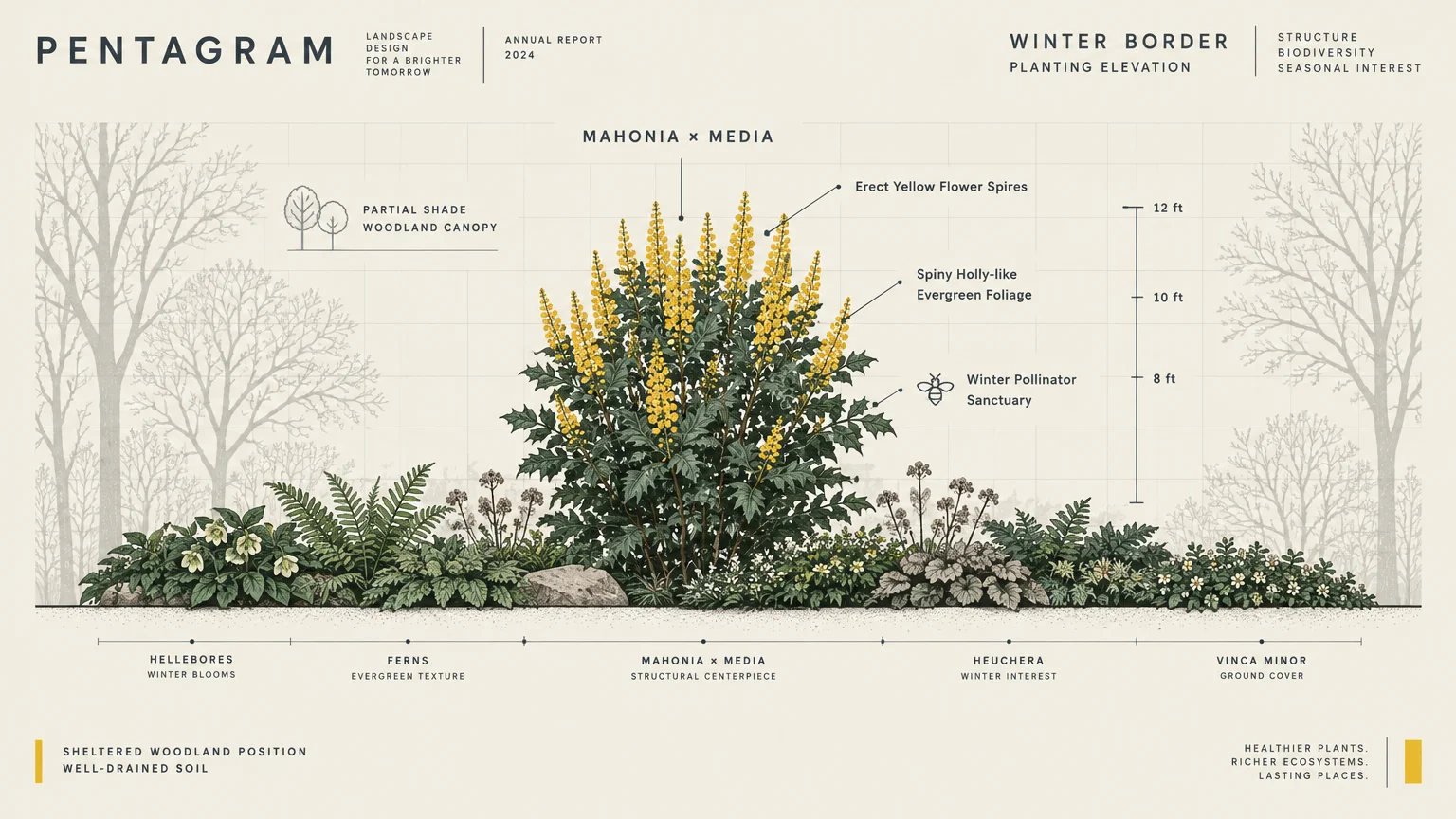
Tip #5: Mahonia (Mahonia × media)
Mahonia, also known as Oregon grape or leatherleaf mahonia, makes a bold architectural statement in winter. Architectural rosettes of spiny, holly-like evergreen foliage frame upright sprays of bright yellow, honey-scented flowers.
These golden winter sprays attract hungry overwintering bees and hummingbirds during mild spells. By early summer, the blooms transition into ornamental clusters of dusty blue-black berries.
Place your mahonia in full to partial shade, sheltered from fierce, drying winds. It performs exceptionally well beneath dense tree canopies where other flowering shrubs struggle.
Ensure the soil remains organically rich, moderately acidic, and well-draining. Mahonia establishes deep roots quickly and tolerates occasional dry spells once mature.
Prune tall, leggy stems after the berry harvest to promote bushier lower growth. Wear heavy gardening gloves when handling branches to protect yourself from the prickly foliage.
Use mahonia as an impenetrable barrier hedge or as a striking woodland accent. Its dramatic texture and vivid winter blooms provide continuous architectural drama.
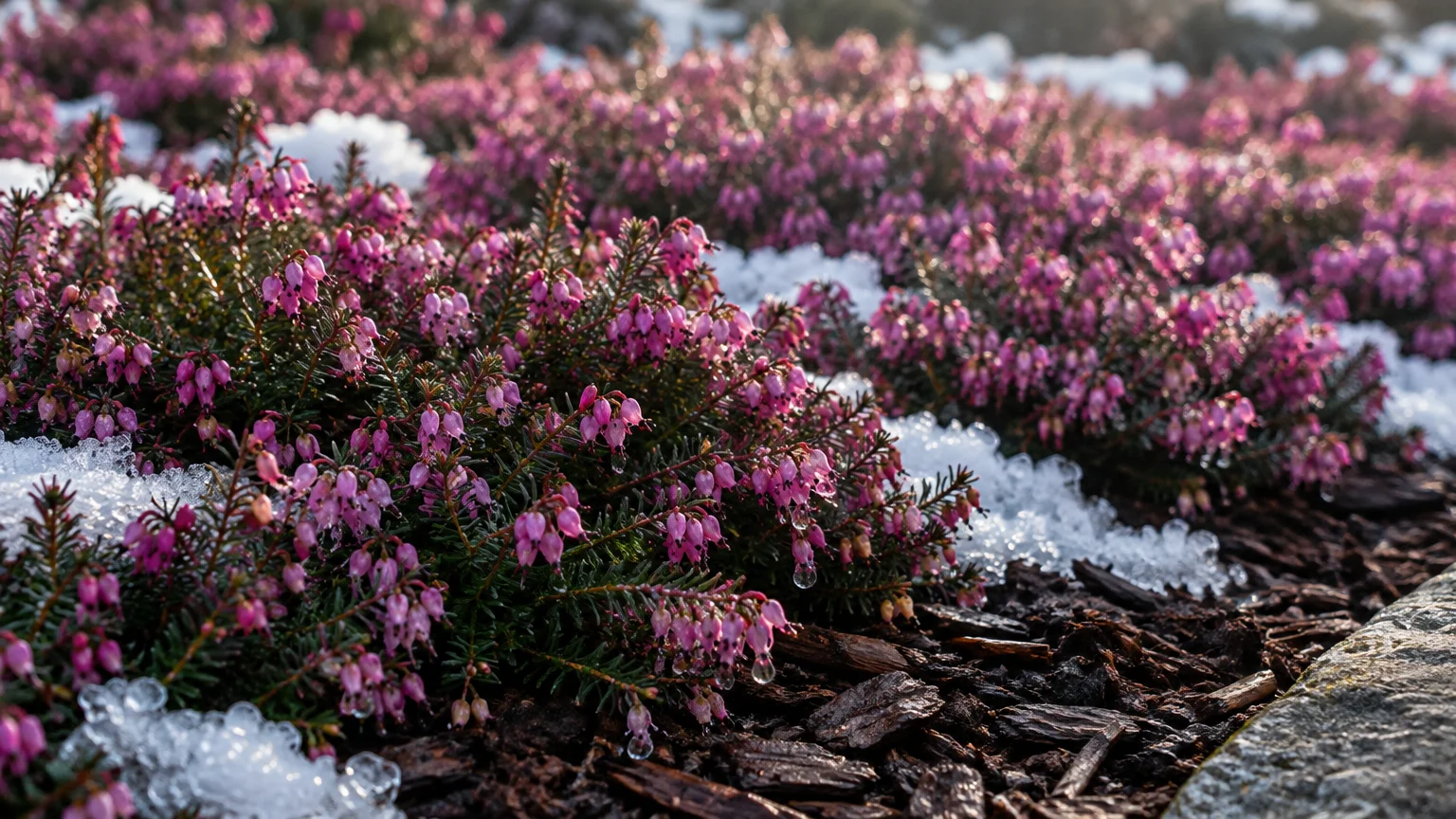
Tip #6: Winter Heath (Erica carnea)
Winter heath forms low, creeping evergreen carpets smothered in tiny, bell-shaped flowers from December through April. Blossom colors span vibrant magenta, soft rose, lavender, and snowy white.
Needle-like foliage stays emerald green or takes on attractive bronze tints during bitter winter cold. These compact shrubs reach just six to twelve inches high.
Unlike summer-flowering heathers, winter heath tolerates neutral to slightly alkaline soils, though it prefers acidic conditions. It demands full sun and gritty, perfectly draining soil.
Plant several specimens closely together to weave a dense groundcover that chokes out weeds. This plant shines in rock gardens, along pathway borders, or across sunny hillsides.
Shear the foliage lightly immediately after blossoms fade in spring to encourage dense growth. Avoid cutting back into old, bare wood, which does not regenerate easily.
This cold-hardy champion shrugs off heavy snow blankets and continues blooming once snowdrifts melt. It delivers months of steadfast ground-level color with virtually no maintenance.
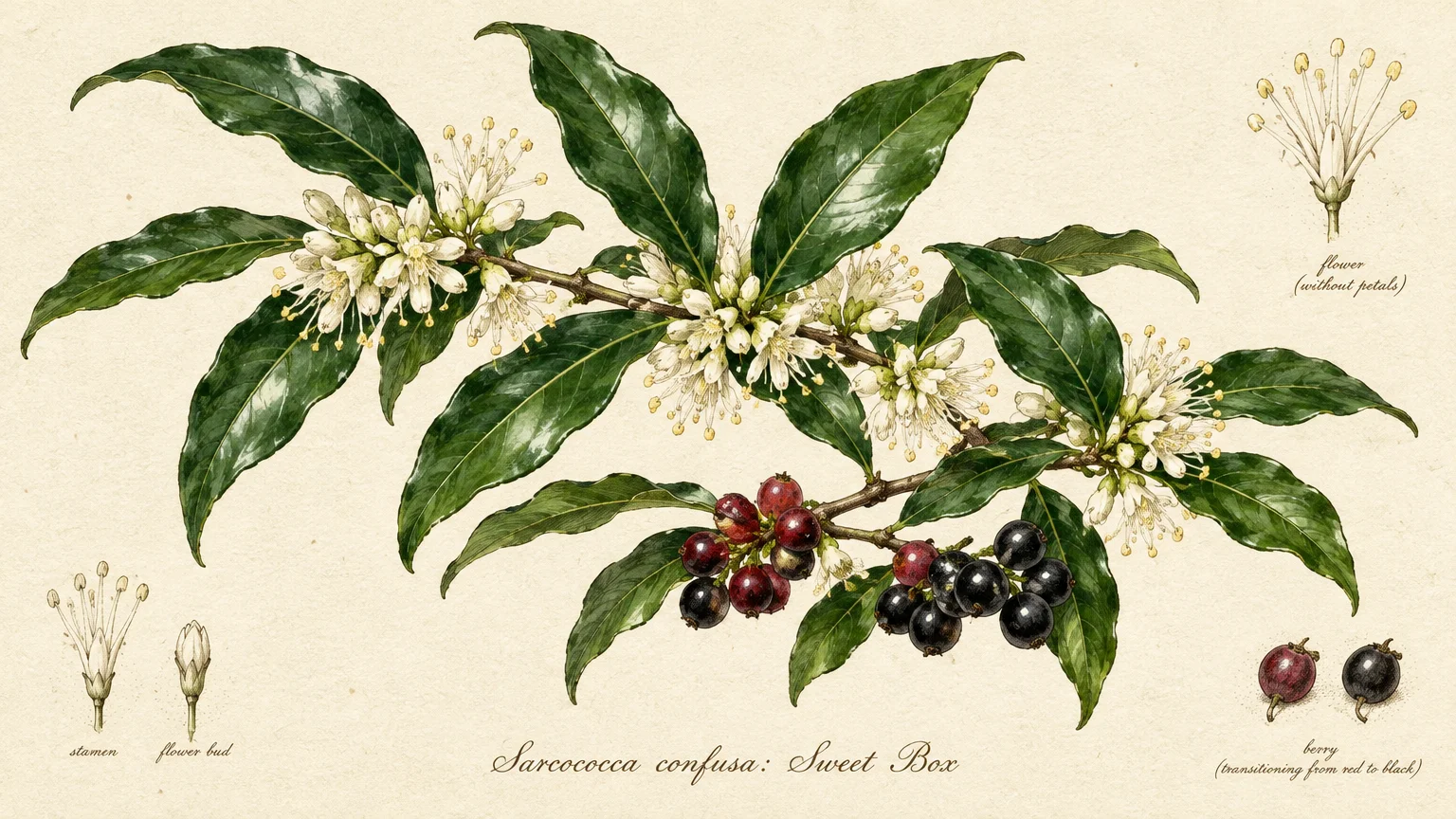
Tip #7: Sweet Box (Sarcococca confusa)
Sweet box features understated, thread-like white blooms that release a surprisingly powerful vanilla perfume. Hidden among lustrous, deep green evergreen leaves, these tiny flowers open in late winter.
The intense honey-vanilla scent drifts across courtyards, alerting you to its presence long before you spot it. Spherical, glossy black berries follow the fragrant blooms in late spring.
Sweet box thrives in deep shade where most flowering shrubs refuse to produce blooms. Plant it beneath large trees, on north-facing walls, or inside shaded courtyard beds.
Provide moist, humus-rich soil packed with organic matter, although mature plants handle dry shade well. Keep the soil mulched to preserve essential moisture around its roots.
This slow-growing, compact shrub requires almost no routine pruning to stay neat and bushy. Simply snip errant stems after flowering to maintain a tailored silhouette.
Plant sweet box near entryways, porches, or patio gates to enjoy its intoxicating winter aroma. It proves that small, subtle blossoms can deliver immense sensory rewards.
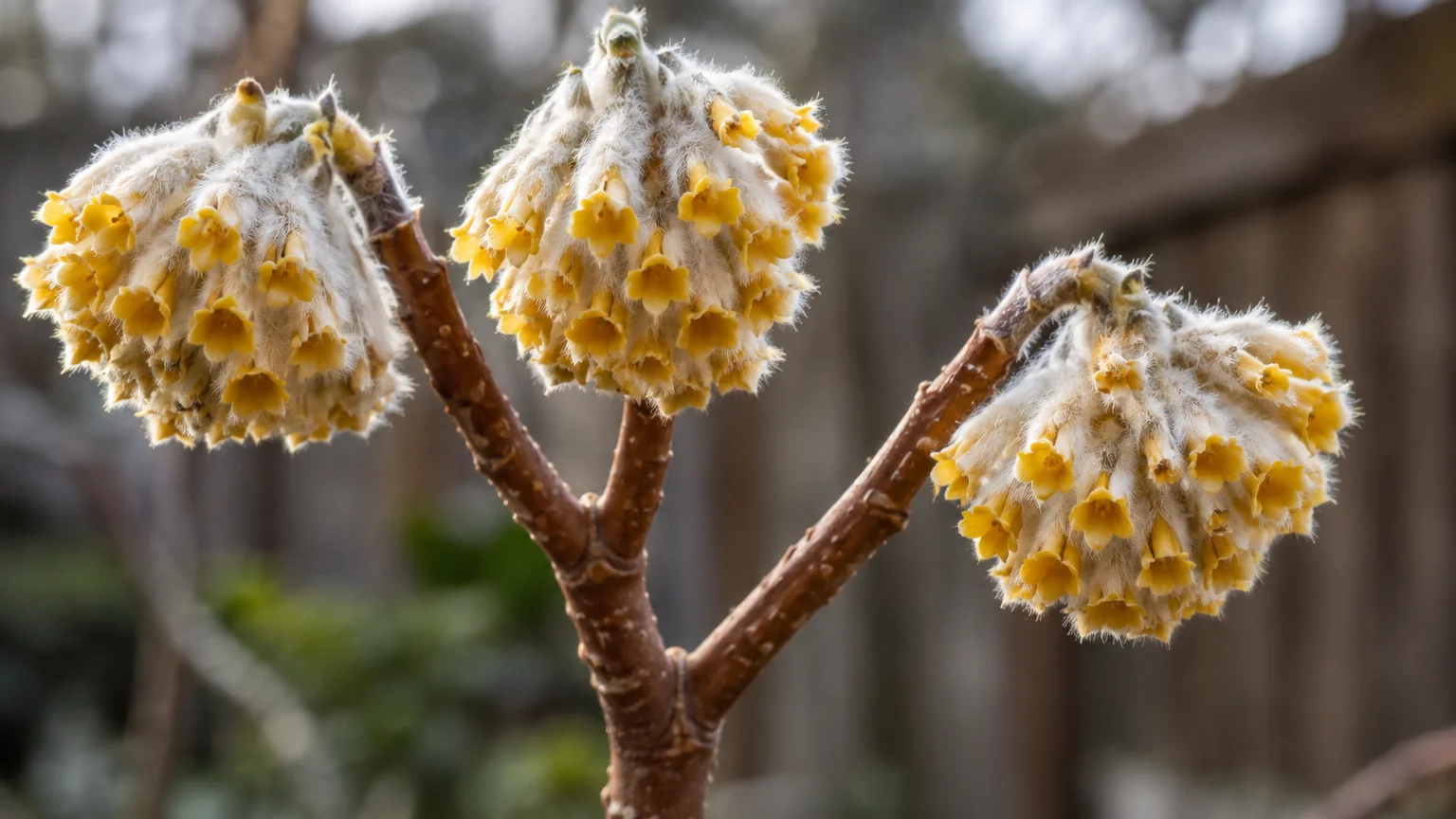
Tip #8: Paperbush (Edgeworthia chrysantha)
Paperbush brings exotic, sculptural elegance to gardens with its smooth, pliable cinnamon-colored branches. In late winter, tight clusters of silky, silver buds burst into downward-facing golden-yellow florets.
These spherical flower heads emit a sweet clove fragrance that fills garden spaces on calm afternoons. The bare winter branches make the golden flower umbels appear almost luminous.
Plant paperbush in rich, moisture-retentive soil that drains freely and contains plenty of compost. It prefers sheltered locations receiving morning sunlight and dappled afternoon shade.
Shield your shrub from severe winter winds, which can damage the tender, developing flower buds. Spread a thick blanket of mulch over roots to moderate winter soil temperatures.
During the summer months, long, tropical-looking leaves emerge, providing handsome architectural foliage until autumn frosts arrive. Paperbush rarely requires pruning; allow its natural umbrella branching form to shine.
Situate paperbush near high-traffic paths where visitors can inspect the tactile, fuzzy buds up close. Its striking form turns heads throughout the winter months.
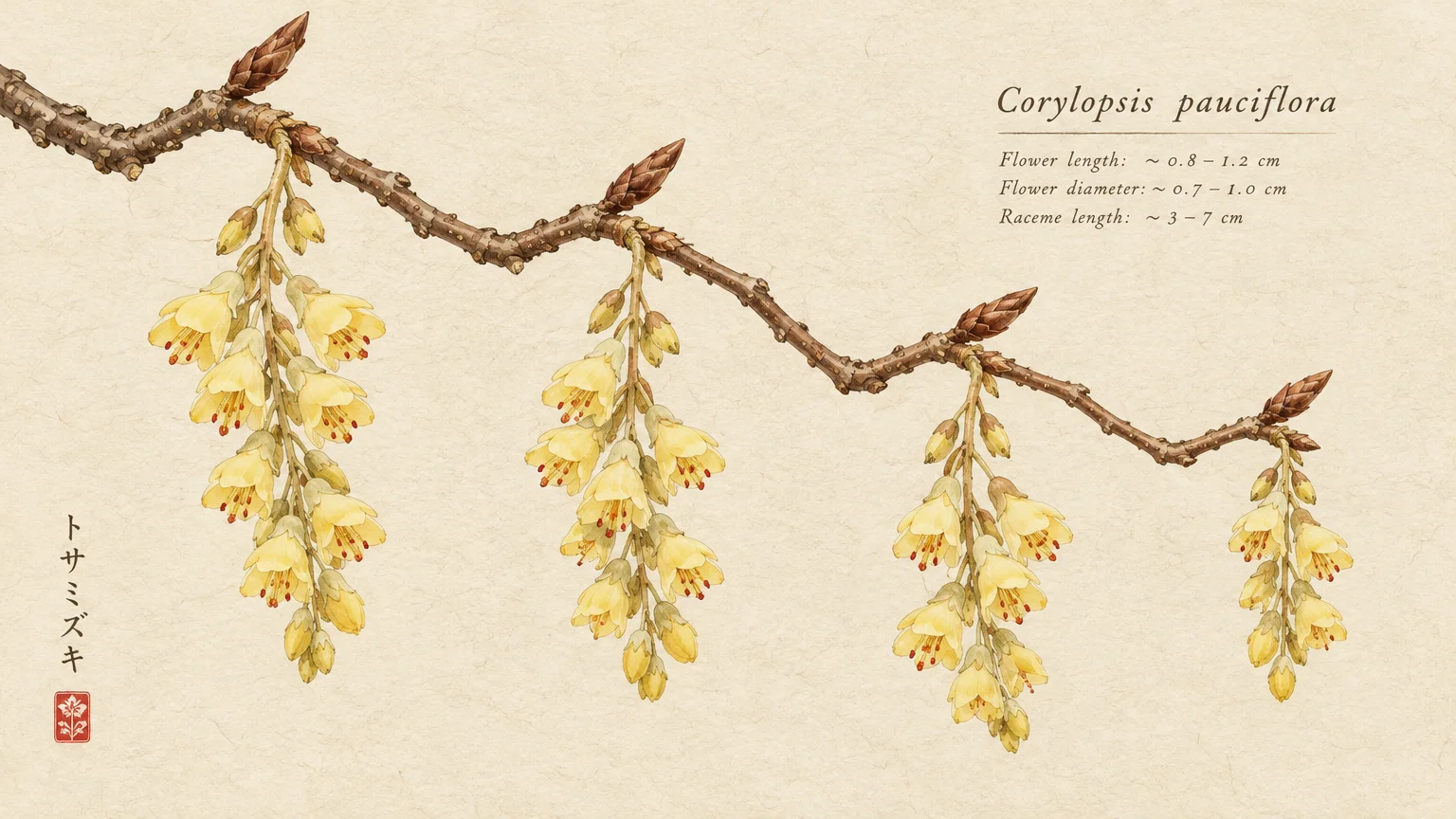
Tip #9: Winter Hazel (Corylopsis pauciflora)
Winter hazel produces delicate, pendulous racemes of buttery yellow blossoms along slender, zigzagging bare twigs. The primrose-yellow flowers emerge in late winter, broadcasting a subtle, sweet cowslip fragrance.
Reaching four to six feet tall, this graceful deciduous shrub creates an open, spreading vase shape. Pleated, hazel-like foliage follows the floral display, turning rich gold in autumn.
Position winter hazel in acidic, organically rich soil that remains moist but drains well. Morning sun paired with afternoon shade shields the delicate drooping flowers from premature wilting.
Cold winds can scorch flower buds, so choose a sheltered courtyard or woodland setting. Keep soil evenly moist by adding decomposed leaves or shredded pine bark mulch.
Winter hazel needs very little pruning beyond removing crossing or broken branches after flowering ends. Its slow growth rate makes it ideal for smaller gardens and intimate borders.
Pair winter hazel with blue-flowered bulbs and dark evergreens for a harmonious late-winter tapestry. It introduces gentle, luminous warmth just as winter begins losing its grip.
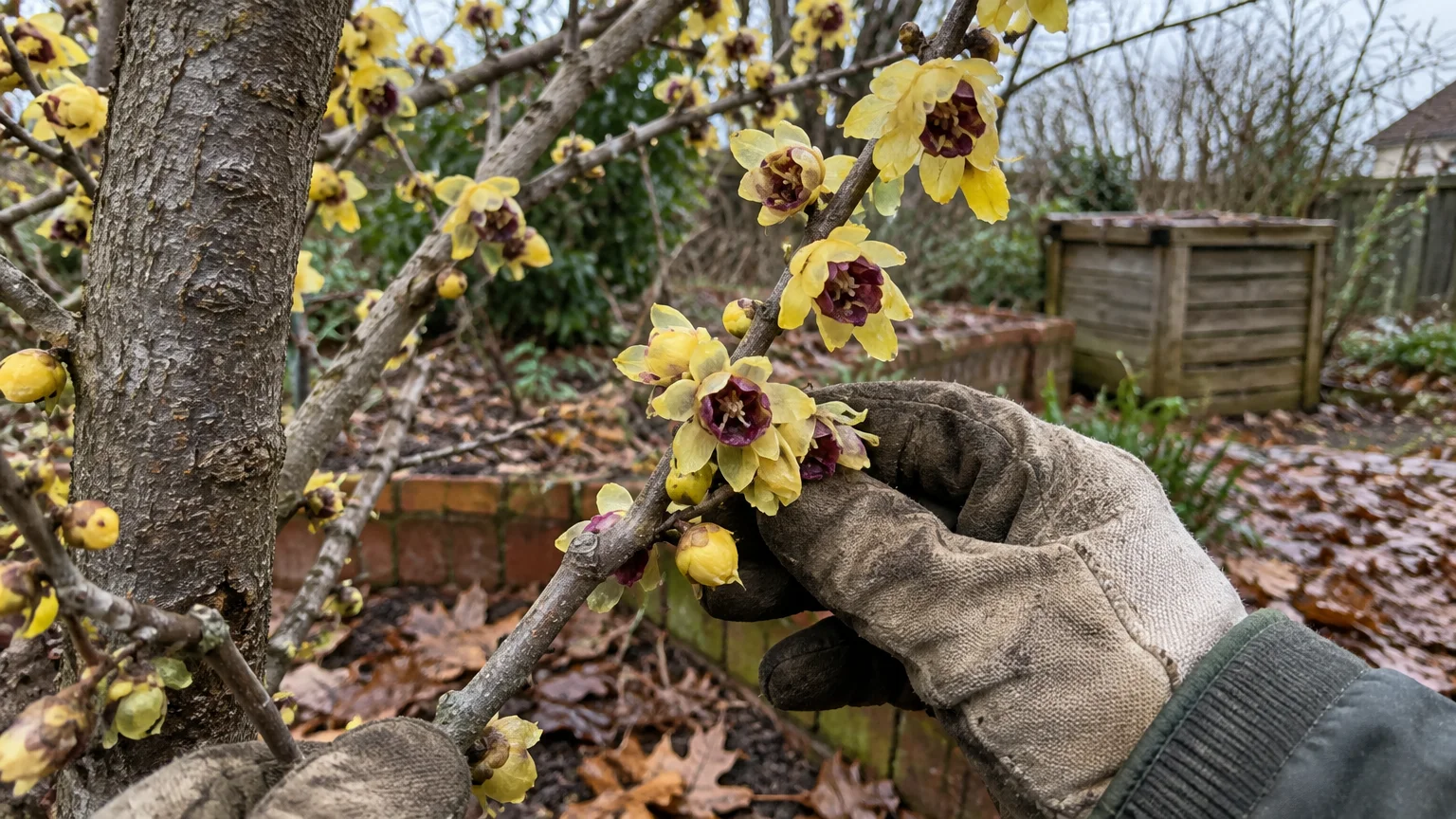
Tip #10: Wintersweet (Chimonanthus praecox)
Wintersweet lives up to its name by releasing one of the most intoxicating scents in horticulture. Waxy, translucent yellow blooms with purple-stained centers cling to bare branches during January and February.
Cut a few blossoming stems to bring indoors; a single branch perfumes an entire living room. This vigorously growing deciduous shrub reaches ten to twelve feet in height.
Plant wintersweet against a warm, south-facing brick wall where captured heat promotes bountiful flower production. It thrives in moderately fertile, well-draining soil under full sun or light shade.
Young plants take several years to settle in and begin blooming, rewarding your patience handsomely. Water regularly during the first two growing seasons to build a deep root framework.
Prune the oldest stems down to ground level right after winter flowering wraps up. This encourages vigorous replacement shoots that will carry flowers two winters later.
Plant this vigorous shrub at the rear of borders where summer greenery forms a lush backdrop. Its sensational winter fragrance makes it an unforgettable cool-season treasure.
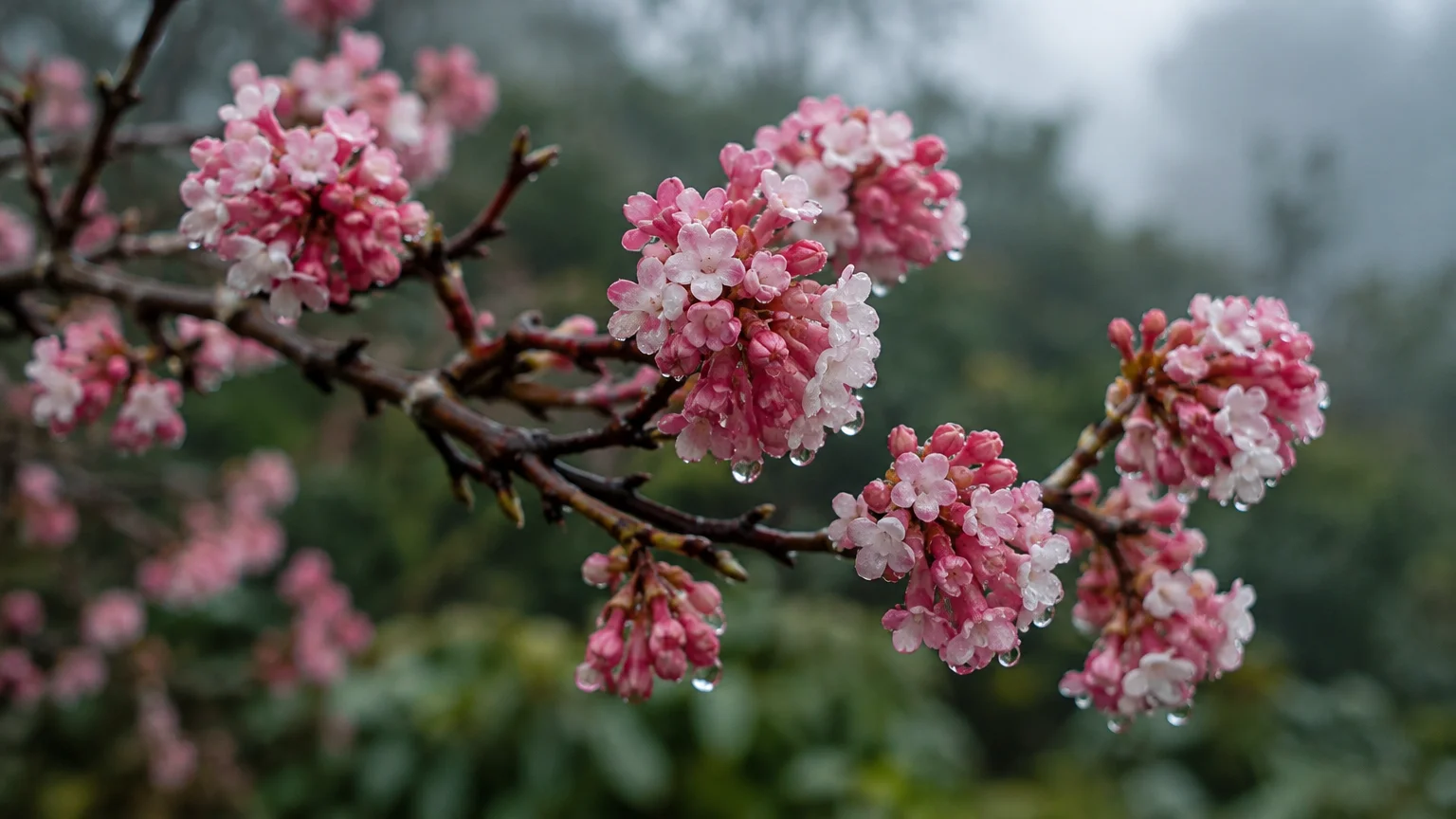
Tip #11: Dawn Viburnum (Viburnum × bodnantense ‘Dawn’)
Dawn viburnum opens clusters of tubular, deep rose buds that fade to soft blush pink. Blooming intermittently from November through March, it offers a spicy-sweet perfume reminiscent of vanilla and cloves.
Frost may singe open petals during sudden cold snaps, but unopened buds quickly take over. This tall, upright deciduous shrub matures to ten feet tall and six feet wide.
Plant ‘Dawn’ in full sun to partial shade in fertile, loamy soil that drains effectively. Ample sunlight ensures the heaviest flower production and enhances rich burgundy autumn leaf color.
Water thoroughly during extended summer droughts to maintain healthy buds along the upper branches. Mulch the root zone with well-rotted manure or compost each spring.
Prune out one-third of the oldest canes every few years after flowering ends in spring. Thinning the center allows sunlight to stimulate vigorous new basal stems.
Position this tall shrub behind low evergreen plantings to display its pale pink flowers dramatically. You will enjoy cut stems indoors all winter long.
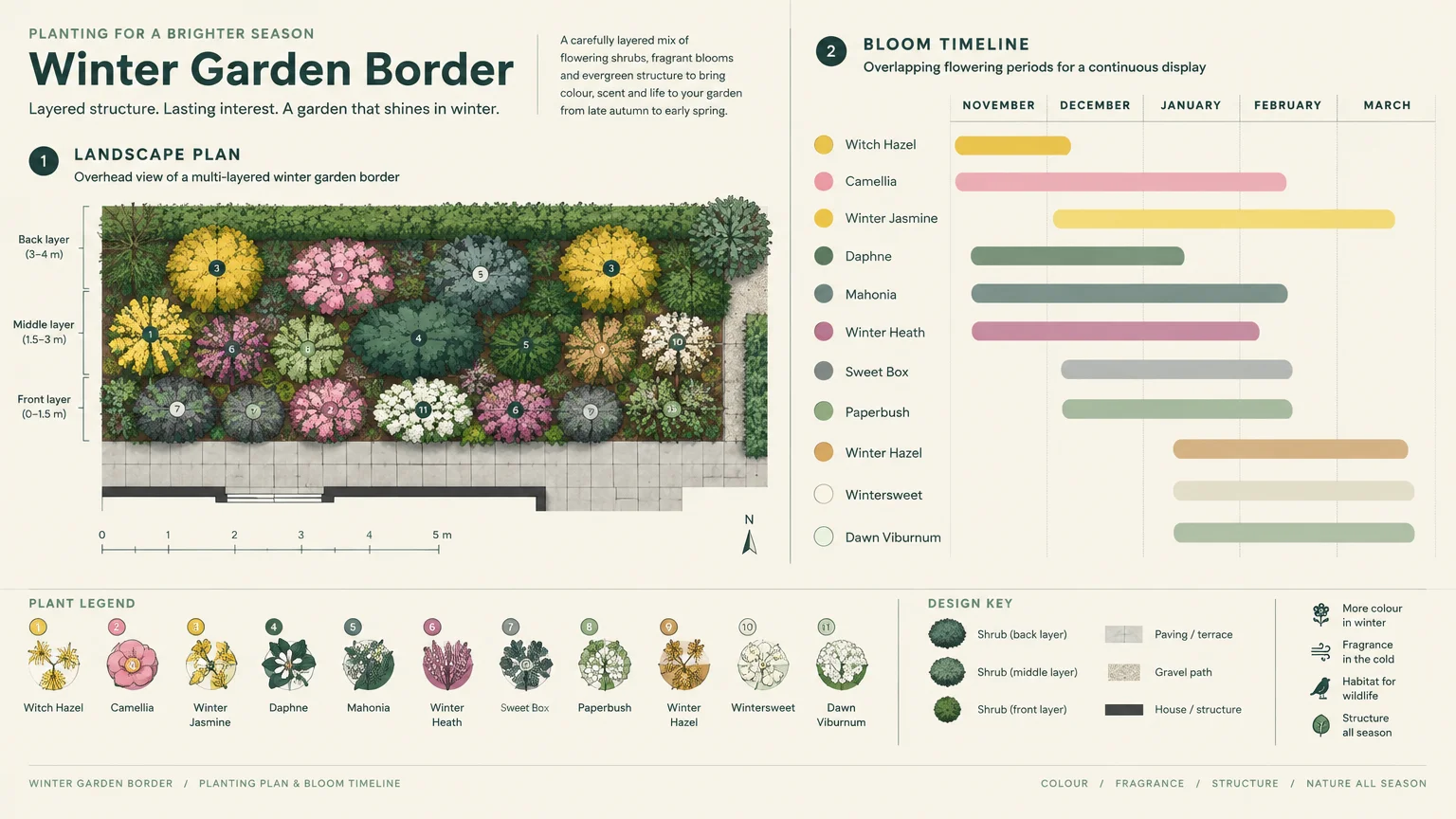
Putting It All Together: Enjoy Your Beautiful Garden
Integrating winter-flowering shrubs transforms dormant yards into dynamic, sensory retreats during the coldest months. By staggering bloom times, you can enjoy vivid color and fragrance from November through April.
Layer tall varieties like Dawn viburnum behind evergreen groundcovers like winter heath for stunning contrasts. This multi-tiered approach creates depth, texture, and reliable wind protection across your landscape.
Remember to plant your most fragrant selections near entryways, walkways, and patio gates. You will savor their sweet scents every time you step outside your door.
Consistent moisture in autumn and protective organic mulches help tender flower buds survive sudden freezes. With thoughtful planning, your cold-season garden will thrive with color and life year after year.
For region-specific advice, consult your local University Extension program (find yours via the USDA directory). For plant databases and inspiration, visit the Missouri Botanical Garden or the Royal Horticultural Society.
Disclaimer: This article provides general gardening advice. Always consider your specific climate, soil conditions, and local pests. Follow safety guidelines when using gardening tools and products.
Frequently Asked Questions
When is the best time to plant winter-blooming shrubs?
Early autumn is the ideal window for planting winter-blooming shrubs in most growing zones. Warm soil encourages rapid root growth before winter freezes arrive.
Alternatively, you can plant in early spring after the ground thaws. Ensure you water regularly throughout the first summer to reduce transplant shock.
How do winter flowers survive freezing temperatures and snow?
Winter-blooming shrubs have adapted unique cellular defenses against cold injury. Many species produce concentrated sugars that act like natural antifreeze within flower tissues.
Other shrubs, like witch hazel, curl their petals inward during severe frost. They unfurl unharmed once temperatures climb above freezing.
Do winter-flowering shrubs attract pollinators?
Yes, these blossoms offer critical nectar sources for early-emerging bumblebees and honeybees during mild spells. Species like mahonia and winter daphne provide vital nourishment when other forage is scarce.
Hummingbirds also visit tubular winter blossoms for energy during unseasonably warm afternoons. Planting them directly supports your local ecosystem when food is hard to find.
How should I prune shrubs that flower in winter?
Always prune your winter-flowering shrubs immediately after their blooms fade in spring. Trimming them in late summer or autumn removes the flower buds set for winter.
Focus on removing dead, damaged, or crossing branches to improve air circulation. Minimal pruning preserves natural forms while encouraging vigorous flowering stems for next year.