A well-designed garden walkway instantly transforms an ordinary yard into an enchanting outdoor sanctuary. It invites visitors to explore hidden garden rooms while protecting tender plant roots from heavy foot traffic.
You do not need a massive budget or landscaping crew to create charming garden design features. Simple materials like river rock, reclaimed brick, or natural flagstone can elevate your landscape overnight.
Whether you want a rustic woodland trail or an elegant formal path, thoughtful walkways establish structure and harmony. Explore these nine creative garden walkway ideas to build the perfect retreat in your own backyard.
Tip #1: Irregular Flagstone Stepping Stone Path
The Appeal of Natural Stone
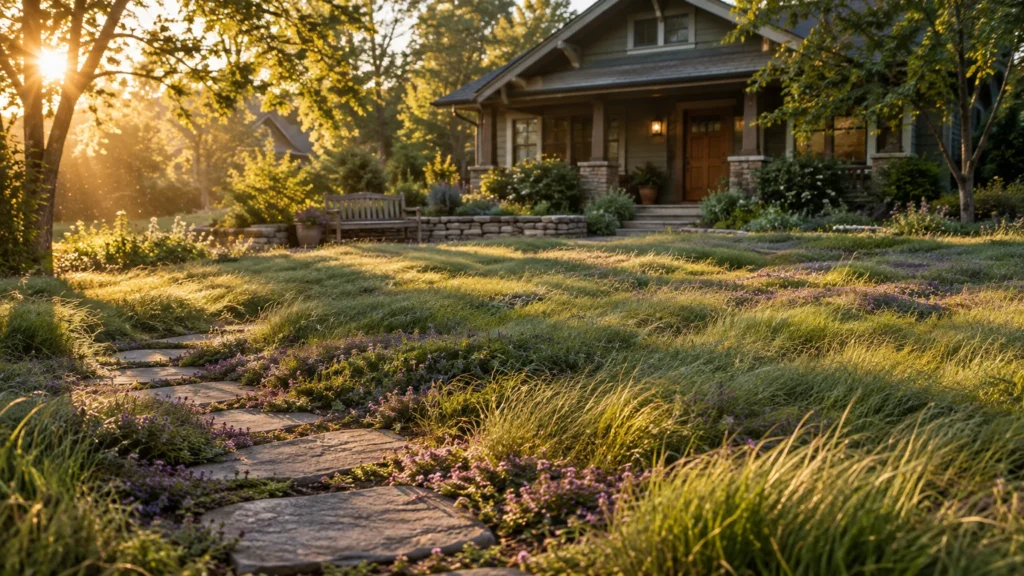
A flagstone stepping stone path provides a timeless, organic look that blends seamlessly into lush foliage. The uneven, hand-chiseled edges echo the natural contours of your garden beds.
Dense sandstone, limestone, and slate offer rugged durability that withstands decades of freezing winters and scorching summers. Their earthy gray, tan, and rust tones complement surrounding greenery effortlessly.
Installation and Spacing Essentials
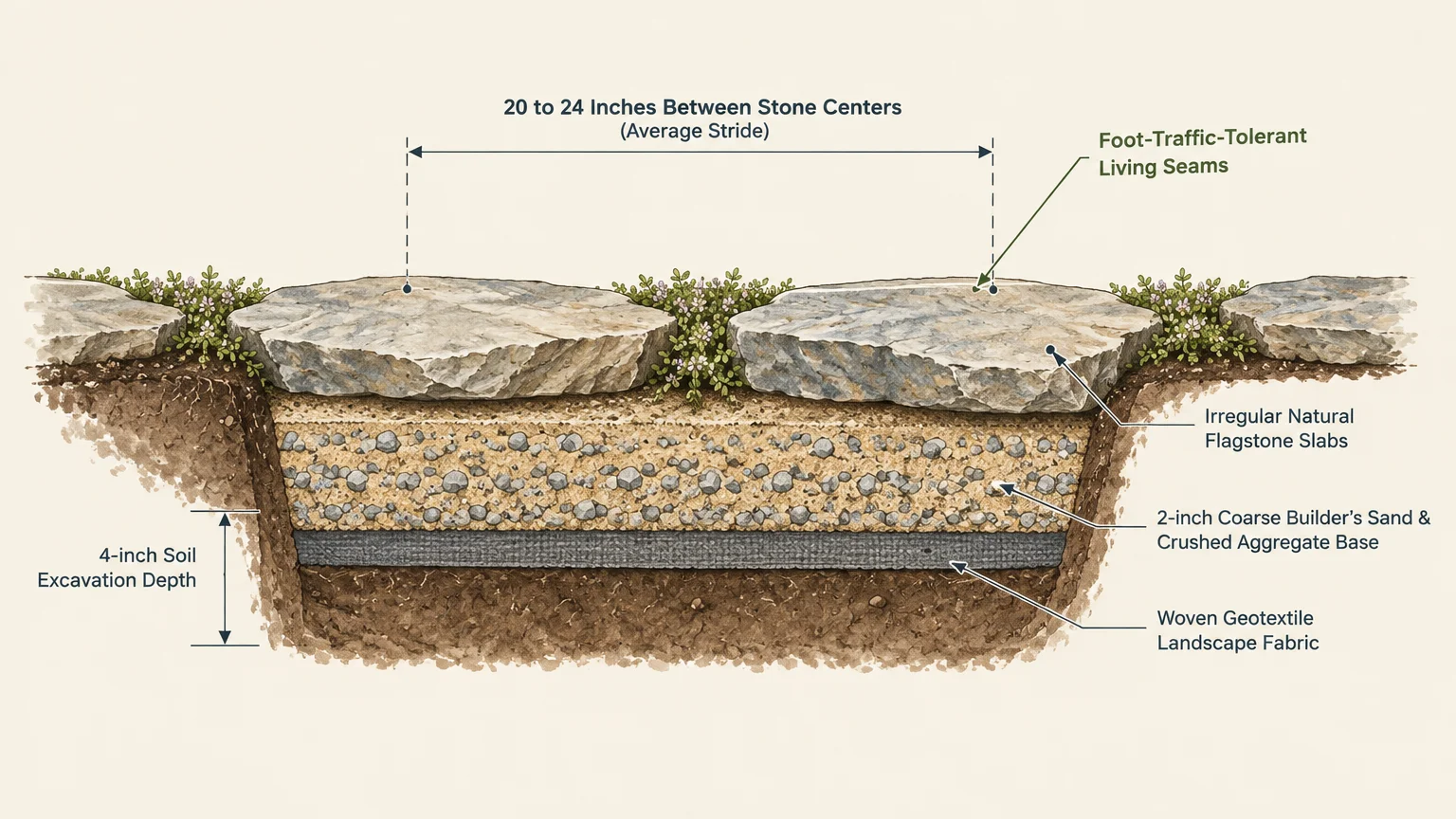
To build this path, excavate the soil about four inches deep along your intended garden path route. Lay down a sturdy geotextile landscape fabric to stop persistent weed growth without blocking natural drainage.
Next, spread a two-inch layer of coarse builder’s sand or crushed stone aggregate across the excavated trench. Level the base thoroughly using a straight wood board before arranging your heavy flagstone slabs.
Space the stones to match an average human stride, usually leaving roughly twenty to twenty-four inches between stone centers. This intentional spacing ensures comfortable walking for everyone strolling through your backyard.
Living Accents Between Stones
Soften the hard stone surfaces by planting low-growing, foot-traffic-tolerant groundcovers inside the wide seams. Creeping thyme, Irish moss, or dwarf mondo grass create a gorgeous tapestry of living texture.
Tip #2: Reclaimed Brick Walkway
Historic Cottage Character
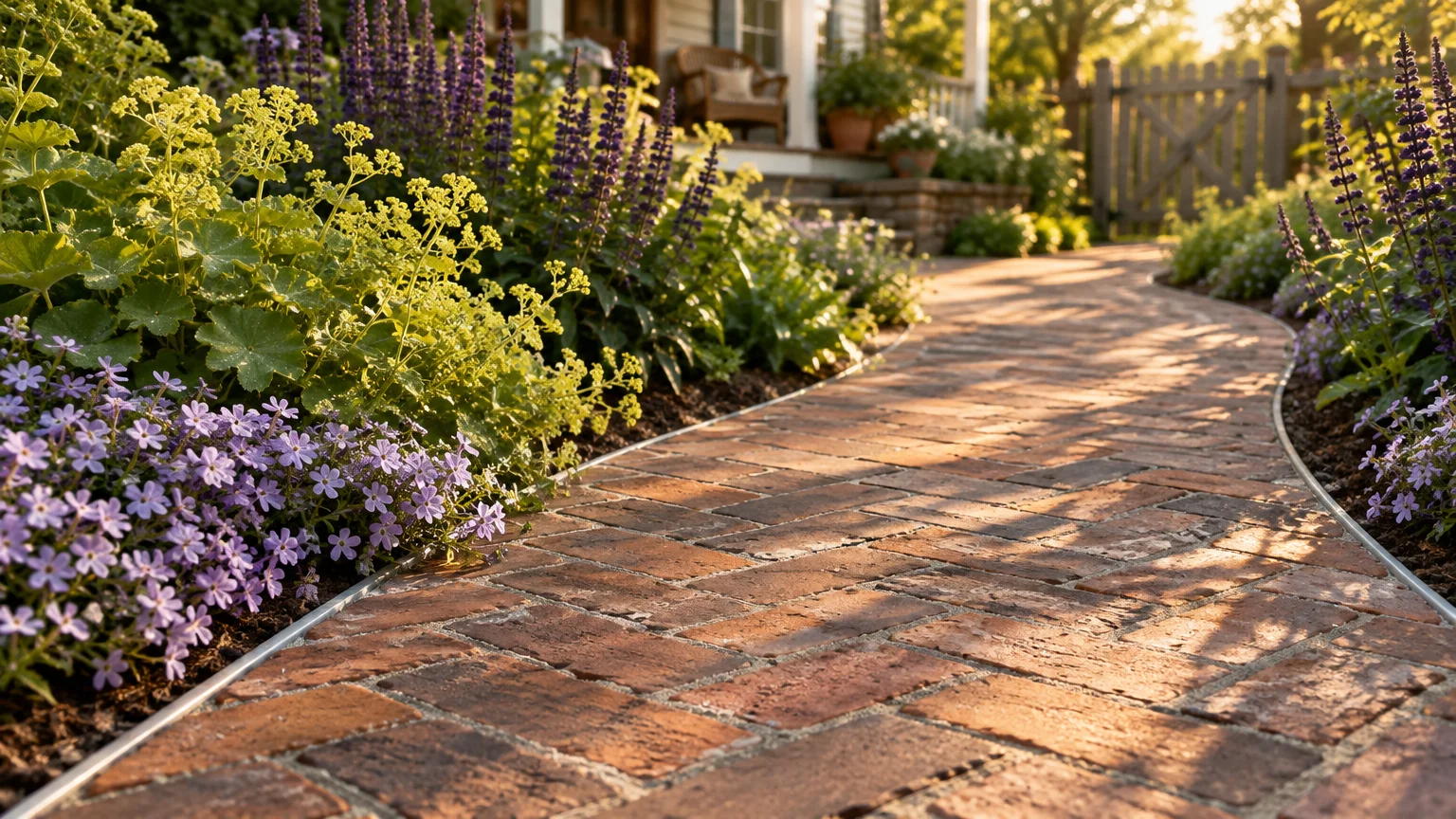
Reclaimed brick walkways instantly infuse your landscape with traditional cottage warmth and historical character. Weathered bricks display soft terracotta hues, subtle color variations, and softened edges that modern pavers simply cannot duplicate.
Sourcing salvaged bricks from local renovation projects or salvage yards also makes this a sustainable landscaping choice. Every vintage paver adds unique architectural history directly to your backyard path ideas.
Classic Patterns for Visual Rhythm
Laying bricks in dynamic patterns gives your garden walkway ideas structural depth and visual interest. A classic herringbone pattern interlocks tightly to resist shifting, while a running bond creates sweeping directional motion.
You can also choose a traditional basketweave pattern to provide an orderly, timeless appearance along straight borders. Whichever pattern you select, snap tight chalk lines to keep your joints straight and consistent.
Foundation and Joint Stabilization
Always bed reclaimed bricks into a well-tamped crushed gravel base topped with coarse bedding sand. Solid edge restraints made of aluminum or treated lumber prevent the exterior bricks from drifting outward over time.
Sweep fine polymeric sand into the dry joints to lock every unit firmly in place. Polymeric sand hardens when lightly misted with water, preventing weeds while deterring burrowing garden insects.
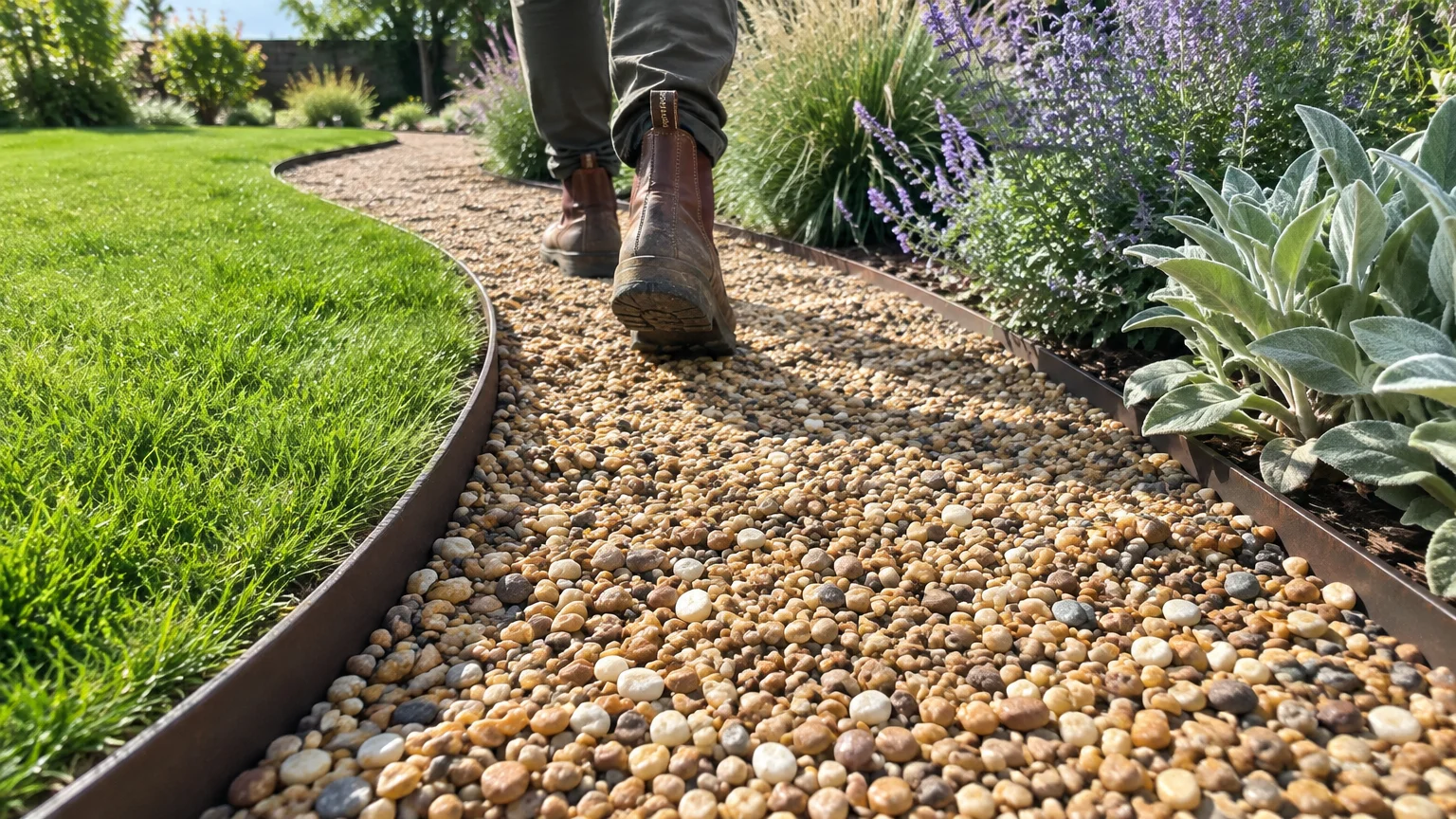
Tip #3: Pea Gravel Path with Crisp Metal Edging
Sensory Charm and Affordability
A pea gravel walkway offers distinct auditory charm, producing a soothing, rhythmic crunch beneath your boots. It remains one of the most cost-effective garden path ideas for covering extensive distances through large landscapes.
Naturally rounded pea gravel stones are gentle on bare feet and garden paws alike. Furthermore, the loose gravel surface provides exceptional rainwater permeability, preventing runoff and eliminating standing puddles.
Installing Rigid Edging Systems
Pea gravel requires firm containment, making sturdy steel or heavy-duty aluminum landscape edging essential. Drive commercial metal stakes deep into the native soil to lock the edging strips flush against lawn turf.
Without deep borders, loose gravel quickly migrates into nearby garden beds and damages lawn mower blades. Keep your metal edging standing roughly one-half inch above the finished gravel surface for maximum stone retention.
Preventing Rutting and Sinking
Spread a permeable woven weed barrier across the compacted trench before pouring your bulk pea gravel. For high-traffic walkways, install interlocking cellular gravel stabilization grids directly over the fabric base.
Fill the path with a uniform layer of gravel no deeper than two to three inches. Deeper layers create a spongy feeling that makes walking or rolling wheelbarrows surprisingly difficult.
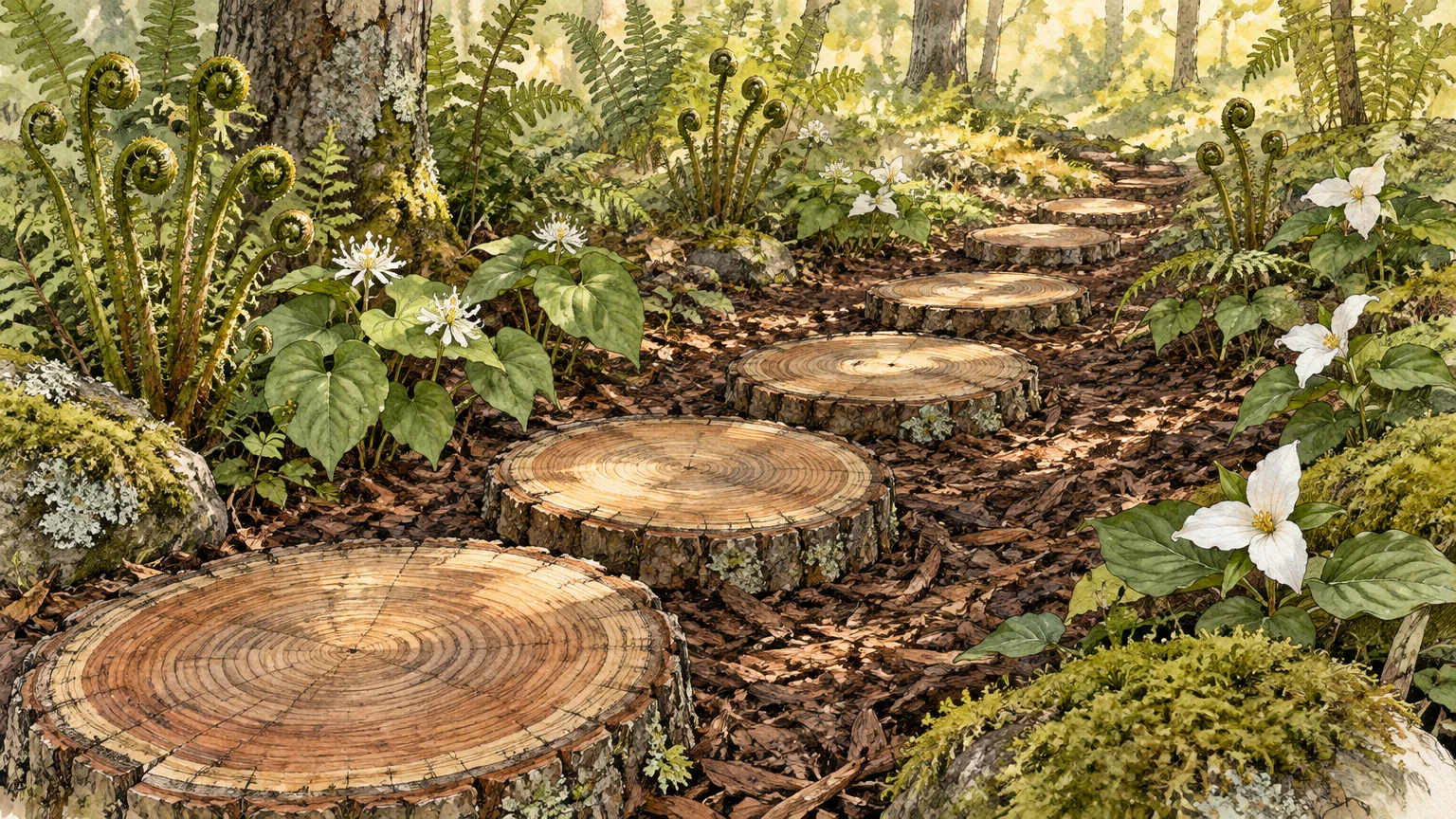
Tip #4: Rustic Wood Slice Stepping Trail
Natural Woodland Atmosphere
Wood slice pathways—often called tree round paths—bring organic woodland whimsy directly to shady backyard alcoves. They create a storybook atmosphere when meandering under dense shade trees or through fern-filled glades.
You can make these rounds from fallen hardwood limbs, salvaged tree stumps, or cedar logs cut into thick cookies. Every individual slice showcases unique growth rings, natural bark textures, and distinctive grain patterns.
Selecting Durable Wood Species
Rot resistance is critical when placing organic wood products directly against damp garden soil. Choose naturally decay-resistant timbers such as black locust, cedar, white oak, or redwood for optimal outdoor longevity.
Cut your wood slices at least four to six inches thick to prevent premature warping or cracking. Avoid softwoods like pine, which decay rapidly when exposed to garden moisture and hungry termites.
Installation and Moisture Protection
Coat each dried timber round with an eco-friendly penetrating wood sealant or raw linseed oil before installation. Dig matching recesses into a bed of coarse drainage pea gravel to keep standing water away from wood bases.
Pack fine cedar sawdust, pine needles, or shredded leaves around the wooden discs to stabilize their perimeter. This organic infill blends the slices into your woodland garden while keeping walking surfaces tidy and stable.
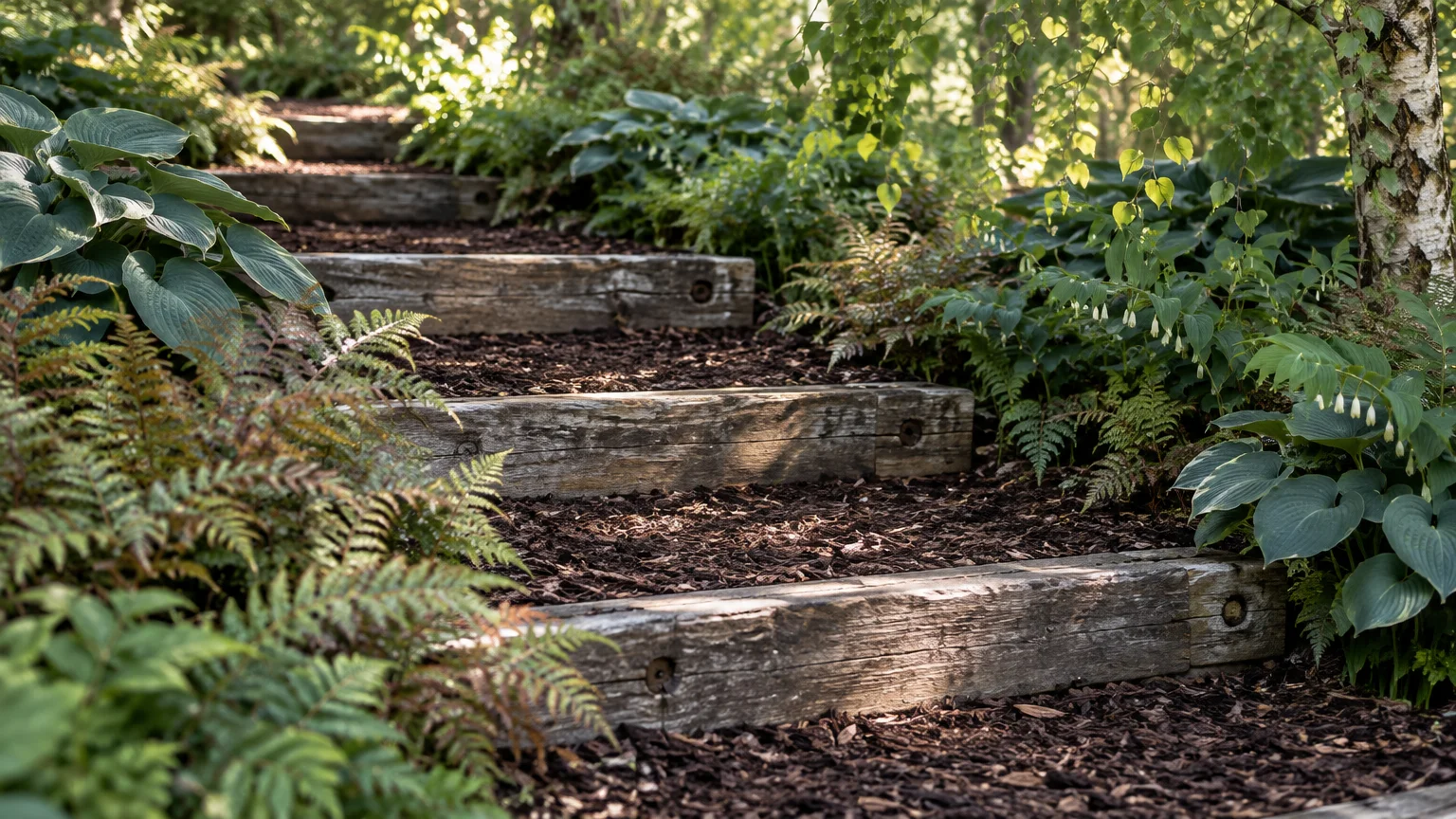
Tip #5: Organic Mulch and Timber Sleeper Path
Soft and Economical Walkways
Organic mulch and timber sleeper paths provide a wonderfully soft, springy walking experience underfoot. They represent an outstanding budget-friendly option for informal garden spaces, woodland borders, and permaculture food forests.
Organic mulch paths break down slowly over several seasons, enriching surrounding soil biology and keeping nearby plant roots insulated. Sourcing fresh arborist wood chips through local tree services often costs nothing or very little.
Using Heavy Wooden Sleepers
Incorporating chunky timber sleepers or untreated cedar ties across the path creates functional, rustic structural steps. These horizontal crossbars anchor the path securely on gentle slopes, preventing bark mulch from washing away during downpours.
Secure your timber sleepers into the ground using steel rebar pins driven through pre-drilled holes. This heavy anchoring keeps your wooden risers rock-solid under heavy loads, wheelbarrow traffic, and seasonal ground movement.
Maintenance and Weed Control
Lay a thick layer of plain cardboard or biodegradable brown paper directly beneath your wood chips. This natural sheet mulch suppresses invasive perennial weeds while earthworms break the cardboard down into fertile humus.
Replenish the walkway with two inches of fresh bark mulch every spring to maintain uniform depth. The refreshed mulch will suppress weeds and restore an attractive, rich forest floor fragrance to your garden.
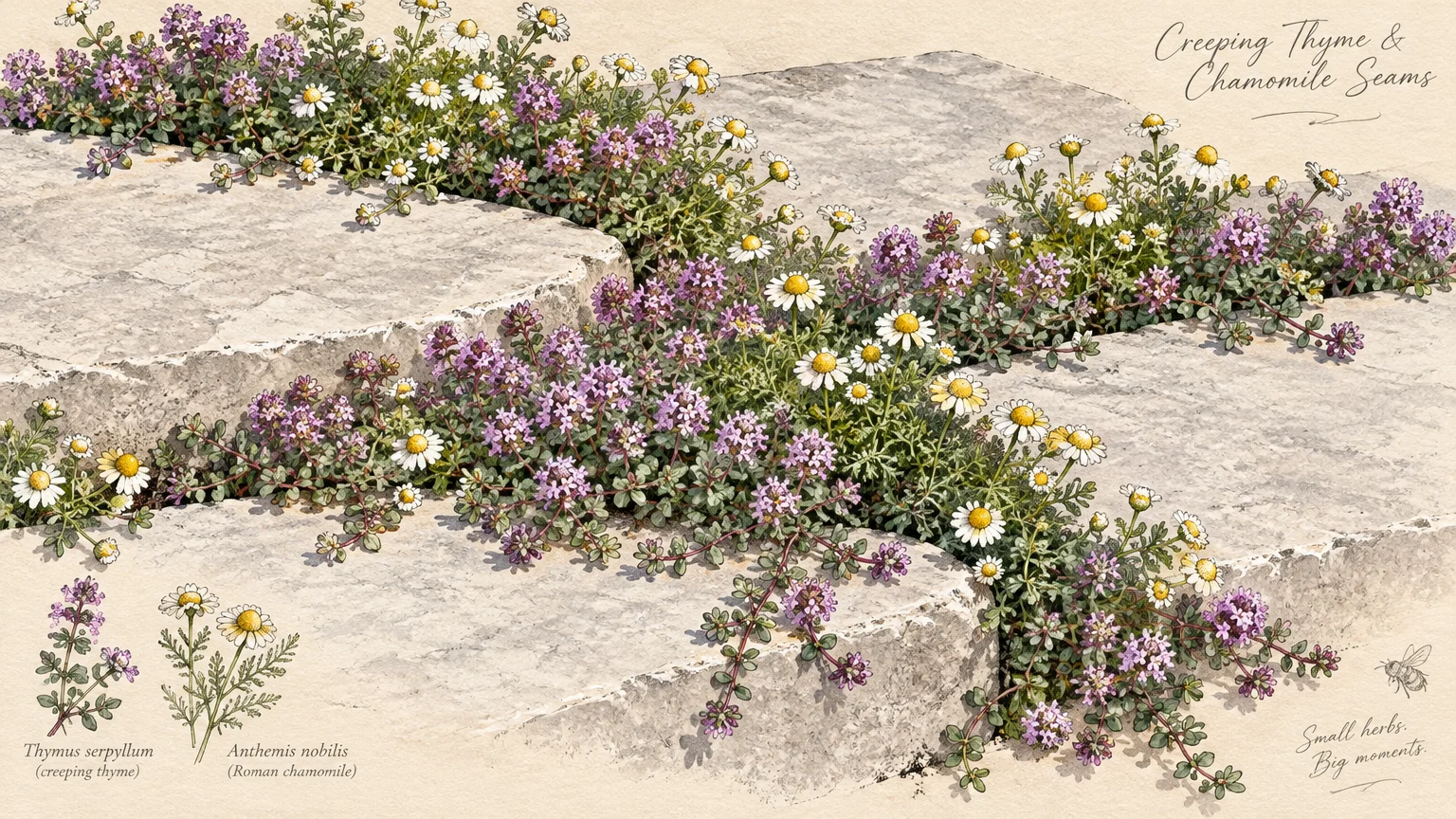
Tip #6: Fragrant Creeping Herb and Paver Walkway
An Aromatic Walking Journey
An aromatic herbal walkway engages your sense of smell as intimately as your visual aesthetic. Stepping lightly upon creeping herbs releases refreshing bursts of essential oils into the warm garden air.
This immersive experience turns a routine walk through the yard into a rejuvenating sensory journey. It represents charming garden design at its absolute best, fusing living plant life with functional hardscaping.
Best Herbal Plants for Paths
Creeping thyme varieties, such as red creeping thyme or woolly thyme, handle foot traffic exceptionally well. They form dense, weed-choking mats only two inches high and bloom with vibrant flowers during summer months.
Roman chamomile makes another delightful infill choice, producing tiny daisy-like flowers and a crisp apple fragrance when stepped on. For shaded garden paths, Corsican mint creates an emerald carpet emitting a clean peppermint aroma.
Creating the Herbal Base
Space your primary stepping stones roughly four inches apart to leave generous planting pockets for the herbs. Fill these open gaps with a sandy loam soil blend that drains excess water quickly.
Trim wandering stems lightly after their summer flowering period to encourage dense, bushy foliage. Occasional clipping prevents herbs from spilling over the stone edges and keeps walking surfaces neat and clear.
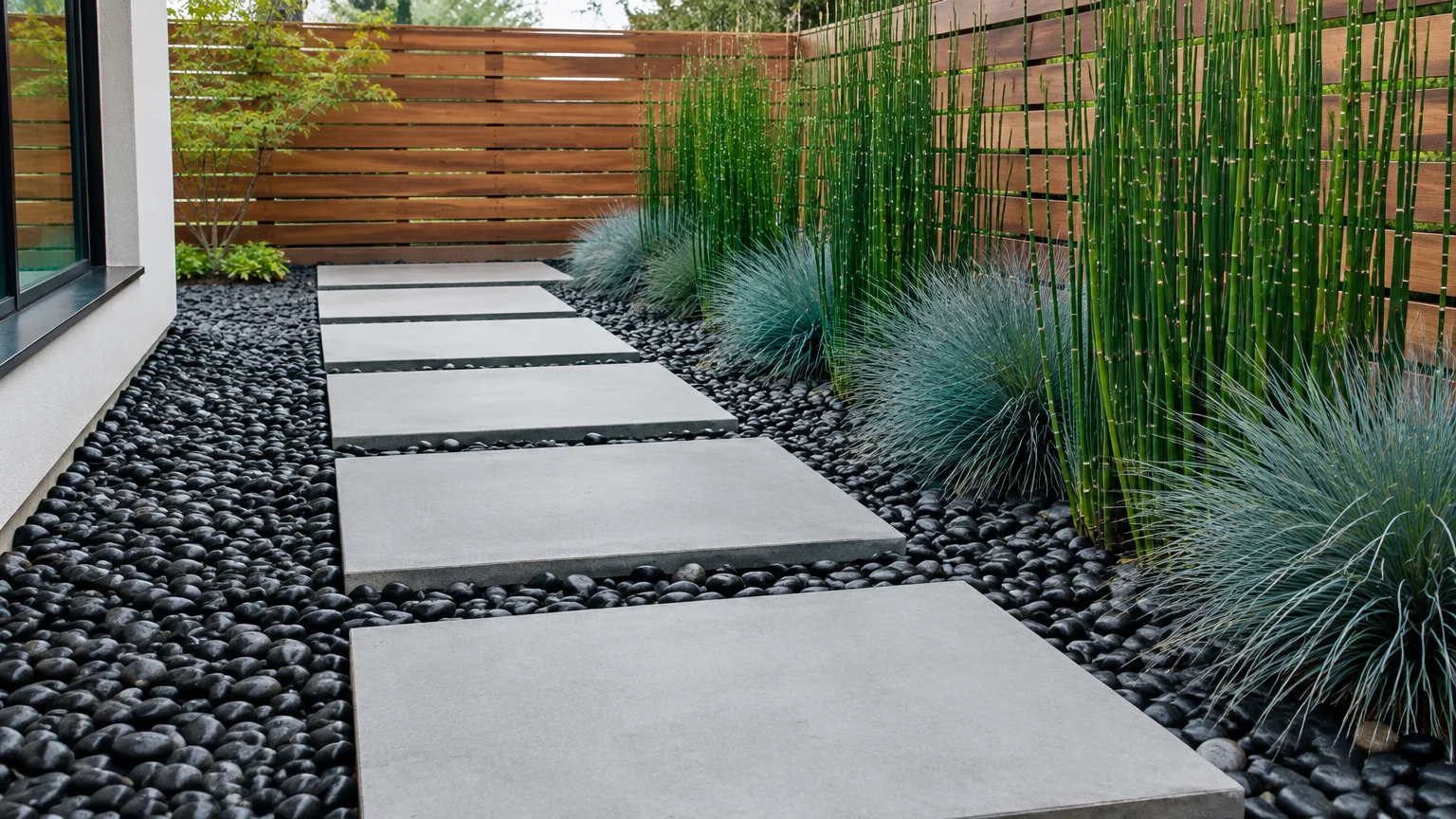
Tip #7: Geometric Concrete Pavers with River Rock
Clean Lines and Contemporary Style
Geometric concrete pavers framed by smooth river rocks offer a striking, contemporary architectural aesthetic. The clean, crisp symmetry of square or rectangular pavers creates an eye-catching contrast against dark, rounded river stones.
This minimalist layout brings visual order to modern backyards and complements structured architectural planting schemes. It functions beautifully along property sidelines or leading directly toward an outdoor dining patio.
Material Selection and High Contrast
Choose large, light gray or charcoal architectural concrete slabs measuring at least twenty-four inches across. Their substantial footprint provides a broad, stable stepping platform that feels completely safe underfoot.
Surround the slabs with contrasting black Mexican beach pebbles or polished river stones for striking drama. The dramatic tonal difference between smooth polished rocks and textured concrete highlights the path’s crisp geometry.
Installing Geometric Pavers Safely
Set your heavy pavers on a firmly compacted crushed gravel base to prevent uneven settling or shifting. Level each individual paver carefully with a spirit level before backfilling the surround with river pebbles.
Keep the surrounding river stone infill slightly below the surface plane of your concrete pavers. This design detail keeps loose stones from rolling onto the pavers and under your feet.
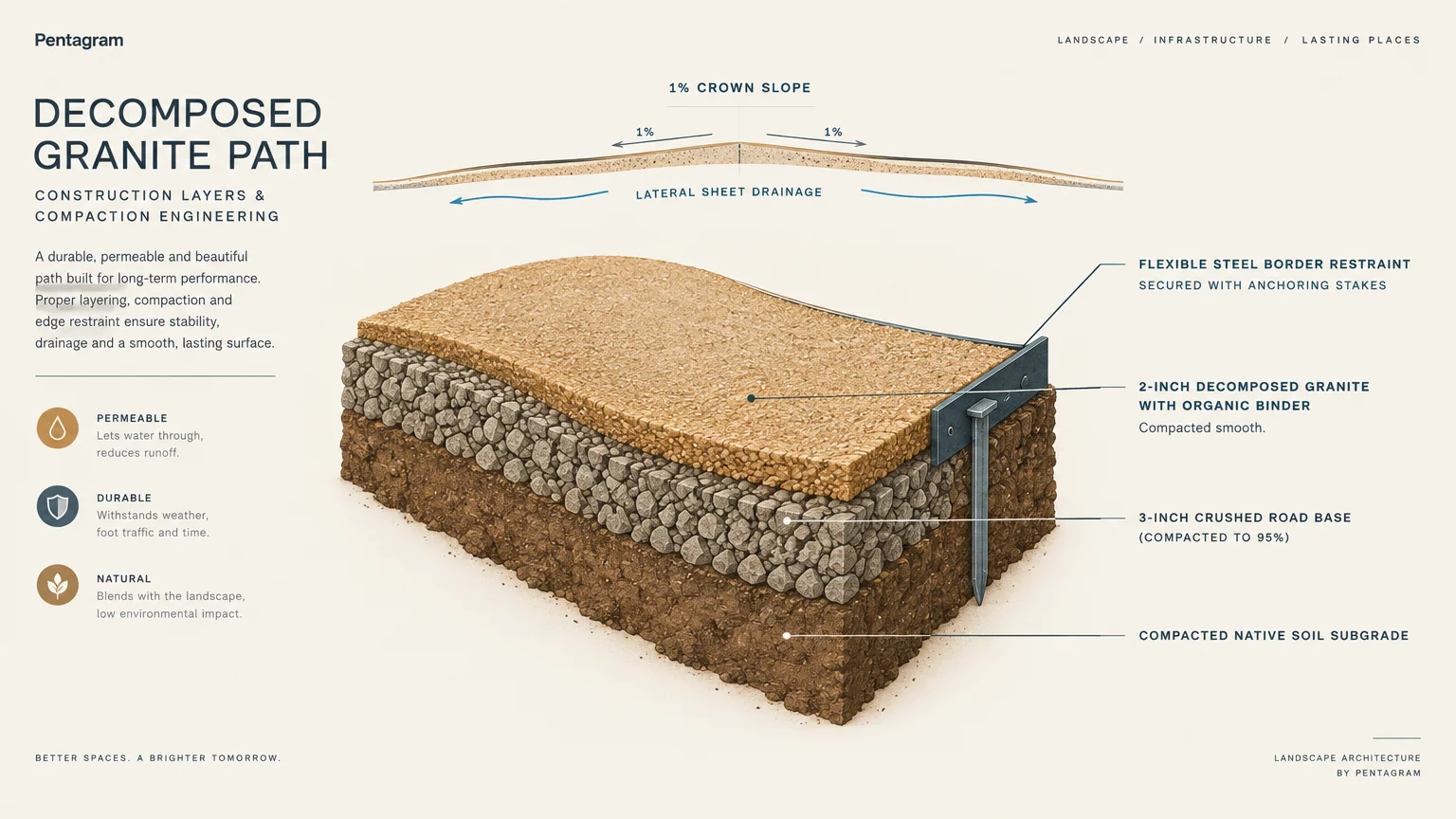
Tip #8: Decomposed Granite Meandering Path
Earthy Elegance and Natural Permeability
Decomposed granite walkways—often called DG paths—offer a warm, natural golden hue reminiscent of Mediterranean villa courtyards. DG consists of weathered granite rock particles that compact into an exceptionally firm, smooth surface.
It curves effortlessly around established garden beds, creating soft, meandering lines through your landscape. In addition, its porous texture allows heavy rain to infiltrate directly into surrounding garden soil.
Stabilized vs. Loose DG
For superior longevity, always choose stabilized decomposed granite blended with organic binding additives. Stabilized DG resists water erosion during torrential downpours and stays remarkably firm under heavy wheelbarrow traffic.
Loose DG without stabilizers can track onto interior floors, scratching delicate indoor hardwood surfaces. Stabilized binders keep the granite particles glued firmly together while preserving that soft, earthy exterior look.
Compaction Steps for Durability
Excavate your pathway three to four inches deep and install sturdy steel or stone edging along both sides. Edge containment is critical to prevent the outer edges of the granite from crumbling over time.
Spread the decomposed granite in two thin lifts, watering each layer lightly before running a heavy vibrating compactor. Compacting the moist material thoroughly ensures a long-lasting, rock-hard walking trail through your yard.

Tip #9: Slate Tile and Moss Walkway
Moody Elegance in Shaded Gardens
A dark slate tile pathway framed by lush emerald moss creates an enchanting, peaceful mood in shady areas. The deep charcoal and blue-gray hues of genuine slate offer a stunning backdrop for vibrant green mosses.
This design works exceptionally well beneath towering trees, along northern home foundations, or inside Japanese-style zen gardens. It turns damp, dimly lit garden zones into breathtaking tranquil focal points.
Cultivating Thriving Living Moss
Rather than fighting garden moss, embrace it as an evergreen, zero-maintenance living carpet between your slate tiles. Sheet moss, cushion moss, and fern moss thrive in moist, acidic shade where turfgrass refuses to grow.
You can collect local moss fragments from nearby rocky woods and press them directly into damp joints. Mist the fresh moss daily for several weeks until its delicate rhizoids anchor into the moist soil.
Laying Slate Safely
Choose natural cleft slate with a textured surface rather than polished tiles to prevent slippery conditions when wet. Set your slate pieces securely over a deep crushed stone foundation to ensure consistent moisture drainage.
Keep the slate tiles slightly elevated above the surrounding moss bed to protect plant crowns from foot compression. Sweeping fallen autumn leaves off the dark slate maintains clean lines and keeps moss thriving.
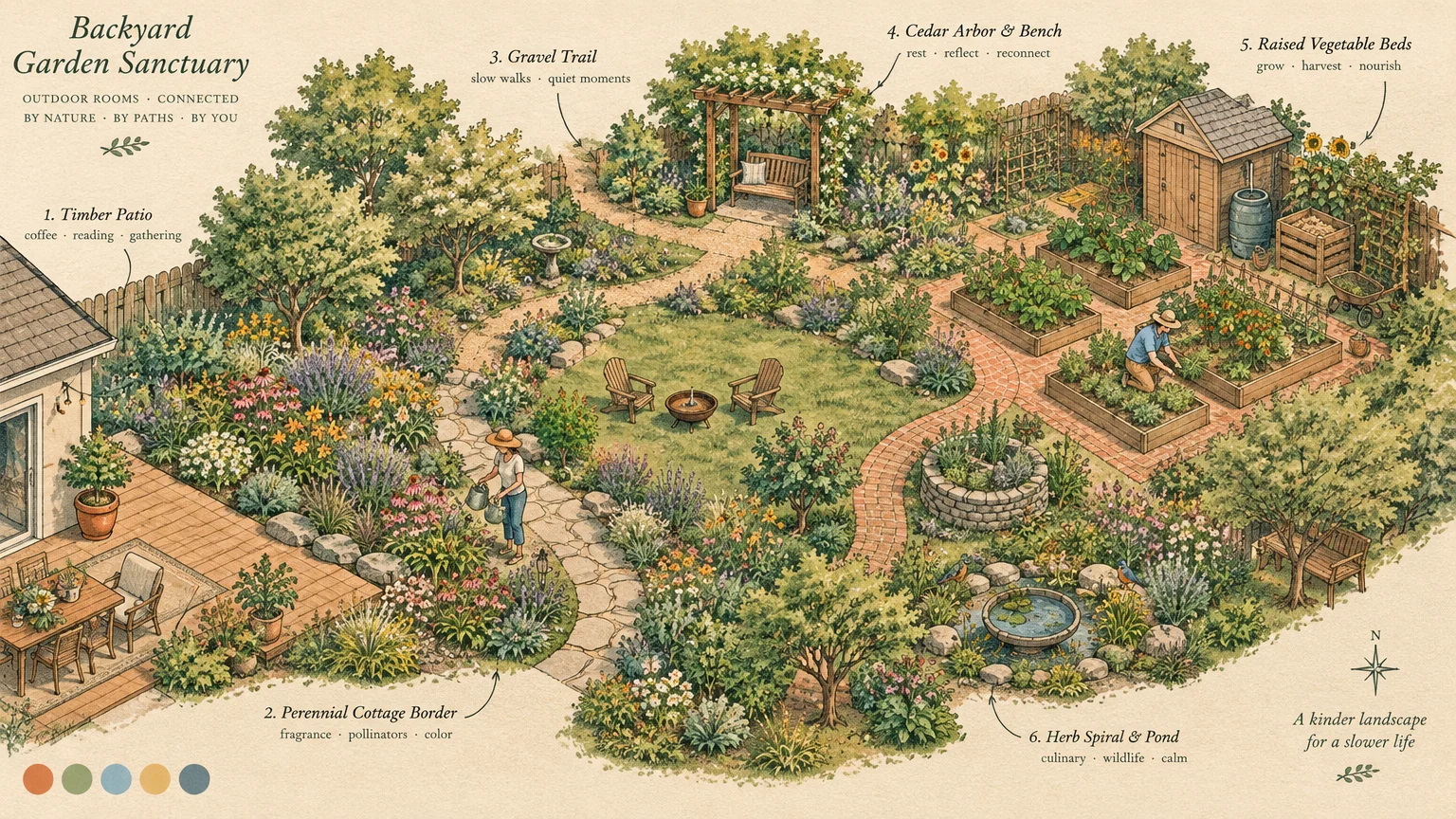
Putting It All Together: Enjoy Your Beautiful Garden
Designing and installing a garden walkway is one of the most rewarding improvements you can make to your landscape. A well-built path defines your outdoor living space, guides movement, and highlights your favorite blooming perennials.
Before starting your project, observe how you and your family naturally navigate through your backyard space. Following natural foot trails ensures your new garden walkway ideas feel completely intuitive and functional.
Always match your path materials to your home’s exterior architecture and the surrounding garden theme. Reclaimed brick suits traditional cottages, whereas smooth concrete pavers enhance modern contemporary architecture.
Take your time with the essential prep work, particularly sub-base excavation, edge restraints, and proper weed barrier installation. Thorough groundwork guarantees your pathway remains safe, level, and beautiful for decades to come.
Add low-voltage landscape lighting, solar path lanterns, and fragrant bordering perennials to complete the visual experience. These finishing touches invite you outside to enjoy peaceful evening strolls whenever twilight arrives.
Remember that the best paths balance functional utility with artistic beauty to invite relaxed outdoor exploration. Start small, gather quality materials, and enjoy the creative process of building your dream garden walkway.
For region-specific advice, consult your local University Extension program (find yours via the USDA directory). For plant databases and inspiration, visit the Missouri Botanical Garden or the Royal Horticultural Society.
Frequently Asked Questions
What is the most inexpensive material for a DIY garden path?
Wood chips and crushed pea gravel are typically the most affordable materials for building a backyard path. Many local arborists offer free wood mulch, while pea gravel can be delivered economically in bulk quantities.
Both materials require simple excavation and basic landscape edging, making them beginner-friendly DIY weekend projects.
How wide should a residential garden walkway be?
A single-person garden path should measure at least twenty-four to thirty-six inches wide for comfortable movement. If you want two people to walk comfortably side-by-side, design your walkway between forty-eight and sixty inches wide.
Wider paths also accommodate heavy wheelbarrows and lawn mowers without damaging delicate border flowers or ornamental edging.
How do I stop weeds from growing between stepping stones?
Lay a heavy-duty commercial geotextile landscape fabric directly beneath your paver sand base to block germinating weeds. For stone joints, sweep polymeric sand between pavers or plant dense creeping groundcovers like thyme.
Dense groundcovers crowd out weed seeds naturally, while hardened polymeric sand forms an impenetrable weed barrier.
Can I install a garden walkway on a slope?
Yes, you can install pathways across gentle slopes by incorporating timber or stone steps along the route. Riser steps prevent gravel or mulch erosion by creating level walking landings throughout the incline.
Always secure timber risers with steel rebar pins driven deeply into the underlying slope for safety.
Disclaimer: This article provides general gardening advice; always consider your specific climate, soil conditions, and local pests. Follow safety guidelines when using gardening tools and products.