Aggressive weeds steal vital moisture, sunlight, and soil nutrients directly from your prized garden plants. Accurate weed identification allows you to stop these unwanted invaders before they overpower your landscape beds.
Mastering garden weed control does not demand harsh chemical sprays or frustrating weekend chores. With thoughtful cultivation techniques, you can foster rich soil biology and protect your ornamental flowers.
Discover how to get rid of weeds using sustainable, reliable gardening practices. Here are ten common garden weeds that could be invading your yard right now, along with simple solutions to defeat them.
Tip #1: Crabgrass (Digitaria)
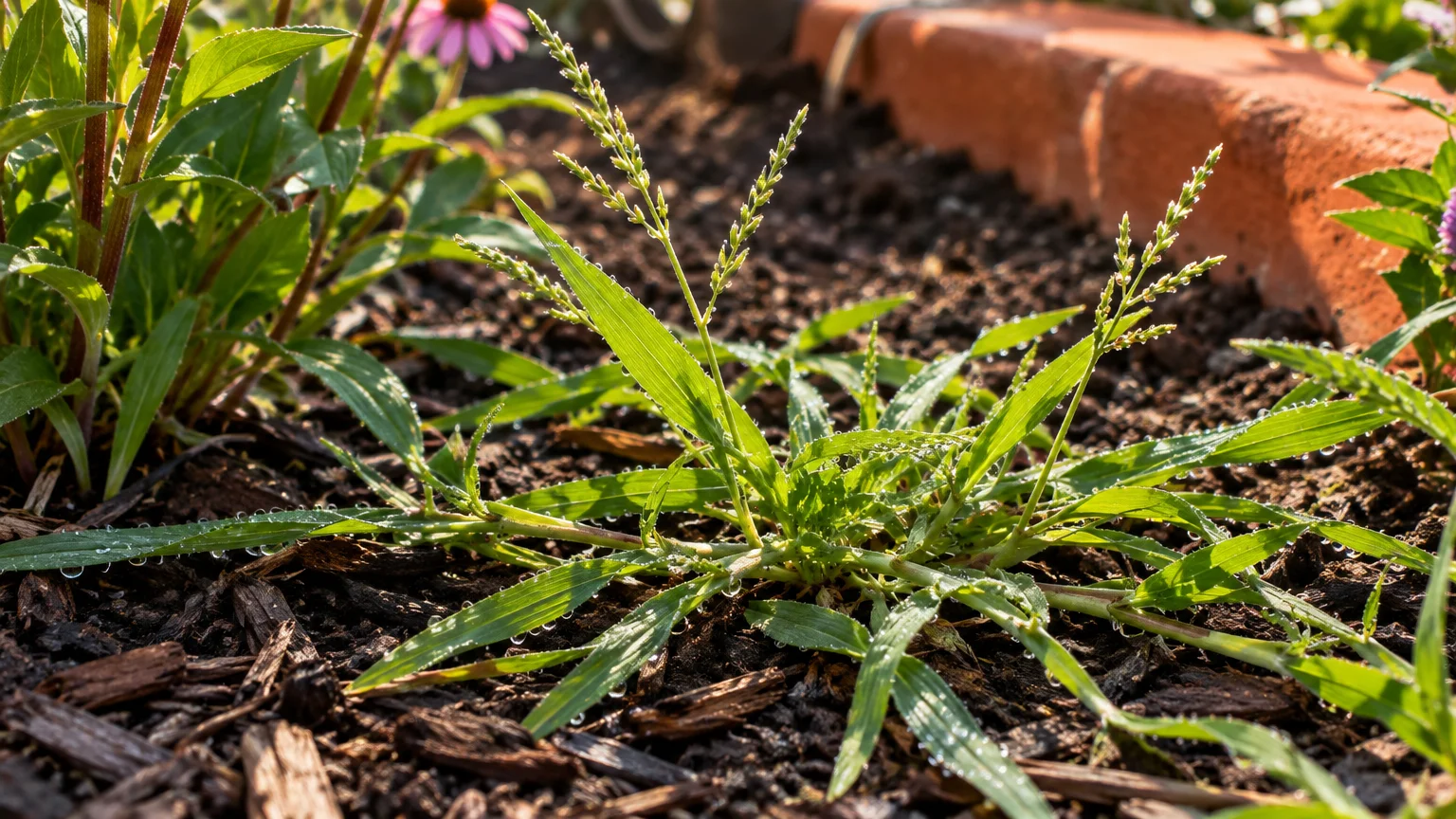
Crabgrass ranks among the most aggressive annual common garden weeds invading sunny lawns and borders. This opportunistic grass thrives in bare soil patches where turfgrass struggles under intense heat.
Identifying Crabgrass
Crabgrass features light-green blades spreading outward from a central base in a low, flat pattern. Its sprawling stems look like crab legs crawling across your garden beds.
Slender flower spikes appear in midsummer, dropping thousands of hardy seeds into the earth. These resilient seeds remain viable in garden soil for several seasons.
Garden Weed Control for Crabgrass
Apply a thick layer of shredded bark mulch across open beds to block germination light. Mulch creates a physical barrier that prevents dormant seeds from establishing root systems.
Hand-pull young crabgrass clumps in early summer before seed heads mature. Applying corn gluten meal in early spring also inhibits new grass seedlings naturally.
Tip #2: Dandelion (Taraxacum officinale)
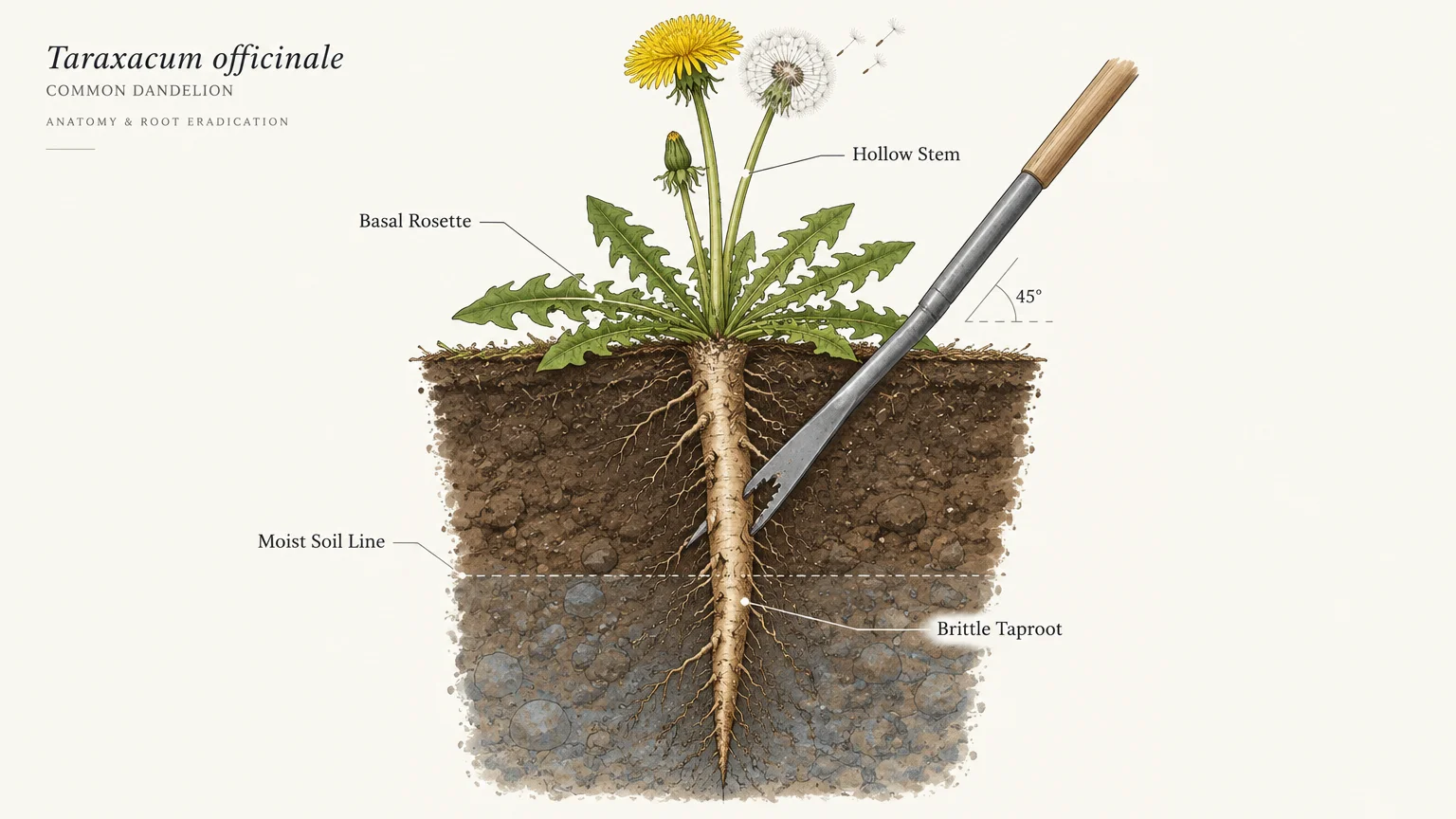
Dandelions are familiar perennial weeds that establish quickly in lawns, vegetable beds, and ornamental borders. Their thick taproots compete aggressively with neighboring plants for moisture and vital nutrients.
Recognizing Dandelion Growth
Dandelions produce a basal rosette of deeply notched, tooth-like leaves hugging the ground. Hollow flower stems rise from the center, topped with cheerful yellow blossoms.
Mature blooms transform into spherical white seed heads carrying hundreds of airborne seeds. Wind disperses these miniature parachutes directly into freshly cultivated soil.
Eliminating Dandelions Permanently
Use a notched dandelion weeding tool to extract the entire brittle taproot intact. Any root piece left in the ground can regenerate into a full plant.
Weed after rain when moist soil releases the taproot without snapping. Snapping the yellow flowers before they go to seed also halts further reproduction.
Tip #3: Field Bindweed (Convolvulus arvensis)
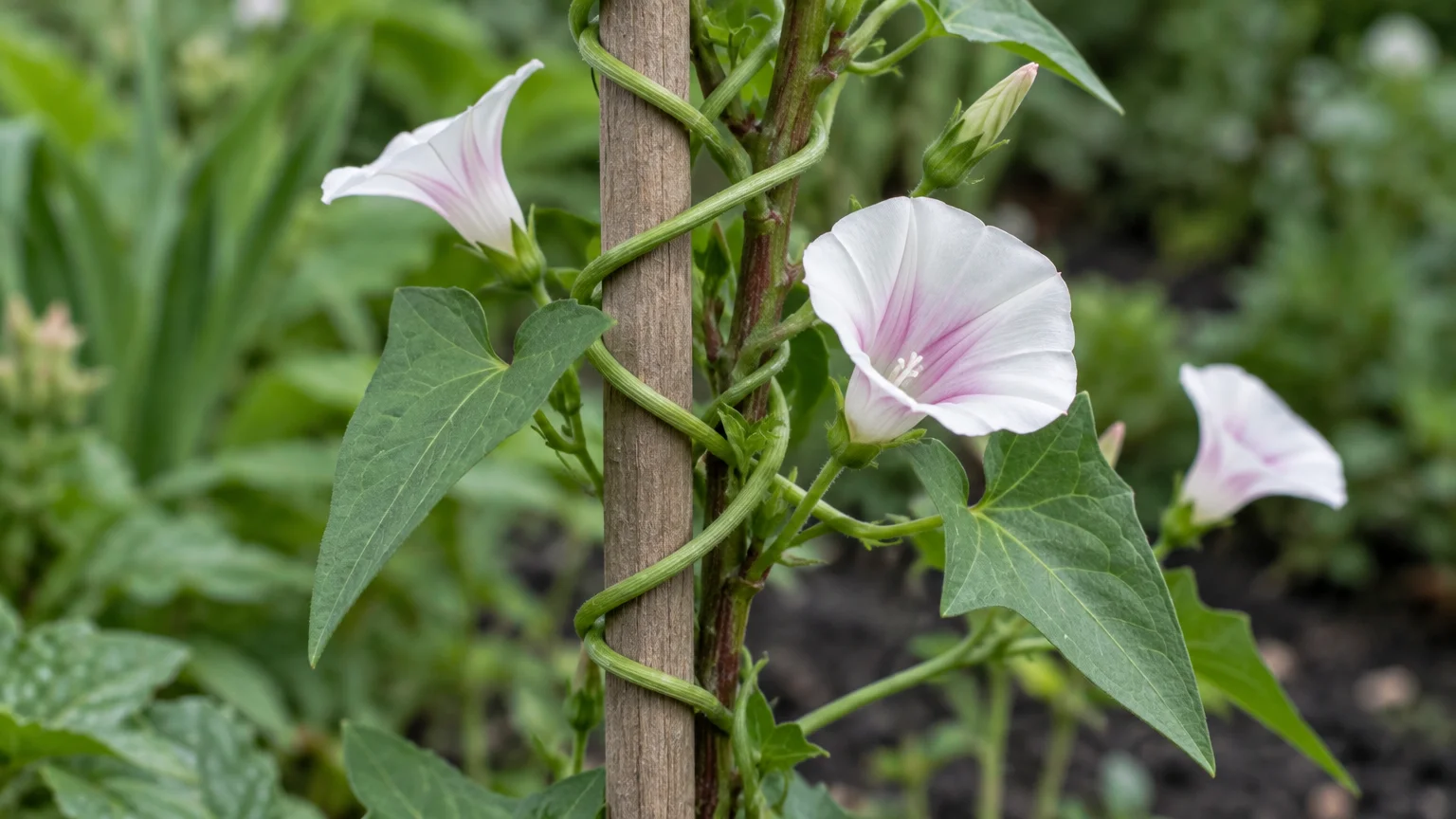
Field bindweed is one of the most persistent invasive weeds challenging home gardeners. This perennial vine twists tightly around perennial stems, quickly smothering prized garden plants.
Spotting Field Bindweed
Look for slender green vines bearing distinct arrowhead-shaped leaves with blunt tips. In summer, funnel-shaped flowers open in delicate shades of white and soft pink.
Its extensive root network penetrates deep into subsoil, storing massive carbohydrate reserves. These vigorous underground rhizomes survive drought, winter freezes, and shallow cultivation.
Controlling Persistent Vines
Cut bindweed vines to ground level every two weeks to deplete root reserves. Avoid rototilling infested soil, which chops rhizomes into hundreds of growing fragments.
Smother established patches under heavy cardboard covered with four inches of mulch. Starving the root system of sunlight over multiple seasons brings effective eradication.
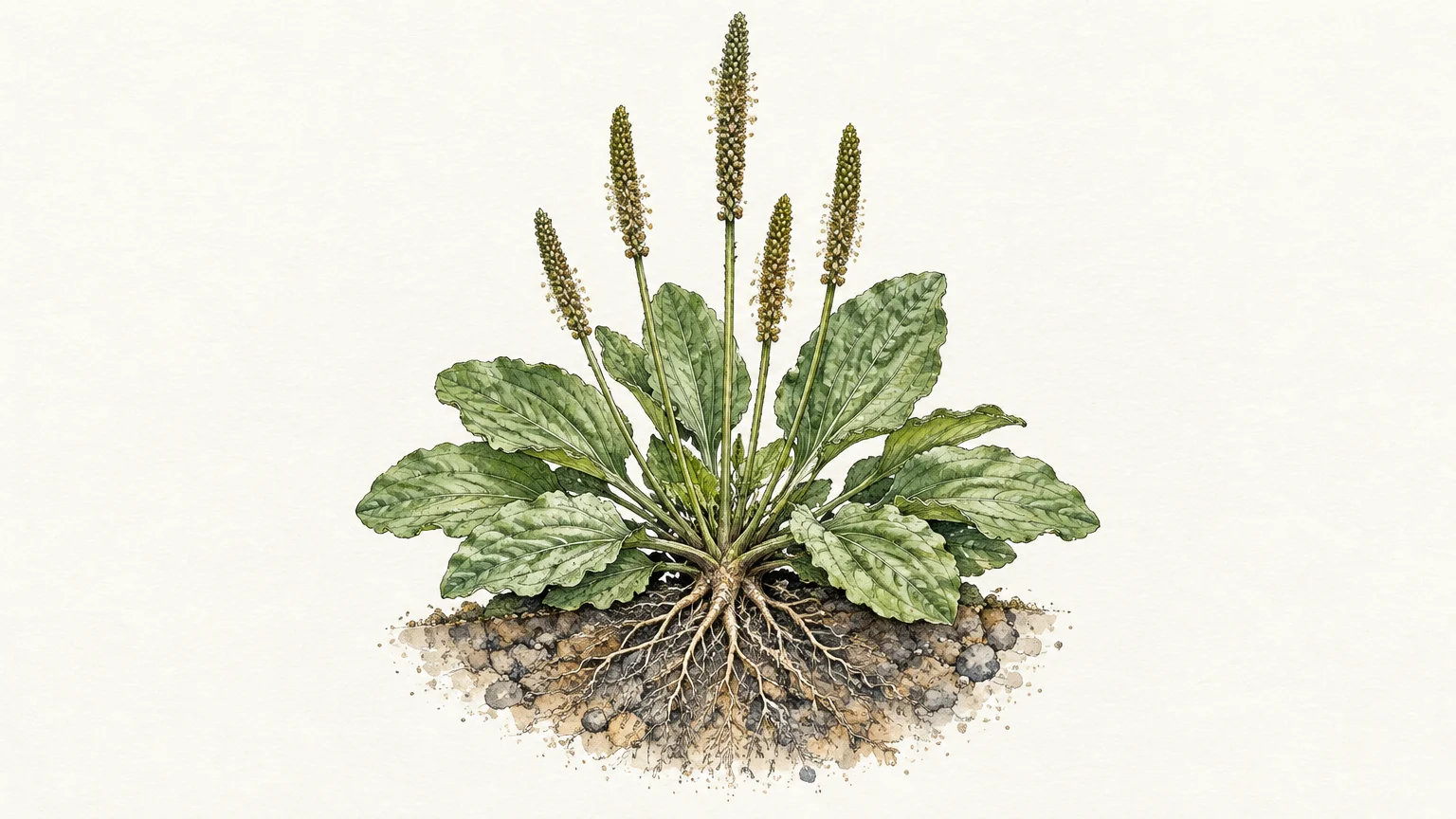
Tip #4: Broadleaf Plantain (Plantago major)
Broadleaf plantain is a hardy perennial weed commonly found along paths, lawns, and borders. It thrives in compacted, heavy clay soils where cultivated plants struggle to root.
Weed Identification for Plantain
Plantain forms a flat rosette of broad, oval leaves with prominent parallel veins. Stiff, pencil-like flower stalks rise from the center, bearing dense clusters of seeds.
These sticky seeds attach easily to passing garden tools, shoes, and pets. A single plant can disperse thousands of seeds throughout your growing beds.
Removing Broadleaf Plantain
Pry under the crown with a garden fork to lift the fibrous root ball intact. Pulling when the earth is slightly damp ensures clean, complete root extraction.
Aerate compacted soil and blend in organic compost to discourage plantain from returning. Maintaining well-aerated soil gives your desired flowers and vegetables a competitive edge.
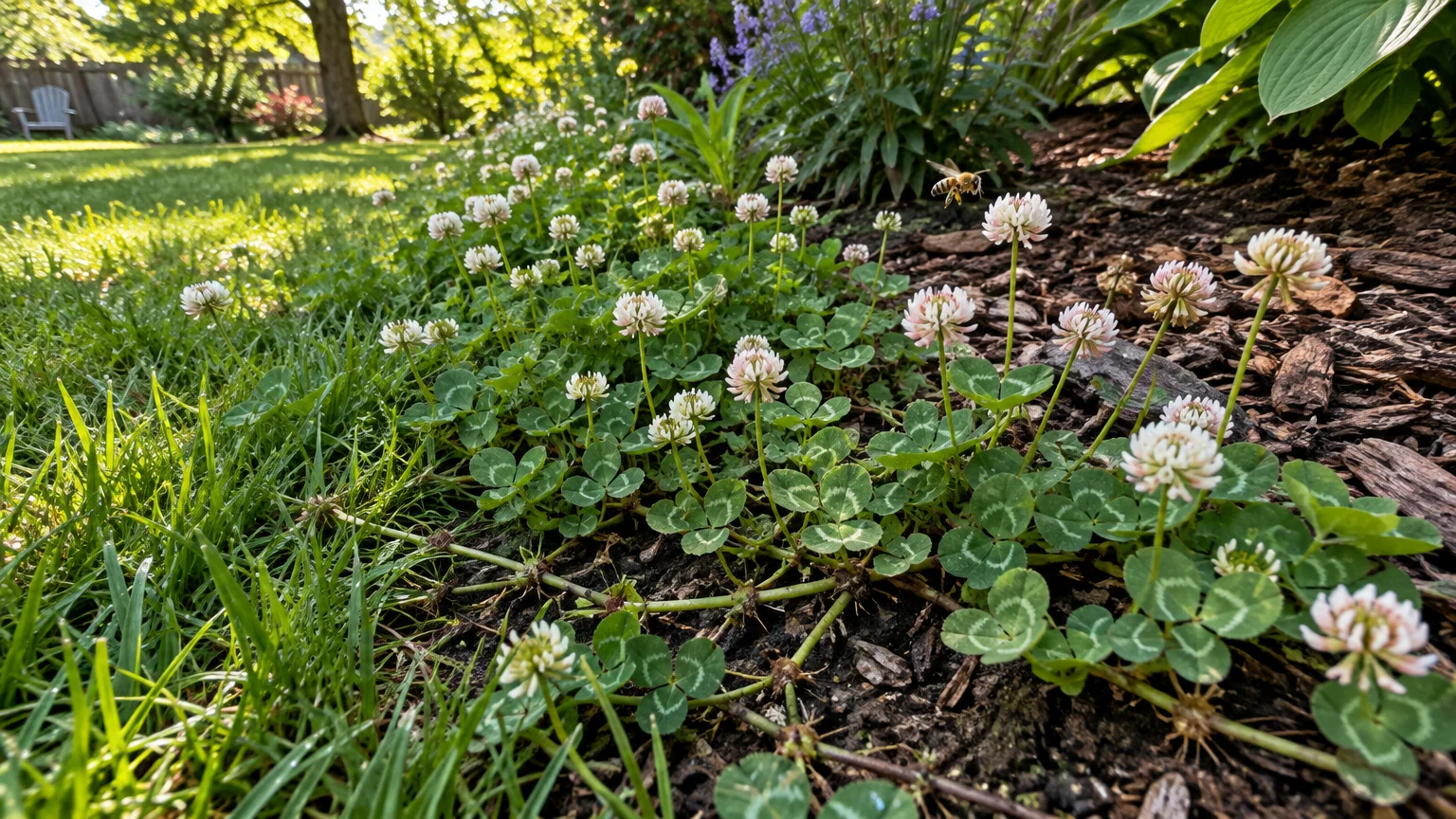
Tip #5: White Clover (Trifolium repens)
White clover is a creeping perennial that forms dense patches across lawns and garden beds. Although it feeds pollinators, it rapidly crowds out low-growing perennials and annual flowers.
How to Identify White Clover
Clover displays classic three-part leaves with faint white crescent markings on each leaflet. Creeping horizontal stems, called stolons, run across the soil surface and root at joints.
Round white flower heads appear continually from late spring through summer. These fragrant blooms yield numerous seeds that replenish the weed seed bank.
Managing White Clover Spread
Hand-pull creeping runners carefully, ensuring you lift every rooted node from the soil. Leaving severed stems behind allows the plant to regenerate rapidly.
Because clover fixes nitrogen, it dominates low-fertility soils. Top-dress beds with organic compost to balance soil fertility and help desirable garden plants outcompete it.
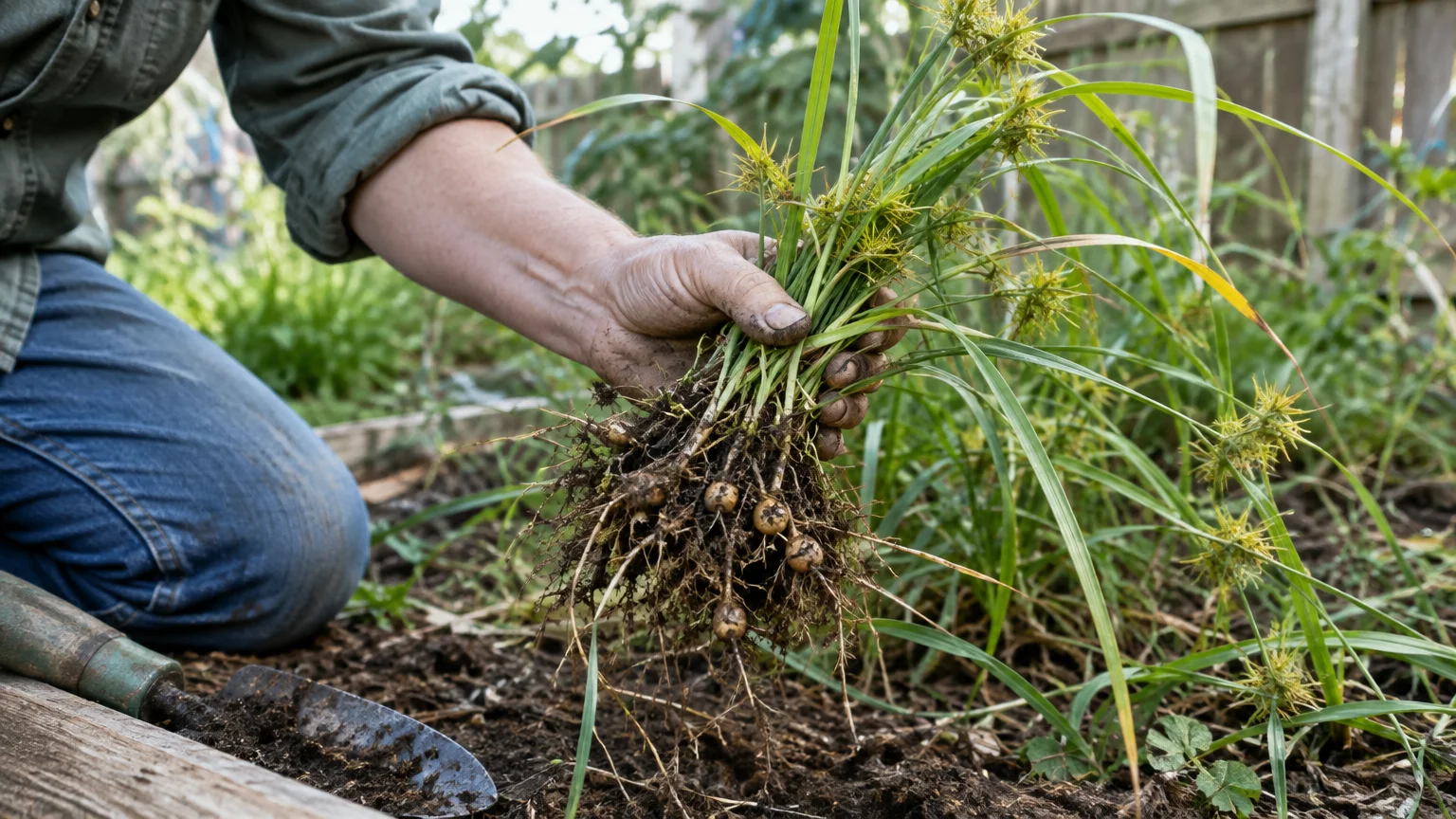
Tip #6: Yellow Nutsedge (Cyperus esculentus)
Yellow nutsedge is a relentless, grass-like perennial weed that colonizes damp garden soil. It outgrows surrounding vegetation rapidly, creating unsightly, pale-green patches in beds and lawns.
Identifying Yellow Nutsedge
Roll the plant stem between your fingers to check for a distinct triangular shape. Unlike true grasses with round stems, sedges always produce solid, three-sided stems.
The foliage looks waxy and yellow-green, shooting up faster than normal turf. Beneath the ground, nutsedge produces small, starchy tubers that sprout into new plants.
Eradicating Nutsedge Colonies
Dig beneath the plant with a trowel to remove both roots and attached nutlets. Simply pulling leaves snaps the stem, triggering dormant tubers to send up shoots.
Improve garden drainage and avoid overwatering low spots to make soil inhospitable for nutsedge. Raised beds filled with porous soil prevent the saturated ground nutsedge prefers.
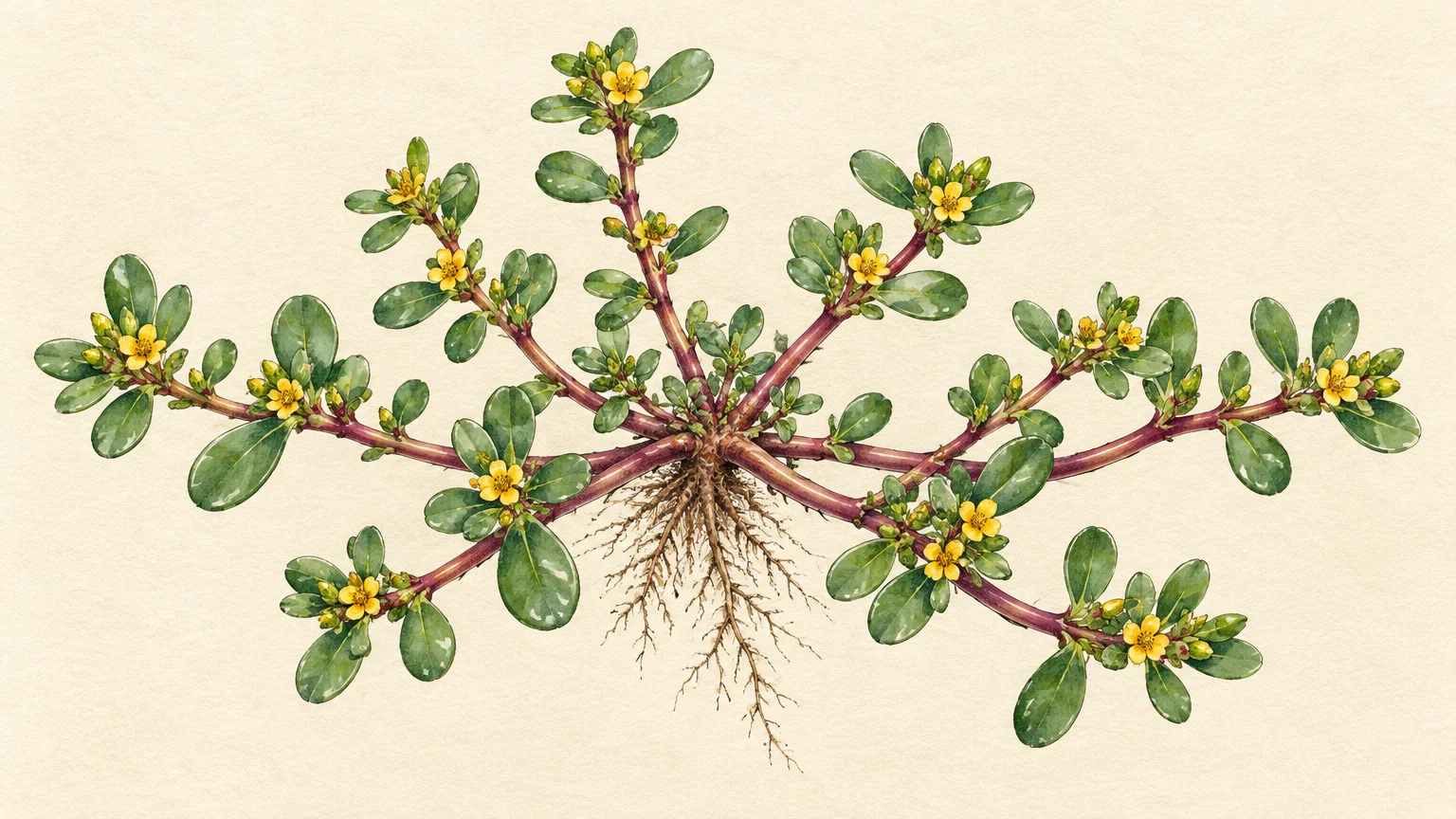
Tip #7: Common Purslane (Portulaca oleracea)
Common purslane is a low-growing annual succulent that thrives in hot, dry garden conditions. It spreads across bare earth rapidly, outlasting less resilient ornamental plants during dry spells.
Recognizing Purslane Growth
Purslane produces thick, fleshy reddish stems that spread outward from a central taproot. Its paddle-shaped leaves store moisture, allowing the weed to survive intense heat.
Tiny yellow flowers open in morning sunlight, producing capsules filled with minuscule black seeds. A single mature plant can drop over two hundred thousand seeds.
Controlling Purslane Infestations
Grasp purslane at the central taproot and pull it free from damp soil. Remove all pulled stems immediately, because severed succulent pieces quickly reroot on bare dirt.
Never toss purslane into unheated compost piles where it can survive and propagate. Cover cleared beds with three inches of mulch to block remaining seeds from sunlight.
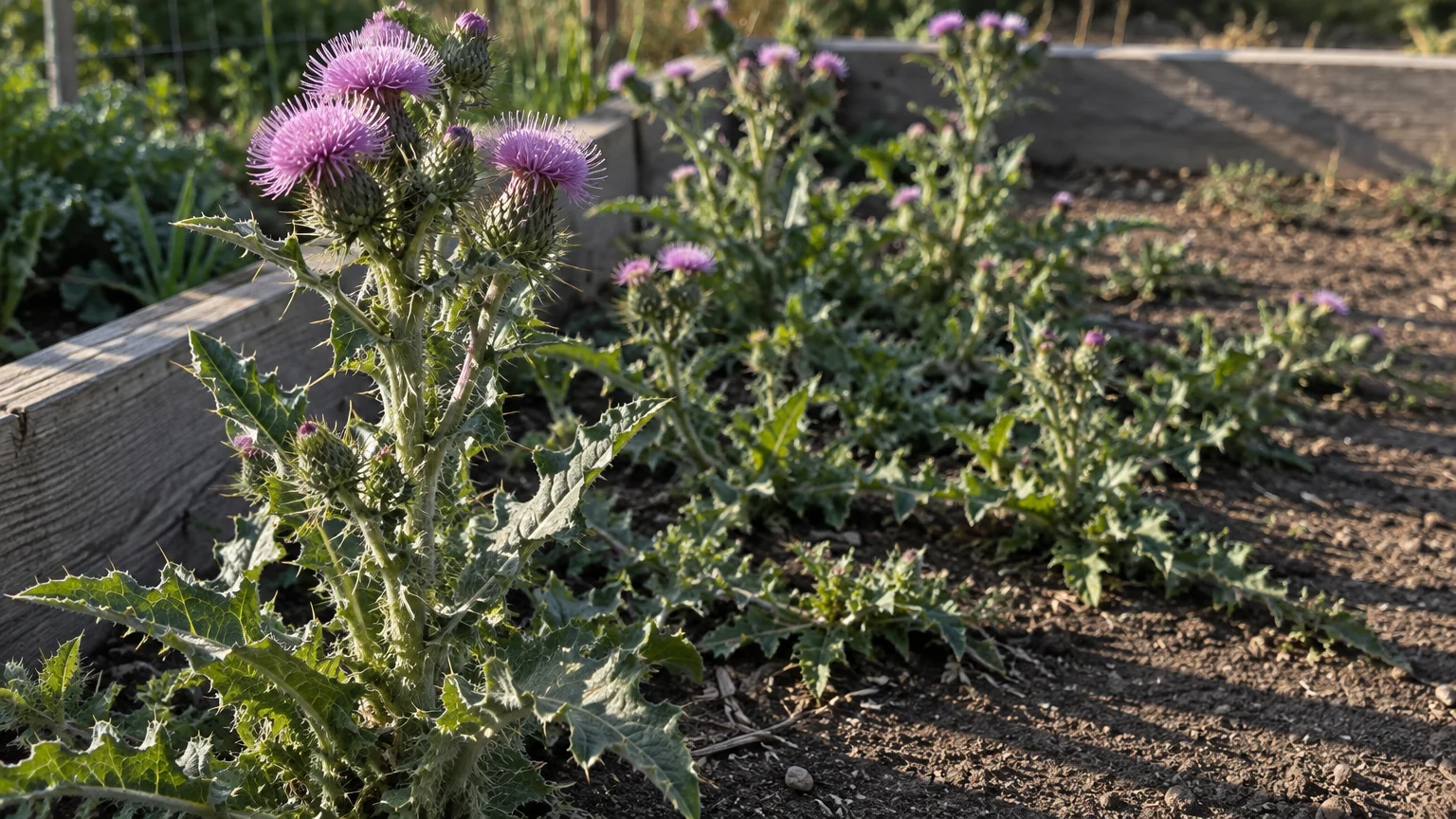
Tip #8: Canada Thistle (Cirsium arvense)
Canada thistle ranks among the most aggressive invasive weeds affecting home gardens. This perennial spreader forms vast underground root colonies that choke out ornamental perennials and vegetables.
Spotting Canada Thistle
Canada thistle displays wavy, spiny-tipped leaves that discourage careless weeding. Slender stems branch near the top, producing clusters of purple or pink flower heads.
Extensive horizontal roots spread many feet in all directions beneath the surface. Each bloom releases fluffy, windblown seeds capable of traveling across great distances.
Removing Canada Thistle
Wear puncture-resistant leather gloves before tackling this thorny garden invader. Slice plants at the ground level repeatedly every two weeks to exhaust the extensive root system.
Smother stubborn thistle patches with thick cardboard topped by deep wood mulch. Blocking all available sunlight starves the root network until colonies can no longer regenerate.
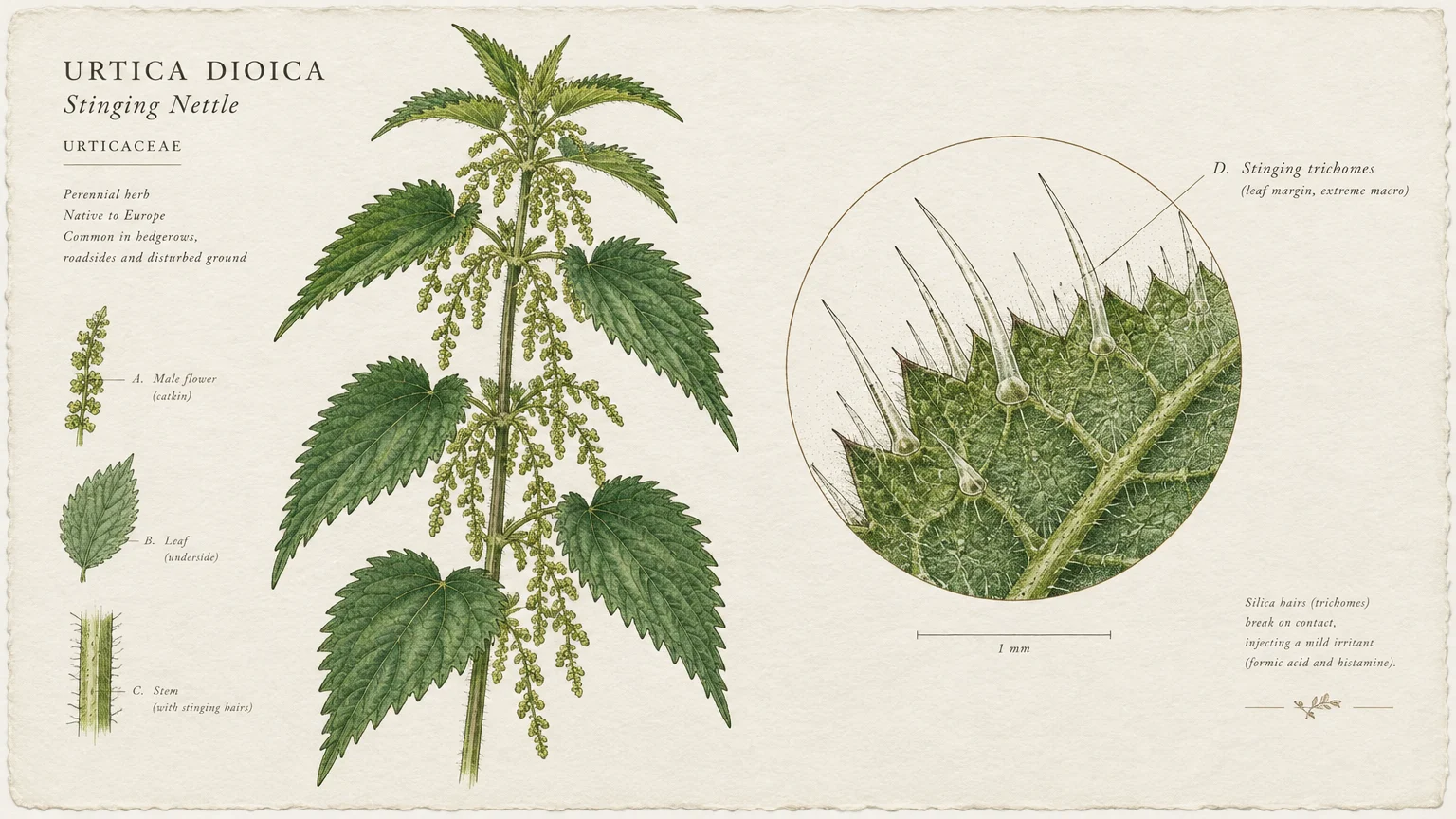
Tip #9: Stinging Nettle (Urtica dioica)
Stinging nettle is an upright perennial weed that frequents moist, fertile garden margins. While ecologically beneficial, its painful contact sting makes removal essential near garden pathways.
Identifying Stinging Nettle
Stinging nettles produce erect, four-sided stems with opposite, serrated, heart-shaped leaves. Translucent stinging hairs cover both stems and foliage, releasing irritating chemicals upon contact.
Greenish flower strands hang from leaf joints in late summer, generating abundant seed. The plant also spreads aggressively through tough, branching yellow rhizomes underground.
Safe Removal and Control
Don thick gloves, long pants, and protective sleeves before handling stinging nettle plants. Lever the root ball out with a spade to unearth the creeping yellow rhizomes.
Mow garden edges regularly to stop nettles from creeping into active planting beds. Cultivating dense perennial plantings will also shade the ground and prevent nettle establishment.
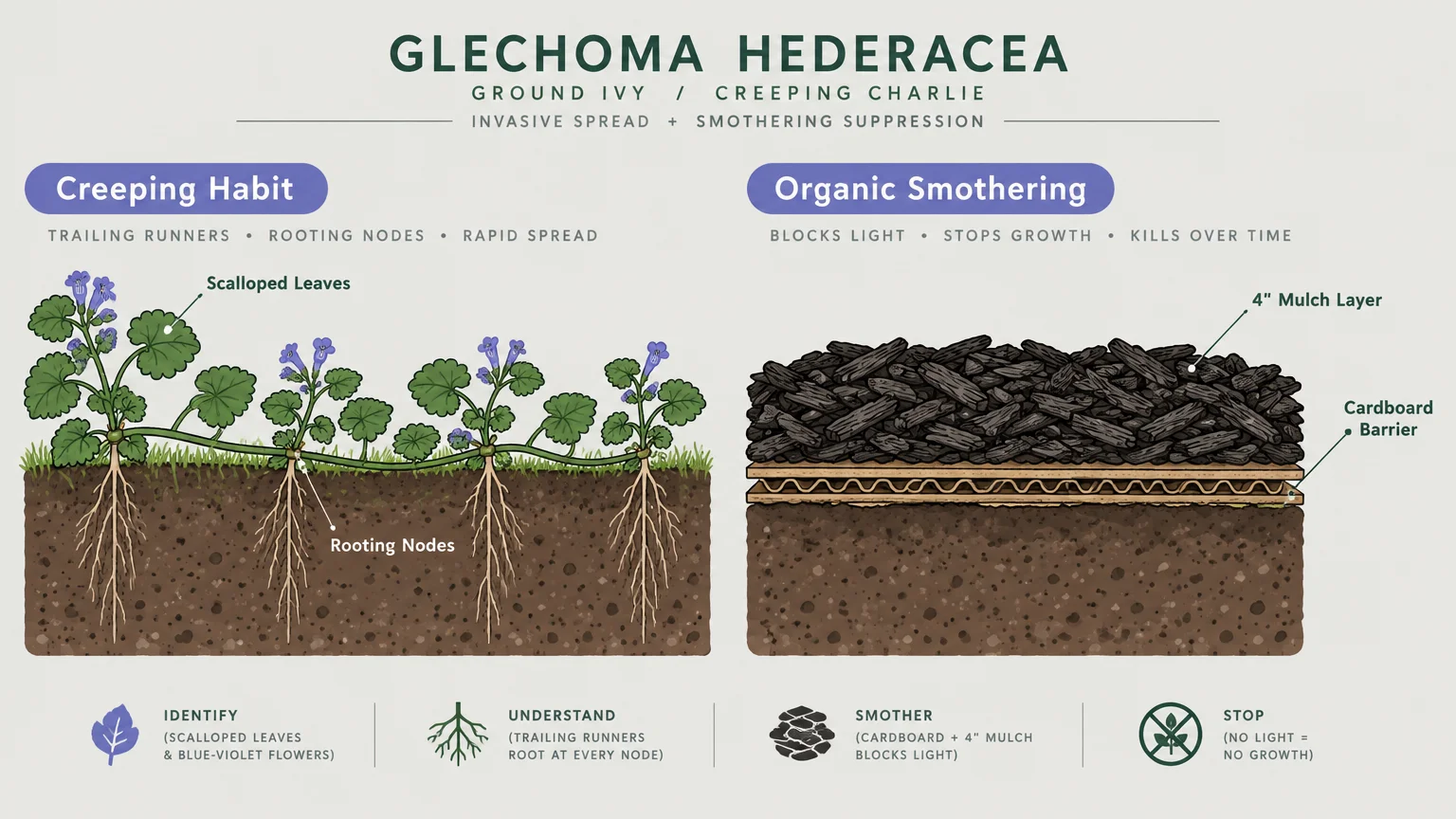
Tip #10: Ground Ivy (Glechoma hederacea)
Ground ivy, often called creeping Charlie, is an aromatic perennial weed in the mint family. It forms dense, carpet-like mats in moist, shady garden beds and neglected lawns.
Recognizing Ground Ivy
Look for rounded, scalloped leaves along square trailing stems that emit a minty fragrance when crushed. Tubular purple blossoms appear in early spring along the sprawling runners.
Creeping stems root at every leaf node, allowing small colonies to expand rapidly. This dense growth habit smothers delicate ground covers and shallow-rooted perennials.
Controlling Ground Ivy
Rake through damp beds with a hand cultivator to pull up long trailing runners. Carefully discard all plant segments to keep fragmented nodes from establishing new roots.
Prune overhead tree limbs to increase sunlight, which weakens ground ivy naturally. Lay down cardboard and organic mulch over cleared areas to prevent remaining runners from returning.
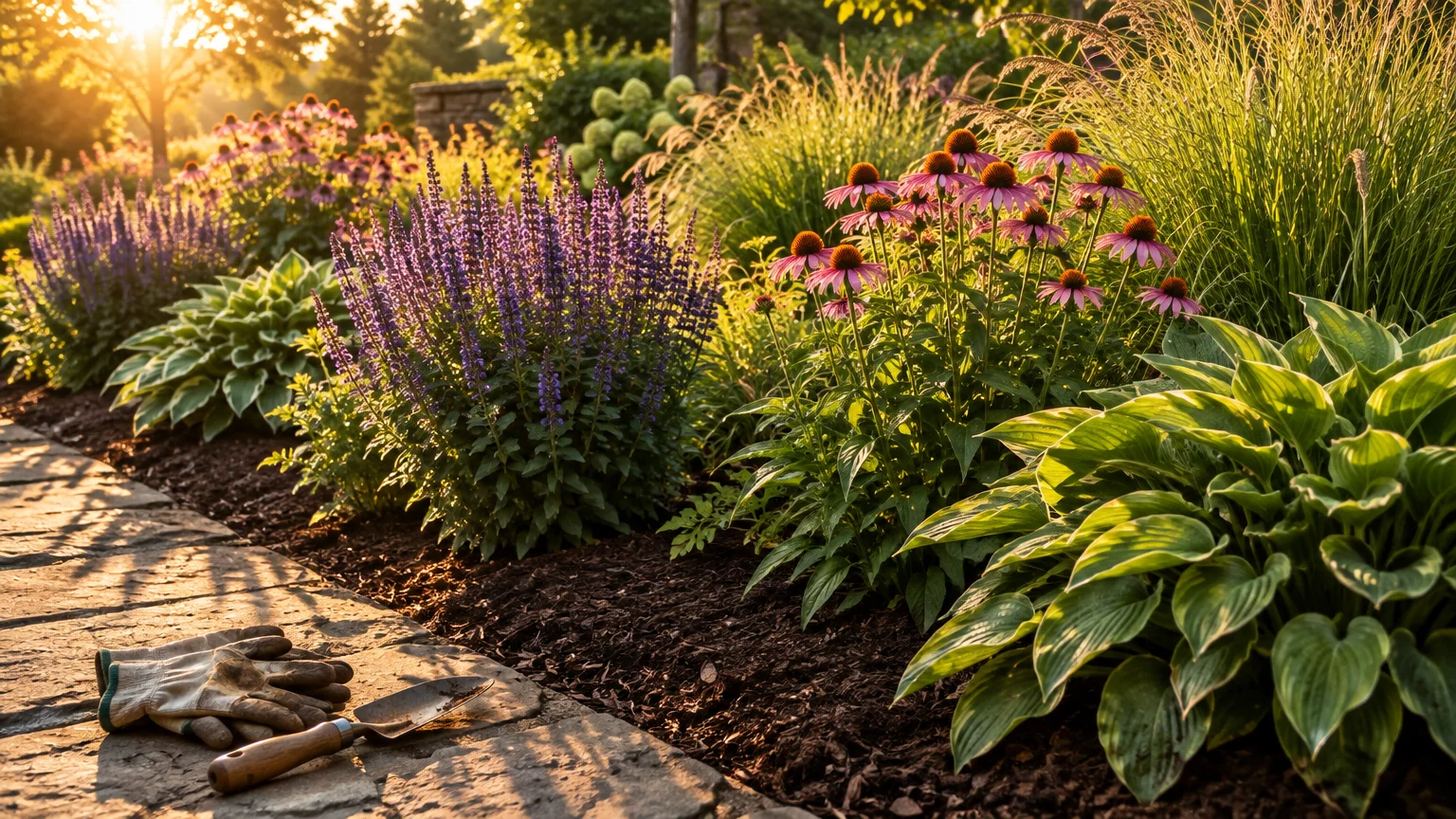
Putting It All Together: Enjoy Your Beautiful Garden
Maintaining an attractive, thriving garden requires consistent garden weed control and regular observation throughout the growing season. Early weed identification enables you to address problem species before they establish deep root systems or set seed.
Combine mechanical hand-pulling with dense organic mulching to protect your delicate soil biology from unwanted competition. Mulch insulates your soil, retains essential moisture, and denies weed seeds the sunlight they need to sprout.
Regular weeding routines transform an overwhelming chore into an enjoyable, rewarding part of your gardening journey. Take time each week to inspect your beds, pull young seedlings, and celebrate your lush, healthy garden.
By cultivating robust plants and caring for your soil, you build a landscape that resists weed invasions naturally. Enjoy the vibrant colors, fragrant blooms, and bountiful harvests that reward your dedicated gardening efforts.
Frequently Asked Questions
How can I prevent weeds from returning each spring?
Apply a three-inch layer of clean organic mulch across your garden beds before spring temperatures begin rising. Mulch blocks sunlight from reaching dormant seeds, stopping them from germinating in warming soil.
Avoid deep tilling, which brings dormant buried weed seeds closer to the light where they sprout rapidly. Overseed bare lawn patches immediately to ensure dense turf crowds out opportunistic weed seedlings.
Does horticultural vinegar work as a natural weed killer?
Horticultural vinegar containing high acetic acid concentrations provides effective contact burn-down on young annual weeds. It breaks down the waxy leaf cuticle, causing foliage to dehydrate and wither in hot sunlight.
However, vinegar does not penetrate deep taproots or rhizomes of established perennial weeds like dandelions or bindweed. For perennial weeds, manual root removal remains the most reliable organic eradication method.
Should I put pulled weeds into my home compost pile?
Avoid composting weeds that have developed flowers, mature seed heads, or vigorous underground rhizomes. Most residential compost bins do not generate the sustained high heat required to destroy hardy weed seeds.
Composting seeding weeds often results in reintroducing thousands of viable weed seeds into your garden beds later. Bag invasive weed species and discard them with municipal yard waste instead.
What is the best time of day to weed my garden?
The best time to weed is early morning following a gentle soaking rain or deep garden watering. Moist soil loosens its grip on fibrous root systems, allowing you to extract entire taproots effortlessly.
Weeding during cooler morning hours also reduces personal heat fatigue and prevents unnecessary soil moisture loss. Avoid disturbing wet soil during midday heat, which stresses neighboring ornamental roots.
For region-specific advice, consult your local University Extension program (find yours via the USDA directory). For plant databases and inspiration, visit the Missouri Botanical Garden or the Royal Horticultural Society.
Disclaimer: This article provides general gardening advice; always consider your specific climate, soil conditions, and local pests. Follow safety guidelines when using gardening tools and products.