Step-by-Step Care for Your Garden After the Rain
While the rain does much of the heavy lifting, your plants still need your help to make the most of the sudden influx of water. Practicing good post-storm maintenance is one of the most vital gardening tips you can learn, ensuring your small space garden remains healthy and vigorous.
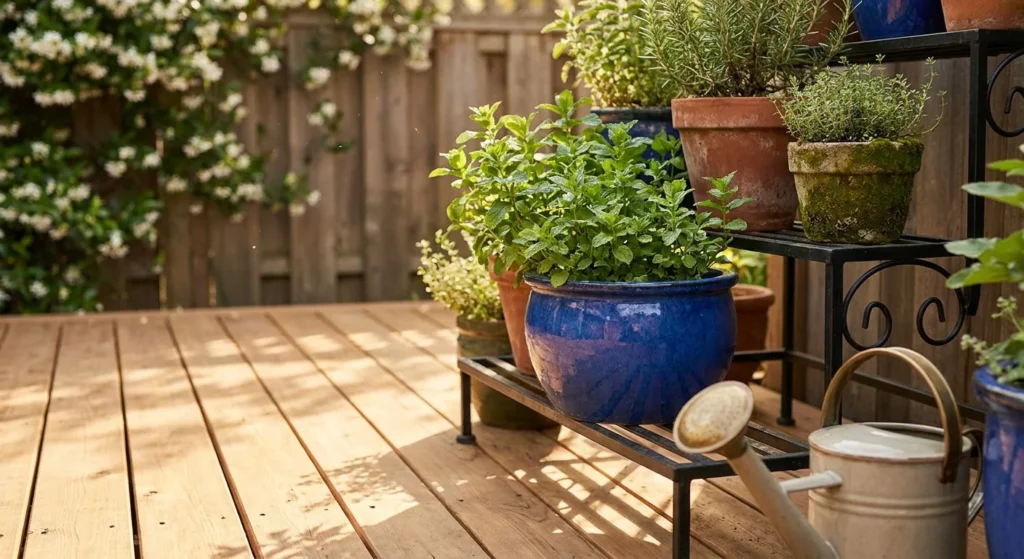
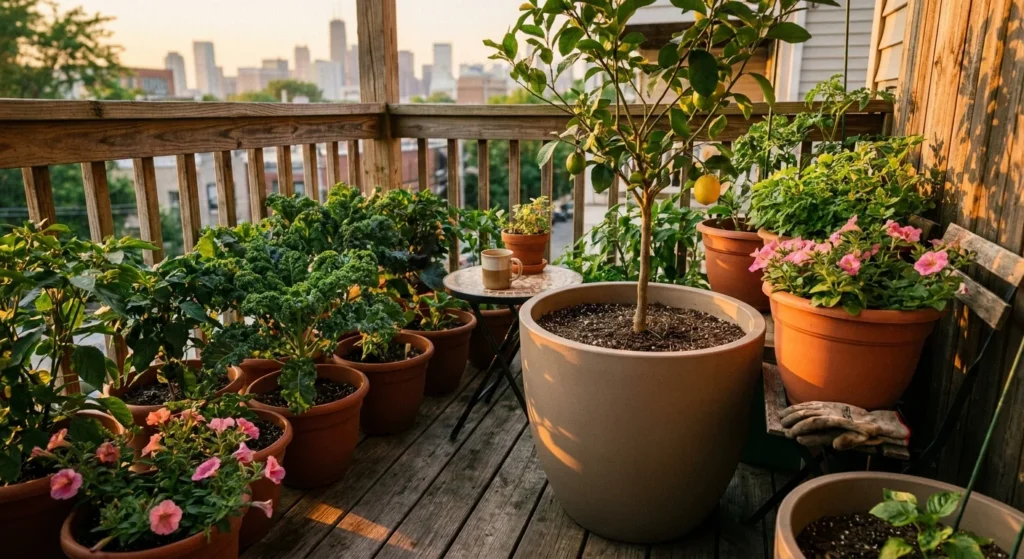
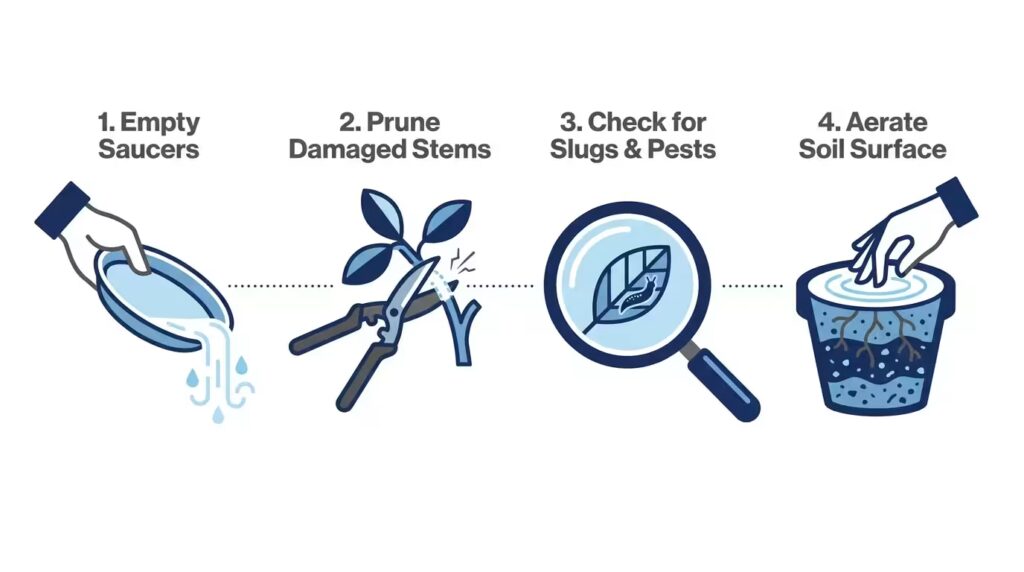
Step 1: Empty the Saucers. Walk through your patio or balcony and inspect every single container. If you use plastic or ceramic saucers beneath your pots to catch drips, they will likely be overflowing after a heavy downpour. Empty these immediately. Leaving a plant sitting in a puddle of water suffocates the roots, preventing them from accessing the oxygen they need to survive. Standing water also serves as a prime breeding ground for mosquitoes.
Step 2: Check for Exposed Roots. Heavy, driving rain can easily wash potting soil away from the base of your plants, particularly in shallow containers or recently planted hanging baskets. Gently scoop up any displaced soil and pack it lightly back around the stems. If too much soil has washed away, top off the container with a fresh handful of compost or potting mix to protect the delicate surface roots from the baking sun.
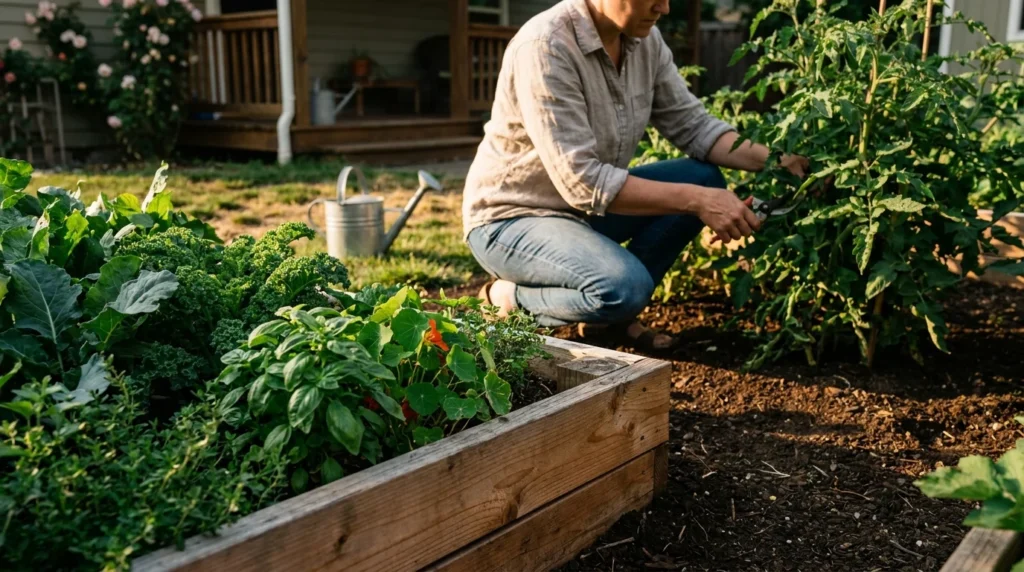
Step 3: Support Heavy Stems. Water is incredibly heavy. Plants that were standing tall before the storm may be bowing or snapping under the weight of waterlogged blossoms and wet foliage. Gently shake the excess water off your plants, taking care not to break the stems. Tie wandering tomato vines back to their stakes, secure heavy clematis vines to their trellises, and prop up any drooping daylilies using small bamboo skewers or soft garden twine.
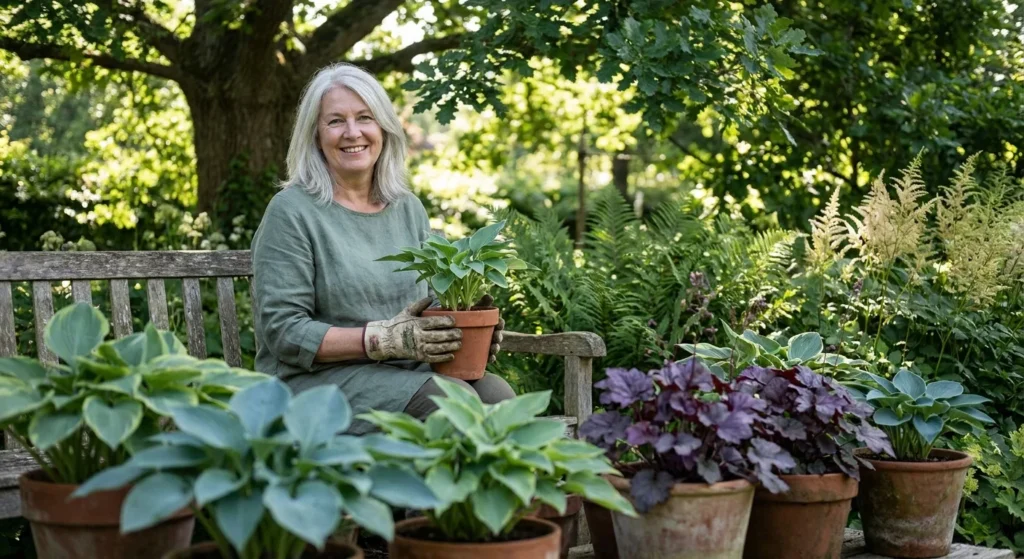
Step 4: Inspect for Pests. Snails and slugs thrive in wet, damp conditions. As soon as the rain stops, they will emerge from their hiding spots to feast on the tender new growth that the rain just stimulated. Do a quick visual inspection of your hostas, basil, and zucchini leaves. Hand-pick any pests you find, or set up a simple, shallow dish of beer near your most vulnerable plants to trap slugs before they can do significant damage.