
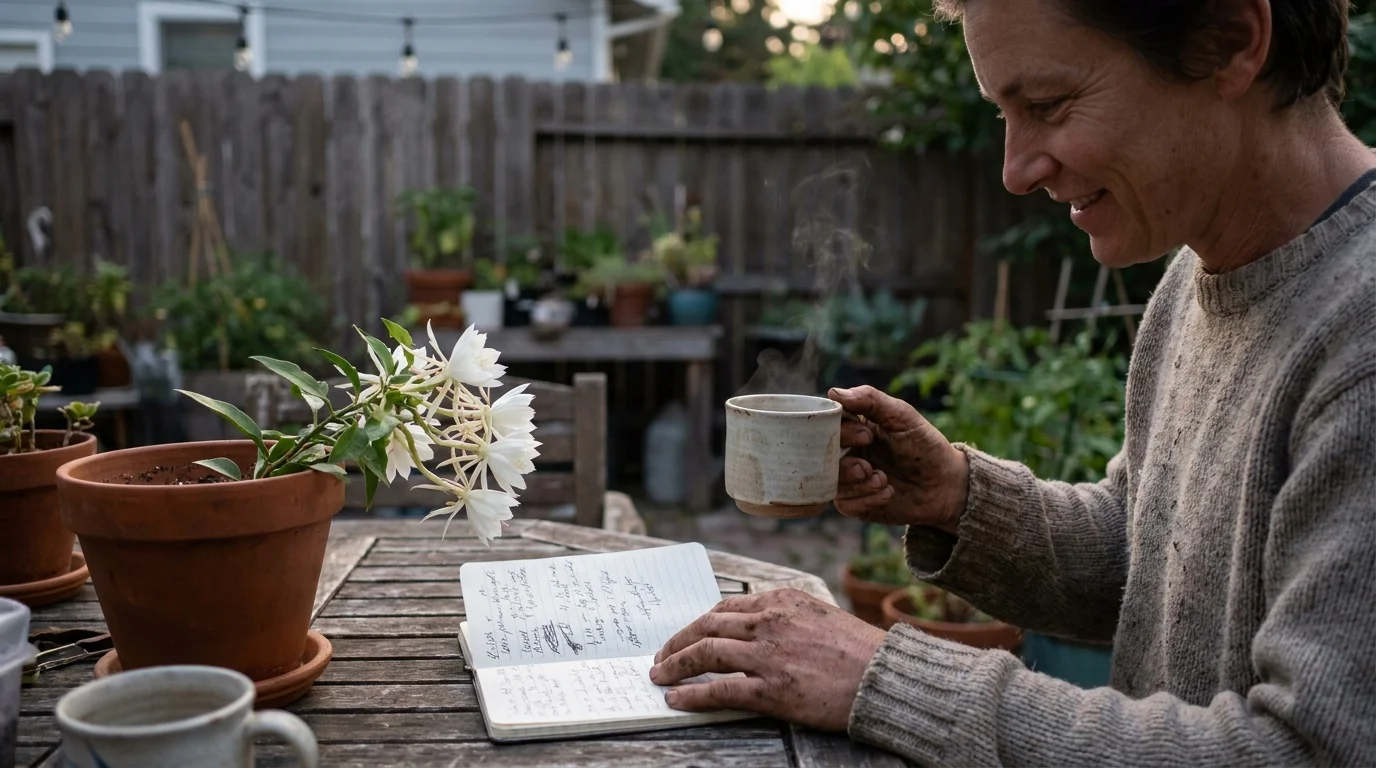
Putting It All Together: Enjoy Your Beautiful Garden
Creating a dedicated space for night blooming plants transforms your standard backyard into an enchanting, multi-sensory retreat that comes alive exactly when you have the free time to enjoy it.
You do not need to overhaul your entire landscape design to experience the magic of an aromatic evening oasis. Start small by introducing a few large pots of night-blooming jasmine to your patio, or train a vigorous moonflower vine up a trellis near your back door.
As you experiment with these highly fragrant plants, pay close attention to the way the evening breezes move across your property; placing your flowers upwind of your favorite seating areas ensures you capture every sweet, vanilla, and clove-scented note.
By mixing low-growing varieties like night phlox with towering specimens like flowering tobacco, you create a layered, visually stunning garden that rewards you with extraordinary perfumes night after night. Embrace the twilight hours, step outside, and let your newly planted evening garden captivate your senses.
Frequently Asked Questions
Do night blooming plants require direct sunlight during the day?
Yes, the vast majority of nocturnal flowers still rely on the sun to perform photosynthesis. They need a full day of bright sunlight to generate the massive amount of energy required to rapidly force open their petals and produce heavy oils by evening. A few varieties can tolerate dappled afternoon shade, but providing six to eight hours of direct daytime sun generally yields the most robust growth and the strongest twilight perfumes.
How can I design a backyard layout to maximize flower fragrances?
To trap and maximize the sweet scents of your flowers, you should utilize the existing architecture of your outdoor space. Plant heavily scented varieties in semi-enclosed areas like courtyards, sunken patios, or cozy corners surrounded by tall fences or dense evergreen hedges. These physical barriers prevent strong evening breezes from instantly blowing the perfume away. Additionally, planting fragrant flowers directly beneath your home’s open windows allows the intoxicating aromas to draft inside during warm summer nights.
Are strongly scented night flowers safe for household pets?
While many fragrant flowers are perfectly harmless, several prominent night-blooming species pose serious toxicity risks to cats and dogs. Angel’s Trumpet and night-blooming jasmine contain potent chemical compounds that are toxic if ingested by curious pets or small children. You should always research the specific toxicity of any new botanical addition and consider planting dangerous varieties in tall, heavy pots or behind sturdy decorative fencing to keep your furry friends completely safe.
What kind of pollinators do night-blooming flowers attract?
By producing pale, glowing white flowers and emitting heavy scents, these plants specifically target nocturnal pollinators that navigate by moonlight and smell. You will frequently see large, fascinating hawkmoths and sphinx moths hovering like hummingbirds near tubular blossoms to drink their nectar. In addition to moths, these fragrant blooms also attract night-flying beetles, certain species of solitary bees that forage late in the day, and occasionally nectar-feeding bats in tropical or desert climates.
For region-specific advice, consult your local University Extension program (find yours via the USDA directory). For plant databases and inspiration, visit the Missouri Botanical Garden or the Royal Horticultural Society.
Disclaimer: This article provides general gardening advice. Always consider your specific climate, soil conditions, and local pests. Follow safety guidelines when using gardening tools and products.
One Response
You left out the best of them all. “Dama De Noche” (Lady Of The Night).