
Transform your outdoor space into a fragrant evening retreat by cultivating a moon garden filled with night blooming plants.
While many traditional backyard flowers close their petals at dusk, a select group of fragrant plants specifically evolved to release their intoxicating perfumes after sunset to attract nocturnal pollinators like hawk moths.
You can enjoy these powerful, sweet scents simply by strategically placing the right varieties near your patio, open windows, or fire pit. Selecting the right night-blooming varieties extends your gardening enjoyment well into the twilight hours; it also adds a magical, sensory dimension to your evening relaxation.
Let us explore the best botanical options to elevate your evening landscape design and create an aromatic oasis.
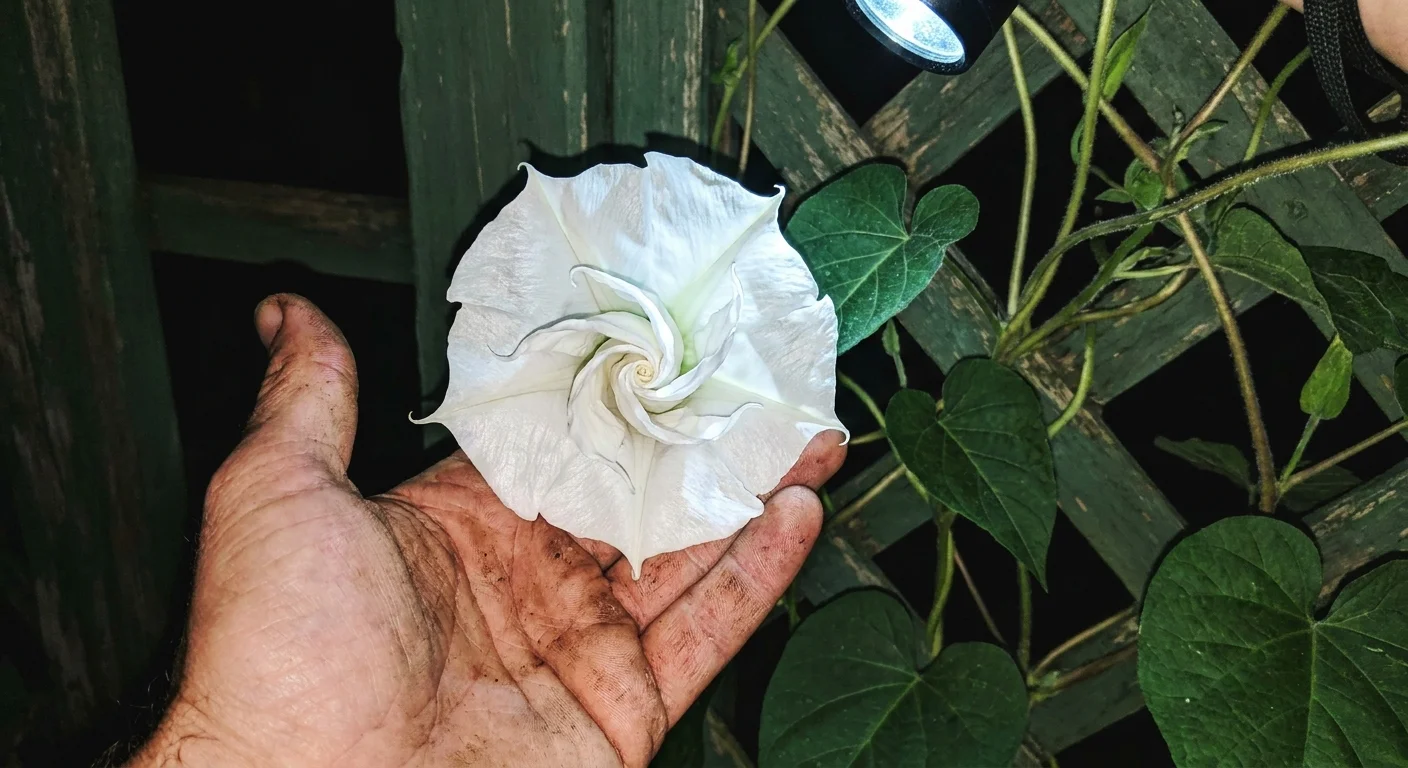
Tip #1: Moonflower (Ipomoea alba)
Moonflowers offer one of the most dramatic spectacles you can introduce to your backyard. As the sun dips below the horizon, you can literally watch the large, cone-shaped buds unfurl into magnificent white blooms up to six inches across; the process happens so rapidly that it appears like time-lapse photography in real life.
Once open, the flowers release a rich, clove-like fragrance that lingers in the humid night air. You will find that these vigorous vines grow up to fifteen feet in a single season, making them ideal for covering unsightly fences or climbing up a sturdy pergola near your seating area.
To successfully grow moonflowers, you must provide them with full sun during the day and rich, well-draining soil. Because their seeds possess a remarkably hard outer shell, you need to prepare them before planting to ensure a high germination rate.
Simply nick the seed coat with a metal file or rub it against sandpaper, then soak the seeds in warm water for twenty-four hours. This scarification process tells the seed that it is time to wake up and grow.
Plant your seeds directly in the ground after all danger of frost has passed. While moonflowers behave as tender perennials in warm southern climates (USDA Zones 9 through 11), northern gardeners treat them as fast-growing annuals that easily put on a spectacular show before the first autumn freeze.
One Response
You left out the best of them all. “Dama De Noche” (Lady Of The Night).