
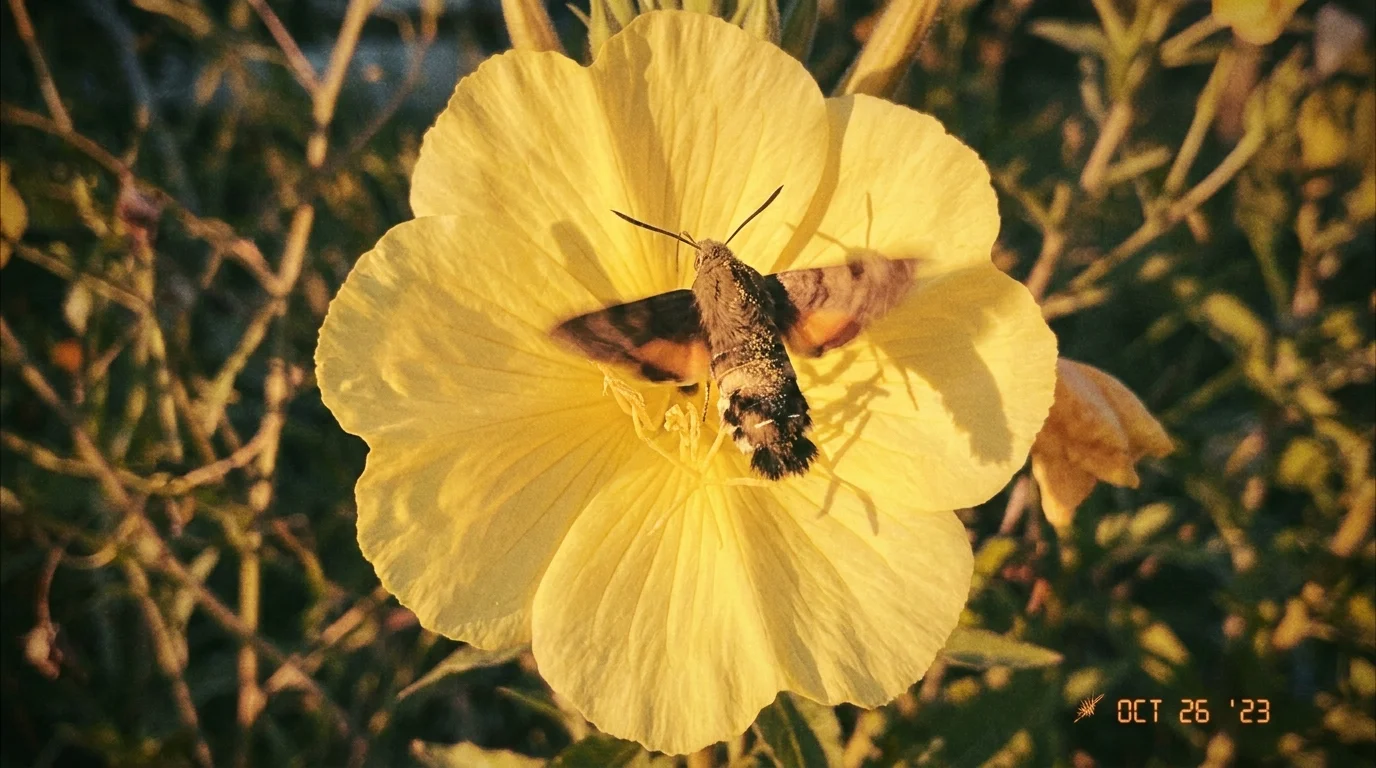
Tip #4: Evening Primrose (Oenothera biennis)
Evening primrose offers a rugged, wildflower charm combined with a delightful nocturnal fragrance. Native to North America, this resilient plant produces large, luminous yellow flowers that burst open at dusk, releasing a sweet, slightly fruity aroma that serves as a powerful magnet for impressive night-flying pollinators like the sphinx moth.
The pale yellow petals possess a mildly iridescent quality that seems to glow under the moonlight, making them an essential component of any dedicated moon garden. Watching an evening primrose bud unfurl is a rapid, captivating event that takes only a minute or two, providing an interactive experience.
Because it naturally thrives in poor, rocky environments, evening primrose requires practically no pampering to succeed in your backyard. This plant prefers full sun and dry, well-draining soil; overwatering or applying heavy fertilizers will actually cause the plant to flop over and produce fewer flowers.
Most varieties operate on a biennial life cycle, meaning they spend their first year growing a low rosette of leaves before sending up tall, flower-bearing spikes in their second year.
Once established, they readily self-seed, creating a sustainable, naturalized patch of evening blooms that will perfume your yard for years to come. Their drought tolerance and low-maintenance requirements make them an outstanding candidate for xeriscaping or out-of-the-way garden borders that cannot easily be reached with a garden hose.



One Response
You left out the best of them all. “Dama De Noche” (Lady Of The Night).