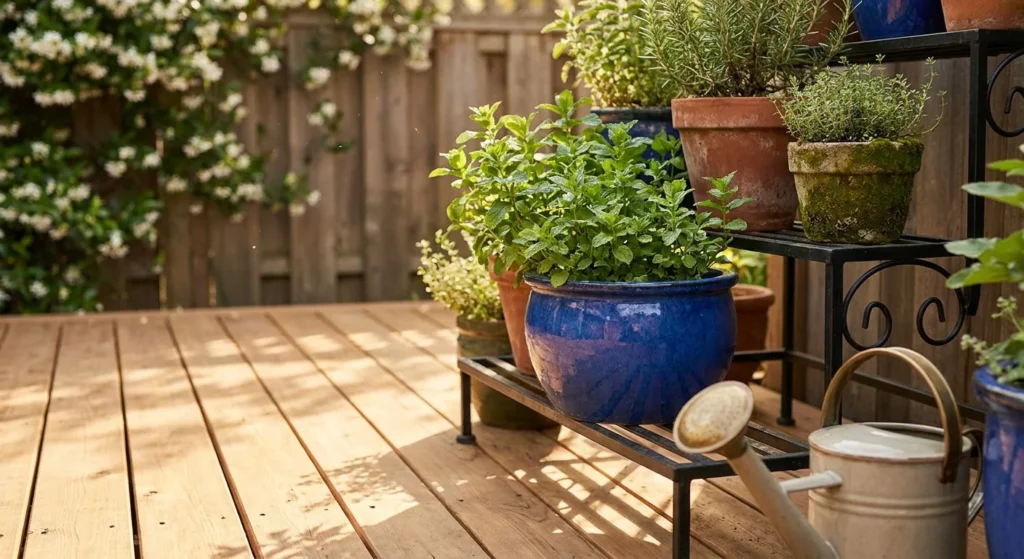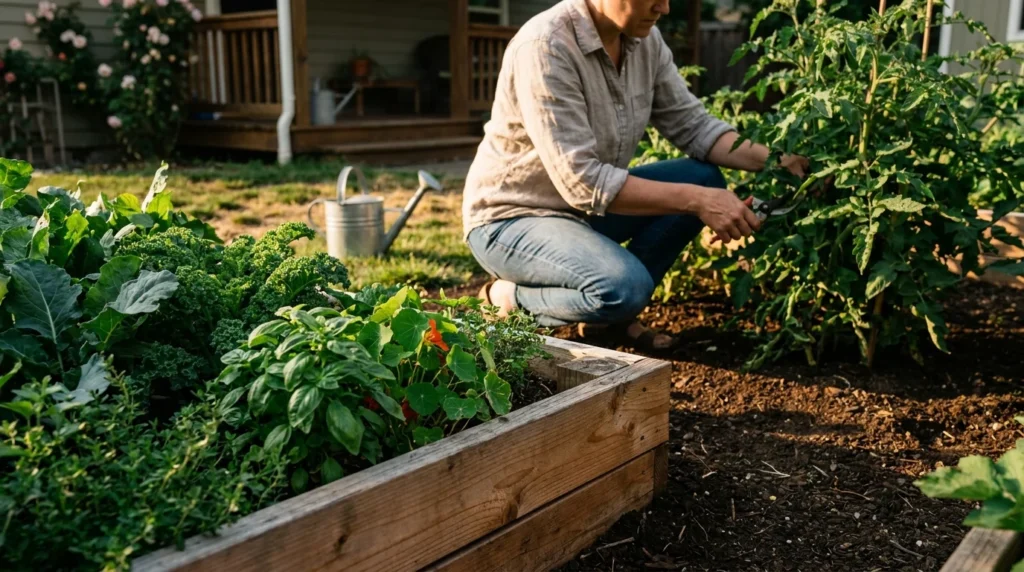
You can build a vibrant garden without spending your weekends watering and weeding by planting outdoor succulents. These rugged, drought-tolerant plants store water in their fleshy leaves; this adaptation allows them to survive scorching heat and prolonged dry spells with zero fuss. Whether you live in an arid climate or simply want to reduce your landscape’s water consumption, selecting the right low-maintenance succulents transforms barren patches into stunning focal points. You will discover robust species that brush off neglect while offering striking architectural shapes, vivid colors, and seasonal blooms. From creeping groundcovers that suppress weeds to towering varieties that demand attention, integrating these easy-care garden plants ensures your outdoor space remains beautiful and resilient all year long.
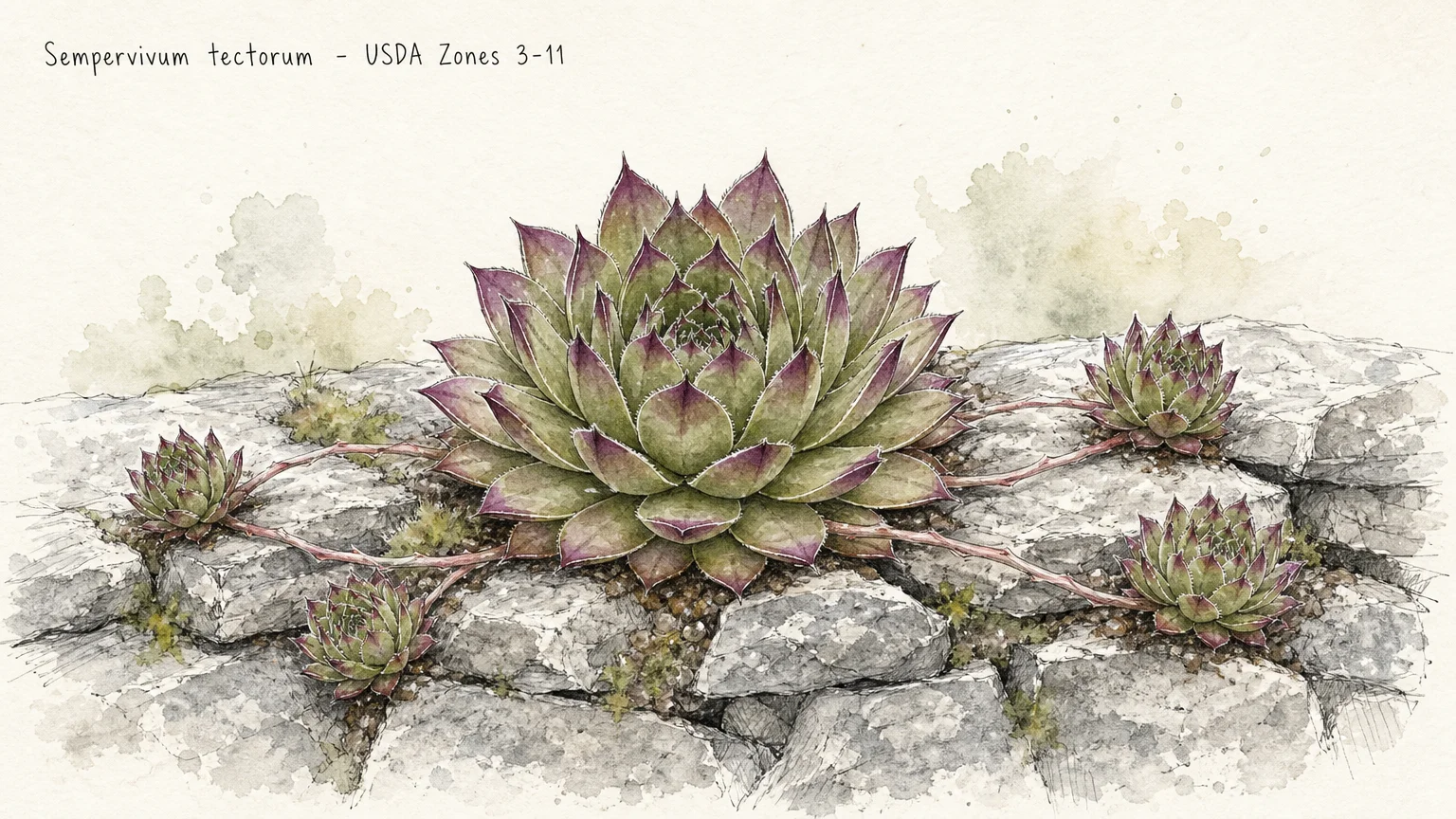
Tip #1: Hens and Chicks (Sempervivum tectorum)
Hens and Chicks represent the gold standard for rugged, cold-hardy succulents. These alpine natives form tight rosettes of fleshy green and red leaves that multiply rapidly across the soil; the central parent “hen” produces numerous smaller “chicks” via delicate runners to create a dense, weed-suppressing mat. You can rely on them to fill awkward crevices in rock gardens or spill elegantly over the edges of stone retaining walls. Their geometric beauty provides year-round visual interest without demanding your constant attention.
These incredibly adaptable plants thrive in USDA Hardiness Zones 3 through 11, making them some of the best succulents for outdoors across highly diverse climates. They endure freezing winter temperatures beneath a thick blanket of snow and easily shrug off blistering summer heat. Their thick leaves act as natural water reservoirs, allowing them to bridge long gaps between rainfalls. You rarely need to provide supplemental water once their shallow root systems establish themselves in your landscape.
To achieve optimal growth, plant your Hens and Chicks in fast-draining, gritty soil. They detest standing water; heavy clay soils will cause their fragile crowns to rot quickly. Mix coarse sand or pumice into your garden beds to improve drainage, and position them in a spot that receives at least six hours of direct sunlight daily. The intense sun exposure actually enhances their coloration, bringing out vibrant purple and red tips on the otherwise green rosettes.
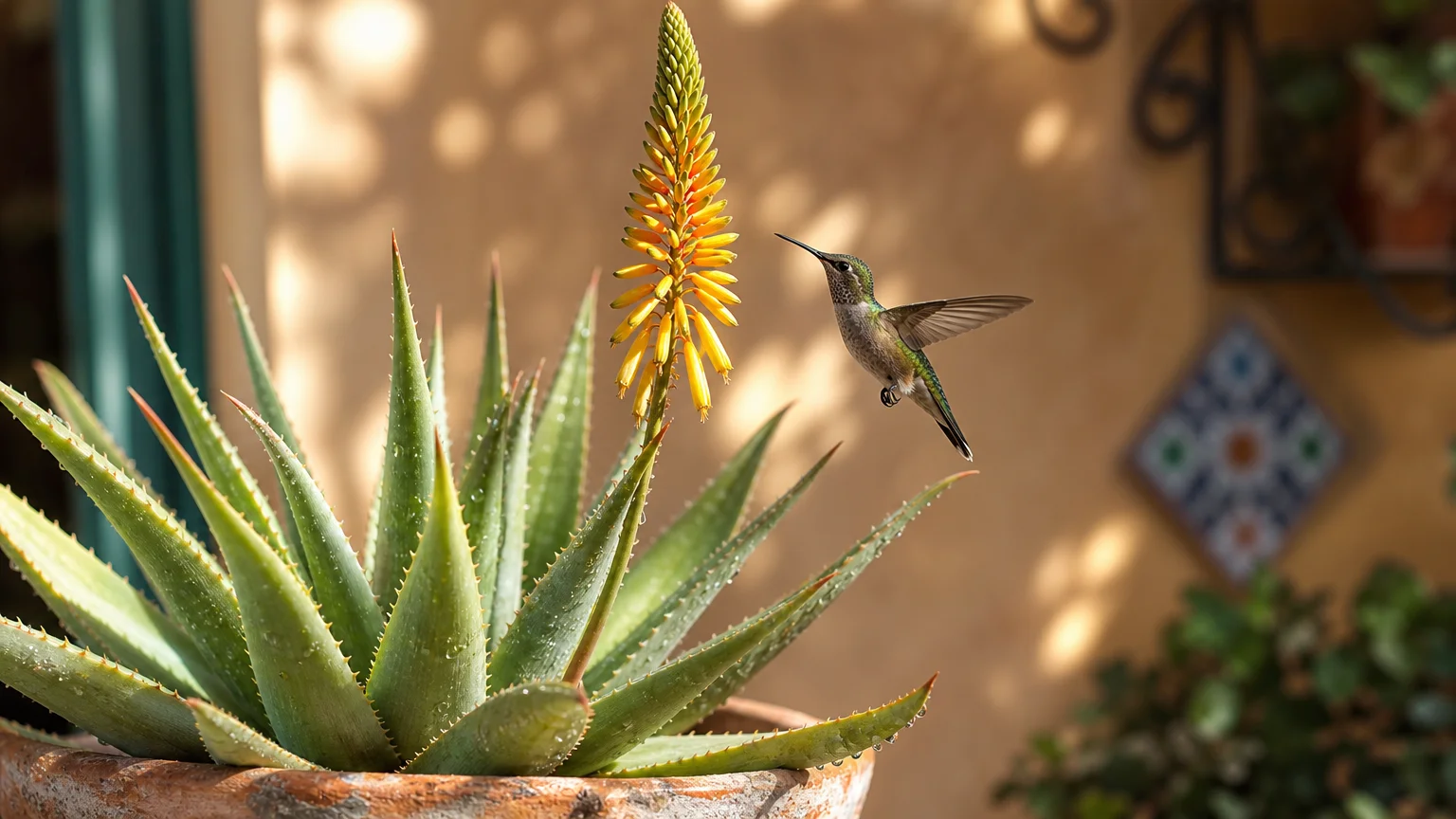
Tip #2: Aloe Vera (Aloe barbadensis miller)
While widely recognized for its soothing medicinal gel, Aloe Vera also serves as a phenomenal landscape plant in warm climates. This iconic succulent features tall, fleshy green leaves armed with soft, flexible teeth along the margins. When planted outdoors in optimal conditions, mature Aloe Vera plants send up spectacular, towering floral spikes adorned with tubular yellow or orange blossoms; these vivid flowers act as a powerful magnet for hummingbirds and essential pollinators during the late winter and early spring months.
Aloe Vera thrives outdoors year-round in USDA Zones 8 through 11. In these warmer, sun-drenched regions, this drought-tolerant powerhouse requires almost no intervention to maintain its striking structural presence. The thick skin of the leaves prevents moisture evaporation, enabling the plant to endure intense summer heat and prolonged dry spells without shriveling. If you live in a cooler climate that experiences freezing winters, you can easily grow Aloe in large terracotta pots. Simply move them onto a sunny patio for the summer months, and bring them back indoors well before the first frost threatens your garden.
For successful outdoor cultivation, prioritize rapid soil drainage above all else. Plant your Aloe Vera in a specialized cactus mix or amend your native soil heavily with perlite and coarse gravel. Position the plant in a location that receives bright, indirect sunlight or dappled afternoon shade; intense, unbroken afternoon sun can scorch the leaves and turn them an unsightly shade of brown. Water the plant deeply but infrequently, allowing the top three inches of soil to dry out completely before you reach for the garden hose.
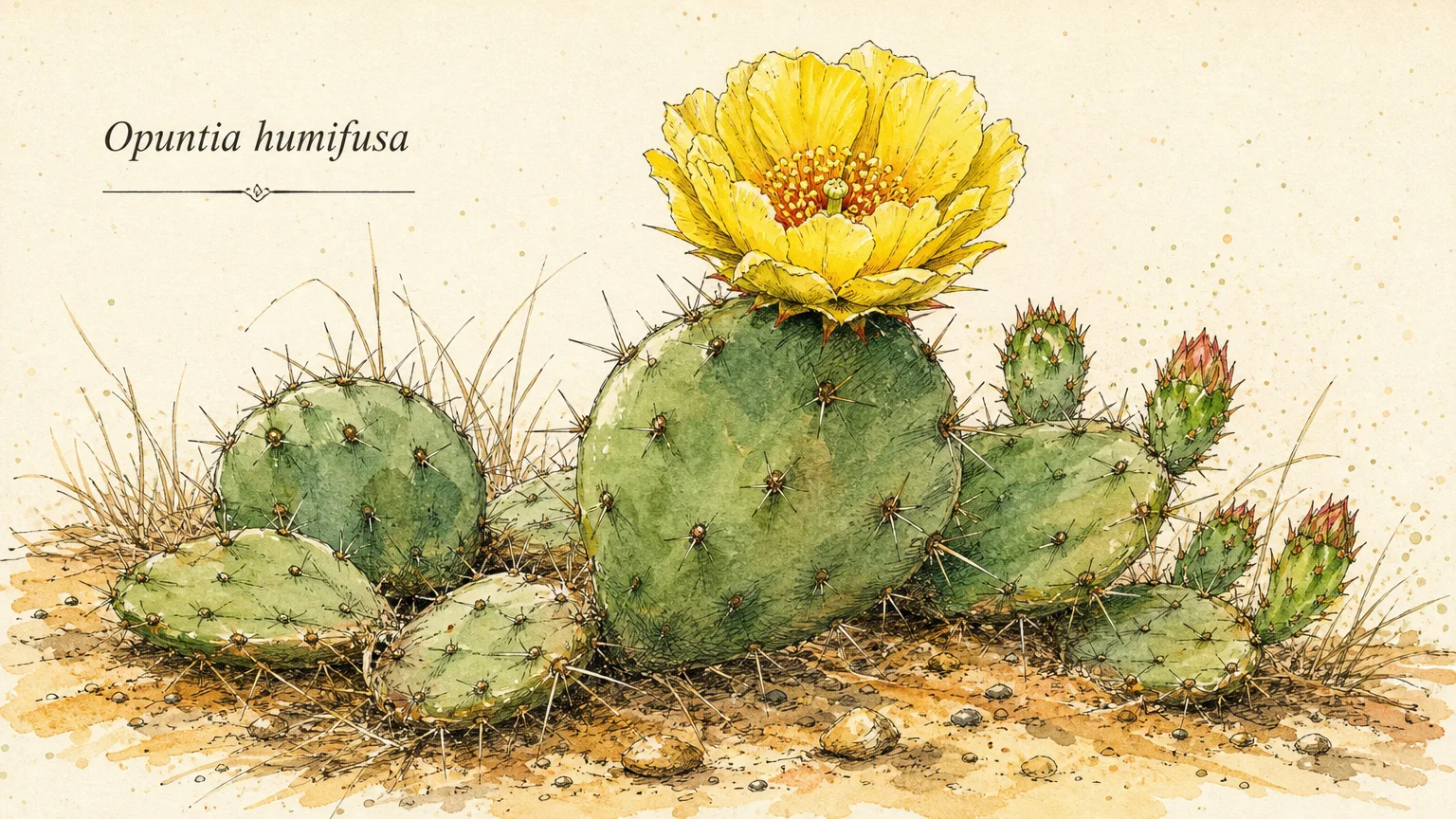
Tip #3: Eastern Prickly Pear (Opuntia humifusa)
Many gardeners assume cacti only survive in barren desert landscapes, but the Eastern Prickly Pear breaks all the conventional rules. This remarkable, flat-padded cactus grows naturally across North America and stands out as one of the few outdoor succulents capable of surviving brutal, sub-zero winters in USDA Zones 4 through 9. It produces brilliant, papery yellow flowers in early summer, followed by edible, ruby-red fruits called tunas. The sprawling, horizontal growth habit makes it an excellent, low-maintenance groundcover for hot, dry perennial borders.
The Eastern Prickly Pear handles extreme environmental stress through a fascinating biological process. As winter approaches, the plant deliberately dehydrates its massive green pads; this active mechanism prevents the water inside the cells from freezing and rupturing the delicate plant tissue. The pads may look deflated and lifeless beneath the snow, but they plump right back up as soon as spring temperatures rise and the rains return. During the peak of summer, its extensive, shallow root system captures even the lightest morning dew to sustain the plant through punishing drought conditions.
Handle this resilient plant with extreme care during installation. Wear thick leather gloves and use kitchen tongs to maneuver the heavy pads, as they feature tiny, barbed bristles called glochids that easily embed in your skin. Plant your Prickly Pear in sandy or rocky soil with maximum sun exposure. It happily tolerates poor, nutrient-deficient dirt and actively resists common garden pests. Once fully established in your yard, you can completely cross watering and fertilizing off your summer chore list.
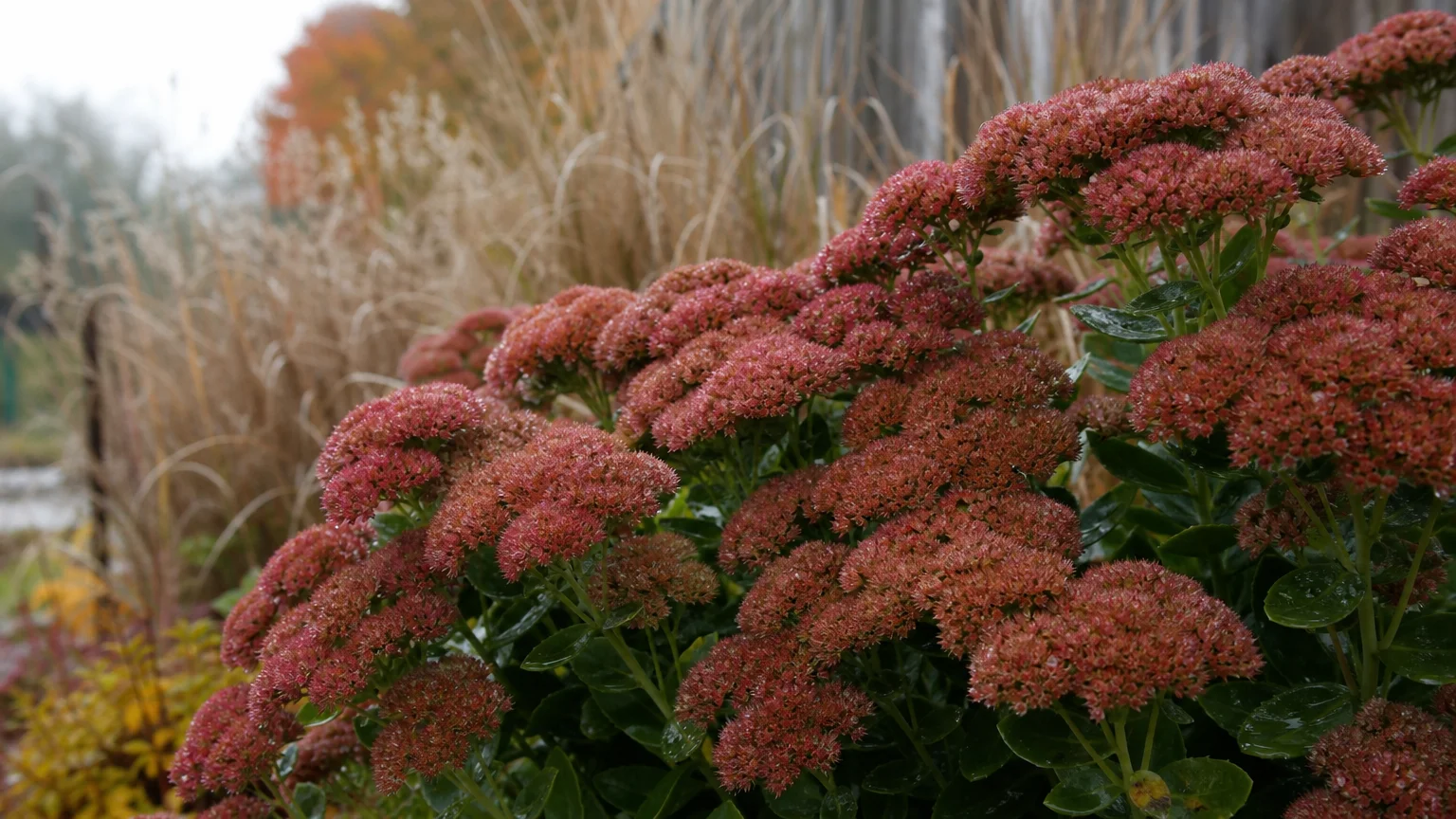
Tip #4: Autumn Joy Stonecrop (Sedum ‘Herbstfreude’)
Autumn Joy Stonecrop earns its place in almost every perennial border by offering reliable, structural beauty alongside an effortless care routine. Unlike low-growing groundcover sedums, Autumn Joy grows strictly upright, forming sturdy, two-foot-tall clumps of fleshy, light green foliage. As the summer progresses, the plant develops dense flower heads that initially resemble pale green broccoli florets. By late August, these heavy clusters burst into a spectacular display of dusty pink blossoms that slowly deepen into a rich, rusty red as autumn sets in.
This specific sedum variety ranks highly among the best succulents for outdoors because it completely transforms the late-season garden while requiring absolute zero coddling. Thriving effortlessly in USDA Zones 3 through 9, Autumn Joy tolerates heat, heavy humidity, and extended dry periods without wilting or losing its upright posture. The nectar-rich flowers provide a crucial late-season food source for migrating butterflies, native bees, and other beneficial insects preparing for the colder months. Even after the bright blooms fade, the dried brown flower heads provide excellent winter visual interest if left standing above the snow.
Plant Autumn Joy in full sun to ensure the succulent stems remain incredibly thick and sturdy; too much shade causes the plant to stretch toward the light and flop over under the weight of its own heavy flowers. It adapts remarkably well to a wide range of soil types, including poor, gravelly dirt, provided the area drains completely after a heavy rainfall. You do not need to apply supplemental chemical fertilizer; in fact, overly rich soil encourages weak, leggy growth. Simply cut the dead woody stalks down to the ground level in early spring, just as the fresh green rosettes begin to emerge from the warming soil.
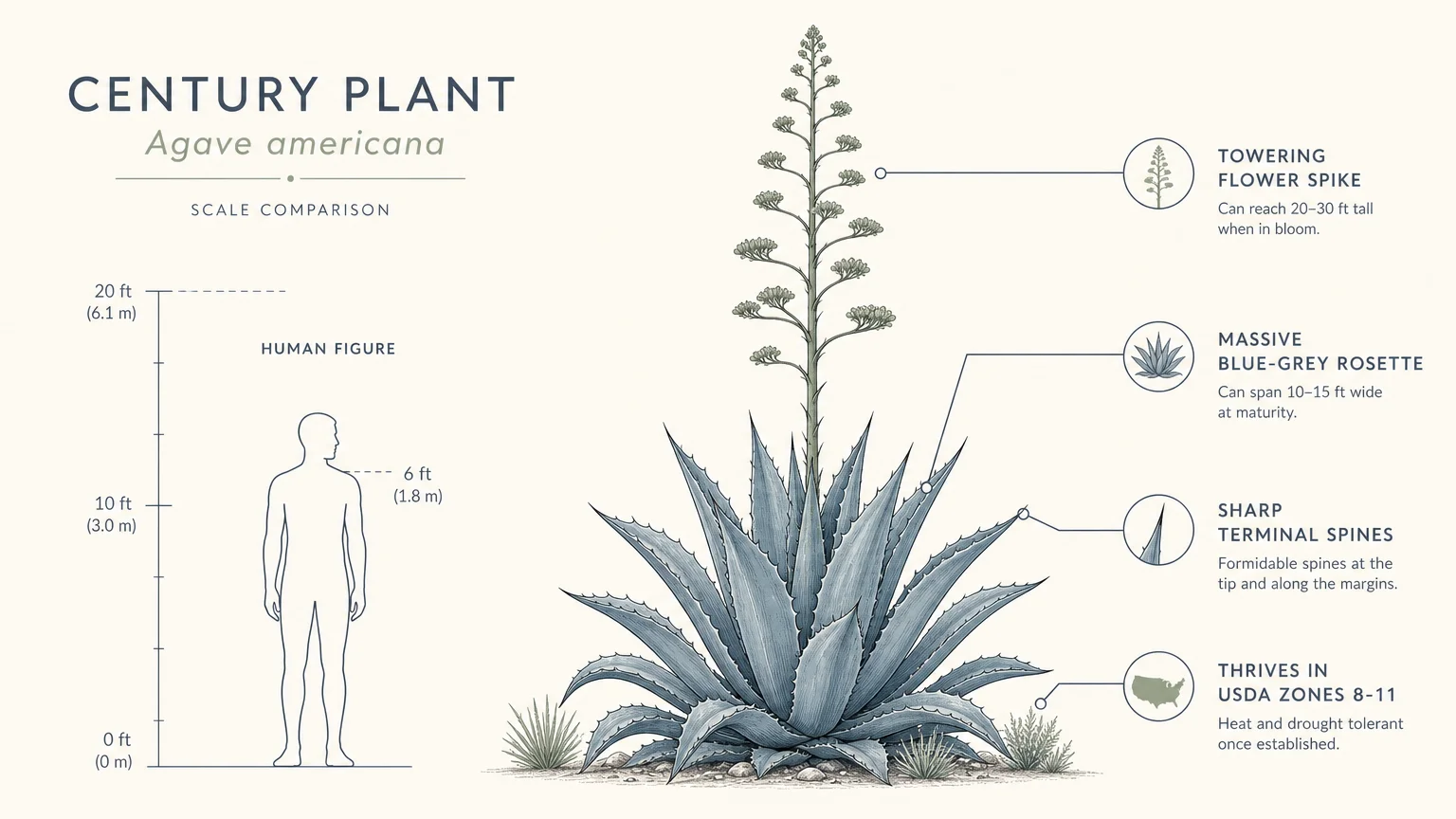
Tip #5: Century Plant (Agave americana)
If you want to make a massive architectural statement in your landscape, nothing rivals the sheer scale and dramatic presence of the Century Plant. This giant succulent forms an explosive rosette of thick, blue-green leaves tipped with wicked, needle-like spines along the margins. A mature Agave americana can easily span six to ten feet across, serving as a powerful living sculpture in large garden beds or xeriscaped slopes. After many years of storing solar energy, it sends up a colossal, asparagus-like flower stalk that can literally reach thirty feet into the sky before the main plant eventually dies.
The Century Plant operates as the ultimate drought-tolerant survivor in USDA Zones 8 through 11. Its deep, aggressive taproot system searches out subterranean moisture, while its thick, waxy outer cuticle locks that vital hydration inside the heavy leaves. This plant literally thrives on neglect; it vastly prefers baking in the relentless summer sun over receiving regular automated irrigation. The massive leaves cast deep shade on the soil directly above the root zone, effectively creating a self-sustaining microclimate that significantly slows down ground-level water evaporation.
Because of its formidable size and razor-sharp spines, initial location selection is absolutely critical. Plant your Agave far away from narrow sidewalks, busy driveways, and high-traffic play areas to prevent accidental injuries. It demands excellent drainage and rots quite quickly if forced to sit in soggy clay over the winter. Dig a wide planting hole and blend in plenty of coarse sand and crushed rock before settling the heavy root ball. Once you put it securely in the ground, step back and let nature do the rest; this monumental desert plant needs absolutely no help from you to succeed.
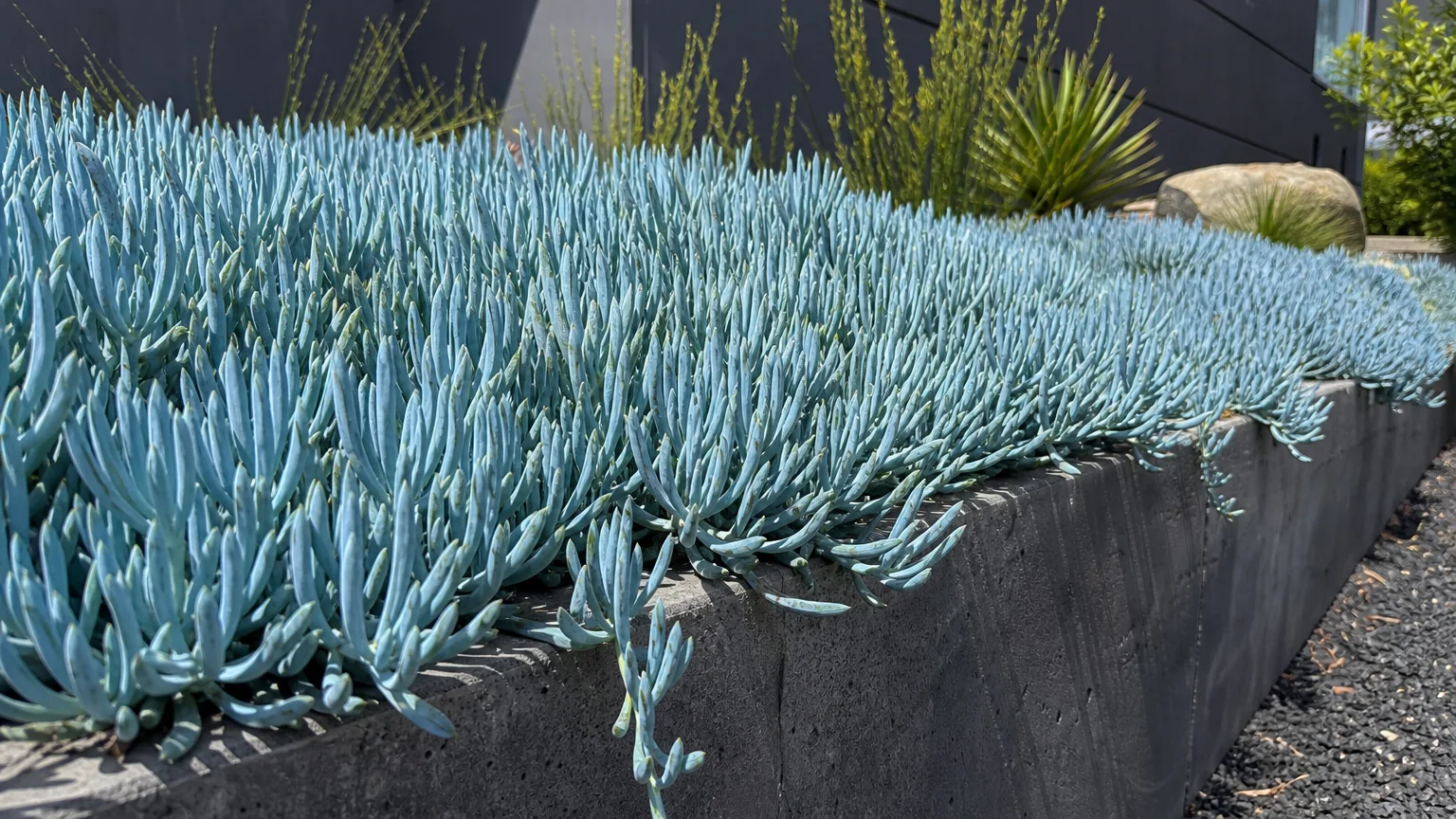
Tip #6: Blue Chalk Sticks (Senecio serpens)
Adding unique color textures to a drought-tolerant garden becomes an effortless task with Blue Chalk Sticks. This visually striking succulent groundcover features upward-pointing, cylindrical leaves coated in a powdery white wax, giving the entire plant a vivid, silvery-blue hue. It forms a dense, sprawling mat that rarely exceeds a foot in height, making it an ideal candidate for border edging, rock gardens, and cascading elegantly over concrete retaining walls. During the summer, tiny, daisy-like white flowers emerge, adding a delicate contrast to the structural blue foliage.
Blue Chalk Sticks thrive aggressively in USDA Zones 9 through 11, making them a common landscaping staple in coastal and arid environments alike. The distinctive powdery coating on the leaves—scientifically known as farina—acts as a powerful natural sunscreen, reflecting intense ultraviolet rays and preventing the plant from burning during extreme heatwaves. This exact adaptation also seals essential moisture inside the tubular leaf structure. It stands out as a highly effective, low-maintenance succulent for fire-wise landscaping, as its moisture-dense leaves naturally resist ignition compared to dry, woody perennial shrubs.
To achieve the tightest, most vibrant growth habit, plant your Blue Chalk Sticks in a location that receives at least six hours of direct, unfiltered sunlight. While it can tolerate partial shade, the stems will rapidly become leggy and the striking blue color will fade to a dull, uninspiring green. Incorporate coarse builder’s sand into your garden bed to ensure rapid drainage. Water newly planted specimens deeply once a week to encourage root establishment; after the first month, you can significantly reduce your watering routine to once every three or four weeks during the hottest part of the summer.
Tip #7: Paddle Plant (Kalanchoe thyrsiflora)
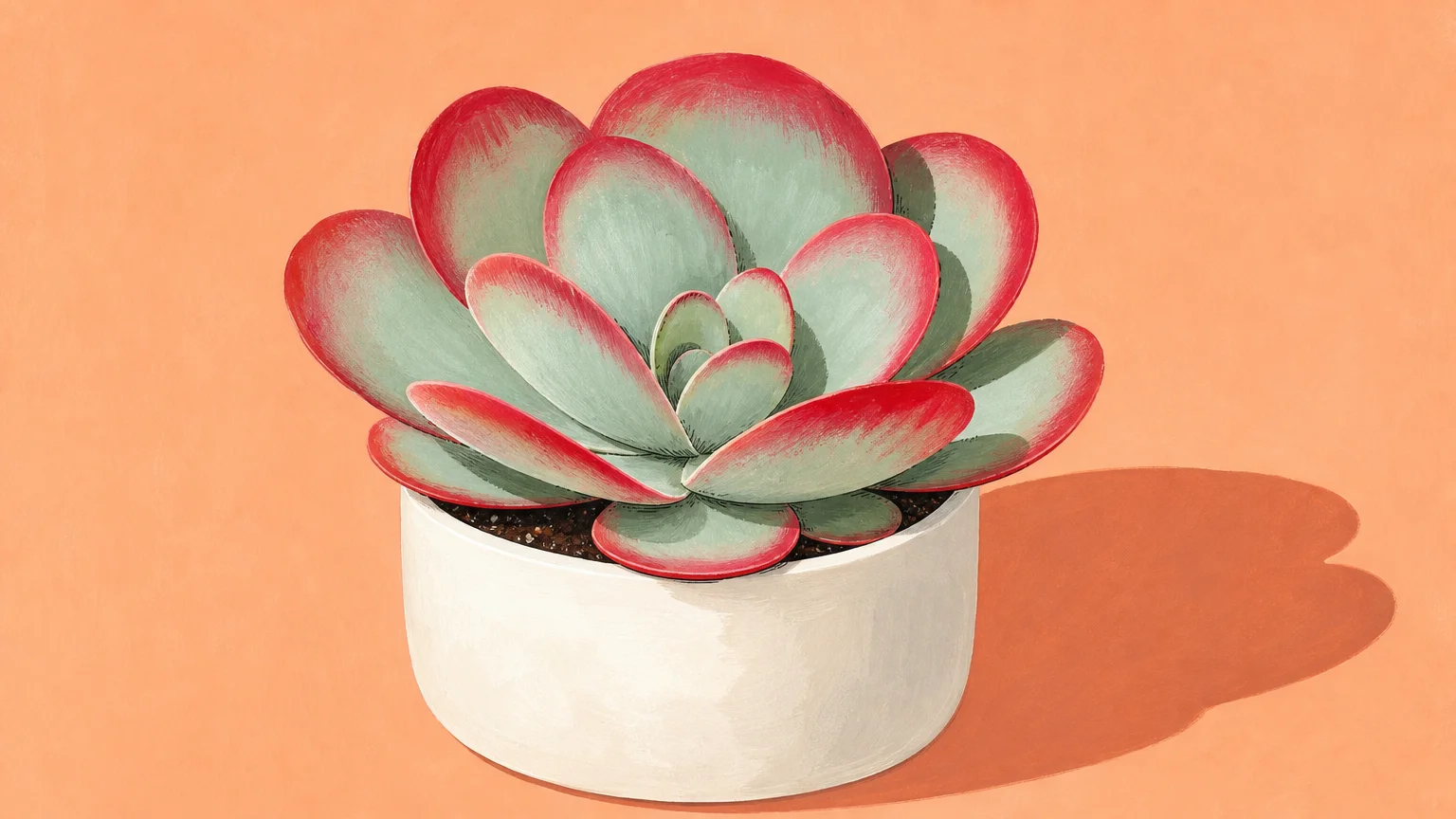
The Paddle Plant introduces an element of whimsical charm to the outdoor garden with its incredibly large, flat, rounded leaves stacked securely in a neat, cabbage-like rosette. When exposed to bright sunlight and cooler autumn temperatures, the outer edges of these sea-green paddles develop a brilliant, fiery red margin. This dynamic color shift makes the Paddle Plant a highly sought-after specimen for mixed succulent bowls and front-yard focal-point plantings. Mature plants occasionally produce a tall, central stalk entirely covered in fragrant, tubular yellow flowers that rapidly attract local pollinators.
This robust African succulent excels in USDA Zones 9 through 11 and perfectly embodies the rugged resilience expected from easy-care garden plants. Native to rocky, arid mountain environments, the Paddle Plant evolved to handle extended periods of severe drought by storing enormous volumes of water in its thick, pancake-like leaves. It requires very little soil volume to thrive, meaning you can easily tuck it into shallow rock crevices or thin borders where traditional deep-rooted perennials would quickly perish from severe dehydration.
When integrating the Paddle Plant into your home landscape, prioritize excellent light exposure. Full, direct sunlight triggers the protective stress response necessary to produce those stunning red leaf margins; plants kept in excessive, gloomy shade will remain entirely green and lose their compact shape. Ensure your soil mixture leans heavily toward inorganic drainage materials like pumice, crushed granite, or coarse sand. Allow the soil to dry out entirely from top to bottom before applying the hose. If you notice the lowest leaves shriveling slightly during a mid-summer heatwave, give the plant a deep, restorative soak directly at the base to avoid unnecessarily wetting the foliage.
Tip #8: Crown of Thorns (Euphorbia milii)
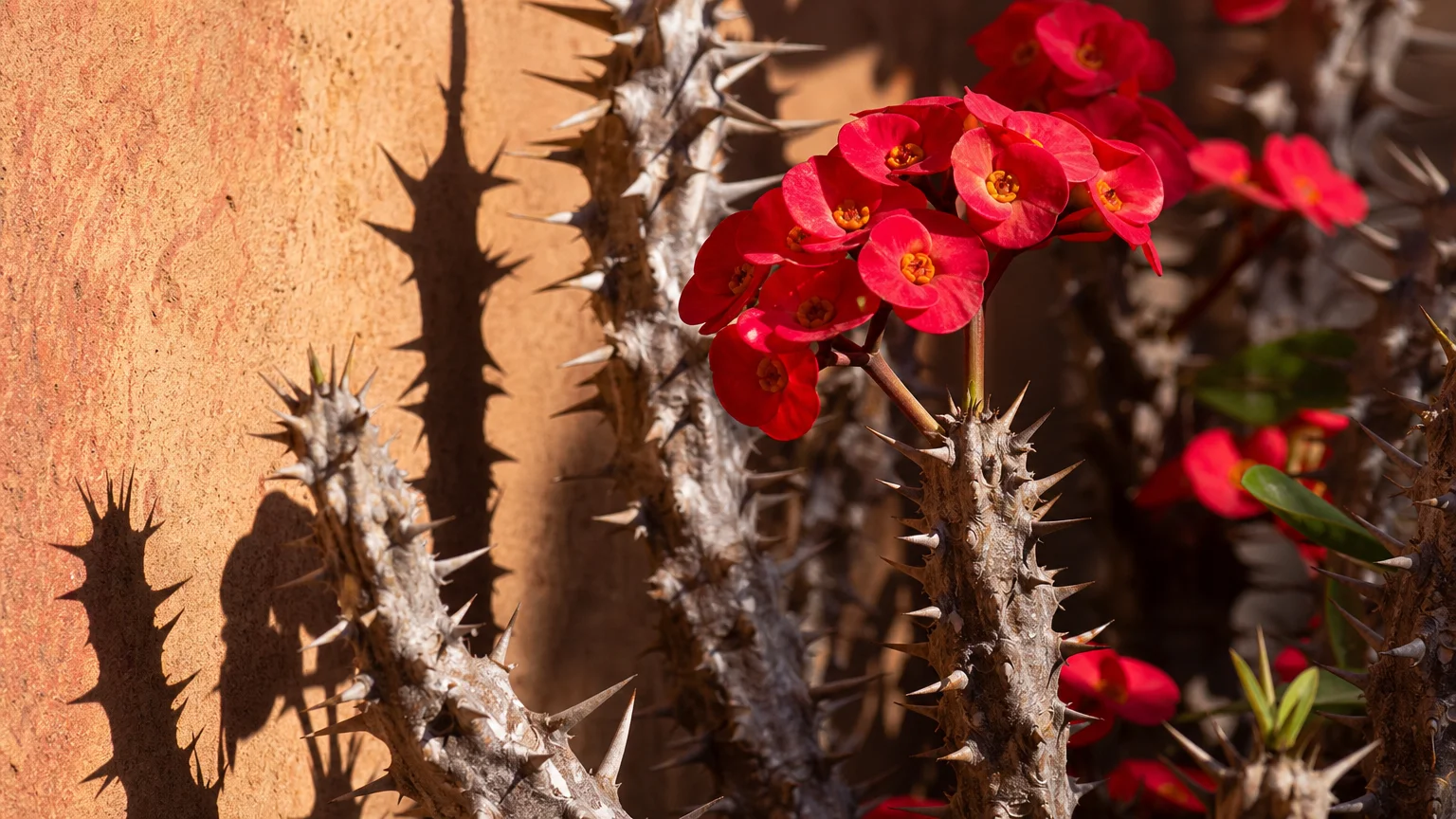
The Crown of Thorns seamlessly bridges the gap between a rugged, desert-dwelling survivor and a continuous floral showpiece. This woody succulent features thick, heavily thorned stems topped with sparse clusters of soft green leaves and brilliant, petal-like bracts in vivid shades of red, pink, yellow, or white. Unlike many standard succulents that only bloom for a brief, fleeting window, a happy Crown of Thorns can produce vibrant color nearly all year long, providing relentless visual appeal in exchange for very little effort.
Thriving outdoors year-round in USDA Zones 9 through 11, this formidable plant handles blistering daytime heat and extended drought with absolute ease. When water becomes incredibly scarce, the Crown of Thorns employs a brilliant survival mechanism: it intentionally drops its green leaves to prevent moisture loss through natural transpiration. The thick, green, photosynthetic stems continue to produce energy and keep the plant alive until the next rain arrives, at which point it rapidly pushes out a fresh, beautiful flush of green foliage and new flowers.
Handle the Crown of Thorns carefully; the sharp, formidable spikes demand absolute respect, and the broken stems release a milky white sap that can severely irritate your bare skin and eyes. Wear thick gardening gloves whenever pruning or relocating this plant. Plant it in a high-and-dry location, such as a raised masonry bed or a gentle slope, using highly porous succulent soil. It prefers full sun for maximum blooming potential but deeply appreciates a few hours of cooling afternoon shade in environments that experience extreme, baking summer heat. Water it deeply once every two weeks during the active spring growing season, but cut back irrigation almost entirely during the cooler, dormant winter months.
Tip #9: Ghost Plant (Graptopetalum paraguayense)
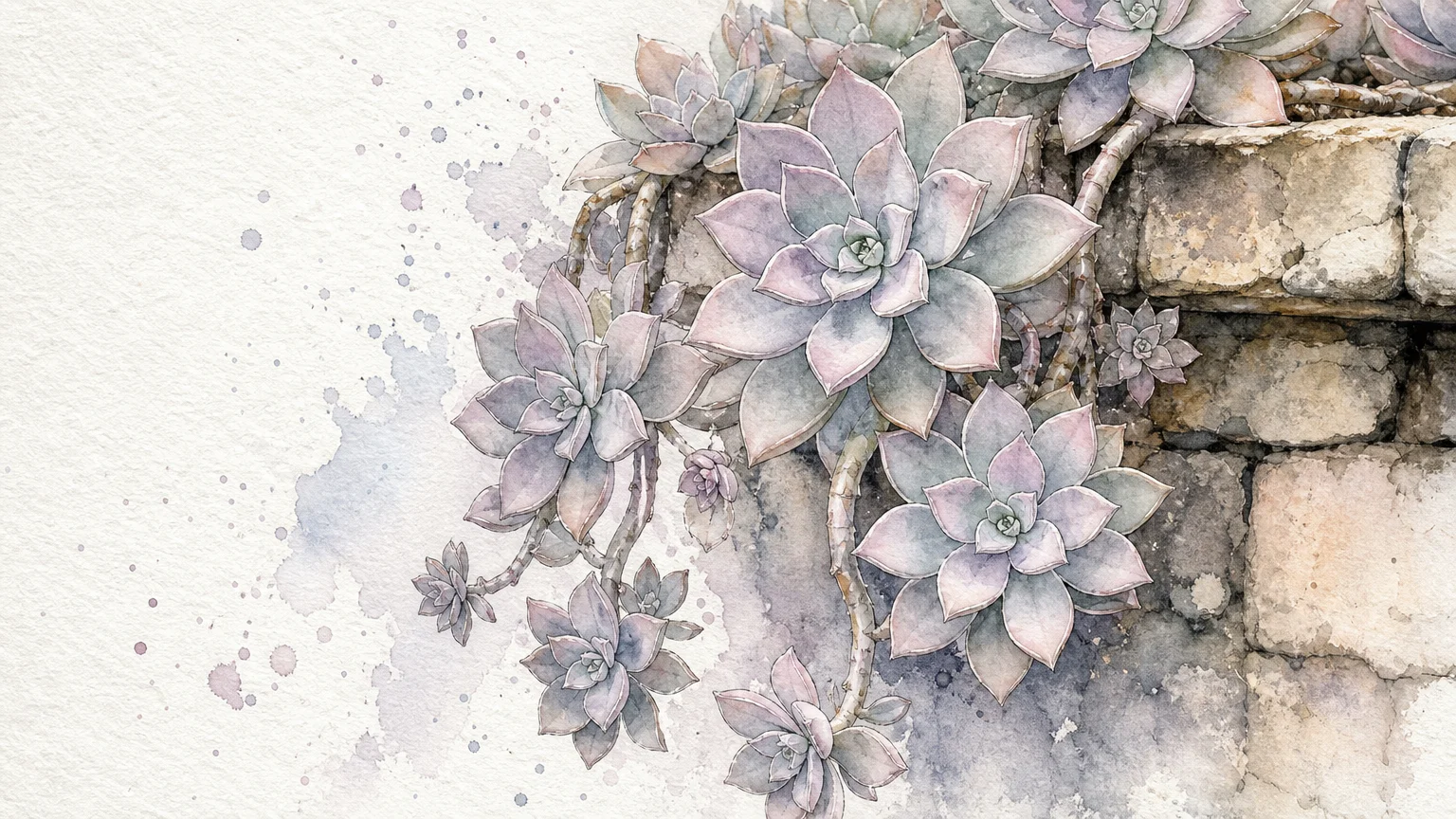
The Ghost Plant offers a haunting, delicate beauty that completely masks its rugged, undeniably resilient nature. This trailing succulent forms stunning, star-shaped rosettes of opalescent leaves that actually shift in color depending on their immediate environment; they flush warm pink and purple in direct sun, and fade to a silvery-blue in partial shade. As the thick stems grow and lengthen, they gracefully spill over the sides of elevated concrete planters, hanging baskets, and stacked stone retaining walls, creating a cascading waterfall of geometric foliage.
Despite its fragile appearance, the Ghost Plant stands as a remarkably tough contender among outdoor succulents. It thrives enthusiastically in USDA Zones 7 through 11, displaying a surprising, robust tolerance for light winter frosts and brief dips below freezing temperatures. A thick layer of powdery epicuticular wax covers every single leaf, shielding the plant from harsh, direct sunlight and acting as a physical barrier against natural moisture loss. When extreme, triple-digit heat hits your neighborhood, the Ghost Plant simply relies on its fleshy internal reserves to power through until the harsh weather finally breaks.
You will find the Ghost Plant incredibly forgiving regarding local soil conditions, provided the ground absolutely does not hold stagnant water. Mix plenty of perlite and coarse potting sand into your chosen planting area before putting it in the ground. The plump leaves break off quite easily if accidentally bumped by curious pets or heavy garden hoses; however, every fallen leaf represents an exciting propagation opportunity. Simply leave the broken leaves resting directly on top of the dry soil, and they will quickly sprout tiny pink roots to form entirely new miniature plants, allowing you to multiply your garden collection for free.
Tip #10: Red Yucca (Hesperaloe parviflora)
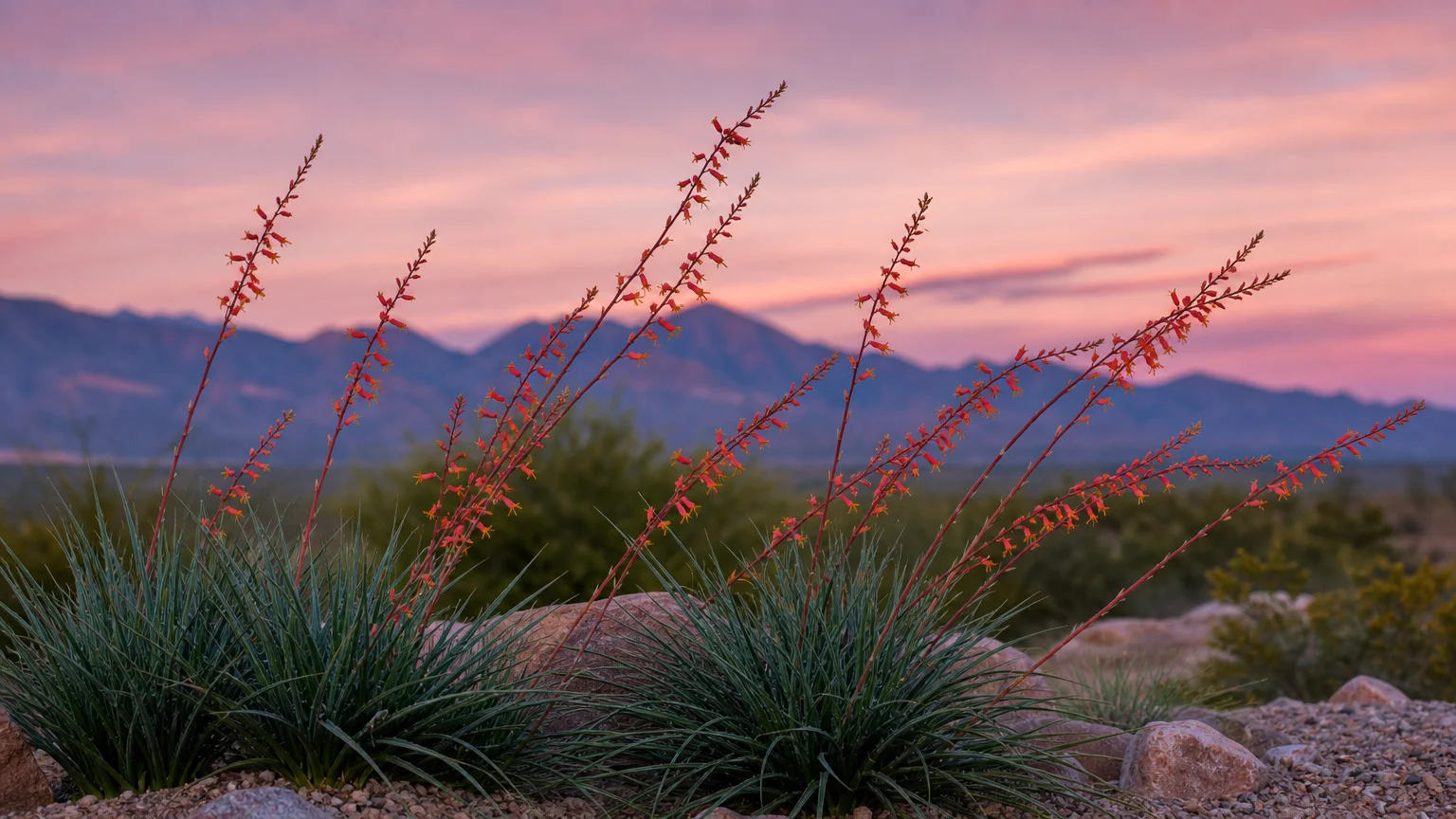
While neither a true yucca nor an aloe, the Red Yucca delivers the best structural characteristics of both in one virtually indestructible, elegant package. This Texas native forms a dense, fountain-like clump of leathery, arching green leaves heavily adorned with fine, peeling white threads along their margins. From late spring through mid-summer, it launches towering, four-foot-tall flower spikes heavily laden with coral-red, bell-shaped blooms. These long-lasting floral displays provide a highly reliable and continuous food source for migrating hummingbirds in your area.
If you seek the ultimate drought-tolerant plants for a deeply demanding environment, the Red Yucca deserves your immediate attention. Exceptionally hardy in USDA Zones 5 through 10, it ignores prolonged freezing winter temperatures just as easily as it dismisses brutal, triple-digit summer heatwaves. Once the extensive, thick root system fully establishes itself in your garden, the mature plant requires absolutely no supplemental irrigation. It flourishes magnificently in hell-strips—those brutally hot, dry patches of dirt located between the concrete sidewalk and the asphalt street—where almost nothing else can survive the intense radiant heat.
Plant your Red Yucca in full, unblinking sun to maximize its impressive flower production and maintain a tight, compact foliage shape. It adapts flawlessly to almost any soil type, ranging from heavy clay to pure desert sand, just as long as the internal drainage remains adequate. You can completely skip applying heavy compost or chemical fertilizers, as overly rich garden soil actually causes the plant to become highly floppy and weak. Simply prune away the spent, woody flower stalks at the base in late autumn to keep the architectural clump looking exceptionally tidy for the winter season.
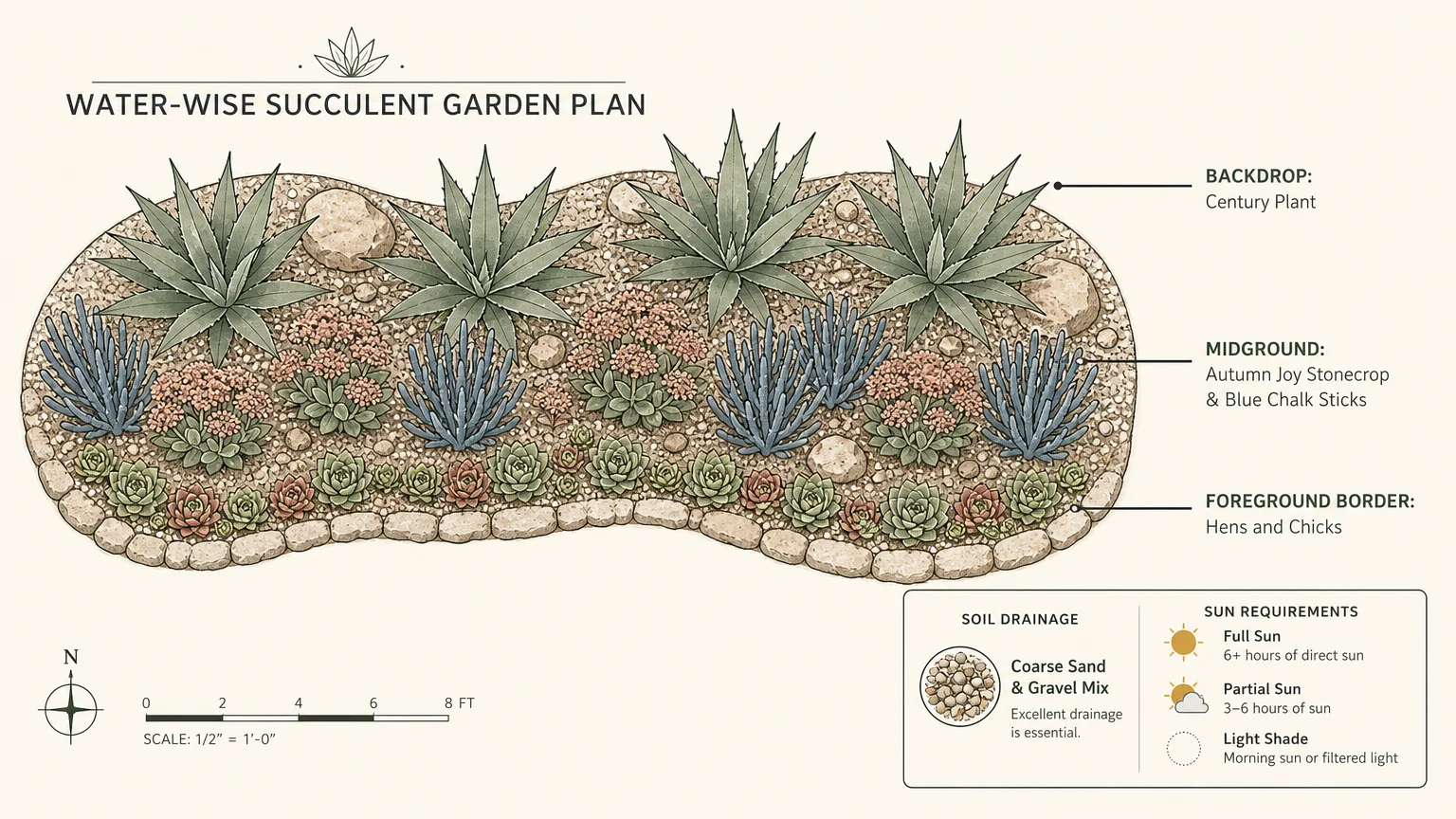
Putting It All Together: Enjoy Your Beautiful Garden
Transforming your residential landscape into a resilient, low-water oasis becomes a highly rewarding reality when you select the correct plant material. By incorporating these rugged outdoor succulents into your design, you actively reduce your monthly water bill, completely eliminate tedious weekend maintenance, and create a visually captivating environment that thrives despite the harshest elements. Nature designed these remarkable plant species to conquer difficult conditions; their fleshy leaves and deep taproots do all the heavy lifting so you do not have to break a sweat.
Take a long walk through your property and identify those notorious trouble spots—the baked earth near the asphalt driveway, the sandy slope that constantly refuses to hold moisture, or the glaringly bright concrete patio. These highly challenging microclimates actually provide the perfect stage for drought-tolerant plants to shine their brightest. Start small by introducing a few cold-hardy sedums or a striking architectural agave, and watch closely how quickly they establish themselves. As your gardening confidence grows, you can easily expand your outdoor collection to include cascading ghost plants and vibrant, flowering euphorbia varieties. Step back, put down the heavy watering hose, and truly enjoy the lasting beauty of a garden that perfectly balances vibrant life with effortless care. Your dream garden does not require endless physical labor; it simply requires the right resilient plants.
Frequently Asked Questions
How often should I water outdoor succulents during the summer?
During the hottest summer months, you should water your fully established outdoor succulents deeply but infrequently. Allow the top two to three inches of the surrounding soil to dry out completely before applying more water. In most climates, a thorough, deep soaking once every two to three weeks provides plenty of vital moisture. Relying entirely on natural rainfall is often sufficient unless your region experiences an extended, severe seasonal drought.
Do outdoor succulents need fertilizer?
Most drought-tolerant succulents thrive beautifully in poor, nutrient-deficient soil and do not require regular scheduled feeding. Applying heavy nitrogen fertilizers can actually harm these plants by causing rapid, highly weak growth that eventually flops over. If you want to encourage vibrant blooming, apply a heavily diluted, low-nitrogen liquid succulent fertilizer just once at the very beginning of the active spring growing season.
How do I protect my outdoor succulents from heavy rain?
Excellent soil drainage serves as your primary and best defense against excessive rainfall. Plant your succulents in raised masonry beds or on gentle slopes to ensure excess water naturally runs away from the delicate plant crowns. Mix coarse sand, pumice, or expanded shale heavily into your native soil prior to planting. If an unusual, prolonged deluge threatens your garden, you can temporarily cover highly sensitive plants with a waterproof tarp to shed the rain.
Can outdoor succulents survive freezing temperatures?
Cold tolerance depends entirely on the specific plant species and your local USDA Hardiness Zone. Rugged varieties like Hens and Chicks, Eastern Prickly Pear, and Autumn Joy Stonecrop possess remarkable biological adaptations that allow them to easily survive sub-zero temperatures and heavy winter snow. Conversely, soft, tropical succulents like Aloe Vera and the Paddle Plant will suffer severe tissue damage during a freeze and require heavy winter protection or relocation indoors.
For region-specific advice, consult your local University Extension program (find yours via the USDA directory). For plant databases and inspiration, visit the Missouri Botanical Garden or the Royal Horticultural Society.
Disclaimer: This article provides general gardening advice. Always consider your specific climate, soil conditions, and local pests. Follow safety guidelines when using gardening tools and products.