
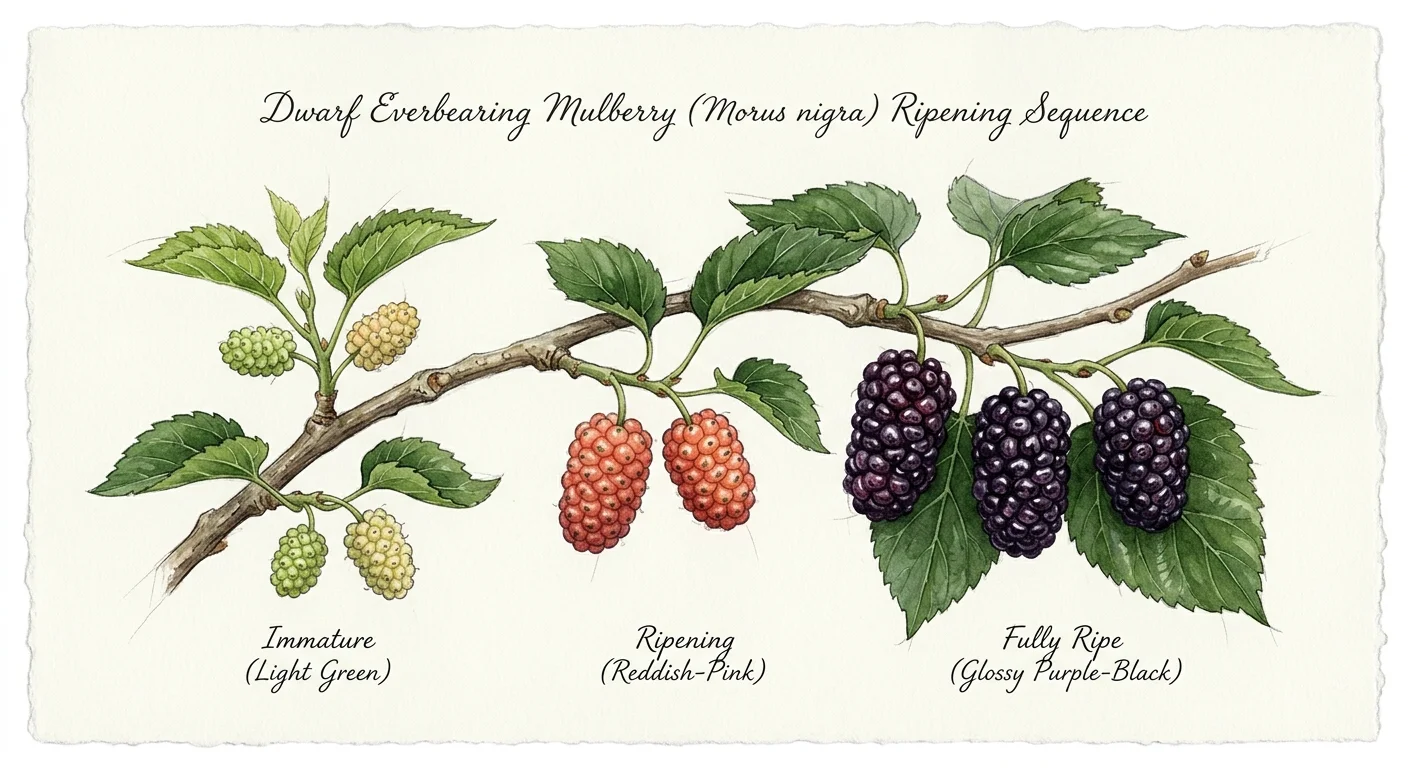
Tip #8: Dwarf Everbearing Mulberry Tree
Unlike massive wild mulberry trees that grow up to 50 feet tall, the Dwarf Everbearing Mulberry (Morus nigra) is a compact shrub that you can easily keep at four to six feet with simple seasonal pruning. This extraordinary plant produces continuous crops of sweet, jet-black mulberries from late spring all the way through autumn, making it one of the most productive small space fruit trees you can choose.
The medium-sized, firm mulberries resemble sweet blackberries and offer a delicate, berry-jam taste without hard seeds. Because this cultivar produces fruit on new growth, light pruning after each fruiting cycle encourages rapid new shoots and immediate flower production. Potted specimens often begin bearing dark fruit during their very first growing season.
Plant your dwarf mulberry in a 10-to-15-gallon pot using standard high-quality potting mix. This hardy plant adapts easily across USDA zones 5 through 10, demonstrating high resistance to pests, disease, and varying heat conditions. Place the tree in full sunlight to partial afternoon shade, and water regularly whenever the top inch of soil feels dry. Feed with an organic liquid kelp or fish emulsion fertilizer every three weeks during the active spring and summer months to support uninterrupted berry production.





Where do I find these trees