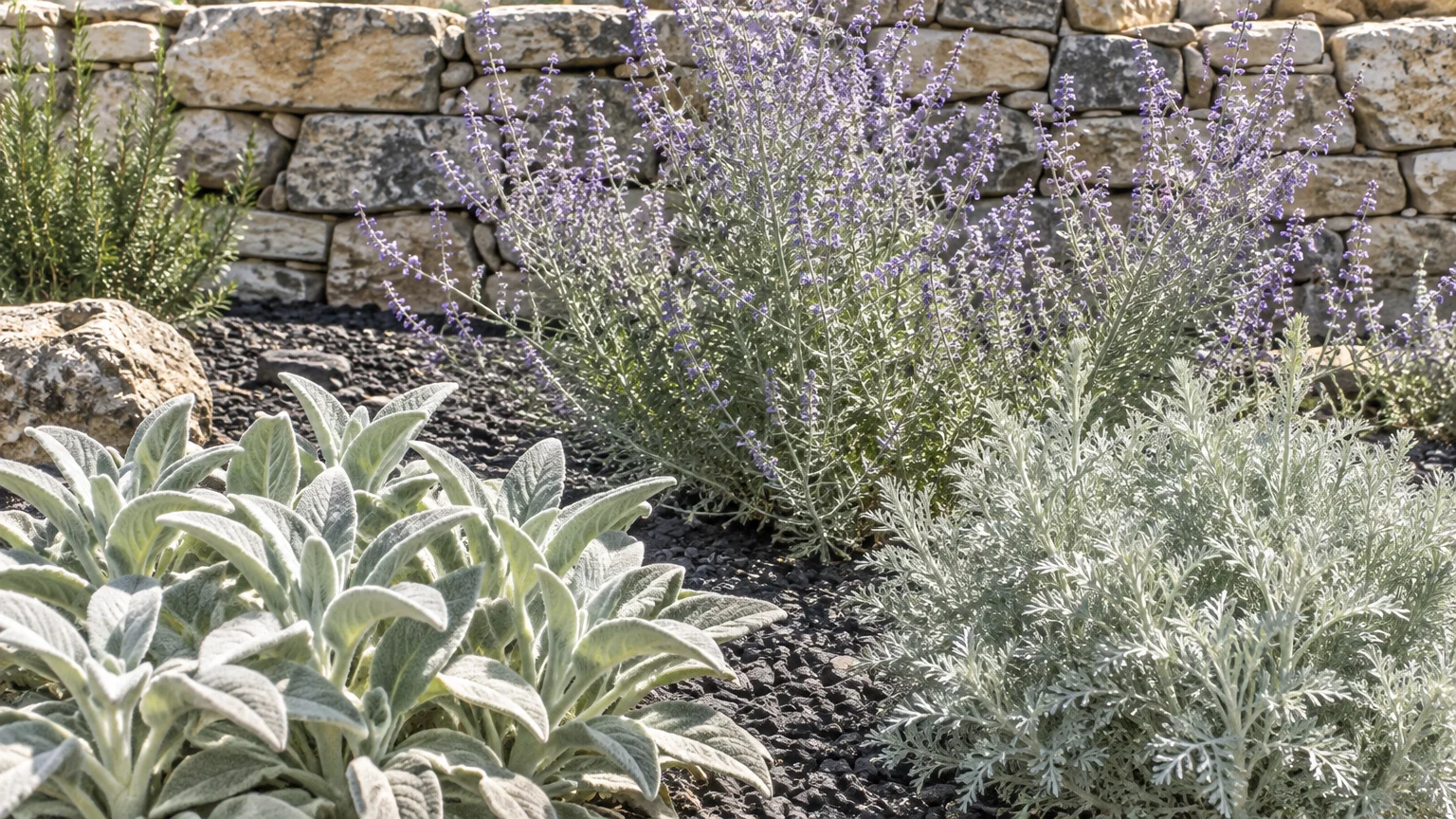
Silver foliage plants brighten dim garden corners, cool down hot borders, and soften harsh stone hardscapes without demanding constant watering. Their pale leaves act like natural reflectors, linking bold flower colors across your entire yard.
Microscopic leaf hairs and waxy coatings deflect harsh sunlight and lock in moisture during dry spells. Replacing thirsty turf with drought-tolerant landscaping can cut outdoor water use by 50% to 75%.
Below, you will find ten proven silver leaf plants matched to sun exposure, soil drainage, and USDA Hardiness Zones. Use these practical picks to build lasting contrast and resilient garden texture ideas right at home.
Outdoor Strategy #1: Russian Sage for Airy Movement and Late-Season Color
Russian sage (Salvia yangii, formerly Perovskia atriplicifolia) brings tall, misty elegance to sunny borders from June to October. Botanists reclassified this Southwest and Central Asian native into the sage genus in 2017, and the Perennial Plant Association named it the 1995 Perennial Plant of the Year.
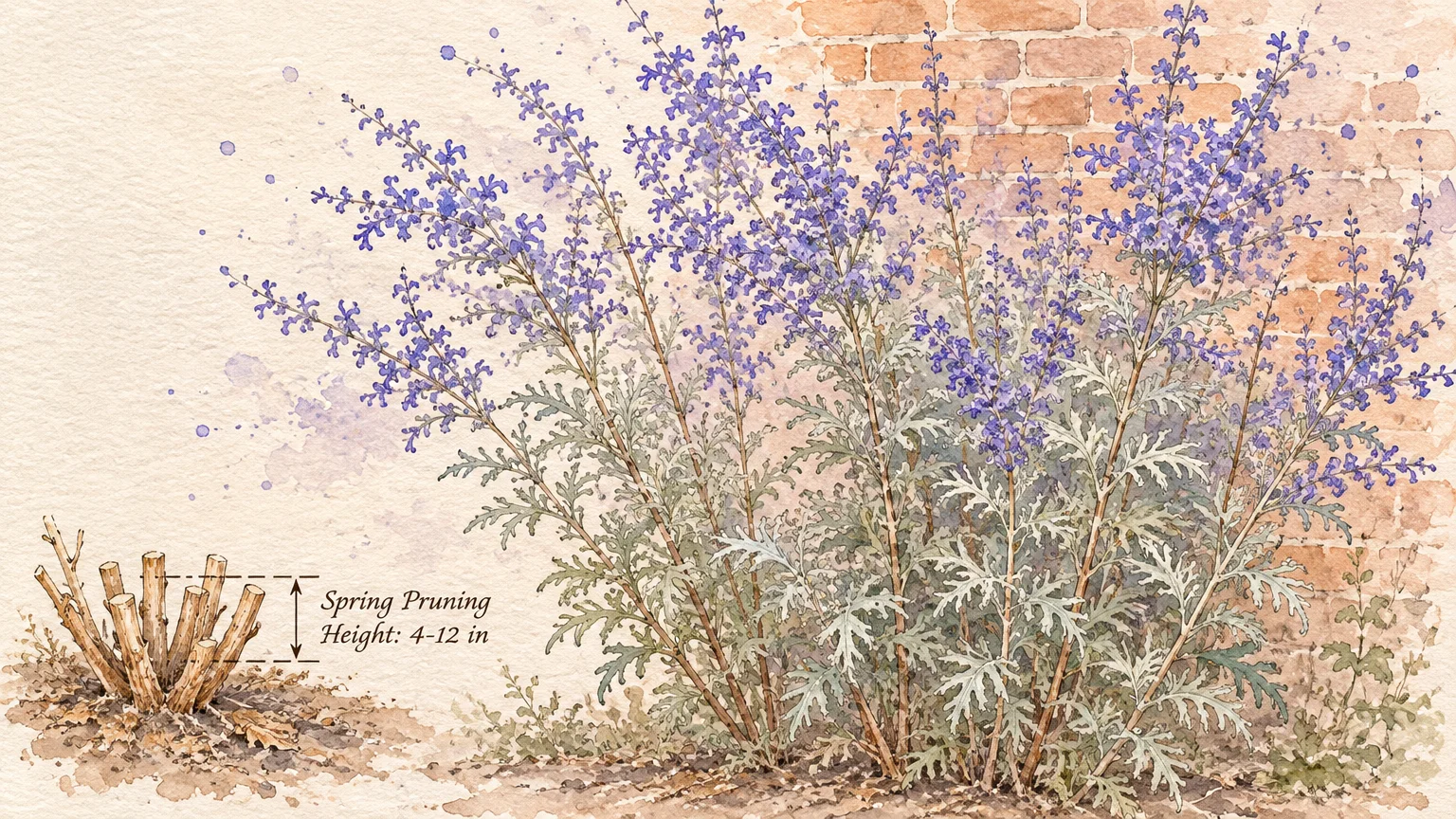
Hardy in USDA Zones 4 through 9, this woody perennial reaches 2 to 4 feet tall and wide—and stretches up to 5 feet in ideal spots. Silvery stems hold finely cut gray-green leaves topped with clouds of violet-blue flowers that sway in every summer breeze.
Plant Russian sage where it receives 6 to 8 hours of direct sunlight and sharp drainage. Dry-to-medium soil keeps the stems upright, whereas rich soil or excess irrigation causes floppy growth.
Wait until early spring to cut last season’s woody stems back to 4 to 12 inches above the ground. Leaving winter stems intact protects the crown from freeze-thaw damage during harsh cold snaps.
Use this plant to soften brick walls, anchor gravel driveways, or weave behind late-blooming coneflowers and ornamental grasses. Deer usually pass it by, while bees, butterflies, and hummingbirds crowd the nectar-rich blooms all summer.
Outdoor Strategy #2: Lamb’s Ear for Velvety Groundcover Along Sunny Paths
Lamb’s ear (Stachys byzantina) invites everyone walking past your garden bed to reach down and touch its thick, plush leaves. Native to Armenia, Iran, and Turkey, it thrives across USDA Zones 4 through 8 as a low, spreading mat.
The silvery foliage stays 4 to 6 inches tall and spreads 1 to 2 feet wide, with individual velvety leaves measuring up to 4 inches long. In summer, upright flower spikes rise 10 to 15 inches tall for an overall height near 0.75 to 1.50 feet.
Space starter plants 12 to 18 inches apart in full sun and dry-to-medium, fast-draining soil. Give each crown room to breathe so air circulates freely around the dense leaf rosettes.
Avoid overhead watering and heavy shade because those woolly hairs trap moisture against the leaf surface. Wet, stagnant air quickly triggers crown rot and fungal leaf spot, especially in humid summer regions.
Edge front walkways with lamb’s ear to cool down hot concrete pavers and contrast glossy dark-green shrubs. Both deer and rabbits avoid the fuzzy texture, making it reliable along unfenced curb-appeal borders.
Outdoor Strategy #3: English Lavender for Fragrance and Compact Border Structure
Despite its name, English lavender (Lavandula angustifolia) hails from sun-baked Mediterranean hillsides rather than rainy England. This fragrant subshrub thrives in USDA Zones 5 through 9 and grows 1.5 to 3 feet tall.
Narrow gray-green leaves reach up to 2.5 inches long, releasing crisp herbal oils whenever you brush past them. Dense purple flower spikes open in summer and dry cleanly on the stem for indoor bouquets.
Give English lavender full sun and light, sandy, alkaline soil with rapid drainage. Wet winter clay suffocates its roots fast, so top-dress beds with crushed gravel or rock mulch instead of moisture-holding bark in humid climates.
Refresh older mounds by pruning plants back to 8 inches tall in spring every 3 years. Regular shaping prevents woody, bare centers and encourages tight mounds of silvery foliage.
Plant lavender near patios, outdoor dining areas, and sunny front entries where you can enjoy the scent daily. Note that the ASPCA Animal Poison Control Center lists lavender as toxic to cats and dogs, since linalool and linalyl acetate can cause nausea, vomiting, and appetite loss.
Outdoor Strategy #4: Silver Mound Artemisia for Sculpted Front-of-Border Cushions
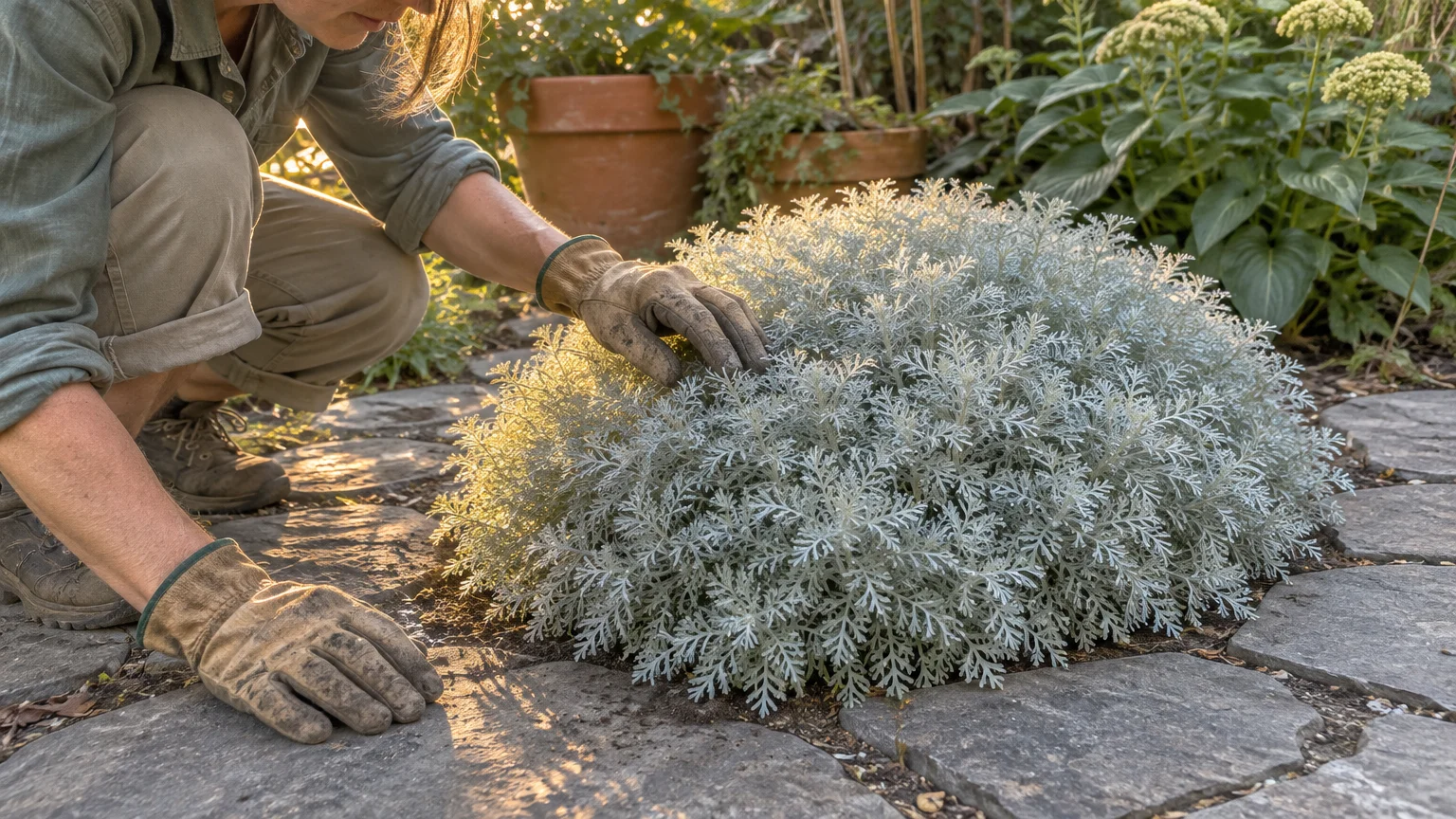
Silver mound artemisia (Artemisia schmidtiana ‘Silver Mound’) forms neat, silky pillows that look freshly clipped without heavy shearing. Hardy in USDA Zones 3 through 7, each compact mound grows 8 to 10 inches tall and 10 to 15 inches wide.
Its fine, threadlike leaves catch early morning dew and glow bright pewter against dark mulch or stone edging. Unlike blooming perennials that fade after a few weeks, this foliage star holds your border structure from spring through frost.
Plant ‘Silver Mound’ in full sun—more than 6 hours daily—and lean, well-drained soil with a neutral-to-alkaline pH of 7.0 or higher. Avoid fertilizer, which pushes weak, leggy stems that collapse after heavy summer rainstorms.
Watch for heat stress if you garden in warmer regions, because this cultivar tends to open up in the center during hot summers. It performs best north of Zone 7 and benefits from a light trim in late spring to keep its dome tight.
Tuck these cushions along the front edge of perennial beds or rock gardens to separate clashing flower colors. Deer and rabbits rarely nibble its bitter, aromatic leaves.
Outdoor Strategy #5: Dusty Miller for Heat-Loving Annual and Coastal Accents
Dusty miller (Jacobaea maritima, formerly classified as Senecio cineraria) delivers bold, felt-like silver leaves that shine in high heat. Native to Mediterranean shorelines, it grows 1.6 to 3.3 feet tall and survives winters in USDA Zones 8 through 10.
In Zone 8 through 10 gardens, dusty miller tolerates cold dips down to -12 to -15°C as a short-lived evergreen shrub. Gardeners in colder climates treat it as an easy, low-cost annual for instant summer contrast.
Give dusty miller 6 to 8 hours of sun and lean, fast-draining soil with a neutral-to-alkaline pH between 7.0 and 8.0. It shrugs off salty coastal winds, resists deer browsing, and earns North American recommendations for fire-resistant landscaping near homes.
Pinch off small yellow flower stalks as they appear if you want the plant to stay tidy and focus energy on its bright leaves. Overfeeding or constant watering makes the stems stretch and dulls the crisp white sheen.
Pair dusty miller with deep burgundy coleus, coral geraniums, or dark purple petunias in driveway beds and entry pots. Keep curious pets away from these beds, as the ASPCA Toxic Plant List flags Senecio species as toxic to cats and dogs.
Outdoor Strategy #6: Silver Ponysfoot for Cascading Containers and Dry Slopes
Silver ponysfoot (Dichondra argentea), best known through the cultivar ‘Silver Falls’, drapes over pot rims and stone walls like liquid mercury. Native to Texas, New Mexico, and Mexico, it overwinters in USDA Zones 10 through 12 and shines as a summer annual elsewhere.
Low mats reach just 2 to 6 inches tall while spreading up to 30 inches wide across dry ground. When planted in hanging baskets or raised planters, those fan-shaped silver leaves trail up to 48 inches—roughly 4 to 6 feet—downward.
Plant ‘Silver Falls’ in full sun to partial shade with dry, gritty, well-drained soil. Once established, it handles intense afternoon heat and prolonged dry spells that wilt ordinary trailing annuals like lobelia.
Space plants along terraced retaining walls or steep rocky banks where rainwater washes away lighter mulch. Its creeping stems root lightly along the soil surface, providing attractive erosion control on sunny slopes.
Combine trailing silver ponysfoot with upright red salvias or spiky agave in porch planters for effortless multi-level contrast. You rarely need to deadhead or prune it unless runners stray across your garden path.
Outdoor Strategy #7: ‘Jack Frost’ Heartleaf Brunnera for Brightening Shady Beds
Most silver leaf plants demand baking sun, which makes ‘Jack Frost’ heartleaf brunnera (Brunnera macrophylla ‘Jack Frost’) a rare treasure for shade gardens. Discovered in Zeeland, Michigan as a sport of ‘Langtrees’, it earned U.S. Plant Patent PP13,859 in 2003 and won 2012 Perennial Plant of the Year.
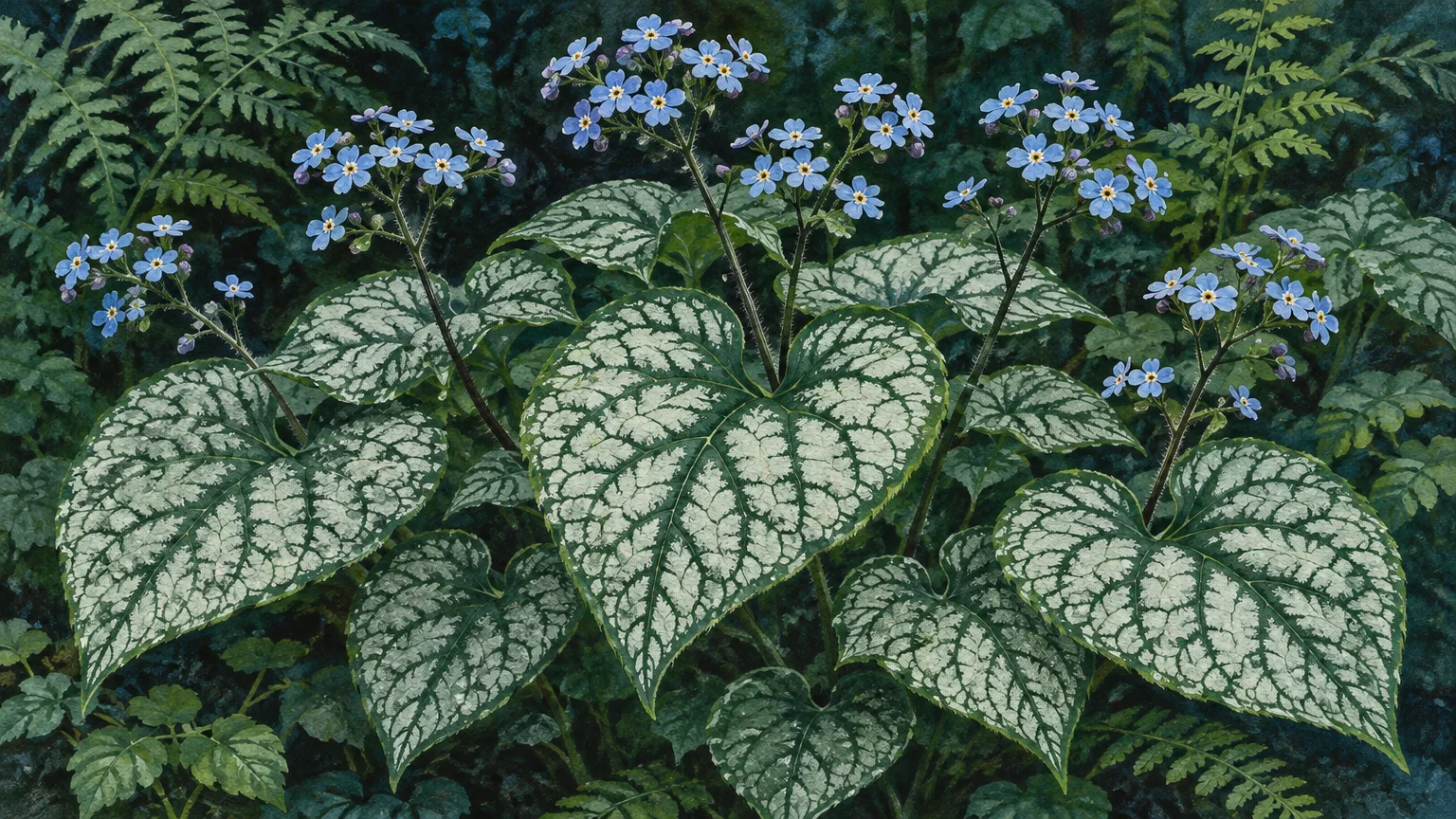
Hardy across USDA Zones 3a through 8b, ‘Jack Frost’ forms neat clumps 12 to 18 inches tall and 18 to 20 inches wide. Large heart-shaped leaves feature frosted silver surfaces etched with crisp emerald-green veins, topped by delicate blue spring blooms for 3 to 4 weeks.
Unlike drought-tolerant Mediterranean herbs, ‘Jack Frost’ is intolerant of drought and scorches in hot sun or dry dirt. Plant it in part to full shade with consistently moist, organically rich soil amended with leaf mold or compost.
Keep in mind that this northern-bred perennial struggles in the intense summer heat and humidity of the Deep South across Zones 7 through 9. In cooler regions, afternoon shade keeps those luminous leaves crisp through autumn.
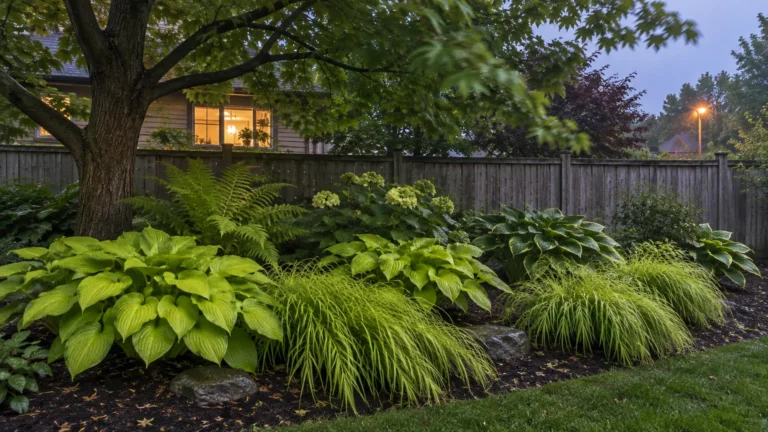
Pair ‘Jack Frost’ with dark-leaved hostas, woodland ferns, and astilbe beneath mature shade trees. Its rough, bristly leaf texture naturally deters deer and rabbits from stripping your shady understory.
Outdoor Strategy #8: Lavender Cotton for Evergreen Structure and Mediterranean Flair
Lavender cotton (Santolina chamaecyparissus) builds dense, coral-like mounds of finely textured silver-gray foliage that hold their shape year-round. Native to the Mediterranean, this woody evergreen shrub adds crisp architectural structure to gravel gardens and formal herb parterres.
Small yellow button flowers rise above the aromatic foliage in summer, brightening dry beds without overwhelming nearby perennials. If you prefer a pure silver-and-white palette, shear those flower buds off right before they open.
Plant lavender cotton in full sun and loose, sharply drained soil rather than damp clay or heavily enriched beds. Rich compost and soggy winter soil cause woody stems to split open and rot from the base upward.
Once roots settle into your native dirt, this shrub handles heat waves and extended dry spells with minimal irrigation. Prune the mound cleanly into shape in late winter before fresh spring growth begins.
Line sunny vegetable beds or Mediterranean courtyard paths with lavender cotton for tidy, evergreen edging. Deer dislike its pungent scent, making it a sturdy sentinel near kitchen gardens.
Outdoor Strategy #9: Blue Fescue for Spiky Texture in Rock Gardens
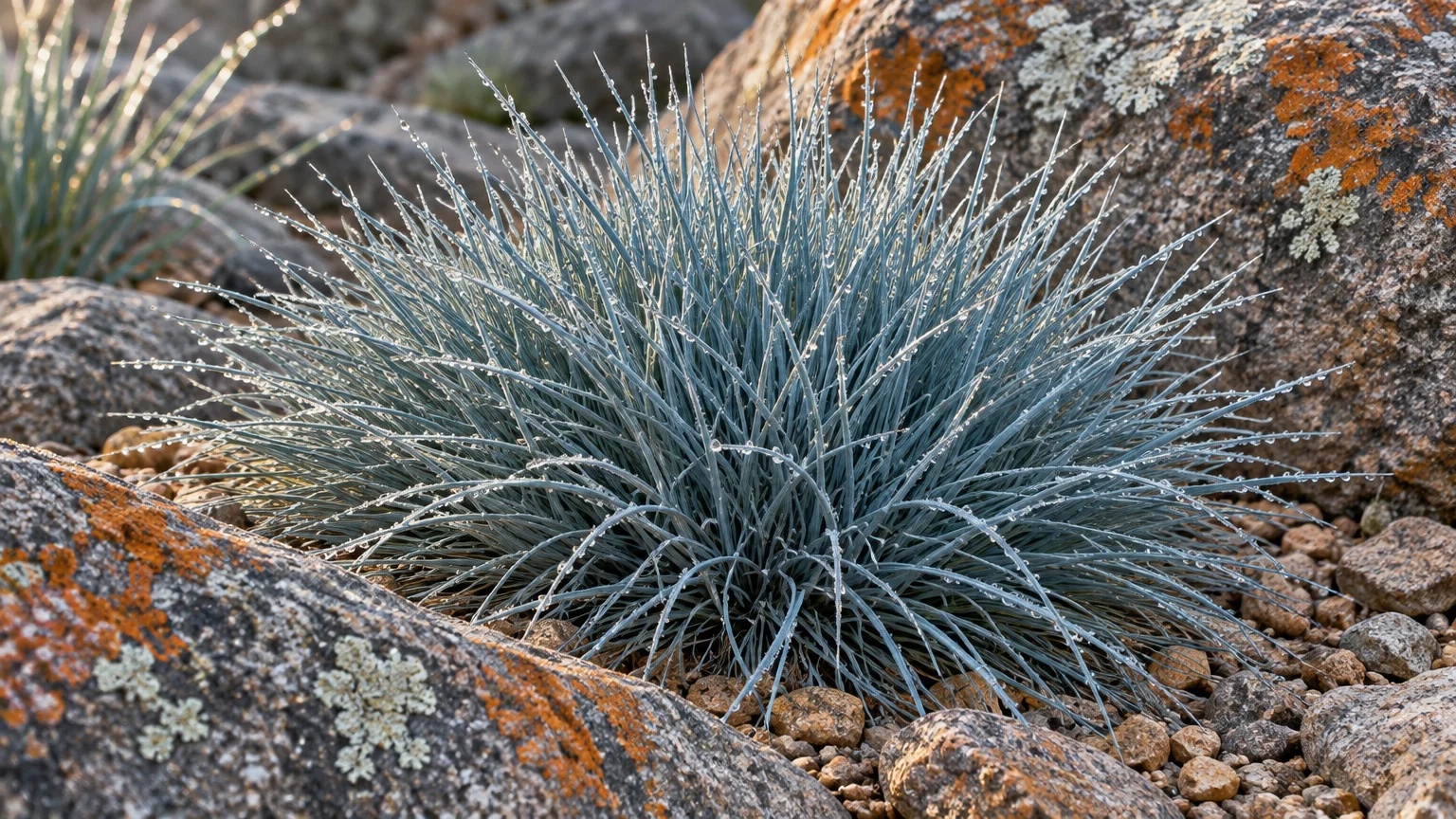
Blue fescue (Festuca glauca) trades broad velvety leaves for tight, porcupine-like clumps of fine blue-silver blades. As a cool-season ornamental grass, it injects crisp vertical movement into flat groundcover plantings and modern courtyard borders.
Plant blue fescue in full sun and lean, fast-draining soil where excess rainwater drains away within minutes. Heavy clay and rich garden fertilizers force soft, sprawling growth that loses its metallic sheen and shortens the plant’s life.
Comb through each clump with gloved hands in early spring to pull out dead tan blades without scalping live green shoots. Every few years, dig up aging clumps whose centers have thinned out, discard the hollow middle, and replant healthy outer divisions.
Repeat small groupings of blue fescue in odd numbers along gravel paths, dry creek beds, or stone steps. The spiky mounds create bold contrast beside flat-leaved lamb’s ear or trailing silver ponysfoot.
Because deer and rabbits rarely chew tough, silica-rich grass blades, blue fescue thrives along open property edges. It pairs effortlessly with succulents, yarrow, and dwarf conifers in low-maintenance front yards.
Outdoor Strategy #10: Snow-in-Summer for Dry Walls and Sunny Slopes
Snow-in-summer (Cerastium tomentosum) forms a tough, evergreen carpet of woolly silver-gray leaves that thrives where grass refuses to grow. In late spring and early summer, clouds of crisp white star-shaped flowers completely blanket the low mat.
Choose a baking-hot slope, rock crevice, or top edge of a dry stone retaining wall in full sun. Poor, rocky, fast-draining soil keeps this vigorous spreader polite and prevents stems from flopping outward.
Give snow-in-summer plenty of elbow room away from delicate, slow-growing alpine treasures that it might crowd out. It shines along driveway borders, hellstrips next to hot asphalt, and terraced sunny embankments.
Shear off spent flower stalks immediately after blooming finishes in early summer using sharp hedge shears. A quick trim keeps the silver mat dense, encourages fresh shoots, and prevents bare spots from opening in the center.
Once rooted deeply into stony ground, snow-in-summer tolerates dry weather and winter cold with almost zero pampering. Use it as a living mulch under taller sun-loving shrubs like Russian sage.
Seasonal Considerations for Your Garden
Timing your planting, pruning, and soil prep to the calendar keeps silver foliage plants dense instead of leggy or rotted. A few well-timed chores each season save hours of rescue work later.
Spring Prep and Pruning
Wait until frost danger fades and fresh buds swell before cutting back woody silver perennials like Russian sage and lavender. Pruning too early exposes tender green growth to late cold snaps, while trimming in spring triggers neat, bushy branching.
Clear away soggy winter tree leaves from around lamb’s ear and snow-in-summer as soon as snow melts. Trapped wet debris invites fungal spots before warm spring breezes can dry the crowns.
Summer Heat and Water Management
Outdoor watering accounts for more than 30% of average U.S. residential water use—and up to 60% in arid regions—with up to 50% wasted through wind, evaporation, and runoff. Grouping drought-tolerant silver plants into hydrozones lets you turn down sprinklers without sacrificing color.
Skip summer fertilizer on Mediterranean silver plants, because nitrogen forces soft, water-hungry shoots that droop in August heat. Only shade-loving ‘Jack Frost’ brunnera needs consistent summer moisture and light organic mulch to stay lush.
Fall Planting and Zone Checks
Plant hardy silver perennials in early fall so roots anchor into warm soil before winter dormancy arrives. Before shopping, verify your current hardiness zone on the updated USDA Plant Hardiness Zone Map released November 15, 2023.
Built from 30-year weather averages between 1991 and 2020 across 13,412 weather stations, that update shifted roughly half of the country to a warmer half-zone and added Zones 12 and 13 for Puerto Rico and Hawaii. Even with milder winters, cold-sensitive coastal picks like dusty miller still need well-drained beds to survive freezing nights.
Winter Drainage Protection
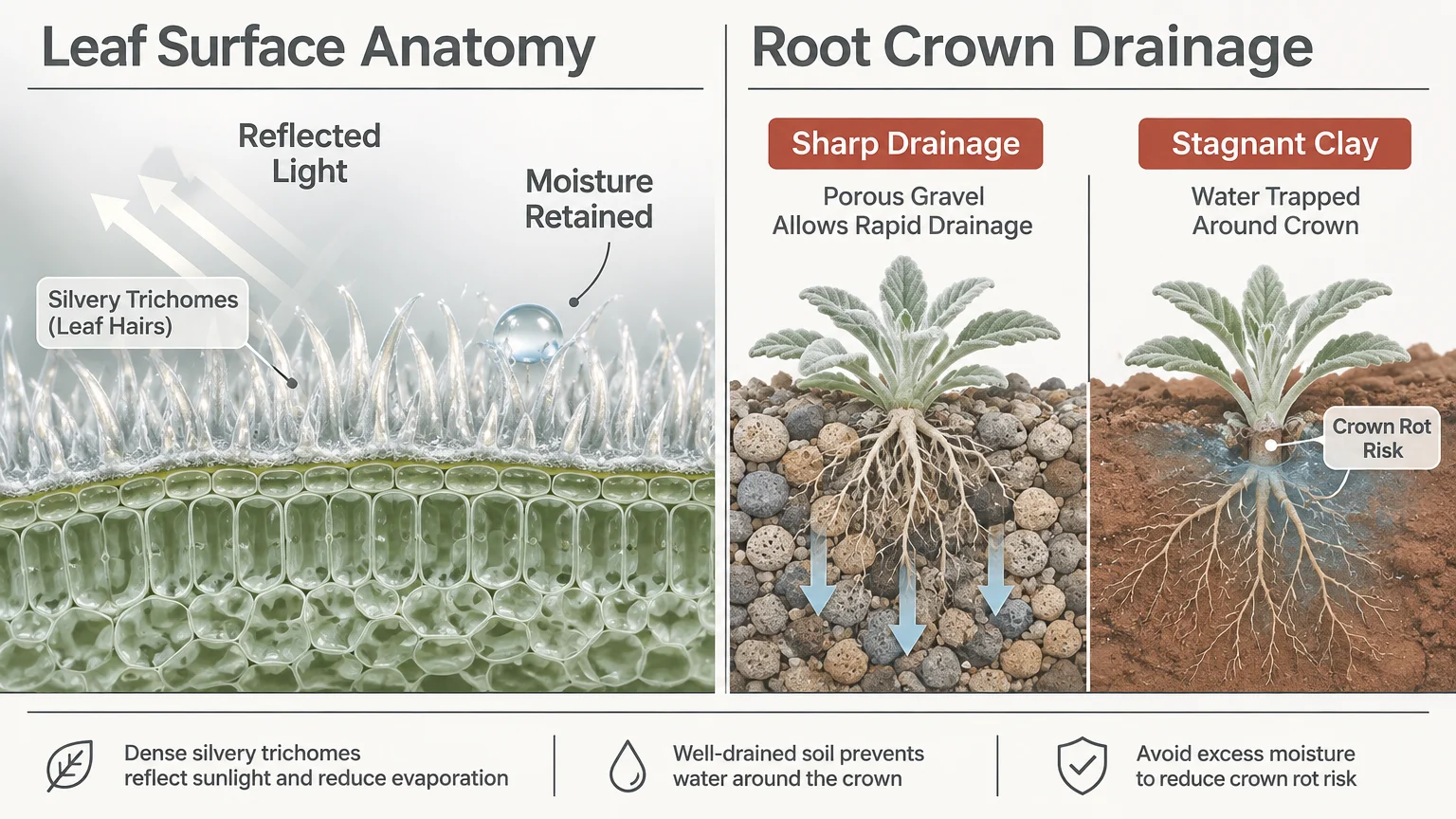
Winter wetness kills far more silver landscaping plants than freezing air temperatures alone. Avoid piling thick hardwood bark over crowns of lavender, artemisia, or lavender cotton heading into November.
Instead, scatter an inch of coarse gravel or crushed granite around the base to shed cold rain away from vulnerable stems. In icy northern zones, leave dried Russian sage stalks standing until spring so snow drifts insulate the root crown.
Dealing with Outdoor Pests and Weather
Understanding why silver leaves look pale helps you keep them healthy through extreme storms, hungry wildlife, and sticky heatwaves. Their pale color comes from light-reflecting structure rather than weak chlorophyll.
How Leaf Structure Fights Heat and Drought
Silver foliage plants owe their metallic glow to microscopic leaf hairs called trichomes or thin waxy coatings. Shield-shaped peltate trichomes on upper leaf surfaces bounce excess sunlight and UV rays away to keep leaf temperatures cool.
Meanwhile, denser star-shaped stellate trichomes along leaf undersides trap humid air and slow wind movement across leaf pores. That natural barrier sharply reduces transpiration water loss during hot, windy afternoons.
Preventing Rot in Humid Climates
Those same moisture-trapping hairs become liabilities during prolonged summer rain or muggy coastal fog. Always aim drip irrigation or soaker hoses directly at the soil line in the early morning rather than wetting leaves at dusk.
Mix coarse grit or expanded shale into heavy clay beds, or plant sun-loving silver herbs in raised mounds. Good spacing between plants keeps air moving so dew evaporates quickly after sunrise.
Deterring Deer, Rabbits, and Protecting Pets
Most sun-loving silver plants carry strong essential oils, bitter compounds, or fuzzy bristles that deer and rabbits hate. Plant Russian sage, lamb’s ear, and lavender cotton along unfenced perimeter beds to discourage browsing near tastier roses and hostas.
Balance deer resistance with pet safety if dogs or outdoor cats roam your yard unsupervised. Keep English lavender and dusty miller out of pet play areas, or choose non-toxic groundcovers near patio lawns.
Frequently Asked Questions
Why do my silver foliage plants turn green or rot in summer?
Excess shade, rich fertilizer, or waterlogged soil strips silver leaves of their frosty sheen and causes soft green growth. Move sun-lovers into at least 6 hours of direct light, stop fertilizing, and amend dense clay with coarse grit for fast drainage.
Which silver leaf plants work in shady or wet yards?
‘Jack Frost’ heartleaf brunnera thrives in part to full shade and needs consistently moist, organic-rich soil across Zones 3a through 8b. Avoid planting sun-loving Mediterranean herbs like lavender or silver mound artemisia under dense tree canopies, where wet shade triggers rot.
How much water can replacing lawn with silver landscaping plants save?
Switching thirsty turfgrass for drought-tolerant xeriscaping cuts outdoor residential water use by 50% to 75%, with state agencies citing savings up to 64%. Turf-removal studies also document empirical savings between 11.2 and 76.0 gallons per square foot per year.
How do I refresh woody silver plants that get leggy over time?
Prune woody subshrubs like lavender cotton in late winter and cut English lavender back to 8 inches every 3 springs before new growth hardens. For spreading mats like snow-in-summer, shear off spent flowers right after bloom to spark compact foliage across bare patches.
Check your USDA Plant Hardiness Zone at the USDA’s website. For lawn and garden care advice, consult your local University Extension program (listed here).
You can also find native plant information from the National Wildlife Federation.
Disclaimer: This article provides general outdoor gardening advice. Success can vary greatly based on your specific climate, soil type, and local conditions.
Always choose plants appropriate for your USDA Hardiness Zone.