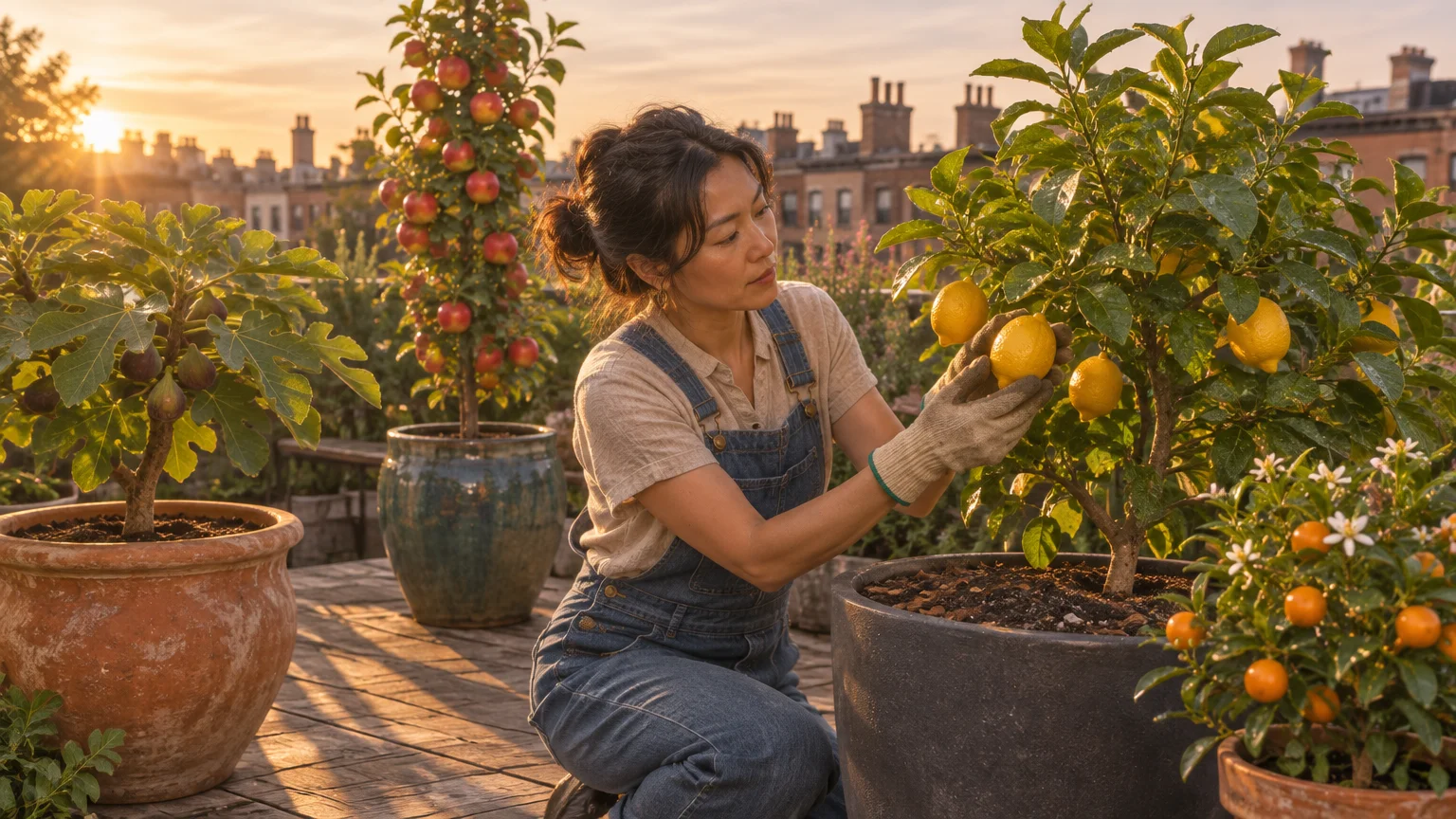
Growing fruit trees in pots turns a sunny patio, deck, or balcony into a productive mini-orchard without needing an acre of yard. You control the soil quality, sun exposure, and winter shelter for every tree you plant.
In a 2025 Purdue University survey, 44% of U.S. households reported producing or planning to produce some of their own food. Bare-root and potted dwarf fruit trees typically retail between $39.99 and $94.99.
By matching compact cultivars to the right container size, potting mix, and hardiness zone, you can harvest fresh fruit right outside your back door. Experts consistently recommend five standout container fruit trees.
Outdoor Strategy #1: Dwarf Citrus for Year-Round Patio Harvests
Dwarf citrus tops nearly every horticultural list for container fruit trees because it pairs glossy evergreen foliage with fragrant blossoms and bright fruit. Standout cultivars include Improved Meyer lemon, calamondin, and cold-tolerant kumquats.
Cold tolerance varies sharply across citrus varieties, according to the New South Wales Department of Primary Industries. Kumquats rank as very cold hardy, while Meyer lemons, mandarins, and Seville oranges tolerate mild chills better than sensitive limes or true lemons.
Choosing the Right Pot and Soil Mix
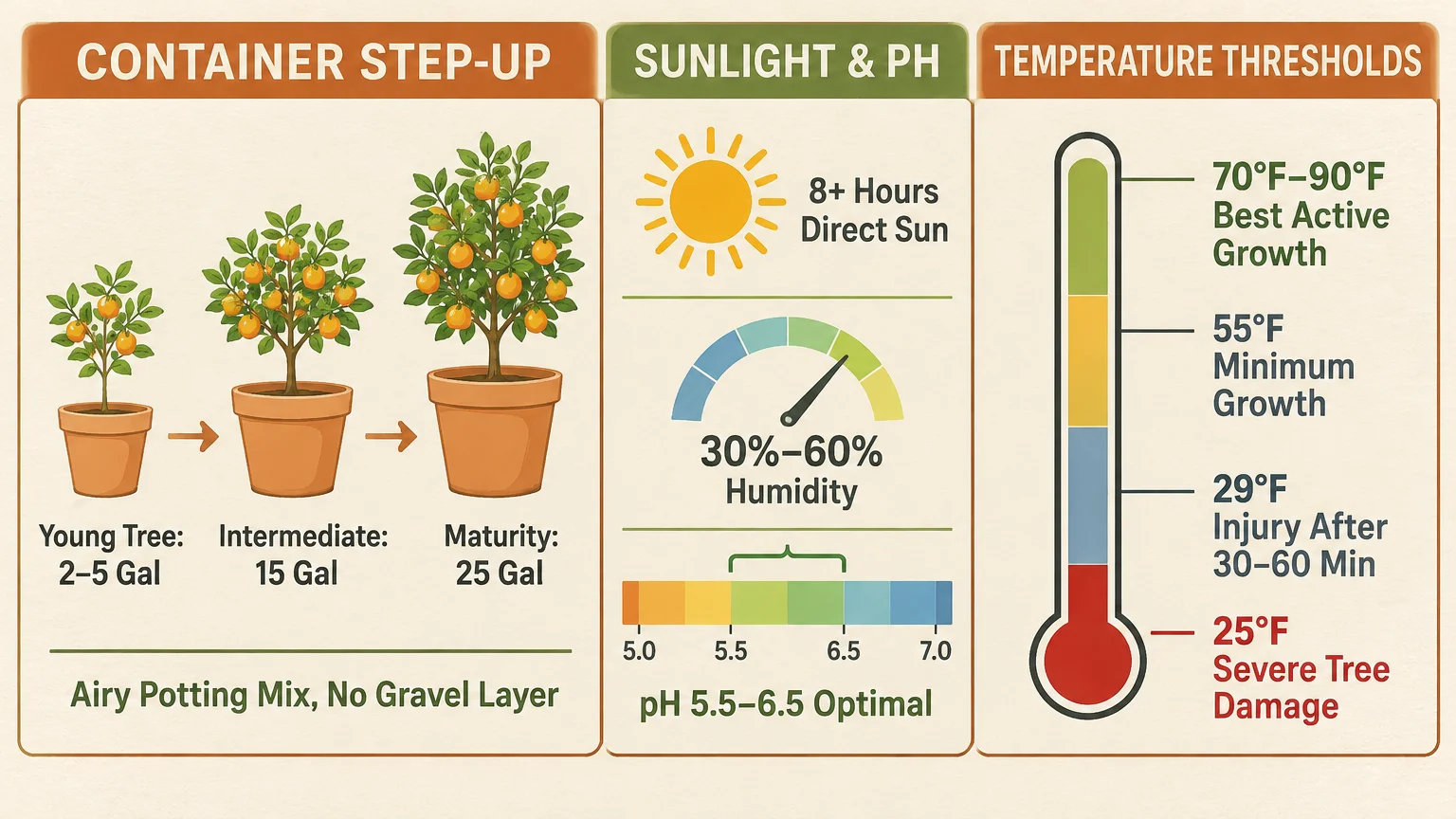
Start young citrus trees in a 2- to 5-gallon container that closely fits the root ball to prevent waterlogged soil. Step the tree up gradually to a 15-gallon pot, and eventually up to 25 gallons at maturity.
Fill every container with an airy, well-draining potting mix instead of heavy garden soil, which compacts and suffocates roots. Follow University of Maryland Extension and Clemson Extension guidance by keeping drainage holes clear and skipping gravel at the pot bottom.
Clemson Cooperative Extension notes that citrus prefers a soil pH between 5.5 and 6.5, though up to 7.0 remains workable. Position pots where they receive at least 8 hours of direct sunlight daily and 30% to 60% humidity.
Feeding, Pollination, and Temperature Thresholds
Frequent watering flushes nutrients out of container mixes faster than garden beds. Clemson Extension recommends applying slow-release formulas such as 12-6-6 or 12-4-6 several times across the growing season, supplemented with acidic water-soluble fertilizer or Epsom salt if leaves yellow.
Most citrus trees are self-pollinating, except tangerines, which require cross-pollination per Clemson Extension. When trees bloom indoors during winter, gently transfer pollen between flowers using a soft paintbrush or cotton swab.
Mississippi State University Extension reports that citrus grows actively between 55°F and 100°F, performing best at 70°F to 90°F. Watch winter forecasts closely, because just 30 to 60 minutes at 29°F injures small lemons, and extended drops below 25°F damage trees.
Quarantine Rules and Pet Safety
Before ordering citrus online, check federal movement restrictions under 7 CFR 301.76 through 301.76-11. USDA APHIS prohibits shipping citrus trees, leaves, or stems out of areas quarantined for citrus greening and the Asian citrus psyllid.
Effective September 1, 2026, USDA APHIS expanded California quarantine boundaries in Santa Paula plus Riverside and San Diego counties. Nurseries cannot legally ship citrus into Alabama, Arizona, California, Florida, or Texas from outside regulated channels, with penalties ranging from $1,100 to $60,000.
Keep curious pets away from fallen citrus debris as well. ASPCA Animal Poison Control warns that citrus stems, leaves, peels, and seeds contain citric acid and essential oils that can cause stomach upset and central nervous system depression in dogs and cats.
Outdoor Strategy #2: Compact Figs for Heat-Loving Balconies
If your patio bakes in afternoon heat, compact figs reward you with lush tropical leaves and sweet summer harvests. Proven container cultivars include Petite Negri, Brown Turkey, and cold-tolerant Chicago Hardy.
University of Maryland Extension recommends at least a 15-gallon container roughly 18 inches wide for compact figs, while NC State Extension sets 10 gallons as a bare minimum. Give figs 8 or more hours of direct daily sun for peak sweetness.
Soil Acidity, Pollination, and Chill Hours
Common figs grow vigorously in porous potting mixes maintained at a soil pH of 5.5 to 6.5, tolerating up to 7.0. Because common figs are self-pollinating, a single potted tree produces abundant crops without a second cultivar nearby.
Remember that figs still require winter dormancy to reset their fruiting cycle. Common figs need at least 100 chill hours between 32°F and 45°F, so store dormant pots in a cool unheated garage rather than a warm living room.
Managing Sap and Pet Exposure
Always wear gloves when pruning fig branches during late winter or summer. ASPCA Animal Poison Control notes that fig sap and foliage contain ficin and psoralen, compounds that can cause skin irritation and drooling, vomiting, or diarrhea in pets.
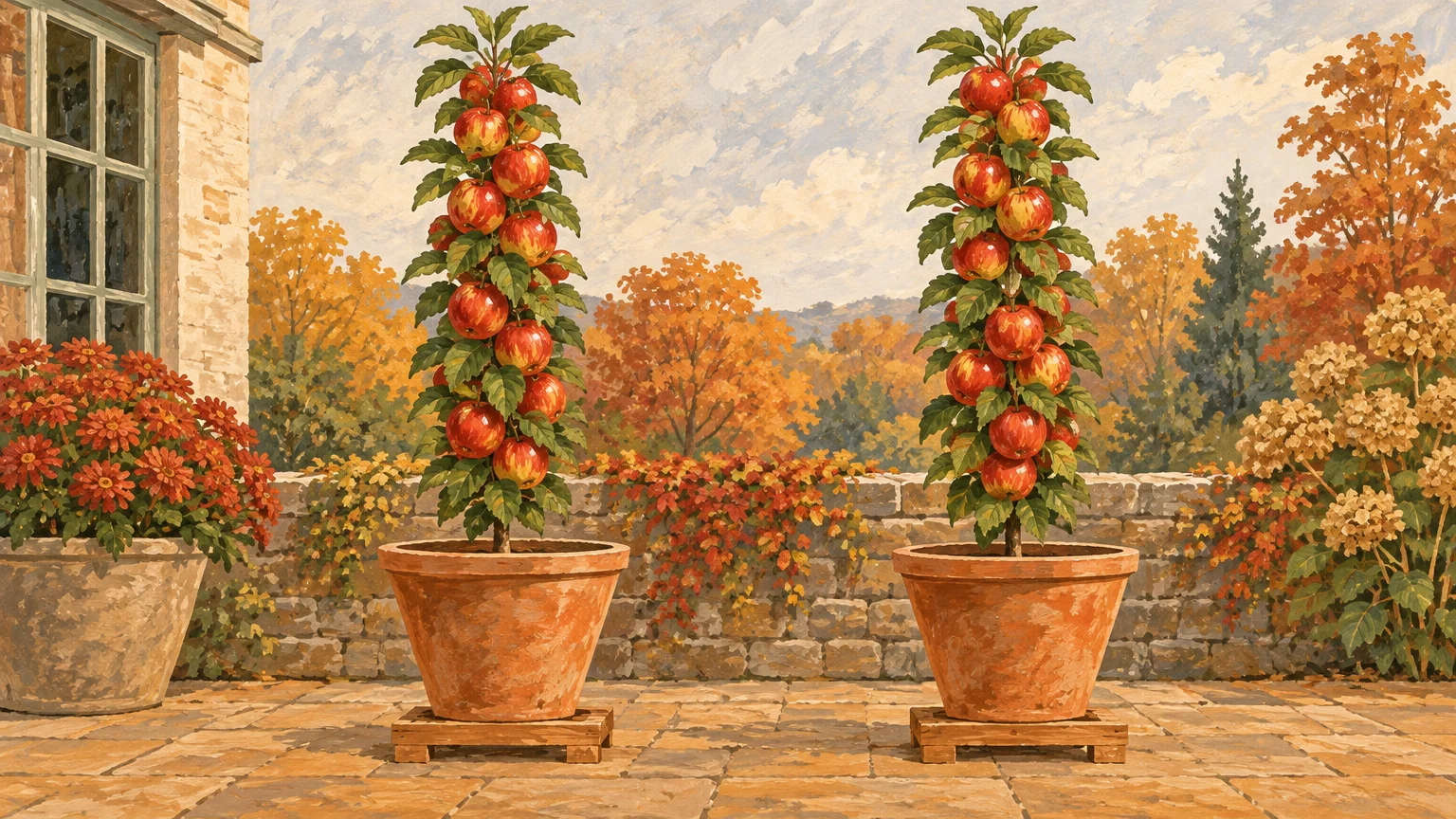
Outdoor Strategy #3: Dwarf and Columnar Apples for Crisp Fall Flavor
You no longer need sprawling backyard acreage to grow crisp apples at home. Columnar varieties such as Northpole and Scarlet Sentinel stay under 4 feet wide according to Stark Bro’s, fitting effortlessly onto narrow townhome balconies and entry walkways.
Standard dwarf fruit trees mature at 8 to 10 feet tall in the ground, or a manageable 3 to 6 feet in pots with annual pruning. By comparison, semi-dwarf apple trees reach 12 to 15 feet and outgrow patio containers quickly.
Rootstocks, Pot Dimensions, and Soil Targets
The Royal Horticultural Society advises choosing apple trees grafted onto M9 or M26 rootstocks for container life, noting that M27 is overly dwarfing. Most container fruit trees need pots measuring 45 to 50 centimeters, or 18 to 20 inches, across.
University of Maryland Extension specifies at least a 20-gallon pot roughly 21 inches wide for dwarf and columnar apples, while NC State Extension favors 20 to 25 gallons. Plant in well-draining potting mix with a soil pH between 6.0 and 7.0.
Place your apple pots where they capture 6 to 8 hours of direct sunlight each day. Adequate morning sun dries overnight dew off leaves quickly, cutting down common fungal leaf spots without heavy sprays.
Solving the Apple Pollination Puzzle
Both University of Illinois Extension and University of Maryland Extension emphasize that apples are self-unfruitful. You need pollen from a second, genetically distinct apple cultivar that blooms at the exact same time to set fruit.
Stark Bro’s recommends keeping cross-pollinating partners within 50 to 100 feet of each other. If you only have room for one container, consider a multi-grafted 4-in-1 apple tree—which typically retails around $94.99—so multiple varieties share one trunk.
Match your apple cultivar to local winter temperatures by checking chill hour ratings from suppliers like Dave Wilson Nursery. Low-chill apples need 500 hours or fewer, whereas traditional high-chill cultivars require 800 to 1,000 or more hours.
Pet Safety Around Apple Trees
Inspect patio surfaces regularly beneath potted apple trees when dogs or cats share your outdoor space. ASPCA Animal Poison Control states that apple stems, leaves, and seeds contain cyanogenic glycosides, with toxicity peaking in wilting foliage, though peeled seedless flesh is safe.
Outdoor Strategy #4: Genetic Dwarf Peaches and Nectarines
Genetic dwarf peaches and nectarines bring spring pink blossoms and juicy mid-summer fruit to sunny decks without constant height battles. Top compact selections include Bonanza, Bonfire, and Pix Zee.
For grafted stone fruit trees, the Royal Horticultural Society recommends Pixy or St Julien A rootstocks to keep roots balanced inside containers. Give dwarf peaches a sturdy 20- to 25-gallon pot, matching University of Maryland and NC State Extension standards.
Sunlight, Soil pH, and Chill Requirements
Position potted peaches and nectarines in 6 to 8 hours of full sunlight daily to sweeten ripening fruit. Maintain a slightly acidic potting medium between pH 6.0 and 6.5, refreshing the top two inches of mix each spring.
Most peaches, including Bonanza, are self-pollinating, giving you reliable harvests from a single container. Bonanza requires roughly 250 or more chill hours and Bonfire needs around 400 or more, making both cultivars strong performers across USDA Zones 6 through 9.
Pruning and Stone Fruit Precautions
Prune your container peach into an open vase shape every late winter so sunlight penetrates the center canopy. Thin excess baby peaches to roughly one fruit every 6 inches in late spring so slender branches do not snap under ripening weight.
Just like apples, peach and nectarine trees belong to the Prunus genus and demand pet vigilance. ASPCA Animal Poison Control warns that stone fruit stems, leaves, and pits contain cyanogenic glycosides that release cyanide if chewed by dogs or cats.
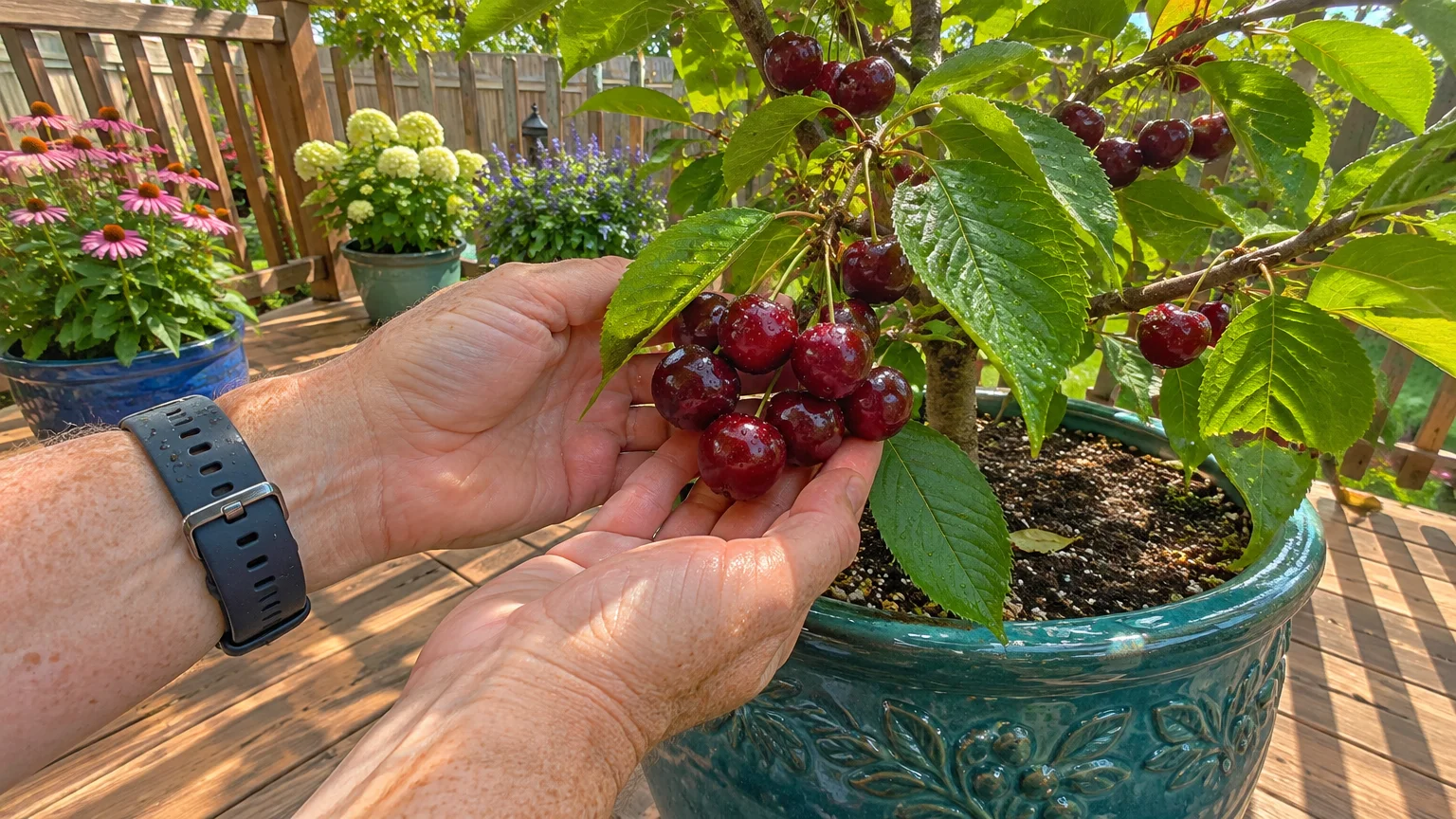
Outdoor Strategy #5: Self-Fertile Dwarf Cherries
Traditional sweet cherry trees tower above rooftops, but modern dwarfing rootstocks let you pick glossy cherries straight from a patio chair. The Royal Horticultural Society highlights Colt and Gisela 5 as premier rootstocks for container cherries.
Pair those compact rootstocks with self-fertile sweet cherry cultivars such as Stella, Lapins, or Sunburst. Self-fertile selections eliminate the headache of squeezing two large cherry containers onto a small terrace just to achieve pollination.
Container Setup and Runner-Up Choices
Start young cherry trees in an 18- to 20-inch container and step up toward 20 gallons as the root crown expands. Provide 6 to 8 hours of daily sunlight, airy potting mix, and a neutral-leaning soil pH between 6.0 and 7.0.
If your climate runs too mild for high-chill cherries, experts also endorse dwarf pears on Quince C rootstock or apricots grafted onto St Julien A or Torinel. Compact container blueberries also make exceptional patio runners-up where acidic mixes thrive.
Keeping Cherry Pits and Foliage Safe
Sweep dropped leaves, twigs, and fallen cherries off your patio promptly throughout summer and autumn. ASPCA Animal Poison Control lists cherry stems, leaves, and pits as toxic to dogs and cats due to cyanogenic glycosides, especially in wilting foliage.
Seasonal Considerations for Your Garden
Container fruit trees depend entirely on your seasonal care rhythm because their roots cannot stretch deeper into earth for water, nutrients, or insulation. Adjusting your routine four times a year keeps potted orchards thriving for decades.
Spring: Repotting, Feeding, and Pollination
Check root balls in early spring before buds swell, stepping up pot-bound trees to the next container size with fresh potting mix. Avoid over-potting young citrus into giant tubs all at once, which traps excess moisture around small roots.
Apply a balanced slow-release fertilizer as new leaves emerge, using citrus-specific formulas like 12-6-6 or 12-4-6 for evergreens. Watch late spring frost alerts closely, rolling blooming pots against a sheltered house wall or inside a garage overnight.
Summer: Watering Discipline and Fruit Thinning
Hot summer sun heats container walls fast, drying potting mix much faster than garden beds. Check soil moisture two inches below the surface daily, watering deeply until excess moisture flows freely through bottom drainage holes.
Thin crowded clusters of young apples, peaches, and pears once fruits reach marble size in early summer. Removing extras prevents limb breakage, boosts individual fruit size, and encourages steady cropping every year rather than boom-and-bust harvests.
Fall: Harvesting and Dormancy Prep
Harvest late-season apples and figs before hard autumn freezes soften fruit skins. Stop applying high-nitrogen fertilizers by late summer so tender new shoots harden into cold-tolerant wood before winter arrives.
Clear fallen leaves and mummified fruit from soil surfaces to cut down overwintering fungal spores and insect eggs. If you live in mild winter zones, inspect chill hour needs before moving deciduous trees into sheltered spots.
Winter: Protecting Vulnerable Container Roots
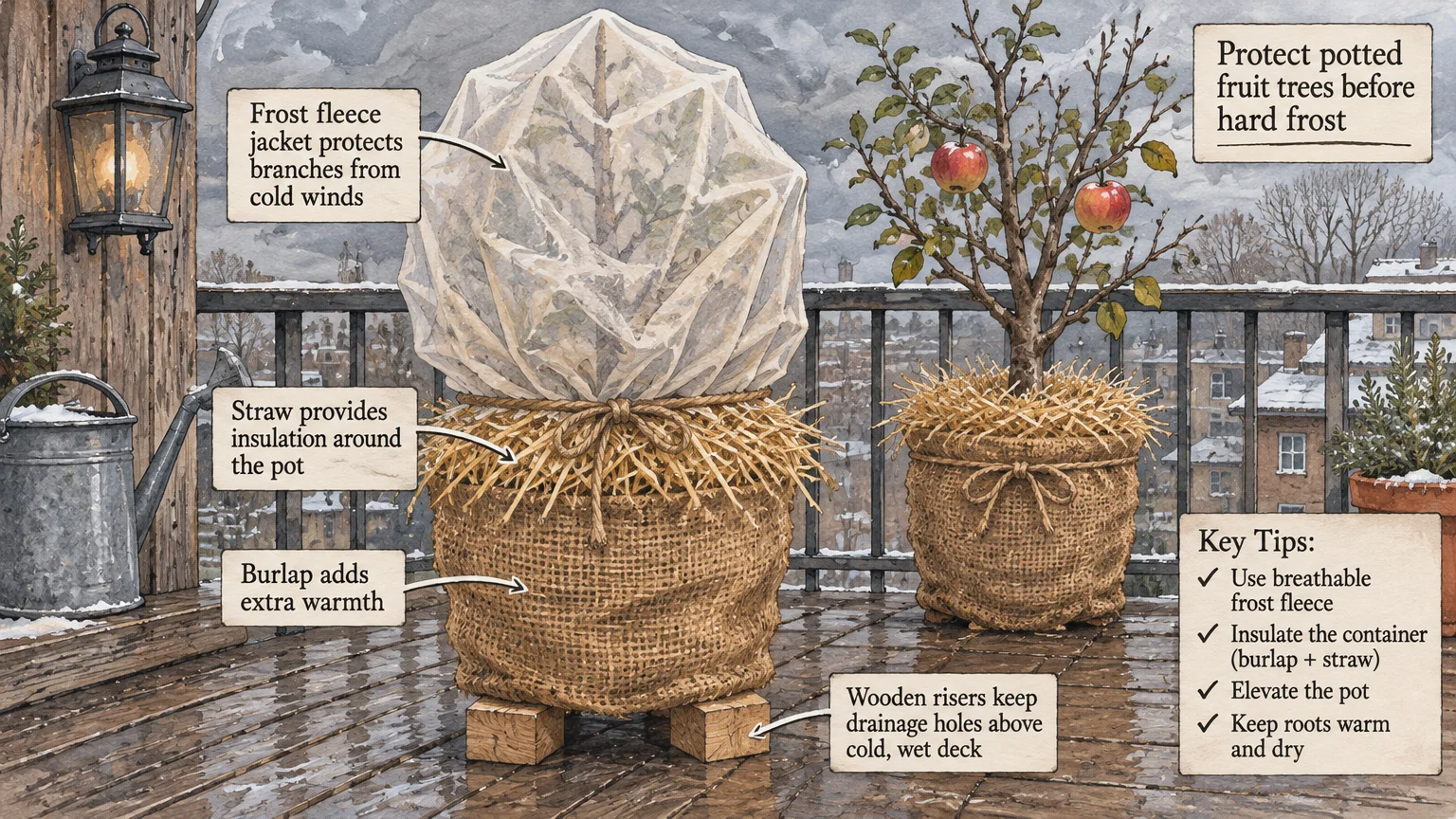
Roots inside above-ground pots face far harsher temperatures than roots insulated by surrounding garden soil. Even cold-hardy dormant apples, peaches, cherries, and figs need root protection once sustained freezing temperatures settle over your yard.
Sink dormant deciduous pots into mulched garden beds, wrap containers in breathable burlap, or slide them into an unheated garage. Keep indoor overwintering citrus in a bright south-facing room between 55°F and 65°F per Clemson Extension, well above damaging 25°F freezes.
Dealing with Outdoor Pests and Weather
Patio gardening exposes potted trees to shifting winds, hungry wildlife, and concentrated insect pressure. Simple physical barriers and smart pot placement solve most outdoor headaches before chemical sprays become necessary.
Managing Frost, Heatwaves, and Wind
Place heavy 15- to 25-gallon containers on lockable wheeled plant caddies so one person can move trees out of sudden frosts or hailstorms. Remember that Mississippi State University Extension documents navel orange injury after just 3 to 4 hours at 27°F to 28°F.
During midsummer heatwaves, light-colored ceramic or resin pots reflect solar radiation better than black plastic nursery tubs. Add a two-inch layer of shredded bark mulch on top of the potting mix, keeping mulch pulled back from the trunk bark.
Tall columnar apples and top-heavy citrus trees act like sails during summer thunderstorms. Choose wide-bottomed containers and anchor pots in sheltered patio corners where fences or house walls break fierce gusts.
Stopping Insects, Birds, and Wildlife
Inspect the undersides of tender spring leaves weekly for aphids, spider mites, and scale insects. A firm blast of water from a garden hose or targeted horticultural soap spray clears early colonies before leaves curl.
Once cherries, figs, and peaches start blushing with color, birds and squirrels quickly notice. Drape lightweight mesh netting over individual canopies and clip the bottom snugly around the trunk so wildlife cannot slip inside.
As patio food gardening grows—the 2026 National Gardening Survey found that renting gardeners now out-purchase homeowners in both vegetable seeds (43.5% versus 36.6%) and herb seeds (32.7% versus 22.0%)—keeping compact spaces clean protects both harvests and pets.
Frequently Asked Questions
How much does it cost to start growing fruit trees in pots?
Bare-root and potted dwarf fruit trees generally retail between $39.99 and $94.99 depending on rootstock age and grafting. Standard single trees often start at $39.99 to $69.99, while space-saving 4-in-1 multi-grafted apple trees run around $94.99.
Factor in a sturdy 15- to 25-gallon container and quality potting mix when budgeting your patio orchard. According to the National Gardening Survey 2026, U.S. gardening households spent a record $740 on average in 2025, and roughly two in three households planning to garden more in 2026 cite inflation as an important driver.
That enthusiasm extends abroad as well, with the Horticultural Trades Association reporting in 2026 that 32% of U.K. adults use outdoor spaces to grow produce. Growing fruit at home delivers high flavor return per square foot once pots are established.
Why should I avoid putting garden soil or gravel in my fruit tree pots?
University of Maryland Extension and Clemson Extension advise against digging up yard soil for containers because it compacts tightly in pots. Compacted soil blocks oxygen flow, traps stagnant water, and quickly rots fine feeder roots.
Adding a layer of gravel at the bottom of a container actually worsens drainage instead of improving it. Water pools in the potting mix right above the coarse stones, raising the saturated zone closer to your tree roots.
Do I always need two fruit trees to get a harvest?
No, single-tree patio gardeners have plenty of self-pollinating choices. Common figs, most genetic dwarf peaches, self-fertile cherries like Stella and Lapins, and nearly all citrus varieties except tangerines set fruit on their own.
Apples are the main exception because they are self-unfruitful and require compatible pollen from another variety within 50 to 100 feet. Choosing a multi-grafted apple tree solves that rule inside a single pot.
How do I choose the right potted fruit tree for my local climate?
Match each cultivar to both your winter chill hours and your cold hardiness zone before purchasing. Low-chill varieties thrive with 500 or fewer cool hours, whereas high-chill deciduous apples and cherries need 800 to 1,000 or more hours.
Check your USDA Plant Hardiness Zone at the USDA’s website. For lawn and garden care advice, consult your local University Extension program (listed here).
Find native plant information from the National Wildlife Federation to pair pollinator-friendly perennials beside your fruit containers and boost natural bee visits during spring bloom.
Disclaimer: This article provides general outdoor gardening advice. Success can vary greatly based on your specific climate, soil type, and local conditions. Always choose plants appropriate for your USDA Hardiness Zone.