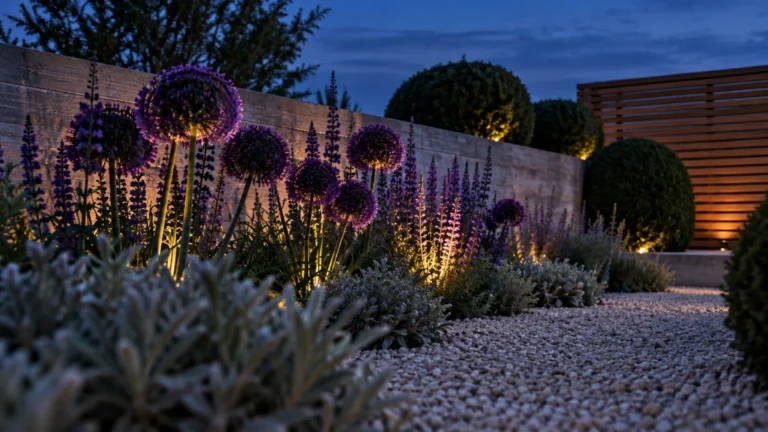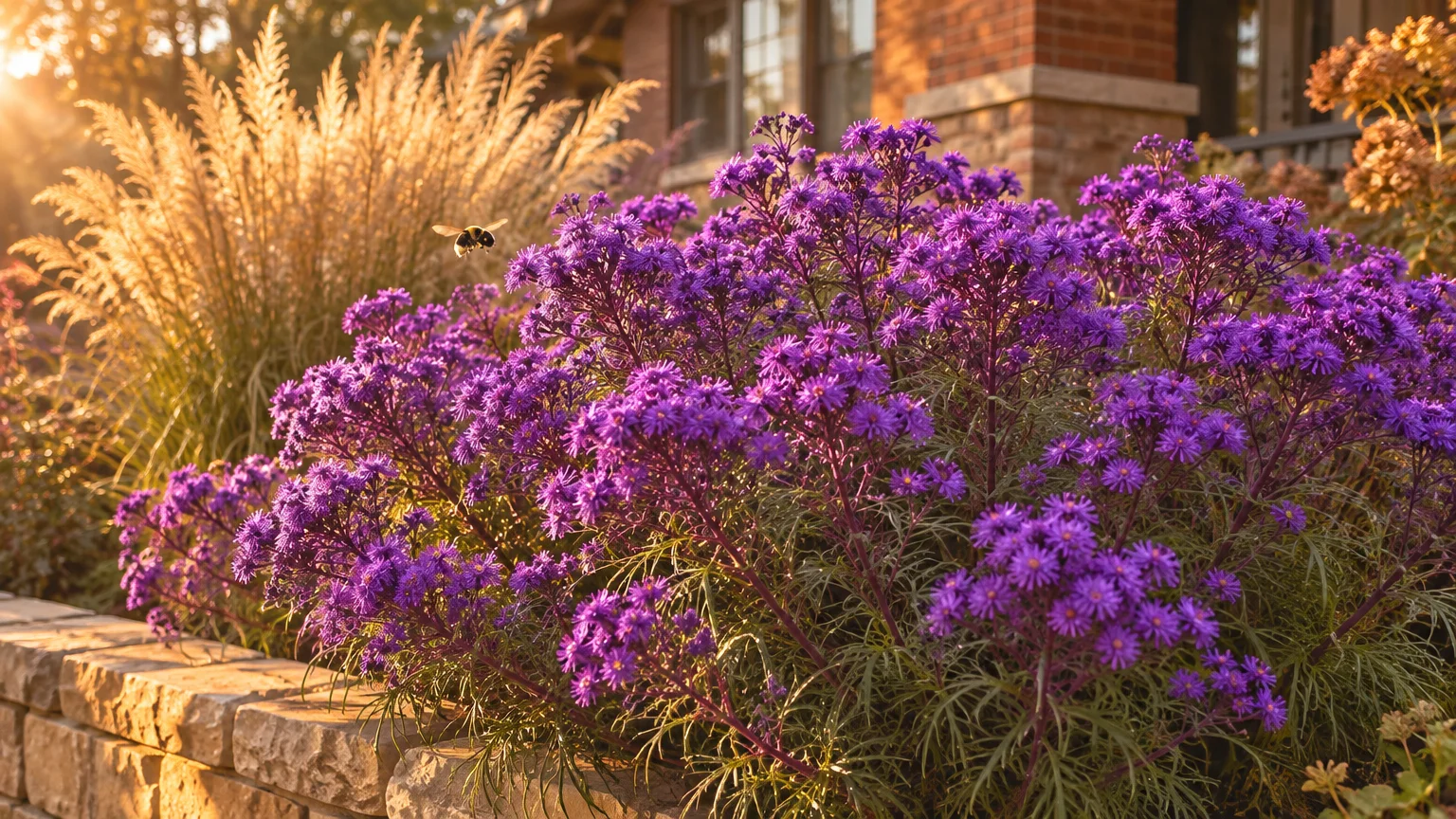
Members of the Perennial Plant Association named Vernonia ‘Summer’s Swan Song’ the 2027 Perennial Plant of the Year, giving your yard a compact powerhouse for autumn color. You gain five to six weeks of deep purple blooms without staking tall, unruly stems.
Dr. Jim Ault bred this hardy ironweed hybrid to thrive in clay, sand, drought, and winter cold down to -30°F. Deer pass it by, while bees and butterflies flock to its late nectar.
If you want to trim lawn chores and match 2027 garden trends, this resilient perennial fits almost any sunny spot. Use the strategies below to design, plant, and maintain it across the seasons.
Outdoor Strategy #1: Replace High-Maintenance Lawn with Compact Ironweed
Homeowners across the country are shrinking thirsty turfgrass to create rewarding, low-chore borders. Garden Media Group captured that shift in its 2027 Garden Trends Report, titled “Digging for Dopamine.”
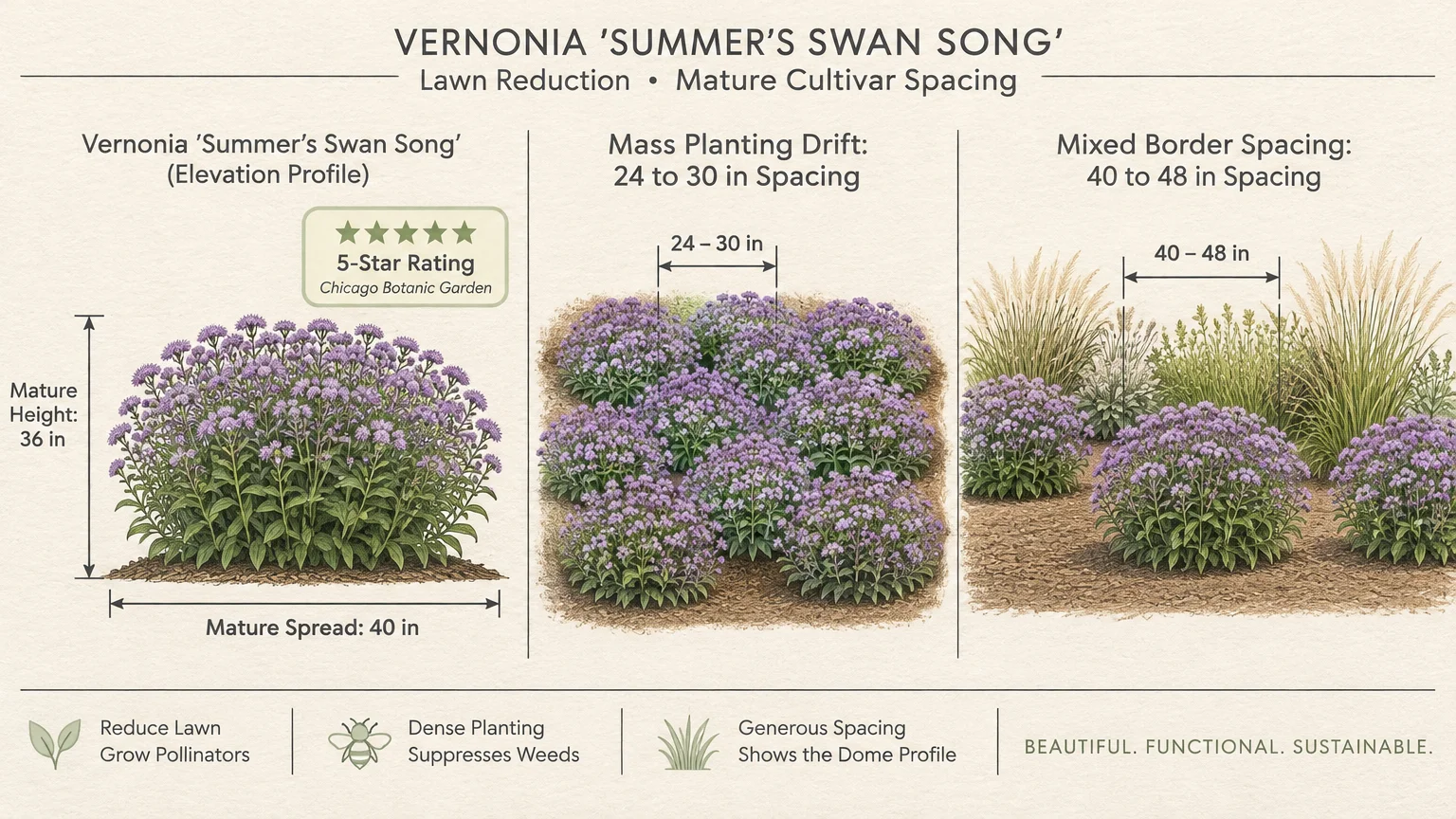
Wild ironweed species often overwhelm residential yards because plants like Vernonia gigantea tower to 10 feet or more. By contrast, Vernonia ‘Summer’s Swan Song’ forms a tidy, rounded clump that averages just 36 inches tall by 40 inches wide.
Match Your Yard’s Scale with Proven Genetics
Dr. Jim Ault created this cross in 2010 at the Chicago Botanic Garden under Chicagoland Grows, Inc., selecting the winning seedling in 2012 before its 2019 release under US Plant Patent PP28,556. He paired narrowleaf ironweed (Vernonia lettermannii), native to western Arkansas and southeastern Oklahoma, with Vernonia angustifolia ‘Plum Peachy’, native to the Southeastern Coastal Plain from North Carolina to Mississippi.
The result earned a 5-star rating in Chicago Botanic Garden plant trials, where plants measured 28 inches tall by 35 inches wide at three years and 31 inches tall by 43 inches wide at five years. Most commercial nurseries list mature sizes between 24 and 36 inches tall and 30 to 48 inches wide, making it ideal for small suburban beds and curb-appeal strips.
Space Plants Properly for Curb Appeal
When you replace a sunny patch of front-yard grass, your spacing decides how quickly the bed fills in. Set plants 24 to 30 inches apart if you want a dense, weed-suppressing mass planting that reads as one continuous drift of foliage and purple blooms.
Give plants 40 to 48 inches of breathing room when you tuck them into a mixed perennial garden beside ornamental grasses or flowering shrubs. Wider spacing lets each rounded clump show off its dome-shaped profile and keeps air moving freely around every stem.
Outdoor Strategy #2: Site Your Vernonia for Full Sun and Dark Red Stems
Sunlight transforms this compact ironweed from a pleasant green mound into an architectural standout. Give your plants full sun so stems, leaves, and elongated interlocking flower branches develop their signature dark red and red-purple cast.
While the Royal Horticultural Society notes that this cultivar tolerates partial shade, you sacrifice vigor when trees or fences block afternoon light. Shaded plants stretch toward the sun, produce fewer flowers, and lose the intense stem color that looks striking against autumn light.
Test Your Soil Type Without Overthinking pH
You rarely need expensive soil amendments before planting Vernonia ‘Summer’s Swan Song’ in your outdoor beds. This adaptable nativar grows reliably in clay, loam, sand, or chalk soils across acidic, neutral, and alkaline pH levels.
Focus on drainage rather than soil richness when you pick a spot along a driveway, patio, or slope. Dig a generous planting hole, loosen compacted clay around the sides with a garden fork, and set the crown level with the surrounding soil surface.
Verify Cold Hardiness and Pair with Fellow Award Winners
Check your local climate before buying, though this hybrid handles wide temperature swings across USDA Hardiness Zones 4 to 9 (4a–9b). Established clumps survive winter lows down to roughly -30°F (-34°C), making it dependable from northern gardens in southern Canada to warm southern borders.
Pair ‘Summer’s Swan Song’ with recent Perennial Plant Association winners to build a foolproof, sunny bed. Combine its fine olive-green foliage with 2026 winner Andropogon gerardii ‘Blackhawks’ for towering burgundy grass blades, or plant 2025 winner Pycnanthemum muticum nearby to bridge summer and fall pollinators.
Outdoor Strategy #3: Extend Late-Season Color When Summer Beds Fade
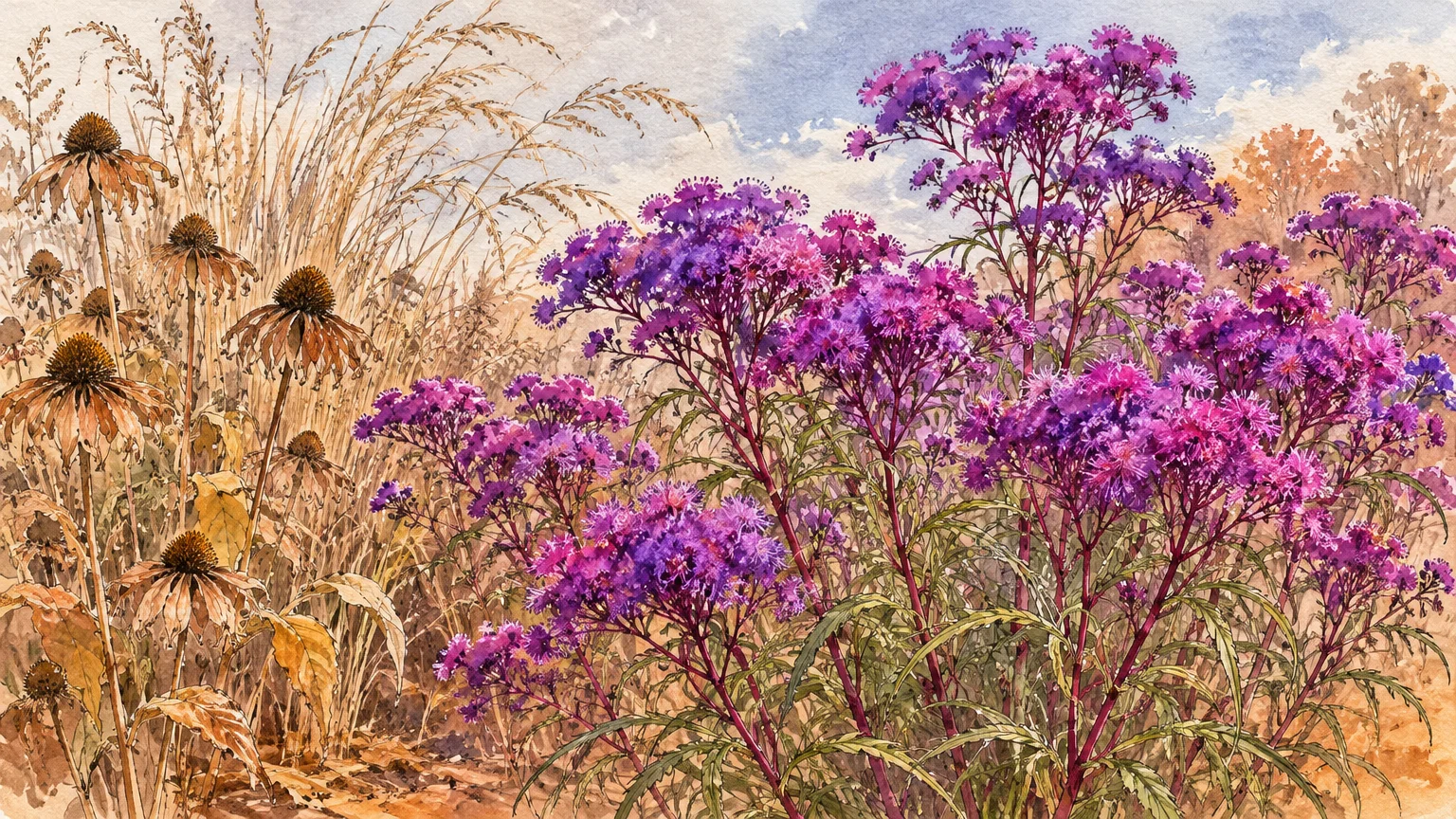
Many residential flower beds look tired by late August once daylilies finish and coneflowers drop their petals. Planting the 2027 Perennial Plant of the Year solves that late-summer slump right when your yard needs a second wind.
Vernonia ‘Summer’s Swan Song’ opens its buds in early September and blooms steadily for five to six weeks into mid-October. Each stem carries clusters of dark purple flower heads measuring roughly 1/3 to 1/2 inch wide above narrow olive-green leaves.
Use Fine Texture to Contrast Bold Leaves
Those narrow leaves measure up to 5 inches long and less than 1/4 inch wide, giving the clump a feathery, threadleaf texture all summer. Even before the September flowers open, that airy green mound cools down hotter reds and oranges in mixed borders.
Plant it behind chunky-leaved perennials like sedum, hosta margins, or 2024 PPA winner Phlox paniculata ‘Jeana’ to highlight leaf contrast. You can also place it near warm-toned phlox—such as Proven Winners’ separate 2027 selection, Phlox paniculata LUMINARY ‘Sunset Coral’—so coral summer blooms hand the baton smoothly to deep purple autumn flowers.
Frame Entryways and Outdoor Seating Areas
Position three or more clumps where you actually spend crisp September evenings, such as beside a back deck, fire pit, or front walkway. You enjoy the rich purple color up close during evening gatherings without walking to the far corner of your property.
Keep the front edge of your border open with low groundcovers or dwarf ornamental grasses so the red-tinted branching structure stays visible. Because the stems never sprawl over walkways, you maintain crisp edges along stone paths and patios.
Outdoor Strategy #4: Build Drought- and Rain-Ready Beds with Deep Roots
Unpredictable swings between summer dry spells and heavy downpours test every home landscape. Industry outlooks for 2027—including reports from Darwin Perennials, Tuinbranche Nederland, and the Perennial Plant Association—emphasize replacing fussy turf with plants that handle both drought and heavy rain.
Once your Vernonia ‘Summer’s Swan Song’ establishes deep roots, it shrugs off dry summer stretches without daily irrigation. At the same time, it thrives in rain gardens and low spots that catch runoff from downspouts, provided water drains away rather than pooling permanently.
Water Smartly During Year One
Give new transplants consistent moisture during their first growing season so roots anchor deeply into your native soil. Check the top few inches of soil with your finger during hot weeks and soak the root zone deeply whenever it feels dry.
Avoid light, frequent sprinkling with an overhead lawn sprinkler, which keeps roots shallow near the surface. Deep soaking encourages roots to chase moisture downward, setting up lifelong drought resilience by the second summer.
Skip Heavy Fertilizer and Excessive Mulch
Skip rich compost piles and synthetic nitrogen boosters when planting or maintaining your ironweed clumps. Overly fertile soil pushes soft, rapid top growth that weakens stem stiffness and invites flopping.
Spread a light layer of shredded leaves or bark mulch around the base to hold even soil moisture and block summer crabgrass. Keep mulch pulled slightly back from the woody crown so winter dampness never rots the emerging buds.
Outdoor Strategy #5: Design a Late-Season Pollinator and Bird Sanctuary
Pollinators face a sharp food shortage in September and October just as they prepare for migration or winter dormancy. Adding Vernonia ‘Summer’s Swan Song’ to your perennial garden creates a vital late-season refueling station.
Bees, butterflies, moths, and occasional hummingbirds visit the nectar-rich purple flower clusters throughout the five-to-six-week autumn bloom window. Native *Vernonia* species also serve as larval host plants for butterfly and moth caterpillars, as documented in public plantings like Chicago’s Lurie Garden.
Leave Seed Heads Standing for Winter Birds
Resist the urge to grab your pruners when the deep purple petals finally fade in mid-October. Fluffy, pom-pom-like seed heads replace the spent flowers and cling to the sturdy stems throughout winter.
Overwintering songbirds forage on those dried seeds during cold snaps when berries and insects grow scarce. Leaving the seed heads intact also gives your snowy winter yard crisp structure and soft golden-tan movement in January winds.
Protect Stem-Nesting Native Bees
Cutting ironweed down in November destroys crucial winter shelter for beneficial backyard insects. Native solitary bees nest inside the hollow, dead stems of Vernonia over the coldest months.
Wait until late winter or early spring—between January and March—to snip old stems down near the ground. That simple calendar shift lets birds finish the seed crop and lets young bees emerge safely when temperatures warm.
Outdoor Strategy #6: Budget Smartly with Nursery Pots and Zero-Staking Care
Transforming a large yard gets expensive fast when you buy oversized pots or replace tender plants every spring. Because the Perennial Plant Association narrows over 400 annual nominations down to three or four finalists partly on ready commercial availability, you can source ‘Summer’s Swan Song’ easily in 2027.
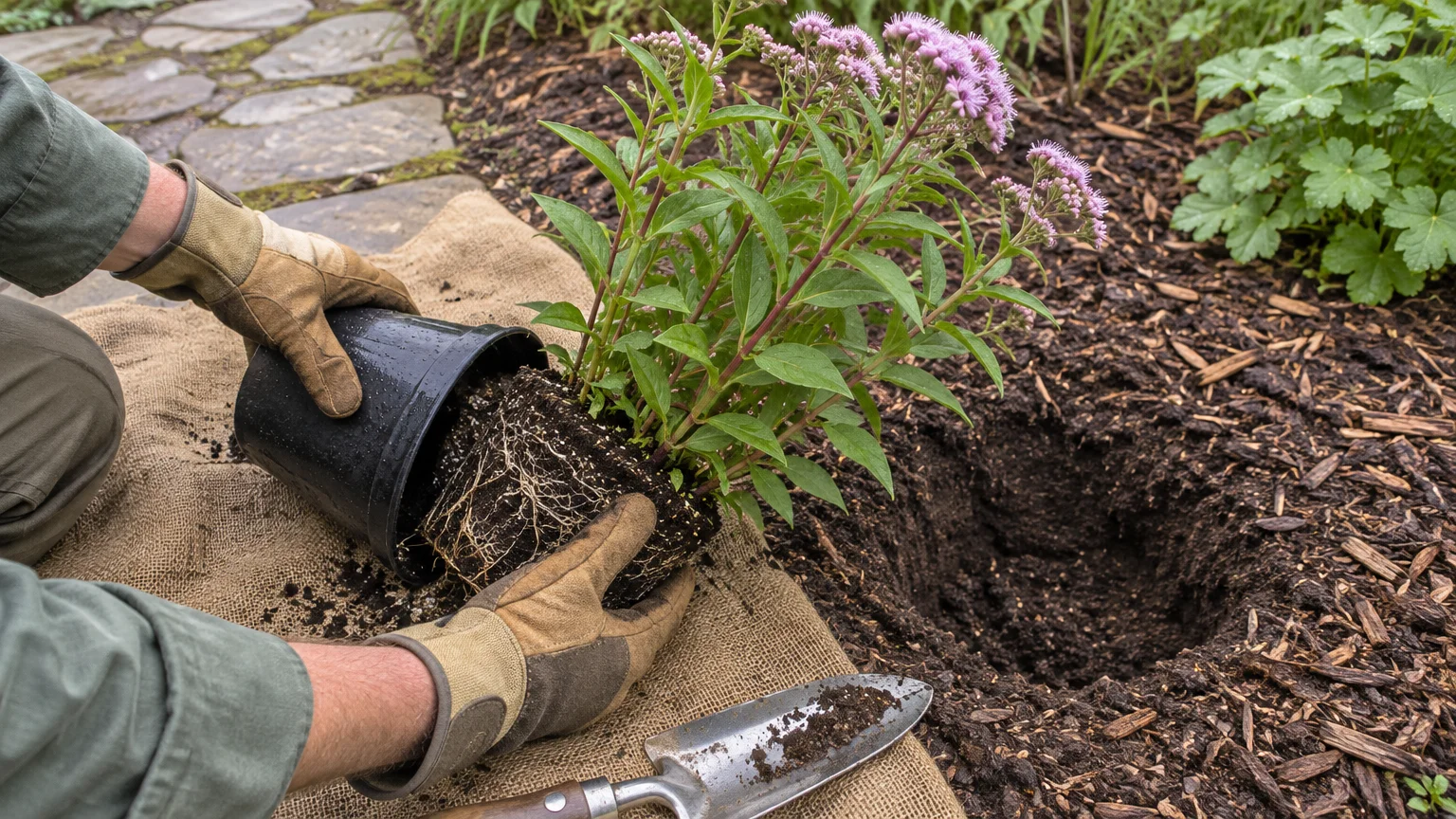
Independent garden centers, native nurseries, and online growers stock this cultivar in small nursery pots, quarts, #1 (1-gallon) containers, and #2 pots. Verified retail prices range from roughly $7.00 to $12.00 for small nursery starts up to $14.22–$14.37 for #1 gallon plants.
Buy Small Pots for Mass Plantings
Choose smaller quart or small nursery pots if you plan to plant a broad sweep along a fence line or driveway. Younger plants cost less per square foot and knit into native soil quickly without circling roots.
Invest in #1 or #2 containers when you only need one or two focal plants beside a front porch or patio. Larger root balls give you instant visual presence and fuller autumn bloom during your very first year.
Save Money by Skipping Stakes and Sprays
Every tool, stake, and chemical bottle you avoid keeps money in your household budget. The strong, interlocking flower branches of ‘Summer’s Swan Song’ resist lodging without bamboo stakes, twine, or metal peony rings.
You also skip expensive fungicide sprays and seasonal annual replacements because this hardy perennial returns reliably year after year. One modest upfront purchase pays dividends in fall color and wildlife activity for decades.
Seasonal Considerations for Your Garden
Tailoring your maintenance to each season keeps Vernonia ‘Summer’s Swan Song’ healthy with minimal effort. Follow this simple seasonal checklist to time pruning, planting, and watering for your climate.
Spring: Prune Old Stems and Plant New Clumps
Cut last year’s dried stems down to a few inches above the soil between January and March, just before fresh shoots push upward. Toss or gently lay cut stems in a quiet corner of your yard for a few weeks so any lingering stem-nesting bees can still emerge.
Spring also gives you the best planting window in colder USDA Zones 4 and 5 once the soil thaws and drains. Set out new pots after hard freezes ease so roots establish deeply before July heat arrives.
Summer: Watch Foliage Color and Year-One Moisture
During summer, your ironweed builds a tidy, airy mound of olive-green foliage that stays clean without pinching or shearing. Unlike older garden asters or mums, you never need to cut it back in June to keep height under control.
Water newly planted clumps during prolonged dry spells, while leaving established second-year plants to handle normal summer weather on their own. Watch the upper stems gradually flush dark red-purple as late summer days shorten.
Fall: Enjoy Peak Bloom and Hold Off on Cleanup
From early September through mid-October, your plants take center stage with thousands of tiny dark purple blooms. Pair fall planting in warmer Zones 7 to 9 with thorough watering until winter rains settle in.
Leave spent flowers untouched once frost arrives so fluffy seed heads develop naturally. Skip autumn fertilizing completely, as late nitrogen pushes tender growth vulnerable to sudden November freezes.
Winter: Appreciate Texture and Protect Crowns
In winter, dried stems and pom-pom seed heads catch frost, rime ice, and light snow for welcome backyard interest. Standing stalks also trap blowing leaves around the crown, adding natural insulation against bitter -30°F cold.
Avoid piling heavy road salt or wet snow shoveled from driveways directly on top of dormant roadside clumps. Otherwise, leave your plants alone and plan where you want to add another drift next spring.
Dealing with Outdoor Pests and Weather
Outdoor beds face constant pressure from hungry wildlife, foliar diseases, and extreme storms. Choosing a tough cultivar bred specifically for garden performance cuts down on troubleshooting from the start.
Deter Deer and Rabbits Naturally
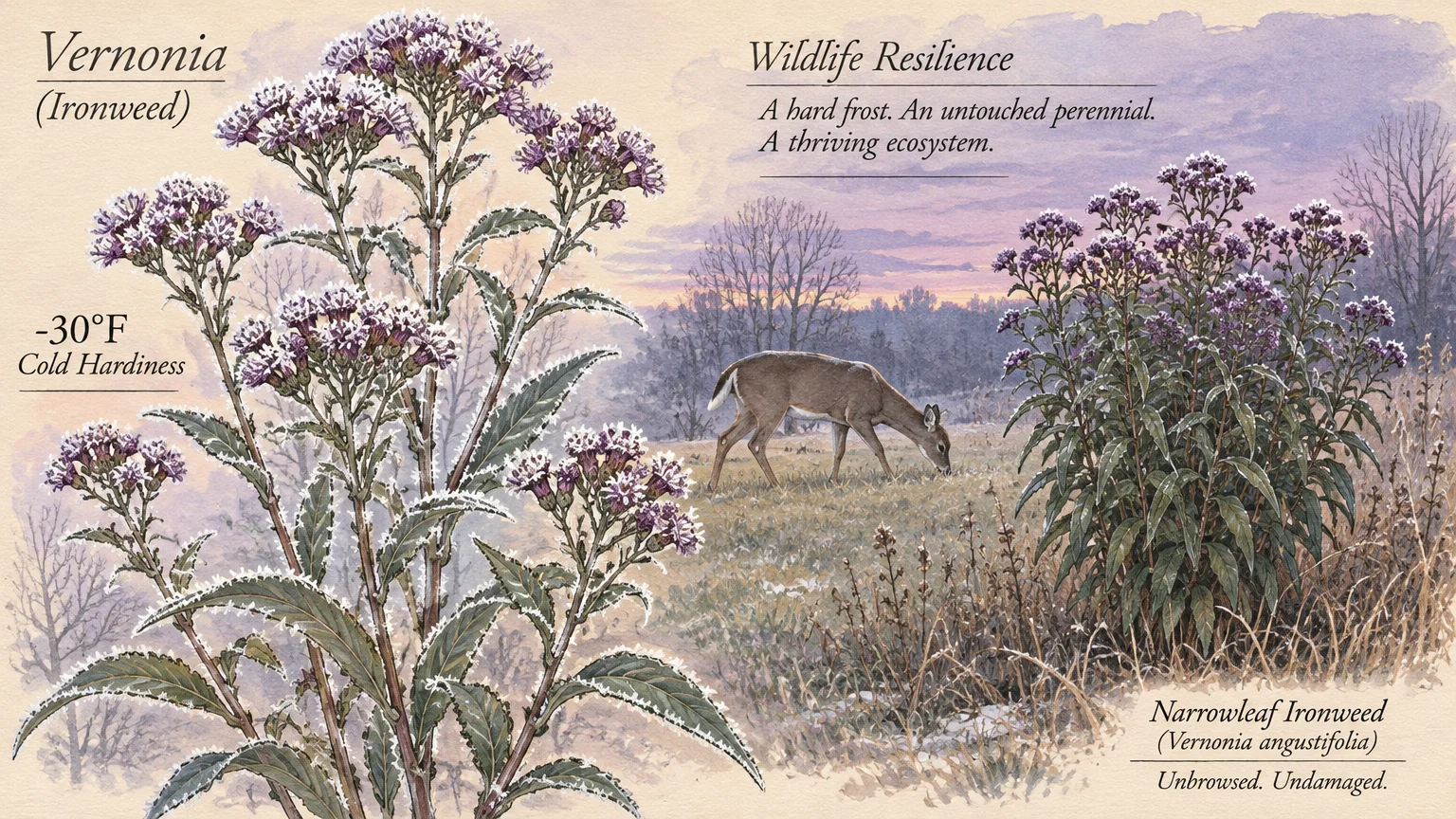
Deer and rabbits ruin countless backyard borders overnight, especially near wooded lots and suburban parks. Fortunately, ‘Summer’s Swan Song’ earns high marks for deer and rabbit resistance.
Ironweed leaves contain bitter-tasting lactones that discourage browsing by deer, rabbits, and even pasture livestock. You get reliable autumn blooms in unfenced front yards without reapplying foul-smelling repellent sprays after every rain.
Avoid Powdery Mildew and Rust
Humid late summers often coat garden phlox, bee balm, and zinnias in chalky white powdery mildew or orange rust spots. Those fungal infections turn healthy borders unsightly right before autumn arrives.
Vernonia ‘Summer’s Swan Song’ displays excellent resistance to both powdery mildew and rust, holding clean, crisp leaves from spring through frost. Proper spacing and full sun further speed morning dew evaporation for spotless foliage.
Stand Up to Autumn Wind and Storms
September cold fronts bring gusty winds and driving rain that flatten tall perennials right at peak bloom. Heavy flower heads on weak stems snap or collapse into neighboring plants, forcing messy emergency staking.
Because this hybrid has sturdy, interlocking flower branches and compact proportions, clumps bounce back after heavy rain. You keep clean sightlines across your garden even after brisk October storms.
Keep Pets and Curious Kids Safe
Pet owners always need to check plant safety before adding new perennials near lawns and patios. Native Vernonia species are not known to be toxic to dogs, cats, humans, or wildlife.
Still, ASPCA Animal Poison Control notes that eating any plant material—even non-toxic varieties—can trigger mild vomiting or stomach upset in dogs and cats. Keep the ASPCA’s 24-hour hotline at (888) 426-4435 handy for emergencies, and train curious puppies away from fresh garden beds.
Frequently Asked Questions
How does Vernonia ‘Summer’s Swan Song’ differ from wild tall ironweed?
Wild ironweed species like Vernonia gigantea commonly soar to 10 feet or more, overpowering standard home borders and flopping in rich soil. ‘Summer’s Swan Song’ stays compact at roughly 36 inches tall by 40 inches wide, features finer threadleaf foliage, and resists flopping without staking.
What USDA Hardiness Zones and soil conditions suit this perennial best?
It grows reliably across USDA Hardiness Zones 4 to 9 (4a–9b), withstanding winter cold down to -30°F (-34°C). Plant it in full sun across clay, loam, sand, or chalk soils of any standard pH, avoiding only stagnant, waterlogged mud.
How much does ‘Summer’s Swan Song’ cost, and how can I stretch my budget?
Expect to pay around $7.00 to $12.00 for small nursery pots or $14.22 to $14.37 for #1 (1-gallon) containers at native and independent nurseries. Buying smaller starts for mass plantings saves money upfront and produces deep, drought-tolerant roots quickly.
Why did the Perennial Plant Association name it the 2027 Perennial Plant of the Year?
Since 1990, PPA members have evaluated over 400 annual nominations across five strict benchmarks: wide climatic suitability, low maintenance, pest and disease resistance, ready commercial availability, and multi-season interest. ‘Summer’s Swan Song’ cleared every hurdle with five-star trial vigor, fall flowers, winter seed heads, and broad adaptability.
Check your USDA Plant Hardiness Zone at the USDA’s website. For lawn and garden care advice, consult your local University Extension program (listed here). Find native plant information from the National Wildlife Federation.
Disclaimer: This article provides general outdoor gardening advice. Success can vary greatly based on your specific climate, soil type, and local conditions. Always choose plants appropriate for your USDA Hardiness Zone.