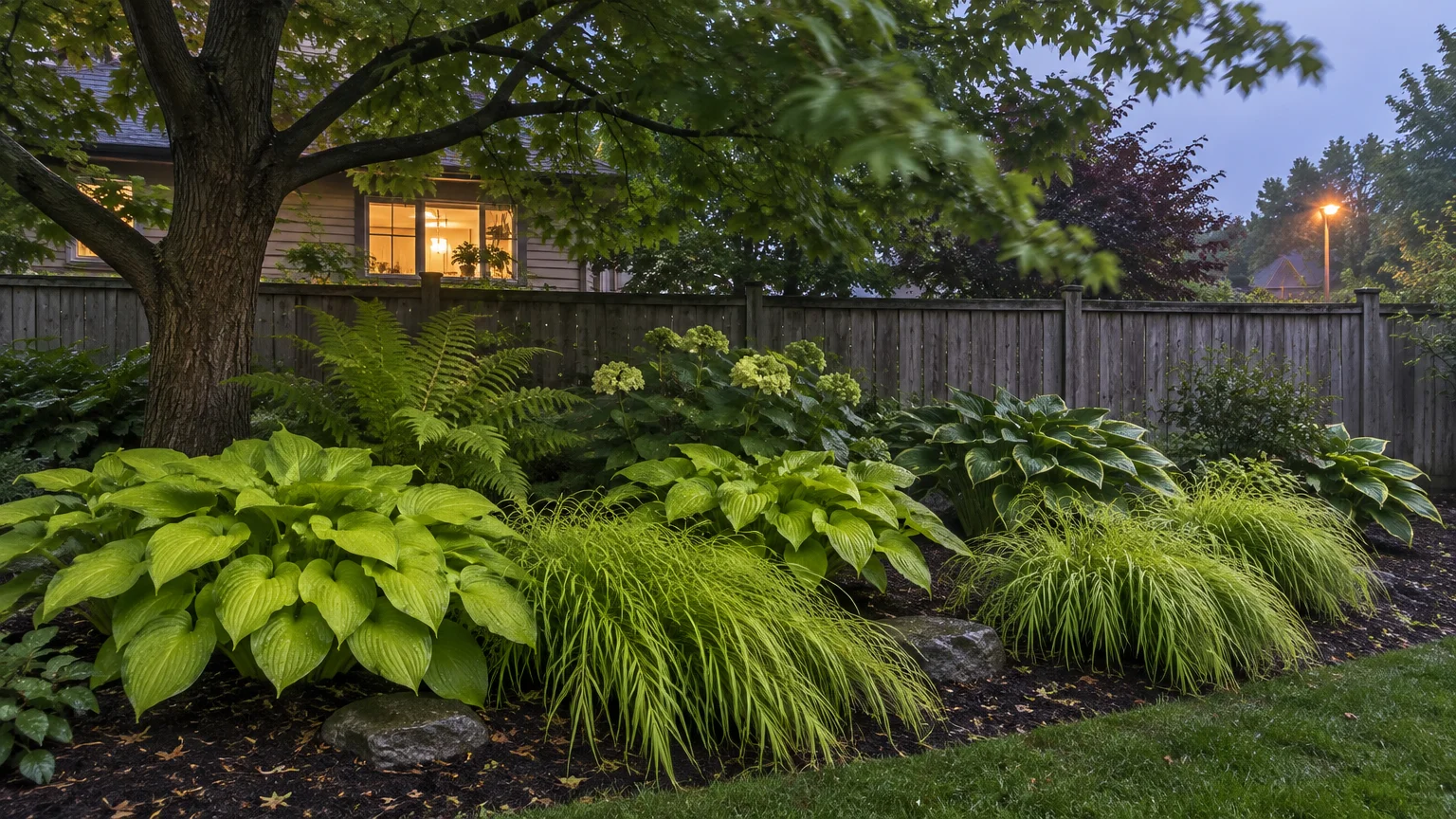
Dark corners beneath mature trees often look flat, especially when deep green shrubs swallow the available light. Adding chartreuse plants turns those dim pockets into luminous focal points that pull your eye across the yard.
Bright foliage plants act like natural spotlights in low light, working far longer than brief seasonal blooms. Whether you want bold leaves, cascading grass, or compact borders, smart shade garden plants transform neglected spaces.
Below, you will find nine reliable performers along with practical garden design ideas for sizing, seasonal care, and pest protection.
Outdoor Strategy #1: Anchor Large Beds with Hosta ‘Sum and Substance’
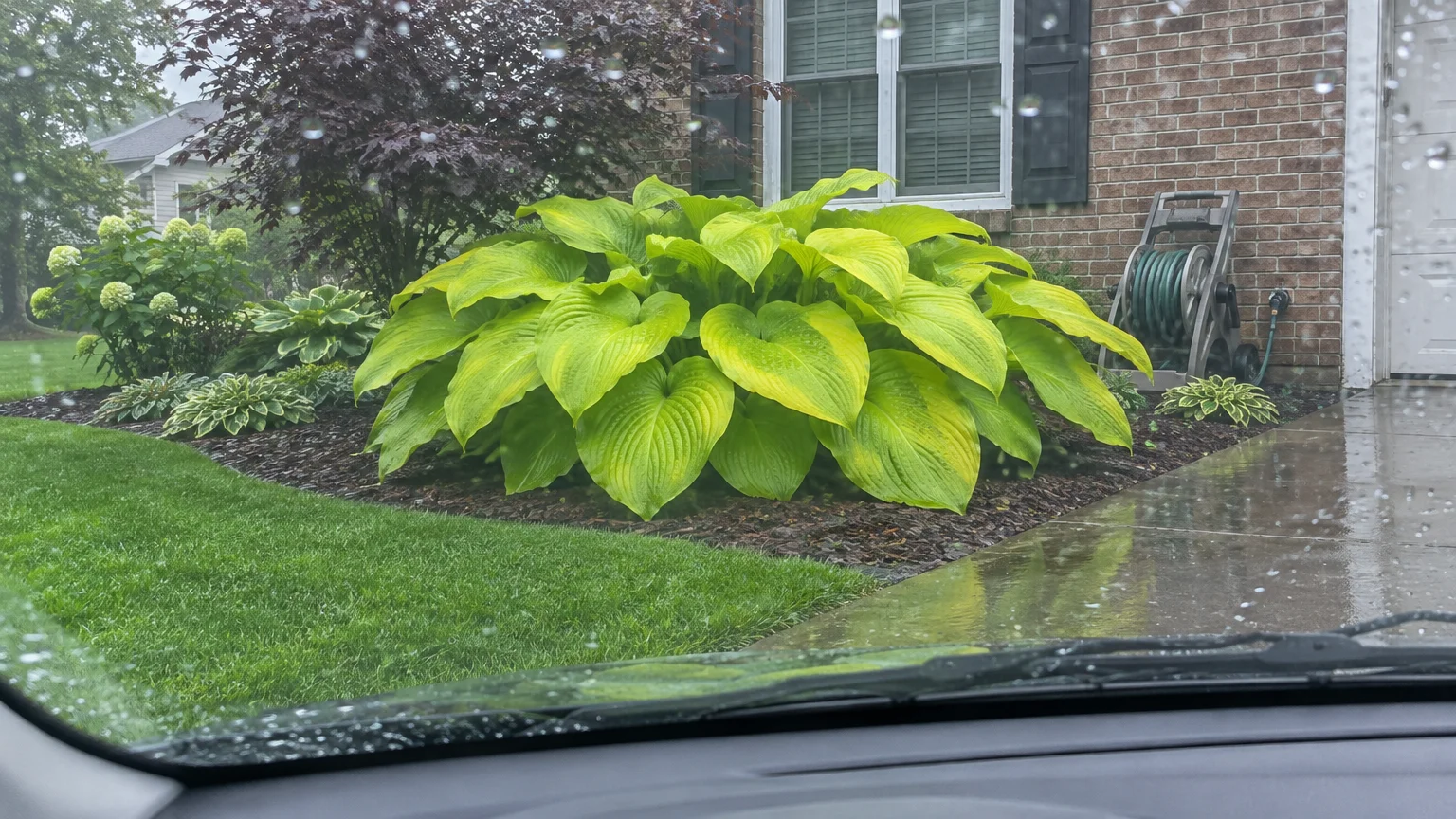
Named the 2004 Hosta of the Year by the American Hosta Society, Hosta ‘Sum and Substance’ brings massive scale to plants for shady areas. It forms a broad mound 30 to 36 inches tall and 5 to 6 feet wide.
Thick, heart-shaped leaves grow up to 20 by 15 inches and stay chartreuse in heavier shade, shifting toward deeper gold with gentle morning sun. White or light lavender flowers rise on 38-inch scapes each July.
Those heavy-textured leaves resist slugs better than thin-leaved varieties. Keep dogs and cats away, since hostas contain glycoside saponins that cause vomiting, diarrhea, and lethargy in pets.
Outdoor Strategy #2: Scale Down Borders with Hosta ‘August Moon’
When a tight walkway cannot fit a six-foot giant, Hosta ‘August Moon’ delivers bright foliage in a manageable footprint. This classic cultivar reaches 16 to 20 inches tall and spreads 36 to 48 inches wide.
Its puckered, heart-shaped leaves hold rich chartreuse-to-gold tones across partial shade beds. Pale lavender flowers appear in July and last two to four weeks, adding soft vertical contrast above the textured mound.
Plant three specimens in a staggered curve along a front path to guide visitors toward your porch.
Outdoor Strategy #3: Soften Edges with ‘All Gold’ Japanese Forest Grass
Hardy in USDA Zones 5 through 9, Hakonechloa macra ‘All Gold’ creates graceful movement where rigid shrubs feel too stiff. Depending on growing conditions, mounds reach 9 to 18 inches tall and 18 to 24 inches wide.
This deer-resistant grass spreads slowly through non-invasive rhizomes and thrives in part shade to shade. Full sun scorches the blades, while very deep shade dims their vibrant glow.
Pair it beside dark ferns or rough stone edging for crisp contrast. Cut spent blades down in late winter or early spring before fresh shoots emerge.
Outdoor Strategy #4: Add Instant Volume with ‘Sun King’ Spikenard
If you need fast height in USDA Zones 4 through 8, Aralia cordata ‘Sun King’ delivers shrub-sized presence in a single growing season. This herbaceous perennial shoots up 3 to 6 feet tall and wide.
Compound leaves reaching 3 feet long glow bright gold with a few hours of sun and shift to lime-chartreuse in heavier shade. Plant it in part shade with moist, well-drained soil, as it dislikes drought.
Tiny white flowers bloom from late July to September on two-foot spikes. Birds feast on the resulting purple-black berries, though the berries are inedible to humans.
Outdoor Strategy #5: Edge Damp Corners with ‘Citronelle’ Coral Bells
Bred from native Heuchera villosa, Heuchera ‘Citronelle’ handles summer heat and humidity far better than older coral bells. Its ruffled chartreuse leaves brighten part shade to full shade where other perennials sulk.
Give it evenly moist, well-drained soil, and clear away old leaves in early spring. In mild-to-temperate climates, it often holds its bright foliage right through winter.
This variety also makes a worry-free choice for pet-friendly yards. The ASPCA lists coral bells as non-toxic to dogs, cats, and horses.
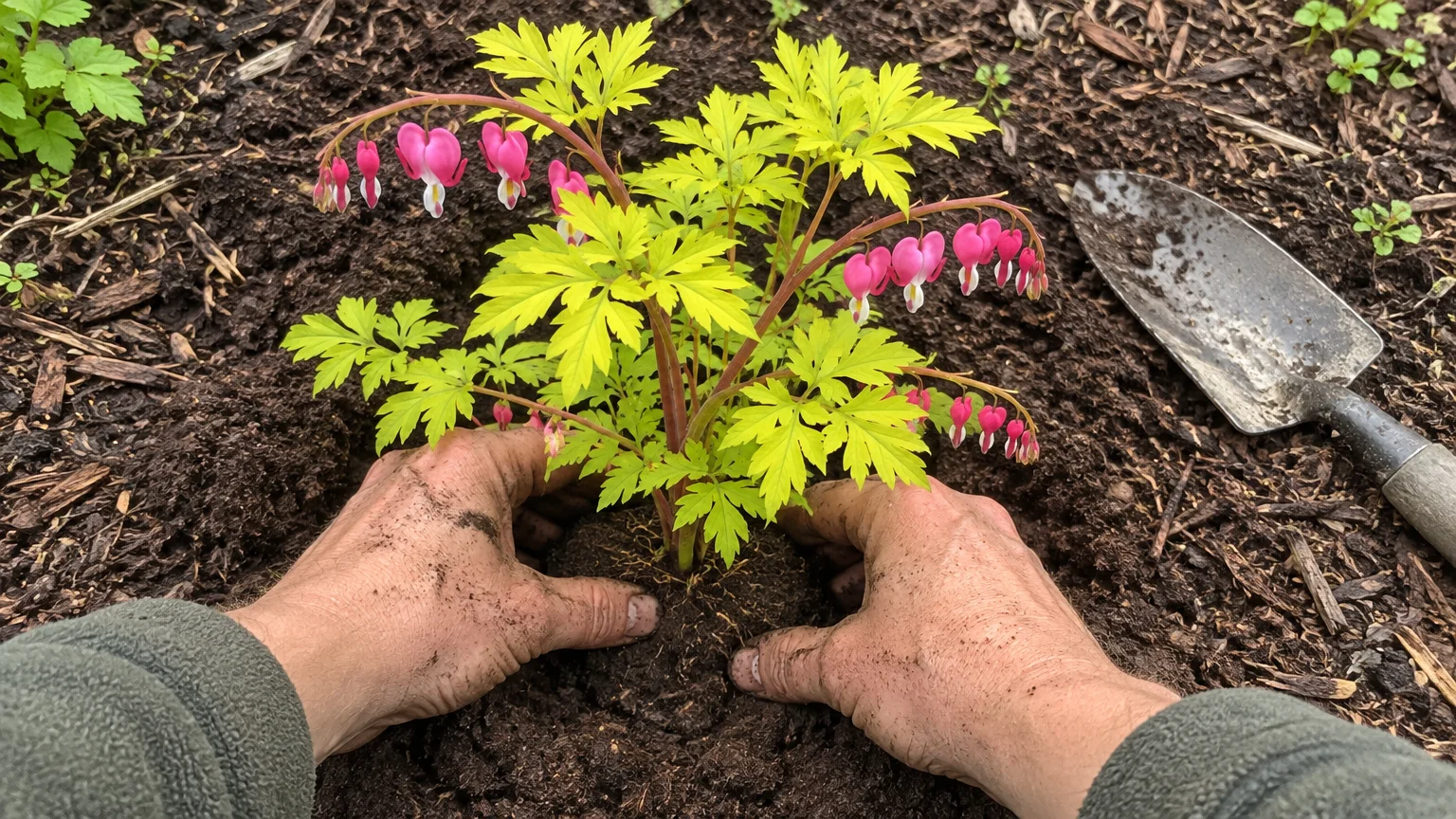
Outdoor Strategy #6: Layer Spring Color with ‘Gold Heart’ Bleeding Heart
Hardy across USDA Zones 3 through 9, Lamprocapnos spectabilis ‘Gold Heart’ pairs luminous chartreuse foliage with arching, heart-shaped blooms. Plants thrive in partial sun or partial shade and flower for four to six weeks.
Expect this woodland classic to peak from late spring into early summer before going dormant during summer heat. Once warm weather arrives, the foliage naturally dies back underground.
Tuck later-emerging hostas right beside it so broad leaves expand and conceal the empty gap by midsummer.
Outdoor Strategy #7: Spill Bright Trails with Golden Creeping Jenny in Containers
Lysimachia nummularia ‘Aurea’ is hardy in USDA Zones 3 through 9, forming a low 2-to-4-inch mat that spreads 2 feet or more. Its coin-shaped leaves turn lime green in shade and brighten in partial sun.
Because stems root easily at leaf nodes, golden creeping Jenny is considered invasive in parts of eastern and northwestern North America. It spreads especially fast near streams, ponds, and damp ground.
Check local regulations before planting it in open beds. Better yet, let it cascade safely from shady porch planters and elevated troughs.
Outdoor Strategy #8: Fill Gaps Fast with ‘Wasabi’ Coleus
When perennials need time to mature, annual Coleus ‘Wasabi’ injects electric lime color all summer. Hardy only to USDA Zone 10, it grows reliably as a warm-season annual across cooler regions.
Plants reach 18 to 28 inches tall and 16 to 28 inches wide in part sun to shade. Serrated leaves bring crisp texture beside smooth hostas and dark mulch.
Poison Control lists coleus as non-poisonous for humans, making it a smart pick near family patios. Still, supervise young children around ornamental plants to prevent choking hazards.
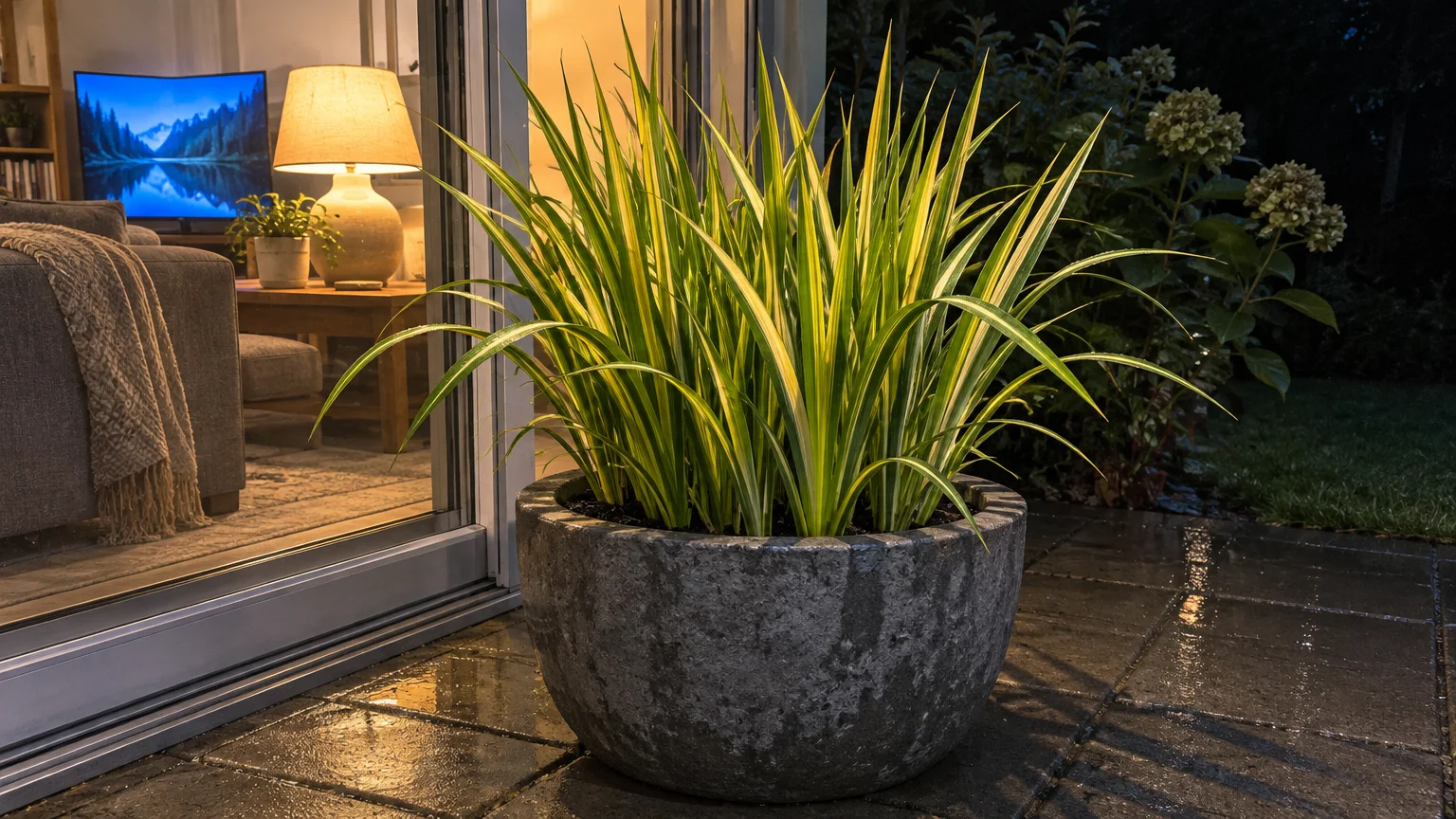
Outdoor Strategy #9: Add Crisp Vertical Lines with ‘Ogon’ Sweet Flag
Acorus gramineus ‘Ogon’ brings upright, grass-like fans to USDA Zone 4 and warmer gardens. Reaching 18 to 24 inches tall and 12 to 15 inches wide, it slices cleanly through mounding shade perennials.
Use this bright perennial along shady garden paths, damp swales, or pond margins where broadleaf plants start looking heavy. Repeating small clumps every few feet creates visual rhythm without crowding narrower beds.
Pair it with dark purple foliage or deep green ferns to make those golden-lime blades pop.
Seasonal Considerations for Your Garden
First, confirm your climate baseline using the 2023 USDA Plant Hardiness Zone Map, which relies on 30-year minimum winter temperature averages from 13,412 weather stations. Roughly half the country shifted one 5-degree half-zone warmer since 2012.
In spring, clear old leaves from ‘Citronelle’ coral bells and cut back ‘All Gold’ forest grass before new growth starts. Dividing overcrowded hostas early also gives roots time to settle before heat arrives.
During summer, watch how tree canopies thicken and reduce sunlight below 3 to 4 hours daily. Full shade, defined as less than 3–4 hours of direct sun, shifts gold cultivars toward softer lime tones.
In fall, leave ‘Sun King’ spikenard berries for migrating birds, then cut herbaceous stems down after hard frost. Top-dress beds with shredded leaves or compost to insulate roots through winter freezes.
Check your USDA Plant Hardiness Zone at the USDA’s website, and consult your local University Extension program (listed here) for regional advice.
You can also find native plant information from the National Wildlife Federation.
Dealing with Outdoor Pests and Weather
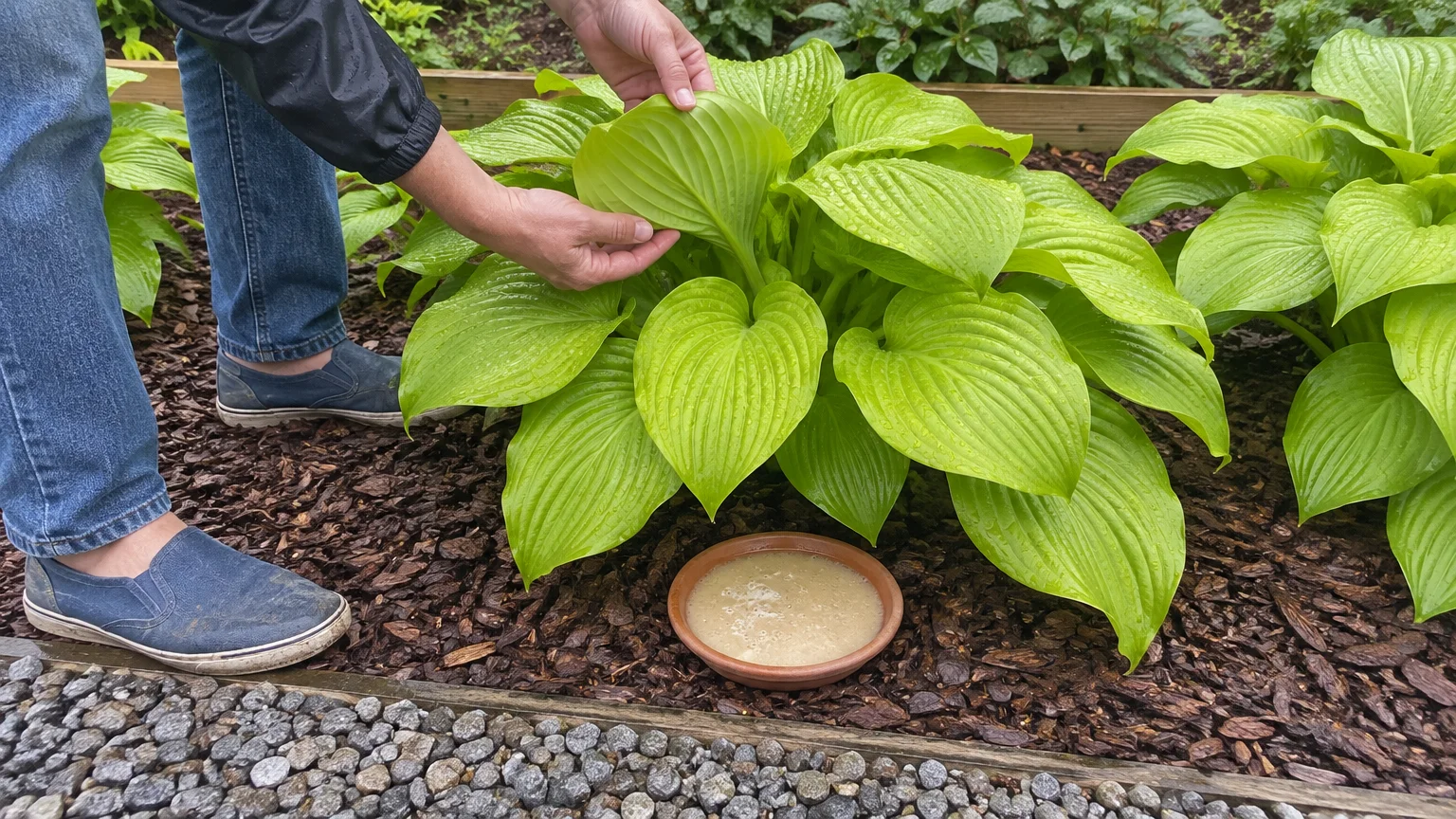
Shady, damp corners invite slugs and snails that shred thin hosta foliage overnight. Skip metaldehyde slug pellets, which are banned in the UK and can cause organ damage, seizures, and death in dogs and cats.
Instead, wrap copper barrier bands around prized hostas and clear rotting mulch away from crowns. Always buy hostas from reputable nurseries to avoid Hosta Virus X, which causes mottled leaves and has no cure.
Deer and rabbits browse tender hosta shoots heavily in spring. Mix deer-resistant ‘All Gold’ Japanese forest grass and aromatic ‘Citronelle’ coral bells along outer bed edges to deter hungry wildlife.
For weather extremes, match light and moisture closely to each spot. Partial shade offers 3 to 6 hours of direct sun, while full shade receives under 2 hours of direct sun plus filtered light.
Water moisture-loving ‘Sun King’ spikenard deeply during dry spells, and mulch root zones two inches deep to lock in coolness. If pets chew toxic plants, call the ASPCA Animal Poison Control Center at (888) 426-4435.
For accidental human ingestion concerns, contact U.S. Poison Control immediately at 1-800-222-1222.
Frequently Asked Questions
How do I keep chartreuse plants bright in deep shade without scorching them?
Aim for bright, filtered light or morning sun, since true full shade with zero direct sun turns golden cultivars toward cooler lime green. Conversely, intense afternoon sun above six hours daily can scorch ‘All Gold’ grass and thin shade leaves.
Which plants for shady areas are safest if I have dogs and cats?
‘Citronelle’ coral bells are non-toxic to dogs, cats, and horses, and ‘All Gold’ Japanese forest grass is generally a safer structural choice. Avoid planting hostas within reach of pets that chew leaves, since hostas contain toxic glycoside saponins.
How can I design a bright shade border on a tight budget?
Anchor one corner with a single fast-growing ‘Sun King’ spikenard or ‘Sum and Substance’ hosta rather than buying dozens of small plants. Fill remaining gaps with inexpensive ‘Wasabi’ coleus starts in summer, then divide mature perennials every few springs.
Why did my ‘Gold Heart’ bleeding heart vanish in July?
Bleeding hearts naturally enter summer dormancy once warm weather arrives, so disappearing leaves do not mean your plant died. Mark the crown with a small stone and surround it with hostas or sweet flag to hide bare soil.
Disclaimer: This article provides general outdoor gardening advice. Success can vary greatly based on your specific climate, soil type, and local conditions. Always choose plants appropriate for your USDA Hardiness Zone.