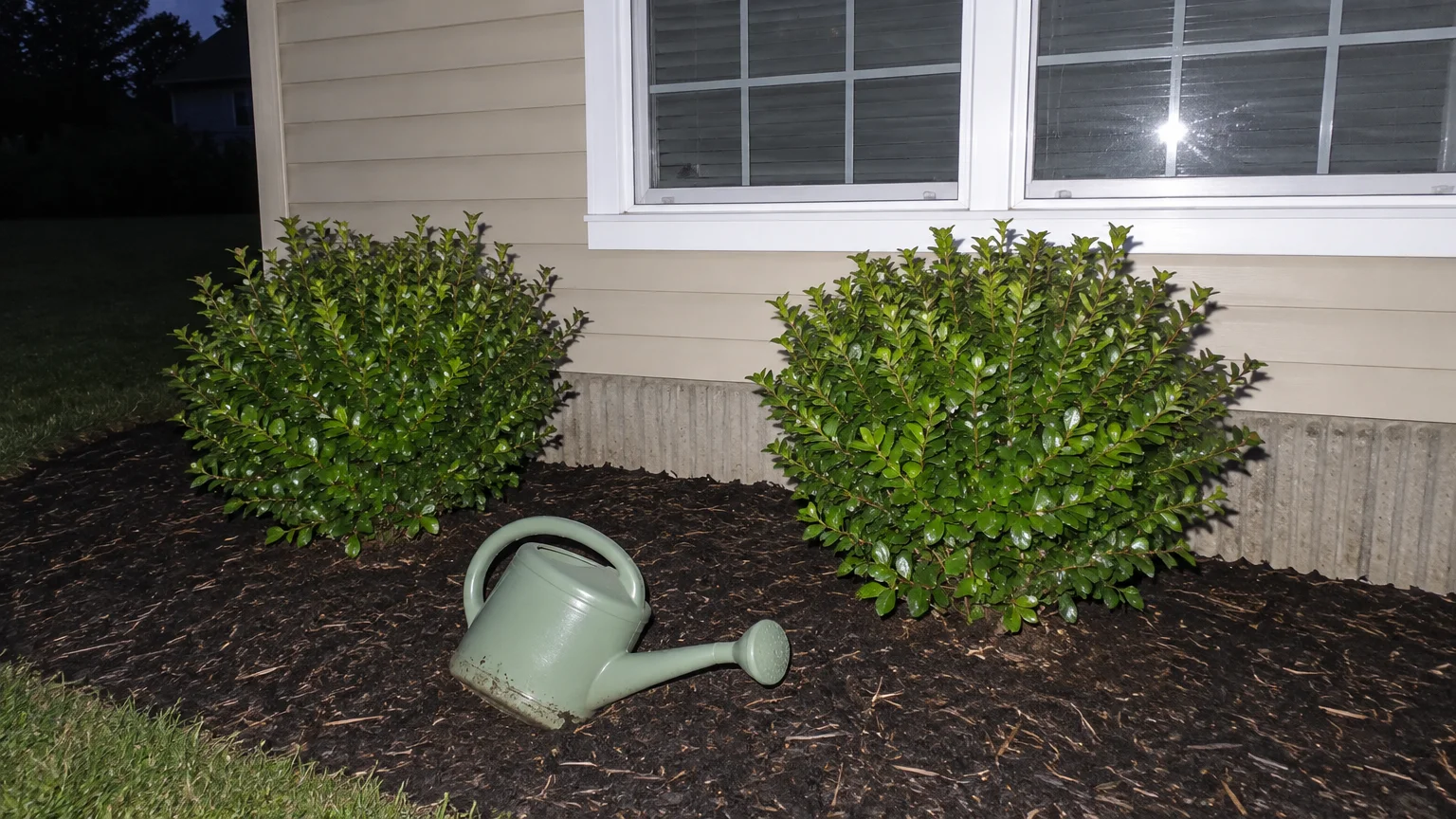
Oversized bushes hide your windows, crowd your siding, and trap moisture against your home. Choosing compact shrubs keeps your entryway bright and makes curb appeal landscaping effortless.
According to the National Association of REALTORS and National Association of Landscape Professionals 2023 report, 92% of Realtors advise improving curb appeal before listing. Well-planned foundation planting also earns an overall 100% cost recovery at resale.
These seven small shrubs for front foundation beds stay naturally tidy below windowsills. Pair them with proper spacing and drainage to protect your home while upgrading your front yard.
Outdoor Strategy #1: ‘Bobo’ Panicle Hydrangea
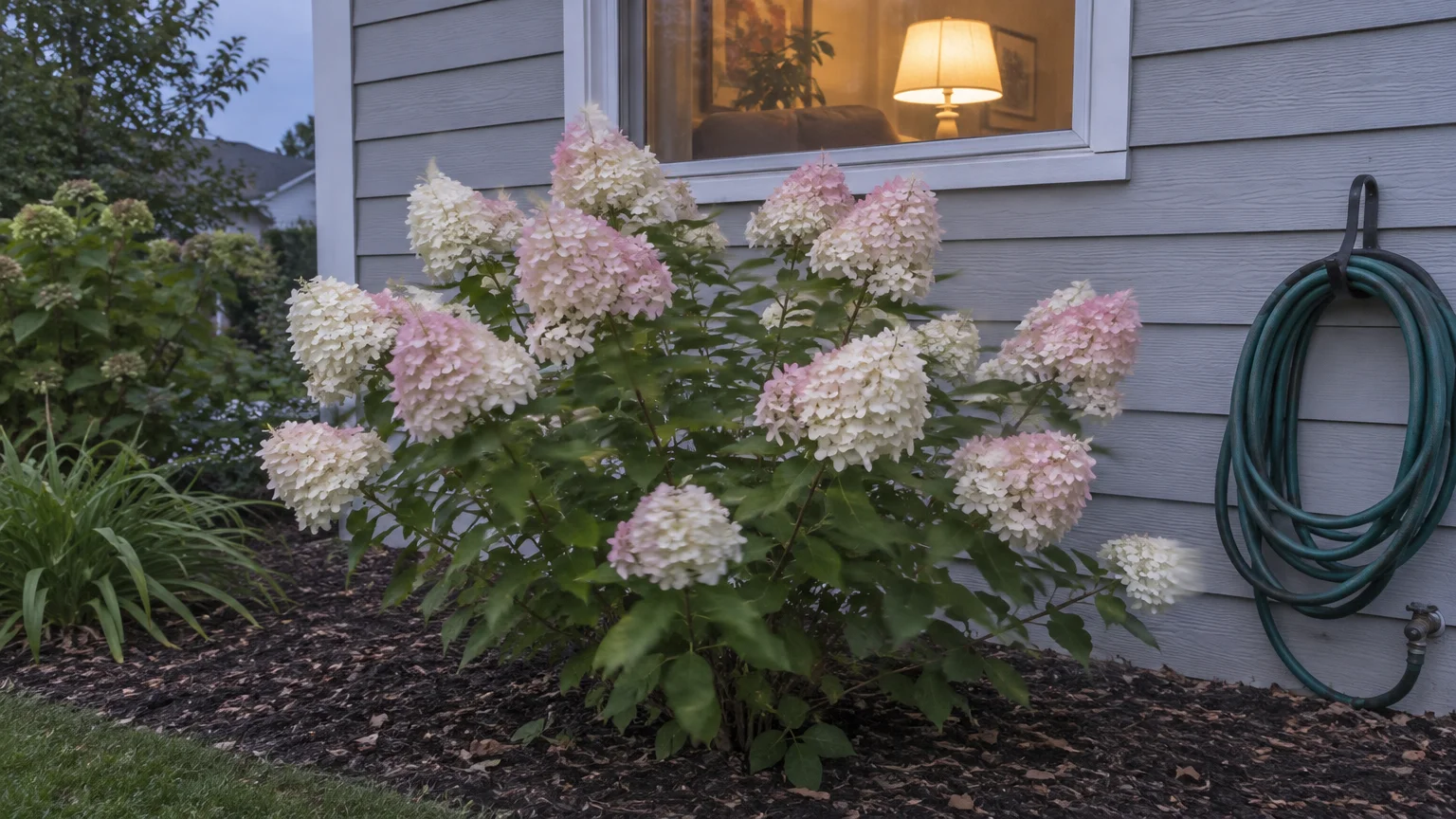
If you want months of summer flowers without constant pruning, plant ‘Bobo’ panicle hydrangea (Hydrangea paniculata ‘ILVOBO’). This tidy cultivar thrives in USDA Zones 3 through 8 and matures at just 3 feet tall and 3 to 4 feet wide.
Large white flower panicles cover the stems in summer before shifting to soft pink in early fall. Because it blooms on new wood, winter cold snaps rarely ruin your display.
Give ‘Bobo’ full sun to part shade and rich, well-drained soil. Plant it at least 30 to 36 inches from your siding—half its mature width plus 12 to 18 inches for airflow—and keep it below your windowsills.
Starter 1-gallon pots typically cost $23.99 to $32.95, while larger #2 and #3 nursery containers run $25.00 to $42.00. Group three plants together along sunny front yard borders for balanced, low-maintenance color.
Outdoor Strategy #2: ‘Gem Box’ Inkberry Holly
Every foundation planting benefits from sturdy winter structure; landscape designers often aim for roughly 50% evergreens, 25% flowering shrubs, and 25% perennials. ‘Gem Box’ inkberry holly (Ilex glabra ‘SMNIGAB17’) delivers that year-round backbone without outgrowing narrow beds.
Hardy in Zones 5 through 9, this native broadleaf evergreen reaches only 2 to 3 feet tall and wide. Its dense, dark green leaves mimic classic boxwood, while red-tipped spring growth and small black winter berries add subtle seasonal interest.
Set ‘Gem Box’ at least 24 to 30 inches from your house wall in sun or part shade. Unlike many foundation shrubs, inkberry tolerates damp spots near downspouts, though it prefers slightly acidic soil.
Check your soil pH before planting, because concrete foundations leach lime compounds that make adjacent dirt more alkaline. Amending with organic matter helps this compact native stay lush and dark green.
Outdoor Strategy #3: ‘Green Velvet’ Boxwood
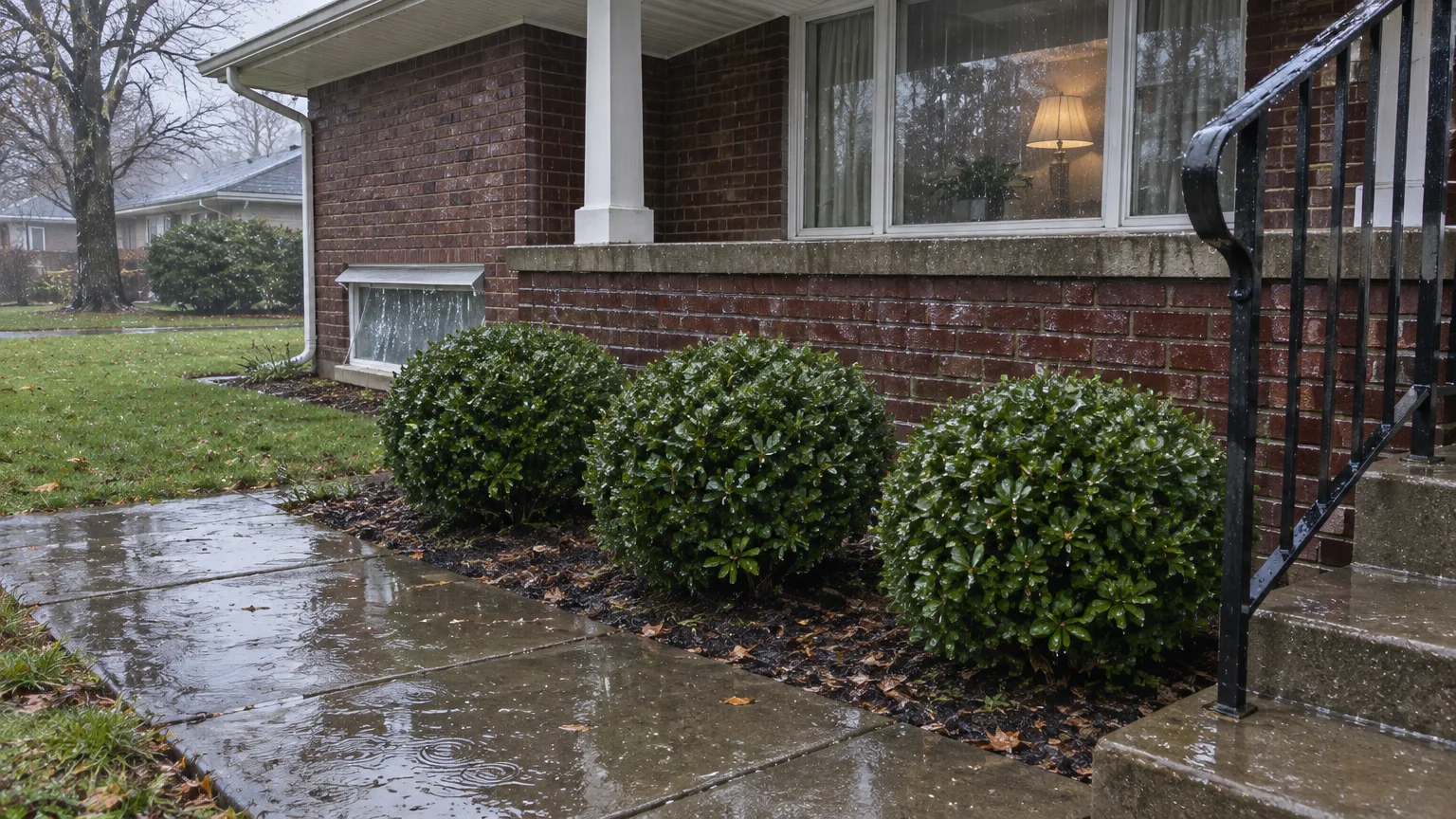
For crisp, tailored edges beside brick walkways or covered porches, ‘Green Velvet’ boxwood (Buxus × ‘Green Velvet’) remains a classic choice. Hardy starting in Zone 5, it naturally forms a neat 3-by-3-foot globe—occasionally reaching 4 feet—that resists deer browsing and moderate drought.
Plant it in moist, well-drained soil with morning sun and afternoon shade. Space shrubs 36 inches apart on-center for distinct mounds, or 24 inches apart if you want a low, continuous front yard hedge.
Before buying boxwood, watch for box tree moth (Cydalima perspectalis), which defoliates hedges within two months. As of October 2026, USDA APHIS federal quarantines cover parts of 10 states, including New York, Pennsylvania, Maryland, Virginia, Ohio, and Michigan.
Never move boxwood clippings or uncertified plants across state lines in quarantined zones. If you live in an active outbreak county, swap in ‘Gem Box’ inkberry holly instead.
Outdoor Strategy #4: ‘Little Princess’ Japanese Spirea
Tough, sunny front yards need front yard shrubs that handle reflected heat from driveways and sidewalks. ‘Little Princess’ Japanese spirea (Spiraea japonica ‘Little Princess’) thrives in full sun across Zones 3 through 7.
This compact deciduous shrub reaches 2 to 3 feet tall and spreads 3 to 4 feet wide. Mint-green leaves frame flat clusters of rosy pink summer flowers that draw butterflies right to your porch.
Space ‘Little Princess’ at least 36 inches from your foundation wall and 2 to 3 feet away from outdoor air conditioning units. Clear airflow keeps cooling equipment efficient and prevents fungal leaf spots.
Because deciduous shrubs burn with less intensity than resinous conifers, spirea works well in moderate-risk yards—though wildfire-prone regions require even stricter spacing. Lightly shear spent blooms in midsummer to encourage a second flush of color.
Outdoor Strategy #5: ‘Mr. Bowling Ball’ Arborvitae
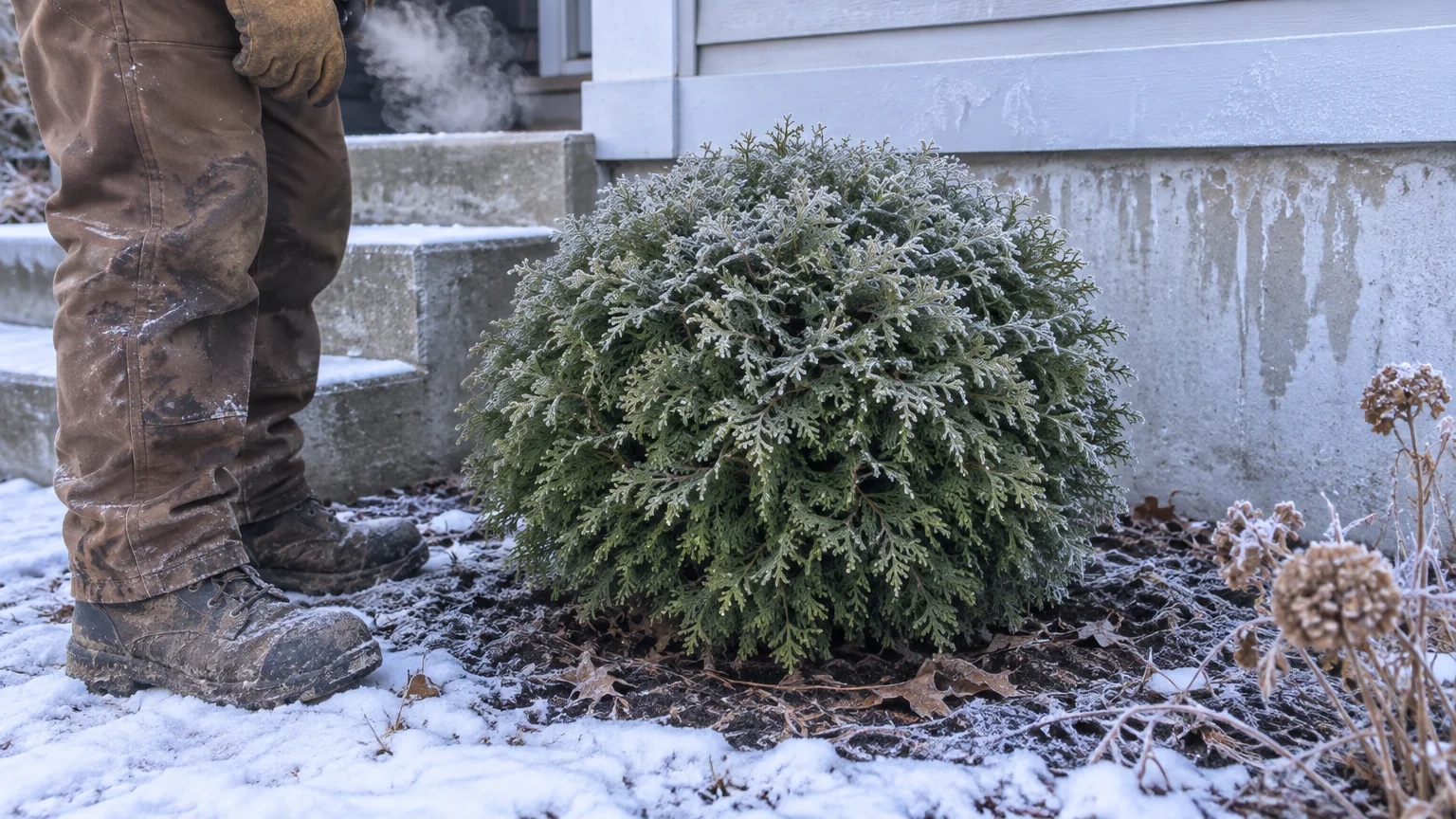
Conifers add soft texture to stone and brick facades, yet standard arborvitae quickly shoot past rooflines. ‘Mr. Bowling Ball’ arborvitae (Thuja occidentalis ‘Bobazam’) solves that scale problem in Zones 5 through 9.
This slow-growing evergreen stays naturally round at 2 to 3 feet tall and wide—usually 24 to 30 inches—with lacy, sage-green foliage. You rarely need to touch it with pruning shears.
Plant it in full sun with well-drained soil, keeping at least 24 to 30 inches between the shrub and your siding. Avoid planting conifers within 5 feet of your house if you live in a wildfire-prone area.
In high-risk regions, firefighters call resinous evergreens little green gas cans because flying embers ignite them easily. Elsewhere, pairing two ‘Mr. Bowling Ball’ globes with a flowering perennial creates effortless symmetry.
Outdoor Strategy #6: ‘Tiny Wine’ Ninebark
If green shrubs blend into your siding, dark burgundy foliage creates instant contrast against white, gray, or tan exteriors. ‘Tiny Wine’ ninebark (Physocarpus opulifolius ‘SMPOTW’) brings rich bronze-maroon leaves in a scaled-down native package.
This compact cultivar grows 3 to 5 feet tall and 3 to 4 feet wide; related ‘Tiny Wine Gold’ varieties carry hardiness ratings for Zones 3 through 7. Late spring brings clusters of pinkish-white blooms along the branches.
Use ‘Tiny Wine’ near blank wall corners or beside tall porch pillars rather than directly under low windows. Leave at least 36 to 42 inches between the center of the plant and your foundation wall.
A #3 nursery container of ‘Tiny Wine’ runs up to $59.99, reflecting its strong garden performance and multi-season color. Give it full sun to keep the maroon leaf tones deep and vivid.
Outdoor Strategy #7: ‘Rose Creek’ Glossy Abelia
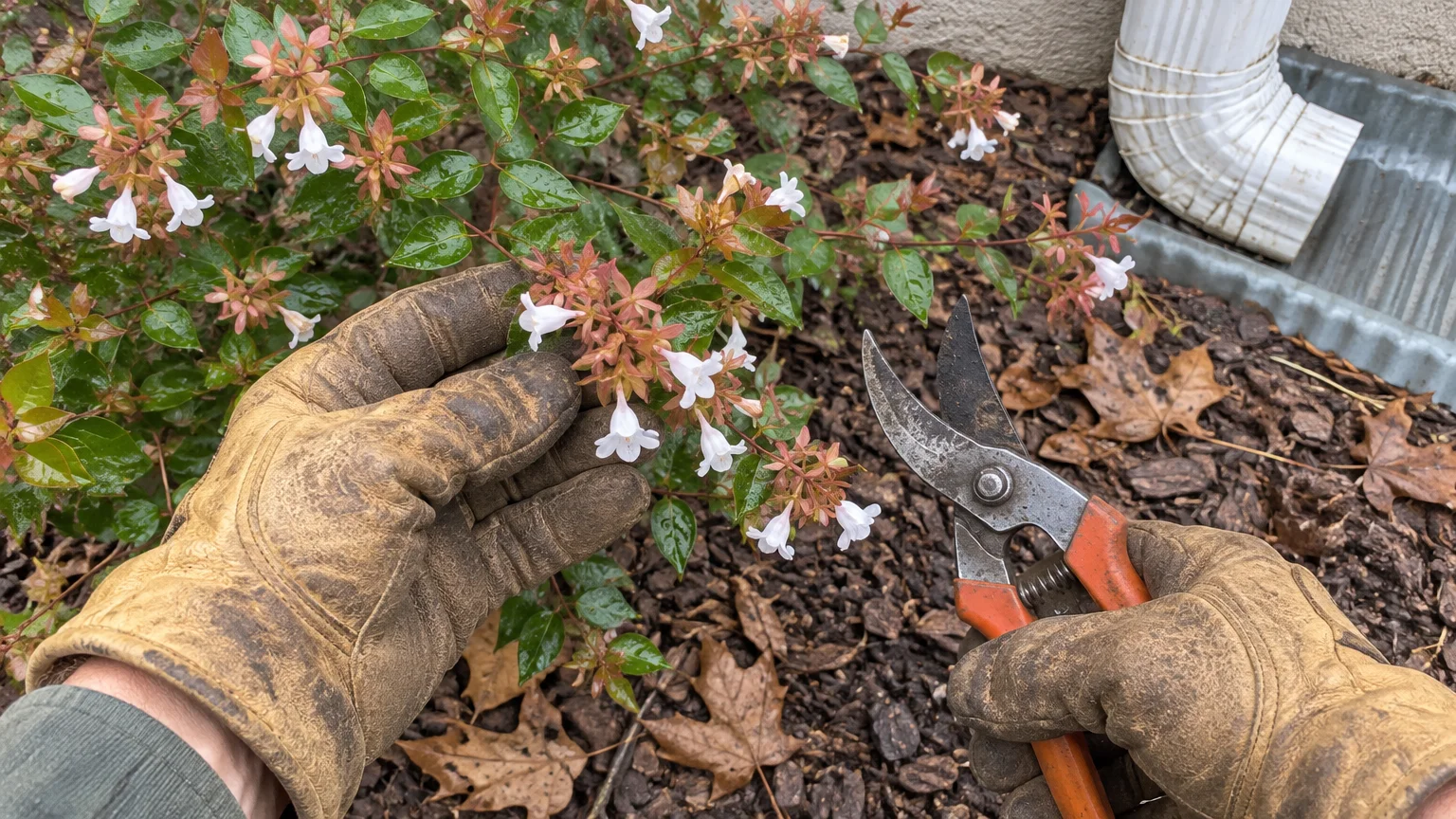
Warm-climate homeowners often struggle to find small shrubs for foundation beds that hold foliage through winter and bloom past August. ‘Rose Creek’ glossy abelia (Abelia × ‘Rose Creek’) excels at both, maturing at 3 to 4 feet tall and wide.
Its glossy green leaves turn purplish-green in fall, while white flowers open continuously from summer into autumn. Another compact option, ‘Radiance’ abelia, stays slightly tighter at 3 by 3 feet with silvery-variegated leaves.
Plant glossy abelia in full sun to light shade, spaced at least 36 inches from your foundation. Pull organic mulch 2 to 3 inches deep around the root zone, keeping it 3 inches clear of stems.
Do not pile mulch against your siding or weep holes; keeping 6 to 8 inches of bare concrete visible blocks rot and termites. Refresh the bed border each spring for crisp curb appeal.
Seasonal Considerations for Your Garden
Spring is prime time to test soil pH and check the 2023 USDA Plant Hardiness Zone Map. Roughly half the country shifted a half-zone warmer since 2012, though winter lows remain only one factor in plant survival.
During summer, remember that roof overhangs create a dry rain shadow right next to your walls. Deep-soak new front yard shrubs weekly during their first growing season instead of relying on passing showers.
In fall, clear dead leaves and debris away from siding before winter pests settle in. Wait until late winter or early spring to prune summer-blooming shrubs like ‘Bobo’ hydrangea and ‘Little Princess’ spirea.
Before deep winter freezes arrive, check that your foundation beds measure 6 to 8 feet deep if you plan spring layering. Beds narrower than 3 feet can only hold a single low row or decorative gravel.
Dealing with Outdoor Pests and Weather
Poor drainage ruins more foundation plantings—and basements—than winter frost ever does. Grade your soil to a minimum 5% soil slope, dropping 6 inches over the first 10 feet away from your house, and extend downspouts at least 5 feet.
Preventing foundation water damage saves serious money, since structural repairs run $2,000 to $8,000. Correcting drainage while building a new bed keeps roots healthy and protects your basement.
In wildfire-prone regions, safety guidelines call for a 5-foot noncombustible perimeter—often called Zone 0—around your home and attached wooden decks. Replace wood mulch and woody shrubs in those first 5 feet with stone, pavers, or gravel, and screen vents with 1/8-inch metal mesh.
Up to 90% of wildfire home losses start from windblown embers landing in dry landscaping or mulch. Even outside high-risk zones, keeping mulch 3 to 12 inches back from your house wall deters termites and moisture damage.
Check your USDA Plant Hardiness Zone at the USDA’s website. For lawn and garden care advice, consult your local University Extension program (listed here). Find native plant information from the National Wildlife Federation.
Frequently Asked Questions
How much does it cost to landscape a front foundation bed?
A do-it-yourself plant installation for a 20-to-40-foot bed typically costs $300 to $1,500, plus $100 to $300 for soil amendments and edging. Hiring a contractor for installation with basic grading and drainage generally runs $2,000 to $6,000.
How tall should foundation shrubs grow under front windows?
Keep shrubs below windowsill height, ideally reaching no more than two-thirds of the distance from the ground to the bottom of your window. Choosing naturally compact shrubs prevents constant hedging and keeps interior rooms bright.
Why do acid-loving shrubs turn yellow near a concrete foundation?
Concrete contains lime and calcium compounds that slowly leach into nearby soil, raising its pH. Acid-loving plants like inkberry holly often yellow in alkaline soil unless you test and amend the bed regularly.
Is foundation landscaping worth the investment before selling a home?
According to the 2023 NAR and NALP report, 97% of Realtors say curb appeal attracts buyers, and landscape maintenance recovers 104% of its cost. Homeowners also report a 9.7 out of 10 satisfaction score after upgrading outdoor spaces.
Disclaimer: This article provides general outdoor gardening advice. Success can vary greatly based on your specific climate, soil type, and local conditions. Always choose plants appropriate for your USDA Hardiness Zone.