
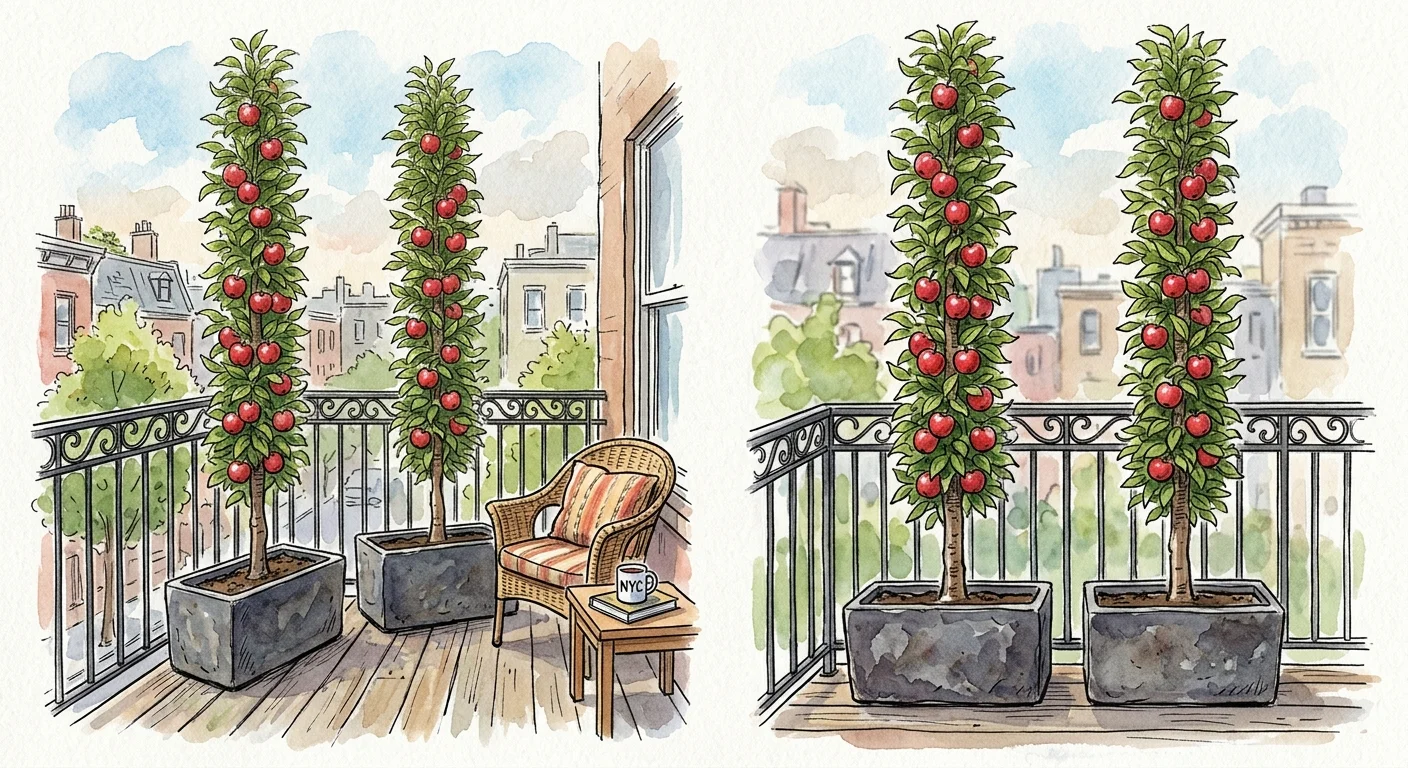
Tip #2: Northpole Columnar Apple Tree
If horizontal yard space is limited, the Northpole Columnar Apple offers a revolutionary solution for small space fruit trees. Columnar apple trees feature a narrow, upright growth habit, rising to eight or ten feet tall while maintaining a width of only two feet. Because the tree produces fruit on short spurs directly along the central trunk, you can align several containers along a patio railing or tight garden fence to create a living, edible privacy screen.
The Northpole cultivar yields large, crisp apples featuring deep red skin and white, crunchy flesh that closely resembles McIntosh apples in flavor and texture. A mature containerized specimen yields up to 30 pounds of fruit annually. Plant your tree in a heavy 15-to-20-gallon pot to prevent high winds from tipping over the tall, slender canopy. Use a well-draining potting mixture rich in organic compost to maintain root moisture balance.
Northpole apples perform exceptionally well in USDA zones 4 through 9, requiring approximately 800 winter chill hours below 45 degrees Fahrenheit to trigger blooming. While self-fruitful under optimal conditions, planting a second columnar variety nearby—such as the Golden Sentinel—drastically increases your crop weight through cross-pollination. Pruning requires almost zero effort; simply clip back any unusual side branches each winter to retain its sleek, columnar architecture.




Where do I find these trees