Tip #6: Purple Coneflower (Echinacea purpurea)
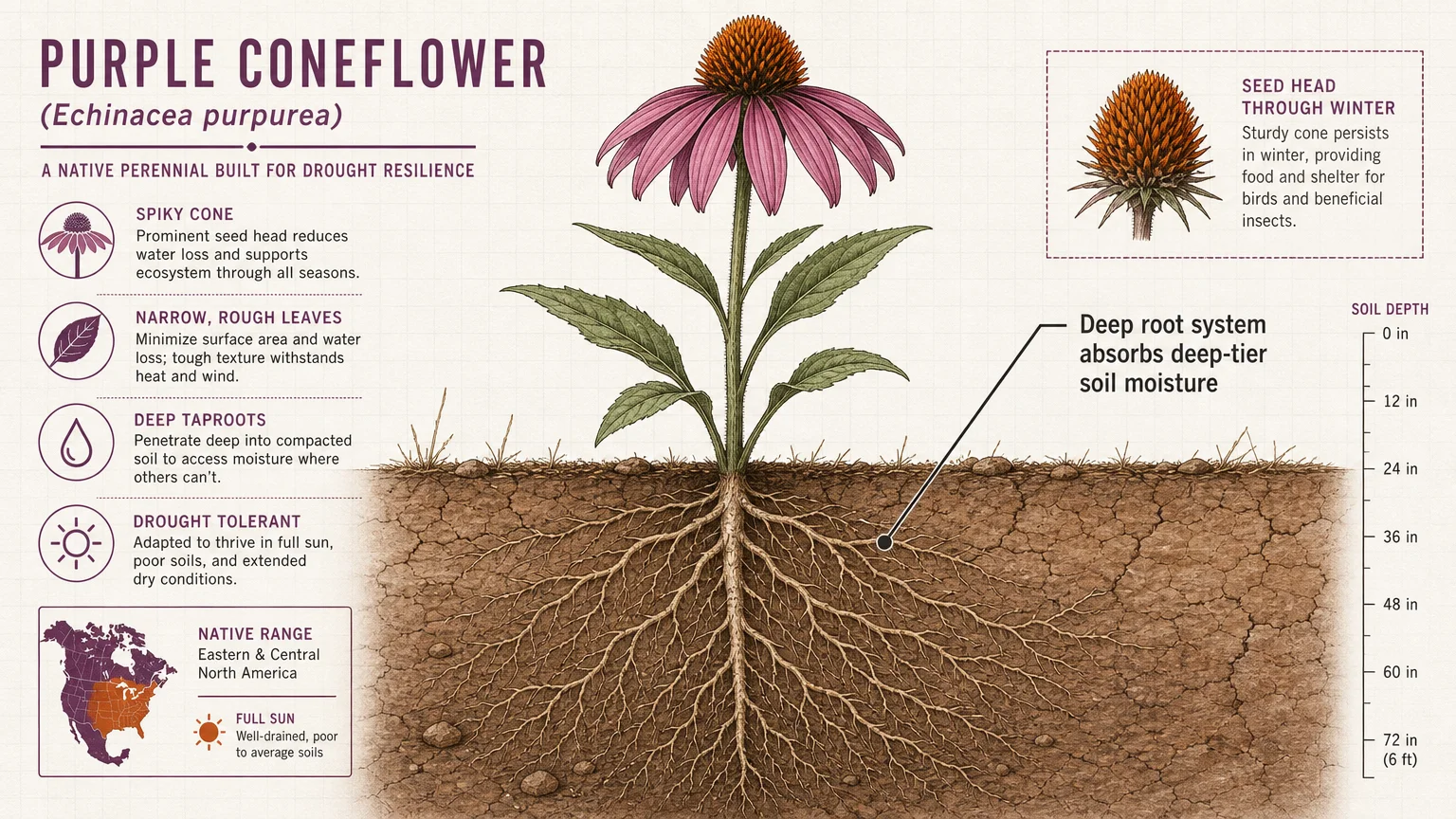
Purple Coneflower serves as an absolute icon of the resilient American summer garden. Known for their bristly, dome-shaped central cones and drooping, pinkish-purple petals, these plants command attention. Beneath the soil, Echinacea develops a massive, thick taproot that plunges several feet into the earth. This biological advantage allows the plant to access underground water reserves long after the topsoil turns to dust.
Thriving in USDA Zones 3 through 9, Coneflowers typically grow between two and four feet tall. During the hottest weeks of July and August, when other perennials wilt gracefully into the mulch, Echinacea stands tall and rigid. They only need a deep drink of water during their first growing season. Afterward, normal rainfall easily sustains them.
Plant your Coneflowers in well-draining soil, avoiding areas where water pools after heavy storms. Wet winter soil easily rots their deep taproots. You can group them with other native prairie species for a spectacular, low-maintenance display. When the petals finally drop in late summer, the prominent spiky cones remain; they provide fantastic architectural interest and attract beautiful songbirds to your yard.