
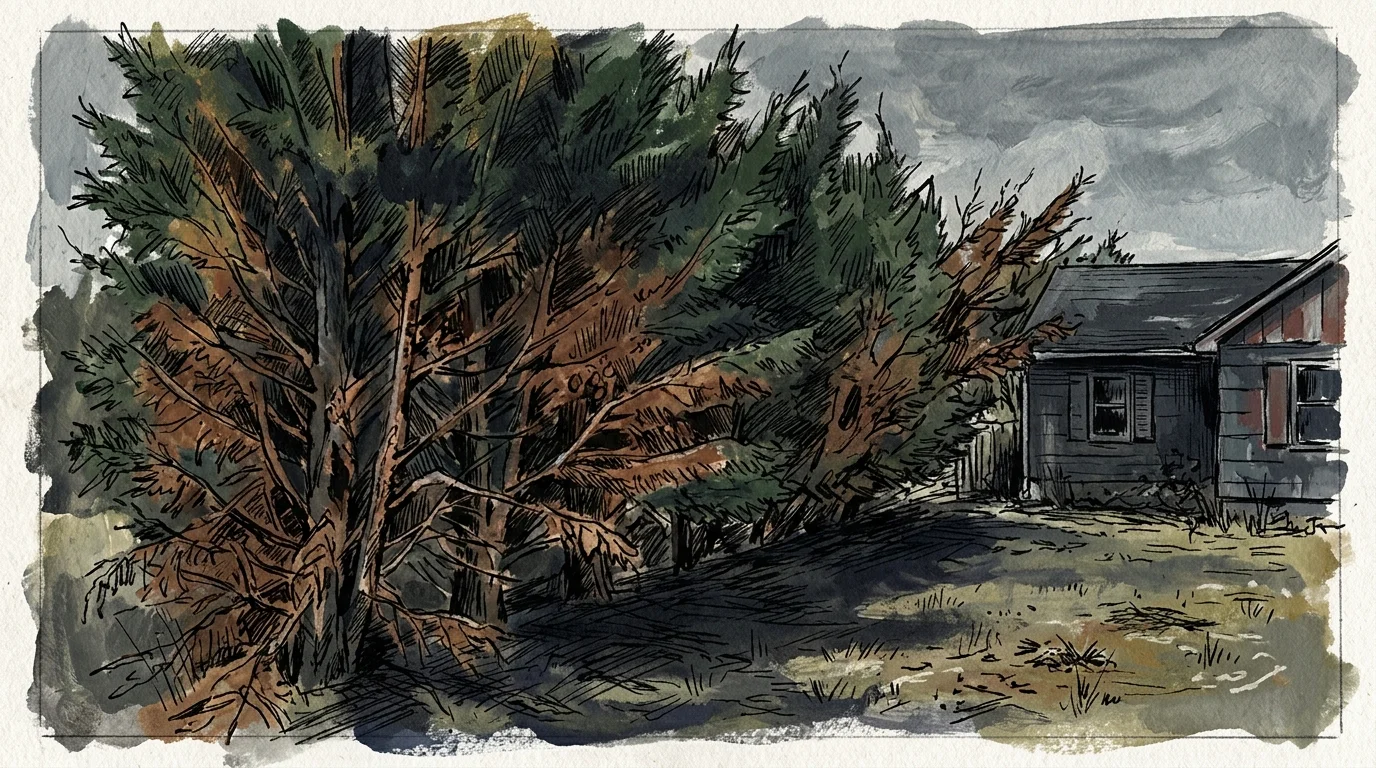
Tip #5: Leyland Cypress (Cupressus × leylandii)
Developers and homeowners frequently rely on the Leyland Cypress to establish instant privacy screens because they grow an astonishing three to four feet per year. Unfortunately, this manufactured hybrid lacks the genetic resilience required for long-term survival in most residential landscapes. Because they lack a deep taproot, their shallow root system fails to properly anchor the massive, dense top growth. When heavy rains saturate the soil and high winds strike, entire rows of mature Leyland Cypresses easily uproot and topple over en masse, crushing fences and structures in their path.
Furthermore, they are highly susceptible to fatal diseases like Seiridium canker and devastating pests like bagworms. Once a single tree in your dense privacy screen contracts a canker, the infection spreads rapidly down the line, leaving you with towering, dead brown eyesores that cost a fortune to remove. The dead wood also presents a significant fire hazard during dry summer months. For a durable, disease-resistant privacy screen, abandon the Leyland Cypress entirely. Instead, plant the Green Giant Arborvitae or utilize native upright hollies, which offer excellent evergreen coverage without the impending heartbreak and massive removal bills.

2 Responses
I could not see the list of 10 trees you shouldn’t plant in your yard. Where was it?
Under the text, there are the buttons for the pages 1 2 3… up to 13, with the first button in green.