
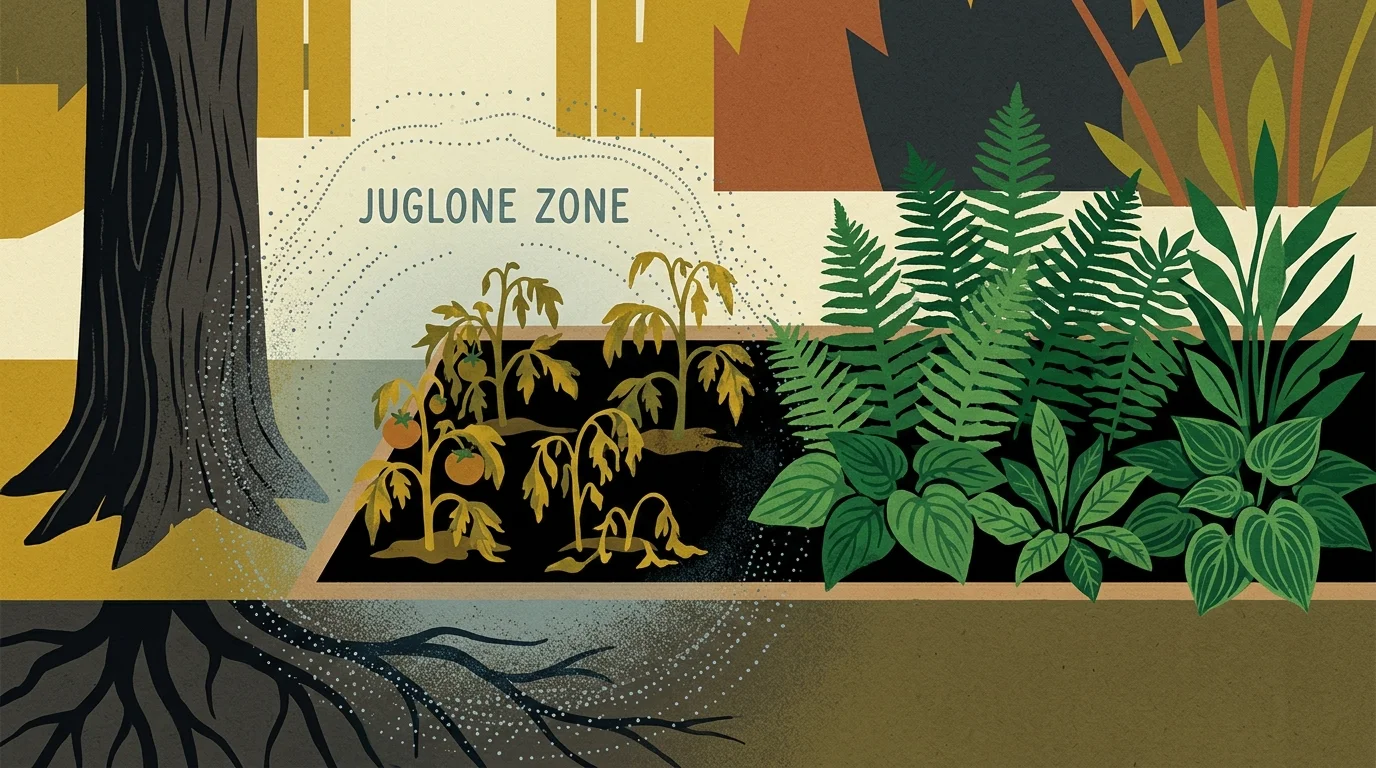
Tip #10: Black Walnut (Juglans nigra)
The Black Walnut produces gorgeous, highly valuable timber, but it actively wages chemical warfare against the rest of your carefully curated garden. The roots, leaves, and nut hulls exude a toxic compound called juglone. This naturally occurring herbicide leaches into the surrounding soil, swiftly killing or severely stunting highly susceptible plants like tomatoes, peppers, azaleas, blueberries, and apple trees. The toxic zone extends up to sixty feet from the trunk, essentially rendering a significant portion of your landscape completely barren for traditional gardening.
Even if you successfully navigate the complex challenge of planting only juglone-tolerant species, the physical mess remains staggering. In late summer and fall, the tree drops hundreds of massive, heavy green nuts. These dense projectiles easily dent the hoods of parked cars, create severe tripping hazards on pathways, and easily destroy lawnmower blades. The husks also contain a dark dye that permanently stains concrete patios and your hands. Leave the Black Walnut to wide-open fields and native forests. For a far more cooperative and tidy shade tree that allows your understory garden to thrive, plant a stately Northern Red Oak or a majestic Tulip Poplar.
2 Responses
I could not see the list of 10 trees you shouldn’t plant in your yard. Where was it?
Under the text, there are the buttons for the pages 1 2 3… up to 13, with the first button in green.