
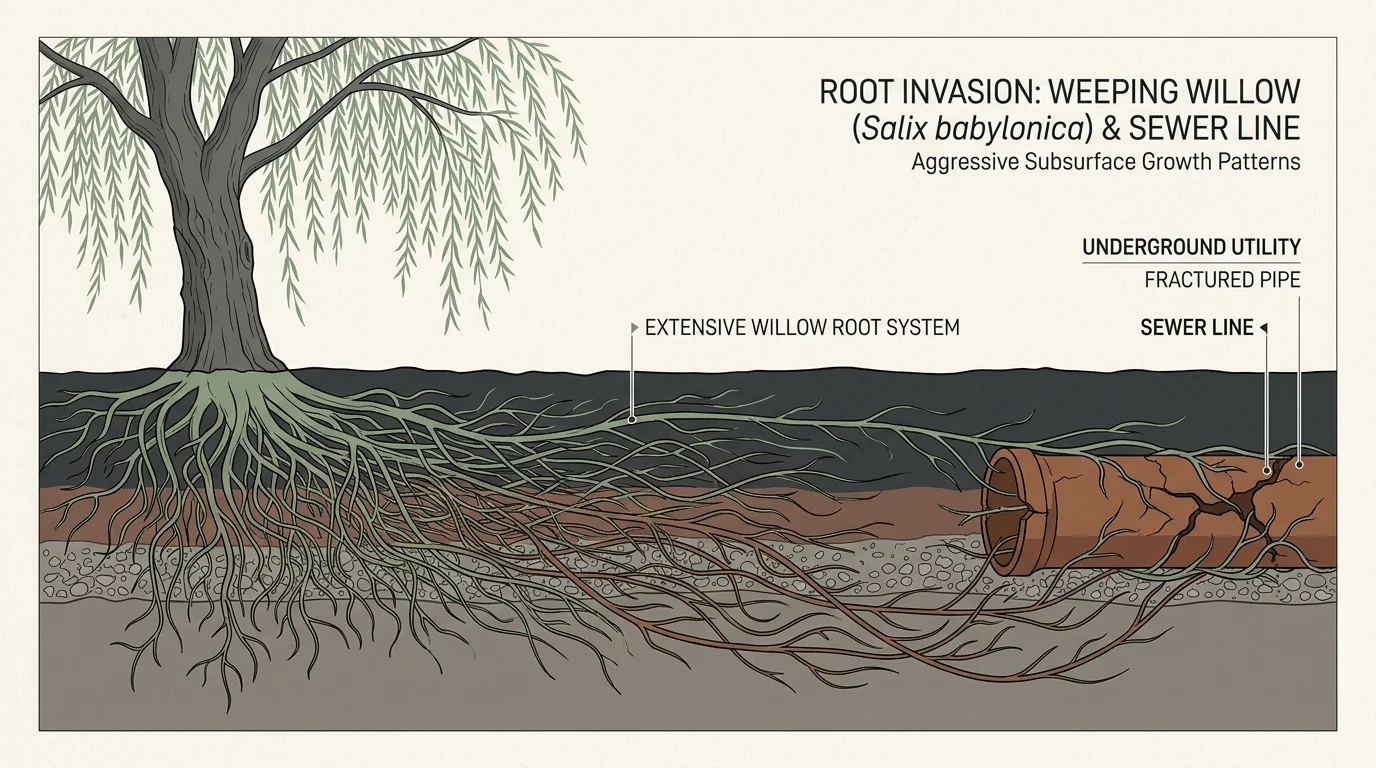
Tip #2: Weeping Willow (Salix babylonica)
Nothing quite matches the romantic, sweeping aesthetic of a Weeping Willow grazing the edge of a pristine pond, but introducing one to a standard residential lot invites inevitable disaster. These fast-growing behemoths possess an insatiable thirst, driving their aggressive root systems to seek out any available moisture source. If you have underground plumbing, sewer lines, or a septic field within a hundred feet, weeping willow roots will relentlessly invade and crush those pipes, resulting in devastating plumbing excavation and repair costs.
In addition to their destructive subterranean habits, they create massive messes above ground. The brittle wood snaps constantly, carpeting your lawn with twigs, branches, and narrow leaves that complicate mowing and require endless, exhausting cleanup. They also suffer from a surprisingly short lifespan; a typical weeping willow begins a steep decline after just thirty years, succumbing to various cankers, borers, and fungal diseases. When assessing backyard trees for your property, avoid the temptation of their rapid shade. Unless you own acreage with a distant natural water source far removed from essential infrastructure, substitute the willow with a less destructive, moisture-tolerant species like the River Birch or the Swamp White Oak.
2 Responses
I could not see the list of 10 trees you shouldn’t plant in your yard. Where was it?
Under the text, there are the buttons for the pages 1 2 3… up to 13, with the first button in green.