
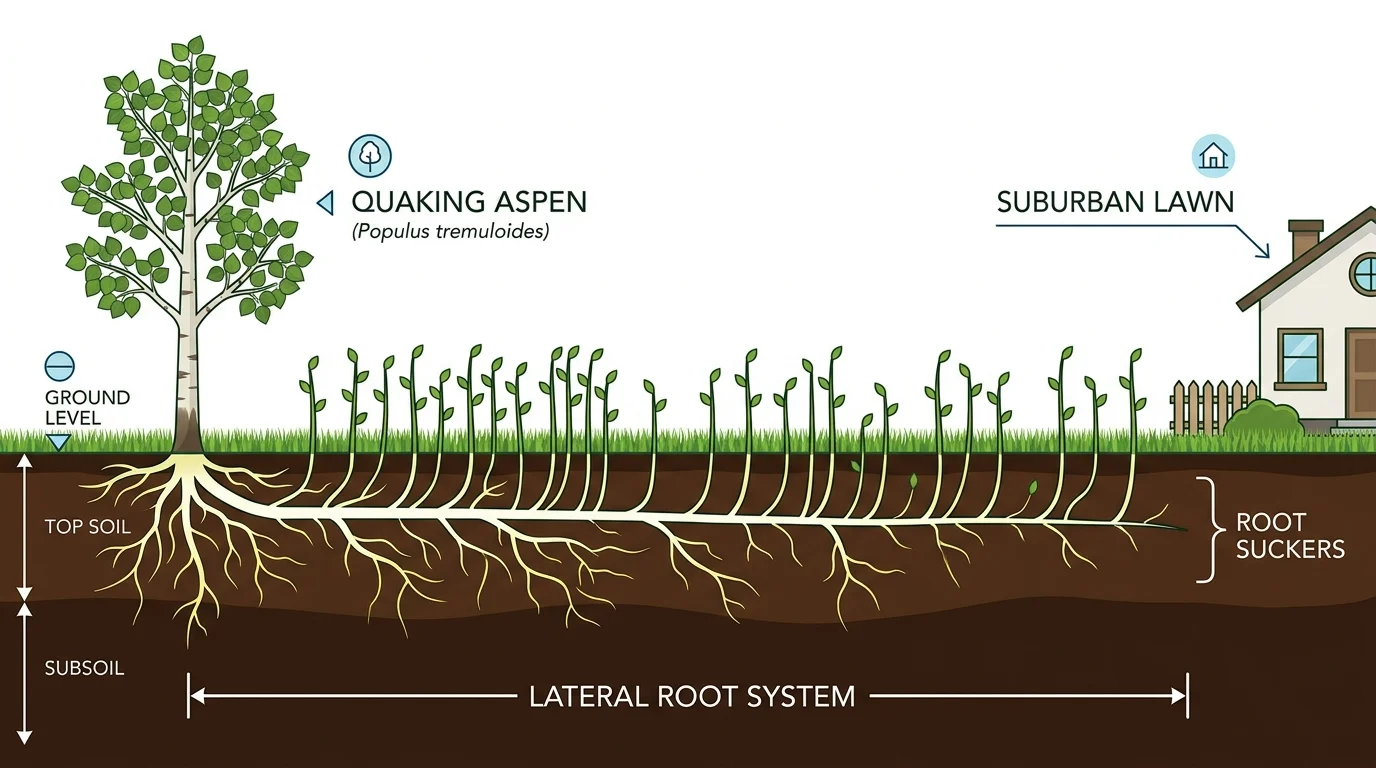
Tip #9: Quaking Aspen (Populus tremuloides)
Viewing a vast mountainside illuminated by the golden foliage and striking white bark of Quaking Aspens ranks among the greatest natural spectacles. Bringing that spectacle into a confined residential yard, however, triggers an uncontrollable horticultural invasion. Aspens do not grow as solitary, well-behaved specimens; they survive in the wild by producing aggressive root suckers, effectively cloning themselves to form massive, interconnected colonies. When you plant a single Quaking Aspen, you inadvertently authorize an entire forest to conquer your property.
The relentless root systems push up dozens of new saplings right through your pristine turfgrass, your carefully mulched flower beds, and the cracks in your driveway. Eradicating an established aspen colony proves notoriously difficult, often requiring heavy chemical intervention or extensive excavation. In lower elevations and warmer suburban climates, they also suffer terribly from borers, cankers, and leaf spot diseases, leaving them disfigured and sickly. If you admire the aesthetic of white bark and shimmering leaves, employ sound landscaping tips by planting a clump of Paper Birch or a native serviceberry. These contained species provide the visual elegance you desire without mounting an underground assault on your entire property.
2 Responses
I could not see the list of 10 trees you shouldn’t plant in your yard. Where was it?
Under the text, there are the buttons for the pages 1 2 3… up to 13, with the first button in green.