Tip #2: Spider Plant (Chlorophytum comosum)
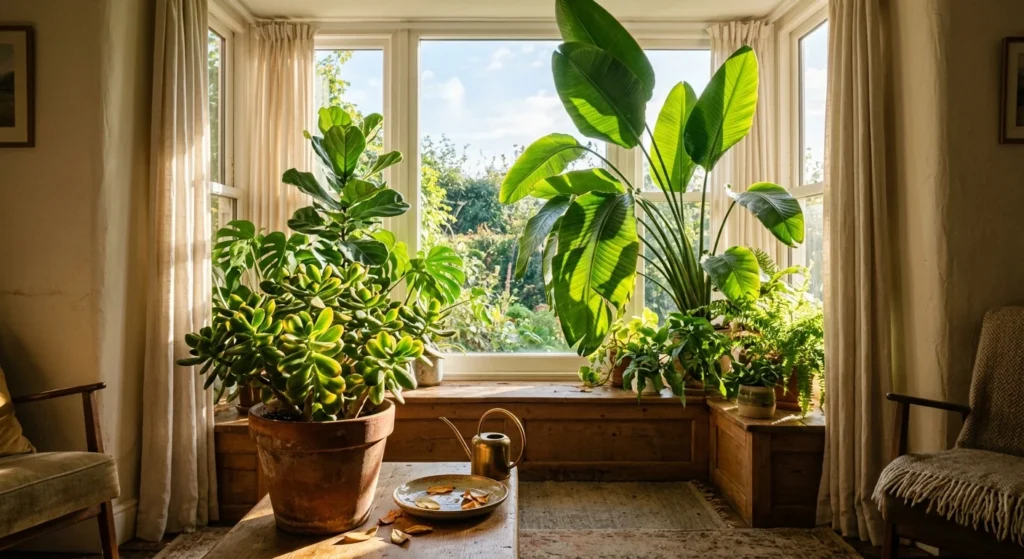
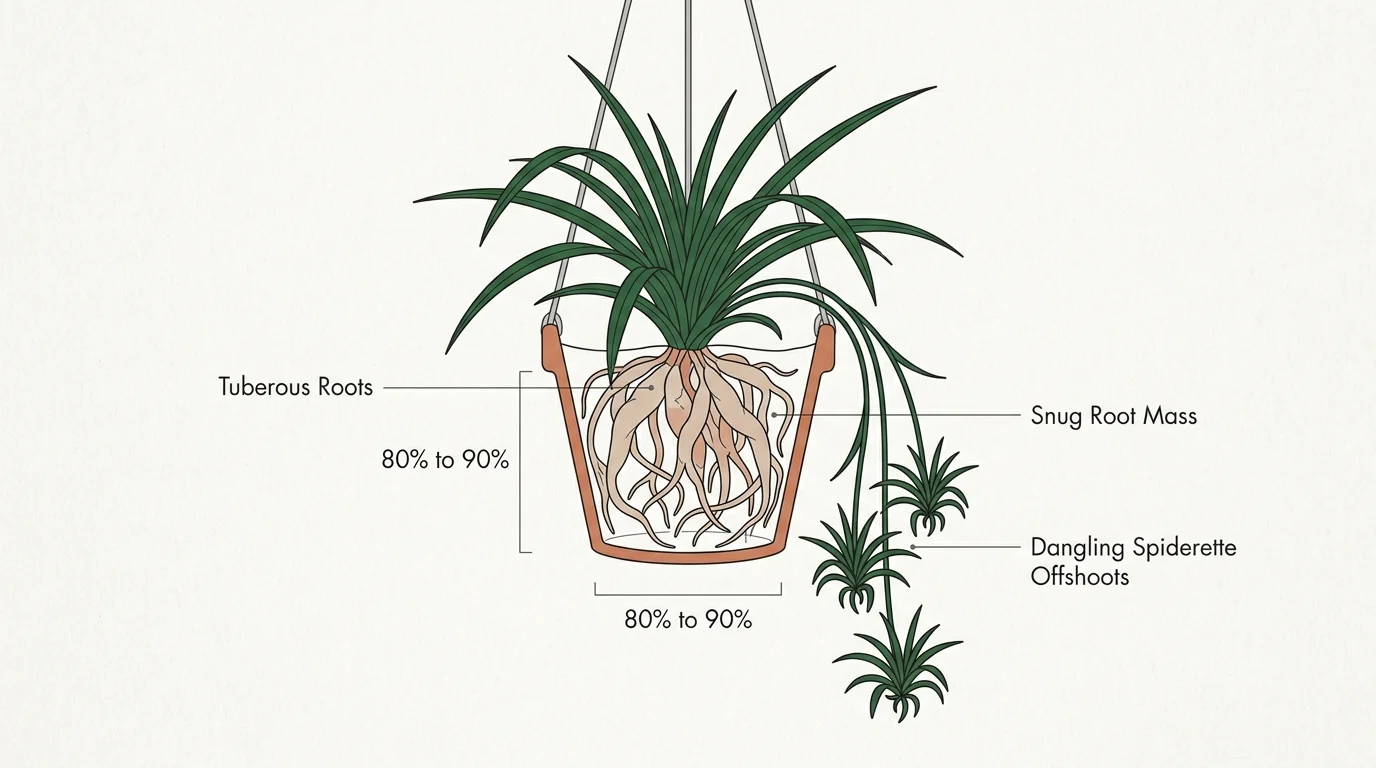
Spider plants are famous for their cascading variegated foliage and delicate plantlets, often called spiderettes. If you want your spider plant to produce dozens of these dangling offshoots, keep its roots snug. Root restriction signals to the spider plant that soil space is limited, triggering a natural survival response that compels the plant to send out long stems with miniature plantlets to reproduce. When grown in a pot that is overly spacious, it focuses almost entirely on developing thick tuberous roots underground, resulting in zero offshoots above the soil line.
For maximum plantlet production, allow the tuberous roots to occupy roughly 80 to 90 percent of the container volume. These fleshy roots store moisture effectively, making spider plants ideal plants for small containers hanging near bright windows. Repot your spider plant only when the root mass pushes the top layer of soil against the rim of the pot. Upgrading by just one pot size every two or three years maintains the exact root pressure needed to trigger continuous flowering.