Upgrading the entrance of your home creates an inviting welcome and boosts overall curb appeal. Selecting the right front yard plants ensures your garden looks lush and polished through every season.
You do not need professional landscaping skills or endless free hours to establish an enviable display. Thoughtfully chosen foundation plants establish structure while demanding minimal effort from you.
These reliable varieties withstand changing weather, resist common garden pests, and beautify your exterior year after year. Let us explore the best easy plants front of house to transform your property.
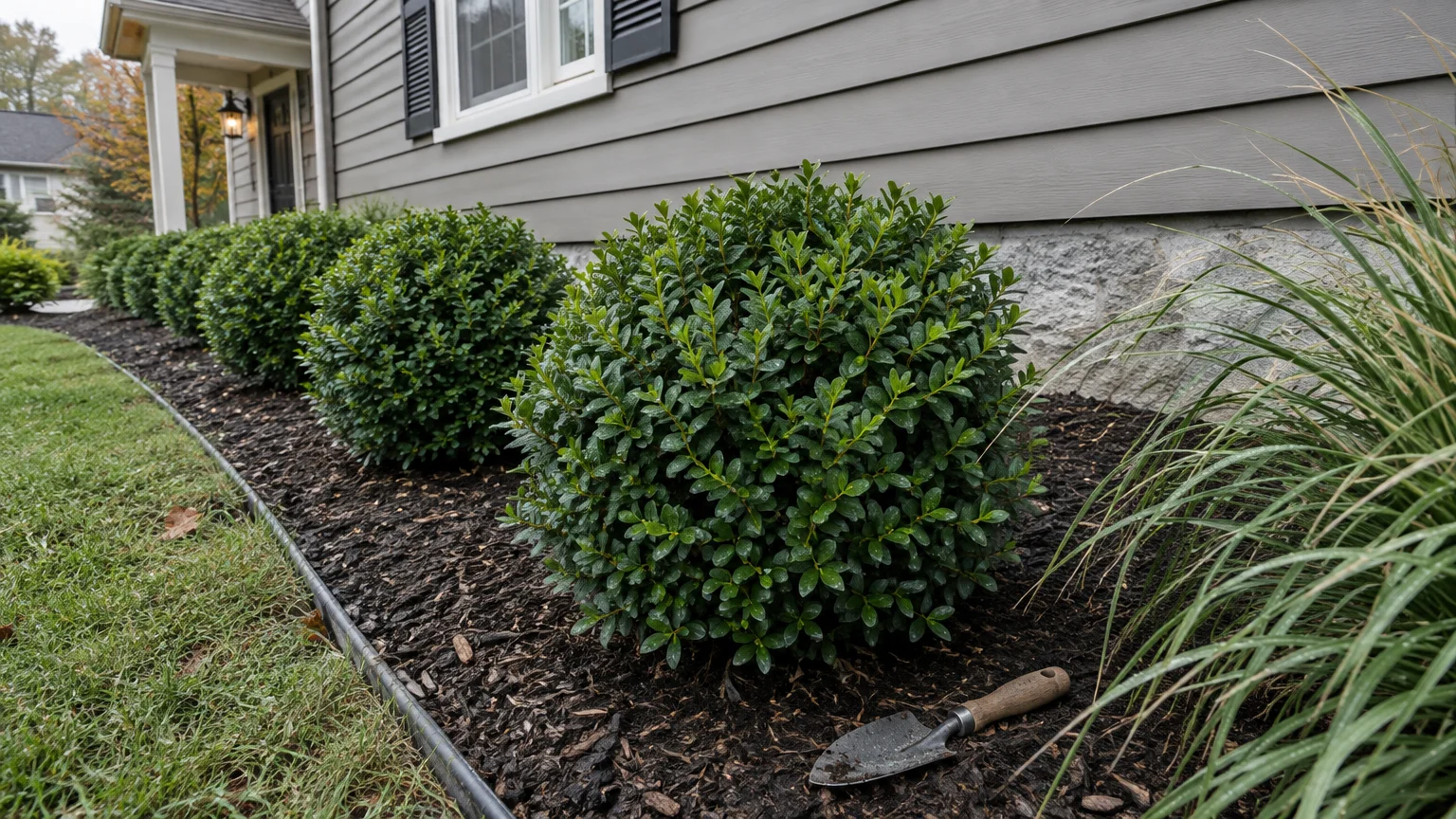
Tip #1: Boxwood (Buxus)
Boxwood serves as the timeless anchor of traditional and modern curb appeal plants. These broadleaf evergreen shrubs maintain rich emerald foliage throughout the coldest winter months.
Their dense, compact growth habit allows you to sculpt tidy geometric hedges or let them grow into soft natural mounds.
Homeowners prize boxwoods as premier foundation plants because they hide exposed concrete slabs and utility meters effortlessly. They also create a crisp backdrop that makes colorful perennial flowers pop.
Furthermore, deer and rabbits typically avoid boxwood due to the natural alkaloids inside the leathery leaves.
Position your boxwood shrubs in a location that receives full sun to partial shade. Ensure your soil drains freely, as soggy ground invites fungal root diseases.
Leave at least two to three feet of breathing room between each shrub and your home exterior wall. A two-inch layer of organic mulch retains soil moisture and moderates root temperature through summer heat.
Pairing boxwoods with flowing ornamental grasses creates an eye-catching contrast between rigid formality and wild motion.
Prune lightly in late spring after the initial flush of tender new growth matures.
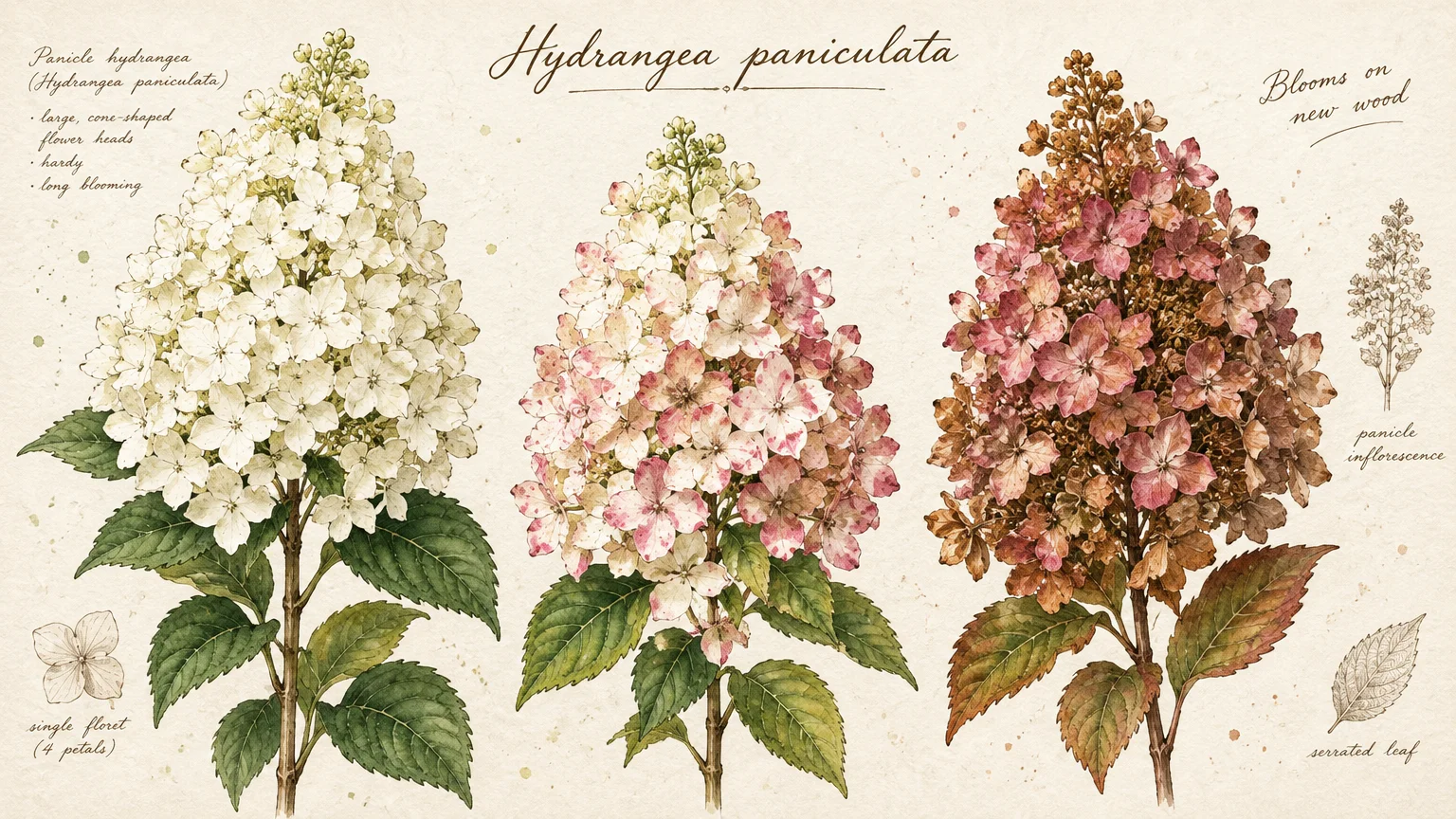
Tip #2: Panicle Hydrangea (Hydrangea paniculata)
Panicle hydrangeas deliver breathtaking architectural presence with immense cone-shaped flower clusters. Starting in midsummer, the blossoms open in creamy white before transitioning into dusty rose and deep antique pink.
Sturdy woody stems hold these massive blooms upright without bending toward the soil during heavy summer thunderstorms.
Unlike finicky mophead varieties, panicle hydrangeas bloom on new wood created during the current growing season. That means harsh winter freezes will never kill off your summer flower buds.
They provide effortless low maintenance landscaping while delivering high-impact color across multiple months.
Plant these easy plants front of house where they receive at least five to six hours of daily sunlight. Morning sun paired with gentle afternoon shade yields the healthiest foliage and the richest bloom tones.
Provide weekly deep watering during the first growing season to establish an extensive root system.
Consider compact dwarf cultivars like Bobo or Little Lime if you have low front windows to protect.
Cut the branches back by one-third in late winter or early spring to encourage vigorous flowering stems.
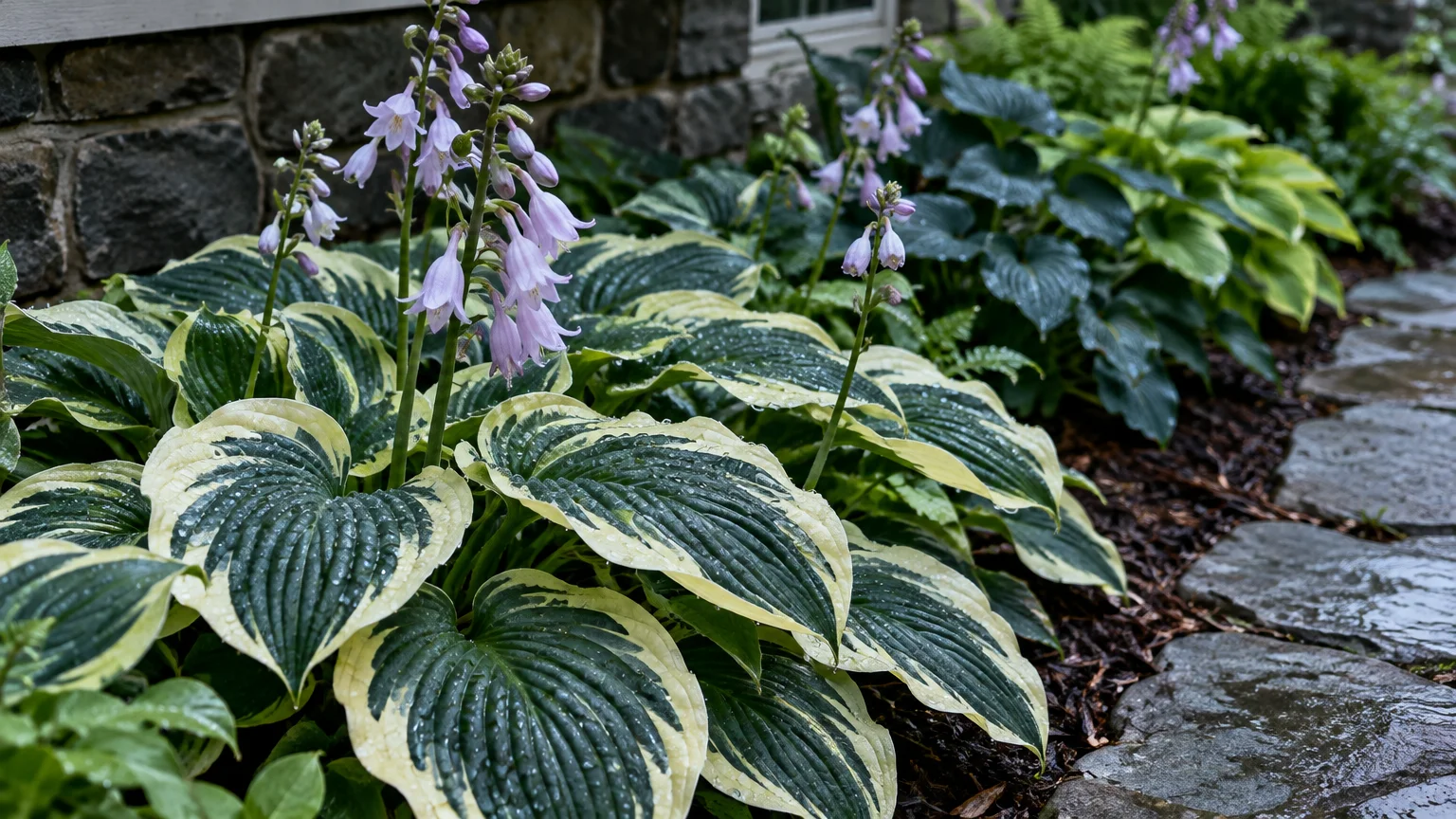
Tip #3: Hostas (Hosta)
Hostas are the undisputed royalty of shade gardens, offering lush foliage in diverse patterns and textures. You can select varieties featuring variegated white edges, chartreuse tones, or dramatic blue-green ribbed leaves.
Tall spires of delicate lavender or white blossoms rise above the leafy mounds in midsummer.
If your front entryway faces north or rests under mature trees, hostas thrive where flowering annuals struggle. They fill bare pockets beneath shrubs and create soft, undulating borders along front stone walkways.
Their broad leaves act as natural living mulch, suppressing weeds beneath their dense canopy all season long.
Plant hostas in fertile, moisture-retentive soil enriched with well-rotted compost. While blue-leaved varieties require deep shade to preserve their powdery coating, gold varieties tolerate dappled morning sun.
Plant hostas along the north or east side of your home where harsh midday sun cannot scorch their leaves.
Spread a thin perimeter of diatomaceous earth or coarse gravel around young plants to deter curious slugs.
Divide overgrown clumps every three to four years during early spring to expand your plantings for free.
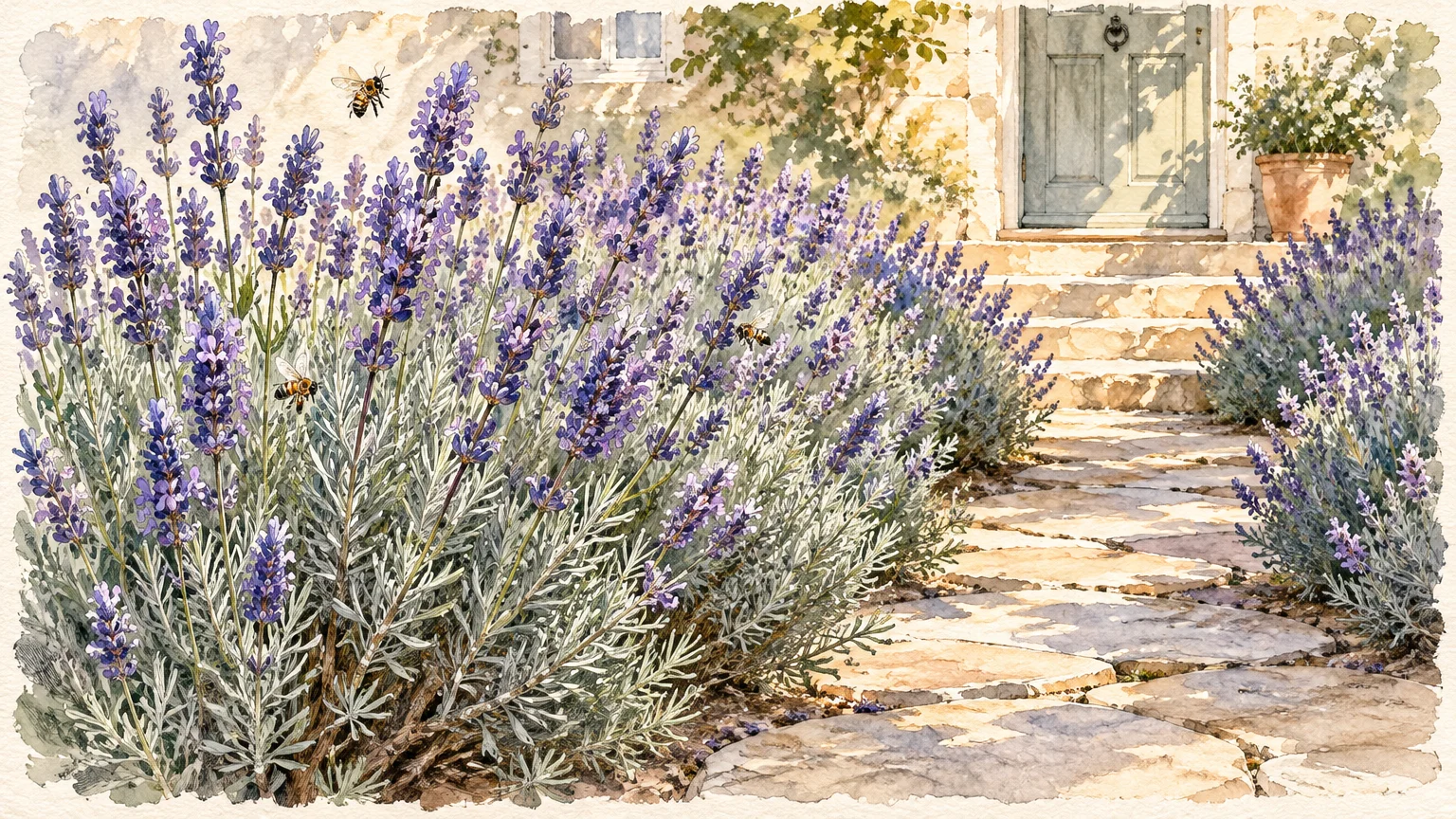
Tip #4: English Lavender (Lavandula angustifolia)
English lavender infuses your front entryway with soothing fragrance, silvery-gray foliage, and vibrant violet-blue flower spikes. It introduces a relaxed, Mediterranean aesthetic that softens rigid stone foundations and concrete borders.
Brushing past these aromatic stems as you walk toward your front door releases delightful essential oils into the air.
Lavender is an exceptional choice for water-conscious homeowners seeking resilient curb appeal plants. Once established, it shrugs off extreme summer heat and prolonged dry spells with ease.
Beneficial pollinators flock to the nectar-rich flowers, bringing honeybees and butterflies straight to your front steps.
Choose an open planting spot that receives full, unhindered sunlight for at least six to eight hours daily. Avoid rich garden soils, as lean, sandy loam produces sturdier stems and higher fragrance concentrations.
Plant lavender near stone walkways where radiated thermal heat fosters healthy root growth and accelerates blooming.
Crucially, ensure rapid water drainage to protect the root crown from wet winter rot.
Trim the plant back by one-third after flowering ceases, taking care never to prune into old, bare wood.
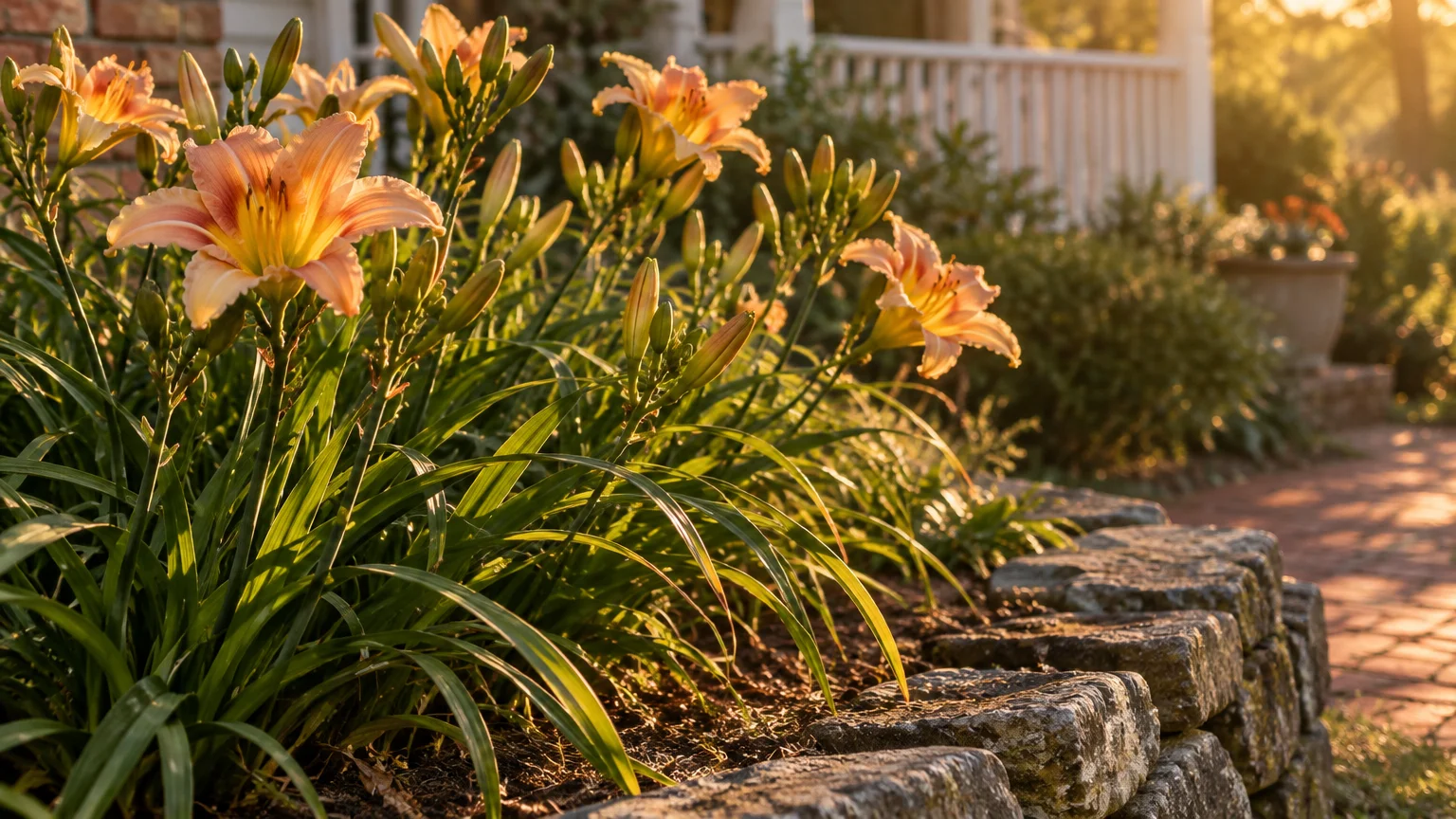
Tip #5: Daylilies (Hemerocallis)
Daylilies are celebrated among home gardeners as virtually indestructible perennials with exuberant trumpet-shaped blossoms. Arching green foliage emerges early in spring, quickly forming dense clumps that stay attractive all season.
Modern reblooming cultivars produce waves of golden, crimson, or peach blossoms from late spring straight through autumn.
These vigorous perennials solve challenging planting situations where fragile front yard plants often fail. They tolerate compacted urban soils, slope erosion, and harsh winter deicing salts carried off driveways.
Because they establish dense tuberous roots, daylilies choke out persistent weeds with remarkable efficiency.
Space your daylily clumps roughly eighteen inches apart in full sun or light afternoon shade. Dig a hole twice as wide as the root mass and set the crown level with the soil surface.
Water thoroughly during dry spells to maintain consistent blossom production throughout the height of summer.
Combine bright yellow daylilies with deep purple salvia to produce dynamic color contrast near your entryway.
Snap off spent seedpods after flowers fade to redirect plant energy toward root vitality and future buds.
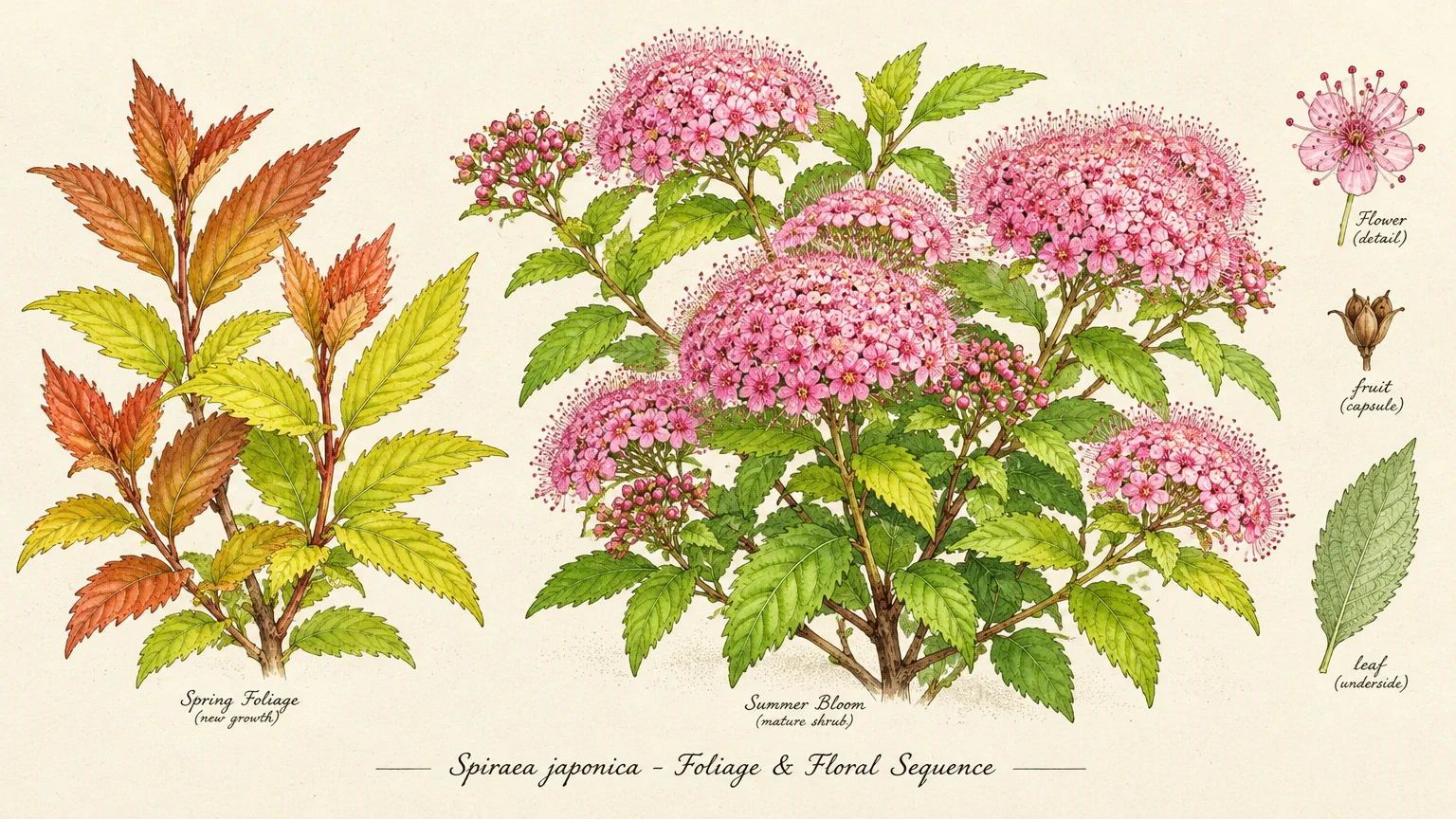
Tip #6: Japanese Spirea (Spiraea japonica)
Japanese spirea is a hardworking deciduous shrub that brings dynamic color shifts to foundation beds. Many popular cultivars feature fiery bronze or golden foliage in spring, followed by vibrant pink blossom clusters in summer.
In autumn, the delicate foliage transforms once more into rich shades of copper, amber, and purple.
Compact spirea cultivars stay neatly sized without demanding constant shearing or specialized pruning equipment. They blend seamlessly between evergreen foundation plants and lower-growing perennial borders.
Spirea resists common garden diseases and recovers quickly even after severe weather or occasional animal browsing.
Install spirea in rich, well-draining garden soil bathed in full sunlight for the most intense foliage coloring. Water your new shrubs weekly until their root system anchors firmly into the surrounding earth.
Choose compact varieties like Magic Carpet or Goldmound to keep foundation beds manageable without constant trimming.
Shear off spent summer flower heads to stimulate a neat secondary flush of blooms in late summer.
Prune the entire shrub down near the ground in early spring to refresh its compact shape.
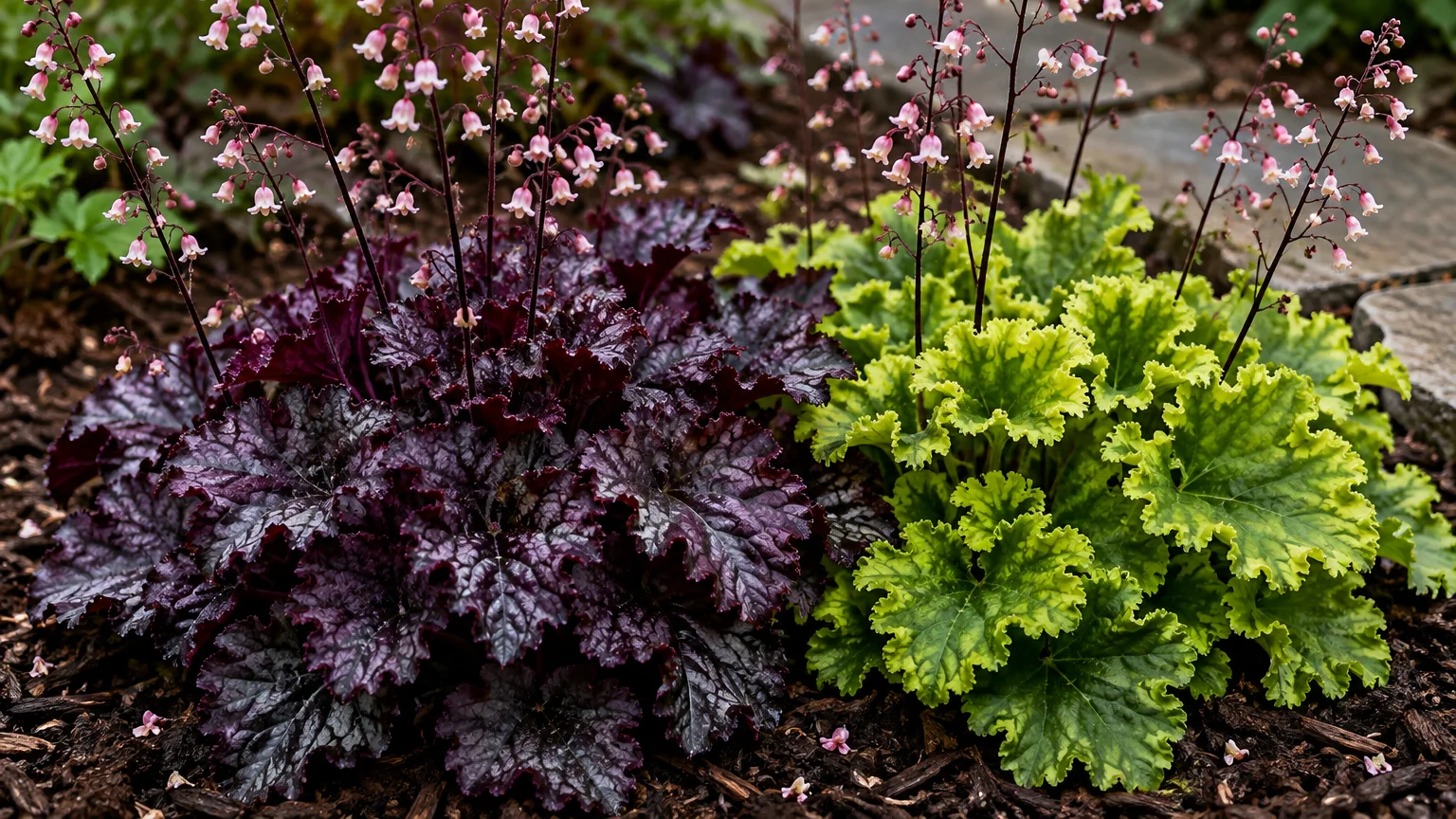
Tip #7: Coral Bells (Heuchera)
Coral bells offer an astonishing spectrum of leaf colors ranging from deep burgundy and obsidian to lime green and caramel. Their scalloped foliage forms neat, rounded clumps that provide continuous visual interest.
Slender, graceful flower wands dance high above the foliage canopy in late spring, attracting hummingbirds.
When you want front-row color without relying solely on short-lived flowers, coral bells deliver season-long foliage impact. They remain semi-evergreen in moderate winter zones, preventing your front borders from looking barren.
Their tidy, non-spreading footprint makes them ideal edging plants along stone walkways and front porches.
Set coral bells in rich soil amended with organic matter, ensuring excellent surface drainage around the crown. They perform best in locations with morning sunshine and sheltered afternoon shade.
Interplant dark plum coral bells beside bright chartreuse hostas to amplify color depth in shaded foundation nooks.
Mulch around the base in late autumn to prevent winter frost heaving from lifting crowns out of the ground.
Clear away damaged outer leaves in early spring to welcome fresh foliage emerging from the center.
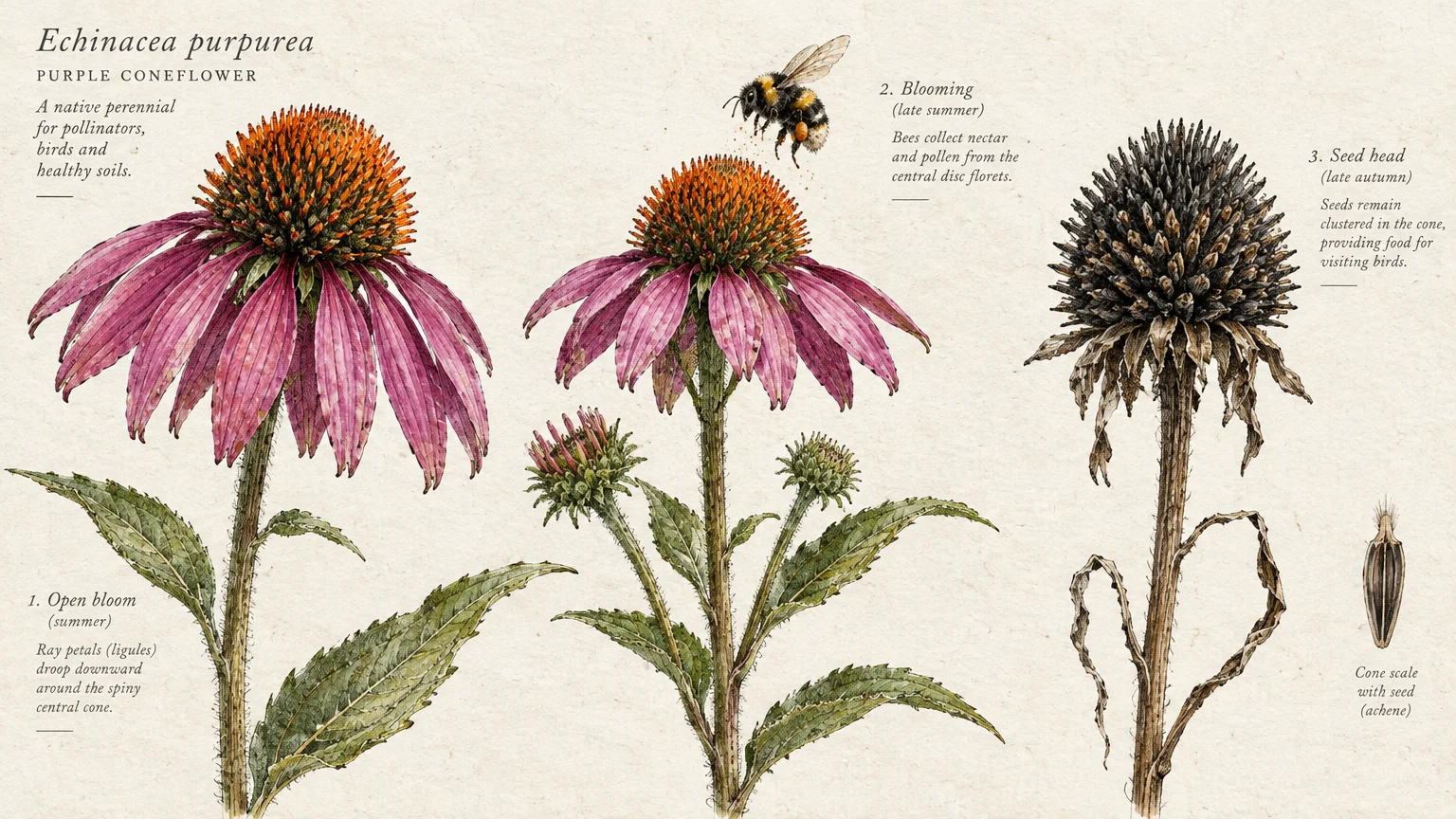
Tip #8: Purple Coneflower (Echinacea purpurea)
Purple coneflowers showcase daisy-like blossoms with prominent, spiky central cones and reflexed petals. These native prairie perennials feature rugged green stems that stand resolute through summer heat and heavy winds.
Blossoms range from classic magenta to modern hues of warm orange, creamy vanilla, and deep crimson.
Coneflowers represent the gold standard of low maintenance landscaping for sunny front yards. Their deep taproots seek out moisture far beneath the surface, making them remarkably resilient during severe droughts.
Leaving the rigid seed cones standing in autumn provides vital nourishment for goldfinches throughout chilly winter months.
Select an unshaded foundation area where coneflowers can absorb full, direct sun for at least six hours daily. Avoid heavy fertilizer applications, which create weak stems and sparse blooms rather than strong plants.
These sturdy natives withstand strong rainstorms and dry summer winds without requiring staking or physical supports.
Water sparingly once roots establish, moistening the soil only during prolonged spells of severe dry heat.
Cut dead stems back to ground level in late winter before fresh spring shoots begin to emerge.
Tip #9: Creeping Phlox (Phlox subulata)
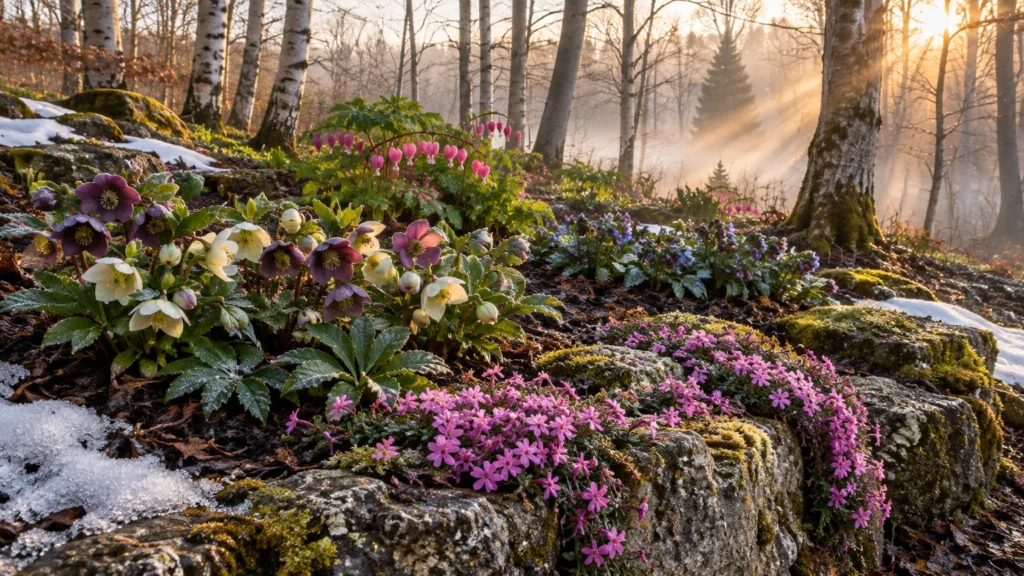
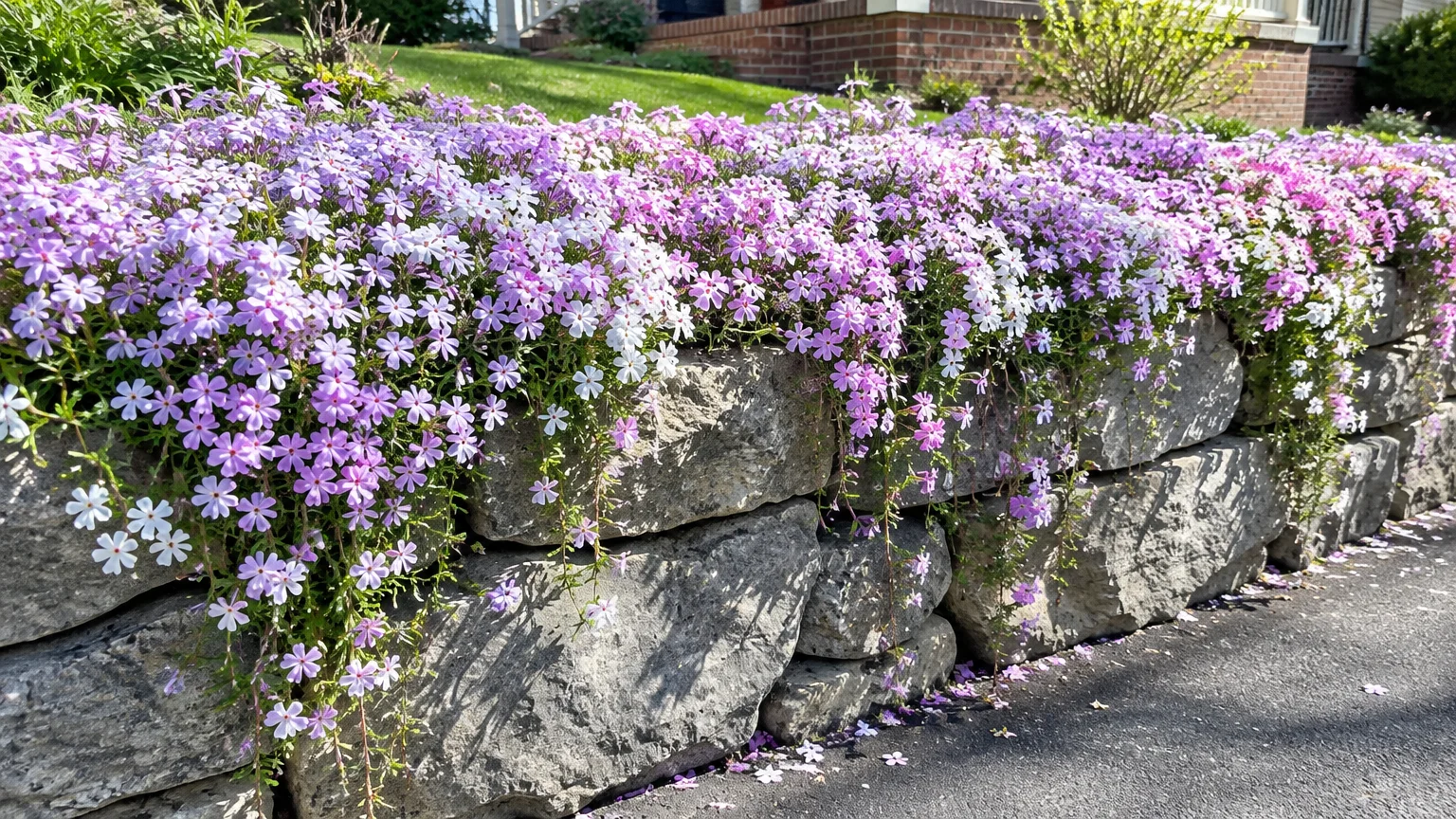
Creeping phlox forms a dense, evergreen mat of needle-like foliage that hugs the soil line closely. In mid-spring, the green carpet disappears entirely beneath a dazzling blanket of tiny, star-shaped blossoms.
Flower colors span electric shades of pink, lavender, pure snow-white, and striking bicolor stripes.
This resilient groundcover softens hard architectural masonry and cascades gracefully over low stone retaining walls. It acts as an evergreen living skirt at the front edge of foundation beds.
Its dense growth prevents unwanted weeds from invading the soil along your front walkway.
Position creeping phlox in full sunlight where soil drainage is rapid and thorough throughout the year. Sandy or rocky garden soils suit this alpine native perfectly, preventing crown moisture problems.
Plant creeping phlox at the base of taller shrubs to suppress weed germination naturally along driveway borders.
Space starter plants roughly twelve inches apart to allow the creeping runners to knit together seamlessly.
Shear the mat back lightly after spring flowering to encourage dense foliage growth and tidy edges.
Tip #10: Feather Reed Grass (Calamagrostis x acutiflora)
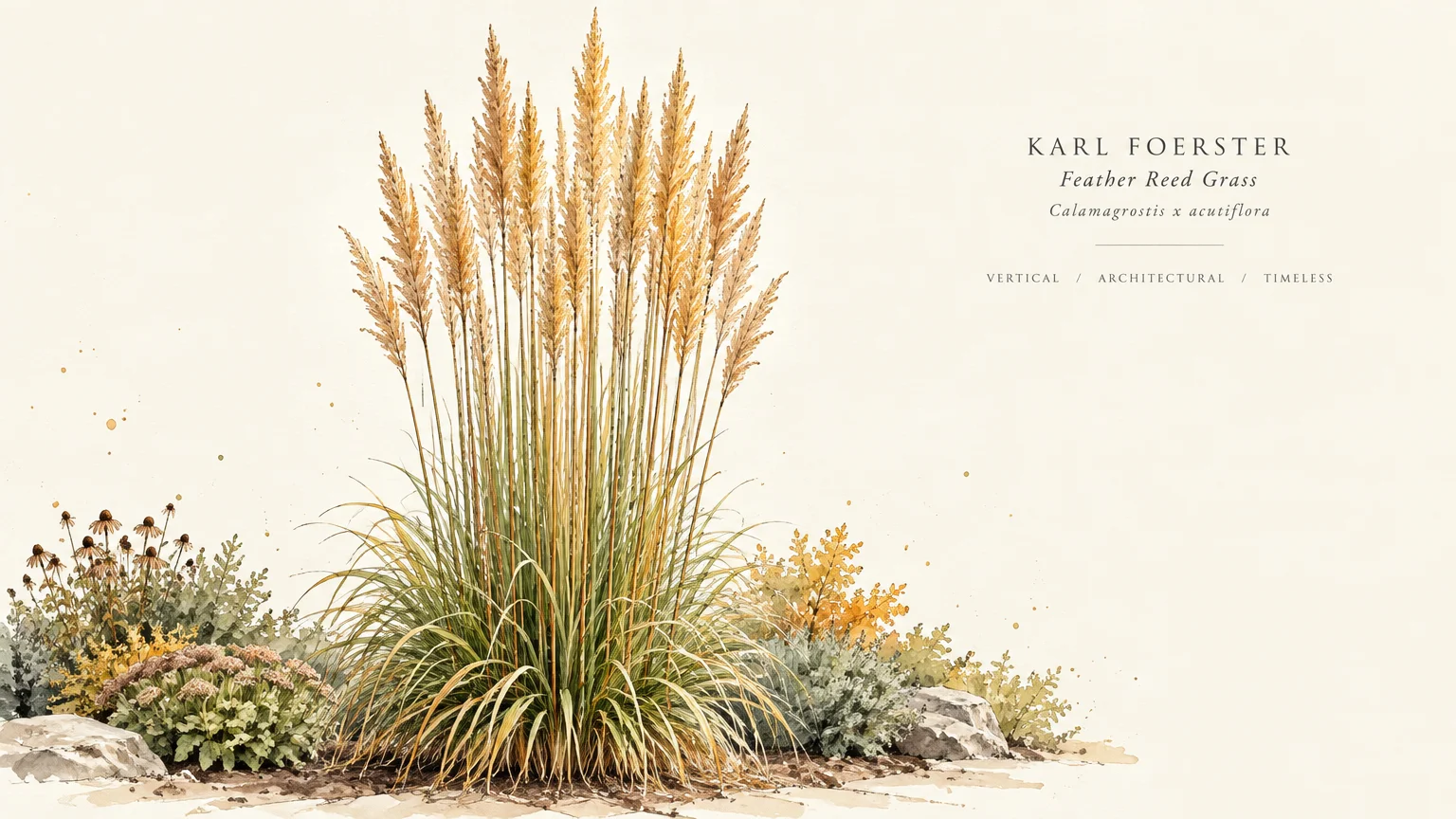
Feather reed grass introduces striking vertical architecture, graceful motion, and soft acoustic rustling to your front landscape. Upright green foliage clumps send up slender, wheat-like flower plumes that reach five feet tall.
The plumes emerge in soft pinkish bronze during early summer before maturing into gleaming golden wands.
Ornamental grasses add multidimensional texture that breaks up static shrub lines and flat wall siding. Because Karl Foerster is a sterile hybrid, it never spreads aggressively or invades nearby garden beds.
The upright stalks remain standing through heavy winter snowstorms, providing dramatic cold-season visual interest.
Plant feather reed grass in full sun to light shade, settling it into almost any garden soil type. It handles heavy clay soils and wet spring conditions far better than most ornamental grasses.
Position feather reed grass at foundation corners to anchor the architectural edges of your home structure.
Space individual plants three feet apart to give their upright vertical silhouettes distinct definition.
Cut the entire clump down to three inches above the ground in late winter before spring growth starts.
Putting It All Together: Enjoy Your Beautiful Garden
Designing an eye-catching front landscape does not require constant maintenance or complicated gardening techniques. By blending sturdy evergreens, long-blooming perennials, and graceful ornamental grasses, you create year-round visual intrigue.
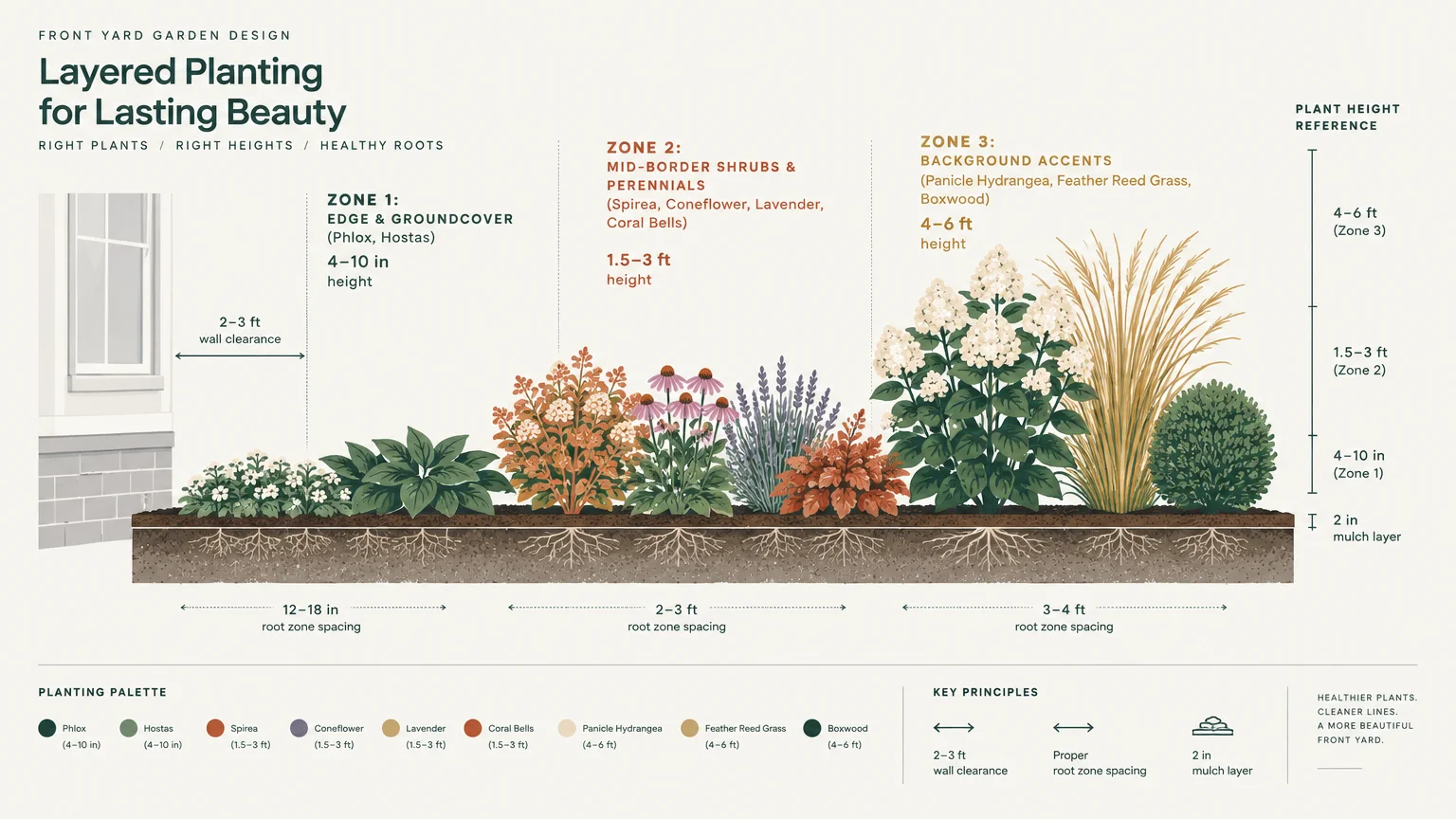
Layer your planting beds thoughtfully to achieve professional landscaping depth. Place taller grasses and shrubs toward the foundation wall, medium perennials in the center, and creeping groundcovers along the border.
Group plants with matching sunlight and hydration needs together into unified planting zones. This hydrozoning technique conserves water while ensuring every individual specimen thrives naturally.
Mulch your beds with a two-inch layer of shredded hardwood bark or pine straw. Organic mulch conserves soil moisture, prevents weed emergence, and ties your entire front yard design together.
Start small by replacing tired foundation plantings with two or three resilient varieties from this guide. You will immediately notice how much brighter and more welcoming your entryway appears.
Consistent seasonal observation helps you refine plant placements and celebrate new growth as the years progress.
Step outside this weekend, evaluate your front yard lighting conditions, and begin planting your dream entrance.
Frequently Asked Questions
How far should foundation plants sit from the front of a house?
Plant small shrubs and perennials at least two to three feet away from your foundation wall. Large shrubs and ornamental grasses require three to four feet of clearance.
This spacing preserves adequate airflow, protects your siding from moisture damage, and allows room for exterior home maintenance.
What are the easiest low maintenance landscaping plants for beginners?
Hostas, daylilies, and panicle hydrangeas offer the greatest forgiveness for novice gardeners. They establish roots quickly, resist drought, and produce impressive displays with minimal intervention.
These hardy varieties bounce back effortlessly even if you occasionally forget to water them.
How do I choose the best curb appeal plants for full shade?
Assess how many hours of filtered light your front porch receives each day. Hostas, coral bells, and shade-tolerant boxwoods flourish in partial to full shade settings without losing color.
Combine contrasting foliage colors and textures to compensate for fewer flower blossoms in shaded beds.
When is the best time of year to install front yard plants?
Early autumn and mid-spring represent the ideal planting windows for most foundation shrubs and perennials. Cooler air temperatures reduce transpiration stress while warm soil encourages rapid root development.
Avoid planting during the sweltering heat of midsummer to prevent severe transplant shock.
For region-specific advice, consult your local University Extension program (find yours via the USDA directory). For plant databases and inspiration, visit the Missouri Botanical Garden or the Royal Horticultural Society.
Disclaimer: This article provides general gardening advice.
Always consider your specific climate, soil conditions, and local pests. Follow safety guidelines when using gardening tools and products.