A damaged garden hose can quietly waste hundreds of gallons of water every month while driving up your utility bill. Catching equipment failures early protects your soil health and keeps your prized garden beds hydrated efficiently.
Pinpointing hidden leaks saves you money and spares your blooming perennials from unexpected drought stress. Routine checks also help you maintain strong water pressure for all your outdoor chores.
Identifying sneaky hardware breakdowns takes only a few minutes when you know the exact warning signs. Here are eight clear red flags that show your watering equipment needs attention.
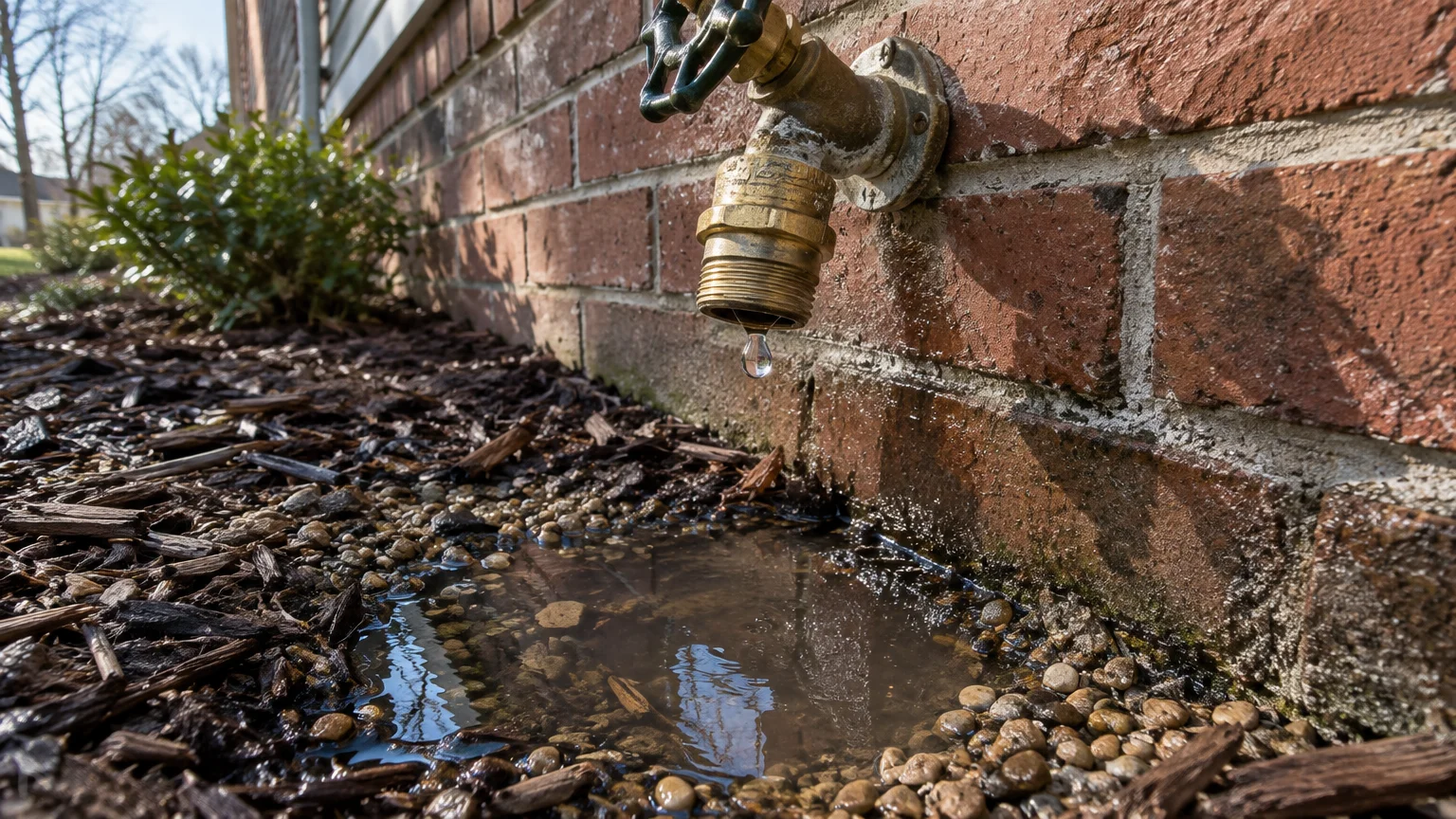
Tip #1: Puddles Forming Near the Spigot Connection
A pooling puddle beneath your outdoor sillcock is the most common indicator of garden hose leaks. Even a small drip at the spigot connection wastes gallons over a single afternoon.
Why It Happens
Brass and plastic couplings endure constant vibration and tension whenever you drag the hose across the yard. This repetitive stress loosens threaded connections and degrades internal rubber washers over time.
Temperature swings during seasonal shifts can also cause metal threads to expand and contract unevenly. This movement creates tiny gaps where pressurized water easily escapes.
The Water Waste Impact
A connection that drips just once per second wastes over five gallons of clean water every day. That accumulates to more than 150 gallons lost each month without nourishing a single plant root.
Unchecked leaks beside your home foundation can also erode topsoil and encourage unwanted mold growth near your siding. Fixing this connection protects both your landscape and your home.
How to Fix It Fast
Turn off the water supply and unscrew the hose coupling from the outdoor faucet. Inspect the round internal washer inside the female fitting for cracks, flattening, or dirt.
Replace the worn seal with a heavy-duty, self-locking rubber or silicone O-ring. Wrap the faucet threads with three layers of Teflon plumber tape before reconnecting the hose firmly by hand.
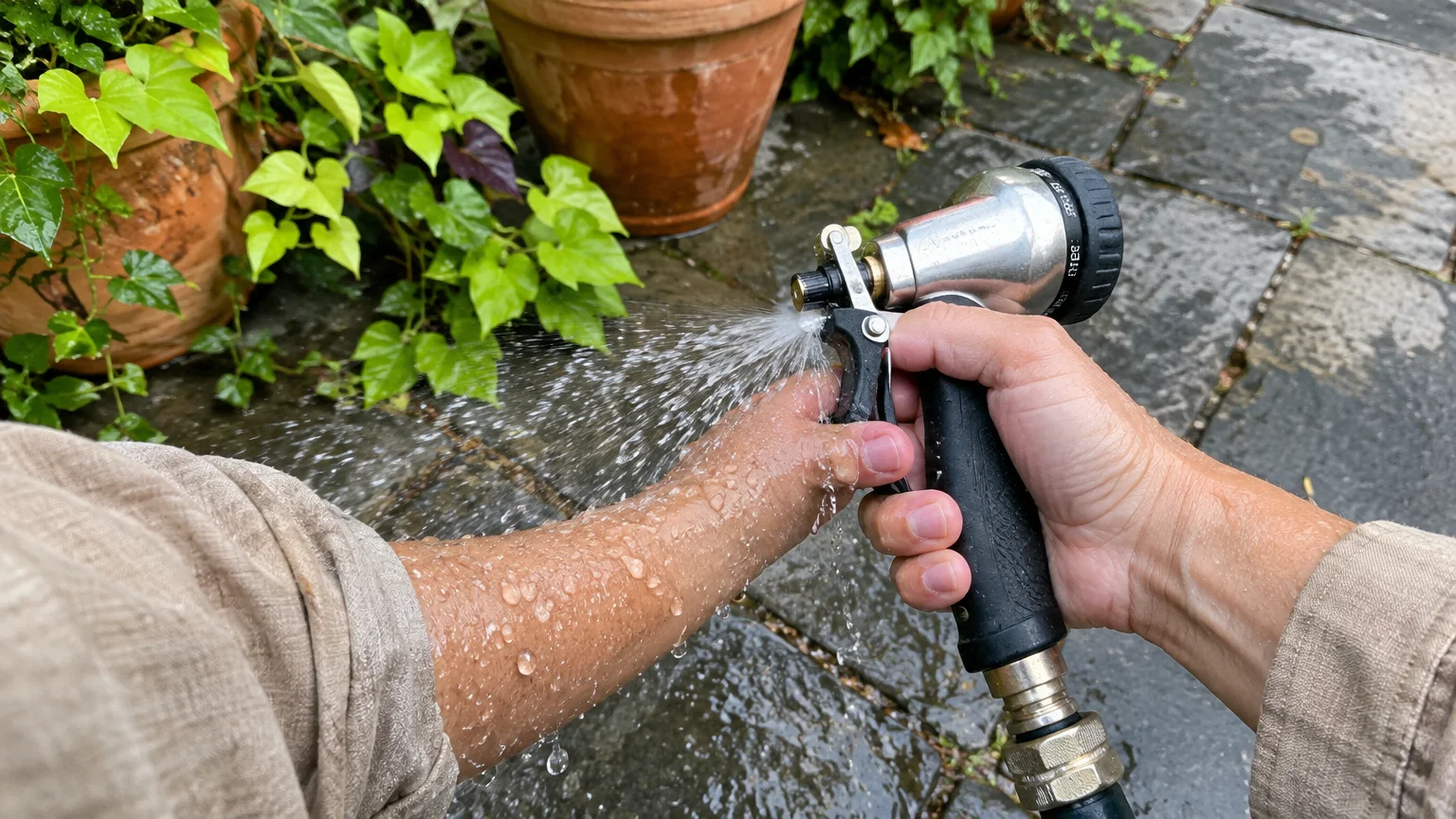
Tip #2: Persistent Spray from the Nozzle Collar
Water should only exit your spray nozzle when you actively squeeze the trigger or open the valve. Water trickling down your wrist while spraying indicates an immediate mechanical failure at the attachment point.
Why It Happens
Spray attachments endure harsh drops against stone patios and gravel garden pathways. Repeated impacts warp the nozzle casing and crack the internal plastic shutoff seals.
Mineral deposits from hard tap water can also jam the internal spring mechanism. When minerals build up, the nozzle cannot seal shut against municipal water pressure.
The Water Waste Impact
Spray collars that bypass their shutoff valves can leak half a gallon per minute while running. Fixing this collar stops you from wasting water garden beds desperately need during dry spells.
Leaky handheld wands also reduce front-end water pressure, making routine garden watering take twice as long. You end up wasting time while failing to hydrate your flowers properly.
How to Fix It Fast
Disconnect your spray nozzle and soak the entire unit in a bucket of distilled white vinegar overnight. This natural bath dissolves calcified mineral deposits and restores smooth spring action.
If the nozzle body is cracked or warped, install a replacement wand featuring solid brass fittings. Always store your sprayer on an elevated hook to prevent accidental impact damage.
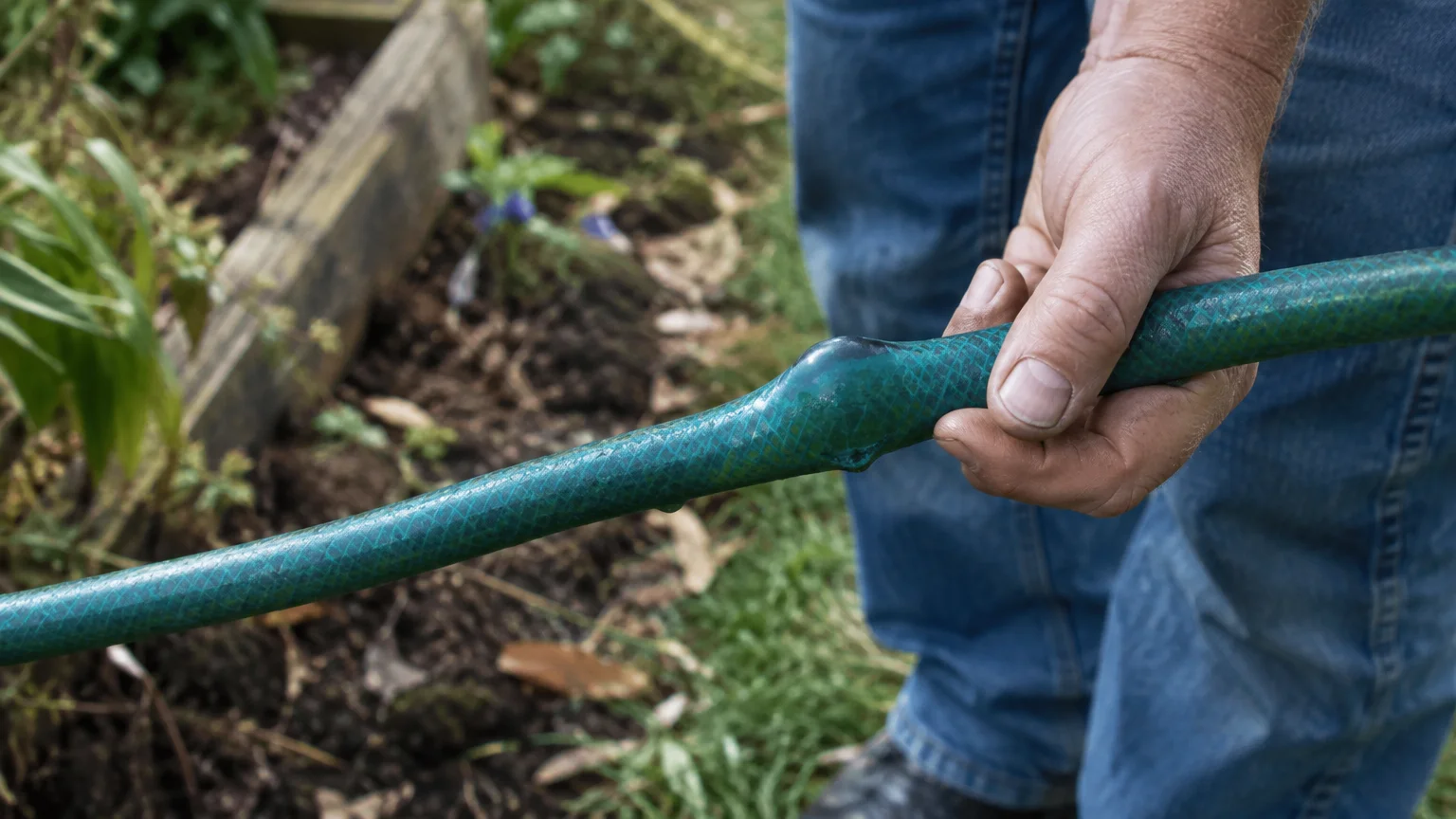
Tip #3: Bulging or Blistering Along the Hose Wall
A visible bubble or soft lump along the length of your hose signals severe internal structural failure. These deformities show that the inner reinforcing mesh has completely separated from the outer rubber layer.
Why It Happens
Leaving your hose pressurized under direct summer sunlight superheats the trapped water inside. As the water heats up, thermal expansion forces the hose lining outward against weakened fibers.
Sudden pressure spikes from fast-closing spray nozzles can also rupture internal polyester cords. Once the structural braid breaks, the rubber stretches into a thin, fragile balloon.
The Water Waste Impact
A bulging hose wall acts like a ticking time bomb in your yard. The thin wall will inevitably burst, dumping dozens of gallons across your lawn before you can reach the spigot.
Catastrophic hose ruptures can flood delicate vegetable patches and wash away nutrient-rich potting soil within minutes. Preventing sudden blowouts is crucial if you want to save water outdoors.
How to Fix It Fast
Relieve water pressure immediately and do not attempt to patch the bulge with duct tape. Turn off the tap and carefully mark the damaged section with a piece of chalk.
Use sharp garden shears to slice out the compromised section cleanly. Insert a compression mender coupling between the two fresh ends and tighten the collar screws securely.
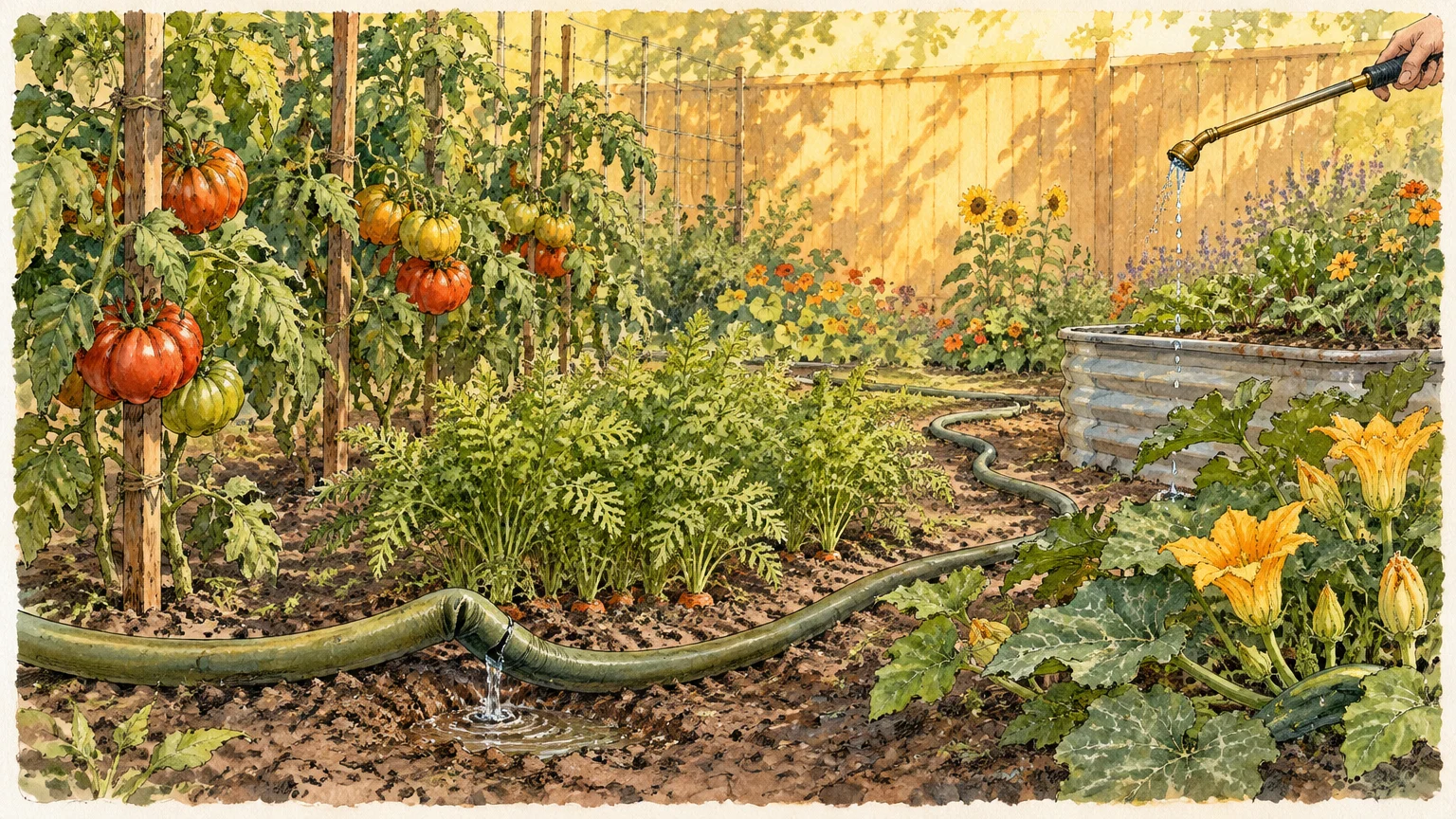
Tip #4: Sudden Drops in Water Pressure
If your sprinkler reaches only half its normal distance, hidden fluid loss is often the culprit. A sudden drop in delivery force usually means water is escaping somewhere along the line before reaching the head.
Why It Happens
Heavy garden equipment or wheelbarrows rolling over your hose can pinch the inner core without puncturing the exterior. This crushing action restricts flow while forcing water through microscopic tears.
Internal tears often develop when a coiled hose is pulled aggressively around sharp corners or rough landscape edging. The stretched lining allows pressurized water to seep into outer casing seams.
The Water Waste Impact
Weak water pressure prolongs your watering sessions because you must run the tap longer to saturate plant roots. You end up using more water overall while delivering less effective hydration to your perennials.
Undetected intermediate leaks also soak unproductive turf areas instead of reaching target root zones. This hidden inefficiency undermines your broader water conservation garden strategy.
How to Fix It Fast
Lay your hose out in a straight line across your lawn and cap the discharge end. Turn the water spigot on fully to pressurize the line without allowing water to exit the nozzle.
Walk the length of the hose slowly and inspect the surface for sweating or localized soft spots. Splice in a brass repair coupling wherever you detect mushy, compromised rubber.
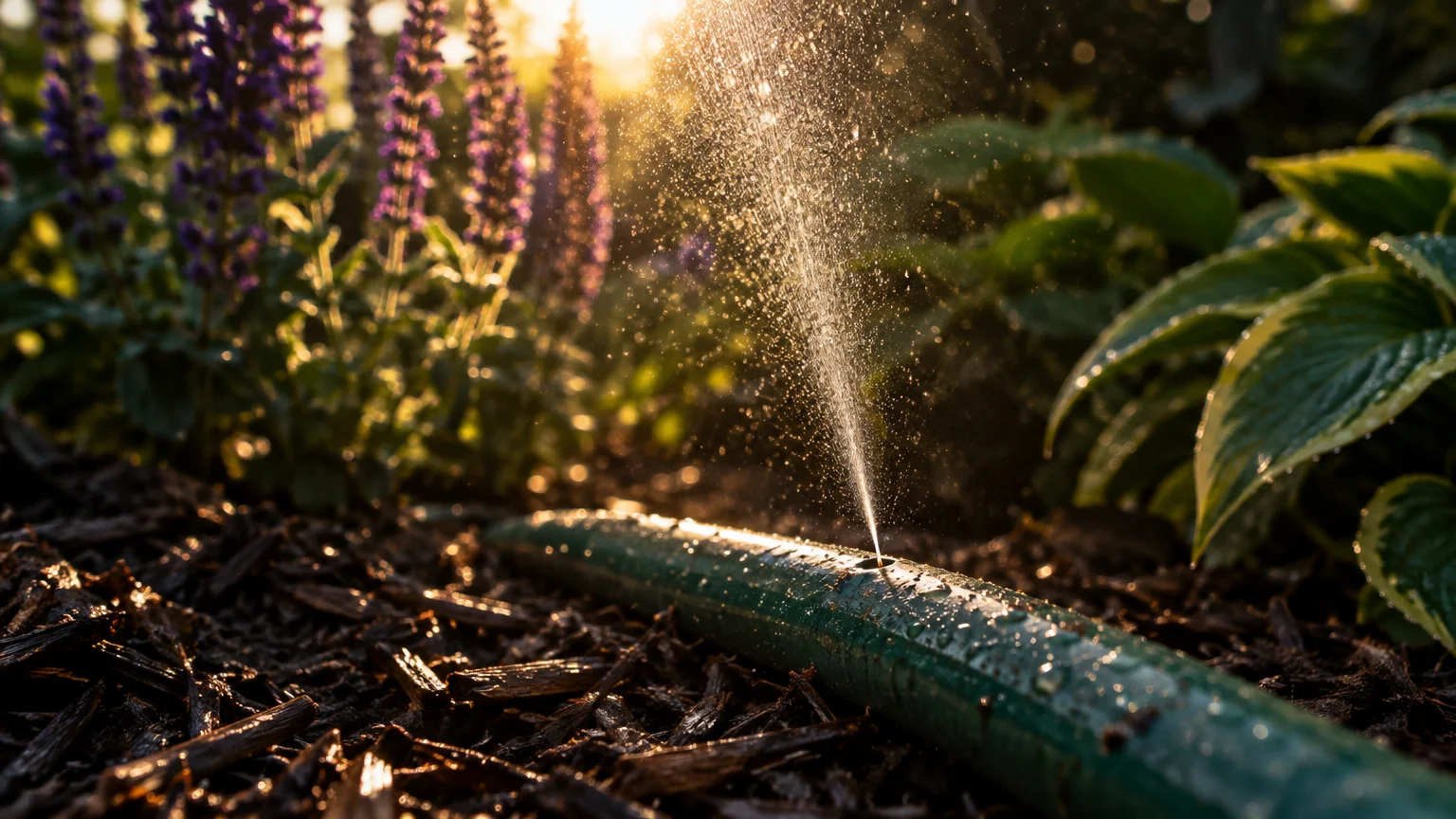
Tip #5: Fine Mists and Mystery Pinhole Sprays
Microscopic pinhole leaks often create a faint, misty vapor that is hard to see in bright sunlight. You might only notice these tiny fountains when cool droplets touch your shins while watering shrubs.
Why It Happens
Rose thorns, brambles, and sharp lawn debris frequently pierce outer rubber layers during routine yard work. Repeatedly dragging your hose through dense berry patches or gravel paths accelerates this damage.
Ultraviolet radiation from prolonged sun exposure degrades synthetic vinyl and rubber compounds over time. Sun-damaged rubber becomes brittle, developing tiny micro-fissures that expand under municipal water pressure.
The Water Waste Impact
A tiny pinhole that sprays a faint mist might look harmless, but it loses substantial moisture over time. Multiple pinholes across a fifty-foot hose can easily squander thirty gallons during a normal watering routine.
The resulting fine mist evaporates into warm afternoon air almost instantly without moistening your garden soil. That lost moisture represents pure waste on your monthly utility statement.
How to Fix It Fast
Mark every pinhole location with electrical tape while the line remains pressurized. Turn off the water and dry the hose surface thoroughly with a clean rag.
Apply self-fusing silicone rescue tape around each hole, stretching the tape tightly as you wrap. For larger punctures, cut the hose at the defect and install a barb mender.
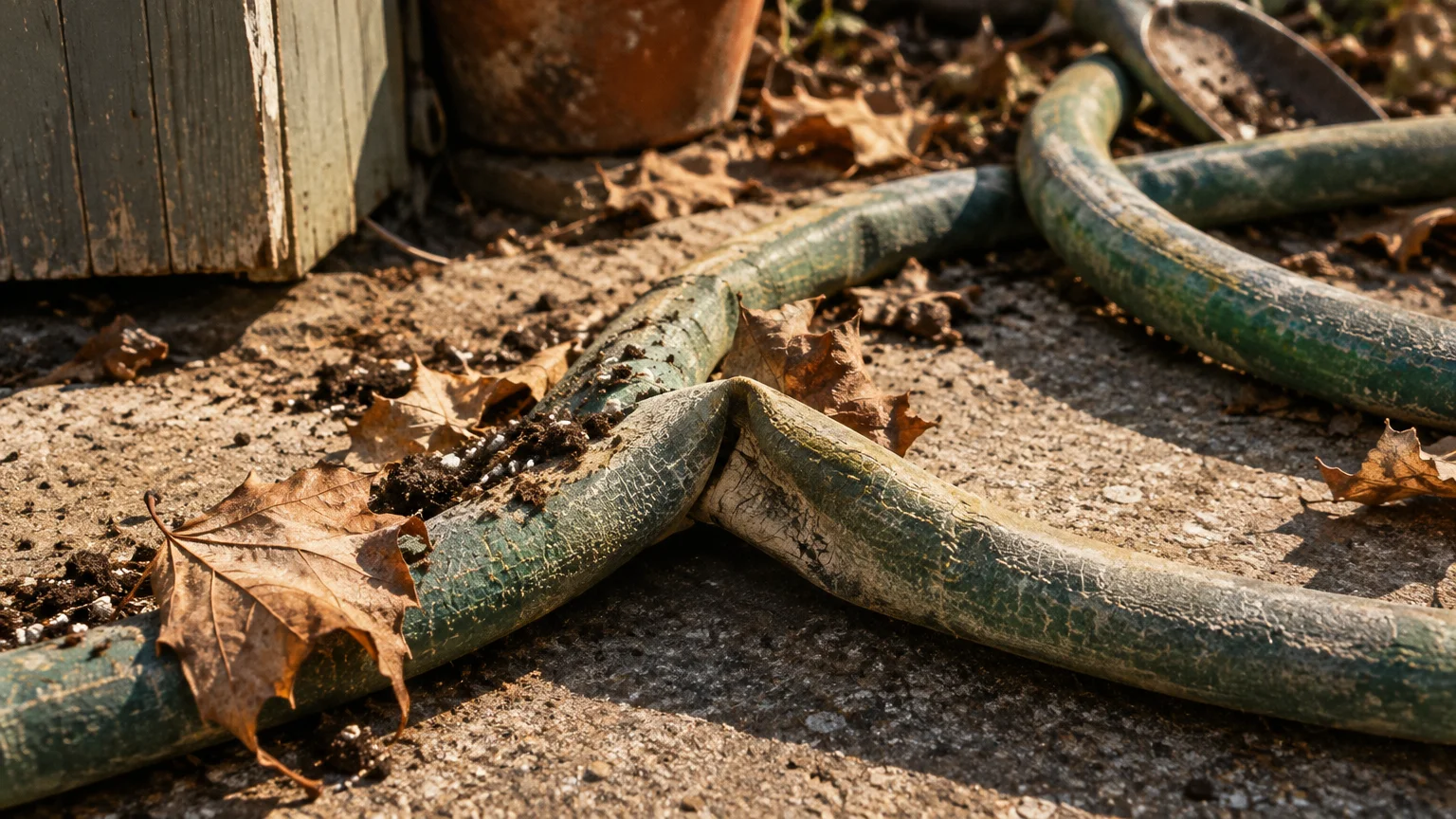
Tip #6: Cracked, Flattened, or Stiff Hose Casings
A healthy garden hose remains supple, round, and flexible across varying outdoor temperatures. When rubber becomes stiff or permanently flattened, the material is reaching the end of its functional life.
Why It Happens
Extended exposure to winter freezes causes residual moisture to expand and fracture internal rubber compounds. Freezing cycles leave the hose casing stiff, brittle, and prone to extensive cracking.
High summer heat bleeds plasticizers out of economy vinyl hoses, causing the material to harden and lose its elasticity. Once vinyl hardens, everyday coiling forces the outer skin to split open.
The Water Waste Impact
Stiff, kinked hoses develop permanent creases that split along the spine when bent during routine watering. These structural cracks leak continuously whenever the hose bends around garden beds or container pots.
Kink-induced fractures waste water rapidly and interrupt your workflow by starving your spray nozzle of volume. You lose both water and patience trying to coax flow through cracked folds.
How to Fix It Fast
Prevent weather degradation by draining your watering line completely before freezing autumn temperatures arrive. Store coils on a wide curved reel in a shaded garage or garden shed.
When a hose develops widespread webbed cracks, surface patches will no longer hold reliable pressure. Invest in a multi-ply polyurethane hose backed by superior UV inhibitors to ensure long-term durability.
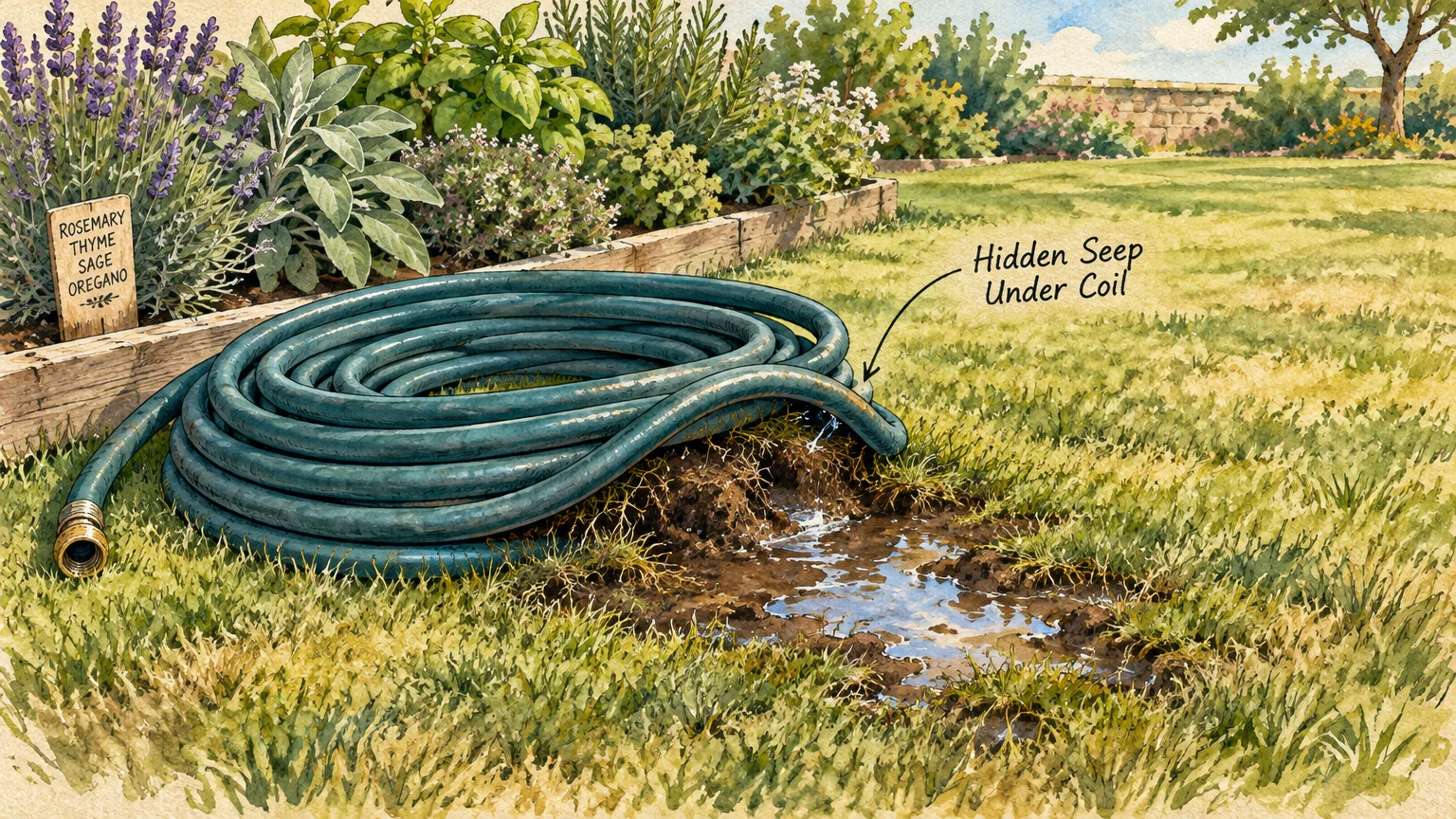
Tip #7: Damp Soil Around Buried or Coiled Sections
Lush patches of abnormally green grass or soggy mud beneath your hose storage caddy signal slow subterranean leaks. If the ground under your hose reel never dries out, your line is steadily losing moisture.
Why It Happens
Hoses stored on tight reels experience constant shear stress near the internal swivel connector. This strain causes internal gaskets to slip out of alignment and weep water continuously.
Soaker hoses and underground feeder runs are also vulnerable to burrowing pests and expanding tree roots. Rodents often chew into flexible lines seeking moisture during dry summer heatwaves.
The Water Waste Impact
Concealed leaks beneath hose reels can drip unnoticed for weeks, wasting hundreds of gallons into soggy mud. This hidden saturation suffocates grassroots and attracts nuisance pests like mosquitoes and gnats.
Silent leaks inside automated irrigation zones can easily inflate your water bill by thirty percent. Catching these hidden losses is vital to maintain smart outdoor efficiency.
How to Fix It Fast
Unwind your entire hose reel once every month to inspect the inner swivel fitting for standing water. Tighten threaded hardware and lubricate internal O-rings with food-grade silicone grease.
For in-ground soaker lines, perform periodic pressure tests by checking your home water meter before and after shutoff. Replace chewed or damaged drip sections with push-fit barbed repair couplings.
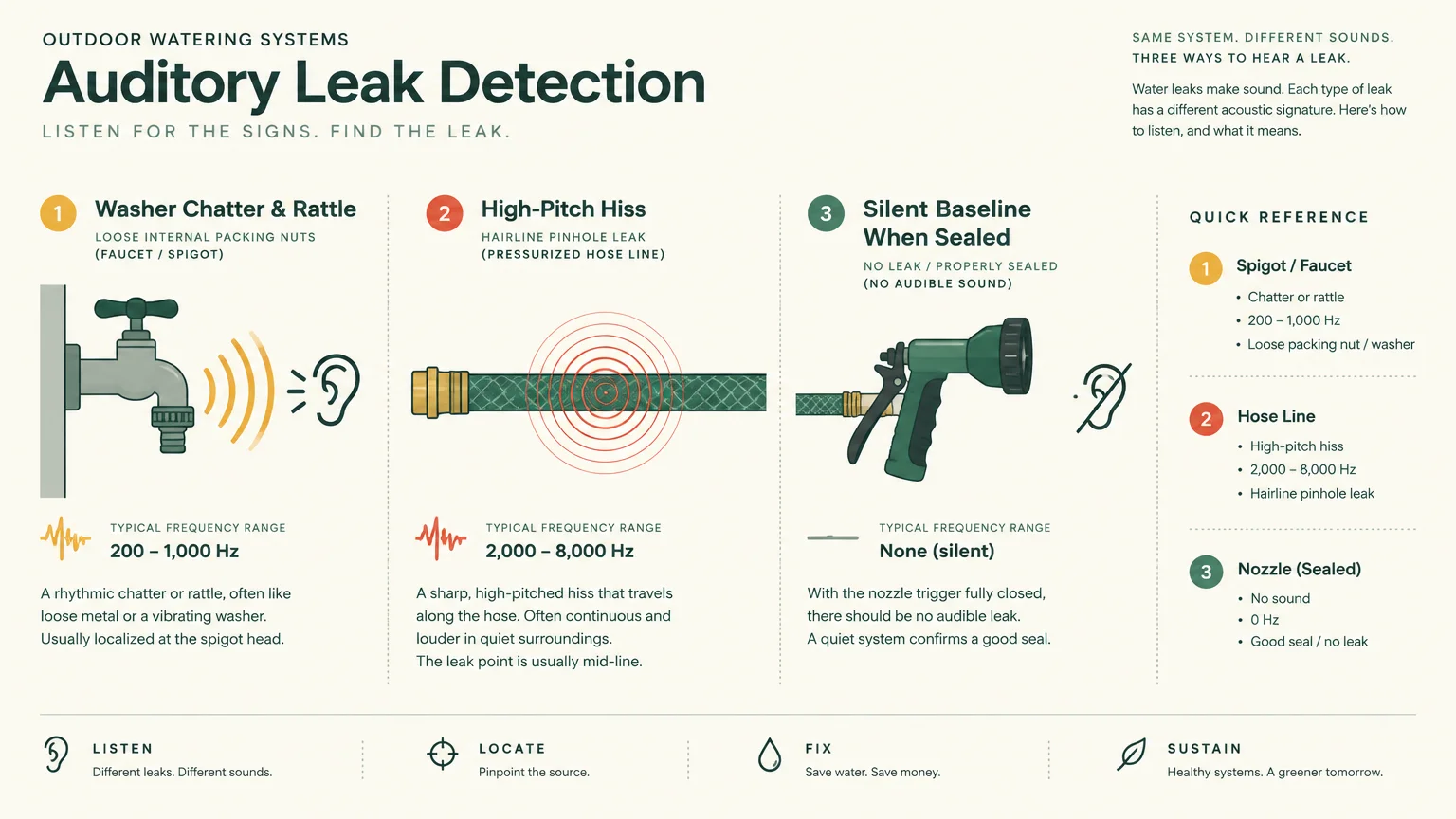
Tip #8: Rattling or Hissing Sounds Under Pressure
You can often hear water escaping long before you spot an active drip across your lawn. A soft hissing sound or trembling vibration indicates high-pressure water forcing its way through a tight opening.
Why It Happens
High municipal water pressure can overpower standard garden hose couplings, especially if your home lacks an outdoor regulator. Water surges push past internal seals, creating acoustic hissing inside metal fittings.
Loose brass crimp rings on factory-assembled hoses also allow micro-jets of water to escape behind the collar. The pressurized fluid creates a buzzing vibration against the metal sleeve.
The Water Waste Impact
Audible hissing indicates water escaping at high velocity, which causes swift and substantial volume loss over time. An unresolved hissing coupling can discharge dozens of gallons during a routine afternoon watering session.
Unchecked high pressure also accelerates wear on spray wands, quick-connect attachments, and internal hose liners. Managing pressure safeguards your watering gear and eliminates preventable fluid loss.
How to Fix It Fast
Install an inexpensive water pressure gauge directly onto your outdoor spigot to measure your static line pressure. If your reading exceeds 60 PSI, attach a brass pressure regulator to protect your equipment.
If a factory end-fitting continues hissing, cut the metal crimp off with a hacksaw. Slide on a heavy-duty brass clamp-on replacement coupling to restore a leak-free seal.
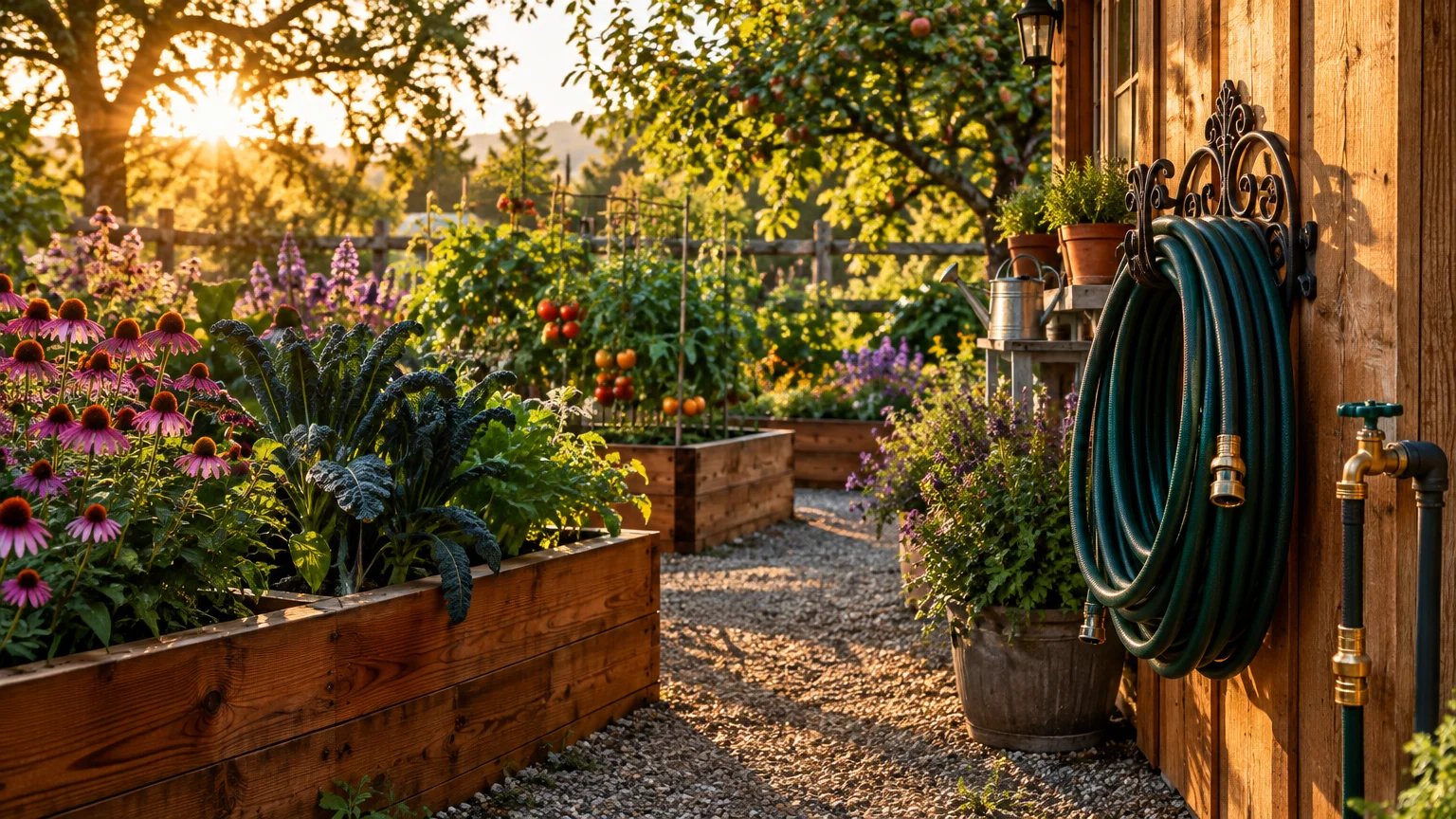
Putting It All Together: Enjoy Your Beautiful Garden
Maintaining durable watering gear is one of the easiest ways to cultivate a thriving, resilient garden ecosystem. When your hoses work efficiently, every single drop delivers targeted hydration directly to your plants.
Implementing essential garden hose tips saves precious moisture and keeps your seasonal utility expenses manageable. Simple proactive maintenance lets you focus on harvesting crisp vegetables and enjoying vibrant floral blooms.
Make seasonal inspections a routine part of your weekend gardening ritual. Walking your lines and replacing cheap washers takes moments and prevents extensive equipment failures.
Thoughtful water management transforms your outdoor space into an eco-friendly oasis where plants flourish naturally. Proper equipment care ensures your garden remains lush, sustainable, and joyful throughout the year.
For region-specific advice, consult your local University Extension program (find yours via the USDA directory). For plant databases and inspiration, visit the Missouri Botanical Garden or the Royal Horticultural Society.
Disclaimer: This article provides general gardening advice. Always consider your specific climate, soil conditions, and local pests. Follow safety guidelines when using gardening tools and products.
Frequently Asked Questions
How often should I replace garden hose washers?
You should inspect and replace rubber hose washers once every gardening season. Sun exposure, mineral buildup, and regular tightening compress the rubber, causing washers to lose elasticity.
Swapping them out each spring prevents nuisance dripping before you begin heavy seasonal watering. Silicone washers typically last twice as long as standard black rubber alternatives.
Can a leaking hose harm my lawn and garden beds?
Yes, continuous hose leaks can severely saturate soil and deprive plant roots of essential oxygen. Overly wet soil creates prime breeding conditions for root rot, fungal blight, and invasive weed species.
Concentrated puddles near paved surfaces can also wash away valuable topsoil and mulch layers. Fixing leaks preserves your landscape layout and protects your garden bed nutrition.
Is repairing a leaking hose better than buying a new one?
Repairing an existing hose is far more cost-effective and environmentally friendly than purchasing a replacement. High-quality brass mender couplings cost only a few dollars and restore full functional water pressure.
You only need to replace the entire hose when the outer casing shows widespread dry rot or extensive cracking. Simple mechanical repairs keep durable rubber out of local landfills for many years.
How can I protect my garden hose from sun damage?
You can safeguard your watering equipment by storing it on a wall-mounted reel located in complete shade. Shielding the casing from direct ultraviolet rays prevents rubber from drying out, cracking, and leaking.
Always release built-up water pressure from the nozzle after closing your outdoor spigot. Depressurizing the line prevents thermal expansion from rupturing the inner reinforced core on hot afternoons.